How to Unclog a Shower Drain With a Plunger, Snake and Other Tools
The Fastest Way to Unclog a Shower Drain
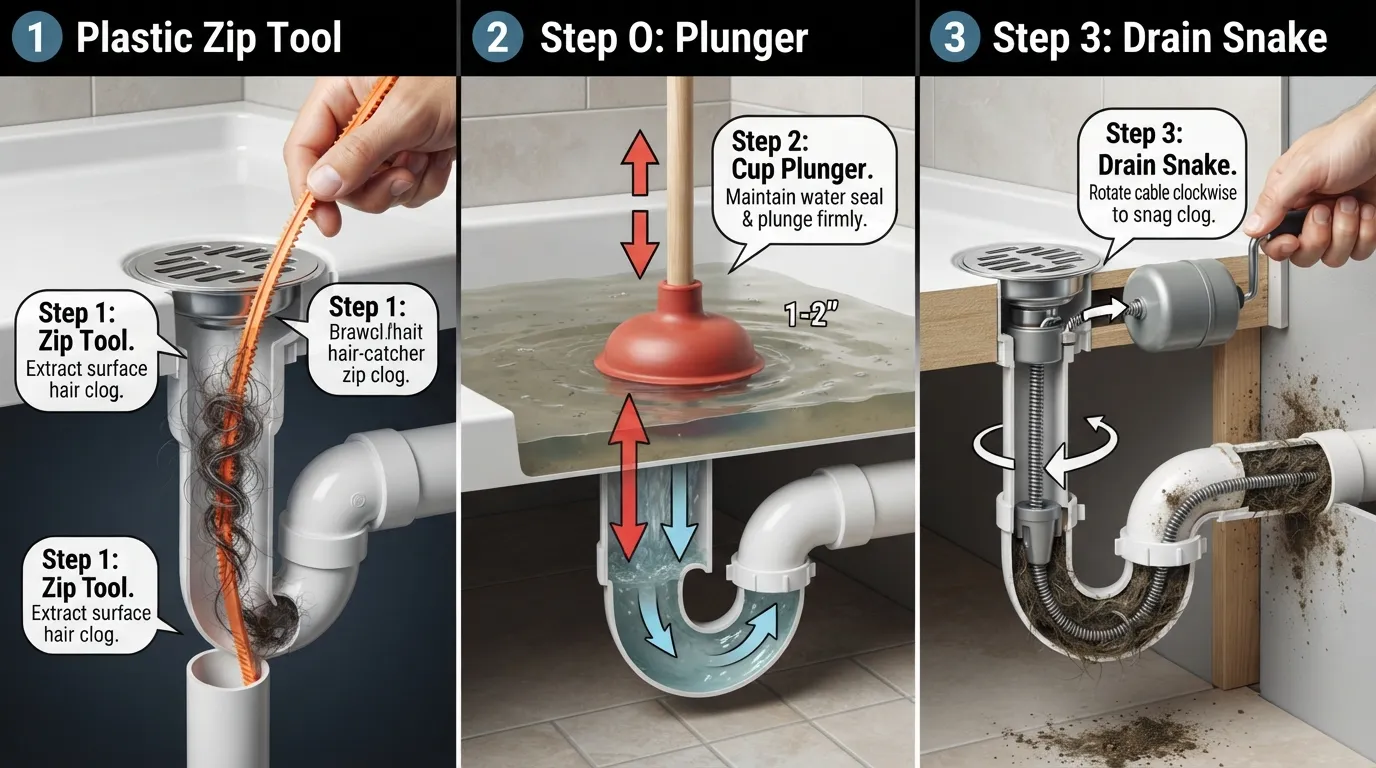
The fastest way to clear a clogged shower drain is to manually extract the hair clump near the drain opening using a plastic drain snake or zip tie, followed by targeted plunging. Mechanical extraction removes physical blockages immediately without relying on chemical reactions, clearing standing water in under five minutes.
The 5-Minute Fix in 4 Steps
Remove the Drain Cover: Pry off the grate using a flathead screwdriver or lift simple snap-in covers directly by hand.
Clear Surface Debris: Pull out any visible hair clog or soap scum buildup settled directly beneath the drain plate.
Insert a Plastic Snake or Zip Tie: Feed a barbed plastic drain snake (or a notched zip tie) into the pipe, rotate it 360 degrees to catch hair fibers, and pull straight up.
Plunge with Standing Water: Fill the shower base with 1 to 2 inches of standing water to create a seal, cover the overflow plate with a damp rag, and plunge firmly 10 to 15 times.
Which Method to Try First
Slow Drain: Start with a plastic drain snake to hook shallow hair mats resting near the strainer.
Fully Blocked Drain: Use a cup plunger over standing water to force out deep-seated blockages through hydraulic pressure.
Recurring Clogs: Deploy a heavy-duty drum auger or consult a licensed plumber, as recurring blockages signal deep main line obstruction or pipe buildup.
What Usually Causes a Clogged Shower Drain
Shower drains clog when loose body hair entangles with sticky soap scum, body oils, and hard water minerals. Over time, these materials bind together inside the upper trap, forming a dense, water-resistant mat that restricts flow.
In standard residential inspections, the vast majority of shower blockages consist of a single thick, stringy mass of hair coated in white-grey soap residue located within the first 6 to 12 inches of the P-trap.
What You Need Before You Start
Having the correct tools on hand ensures you can clear a clogged shower drain quickly without causing accidental damage to your plumbing fixtures or pipe linings.
Tools Checklist
Cup Plunger: Creates a tight, flat hydraulic seal directly over flat shower drain openings. (Good substitute: A small sink plunger or hand-held bellows plunger).
Plastic Drain Snake: Flexible 20-inch barbed tool designed to hook and pull out shallow hair mats. (Good substitute: A long notched cable tie or zip tie).
Flathead Screwdriver: Unfastens screwed-down drain plates and strainers. (Good substitute: A butter knife or thin putty knife).
Rubber Gloves: Protects hands from bacteria, stagnant wastewater, and sharp debris. (Good substitute: Heavy-duty vinyl or nitrile gloves).
Bucket & Flashlight: The bucket catches dripping debris, while the flashlight illuminates deep blockages inside the dark P-trap.
Drum Auger (Optional): A heavy-duty steel cable reel used for clearing deep, stubborn main-line obstructions beyond 2 feet.
Wet/Dry Vacuum (Optional): Sucks out stubborn hair plugs and standing water when manual plunging fails.
Don’t Have a Snake? What You Can Use Instead
Notched Zip Tie: Cut diagonal slits into the edges of a long plastic zip tie using scissors or a utility knife to create artificial barbs. Insert it into the grate and rotate to hook hair.
Straightened Wire Hanger: Unravel a metal coat hanger and form a tiny 1/4-inch “J” hook at one end using pliers.
Caution: Wrap the tip of any wire hanger with a small strip of electrical tape before inserting it into the drain. Exposed metal edges can easily scratch decorative drain finishes, chip porcelain bases, or puncture flexible PVC piping underneath.
Cup Plunger vs. Flange Plunger for Showers
Cup Plunger (Best for Showers): Features a flat-bottomed rubber cup designed to lie completely flush against flat surfaces like shower trays and bathtub floors, forming a tight hydraulic seal.
Flange Plunger (Best for Toilets): Includes a fold-out rubber sleeve (flange) shaped to fit inside curved toilet bowl outlets; it will not lay flat against a shower floor, causing air and water to leak out around the edges.
| Feature | Cup Plunger | Flange Plunger |
|---|---|---|
| Design | Flat-edged rubber dome | Cup with an extended inner lip |
| Primary Surface | Flat surfaces (showers, sinks) | Curved bowls (toilets) |
| Shower Seal | Optimal (Airtight) | Poor (Leaks water/air) |
Method 1: Remove the Drain Cover and Pull Out Surface Hair
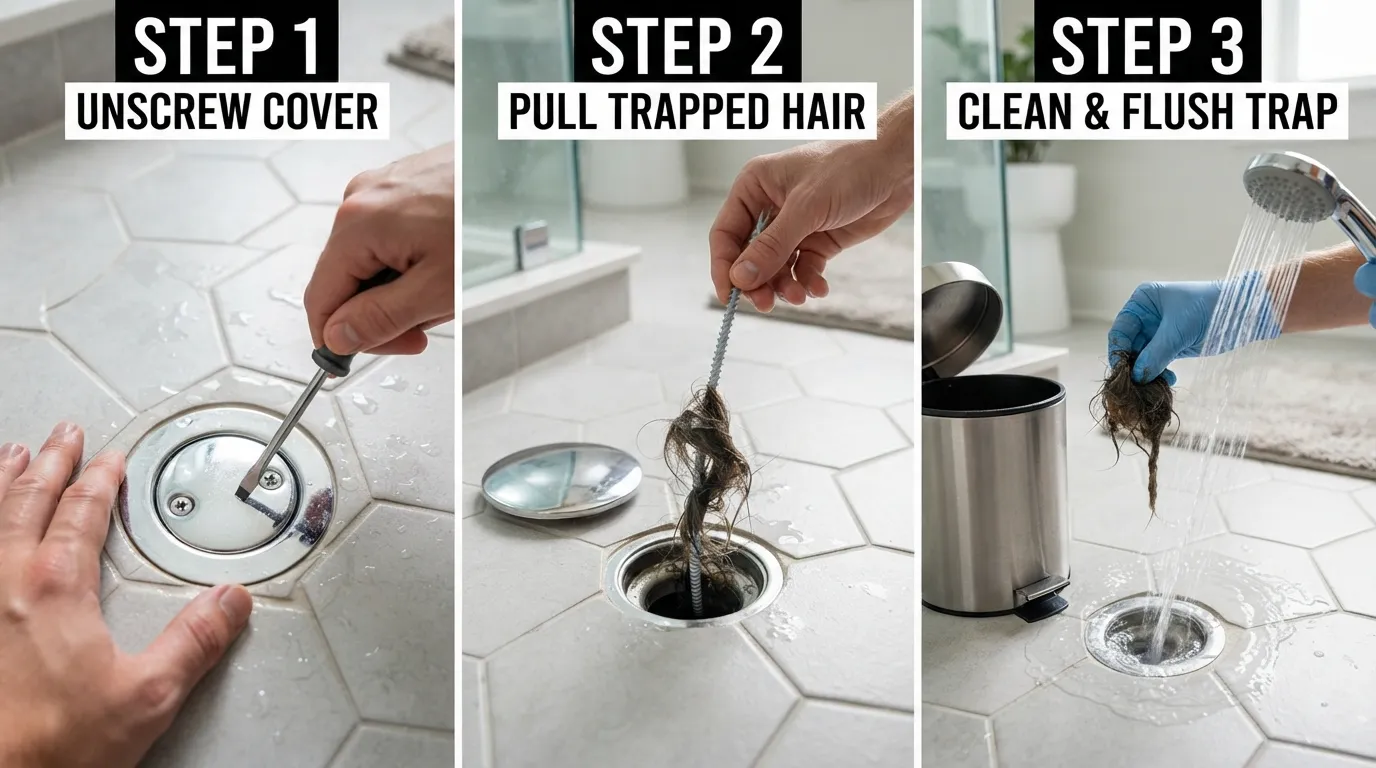
Removing the drain cover to extract visible surface hair solves over 80% of routine shower blockages. Because hair entangles near the top of the drain pipe, physical removal delivers immediate results without requiring heavy equipment or harsh chemical cleansers.
Step-by-Step: Remove the Cover and Clear Visible Debris
Put On Protective Gear: Wear thick rubber gloves to guard against sharp metal edges, stagnant wastewater, and bacteria.
Remove the Cover: Use a flathead screwdriver to unscrew mounting fasteners, or pry up snap-in drain grates around the perimeter.
Extract Surface Hair: Reach into the pipe opening with long needle-nose pliers or tweezers to grab the central hair clump.
Pull Firmly Vertical: Extract the hair mass in a slow, steady upward motion to prevent the clump from breaking apart and slipping deeper into the P-trap.
Wipe Down the Upper Pipe: Scrape away sticky soap scum clinging to the inner side walls using a damp rag.
How to Remove a Drain Cover That Won’t Come Off
Shower drain covers fall into two categories: screw-in grates held by dual screws, and pop-in/snap-in strainers held by friction clips.
Stuck Screw-In Covers: Spray rusted or mineral-crusted screws with a penetrating lubricant like WD-40, let it sit for 5 minutes, and use a firm-fitting flathead screwdriver while applying downward pressure to avoid stripping the screw head.
Stuck Snap-In Covers: Insert the tip of a flathead screwdriver or stiff putty knife into the thin seam between the grate edge and the shower base, then gently pry upward at multiple points around the circumference.
Field Tip: If a metal drain grate is frozen completely solid by hard water scale, place a rag soaked in hot vinegar directly over the screw heads for 10 minutes. The acetic acid softens the calcium deposits, allowing the screw thread to break free without stripping.
Clean the Cover and Rinse the Drain
Scrub the Grate: Submerge the drain cover in warm water and scrub away built-up soap scum, hair strands, and mold using an old toothbrush.
Flush with Hot Tap Water: Turn on the shower tap at full pressure for 30 seconds to flush away remaining micro-debris before reinstalling the cover.
Reattach Securely: Align the cover back over the drain opening and hand-tighten the screws to keep larger objects from dropping down the pipe.
Method 2: Clear the Clog With a Plastic Drain Snake or Zip Tie
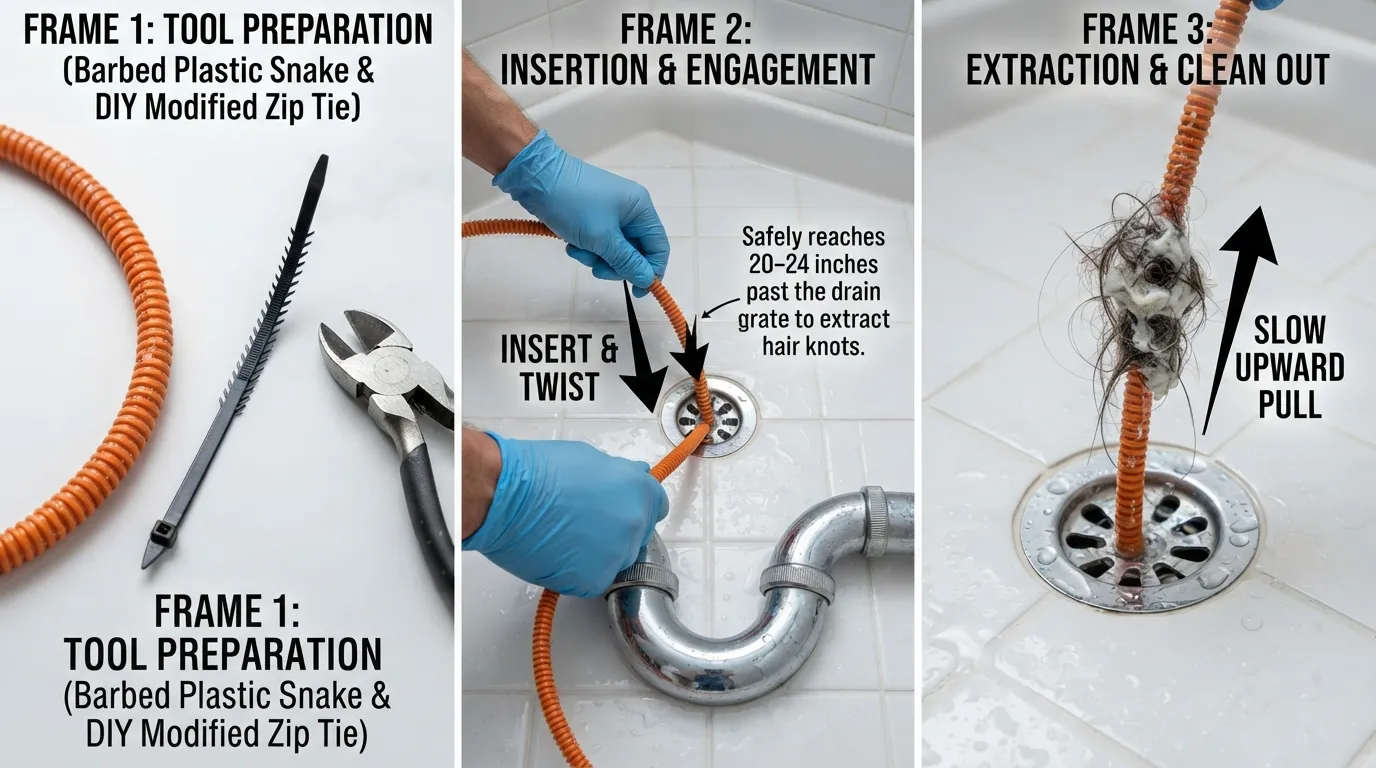
Using a flexible plastic drain snake or custom zip tie is the most effective mechanical technique for pulling deep-seated hair clogs out of a shower drain opening without removing plumbing traps. This method targets obstructions residing past the immediate drain strainer, catching entangled clumps securely on barbs.
How to Use a Plastic Drain Snake (Zip-It Style)
Insert the Tool: Feed the narrow end of the barbed plastic drain snake straight down into the open drain aperture.
Rotate and Engage: Push the flexible strip gently until it meets resistance in the P-trap, then rotate it 360 degrees twice to catch hair fibers on the plastic teeth.
Pull Straight Up: Withdraw the tool in a steady, vertical motion to bring the hair mass up through the drain opening.
Repeat and Clean: Clear captured debris off the barbs into a paper towel and repeat the insertion until the snake pulls out clean.
How to Make a DIY Snake With a Zip Tie
Select a Long Zip Tie: Choose a heavy-duty nylon cable tie measuring at least 12 to 18 inches in length for adequate reach.
Cut Diagonal Barbs: Use utility scissors or a sharp knife to snip small, upward-facing diagonal notches along both sides of the zip tie strip, creating flexible plastic barbs.
Safe Handling: Hold the smooth tail end securely while snaking the notched portion down the drain opening to prevent the makeshift tool from slipping entirely into the waste line.
Real-World Tip: What the Clog Looks Like When It Comes Out
When a plastic snake successfully clears a stubborn shower blockage, the extracted mass typically emerges as a dense, dark, cylindrical felt-like cylinder. It consists of tightly matted hair coated in a greyish-white layer of congealed soap scum and body oils, resembling a wet felt tube shaped precisely to the interior diameter of the P-trap.
Common Mistakes
Pushing Too Hard: Forcing a rigid or flimsy tool with excessive downward pressure can bend the plastic inside the pipe or wedge the clog tighter against bends in the P-trap.
Pulling at an Angle: Yanking the tool sideways against the metal drain rim can snap the plastic handle or strip the barbs off inside the pipe.
Breaking the Tool: Reusing brittle plastic snakes multiple times weakens the barbed teeth; discard and replace the tool immediately if any plastic segments show signs of stress cracking.
Method 3: How to Plunge a Shower Drain Correctly
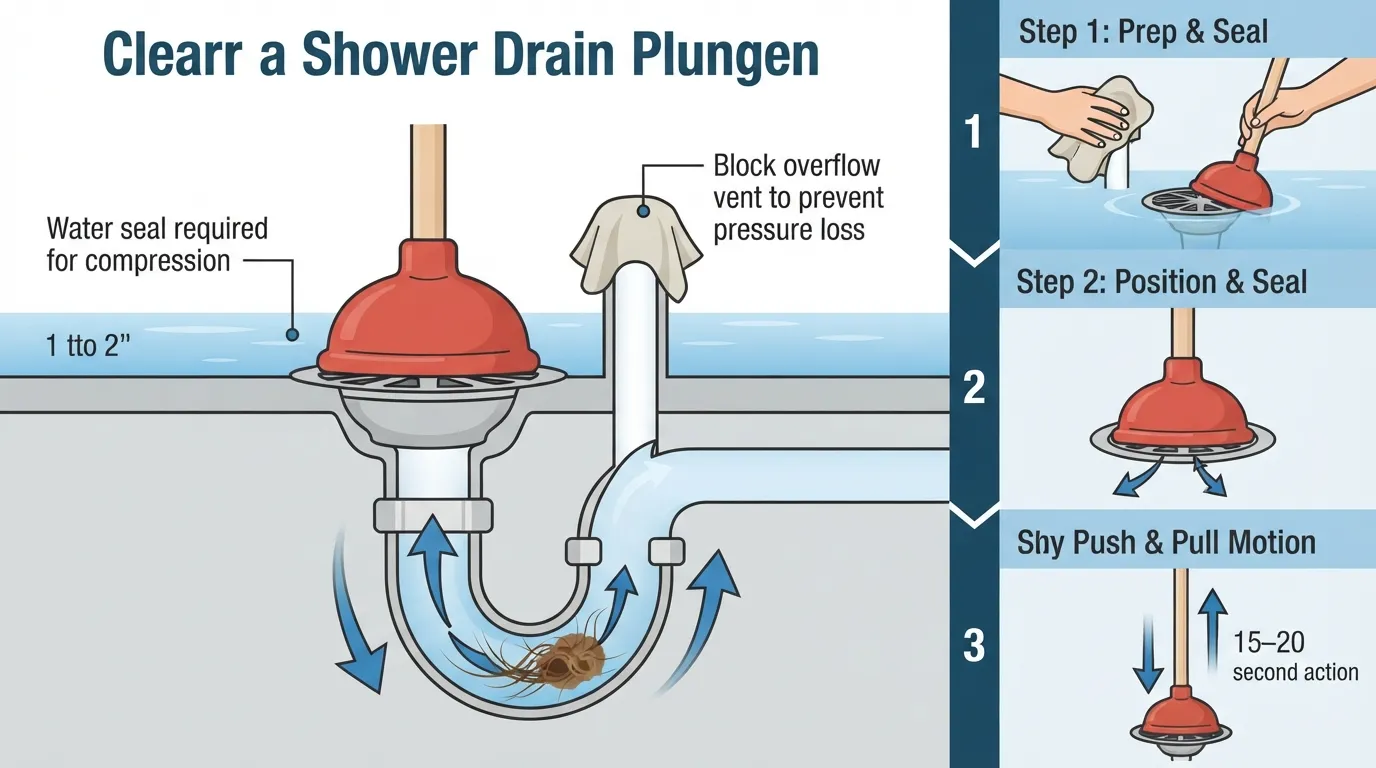
Yes, you can effectively unclog a shower drain using a cup plunger by creating adequate hydraulic pressure to dislodge and push through blockages. Plunging works best when the obstruction is soft organic matter or a hair clump located within the immediate trap rather than a rigid, calcified buildup.
Can You Use a Plunger on a Shower Drain?
Using a plunger on a flat shower floor requires an airtight seal to generate the necessary suction and pressure differential. Unlike curved toilet bowls, flat shower bases let air escape easily around the edges unless you submerge the rubber cup completely in standing water.
Step-by-Step Plunging Technique
Fill with Water: Run enough warm water into the shower basin until 1 to 2 inches of liquid covers the rubber rim of the cup plunger.
Block the Overflow (If Applicable): Seal off any adjacent overflow drain or tub spout opening using a damp, rolled-up rag to prevent air from escaping.
Establish an Airtight Seal: Center the flat rubber cup directly over the shower drain aperture, ensuring the entire rim makes contact with the flat floor surface.
Execute Push-Pull Rhythms: Push down firmly to collapse the cup, then pull straight up abruptly to create suction without breaking the bottom seal.
Repeat Rounds: Perform 10 to 15 vigorous push-pull strokes, lift the plunger, and check if the standing water drains rapidly. Repeat for 2 to 3 rounds if necessary.
Why Your Plunger Isn’t Working
Poor Suction Seal: The rubber cup is sitting unevenly over a textured grout line or raised drain frame, allowing air to leak and kill the pressure differential.
Insufficient Water Depth: Failing to submerge the rubber rim means the plunger is pushing air instead of water, which lacks the hydraulic force needed to move heavy clogs.
The Clog Is Too Dense or Deep: The blockage consists of compacted mineral scale, construction debris, or a rigid foreign object wedged too far down the waste line for surface pressure to reach.
Method 4: Use a Drum Auger Plumber’s Snake for Deeper Clogs
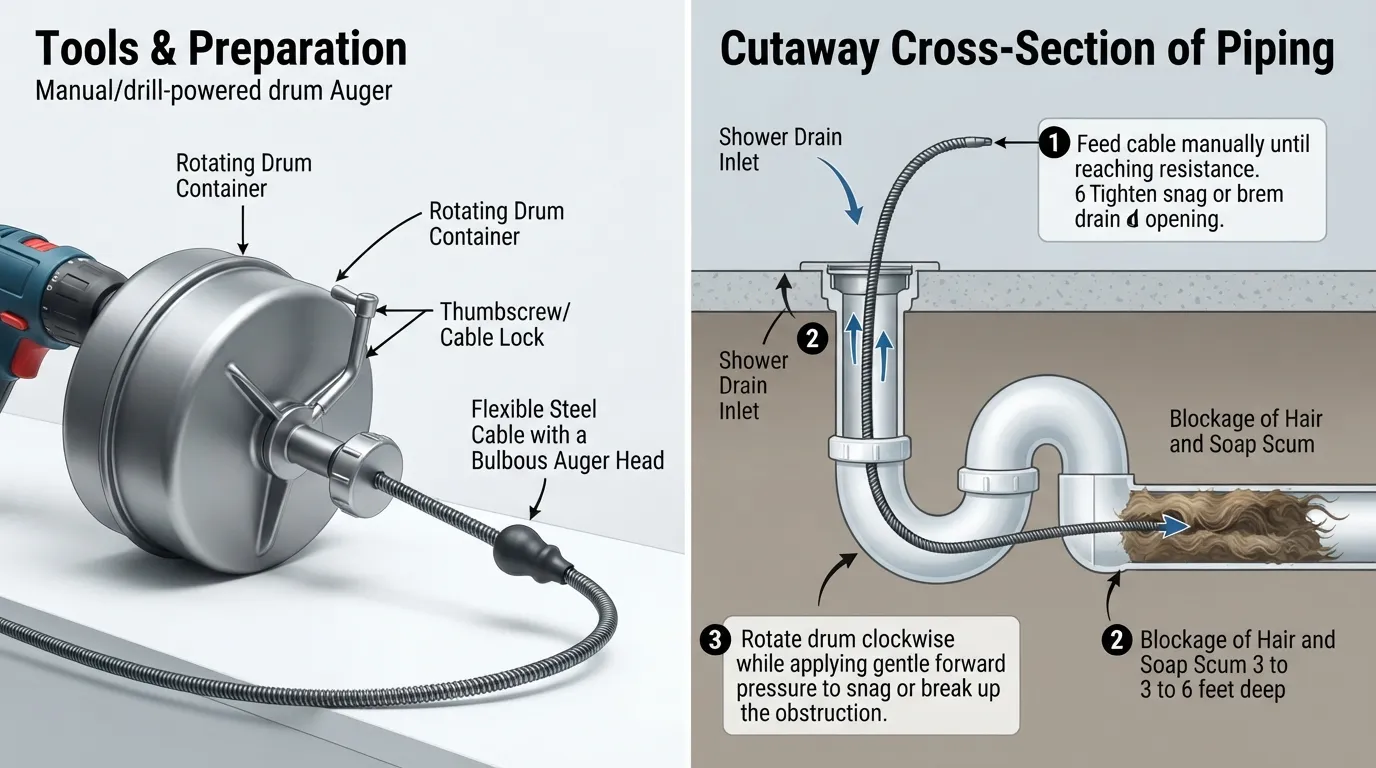
When standard plastic drain snakes and plungers fail to reach or clear an obstruction, a hand-crank drum auger provides the extended mechanical reach needed to break apart deep-seated blockages. This tool utilizes a flexible steel cable housed inside a storage drum to navigate pipe bends and bore through stubborn clogs.
When a Drum Auger Is the Right Tool
A drum auger is required when water backs up repeatedly despite surface hair removal, indicating a dense obstruction located past the immediate P-trap or further down the branch drain line. If a 20-inch plastic zip strip comes back clean yet the shower still floods, the blockage is lodged beyond standard manual reach.
Step-by-Step: How to Use a Drum Auger
Feed the Cable: Pull 6 to 8 inches of steel cable out of the drum and guide the auger head gently into the shower drain opening.
Tighten the Thumb Screw: Lock the cable securely in place using the housing thumb screw so the wire won’t slip back into the canister while cranking.
Crank Clockwise: Rotate the hand crank in a clockwise direction while applying steady, gentle forward pressure to let the auger bit bore through the clog.
Retract Slowly: Loosen the thumb screw, pull back a section of cable, wipe away grease and debris with a disposable towel, and repeat until the line feeds smoothly.
Protecting Your Pipes
Avoid Excessive Force: Forcing the steel cable too aggressively against solid pipe elbows can puncture PVC lines or crack older metal fittings.
Release When Stuck: If the cable stops advancing and begins to twist or bind up, stop cranking immediately and turn the handle counter-clockwise while pulling back to disengage the tip.
Seek Professional Support: If the cable won’t pass the blockage, a professional drain cleaning service can use heavier equipment to clear the line safely.
Method 5: Natural and Chemical Drain Cleaners: What Works and What Doesn’t
Choosing the right drain cleaner depends on the severity of the blockage, pipe material, and safety considerations. While natural mixtures offer a safe option for light buildup, heavy hair clogs often require targeted enzyme solutions or mechanical removal rather than harsh chemical applications.
Baking Soda and Vinegar: How to Use It and Its Limits
Combining baking soda and white vinegar creates an effervescent chemical reaction that loosens organic residue, light grease, and minor soap scum. However, this fizzing action lacks the corrosive power to dissolve thick hair mats or solid debris lodged deep inside a trap.
To treat minor slow drains effectively:
Pour 1/2 cup of baking soda directly down the drain opening.
Follow immediately with 1 cup of white vinegar.
Cover the drain plug with a damp cloth to force the bubbling action down into the trap.
Let the mixture sit for 15 to 30 minutes.
Flush the line thoroughly with 2 to 3 gallons of hot tap water.
Best Used For: Weekly maintenance, deodorizing garbage disposals or shower drains, and breaking up fresh soap scum.
Limitations: Will not melt hair, dissolve mineral scale, or clear complete blockages.
Does Boiling Water Unclog a Shower Drain?
Boiling water can melt thin layers of body fat and soap buildup inside metal piping, but it should never be poured directly into standard PVC drain lines. Temperatures reaching 212°F (100°C) exceed the thermal safety rating of schedule 40 PVC joints, which can soften, distort, or cause glue failure.
If your home utilizes modern plastic plumbing, use hot tap water (around 120°F to 140°F) instead of boiling water to flush out loosened debris safely.
Is Salt, Vinegar, and Baking Soda Overnight Safe?
Leaving a mixture of salt, baking soda, and vinegar in your drain overnight is generally safe for modern plumbing materials, but it offers diminishing returns. Salt acts as a mild abrasive to scrub pipe walls when flushed, but the active acid-base reaction between vinegar and baking soda finishes within 10 to 15 minutes.
Prolonged exposure over 8 hours does not increase hair-dissolving power. If left in metal pipes with pre-existing corrosion, prolonged acidic exposure can slightly accelerate degradation over time. Flushing with hot water after 30 minutes provides the same benefit without risks.
What Dissolves Hair in a Shower Drain?
Hair is composed of keratin, a tough structural protein resistant to standard household natural solutions. Clearing hair blockages requires either biological enzyme breakdown or chemical hydrolysis.
Enzyme Cleaners: Utilize specialized bacterial cultures that digest organic matter and hair over 8 to 24 hours. They are 100% pipe-safe, non-toxic, and ideal for septic systems, though they act slowly.
Caustic Cleaners: Rely on sodium hydroxide (lye) or potassium hydroxide to break down keratin bonds rapidly. While effective as a fast-acting hair dissolver, caustic formulas generate intense heat that can damage old or thin-walled pipes over time.
Chemical Drain Cleaners Compared: Drano, Zep, Green Gobbler
Commercially available drain treatments differ significantly in chemical formulation, pipe safety, and overall effectiveness. The table below outlines how popular brands perform across key performance factors.
| Brand / Product | Product Type | Works On | Pipe Risks | Best For |
| Drano Max Gel | Caustic (Sodium Hydroxide & Bleach) | Soap scum, organic sludge, hair mats | High heat generation; can melt thin PVC or damage old metal if standing | Fast emergency relief in standard brass/cast PVC lines |
| Zep Crystal Heat | Lye-Based Heat Generator | Severe hair clogs, heavy grease | High risk; can warp plastic pipes if poured incorrectly without cold water | Heavy-duty hair removal in durable plumbing systems |
| Green Gobbler | Biodegradable Monosodium Sulfate / Enzyme | Hair, organic matter, paper, soap scum | None; non-corrosive and safe for all pipes and septics | Safe overnight hair dissolving without harsh chemical fumes |
What Do Plumbers Use Instead of Drano?
Licensed plumbers consistently avoid liquid chemical drain openers due to their potential to damage plumbing hardware, ruin finish coatings, and create severe hazards during manual clearing. When a chemical cleaner fails to clear a pipe, the trap remains filled with toxic, corrosive liquid that can burn a technician during disassembly.
Instead of chemicals, professional plumbers rely on mechanical methods:
Manual Drain Augers (Snakes): Flexible steel cables that physically hook, break up, and retrieve hair clumps without chemical exposure.
Motorized Drain Cables: Electric augers capable of clearing heavy blockages deep within the main branch line.
Hydro-Jetting: High-pressure water stream systems that blast grease and buildup off interior pipe walls, restoring original flow capacity.
Safety Rules for Drain Cleaners
Improper handling of commercial drain chemicals presents severe burn, toxic gas, and eye damage risks. Adhere strictly to these safety precautions when using strong cleaning agents:
Never Mix Chemicals: Combining acid-based cleaners (sulfuric acid) with chlorine bleach or caustic lye creates toxic chloramine gas, which can cause fatal respiratory distress.
Wear Personal Protective Equipment: Always wear thick nitrile gloves and splash-resistant eye protection before opening chemical containers.
Maintain Maximum Ventilation: Open bathroom windows and run exhaust fans to clear chemical fumes during application.
Do Not Plunge After Pouring: Plunging a line filled with caustic or acidic liquids risks splashing dangerous chemicals directly onto skin, eyes, or bathroom fixtures.
Read Safety Guidelines: Review the official chemical exposure and safety protocols provided by Poison Control Chemical Safety before attempting to clear drains with hazardous materials.
Why Your Shower Drain Is Still Clogged: Troubleshooting
When DIY remedies fail to clear a stubborn clog, the issue usually stems from mechanical limitations, incorrect tool selection, or underlying plumbing ventilation faults. Identifying the root cause ensures you apply the correct remedy without damaging your fixtures.
Why Isn’t My Drain Snake Working?
A manual drain snake often fails when the cable is too short to reach a deep obstruction, or when it coils up inside the P-trap instead of advancing down the line. Using a standard hand-crank snake on an angled sanitary tee can also cause the tip to miss the main vertical stack entirely.
Insufficient Length: Basic 3-foot plastic zip tools only clear surface debris and cannot reach blockages lodged further down the branch line.
Coiling Effect: Pushing too fast without rotating the cable causes the metal spring to loop inside wider pipe sections rather than engaging the clog.
Vent Obstructions: If a snake passes completely through a clean pipe without hitting resistance, the slow drainage is likely caused by a blocked roof vent rather than a physical clog.
Shower Drain Clogged With Standing Water
Dealing with a basin full of standing water requires careful water extraction before attempting physical repairs or chemical treatments. Pouring liquid drain openers directly into a flooded tub dilutes the formula and creates a major splash hazard.
Removal Technique: Use a disposable cup, a wet/dry vacuum, or a manual hand pump to transfer standing water into a bucket before working on the drain.
Initial Inspection: Once the water is cleared, check if the drain stopper mechanism or hair-catching grid is trapping the bulk of the organic waste.
How to Unclog a Shower Drain Without a Vent (or With a Venting Issue)
Plumbing vent stacks allow air to enter the drainage system, maintaining neutral atmospheric pressure so water flows smoothly. When a vent is clogged by leaves, bird nests, or scale, it creates a vacuum effect that stalls water movement.
Key Symptoms: Watch for bubbling water, a distinct gurgling sound in the toilet or sink when the shower runs, and sluggish drainage across multiple fixtures simultaneously.
Diagnostic Check: If clearing the trap and running an auger yields no blockages, inspect the plumbing vent termination point on your roof for external obstructions.
Fixes That Make Things Worse
Applying aggressive fixes out of frustration can turn a minor slow drain into an expensive plumbing emergency. Avoid these common counterproductive mistakes:
Overusing Chemical Cleaners: Pouring multiple rounds of caustic chemicals into standing water produces excessive heat that can warp PVC pipes or melt rubber slip-joint washers.
Forcing Rigid Tools: Jamming thick metal augers into fragile or aged cast iron elbows can puncture pipe walls or dislodge slip-joints under the floor.
Ignoring Repeated Clogs: Treating the same slow drain weekly with quick fixes masks a deeper structural offset or root intrusion in your main sewer line.
How to Prevent a Clogged Shower Drain
Preventing future drain blockages requires a combination of physical strainers, regular flushing routines, and mindful habits. Implementing a proactive maintenance plan stops hair, organic oils, and soap scum from bonding inside your pipes before a full obstruction forms.
Use a Hair Catcher
Installing a dedicated hair catcher or drain strainer is the single most effective way to protect your plumbing system from recurring clogs. These devices intercept hair strands and surface debris before they can pass into the P-trap.
Silicone Mushroom Strainers: Sit inside the drain opening to collect hair around an internal cylinder out of sight, maintaining high water flow.
Stainless Steel Mesh Covers: Place directly over flat shower drains to catch fine hair and soap residue while offering easy surface cleanup.
Disposable Catchers: Peel-and-stick adhesive mesh covers designed for short-term use, ideal for rental properties or temporary stays.
A Simple Monthly Maintenance Routine
Establishing a regular preventative schedule keeps pipe walls clean and removes minor buildup before it restricts drainage.
Remove and Clean the Cover: Take off the shower drain grid once a month to manually pull out any trapped surface hair or debris.
Execute a Hot Water Flush: Run hot tap water down the line for 3 to 5 minutes to dissolve fresh soap scum and residual body wash.
Apply an Enzyme Cleaner: Pour a natural enzyme cleaner down the drain before bed once a month to digest organic buildup overnight without corroding your pipes.
Habits to Avoid
Certain everyday household practices contribute significantly to pipe restrictions over time. Avoiding these common habits protects your drainage system’s integrity:
Washing Heavy Pet Hair: Washing dense pet fur down the shower drain creates tight, fibrous mats that easily catch on internal pipe joints.
Flushing Heavy Body Butter or Oil: Excessive use of thick bath oils and body butter builds up a tacky layer along pipe walls that captures passing hair.
Over-Relying on Chemical Openers: Using harsh caustic drain cleaners as a routine preventative measure weakens metal connections, degrades PVC joints, and damages fixture finishes.
Frequently Asked Questions
What is the fastest way to unclog a shower drain?
The fastest way to unclog a shower drain is using a manual hair snake or zip tool. Inserting a plastic snake directly into the drain traps and extracts the surface hair knot in under two minutes, immediately restoring full water flow without waiting for chemical reactions.
Why isn’t my drain snake working to unclog my shower drain?
Your drain snake may fail if the cable is too short, coils inside a wide P-trap, or misses the clog by riding up a vent line. If the snake extends fully without resistance while water remains standing, the obstruction lies deeper in the main branch line.
Can I unclog a shower drain using a plunger?
Yes, a cup plunger can effectively clear minor standing water blockages. Ensure the cup completely seals the drain opening, cover any overflow vents with a wet rag to maintain suction, add enough water to submerge the rubber head, and plunge vigorously with rapid up-and-down motions.
What can I pour down my shower drain to make it drain faster?
To clear minor organic sludge and make a slow shower drain faster, pour $1/2$ cup of baking soda followed by $1$ cup of white vinegar down the pipe. Wait 30 minutes, then flush thoroughly with hot tap water to dissolve fresh soap scum and grease buildup.
What is the strongest drain unblocker for a shower?
Industrial-grade caustic cleaners containing high concentrations of sodium hydroxide or lye are the strongest chemical unblockers for hair mats. However, professional plumbers consider motorized drain augers and hydro-jetting systems superior, as mechanical removal clears severe blockages without melting PVC or corroding pipes.
What do plumbers use instead of Drano?
Plumbers use mechanical drain augers, hand snakes, or high-pressure hydro-jetters instead of Drano. Mechanical tools physically break apart and retrieve hair mats, completely restoring pipe capacity without creating chemical hazards, damaging pipe joints, or leaving dangerous corrosive liquids trapped inside the plumbing line.
What liquid do plumbers use to unclog drains?
Plumbers typically avoid harsh liquid chemicals, but when necessary, they use professional-grade commercial enzyme cleaners or concentrated sulfuric acid for severe organic clogs. Enzyme treatments safely digest hair and sludge over time, whereas acidic formulas require extreme caution due to intense heat generation and fume hazards.
Which is better, Zep or Green Gobbler?
Green Gobbler is better for safe, chemical-free maintenance, septic systems, and overnight hair breakdown without toxic fumes. Zep is better for fast-acting, heavy-duty emergency clearing, though its strong caustic formula carries a higher risk of damaging thin-walled pipes or hardware finishes if left standing.
Will pouring boiling water down a shower drain unclog it?
Boiling water can melt thin layers of soap scum in metal pipes, but you should never pour boiling water down PVC shower drains. Water reaching 212°F exceeds the thermal limit of schedule 40 PVC joints, risking pipe distortion or glue failure. Use hot tap water instead.
What will dissolve hair in a shower drain?
Sodium hydroxide (lye) and potassium hydroxide in caustic cleaners dissolve hair by breaking down its keratin proteins. For a safer, pipe-friendly alternative, natural enzyme cleaners utilize specialized bacteria to digest hair mats and organic matter over several hours without generating pipe-damaging heat or hazardous chemical fumes.
How can you unclog a shower drain without chemicals?
You can clear a shower drain without chemicals using a plastic zip tool, a manual drain snake, a wet/dry vacuum, or a standard cup plunger. These mechanical methods physically hook or dislodge hair and soap scum blockages without subjecting your plumbing hardware to harsh, corrosive reactions.
Can I use vinegar to unclog my shower drain?
Vinegar alone will not dissolve tough hair clogs, but paired with baking soda, it creates an effervescent reaction that loosens fresh soap scum and minor residue. For best results, pour $1/2$ cup of baking soda followed by $1$ cup of white vinegar, wait 30 minutes, and flush.
Conclusion and Next Steps
Restoring proper drainage to your shower is a straightforward process when approached systematically. By matching the right tool to the severity of the blockage, you can clear most obstructions safely without damaging your home’s plumbing system.
Start with Surface Hair Removal: Use a plastic zip tool or manual hand strainer to extract hair knots caught near the drain grate.
Try Gentle Mechanical Methods: Use a shallow cup plunger or a 25-foot hand-crank snake to dislodge blockages seated in or past the P-trap.
Avoid Caustic Shortcuts: Skip harsh chemical openers that can warp PVC pipes or generate toxic fumes, opting for safer enzyme cleaners or physical retrieval instead.
Know When to Escalate: If standing water remains or multiple fixtures gurgle, stop DIY efforts to prevent pipe damage or structural leaks.
Still Clogged? Get Help
If water continues to back up into your basin after running a snake, your plumbing system may be dealing with an main stack obstruction, a collapsed line, or severe root intrusion deep inside the main sewer line. Continuing to force tools or pour chemicals down a stubborn blockage can cause expensive pipe ruptures.
Protect your home and restore your system’s flow by reaching out to a licensed professional. Book a plumber today to inspect your main drainage line with advanced diagnostic cameras and clear tough clogs safely.
Main Services
Related Posts
Need a Plumber in Miami?
Schedule service online or speak directly with the EZ Plumbing team.
Owner-Led Local Service
Know who is behind the business before you request service. The owners, contact line and Miami service pages are published clearly.
- Named business owners
- Direct phone and social channels
- Local Miami service information
Clear Help Before You Book
Review the relevant service page, contact the team directly and use the booking page when you are ready—without relying on vague claims.
- Service-specific information
- Direct questions before scheduling
- Clear online booking route