
Why Is My Septic Tank Alarm Going Off? Causes, Quick Fixes and When to Call a Pro
Why Is My Septic Tank Alarm Going Off?
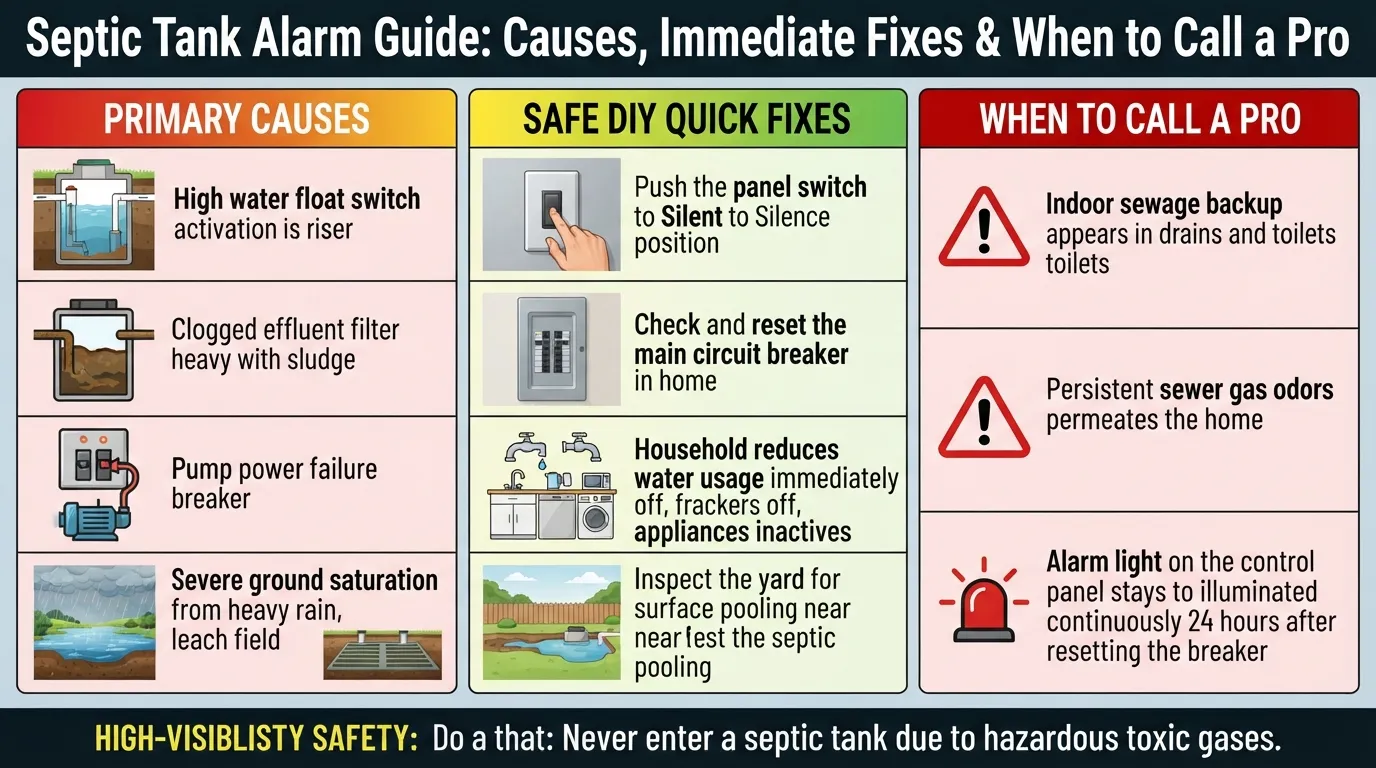
A septic tank alarm triggers when the water level inside the pump chamber exceeds its safe operating limit or when a critical system component fails. It serves as an early warning mechanism—signaling an issue with the effluent pump, float switch, control panel, or electrical circuit before a sewage backup occurs in your home.
What a Septic Alarm Is Actually Telling You
When your septic alarm sounds or its red light illuminates, it indicates that effluent in the pump tank has risen past its normal high-water threshold. This happens because the effluent pump is not evacuating water to the drain field, a float switch is malfunctioning, or an aerobic component like an aerator has lost power. The alarm alerts you to act before the tank overflows or backs up into domestic plumbing fixtures.
The 5 Most Common Causes at a Glance
Excessive Water Usage: Running multiple high-water appliances simultaneously (such as laundry, showers, and dishwashers) or heavy rainfall overloading the pump tank.
Pump Failure: Mechanical breakdown, age-related wear, or an electrical motor burnout preventing the pump from discharging liquid.
Stuck or Faulty Float Switch: A tethered or vertical float switch becoming tangled, weighted down by debris, or failing internally.
Electrical or Breaker Trip: A tripped circuit breaker in your main panel or a blown fuse inside the control panel cutting power to the system.
Flooded Drain Field: Saturated soil or severe rainwater runoff preventing the leach field from accepting discharged wastewater.
Is a Septic Alarm an Emergency?
A septic tank alarm requires immediate attention, but it is rarely an instant catastrophe if addressed promptly. Most septic pump tanks feature a emergency reserve capacity—typically 24 to 48 hours of normal household water storage above the high-water float.
It becomes a critical emergency if wastewater begins backing up through basement floor drains, toilets, or low-lying sinks, or if sewage is pooling on the ground above the pump tank or drain field.
Field Note from a Septic Technician: “Nine times out of ten, when I arrive at a home with an active septic alarm, the reserve space hasn’t completely filled yet. The single best thing a homeowner can do the moment that red light turns on is silence the alarm on the control panel and immediately stop all unnecessary water use—no laundry, no long showers, and no flushing unless necessary. That simple step buys us all the time we need to diagnose and fix the float or pump without dealing with a sewage spill inside the house.”
What to Do Right Now When Your Septic Alarm Sounds
When your septic tank alarm starts ringing, swift action prevents an interior backup while protecting your pump system. Following a structured triage checklist helps you safely manage the situation and minimize potential damage.
Step 1: Silence the Alarm (and Why That Does Not Fix the Problem)
Locate the external control panel and press or toggle the alarm silence button. This stops the audible noise so you can troubleshoot in peace, but it does not resolve the underlying issue. The red indicator light will remain lit until the water level in the pump chamber drops back to normal.
Step 2: Cut Back on Water Immediately
Drastically reduce household wastewater generation by stopping all heavy water-using activities. Postpone running the dishwasher and laundry machine, limit shower durations, and minimize toilet flushes. Reducing input gives the system breathing room if the pump is lagging behind demand.
Step 3: Check the Breaker and GFCI Outlet
Inspect your home’s main electrical breaker box and any exterior GFCI outlets associated with the septic system. If a breaker has tripped, you may attempt to reset it once. Never repeatedly flip a breaker that continues to trip, as this indicates a short circuit, wiring fault, or a locked-up pump motor that can cause an electrical fire.
Step 4: Wait and Monitor
Give the system an 8-to-15-hour window to catch up, provided you have halted all major water consumption. In many cases, a minor surge from heavy laundry days or a temporary float snag resolves itself as the pump clears the excess volume.
For a visual walkthrough of these initial troubleshooting steps, you can watch the video guide What to do when your septic alarm goes off.
What NOT to Do
Do Not Open the Tank Lid: Tampering with heavy access lids exposes you to toxic gases and structural fall hazards.
Do Not Pour Chemicals In: Adding commercial quick-fix chemicals or unapproved additives can damage beneficial tank bacteria and ruin your drain field.
Do Not Ignore a Persistent Light: Even if the alarm is silenced, a light that stays on means the problem is active and requires professional diagnosis.
Safety Box: Sewage Gases and Septic Tanks Septic tanks emit toxic, flammable gases like hydrogen sulfide and methane. Always keep children and pets away from the tank area, never remove access risers or lids yourself, and under no circumstances should anyone ever lean over or enter a septic tank chamber.
Which Type of Septic Alarm Do You Have?
Understanding the specific type of septic system installed on your property is crucial for effective troubleshooting. Different system configurations trigger alarms for distinct reasons, ranging from mechanical pump failures to air supply disruptions.
Pump Tank (Effluent Pump) High-Water Alarm
A pump tank high-water alarm activates when wastewater in the dosing chamber exceeds its normal operating level. This setup relies on an effluent pump and float switches to move liquid effluent out to the drain field. An alarm here indicates that liquid is entering the chamber faster than the pump can remove it, or that the pump itself has stopped functioning entirely.
Aerobic Treatment Unit (ATU) Alarm: Aerator and Air Pump Failure
An Aerobic Treatment Unit (ATU) utilizes a continuous supply of oxygen to digest biological waste through beneficial aerobic bacteria. Systems featuring linear air pumps, such as HiBlow aerators, include dedicated air pressure sensors inside the control panel. An ATU alarm triggers not only during high-water events but also when the aerator fails, loses pressure, or suffers a torn diaphragm, putting bacterial health at risk.
Audible Alarm vs Red Warning Light: What Each One Means
Audible Alarm (Buzzer/Horn): Designed as an immediate acoustic notification to alert occupants indoors or nearby that the system requires urgent attention.
Red Warning Light (Beacon): Provides a continuous visual indicator that remains lit as long as the high-water condition or pressure fault persists, even after the sound is silenced.
Where to Find Your Alarm Panel
Your control panel is typically mounted in an easily accessible outdoor or utility location:
Exterior Wall of the House: Located near the main plumbing exit point or electrical service meter.
Garage or Utility Room: Wall-mounted inside for weather protection while remaining accessible.
Near the Tank Riser: Mounted on a dedicated post or stake directly adjacent to the septic tank or pump chamber.
Quick Comparison Table: Pump Tank vs ATU Alarms
| Alarm Trigger | Usual Cause | DIY Check | When to Call a Pro |
| Pump Tank High-Water | Failed effluent pump, stuck high-water float, excessive water use | Verify home circuit breaker, check for tripped GFCI, reduce water usage | Alarm stays on after 8–12 hours of restricted water use or breaker repeatedly trips |
| ATU Air Pressure Fault | Defective HiBlow aerator, clogged air filter, torn diaphragm, loose airline | Check aerator plug connection, inspect air filter for debris or clogs | Aerator is hot/humming without airflow, or air pump replacement is needed |
| ATU High-Water | Discharged pump failure, clogged filter, high hydraulic loading | Ensure power to control panel, inspect clear lines for surface blockages | Water levels rise near ground level, or effluent pump shows no activity |
Common Reasons a Septic Alarm Goes Off Symptom-to-Cause Guide
Pinpointing the root cause of an active septic alarm helps determine whether the issue is a temporary hydraulic overload or a mechanical failure requiring professional intervention. A structured symptom-to-cause approach quickly clarifies why the system is triggering.
High Water Usage in a Short Time
When a household experiences heavy water activity—such as hosting guests, running back-to-back laundry marathons, or taking consecutive long showers—the pump tank can fill faster than the effluent pump can clear it. However, the culprit is frequently hidden: a constantly running toilet repair or a subtle indoor plumbing leak can silently dump hundreds of gallons into the system daily, eventually triggering the high-water alarm. Scheduling professional leak detection helps catch these stealthy water drains before they overwhelm your tank.
Pump Failure or a Jammed Impeller
An effluent pump can stop working due to internal motor burnout, electrical switch failure, or a jammed impeller. If hair, wipes, or debris bypass the primary tank and lodge inside the pump housing, the impeller locks up, allowing the chamber water level to rise unchecked.
Stuck or Tangled Float Switch
Float switches are tethered or vertical mechanical sensors that tell the pump when to turn on and off. Over time, cords can tangle against the tank walls, heavy grease coatings can weigh down the plastic bulb, or debris can jam the pivot mechanism, preventing the switch from rising and activating the pump.
For a closer look at how float switches operate and why they get stuck, watch the video guide Septic alarm causes and float switch troubleshooting.
Electrical Problems
Electrical supply interruptions frequently trigger system alarms. A tripped main circuit breaker, a popped GFCI outdoor outlet, a disconnected control panel toggle, or a prolonged neighborhood power outage will stop the pump immediately while wastewater continues to flow into the chamber.
Clogged Effluent Filter or Blocked Discharge Line
Effluent filters trap suspended solids before liquid enters the pump chamber. When neglected, accumulated sludge and slime coat the filter mesh, blocking liquid flow. Similarly, a frozen, crushed, or tree-root-damaged discharge pipe prevents water from reaching the drain field. If you suspect blockages in your pipes, professional drain cleaning and filter maintenance are essential.
Aerator or Air Pump Failure (ATU Systems)
Aerobic Treatment Units rely on constant air injection to maintain active bacteria. When a linear air pump dies, the pressure switch inside the control panel trips, sounding an immediate alarm to warn you that the aeration process has failed.
Flooded Drain Field and High Groundwater
Heavy downpours, prolonged seasonal rain, or high local groundwater tables can saturate the soil surrounding your leach field. When the soil reaches total saturation, water cannot escape the discharge pipe, causing effluent to back up rapidly into the pump tank.
Symptom-to-Cause Quick Reference
Alarm active + Drains clear and flowing normally: Typically points to a stuck float switch, a tripped breaker, or a temporary water surge.
Alarm active + Slow house drains + Sewage odor: Strongly suggests a blocked main line, a clogged effluent filter, or a fully saturated drain field.
Alarm active + Aerator silent or humming hot: Indicates an Aerobic Treatment Unit (ATU) air pump failure or blown thermal overload.
What a Technician Checks First
When an experienced septic technician arrives on-site, they follow a systematic diagnostic sequence to find the root cause efficiently:
Control Panel Inspection: They check the circuit breakers, fuses, and internal wiring terminals for continuity and power delivery.
Chamber Water Level Assessment: They measure how high the liquid has risen relative to the pump-on and alarm float levels.
Float Switch Function Test: They manually lift the floats to verify if the pump activates or if the switch mechanism is stuck or electrically dead.
Effluent Pump & Filter Check: They test the pump current draw (amperage) to see if it is running, humming, or shorted, and inspect the effluent filter for heavy slime buildup.
Why Your Septic Alarm Goes Off at Night, After Rain, or After Pumping
Septic alarms often sound during specific events like heavy downpours, overnight hours, or shortly after maintenance. Specific environmental triggers and household habits account for these sudden, unexpected alarm activations.
Why Is My Septic Alarm Going Off at Night?
Nighttime alarms usually stem from automated household routines or delayed system responses. Late-night dishwasher cycles, late laundry loads, or running toilets continuously add volume when no other water is being monitored. Additionally, timer-based pump control panels are frequently set to discharge effluent during low-demand nighttime hours; if the pump fails to start on its designated cycle, the water level triggers the high-water float instead.
Should You Wait Until Morning?
If the alarm sounds late at night, silence the audio tone at the control panel, avoid running any water overnight, and inspect the circuit breaker. If no water is flowing in the home, you can safely wait until morning to investigate further or call a technician.
Septic Alarm Going Off After Heavy Rain
Heavy downpours, tropical storms, and seasonal rainy seasons saturate the soil surrounding the drain field, temporarily elevating local groundwater levels. When the soil becomes completely waterlogged, effluent discharged by the pump cannot absorb into the ground, causing liquid to back up through the discharge pipe into the pump chamber. In flood-prone regions or low-lying areas, storm surge and high water tables are the primary drivers of rain-induced septic alarms.
Septic Alarm Going Off After the Tank Was Pumped
An alarm immediately following a septic tank pumping usually points to disturbed internal components. During the pump-out process, hose movement or vacuum pressure can tilt, tangle, or unclip a float switch, trapping it in the “on” or “high-water” orientation. Additionally, if the pumping technician filled or flushed the tank without cycling the pump manually, the initial water level may sit briefly above the alarm float until the system resets.
Septic Alarm Going Off After a Power Outage or Hurricane
Power outages interrupt the electrical supply to your effluent pump while normal water usage inside the home often continues. Once main power is restored after a blackout or hurricane, the control panel powers back up and immediately detects an accumulated high water level, sounding the alarm. High winds and driving rain during severe weather can also flood outdoor control boxes, blowing panel fuses or tripping GFCI breakers.
Will a Septic Alarm Go Off on Its Own?
Yes, a septic alarm can turn off automatically if the cause was a temporary hydraulic overload. Once water usage halts, a working pump will slowly clear the excess chamber volume, allowing the high-water float to drop and turning off the red beacon. However, if the alarm turns off and on intermittently, it indicates an underlying problem—such as an aging pump motor, a sticking float switch, or a deteriorating drain field—that requires professional inspection before a full system breakdown occurs.
Can I Shower or Use Water While the Alarm Is On? How Long Do You Have?
When your septic alarm goes off, your system has reached a critical fill threshold. Continuing normal water use directly increases the risk of backing up raw sewage into your home’s drains and plumbing fixtures.
Can I Shower If My Septic Alarm Is Going Off?
No, you should not take a shower while your septic alarm is actively sounding or showing a red warning light. Showers send large volumes of continuous wastewater into the pump chamber, which is already at or near capacity. Adding dozens of gallons of water during an active alarm quickly exhausts any remaining reserve space and forces wastewater to back up into low-lying household drains, such as shower basins, bathtubs, and basement toilets.
How Long Do You Have After a Septic Alarm Goes Off?
Most standard residential pump tanks include a built-in reserve capacity above the high-water float, typically engineered to hold between 100 to 300 gallons—or roughly 24 hours of emergency reserve under strictly minimized water use.
However, your exact buffer time depends on three specific factors:
Remaining Reserve Volume: The physical size of the air gap between the alarm float level and the top inlet pipe of the tank.
Rate of Wastewater Inflow: How quickly household residents generate incoming water (e.g., running laundry vs. essential handwashing).
System Type: ATU systems or dual-chamber tanks may have smaller holding buffers than dedicated heavy-duty pump tanks.
Rather than relying on false precision, assume you have zero safe capacity for non-essential water activities until the water level drops or a technician resolves the underlying issue.
Water-Use Traffic Light Table
| Status | Activity | Operational Guidance |
| RED: Strictly Avoid | Running washing machine or dishwasher | Generates massive surges of water and lint/soap debris that worsen chamber overflows. |
| RED: Strictly Avoid | Taking showers or full baths | Adds high water volume directly into a full pump tank; high risk of bathtub backup. |
| YELLOW: Strongly Limit | Toilet flushes | Flush only when absolutely necessary; avoid multi-flushing or disposable wipes. |
| YELLOW: Strongly Limit | Handwashing and dish rinsing | Keep tap flow low and brief; do not leave water running while scrubbing. |
| GREEN: Fully Safe | Drinking water and basic food prep | Consuming tap water or filling drinking pitchers does not add water to your drainage system. |
Temporary Water-Saving Tips While You Wait for Service
Silence the Buzzer First: Turn off the audible alarm on your control panel so you can manage the situation without continuous noise disruption.
Collect Sink Water in Buckets: If you must rinse food or hands, collect the graywater in a small basin or bucket and discard it outdoors away from the drain field.
Inform Housemates and Guests: Ensure everyone in the house is aware of the restriction so no one accidentally starts a laundry cycle or bath.
Use Hand Sanitizer: Opt for alcohol-based hand sanitizer for light hand hygiene to avoid turning on faucets unnecessarily.
Warning Signs It’s More Serious Than Just an Alarm
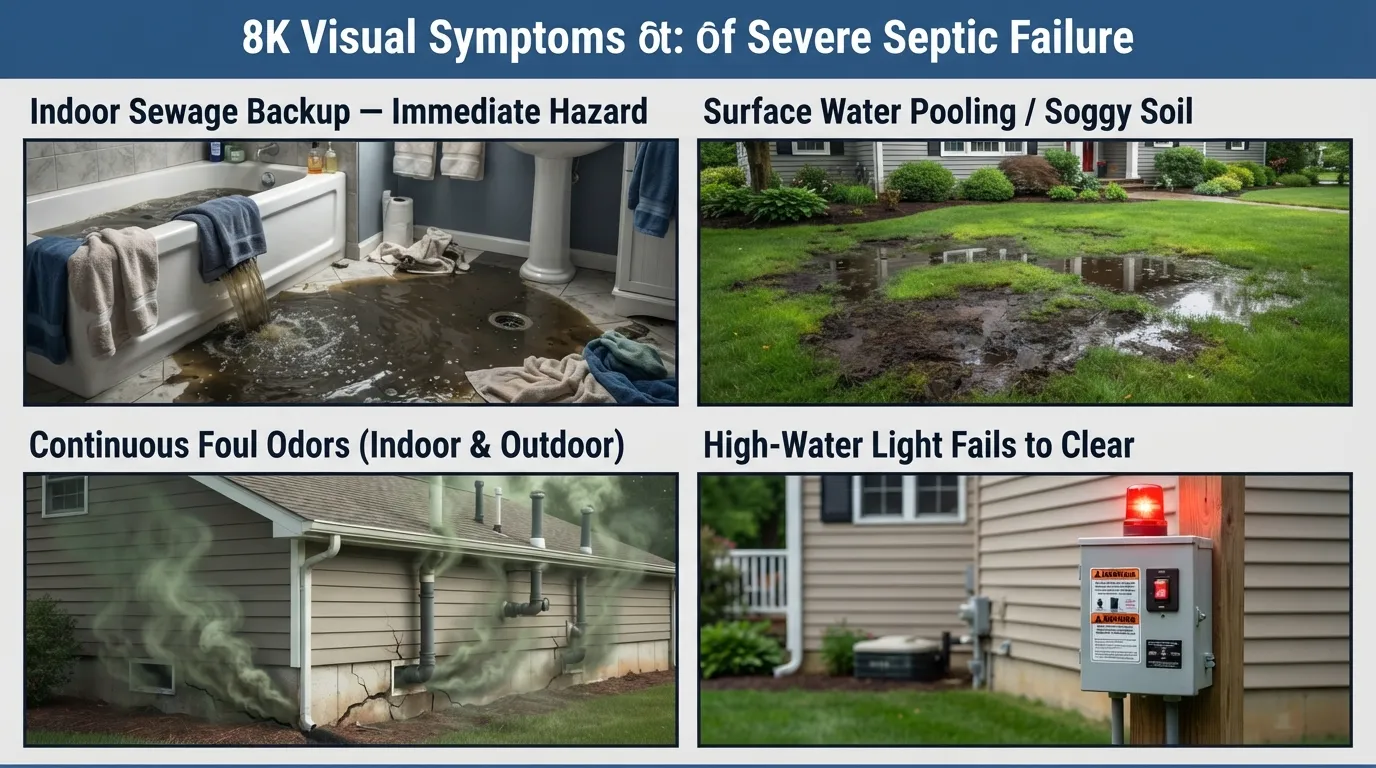
An illuminated red light or buzzing horn is an early warning, but certain secondary symptoms indicate that your system has moved past a simple electrical or pump hiccup into an immediate, severe failure. Recognizing these critical red flags helps you prevent catastrophic structural and environmental damage to your home.
Slow Drains and Gurgling Pipes
If sinks, showers, and toilets drain sluggishly or emit distinct gurgling sounds when water empties elsewhere in the house, the plumbing stack is struggling against trapped air and rising liquid pressure. This gurgling occurs when wastewater inside the main sewer line meets a severe blockage or an overfilled pump chamber, forcing displaced air bubbles back up through house traps.
Sewage Odor Inside or Outside the House
A persistent rotten-egg smell inside your home, near the control panel, or around the septic tank area signals the presence of hydrogen sulfide gas. Under normal operation, septic gases vent safely above the roofline. Strong odors mean gases are escaping from saturated soil, submerged tank vents, or dried-out indoor p-traps overwhelmed by system backpressure.
Wet, Soggy or Foul-Smelling Ground Near the Tank or Drain Field
Unusually green, spongy grass or standing pools of dark, foul-smelling liquid directly over the septic tank riser or leach field indicate an active surface overflow. When the drain field loses its absorption capacity or the pump tank overflows its risers, untreated effluent forces its way to the surface, creating severe environmental contamination in your yard.
Sewage Backing Up into Toilets, Tubs or Floor Drains
The ultimate indicator of total system failure is raw sewage backing up into lower-level fixtures, such as basement floor drains, showers, and toilets. Once wastewater begins entering living spaces, your reserve capacity is completely exhausted. If you encounter liquid or solid waste coming up through domestic drains, professional sewer line repair and immediate system evaluation are required to stop ongoing damage.
Why Sewage Exposure Is a Health Risk
Raw septic effluent contains dangerous biological hazards, including disease-causing pathogens, bacteria (such as E. coli and Salmonella), viruses, parasites, and toxic hydrogen sulfide gas. Direct contact with sewage backup or inhaling high concentrations of septic fumes poses severe health risks to humans and pets, leading to gastroenteritis, respiratory distress, and skin infections.
Emergency Checklist: Stop All Water Use and Call Now
If you observe any combination of sewage backups, gurgling drains, or standing surface water, treat the situation as an immediate plumbing crisis:
Halt All Water Activity: Turn off taps, halt all appliances, and instruct every occupant to refrain from flushing toilets or running sinks.
Evacuate Affected Areas: Keep children and pets entirely away from flooded basements, bathrooms, or soggy lawn areas.
Contact Emergency Service Immediately: Call an emergency plumber or licensed septic contractor to dispatch a technician and pump truck right away.
DIY Fix or Call a Professional? Who to Call When the Alarm Won’t Stop
Deciding whether to handle a septic system issue yourself or call a professional protects your safety and prevents costly equipment damage. Knowing your limits keeps minor glitches from turning into major failures.
What You Can Safely Check Yourself
Main Circuit Breakers: Verify that the breakers powering your septic pump and control panel have not tripped.
GFCI Outlets: Reset any tripped outdoor or garage GFCI outlets associated with the septic system.
Water Use History: Check whether heavy water usage, such as consecutive laundry loads, temporarily overloaded the system.
Control Panel Switch: Confirm the alarm toggle is securely set and not jammed in the manual test position.
What You Should Never Attempt
Opening Heavy Tank Lids: Removing access covers exposes you to structural collapse hazards and toxic gas concentrations.
Pulling the Pump or Floats: Handling electrical submersible pumps without proper safety gear and lifting equipment risks shock or injury.
Altering Control Panel Wiring: Attempting DIY electrical rewiring inside the control box can ruin components or void warranties.
When to Call a Professional
Persistent Alarms: The high-water or air pressure alarm fails to turn off after 8 to 12 hours of restricted water usage.
Recurring Alarms: The system triggers multiple times over a few days or weeks, pointing to a systemic fault.
Active Sewage Backups: Wastewater rises into household fixtures, or foul odors and soggy ground appear over the yard.
What to Tell the Technician
When you contact a certified septic technician, having specific details ready speeds up diagnosis:
System Type: Specify whether you have a standard pump tank or an aerobic treatment unit (ATU).
Alarm Characteristics: Note whether the alarm is an audible buzzer, a red light, or both.
Timeline of Events: State exactly when the alarm started and whether heavy rain or high usage preceded it.
Observed Symptoms: Mention slow drains, gurgling noises, or strange odors around the home.
What Happens During a Service Visit
A professional service call involves a methodical diagnostic sequence to isolate and resolve the underlying mechanical or electrical failure. Technicians test components, clean filters, and evaluate overall system performance.
To see what a professional technician looks for during a service call, watch the video guide Septic alarm service and inspection walkthrough.
If your septic alarm remains active and you need expert help to resolve the issue, you can book a plumbing visit online to have a licensed technician inspect and service your system.
How Much Does It Cost to Fix a Septic Alarm Problem?
Understanding the potential repair costs associated with a septic alarm helps you budget accurately and evaluate professional quotes. Total expenses depend on whether the issue involves a simple electrical reset, component replacement, or emergency pumping to resolve a tank backup.
Typical Cost Ranges by Problem
| Septic Issue / Repair Service | Estimated Cost (Parts & Labor) | Operational Scope |
| Call-Out Fee / Diagnostic Inspection | $100 – $300 | Initial service visit, digital inspection, and system troubleshooting (often credited toward approved repairs). |
| Breaker / Electrical Reset | $100 – $200 | Diagnostic check, clearing minor panel trips, or resetting exterior GFCI connections. |
| Float Switch Replacement | $150 – $350 | Replacing a tangled, weighted, or defective high-water or pump float switch. |
| Effluent Filter Cleaning / Service | $150 – $250 | Pulling, pressure washing, and reinstalling a clogged effluent filter assembly. |
| Standard Tank Pump-Out | $250 – $600 | Routine removal of accumulated sludge and scum layers from the pump chamber or primary tank. |
| Emergency Pump-Out / After-Hours Call | $375+ | Immediate dispatch service for active interior backups or weekend/holiday emergencies. |
| Effluent Pump Replacement | $600 – $1,500 | Removing a burned-out pump and installing a new heavy-duty submersible effluent pump. |
| ATU Aerator / Air Pump Repair or Replacement | $350 – $950 | Repairing or replacing a failed linear air pump, diaphragm kit, or pressure switch on an aerobic system. |
What Affects the Final Price
System Type: Aerobic Treatment Units (ATUs) and complex multi-stage pump systems feature specialized components that carry higher replacement costs than basic gravity-fed or single-pump systems.
Accessibility and Depth: Buried tank lids requiring manual excavation or specialized locating equipment add $200 to $300 in labor unless access risers are installed at surface level.
Component Quality and HP Rating: High-horsepower, continuous-duty stainless steel effluent pumps cost significantly more than standard thermoplastic units.
Time of Service: Requesting emergency service on weekends, late nights, or holidays typically incurs after-hours call-out fees or emergency surcharges.
Severity of Backup: If wastewater has escaped the tank and damaged surrounding lawn areas or required high-pressure line jetting, overall restoration expenses increase accordingly.
How to Avoid Repeat Repair Costs
Install Access Risers: Bringing buried tank lids to surface level eliminates future digging and locating fees during routine maintenance or emergency visits.
Schedule Regular Pumping: Pumping your septic tank every 3 to 5 years prevents solid sludge from washing into the pump chamber, protecting your pump and float switches from premature failure.
Maintain Effluent Filters: Inspecting and cleaning your effluent filter annually prevents hydraulic backups and protects your drain field from catastrophic clogging.
Practice Careful Water Usage: Spreading laundry loads across the week and repairing running toilets immediately keeps peak hydraulic loads well within your pump’s design capacity.
Septic Alarm vs. Sump or Sewage Pump Alarm: What’s the Difference?
Homeowners often confuse septic alarms with sump pump or sewage ejector alarms because all three use similar warning buzzers and float switch mechanisms. However, each system manages entirely different sources of water, carries unique health risks, and requires distinct corrective steps.
How a Septic Alarm Differs from a Sump Pump Alarm
A septic alarm monitors outdoor wastewater volume inside your effluent dosing chamber or aerobic treatment tank. When activated, it indicates that domestic wastewater leaving your home is not moving properly out to the soil drain field.
In contrast, a sump pump alarm monitors a pit in your basement or crawl space designed exclusively to collect ground surface runoff and rainwater intrusion. If a sump pit overflows, clear water threatens to flood your basement floor—a serious property risk, but free from raw human sewage or septic bacterial hazards. If your basement drainage pit overflows or fails during heavy storms, scheduling timely sump pump service protects your foundation from structural water damage.
What a Sewage Ejector Pump Alarm Means
A sewage ejector pump (or grinder pump) alarm signals a high-water condition inside a sealed interior pit that collects waste from lower-level fixtures, such as basement bathrooms, laundry sinks, or wet bars.
Because basement drains sit below the elevation of the main sewer exit pipe or outdoor septic tank, the ejector pump lifts solid and liquid waste upward to join the primary drainage stack. An alarm on a sewage ejector panel means wastewater is trapped in an indoor basin, creating an immediate risk of a raw sewage backup inside your lower level.
How to Tell Which Alarm You Are Hearing
Location of the Panel: Sump pump alarms are mounted on basement walls directly above an open or screened pit. Sewage ejector alarms feature a sealed basin lid with twin pipes in the basement. Septic alarms are mounted on an exterior house wall or post near the yard.
Control Panel Labels: Read the printed faceplate on the control box. Septic units display terms like “Pump Station,” “ATU,” or “High Water Alarm.” Sump units typically say “Sump Alarm” or “Basement Watchdog,” while sewage ejector panels feature labels like “Ejector Control” or “Sewage Pump Panel.”
Sound and Beacon: Septic panels use an exterior red flashing beacon combined with a high-pitched outdoor buzzer. Indoor sump and ejector alarms rely primarily on high-decibel interior buzzers or smart Wi-Fi push notifications.
To better understand how these systems differ in function and application, check out Sump Pump VS Sewage Ejector Pump: What’s the Difference?, which explains how each pump handles groundwater versus solid wastewater.
How to Prevent Septic Alarms: Maintenance and What Not to Flush
Proactive maintenance and strict waste management are your best defenses against sudden septic alarm triggers. Most high-water alarms result from preventable issues—such as clogged effluent filters, hydraulic overload from excess laundry, or flushing non-biodegradable items. By establishing a routine inspection schedule and managing household water usage, you protect your drain field from premature failure and avoid costly emergency pump-outs.
Pump-Out Schedule and Regular Inspections
Routine pumping removes accumulated solids before they carry over into the drain field or block pump switches. Average residential septic tanks require a professional pump-out every 3 to 5 years, depending on household size and total tank volume.
Annual Inspections: Have a licensed septic professional inspect mechanical components, scum levels, and sludge depth once a year.
Solids Accumulation: If sludge occupies more than one-third of the tank’s total liquid capacity, schedule an immediate pump-out regardless of time elapsed.
Record Keeping: Keep a detailed maintenance log recording every service date, pump-out, and component replacement to track system performance over time.
For detailed government standards on system maintenance schedules and health guidelines, consult the EPA septic system guidance.
Keep the Effluent Filter Clean
The effluent filter sits in the outlet tee of your septic tank, catching suspended solids before wastewater flows to the pump chamber or distribution box. A clogged filter restricts water outflow, causing tank levels to rise until the high-water alarm activates.
Locate the Filter: Open the outlet access riser on your septic tank.
Remove and Inspect: Carefully pull the filter cartridge straight up out of the baffle.
Clean Thoroughly: Spray the filter cartridge with a hose directly over the inlet side of the septic tank so all washed-off debris falls back into the tank.
Reinstall Correctly: Slide the filter back into the outlet tee until it seals securely.
Perform this maintenance routine every 6 to 12 months to ensure uninterrupted effluent flow and prevent high-water alarm triggers.
What Not to Put in a Septic Tank
Flushing unapproved materials destroys the natural bacterial ecosystem inside your tank and physically blocks pumps, floats, and pipes. Keep the following items out of your drainage system:
Grease and Cooking Oils: Coagulate inside pipes, form a thick scum layer, and seal off soil pores in the drain field.
Flushable Wipes and Paper Towels: Do not break down like toilet paper; they quickly bind together and jam solids handling pumps.
Harsh Chemical Drain Cleaners: Kill beneficial anaerobic and aerobic bacteria that break down organic waste solids.
Excess Bleach and Solvents: Disrupt biological digestion, leading to rapid sludge buildup and foul odors.
Feminine Hygiene Products and Latex: Non-biodegradable synthetic fibers wrap around pump impellers, causing motor overheating and panel trips.
Is Dawn Dish Soap Bad for Your Septic System?
Standard Dawn dish soap is safe for septic systems when used in normal, everyday household quantities. Its formula is biodegradable and does not harm biological waste treatment when properly diluted.
However, excess usage or concentrated disposal poses distinct operational risks:
Antibacterial Formulas: Avoid using antibacterial soaps in large volumes, as they actively kill the beneficial bacteria needed to break down solids.
Grease Emulsification: Excessive degreasing soaps suspend fats and oils in the liquid layer rather than allowing them to float into the scum layer, carrying grease directly into your drain field.
Best Practice: Use standard, non-antibacterial dish soaps sparingly, and scrape heavy grease into the trash before washing dishes.
How Many Loads of Laundry a Day Is Safe With a Septic System?
A standard washing machine uses between 20 to 40 gallons of water per load. Running multiple back-to-back loads in a single day creates hydraulic overload, surging hundreds of gallons of water through the tank faster than the drain field can absorb it.
To manage household laundry safely:
Limit Daily Loads: Strive for no more than 1 to 2 loads per day.
Spread Usage: Space laundry cycles across the entire week rather than doing all washing on a single day.
Upgrade Efficiency: Use high-efficiency (HE) washing machines and liquid detergents to reduce water volume and prevent powder detergent binder buildup.
Protecting Your System During Rainy Season and Hurricane Season
Severe rainfall and seasonal storms saturate the ground surrounding your septic tank and drain field. When groundwater rises above the tank outlets, water can back up into the system, raising float switches and sounding the alarm.
Divert Surface Runoff: Ensure roof gutters, downspouts, and landscape drainage direct stormwater away from the septic tank and drain field area.
Inspect Riser Seals: Check that access risers and lids have watertight rubber gaskets to stop surface water infiltration.
Reduce Household Water Use: Minimise water usage during torrential rains to reduce hydraulic load while soil absorption is compromised.
Do Not Pump Saturated Tanks: Never pump a septic tank during high groundwater conditions; doing so can cause the empty tank to float or shift out of the ground.
Test Your Alarm Panel Regularly
Testing your alarm panel ensures the audible buzzer and visual beacon function correctly before a real high-water event occurs. A quick monthly check verifies electrical integrity and battery backups.
Locate the Control Panel: Find the exterior control box mounted near your septic system or home foundation.
Flip to Test Mode: Locate the exterior toggle switch marked Test / Normal / Silence and push it to the Test position.
Verify Signals: Confirm that the red warning light illuminates brightly and the audible buzzer sounds clearly.
Reset to Normal: Return the toggle switch to the Normal operating position immediately after testing.
If the light or horn fails during a test, inspect the control panel circuit breaker or call a certified electrician to service the system float switch and wiring.
Septic Alarm FAQs
What should I do if my septic tank alarm goes off?
Silence the alarm using the toggle switch on your control panel to stop the audible buzzer, then immediately reduce all household water usage. Inspect the tank’s water level, check the circuit breaker, and verify whether your effluent pump or float switch has failed before contacting a licensed septic technician.
How do I silence my septic alarm?
Locate the exterior control box near your tank or home foundation and push the toggle switch from Normal to Silence. This deactivates the loud buzzer while keeping the red warning light illuminated, allowing you to troubleshoot safely without continuous noise while waiting for professional repairs.
Will a septic alarm go off on its own?
A septic alarm will only reset automatically once the water level inside the tank or pump chamber drops back below the high-water float threshold. If the alarm turns off without intervention, it usually indicates temporary peak water usage or a stuck float switch that freed itself.
Can I shower if my septic alarm is going off?
Avoid taking showers, running laundry, or operating the dishwasher while the alarm is active. Adding high water volume during an active high-water alarm accelerates system saturation, increasing the risk of raw sewage backing up into your home drains or overflowing into your yard.
How long do you have after a septic alarm goes off?
Most residential septic tanks provide a reserve capacity of roughly 24 to 48 hours under minimal water usage after an alarm triggers. Minimise water consumption immediately—avoid laundry, dishwashing, and long showers—to buy sufficient time for a technician to diagnose and repair the issue.
Why would my septic alarm come on after the tank was pumped out?
If your alarm activates shortly after a pump-out, the technician may have accidentally tipped or tangled the high-water float switch. Other common causes include an unplugged effluent pump, a tripped circuit breaker, or surface water rapidly filling an unsealed access riser during heavy rainfall.
Why is my septic alarm going off at night?
Septic alarms frequently sound at night due to delayed hydraulic load from evening showers, running dishwashers, and late laundry cycles accumulating in the tank. Additionally, nightly temperature drops can cause aging electrical components, faulty wiring, or worn float switches to trigger false electrical alarms.
Why is my septic alarm going off after heavy rain?
Torrential rainfall saturates the soil surrounding your drain field, raising groundwater levels and slowing effluent absorption. Surface runoff can also infiltrate unsealed riser lids or cracked septic tanks, overflowing the pump chamber and pushing high-water float switches past their activation threshold.
What is the worst thing you can put in a septic tank?
Non-biodegradable items like grease, flushable wipes, paper towels, and harsh chemicals are the most damaging inputs. Cooking grease seals drain field soil, wipes jam pump impellers, and harsh chemicals kill beneficial waste-digesting bacteria, leading to premature system failure and frequent high-water alarm triggers.
Can I flush paper towels into my septic tank?
Never flush paper towels into a septic system. Unlike toilet paper, paper towels are engineered with strong synthetic binders that resist dissolving in water, causing immediate blockages in tank baffles, binding effluent filters, and clogging solids-handling pumps until high-water alarms activate.
Who do I call when my septic alarm goes off?
Contact a licensed septic service contractor or certified wastewater technician immediately. If electrical failure or breaker trips are suspected, consult a qualified electrician. Avoid opening the septic tank yourself, as hazardous gases like hydrogen sulfide pose severe health and safety risks.
Need Help With a Septic Alarm or Backup? Next Steps
A sounding septic alarm or sluggish drainage indicates your wastewater system requires prompt attention to prevent backup into your home. Following immediate troubleshooting steps reduces risk while you arrange for professional service.
Quick Recap: 4 Things to Do Right Now
Silence the Alarm: Switch the control panel toggle to Silence so the audible horn stops while keeping the red warning light active.
Halt Water Usage: Stop running washing machines, dishwashers, showers, and unnecessary toilet flushes to avoid overflowing the tank.
Check the Breakers: Inspect your main electrical panel to see if the septic pump breaker tripped, and reset it once if necessary.
Inspect the Yard: Check the drain field and tank area for standing water, foul odors, or surface effluent pooling.
When It’s Urgent
Certain symptoms indicate high risk to your plumbing infrastructure and indoor living environment:
Indoor Sewage Backup: Wastewater surfacing in bathtubs, showers, or floor drains.
Persistent Odors: Strong sewer gas odors indoors or immediately surrounding your home’s foundation.
Uncleared High-Water Light: The red alarm beacon remains lit hours after completely stopping household water use.
If you observe any of these signs, request an emergency plumbing service immediately to address pump failures or blockages before structural damage occurs.
Book a Visit
If your alarm activated, your system requires inspection by a certified technician to verify pump health, float switch operation, and tank liquid levels.
To schedule an inspection or routine service, Book a visit to have a licensed septic specialist evaluate your system and restore reliable performance.
Main Services
Related Posts
Need a Plumber in Miami?
Schedule service online or speak directly with the EZ Plumbing team.
Owner-Led Local Service
Know who is behind the business before you request service. The owners, contact line and Miami service pages are published clearly.
- Named business owners
- Direct phone and social channels
- Local Miami service information
Clear Help Before You Book
Review the relevant service page, contact the team directly and use the booking page when you are ready—without relying on vague claims.
- Service-specific information
- Direct questions before scheduling
- Clear online booking route