Brown Friday: Why The Day After Thanksgiving Is So Busy For Plumbers
What Is Brown Friday?
Brown Friday Meaning in One Sentence
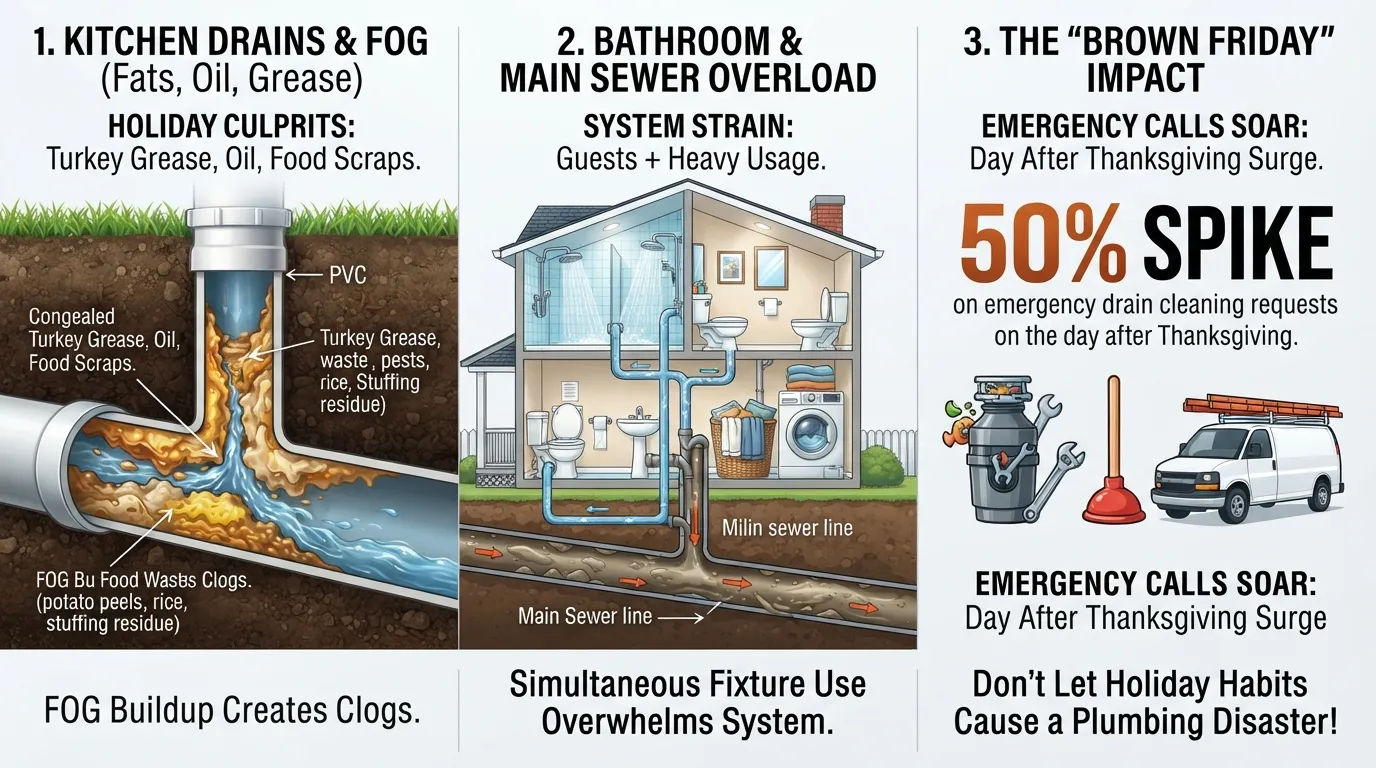
Brown Friday is the official moniker given by the plumbing industry to the day after Thanksgiving, which routinely stands as the busiest day of the year for drain cleaning and emergency plumbing repairs. This sharp nationwide surge in emergency service calls is primarily driven by kitchen sink disposals jammed with holiday cooking waste, clogged main lines, and overloaded bathroom facilities servicing houseguests.
How Big Is the Spike?
Plumbing service call volumes jump dramatically the moment Thanksgiving dinner concludes, creating an unprecedented strain on residential infrastructure across the nation.
50% Call Volume Surge: Residential plumbing contractors routinely experience a 50% increase in service calls on Brown Friday compared to a typical Friday.
Weekend Breakdown: Emergency call volume remains elevated throughout the entire holiday weekend, running roughly 21% higher than a standard Thursday-through-Sunday baseline according to Roto-Rooter data (2025).
Primary Drivers: Nearly 70% of these emergency callouts involve kitchen sink drain clears, garbage disposal repairs, or main sewer line back-ups.
Why “Brown” Friday?
The term “Brown Friday” is an industry play on “Black Friday”—the traditional retail shopping holiday. While retailers focus on high sales volume and shifting back “into the black,” plumbers brace for a different kind of volume. The tongue-in-cheek name references the heavy accumulation of organic waste, cooking grease, and fibrous food scraps hitting residential sewer lines simultaneously, transforming the day into a peak event for professional wastewater management and emergency drain clearing.
Where Did the Name “Brown Friday” Come From?
How the Plumbing Trade Coined the Term
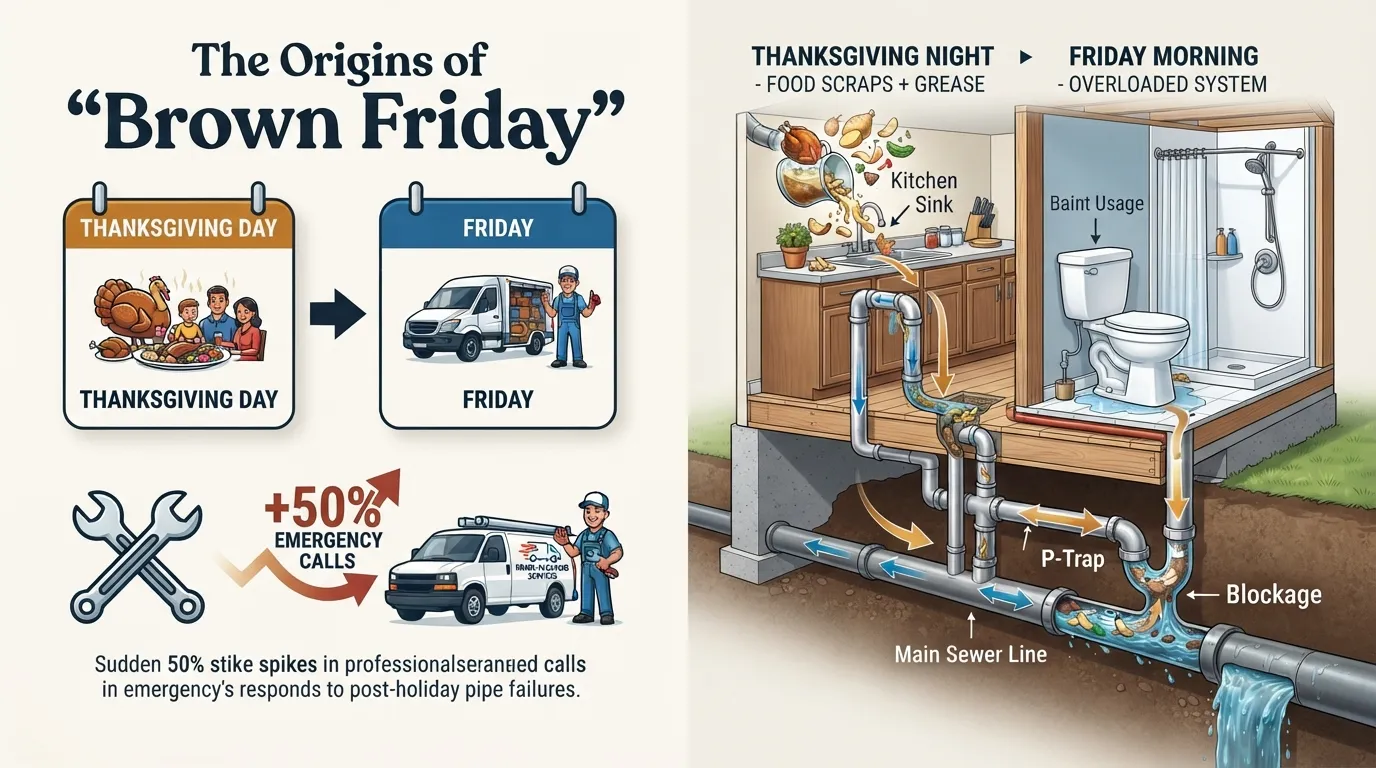
The term originated as internal plumbing industry slang created by field technicians to describe the intense spike in service requests occurring immediately after Thanksgiving. According to Brown Friday on Wikipedia, the phrase was coined directly by plumbers responding to a sudden nationwide wave of clogged kitchen drains and broken garbage disposals. Over time, trade organizations and national plumbing franchises formalized the expression to prepare their emergency dispatch crews for the holiday rush.
From Trade Slang to News Headline
What began as specialized trade jargon quickly spread into mainstream public consciousness through annual consumer awareness campaigns and viral social media attention.
Media Amplification: Major news outlets and local broadcasts routinely run “Brown Friday” warning segments leading up to Thanksgiving, highlighting common drain-clearing hazards.
Social Media & Memes: The humorous contrast between retail “Black Friday” and plumbing “Brown Friday” generated a distinct Brown Friday meme trend across platforms, featuring lighthearted trade humor about emergency sewer backups.
Consumer Education: Plumbing companies leverage the recognized term annually to educate homeowners on proper waste disposal, turning industry slang into an effective preventive maintenance message.
Why Thanksgiving Weekend Overloads Your Plumbing
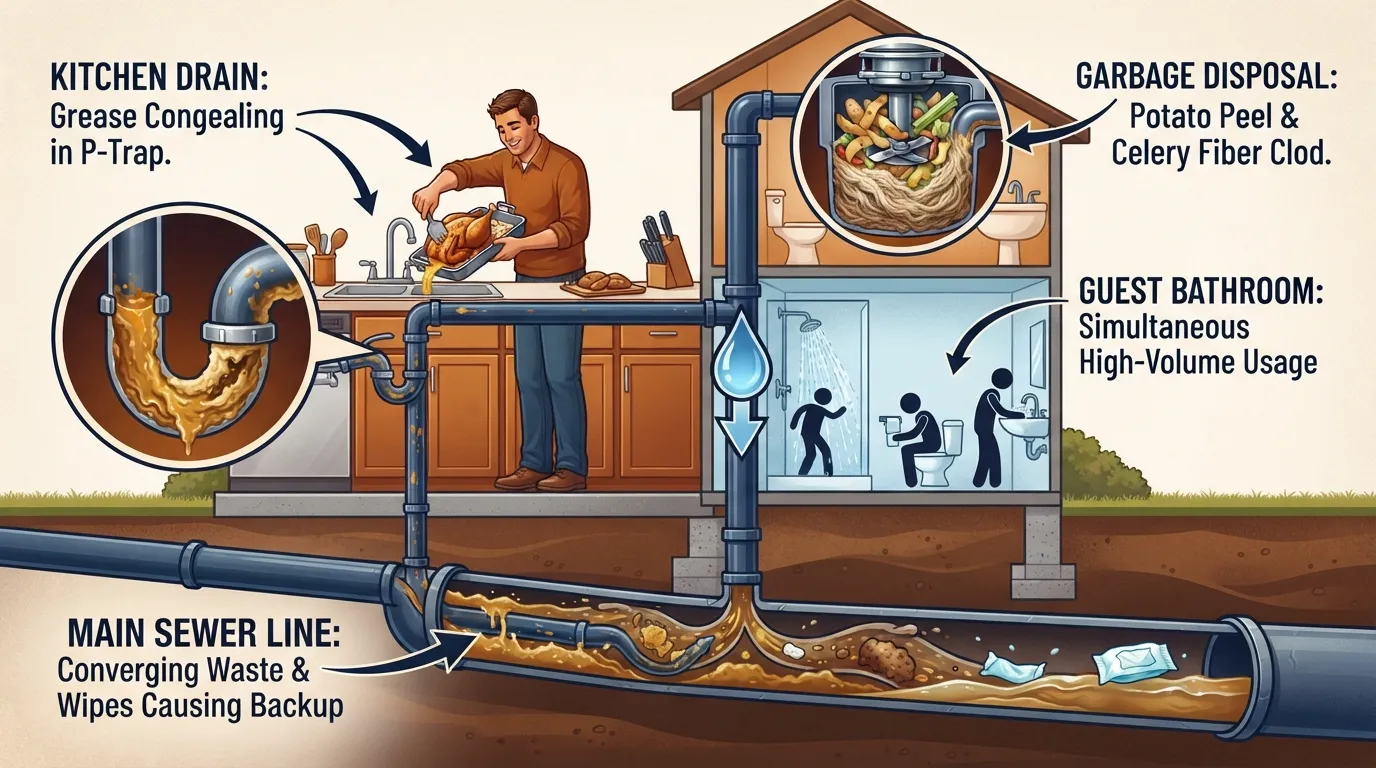
Plumbing systems experience their highest stress of the entire year during Thanksgiving weekend, driven by a combination of intense meal preparation, heavy kitchen disposal, and increased household occupancy. The simultaneous demand on kitchen drains, main sewer lines, and water heaters frequently exceeds standard residential drainage capacity, turning minor existing pipe restrictions into total system backups.
Marathon Cooking and Cleanup Put Extra Load on Kitchen Drains
Sustained cooking and continuous dishwashing put unprecedented volume demands on kitchen drainage networks over a short period. Continuous water flow combined with heavy food residue pushes residential drain lines to their operational limits.
Continuous Water Flow: Kitchen faucets run almost non-stop during food prep and dishwashing, filling drain branches faster than slow-moving or partially blocked lines can clear.
High-Volume Soap and Residue: Excessive dish soap mixes with suspended organic materials, forming a sticky scum along pipe walls that catches passing debris.
Compounded Drain Stress: Minor pre-existing build-ups that caused no issues during light daily use quickly become complete blockages under constant multi-hour usage.
Garbage Disposal Misuse Is the #1 Culprit
Garbage disposals are designed for light food rinsing, not for processing large volumes of dense, starchy, or fibrous cooking waste. Processing improper materials through the unit creates thick blockages that choke off the main kitchen branch line.
Starchy Waste Transformation: Potato peels, beans, rice, and pasta absorb water and break down into a thick, spackle-like paste that clings aggressively to pipe interior walls.
Fibrous Material Entanglement: Celery stalks, corn husks, pumpkin innards, and poultry skins feature tough fibers that wrap tightly around disposal impellers and catch inside P-traps.
Mechanical Jamming: Forcing bulk amounts of solids into the disposal unit at once stalls the motor, burns out the internal flywheel, or forces solid debris directly into the drain without proper shredding.
Turkey Grease Hardens Inside the Pipes
Pouring liquid fat, oil, and turkey drippings down the sink is the leading cause of severe kitchen line blockages during the holidays. Even when washed down with hot water, liquefied fats inevitably cool and solidify inside the cooler underground pipe network.
Fats, Oils, and Grease (FOG) Congealing: Hot turkey grease liquidizes easily in the pan, but rapidly cools as it travels through cold subterranean plumbing pipes.
Pipe Diameter Restriction: As congealed fat coats the inner circumference of the pipe, it creates a narrow funnel, drastically slowing drainage velocity.
Debris Trapping Matrix: The hardened grease acts like glue, trapping passing food scraps, coffee grounds, and paper particles until the line is completely sealed off.
More Guests Means More Showers, Laundry and Toilet Flushes
An influx of holiday visitors increases household water usage exponentially, putting severe stress on fresh water delivery systems, wastewater drainage lines, and water heaters.
Sewer Line Overload: Consecutive toilet flushes, back-to-back showers, and frequent laundry loads create an unrelenting volume of graywater and blackwater entering the overloaded sewer line.
Main Line Backups: Higher wastewater volume pushes existing tree root intrusions or pipe sagging points to complete failure, risking raw sewage backups in lower-level drains.
Water Heater Exhaustion: High peak demand drains tank-style water heaters faster than they can recover, straining heating elements and thermostatic controls. If back-to-back showers leave guests with cold water, a failing tank is often the cause: water heater services.
Wet Wipes and “Flushable” Products Clog Toilets
Increased bathroom usage during holiday gatherings frequently leads to non-flushable items entering the toilet drainage system. Even products marketed as “flushable” fail to disintegrate in the timeframe required to pass safely through residential waste pipes.
Non-Disintegrating Fibers: Unlike standard toilet paper, wet wipes, baby wipes, and personal hygiene products are reinforced with synthetic fibers that stay intact underwater.
Chokepoints in Bends and Junctions: Intact wipes snag easily on pipe roughness, aging cast iron ridges, or sharp directional turns in the drain line.
Toilet Trap Restrictors: Wipes accumulate quickly inside the toilet’s internal S-trap or bowl outlet, requiring immediate mechanical augering to clear. A stubborn toilet clog can need a professional: toilet repair.
Thanksgiving Foods That Clog Your Drains
Holiday food preparation produces specific waste types that overwhelm standard residential plumbing and garbage disposals. Understanding which holiday ingredients pose a direct threat to your pipes prevents severe backups and protects your entire drainage network.
Dish-by-Dish Drain Danger List
Reviewing specific holiday ingredients helps identify which food scraps bypass normal waste breakdown and trigger plumbing failures.
| Food | Why it clogs | What to do instead |
| Turkey Grease | Liquefies when hot but solidifies in underground pipes, creating dense blockages | Pour cooled grease into a container and dispose of it in the trash |
| Potato Peels | Starch and thin sheets bind together into a glue-like paste inside the P-trap | Throw vegetable peelings directly into the garbage or compost bin |
| Rice and Pasta | Expand rapidly as they absorb moisture, creating solid plugs in drain lines | Scrape leftovers into the trash before rinsing plates in the sink |
| Celery | Stringy, fibrous strands wrap tightly around disposal impellers and trap debris | Cut fibrous stalks into small bits or place them in organic waste |
| Onion Skins | Lightweight, papery layers slip past blades intact and flatten against pipe walls | Toss dry outer layers straight into the trash can |
| Eggshells | Tiny membrane fragments and gritty grit settle and coat pipe interiors | Compost shells or dispose of them in household waste |
| Coffee Grounds | Compact into a dense, mud-like sediment that clogs minor pipe bends | Add grounds to your garden soil or throw them in the trash |
| Bread / Stuffing | Absorbs standing water instantly to form a gummy dough barrier | Scrape excess bread and stuffing into the trash or compost |
| Pumpkin | Stringy pulp and hard rind pieces tangle in disposal blades and obstruct drains | Place raw pulp and thick rinds in yard waste or trash |
The Science: Why Starch Swells and Fat Hardens
Plumbing clogs during the holidays are driven by specific chemical and physical reactions between water, organic starches, and animal fats. Recognizing this underground science explains why certain kitchen habits cause immediate drainage failure.
Starch Hydration and Expansion: Starchy foods like rice, pasta, and potato starch rapidly absorb available water, swelling up to several times their original dry size and packing tightly into narrow pipe junctions.
Thermal Fat Solidification: Animal fats and turkey drippings remain liquid in hot water, but cool quickly upon contacting subterranean plumbing pipes, turning into congealed fat that coats pipe walls.
Debris Accumulation Matrix: The sticky combination of expanded starches and hardened grease forms an adhesive lining that catches every passing food particle until the pipe is entirely blocked.
How to Use a Garbage Disposal Correctly
Operating your garbage disposal correctly during heavy holiday meal prep prevents mechanical jams and reduces the strain on your kitchen drainage system. Following proper operational technique ensures food waste breaks down safely without overloading your pipes.
Run Cold Water: Always turn on a strong stream of cold water before starting the disposal and let it run for 15 seconds after grinding finishes to flush debris through the P-trap.
Feed Scraps in Small Amounts: Never dump a massive handful of food into the unit at once; feed scraps in slow, gradual increments to keep the motor running smoothly.
Keep the Motor Running: Leave the disposal powered on while feeding scraps into the hopper to prevent binding and ensure complete pulverization. When a clog is past DIY, our drain cleaning service can clear it.
Quick Video: What Not to Put Down a Disposal
Watch this helpful guide on garbage disposal dos and don’ts to protect your kitchen plumbing throughout the holiday season:
Warning Signs That a Clog Is Bigger Than It Looks
Identifying severe plumbing issues early prevents costly structural damage and sudden drain failures during high-demand holiday gatherings. Early warning signs often indicate a deep-seated blockage or main sewer line failure rather than a simple fixture clog.
Slow Drains and Gurgling Sounds
Persistent slow draining accompanied by odd noises indicates air is trapped inside the drain line by an encroaching obstruction. These symptoms show that wastewater cannot displace air freely within the drainage pipe.
Sluggish Wastewater Flow: Water pooling in sinks, tubs, or shower basins points to a restrictive buildup narrowing the pipe’s internal diameter.
Distinct Gurgling Sounds: Bubbling or glug-glug noises occurring as water drains indicate air pockets forcing their way past an active blockage.
Recurring Standing Water: Drains that clear temporarily but continuously slow down signal an issue situated further down the branch line.
Multiple Fixtures Backing Up at the Same Time
When several plumbing fixtures fail simultaneously, the problem resides within the main sewer line rather than an isolated P-trap. Main line blockages compromise the entire home’s drainage network and require immediate attention.
Wastewater Re-emergence: Running the washing machine or dish washer causes dirty water to back up into basement floor drains, shower stalls, or low-lying bathtubs.
Toilet Bowl Volatility: Flushing a toilet causes water to surge upward or bubble in nearby sinks or shower drains.
Widespread Fixture Failure: Simultaneous slow drainage across kitchens, guest bathrooms, and laundry rooms confirms a main sewer line blockage.
Sewage Odors, Wet Spots or a Sudden Water Bill Jump
Physical signs of pipe degradation and subterranean wastewater backup extend beyond sinks and toilets. Unresolved pipe pressure can lead to structural leaks, contaminated water exposure, and property damage.
Foul Sewage Odors: Persistent sewer gas odors emerging from drains or crawlspaces indicate dried-out traps or cracked lines venting sewer smell into the home.
Unexplained Lawn Wet Spots: Soggy, unusually green patches of grass near the buried main sewer pipe point to subsurface leaks or structural line breaks.
Sudden Water Bill Spike: Unexplained surges in monthly utility costs often signal continuous, undetected water loss. Unexplained wet spots or a higher bill can point to a hidden leak: leak detection and repair.
Already Clogged? What to Do Right Now
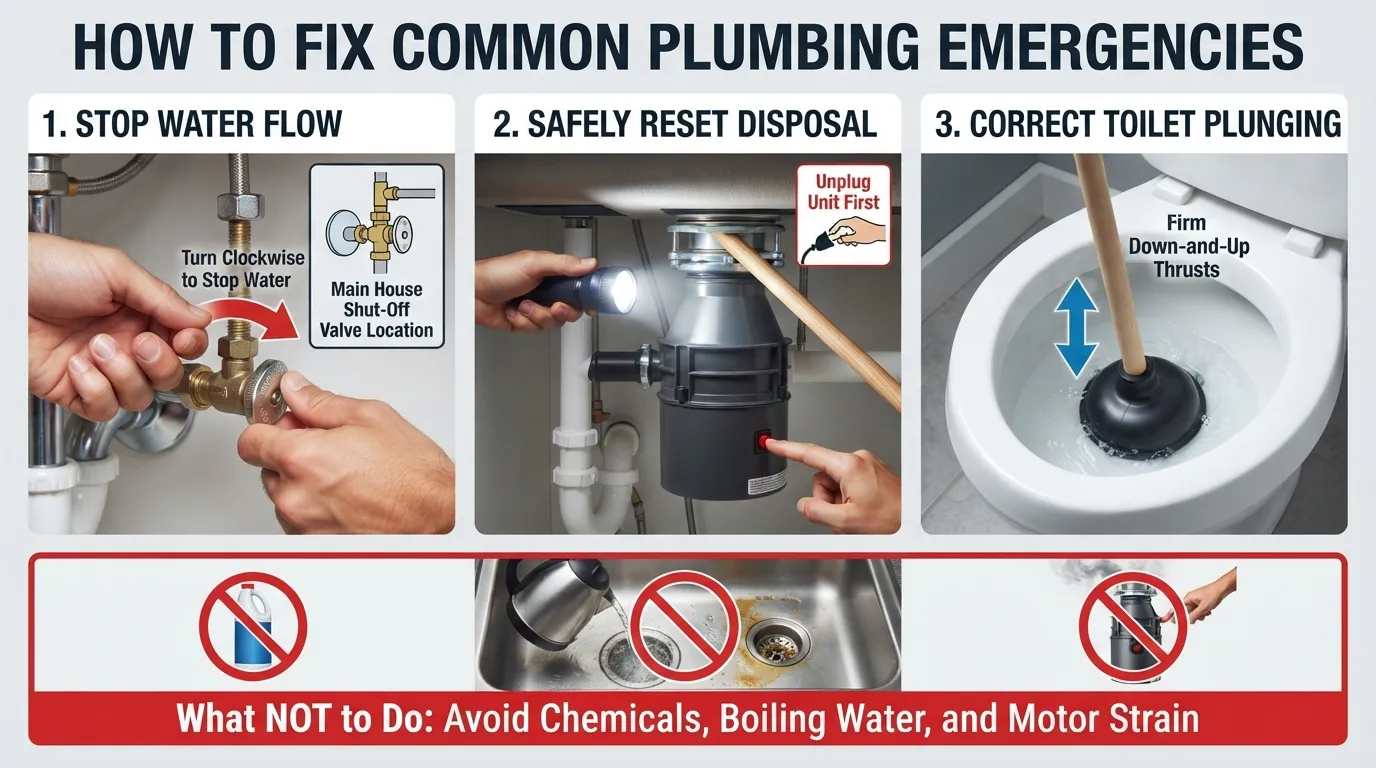
Encountering an active plumbing emergency during holiday meal preparation requires immediate, methodical steps to contain water damage and prevent complete system failure. Taking rapid corrective action before the situation escalates protects your home and keeps holiday stress manageable.
Step 1: Stop Using Water and Locate the Shut-Off Valve
Cease all water usage immediately to prevent overflowing sinks, tubs, or toilets from flooding living spaces. Locate and close local water supply valves or the main household shut-off valve to halt water flow entirely.
Halt Fixture Usage: Instruct all holiday guests to stop running faucets, flushing toilets, and operating dishwashers or washing machines.
Locate Supply Valves: Turn the individual fixture valve clockwise beneath the affected sink or behind the toilet to shut off water to that specific unit.
Main House Shut-Off: If an active leak persists or local valves fail, turn off the main water supply valve located where the primary supply line enters the home.
Step 2: Reset or Clear a Jammed Garbage Disposal Safely
Garbage disposals frequently stall or trip their internal breakers when overloaded with holiday scraps. Clearing a jammed unit requires strict adherence to safety protocols to prevent severe hand injuries.
Disconnect Power First: Unplug the disposal under the sink or switch off the dedicated circuit breaker before touching any internal components.
Never Put Hands Inside: Always use a wooden spoon handle or hex wrench from underneath the unit to rotate the flywheel and clear obstructions.
Press the Reset Button: Locate the small red or black reset button on the bottom exterior motor housing and press it firmly after clearing the jam.
Step 3: How to Plunge a Clogged Toilet Properly
Clearing a stubborn toilet clog quickly requires the correct tool choice and plunging technique to force the blockage through the trap. Using a flange plunger instead of a flat cup plunger creates the necessary airtight seal.
Choose a Flange Plunger: Use a plunger featuring an extended rubber flap designed specifically to fit snugly into the toilet bowl drain opening.
Submerge the Rubber Head: Ensure enough standing water covers the rubber bell; add water with a bucket if necessary to create proper hydraulic pressure.
Push and Pull Vigorously: Maintain a tight seal while executing steady, powerful thrusts up and down to dislodge the trapped waste.
Video: Quick Toilet Clog Fix Before You Call a Plumber
Watch this demonstration for clearing a stubborn toilet clog efficiently using standard household tools:
What NOT to Do
Certain common DIY troubleshooting methods worsen existing pipe blockages, damage fixtures, or pose safety hazards to anyone working on the plumbing system. Avoid these destructive shortcuts during an active holiday plumbing backup.
Avoid Chemical Drain Cleaners: Caustic commercial chemicals fail to dissolve dense holiday grease or starchy food clogs, often sitting in pipes and splashing back dangerously.
Do Not Pour Boiling Water on Grease: Pouring hot water onto congealed fat melts it temporarily, allowing it to flow a few feet further down before solidifying deeper in the line.
Never Run a Stalled Disposal: Continuously clicking the wall switch on a jammed garbage disposal overheats the motor, fries internal wiring, and damages the unit permanently. Still not draining? Call our 24/7 emergency plumber.
DIY or Call a Plumber? Costs and Booking Tips for the Holidays
Deciding whether to tackle a holiday plumbing issue yourself or call a professional depends on the severity of the blockage, its location in the pipe network, and the risk of property damage. Understanding when to intervene personally versus when to engage a licensed professional protects your home while managing unexpected holiday repair expenses.
When DIY Is Fine, and When It Isn’t
Evaluating simple surface blockages against complex, deep-line drain failures ensures you apply the correct solution without risking further pipe damage.
| Scenario | DIY Approach | Professional Required |
| Single Fixture Clog | Plunge toilet or clean P-trap under sink | Blockage persists after 10–15 minutes of manual plunging |
| Jammed Disposal | Use hex wrench underneath and press reset | Motor hums continuously without turning or trips breaker repeatedly |
| Slow Sink Drainage | Clear visible hair, food bits, or surface debris | Sink backs up into nearby tub or adjacent floor drains |
| Multi-Fixture Backup | Stop using water immediately; avoid DIY | Wastewater overflows across multiple fixtures or main drain lines |
| Foul Sewer Odors | Check and refill dried-out P-trap water seals | Persistent sewer gas smells vent into living spaces or basement |
Why Emergency Calls Cost More on Holidays
Emergency plumbing services during peak holiday periods involve higher service rates due to off-hours labor demands and heightened dispatch volumes. Understanding how these factors impact overall repair costs helps you budget effectively if urgent service becomes necessary.
After-Hours and Holiday Premium Rates: Dispatching certified technicians on Thanksgiving Day or over the holiday weekend typically incurs premium hourly labor rates to cover mandatory holiday pay and overtime.
Peak Demand Surcharges: The intense concentration of service requests across a single weekend compresses dispatch availability, requiring specialized scheduling to handle priority calls.
Comprehensive Diagnostics: Professional holiday dispatch includes specialized high-pressure water jetting or augering equipment to address severe line obstructions. When an isolated backup turns severe, comprehensive drain cleaning serves as the standard, long-term solution.
Book Early to Avoid the Brown Friday Rush
The day after Thanksgiving—known in the industry as “Brown Friday”—is historically the busiest day of the year for residential drain service calls. Taking proactive measures before guests arrive guarantees availability and prevents mid-holiday service delays.
Schedule Pre-Holiday Inspections: Arrange a preventive drain line evaluation before hosting large family gatherings to catch hidden pipe restrictions early.
Secure Same-Day Service Openings: Booking early in the week reserves priority dispatch slots before peak holiday demand fills technician schedules.
Confirm Emergency Service Options: Identify an established 24/7 service provider in advance so you can request urgent assistance immediately if a backup occurs. Book your plumbing visit today to secure your holiday service slot.
Brown Friday FAQs
What is the busiest day for plumbers?
The day directly following Thanksgiving, widely known in the industry as “Brown Friday,” is historically the single busiest day of the year for residential plumbers. Drain cleaning service calls spike dramatically as household pipes and garbage disposals fail under heavy holiday meal prep and houseguest water usage.
Why is the day after Thanksgiving called Brown Friday?
The trade nickname “Brown Friday” refers to the post-holiday surge in severe wastewater, main sewer line, and toilet backups resulting from holiday feasts. Plumbers coined the term because their schedules are filled with emergency calls clearing clogged kitchen drains and overloaded sewer mainlines.
What should never go down the drain?
Fats, oils, turkey grease, potato peelings, fibrous vegetables like celery, rice, pasta, and wet wipes should never enter household drains. These substances expand, congeal, or tangle inside underground pipes to form dense blockages that standard water flow cannot flush out.
Is Brown Friday a real thing or just a joke?
Brown Friday is an industry-recognized phenomenon documented by major service providers like Roto-Rooter, which reports an average 50% increase in service call volume on the day after Thanksgiving compared to standard Fridays. The spike is driven directly by overburdened garbage disposals and heavy guest usage overloading residential plumbing systems.
Can I put turkey grease down the garbage disposal?
No, liquid turkey grease should never be poured down a garbage disposal or sink drain under any circumstances. Even when rinsed with hot water, the liquified fat quickly cools and hardens inside cold subterranean pipes, trapping passing food particles and creating a severe line blockage.
What are the most common plumbing mistakes to avoid?
The most frequent plumbing mistakes include overloading the garbage disposal with starchy food scraps, pouring grease down kitchen sinks, and flushing synthetic wet wipes down toilets. Chemical drain cleaners should also be avoided, as they rarely clear dense organic clogs and can permanently damage aging pipe walls.
Are Miami homes affected by Brown Friday too?
Yes, Miami residential properties experience the same dramatic surge in holiday plumbing emergencies as homes across the rest of the country. Local coastal factors, such as aging cast iron pipes and low-elevation sewer lines, can make South Florida homes even more vulnerable to heavy guest traffic and kitchen drain overload.
Final Thoughts
Preventing a major plumbing emergency over Thanksgiving weekend comes down to proactive habit management and knowing what your drainage system can handle. By keeping grease out of the sink, disposing of starchy waste in the trash, and setting clear bathroom guidelines for guests, you can protect your main sewer line from severe blockages. Taking a few simple precautions ahead of time ensures your household avoids the common hazards of Brown Friday and enjoys a stress-free holiday.
Keep Your Pipes Flowing This Thanksgiving
Protecting your plumbing requires enforcing strict drain safety rules throughout meal prep and cleanup. Always collect cooking oils in dedicated containers, feed garbage disposals in tiny increments with continuous cold water, and remind visitors that non-flushable wipes belong in the trash. A little vigilance prevents congealed fat and expanded starches from causing unexpected holiday backups.
Need Help Before or After the Holiday?
Whether you want to schedule a preventive drain line check before family arrives or need immediate assistance clearing a stubborn backup, working with a licensed plumber ensures long-lasting peace of mind. Explore our full range of all plumbing services to keep your home running smoothly, or book now to secure a convenient appointment slot before the holiday rush.
Main Services
Related Posts
Need a Plumber in Miami?
Schedule service online or speak directly with the EZ Plumbing team.
Owner-Led Local Service
Know who is behind the business before you request service. The owners, contact line and Miami service pages are published clearly.
- Named business owners
- Direct phone and social channels
- Local Miami service information
Clear Help Before You Book
Review the relevant service page, contact the team directly and use the booking page when you are ready—without relying on vague claims.
- Service-specific information
- Direct questions before scheduling
- Clear online booking route