
Is a Built In Shower Seat Right for You? Pros, Cons, and Cost

Is a Built In Shower Seat Right for You?
A built-in shower seat or shower bench can transform your walk-in shower into a spa-like retreat while offering long-term accessibility and comfort. However, permanent options take up valuable space and require careful waterproofing during installation, so weighing your layout and daily routine is essential to confirm if it matches your lifestyle.
A Built In Shower Seat Is a Good Fit If…
You have a larger shower: Your enclosure measures at least 36 by 48 inches, providing ample standing space alongside the permanent bench without feeling cramped.
This is your long-term home: You are designing for aging-in-place or want a permanent architectural feature that adds lasting value and safety.
You want a seamless, custom look: You prefer the solid feel, high-end tile integration, and durability of a masonry or stone floating bench over temporary alternatives.
You have regular sitting needs: You or a household member frequently sit down to shave, scrub feet, or relax during a routine.
You May Want to Skip It If…
You have a compact shower: Your standard or small enclosure lacks the square footage, and a permanent structure would restrict movement and daily showering comfort.
The bathroom is shared with mixed needs: Family members prefer maximum standing space, meaning a fold-down seat or a portable shower stool would be a more flexible choice.
You need wheelchair transfer support: A standard built-in bench might not meet specific ADA height, depth, or grab-bar alignment requirements for safe wheelchair transfers.
You are on a tight budget: Permanent built-in shower benches require complex framing and specialized waterproofing, which significantly increases construction costs compared to mobile options.
What Counts as a Built In Shower Seat? Main Types Explained
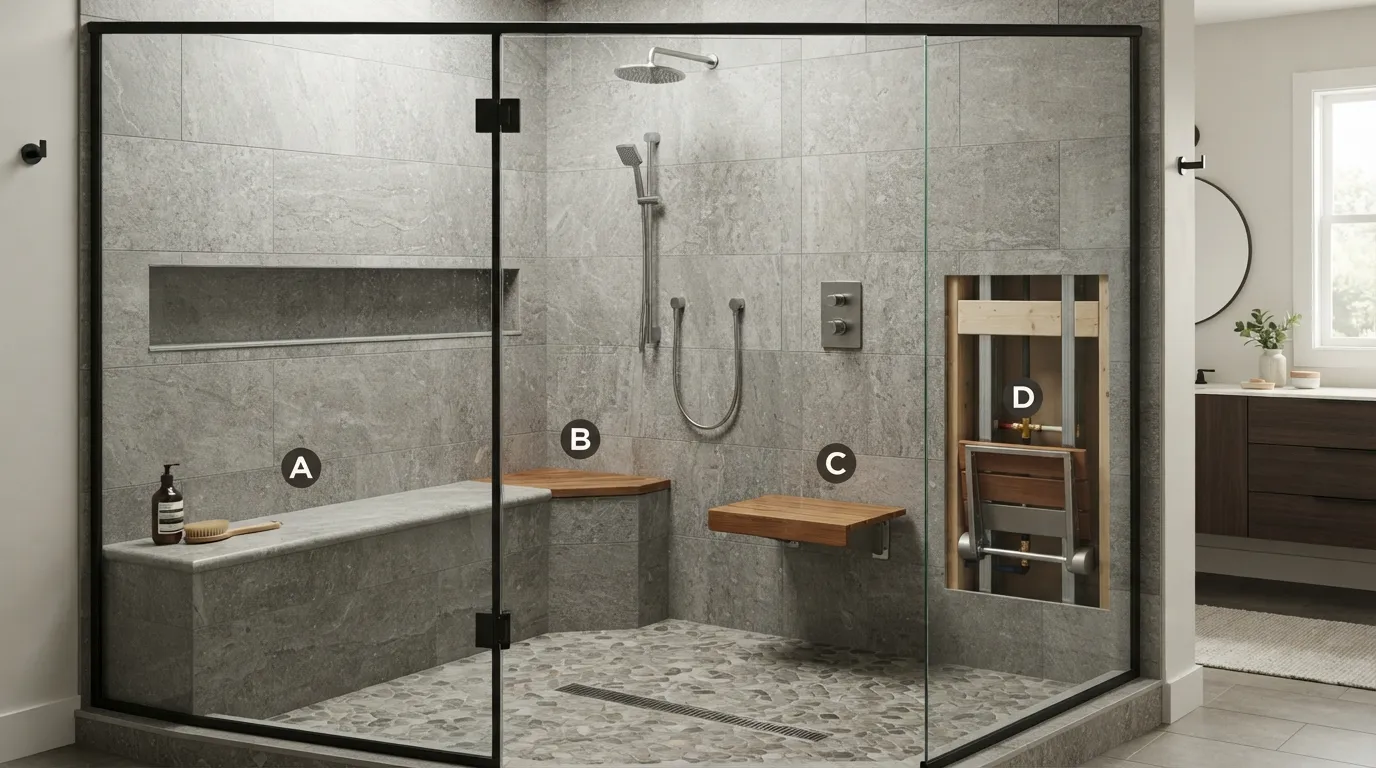
A built-in shower seat is a permanent or semi-permanent resting structure integrated directly into a walk-in shower design. Choosing the right configuration depends on your bathroom layout, desired aesthetic, and structural framing.
When selecting materials for the bench top, options range from matching ceramic or porcelain tile to durable quartz, granite stone slabs, or solid surface materials like Corian, which minimize grout lines and simplify cleaning.
Full-Length and Standard Tiled Bench
Full wall coverage: Spans the entire width of the shower back wall, creating a massive platform for sitting, storing toiletries, or placing bath items.
Custom tile integration: Usually built from wood or metal framing and cement backer board, then tiled to seamlessly match the surrounding shower walls.
Best for spacious enclosures: Demands generous square footage so the substantial footprint does not crowd the standing shower zone.
Corner Shower Seat
Space-saving geometry: Tucked neatly into a 90-degree corner, making it an ideal solution for medium-sized walk-in showers.
Minimal footprint: Provides a comfortable perching spot for shaving legs or relaxing without consuming precious floor space.
Structural stability: Supported securely by two adjacent walls, distributing weight evenly across reinforced framing.
Floating Bench
Airy, modern aesthetic: Wall-mounted structure that sits completely off the floor, creating an open, floating appearance.
Simplified floor cleaning: Because there are no vertical supports touching the shower pan, cleaning underneath the bench is effortless.
Heavy-duty engineering: Requires robust internal steel support brackets anchored firmly to wall studs to safely bear heavy downward weight.
Prefab or Molded Seat in a Shower Base
Factory-engineered reliability: Manufactured as part of a pre-formed shower pan or integrated shower unit, eliminating custom framing guesswork.
Waterproofing confidence: Reduces the risk of leaks because the seat mold is constructed as a single cohesive unit with the base.
Quick installation: Speeds up remodeling timelines by dropping into place without requiring complex tile setting or masonry work.
Benefits of a Built In Shower Seat
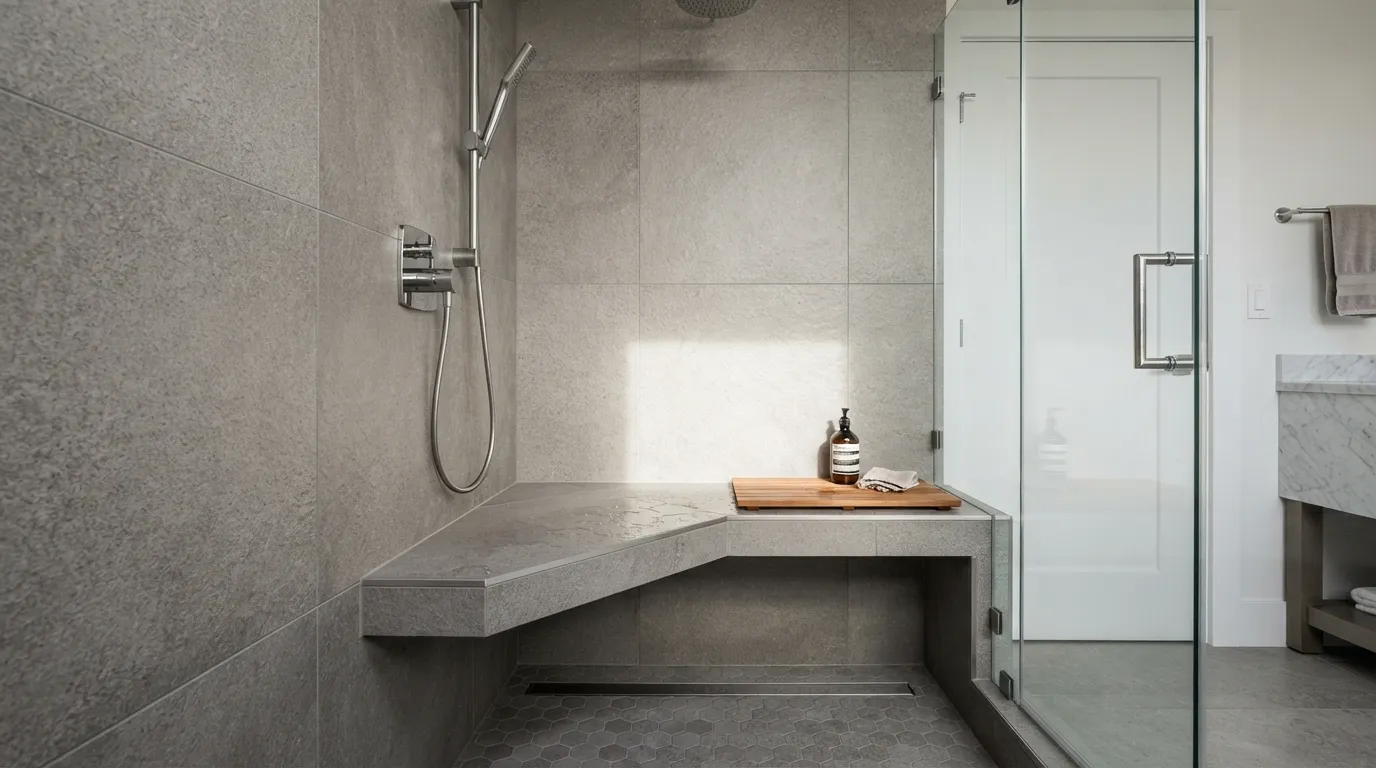
A built-in shower seat delivers exceptional utility that extends far beyond simple comfort. Whether you are planning a modern bathroom update or designing a long-term accessible space, integrating a permanent bench elevates both the function and aesthetic of your daily routine.
Stability and Weight Capacity
Rock-solid foundation: Unlike portable stools or cheap plastic seats, a permanent bench is anchored directly into wall studs and reinforced framing.
High structural strength: Permanent masonry or bracketed benches are commonly cited as supporting 400 to 500 pounds, though true weight capacity depends heavily on professional framing and correct installation.
Eliminated slipping risks: The fixed nature of the bench ensures it will never slide, wobble, or tip over on wet, soapy shower floors.
Custom Look That Matches Your Tile
Seamless design integration: Built-in benches can be wrapped in the exact same tile, porcelain, or stone as your walk-in shower walls for a cohesive, high-end finish.
Architectural elegance: A well-designed floating or corner bench acts as a luxury focal point that enhances overall home value.
Tailored dimensions: You can customize the exact height, depth, and length to fit your specific body type and enclosure layout.
A Seat, Shelf, and Shaving Spot in One
Multi-functional surface: When you are not sitting, the bench doubles as an expansive shelf for shampoo bottles, body washes, and loofahs.
Ergonomic shaving station: Provides a safe, elevated elevation point for shaving legs without awkward bending or balancing on slippery floors.
Clutter reduction: Eliminates the need for dangling wire caddy racks or suction-cup shelves that frequently rust and fall.
Helpful During Recovery and Aging in Place
Effortless rehabilitation: Offers a secure resting spot for anyone recovering from knee, foot, or hip surgery who cannot stand for long durations.
Proactive aging-in-place: Prepares your bathroom for future mobility changes without making the space look clinical or institutional.
Reduced fatigue: Allows you to sit comfortably during warm showers when feeling fatigued, dizzy, or unwell.
Steam Shower Comfort
Luxury spa experience: If you are installing a steam generator, a built-in seat is practically mandatory for relaxing during long, therapeutic steam sessions.
Heat management: Masonry and stone surfaces hold ambient warmth well, providing a cozy seat as steam fills the enclosure.
Drawbacks and Risks Most Guides Skip
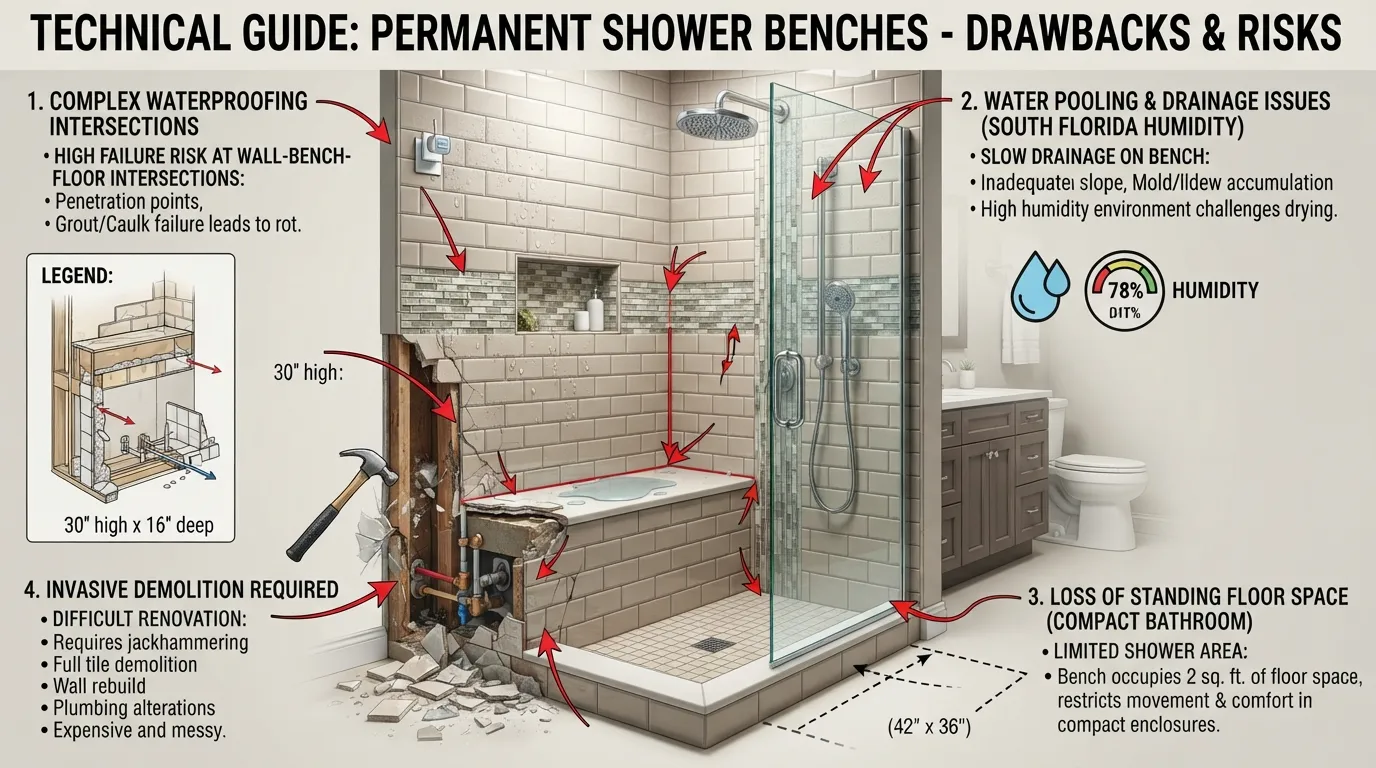
While built-in shower seats look stunning in design magazines, they come with hidden design and maintenance challenges that many contractors gloss over. Understanding these drawbacks helps you avoid costly remodeling regrets and structural water damage down the line.
Cost and Complex Waterproofing
Labor-intensive construction: Building a custom bench requires framing, backer boards, and meticulous waterproofing layers that drive up material and labor expenses.
Intricate detailing: Every corner and joint introduces a potential failure point that demands professional-grade liquid membranes or sheet waterproofing systems.
Permanent Floor Space in Smaller Showers
Restricted movement: A bulky built-in bench occupies square footage permanently, which can make a standard shower feel cramped during standing use.
Limited layout flexibility: Once anchored in place, you cannot remove or reposition the seat if your household’s mobility needs or design preferences change.
Cold, Slippery, or Hard Surfaces
Chilly tile contact: Unlike warm wood or padded plastic stools, unheated stone, quartz, or ceramic tile can feel cold against bare skin.
Slip hazards: Smooth tiled surfaces can become slippery when coated in soap suds, requiring a textured finish or a removable non-slip mat.
Fixed Height and Reach to Controls
Awkward reach distances: A permanent bench locks you into one spot, which might place you awkwardly far away from the shower valve or handheld spray wand.
Single-height limitations: A fixed height cannot accommodate multiple household members of varying heights, whereas movable options offer adjustable positioning.
Why Some Accessibility Experts Advise Against Built-In Seats
Wheelchair transfer obstacles: Universal design experts note that fixed benches can sometimes block safe lateral wheelchair transfers compared to open floor plans.
Rigid positioning: A single permanent height does not suit every user, and an unused bench can simply get in the way when standing family members want maximum elbow room.
What Happens When Waterproofing Fails
Hidden water infiltration: More joints, corners, and intersecting planes mean more opportunities for moisture to breach the shower membrane.
Plumber’s field note: When opening up leaking benches, plumbers routinely find that water migrated through hairline grout cracks at the bench-to-wall intersection, rotting out the underlying wood framing and subfloor before any surface mold appeared.
Early warning signs: Watch for soft grout, persistent dampness, water stains on adjacent drywall, or a musty odor near the enclosure. If you suspect moisture is tracking behind your tile work, scheduling professional leak detection can prevent catastrophic structural rot.
Who Should Choose a Built In Shower Seat? By Situation
Choosing a built-in shower seat depends entirely on your specific household needs, bathroom layout, and long-term plans. To help you make the right choice, review the decision matrix and self-check questions below to see how your lifestyle aligns with a permanent installation.
Quick Decision Table
| Your Situation | Built-In Seat | Better Alternative |
| Remodeling a large shower | Yes | N/A (Plenty of space) |
| Small shower (< 36×36 inches) | Skip It | Fold-down wall seat or portable stool |
| Older adult who sits daily | Yes | Wall-mounted fold-down seat with grab bars |
| Short-term injury recovery | Skip It | Temporary plastic shower chair |
| Caregiver assisting another person | Skip It (often blocks motion) | Open shower design with a rolling shower chair |
| Wheelchair user | Skip It (standard built-ins lack ADA clearance) | Custom roll-in shower with compliant fold-down bench |
| Planning to sell soon | Skip It (taste-specific) | Neutral design with optional mobile stool |
| Tight budget | Skip It | Non-slip portable shower bench |
Self-Check Questions to Ask Before You Build
How frequently will the seat actually get used? If you or your family members only sit down once a month, a permanent bench takes up valuable elbow room for everyday standing showers.
Does your shower layout have the square footage? Ensure your enclosure is large enough so that a protruding bench does not restrict your movement, block the door, or interfere with water spray patterns.
Are you factoring in waterproofing and labor costs? Confirm your contractor is experienced in waterproofing complex masonry corners to prevent costly leaks behind the tilework.
Will your household mobility needs change in the next five to ten years? If you are designing your forever home, a sturdy built-in or a professionally anchored fold-down seat is a worthwhile investment.
How Big Should a Built In Shower Bench Be? Size, Height, and Placement
Getting the dimensions and placement of a built-in shower bench right is crucial for both daily comfort and bathroom safety. Poorly planned measurements can leave you cramped for standing space or awkwardly out of reach from your shower controls.
Minimum Shower Size
General spatial guideline: A comfortable walk-in shower with a built-in bench is commonly cited as needing at least 48 by 36 inches of interior floor space.
Avoiding cramped quarters: If your enclosure is only 36 by 36 inches, an 18-inch deep bench will consume half the floor plate, leaving virtually no comfortable standing room.
Bench Height and Depth
Ergonomic seat height: A finished seat height of 17 to 19 inches from the finished shower floor mimics standard chair height and works well for most adults.
Optimal bench depth: A depth of 15 to 18 inches provides enough surface area to sit securely without forcing your legs into an awkward angle.
Maintaining drainage slope: Ensure the top surface of the bench includes a gentle slope (roughly 1/8 to 1/4 inch per foot) toward the drain so water never pools on the seat.
Best Placement
Out of the direct spray: Position the bench slightly away from the primary showerhead so you can sit comfortably without getting blasted by cold water before you are ready.
Within arm’s reach of controls: Mount the bench where you can easily turn the shower valve on and adjust water temperature without standing up or stretching dangerously.
Corner vs. full wall: Corner benches maximize standing floor space in mid-sized showers, while full-wall benches are ideal for spacious, luxury walk-in enclosures.
Add-Ons That Make It Work
Handheld shower on a slide bar: Allows seated bathers to adjust the height of the spray wand for targeted rinsing, hair washing, or bathing children and pets.
Strategically placed grab bars: Essential for safe transitions between sitting and standing, especially on wet, soapy tile surfaces.
Task lighting: Avoid placing the bench directly in a shadow; dedicated waterproof LED shower lighting ensures safe visibility around the seating area.
Designer Layout Blueprint (Top & Side View)
(Ample Standing / Open Floor Space with 1/4" Slope Toward Drain)
How Much Does a Built In Shower Seat Cost?
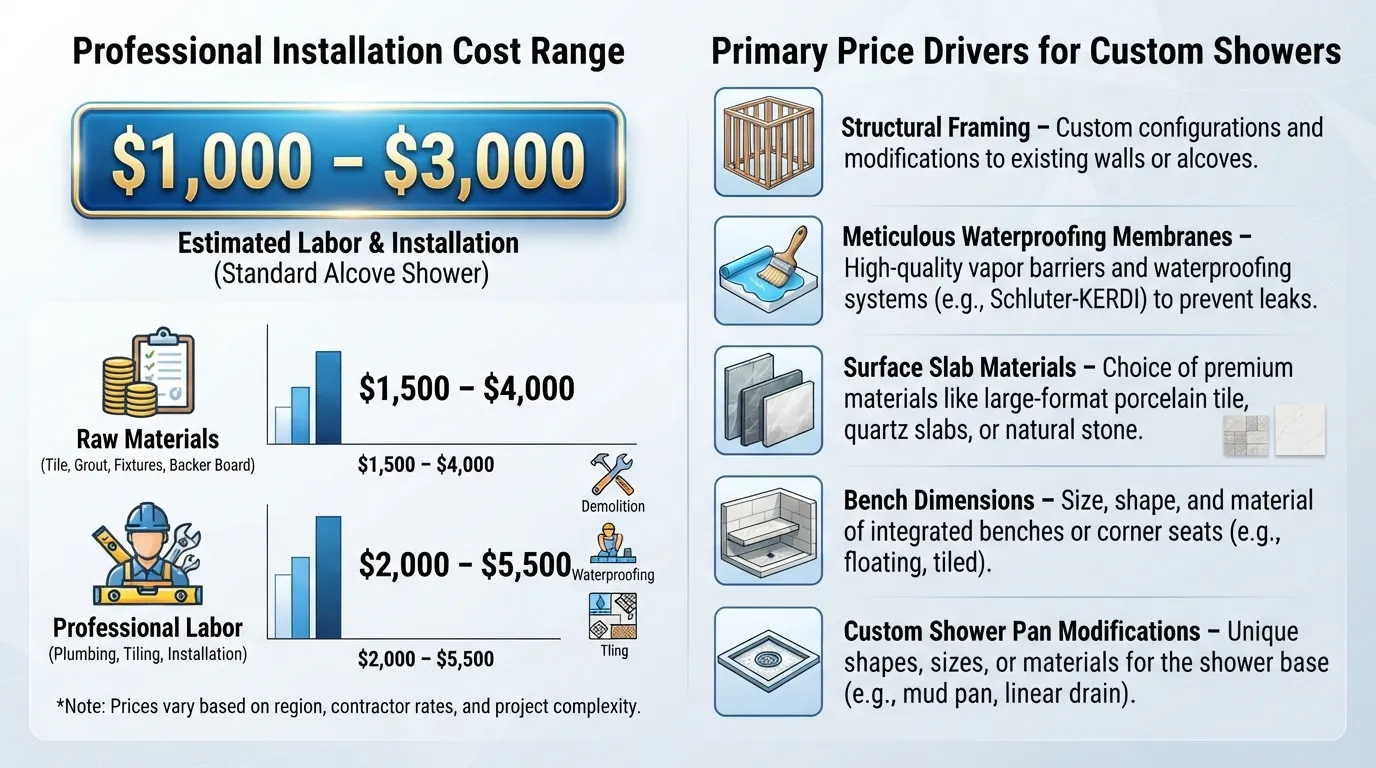
Understanding the financial commitment of adding a permanent fixture prevents unexpected budget overruns during a bathroom renovation. Because a built-in seat requires specialized carpentry, framing, and waterproofing layers, its price extends past simple surface tile.
Typical Cost Range
Professional installation investment: A custom built-in shower bench generally ranges from $1,000 to $3,000 for professional installation as part of a broader walk-in shower remodel, though local pricing and contractor rates vary.
Standalone feature pricing: When itemized during a larger tile installation, the raw materials and labor for the bench structure alone frequently average $300 to $1,000+ depending on complexity and surface finish.
What Drives the Price
Framing and materials: Building the structural frame from decay-resistant wood or metal studs accounts for the initial labor phase.
Meticulous waterproofing: Applying liquid membranes, sheet liners, or custom pan liners around every bench angle is labor-intensive and non-negotiable for leak prevention.
Surface top selection: Standard porcelain tile keeps material expenses low, whereas custom-cut quartz, granite, or marble slabs add significant fabrication and material costs.
Bench size and shape: Expansive full-wall benches require more square footage of tile and support than a simple, compact corner seat.
Demolition and shower pan work: Tearing out an old tub or pan to rebuild a custom sloped base to accommodate the bench increases overall remodeling hours.
Built In vs Fold Down Cost
Permanent custom masonry: Demands high labor hours and expert waterproofing, pushing totals into the thousands.
Fold-down shower seats: Wall-mounted commercial fold-down seats are commonly cited at about $50 to $200 for the unit itself, with professional installation running extra depending on whether wall blocking is already present.
Ways to Save
Choose a prefab shower base with a molded seat: Drops installation time and bypasses custom tile work.
Opt for a compact corner footprint: Uses fewer materials and less tile-cutting labor than a full-wall bench.
Install blocking now, seat later: Have your contractor install internal wood blocking behind the wall studs during a standard remodel; this allows you to safely mount a fold-down seat later on if your budget or needs change.
Built In vs Floating vs Fold Down vs Shower Chair
Selecting the right seating option involves balancing available floor space, structural framing requirements, budget, and long-term versatility. Reviewing the options side by side ensures you choose the ideal match for your daily routine.
Side-by-Side Comparison Table
| Feature | Built-In Full Bench | Floating Bench | Fold-Down Seat | Moveable Teak / Plastic Chair |
| Cost | High ($1,000–$3,000+) | Moderate-High | Moderate ($50–$200+ unit) | Low-Moderate ($30–$150) |
| Stability | Rock-solid masonry | Very high (anchored) | Moderate-High (depends on wall) | Variable (slip / tip risk) |
| Space Use | Permanent footprint | Open under-space | Folds flat against wall | Fully portable / storable |
| Installation | Complex framing & tile | Professional wall brackets | Wall blocking required | None (standalone) |
| Maintenance | Regular grout / stone care | Minimal surface wipe | Pivot joint / hinge check | Requires drying / teak oil |
| Best For | Large luxury walk-ins | Modern, spacious showers | Small or shared showers | Short-term injury recovery |
Fold Down Seats
Maximum space efficiency: Folds flat flush against the wall when not in use, making it ideal for compact or shared family showers.
Structural prerequisite: Requires heavy-duty wood blocking installed behind the wall studs prior to tile work to safely handle user weight.
Flexible long-term adaptation: Can be added during an initial remodel framing phase and put into service years later when mobility needs change.
Floating Benches
Sleek modern aesthetic: Mounts securely to wall studs while hovering entirely off the floor to create an open, minimalist look.
Effortless floor cleaning: Leaves the shower pan unobstructed below, allowing for quick squeegeeing and mopping.
Freestanding Teak or Moveable Shower Chairs
Zero installation required: Can be purchased and placed immediately inside any existing shower without drilling into tile or waterproofing membranes.
Portability benefits: Easy to remove from the enclosure when standing family members want maximum floor space.
Potential trade-offs: Can feel bulky in smaller stalls, presents a minor sliding or tip risk if not fitted with rubber feet, and natural teak wood requires regular cleaning to prevent mold growth in damp environments.
Which One Fits Your Bathroom?
Choose a built-in or floating bench if you are executing a full-scale custom remodel with plenty of square footage and prefer a permanent architectural look.
Choose a fold-down seat if you want accessibility and seating comfort without permanently giving up standing floor space in a medium-sized enclosure.
Choose a moveable chair if you need an immediate, budget-friendly solution for temporary injury recovery or guest use without altering your existing tile work.
Safety, Seniors, and Accessibility: What to Know
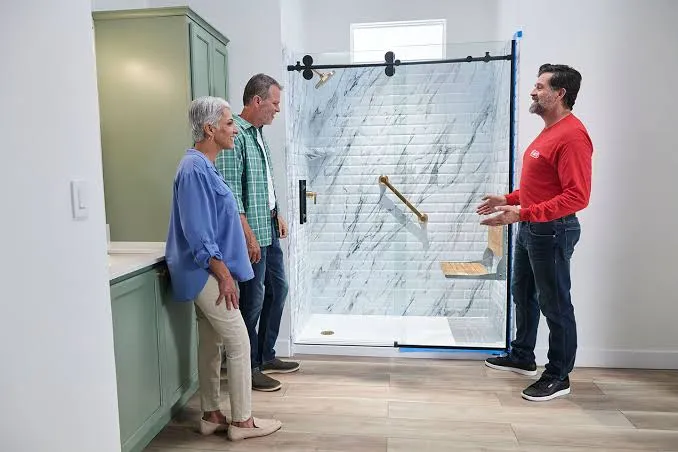
Integrating a shower seat for aging in place or injury recovery requires looking closely at bathroom ergonomics, stability, and safety codes. While a built-in bench offers a permanent luxury aesthetic, it is not automatically the safest choice for every senior or mobility-impaired user.
Is a Built In Seat the Safest Option for Older Adults?
When a built-in seat shines: For active older adults who want a stylish, permanent resting spot to wash or relax without a clinical look, a well-placed built-in or floating bench provides unmatched solidity.
When a fold-down or medical chair is safer: If a caregiver needs to assist inside the shower, or if a user requires lateral transfers from a wheelchair, a fixed masonry bench can actually obstruct movement. In these scenarios, a wall-mounted fold-down seat or an open roll-in layout with a moveable shower chair is often safer and more functional.
Safety Features to Add
Strategically positioned grab bars: Install vertical and horizontal textured grab bars near the seat and valve controls to ensure secure leverage during standing and sitting transitions.
Non-slip floor and seat treatments: Avoid highly polished stone on the seat top or shower floor; opt for textured tiles, matte finishes, or removable non-slip mats to prevent slips.
Handheld shower integration: Pair the seat with a flexible hose and slide bar so bathers can comfortably rinse while remaining seated.
Task lighting: Ensure waterproof overhead or recessed shower lighting brightly illuminates the seating zone so users never step or sit in shadows.
Seat Height and Transfers
Ergonomic guidelines: The U.S. Access Board specifies that accessible shower seats should be positioned at a finished height of 17 to 19 inches above the floor, which aligns closely with standard chair and wheelchair heights.
Wheelchair transfer clearance: For individuals transferring from a wheelchair, the seat must be placed within close proximity to the entry and paired with adequate clear floor space to allow unhindered sideways movement.
Occupational therapist insight: Certified aging-in-place specialists and occupational therapists frequently recommend testing mock layouts with a standard chair before finalizing custom bench dimensions to ensure the user’s knees and reach angles feel natural.
Does Medicare Pay for a Shower Seat?
Original Medicare exclusions: Original Medicare (Parts A and B) generally does not cover shower seats, built-in benches, grab bars, or transfer benches, classifying them as home modifications or convenience items rather than medically necessary Durable Medical Equipment (DME).
Alternative coverage avenues: Some private Medicare Advantage (Part C) plans offer supplemental over-the-counter (OTC) allowances or home safety benefits that may help offset the cost of portable bathroom safety gear. Always check directly with your plan provider or state assistance programs before purchasing if you are relying on insurance reimbursement.
Waterproofing, Plumbing, and Maintenance in Miami Homes
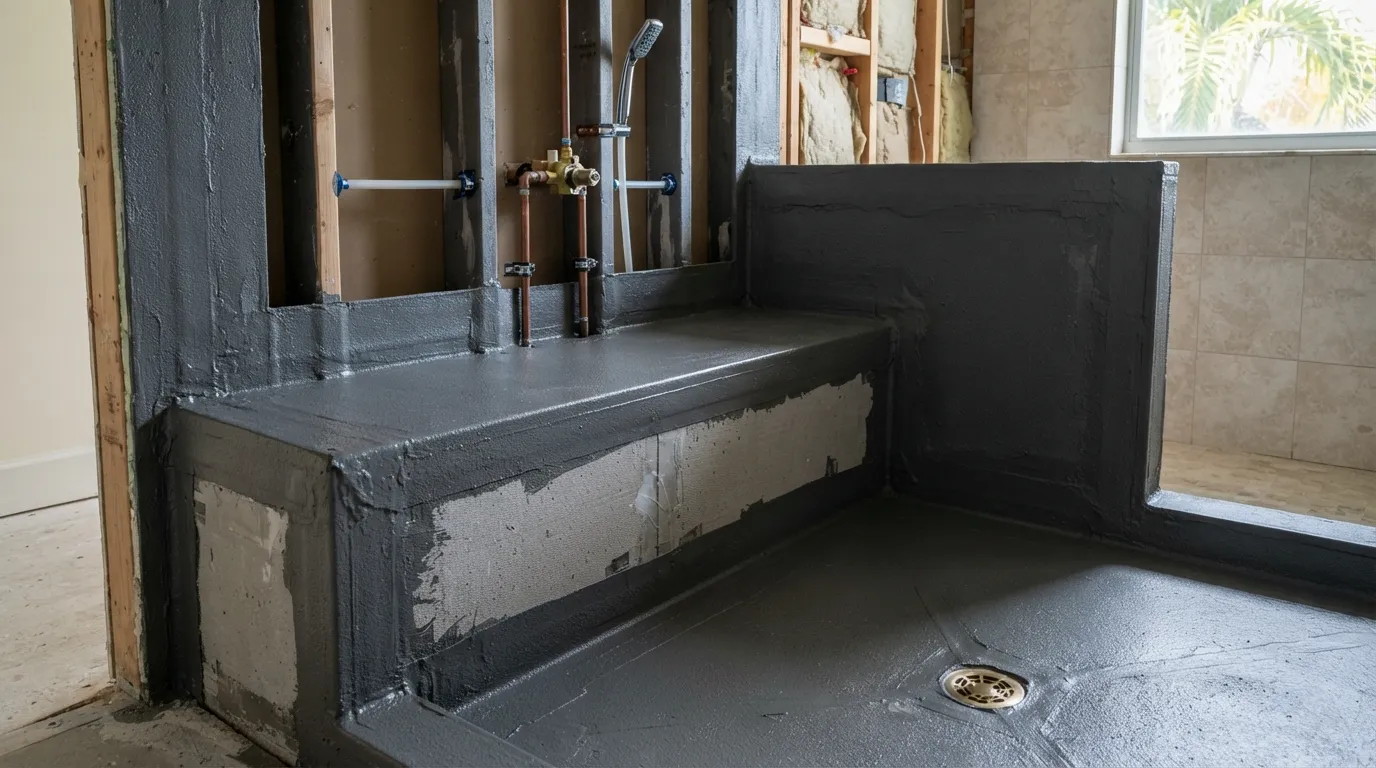
Building a permanent shower bench in South Florida involves unique structural challenges that go far beyond basic tile setting. High humidity, hard water minerals, and intense tropical weathering demand meticulous installation and proactive maintenance to prevent long-term water damage.
Why Waterproofing Matters More Than the Tile
Concealed vulnerability: A gorgeous tile finish can easily mask a failing sub-structure if the underlying waterproofing membrane is compromised.
Continuous membrane protection: Every corner, joint, and screw penetration where the bench meets the wall must be sealed with liquid or sheet waterproofing systems.
Mandatory bench slope: Just like the shower floor, the top surface of the bench must feature a gentle slope (at least 1/8 to 1/4 inch per foot) toward the drain so water never pools against the wall.
Plan Plumbing Before You Build
Valve and handheld placement: Ensure your plumber positions the mixing valve and slide-bar mount so you can comfortably reach them while seated without twisting awkwardly.
Drain positioning: The layout must account for water runoff from the bench, ensuring the shower pan slope directs all moisture efficiently toward the drain without pooling in corners.
In-wall structural blocking: Coordinate with your contractor to install heavy-duty wood or metal blocking between wall studs during framing. If you need professional assistance with layout and pipe routing, scheduling licensed plumbing services ensures supply and drain lines are mapped correctly before any tile goes up.
Humidity, Mold, and Hard Water in South Florida
Prolonged moisture retention: Because horizontal bench surfaces dry slower than vertical walls, they trap ambient humidity, creating an ideal breeding ground for mold and mildew in South Florida’s climate.
Hard water scale accumulation: High mineral content in local water supplies leaves stubborn calcium and lime scale deposits on stone slabs and glass enclosures.
Ventilation priority: Run your exhaust fan during and for at least 20 minutes after every shower to pull heavy moisture out of the bathroom.
Cleaning a Built In Bench
Squeegee daily: Make it a habit to wipe down the bench surface and corners with a squeegee immediately after showering to minimize soap scum and mineral buildup.
Underside maintenance: Don’t forget to clean underneath floating or corner benches where dust and moisture settle.
Regular sealing: Natural stone tops and porous grout lines require periodic re-sealing every 12 to 18 minutes—depending on usage—to prevent water absorption and staining.
Soap Scum and Slow Drains
Body oils and residue: Benches naturally encourage longer, more relaxed showers, which translates to a heavier accumulation of hair, soap scum, and body oils washing down the drain.
Proactive maintenance: If your shower pan starts draining sluggishly due to combined soap residue and hair build-up, utilizing professional drain cleaning services will restore proper flow and prevent stubborn backups.
Are Built In Benches Still Popular? Trends and Resale Value
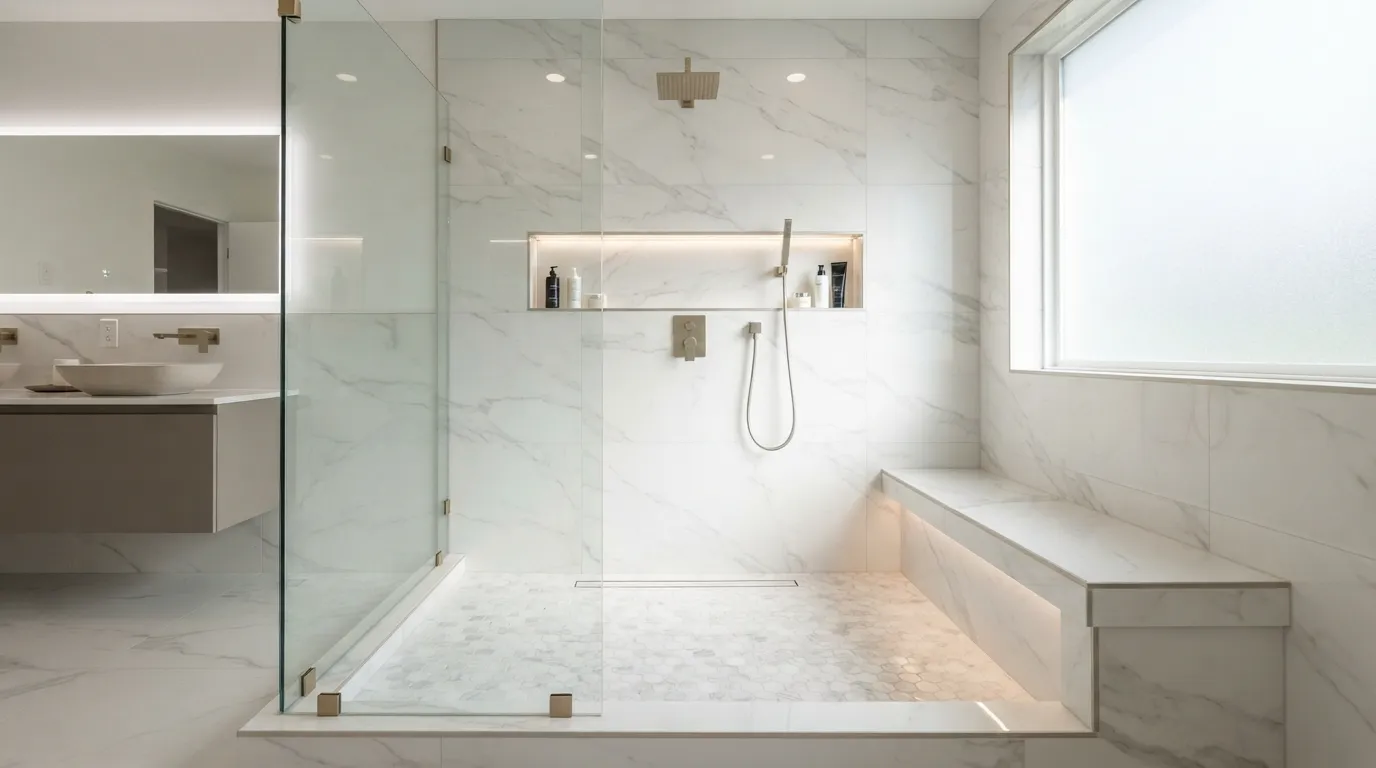
Shower design preferences have evolved significantly, moving away from bulky, space-consuming masonry structures toward streamlined, flexible solutions. Evaluating current trends helps ensure your bathroom remodel strikes the ideal balance between modern luxury and everyday practicality.
Are Built In Benches Still Popular?
Split market preferences: Traditional built-in benches remain popular primarily in expansive, luxury walk-in enclosures where square footage is abundant.
The shift toward flexibility: In standard or medium-sized bathrooms, many homeowners and designers now bypass permanent masonry in favor of floating or fold-down alternatives to preserve open floor space.
Current Trends
Floating and minimal profiles: Wall-mounted floating benches provide a sleek, lightweight aesthetic that keeps the shower floor entirely open.
Curbless wet-room layouts: Seamless walk-in and curbless designs prioritize uninterrupted movement, making folding seats a natural complement.
Large-format tile and material drenching: Wrapping walls, floors, and benches in continuous stone or large porcelain panels creates a cohesive, spa-like cocoon.
Integrated wellness tech: Paired lighting, digital thermostatic controls, and multi-function handheld spray wands transform standard seating zones into functional relaxation hubs.
Does a Shower Bench Affect Resale?
Buyer polarization: A well-executed, high-end stone or tiled bench can deeply appeal to buyers looking for a luxury spa feel or future-proofing options.
Potential spatial drawbacks: Conversely, buyers with young children or those who prefer maximum standing room in a compact shower may view a permanent, bulky bench as an awkward obstruction that is costly to remove.
Final Checklist: Should You Build One?
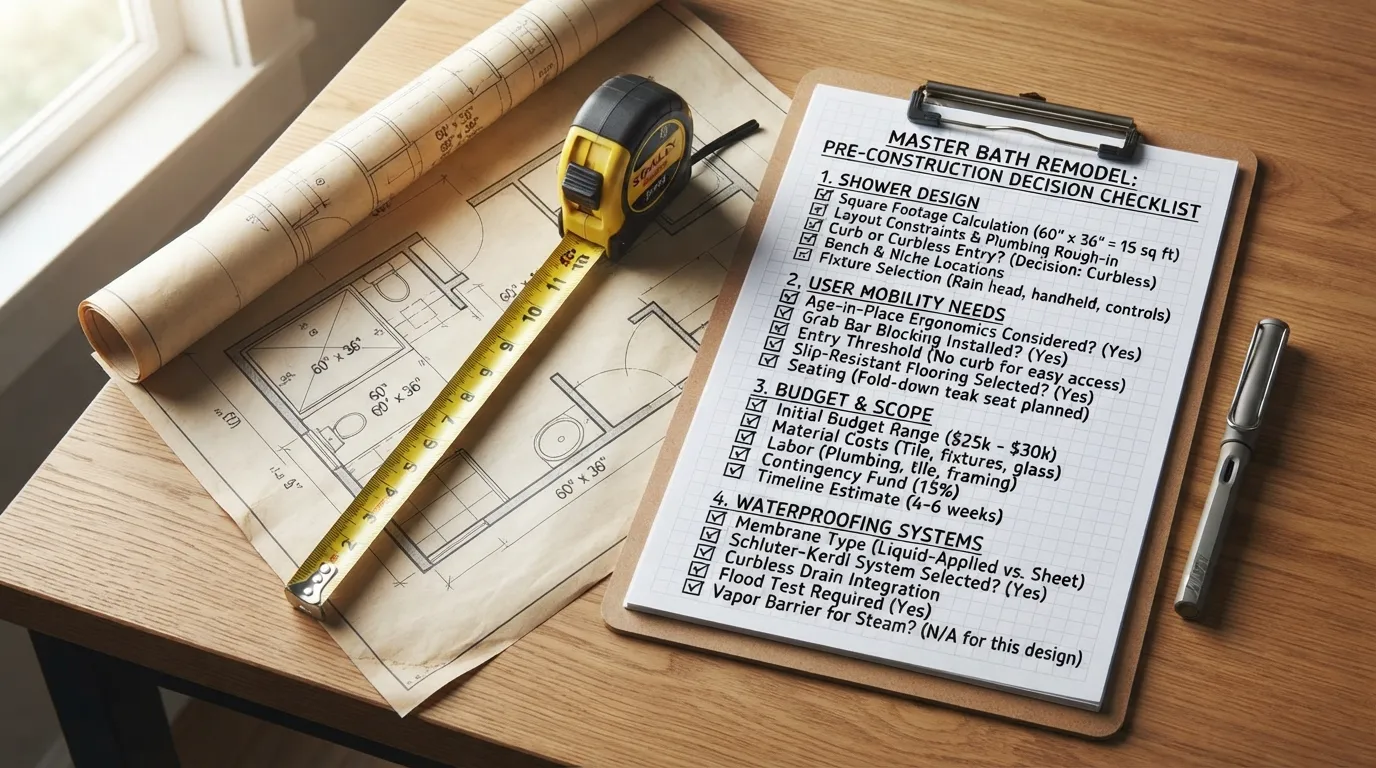
Deciding whether to install a built-in shower bench requires balancing your immediate design vision against long-term maintenance realities and daily spatial needs. Reviewing this final checklist ensures you make a confident, well-informed investment before construction begins.
6-Point Decision Checklist
Shower square footage: Is your enclosure large enough (ideally 48 by 36 inches or greater) to accommodate a permanent structure without cramping your standing room?
Primary household users: Who will use the seat most often, and do their mobility or assistive needs call for a permanent bench or a flexible fold-down alternative?
Remodeling budget: Have you factored in the added costs of specialized framing, masonry work, and meticulous waterproofing layers?
Long-term living plans: Are you designing your permanent forever home, or is this a short-term upgrade before a future resale?
Waterproofing confidence: Is your contractor experienced in detailing complex angles and bench-to-wall intersections to prevent hidden leaks?
Alternative evaluation: If you are still hesitant, have you considered a wall-mounted fold-down seat or a high-end portable shower stool instead?
Key Takeaways
Built-in benches offer rock-solid stability and a luxurious custom aesthetic, but they demand ample space and flawless waterproofing.
Alternative options like floating benches and fold-down seats preserve floor space while offering excellent accessibility.
Poor waterproofing around bench corners represents one of the most common points of failure in custom tile showers.
Proper plumbing alignment—including valve reach, drain slope, and slide-bar placement—is critical for everyday comfort.
Talk to a Licensed Plumber Before You Build
Before finalizing your tile layout or ordering expensive stone slabs, consulting with an expert ensures your supply lines, mixing valves, and shower drain locations are mapped correctly from the start. To get professional guidance tailored to your layout, you can book a plumber to review your renovation plans.
Frequently Asked Questions
What is the best shower bench seat material?
Matching porcelain tile, stone slabs, or solid surface materials to your surrounding shower walls creates a seamless, watertight finish. While natural stone offers high-end luxury, it requires periodic sealing. Alternatively, treated teak wood delivers organic warmth for moveable or fold-down options, though it demands regular maintenance to resist moisture.
Can you add a built-in shower seat to an existing shower?
Retrofitting a permanent masonry bench into an existing finished shower is extremely difficult and invasive. It requires tearing out the existing tile, cement backer board, and waterproofing membrane to rebuild the structural framing and shower pan slope from scratch. Fold-down seats offer a much simpler alternative for existing spaces.
Can I add a fold-down seat later if I build the wall right?
Yes, installing heavy-duty wood or metal blocking between your wall studs during initial framing makes adding a fold-down seat later effortless. This hidden reinforcement provides the structural strength required to safely anchor wall-mounted seats without needing to tear open finished tile walls down the road.
How much weight can a built-in shower bench hold?
A properly engineered built-in shower bench supported by solid masonry, concrete block, or reinforced framing can easily hold hundreds of pounds. Because it ties directly into the structural load-bearing walls and subfloor, a permanent custom bench offers maximum stability and significantly higher weight capacities than standard wall-mounted alternatives.
Where can I buy a shower seat?
Portable shower stools, teak benches, and wall-mounted fold-down seats are widely available at major home improvement retailers, specialized bath showrooms, and online medical supply stores. Custom solid surface or stone slab benches are typically fabricated and installed directly by your tile contractor, stone fabricator, or bathroom remodeler.
Main Services
Related Posts
Need a Plumber in Miami?
Schedule service online or speak directly with the EZ Plumbing team.
Owner-Led Local Service
Know who is behind the business before you request service. The owners, contact line and Miami service pages are published clearly.
- Named business owners
- Direct phone and social channels
- Local Miami service information
Clear Help Before You Book
Review the relevant service page, contact the team directly and use the booking page when you are ready—without relying on vague claims.
- Service-specific information
- Direct questions before scheduling
- Clear online booking route