At Home Haircuts and Your Plumbing Read Before You Trim: A Plumber's Guide to Protecting Your Drains
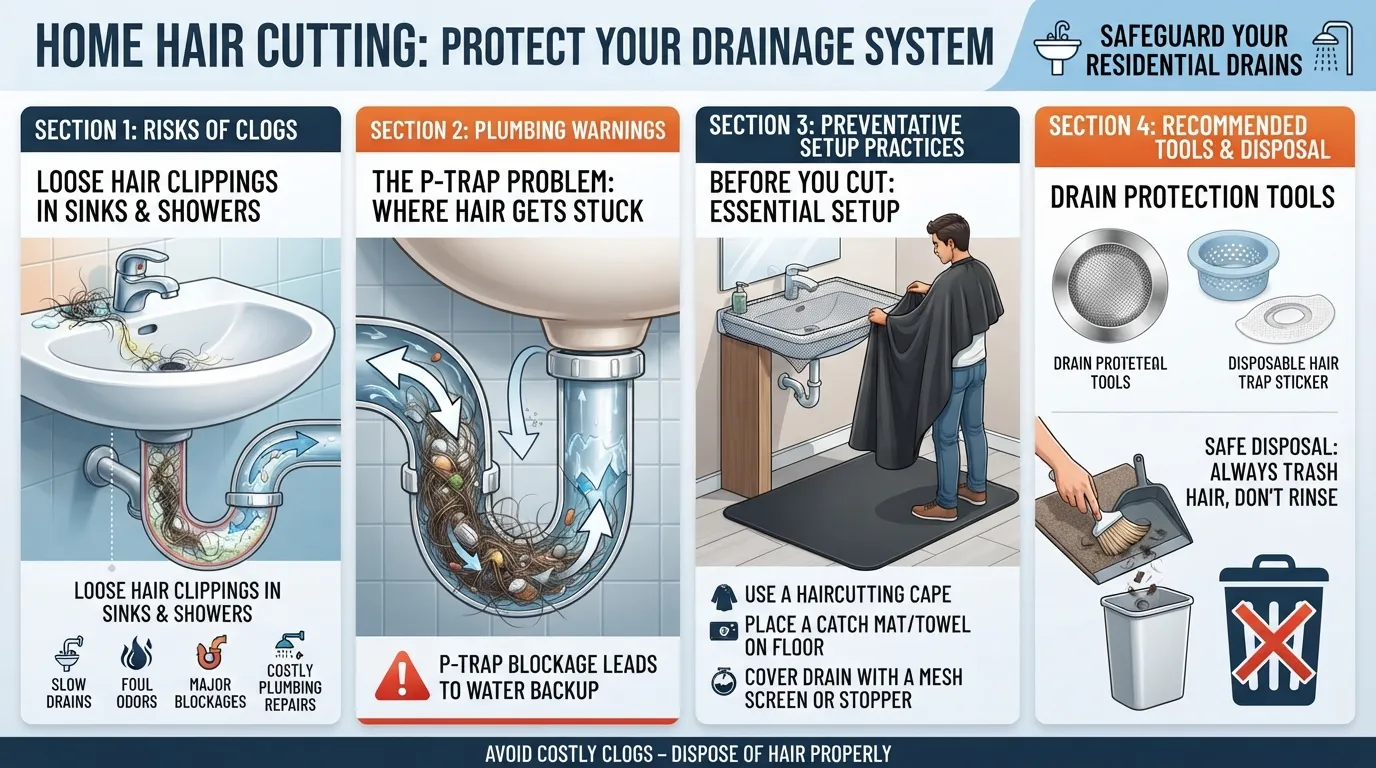
Can Cutting Your Hair at Home Clog Your Drains?
Yes, hair clippings can indeed clog bathroom sinks, shower drains, and toilets. Loose strands slip past the stopper, bind with soap scum and grease inside the pipe, and build a stubborn blockage over time.
The Real Risks of DIY Haircuts
Close the drain: Always ensure the sink or tub drain is fully sealed or covered before beginning any trimming or grooming.
Trim over a wastebasket or sheet: Position yourself directly over a trash can or lay down a protective sheet or cape to catch falling hair clippings.
Never rinse clippings down: Avoid washing loose hair down the drain with water, as this forces the strands deeper into the plumbing system where they agglomerate with soap scum.
Who This Guide Is For
DIY haircut households looking to maintain home grooming routines without plumbing disasters.
People trimming beards, mustaches, or buzz cuts over bathroom basins.
Parents cutting kids’ hair at home.
Anyone with long hair managing daily shedding or styling over bathroom sinks.
Why Plumbers See This Problem More Than You’d Expect
Professional plumbing technicians frequently report that hair is one of the most common and underestimated culprits behind residential bathroom drain clogs. Because hair does not dissolve in water and easily traps oils, skin cells, and styling products, even a small amount washed down the sink during a routine at-home haircut can rapidly form a dense, pipe-blocking mat.
How Hair Clogs Your Pipes
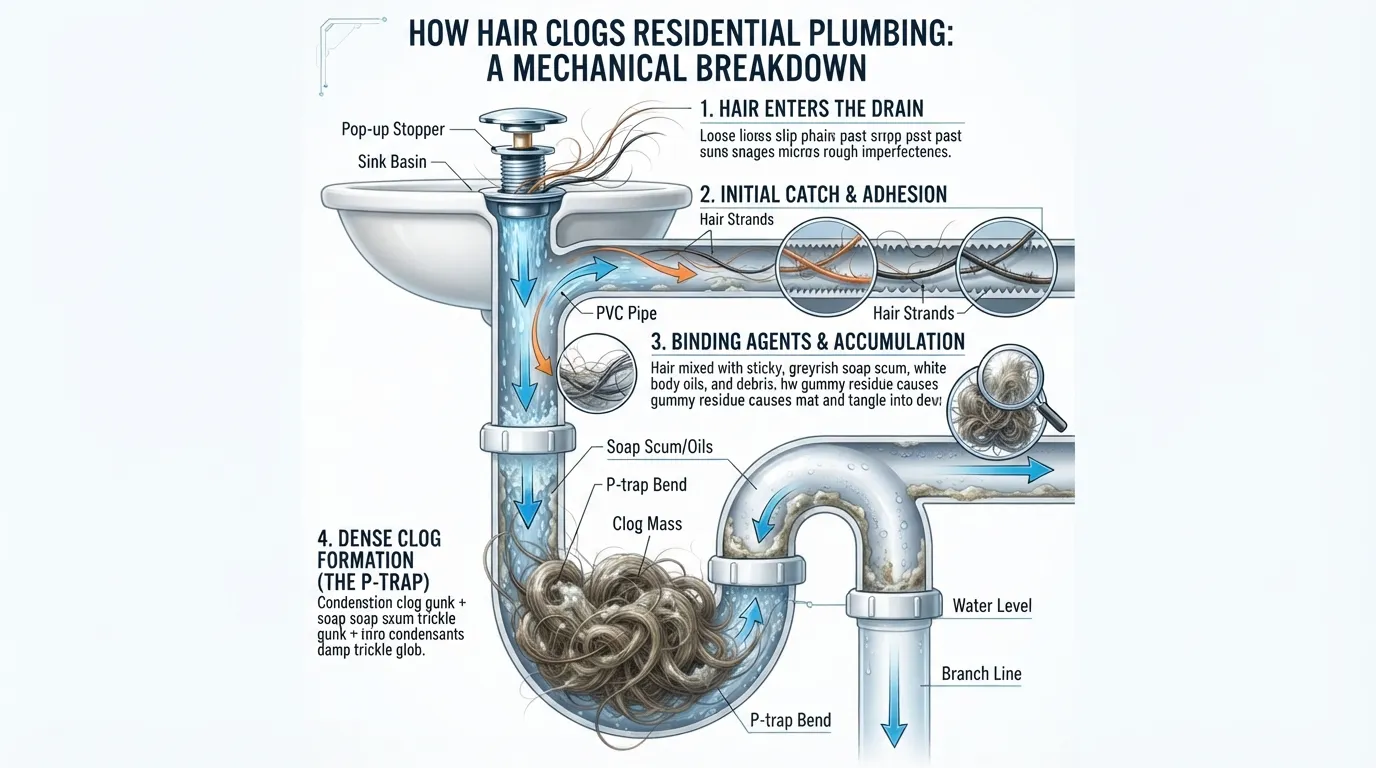
Hair behaves like a net inside your plumbing, catching oils, soaps, and debris to form stubborn blockages. Understanding the exact mechanical process helps you prevent plumbing failures before they require professional intervention.
Why Hair Doesn’t Break Down in Your Drain
Made of keratin: Hair is composed of a tough, fibrous protein called keratin that resists natural decay.
Insoluble in water: Unlike organic food waste or water-soluble powders, hair does not dissolve or break down when exposed to water.
High-friction texture: The outer cuticle of a hair strand features microscopic scales that easily tangle and grip onto rough interior pipe walls.
The Hair + Soap Scum + Grease Chain Reaction
Initial catch: Loose hair strands slip past the drain guard and catch on microscopic imperfections or rough spots along the pipe wall.
Residue accumulation: Soap scum, body oils, and styling product grease wash down and stick directly to the trapped hair fibers.
Mat formation: Additional hair and debris accumulate on the sticky surface, rapidly weaving together into a dense, felt-like mat.
Flow restriction: The growing mass chokes the pipe diameter, resulting in a sluggish, slow-draining sink or shower.
Where Hair Gets Stuck: P-Trap, Pop-Up Stopper, and Branch Lines
Pop-Up Stopper: The mechanical stopper mechanism directly beneath the sink basin is the primary surface where wet hair strands wrap and anchor.
P-Trap: The curved U-section of pipe under your sink holds standing water and naturally collects floating hair clumps and heavy sediment.
Branch Lines: Horizontal pipes connecting individual fixtures to the main stack accumulate compacted hair mats further down the line.
Short Clippings vs. Long Hair: Which Is Worse?
Short clippings (beards, buzz cuts): While tiny beard trimmings seem harmless, their stiff, needle-like nature allows them to scatter widely, settle into deep pipe bends, and pack tightly together.
Long hair: Long strands act like ropes or nets, easily wrapping around mechanical stoppers and catching other debris to form massive clogs.
Sink, Shower, or Toilet: Where Can Hair Safely Go?
Navigating where hair can and cannot go safely depends entirely on your plumbing setup and the fixture you choose. While sinks and showers routinely handle stray grooming debris, improper disposal methods can quickly result in costly emergency drain cleaning or severe mainline backups.
Can Hair Go Down the Bathroom Sink?
Washing large amounts of hair down the bathroom sink is highly risky because loose strands quickly catch on the pop-up stopper and inner pipe walls. While a few accidental stray strands will usually wash through, directing whole bundles or trimming piles down the basin guarantees a slow or completely blocked drain over time.
Can Hair Go Down the Shower Drain?
Shower drains handle daily shedding, but they are primary hotspots for heavy clogs unless protected by a fine mesh hair catcher. Showers collect significantly more hair over time because high-volume water flow constantly pushes loose strands into the P-trap, where they combine with body oils and soap scum.
Can Hair Go Down the Toilet?
While minor stray hairs won’t instantly break your plumbing, flushing hair down the toilet is strongly discouraged because human hair does not dissolve and easily tangles with toilet paper, flushable wipes, and other non-soluble waste. This creates dense obstructions deep within the sewer line, requiring professional toilet repair if a severe obstruction forms.
What About Septic Systems?
Hair consists of resilient keratin proteins that do not break down naturally through bacterial digestion in a septic tank. Because hair accumulates inside the tank as a non-degrading solid rather than liquefying, it accelerates scum and sludge layer buildup, increasing the frequency at which your tank must be professionally pumped. Property owners can review official guidelines through the EPA SepticSmart guidance to learn more about what should and shouldn’t enter an onsite wastewater system.
Quick Comparison Table: Sink vs. Shower vs. Toilet vs. Septic
| Fixture / System | Risk Level | Why It Happens | Safer Option |
| Bathroom Sink | Moderate to High | Strands snag on pop-up stoppers and accumulate with toothpaste and soap scum. | Wipe hair clippings with a tissue and throw them in the trash. |
| Shower Drain | High | Constant daily shedding combines with heavy soap and body oil residue. | Install a silicone or stainless steel mesh hair catcher over the drain. |
| Toilet | High | Hair binds with paper products and wipes to create dense, structural blockages. | Never use the toilet as a trash can for hair disposal. |
| Septic Tank | Severe (Long-term) | Non-degrading keratin solids accumulate and accelerate sludge layer growth. | Catch all hair dry and dispose of it in solid waste bins. |
How to Trim Your Hair at Home Without Harming Your Plumbing
Giving yourself a DIY haircut at home requires careful preparation to ensure you achieve a clean look without risking a costly plumbing emergency. Protecting your bathroom pipes from loose hair clippings is just as important as mastering your styling technique.
Step-by-Step: A Plumbing-Safe Home Haircut Setup
Choose the right spot: Select a well-lit area with easy-to-clean flooring, such as a bathroom with hard tile or a hardwood space.
Cover the floor: Lay down a large protective sheet, plastic drop cloth, or towel to catch stray hair clippings before they scatter.
Close and seal the drain: Insert a reliable drain stopper or cover sink and tub openings completely to block any loose strands from entering the plumbing.
Wear a cape or old towel: Secure a professional cutting cape or wrap an old towel snugly around your shoulders to keep cut hair off your clothes and skin.
Trim over a wastebasket or tray: Position yourself directly above a trash can or large holding tray to catch the bulk of falling hair.
Collect clippings before rinsing: Carefully gather all loose hair from your cape, sheets, and workspace into the trash before cleaning up your area.
The Best Place to Cut Hair at Home (and the Worst)
Best locations: Trimming your hair outdoors, in a garage, or standing over a hard kitchen floor protected by a large sheet makes cleanup entirely risk-free for your indoor plumbing.
Worst location: Leaning directly over an unprotected bathroom sink basin while cutting hair is the absolute worst choice, as stray clippings inevitably slip past stoppers and enter delicate P-traps.
If You Must Trim Over the Sink: Damage-Control Tips
Plug the drain: Ensure your sink stopper is firmly clicked down or use a silicone drain cover before picking up your clippers or shears.
Line the basin: Line the interior of the sink bowl with a damp paper towel or plastic wrap to catch fine hairs.
Wipe clippings toward the trash: Use a dry paper towel to sweep all accumulated hair out of the basin and directly into the wastebasket.
Never rinse clippings: Avoid running water or using the faucet sprayer to wash hair down the drain, as water pushes loose strands deeper into pipe bends.
Quick Haircut Basics Readers Ask About
How to give yourself a trim at home? Section your hair cleanly, maintain proper tension, cut with professional shears using point-cutting techniques, and always keep hair away from household drains [05:55], [10:36].
Tips for Trimming Beards, Buzz Cuts, and Long Hair
Beard trimming: Always use a specialized beard-trimming bib, a sink catcher apron that suctions to the mirror, or trim directly over a lined wastebasket to keep coarse facial hair out of the sink trap.
Buzz cuts: Use a handheld vacuum clipper attachment or place a damp towel across the bathroom counter and sink basin to intercept short, needle-like hair stubs.
Long hair: Tie or section long strands securely before trimming ends to prevent loose hair from shedding into bathroom floors and shower drains.
Best Tools to Keep Hair Out of Your Drains
Preventing hair clogs before they start is far easier and less expensive than clearing a blocked mainline. Equipping your bathroom with the right physical barriers stops hair clippings from ever reaching your plumbing system.
Drain Covers and Hair Catchers
Silicone drain protectors: Flexible, low-profile covers that fit snugly over standard tub and shower drains, catching hair on top while allowing water to pass through.
Stainless steel mesh strainers: Durable drop-in baskets with fine metal mesh that trap even the shortest strands and resist rust from daily water exposure.
Popup-compatible strainers: Specially designed silicone rings or domed caps that sit over existing bathroom sink stoppers without impeding normal operation.
Beard and Trimming Catchers (e.g., Stubble Buddy-type products)
Mirror-suctioned grooming bibs: Fabric capes that attach to your bathroom mirror via suction cups and loop around your neck, creating a hammock-like pouch that catches 100% of beard and hair trimmings.
Pros: Completely eliminates stray clippings from falling onto the counter or down the sink, folds up easily for storage, and makes cleanup effortless.
Cons: Requires clear mirror space for secure suction and takes an extra minute to put on and take off during routine grooming.
Simple Household Alternatives
Dedicated countertop wastebasket: Placing a small trash can right next to the bathroom mirror encourages you to wipe dry hair clippings directly into the bin instead of the sink.
Damp paper towel lining: Laying a wet paper towel across the sink basin traps loose stray hairs, allowing you to fold it up and throw it away when finished.
Plastic drop cloths or old sheets: Spreading a protective covering over the floor or counter catches falling hair during family haircuts for easy shake-out disposal outdoors.
Our Plumbers’ Take: What Works and What Doesn’t
What actually works: Simple physical mesh catchers, silicone sink guards, and mirror-attached beard capes are absolute game-changers that our plumbing technicians recommend on nearly every service call. They stop hair at the surface before it can interlock with soap scum inside the P-trap.
What doesn’t work: Liquid chemical drain openers advertised as “hair dissolving” formulas are largely ineffective on dense, compacted hair and soap clogs, often leaving corrosive residue in your pipes while only burning a small hole through the center of the blockage.
Comparison Table: Drain Protection Tools
| Tool | Best For | Pros | Cons | Cost Range |
| Silicone Drain Protector | Showers and tubs | Easy to clean, fits most drains, soft on feet. | Can slow drainage slightly if hair builds up quickly. | $5 – $12 |
| Stainless Steel Mesh Strainer | Sinks and high-flow drains | Highly durable, rust-resistant, traps fine hair effectively. | May require frequent emptying during long grooming sessions. | $8 – $15 |
| Beard Trimming Bib | Facial hair and beard trims | Catches 100% of trimmings, zero mess on counters or sinks. | Requires mirror space for suction cups; extra setup step. | $10 – $20 |
| Silicone Sink Cap | Bathroom sink pop-ups | Instantly covers tricky pop-up stoppers to block hair entry. | Must be removed to use the sink plug normally. | $6 – $14 |
Warning Signs a Hair Clog Is Forming
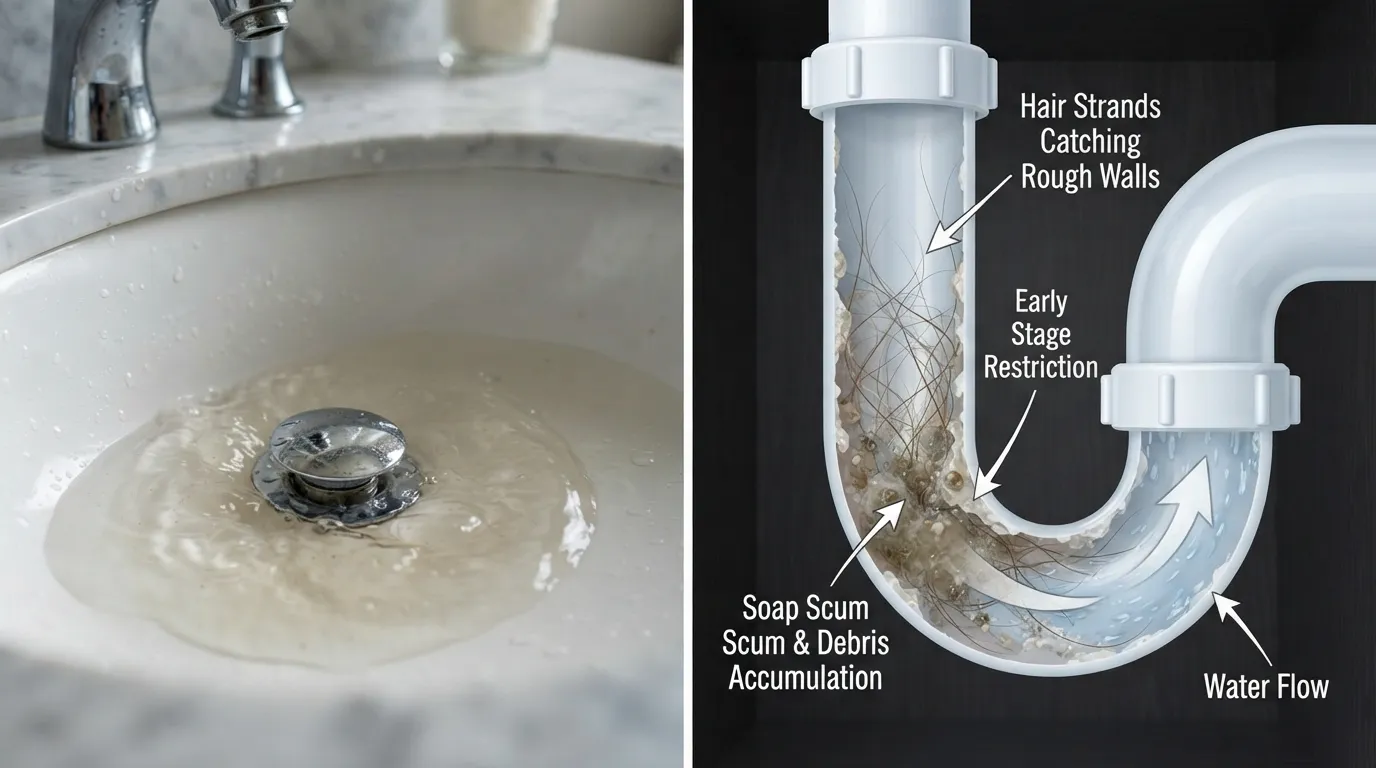
Catching a hair clog in its early stages can save you from a messy and expensive plumbing emergency. Knowing the warning signs allows you to clear minor restrictions before they transform into complete blockages.
Slow Draining Water
The warning sign: Water takes noticeably longer to empty from your sink basin or shower floor after a normal use, leaving a lazy whirlpool or pooling water behind.
Why it happens: Accumulated hair and soap scum have narrowed the interior pipe diameter, restricting water flow through the P-trap or horizontal branch line.
Gurgling Sounds and Bad Smells
The warning sign: You hear distinct bubbling or gurgling noises from the drain while water flows down, or you notice a musty, organic odor rising from the pipes.
Why it happens: Trapped hair collects organic waste, skin cells, and bacteria that decompose inside the pipe, while escaping air bubbles push past partial blockages.
Standing Water in the Sink or Shower
The warning sign: Water pools around your feet during a standard shower or refuses to empty entirely from the bathroom sink basin after handwashing.
Why it happens: A dense, felt-like mat of hair and debris has sealed off a major portion of the drain line, preventing wastewater from escaping downstream.
Multiple Drains Backing Up at Once (Could Be More Than Hair)
The warning sign: When you run the bathroom sink and water bubbles up in the shower drain or toilet, or multiple fixtures throughout the bathroom fail simultaneously.
Why it happens: Multiple slow fixtures or total backups usually indicate a blockage deeper in your plumbing system rather than a single sink trap. If several fixtures are affected, the issue may extend into your property’s sewer line, requiring professional diagnosis and cleaning.
Already Clogged? Safe DIY Fixes and What to Avoid
If your bathroom drain is already draining slowly or completely blocked by hair and soap scum, you don’t necessarily need to panic or call a plumber right away. However, choosing the wrong clearing method can lead to severe pipe damage and expensive repairs.
Safe Ways to Clear a Minor Hair Clog
Remove the sink or tub stopper: Unscrew or pull out the pop-up stopper mechanism to expose the main drain opening where hair clumps accumulate.
Pull out visible hair: Use a flexible plastic hair snake, drain tool, or wire coat hanger with a small hook to fish out entangled hair mats.
Flush with hot water: Pour a steady stream of hot (never boiling, which can crack porcelain or warp PVC pipes) tap water down the drain to rinse away loosened residue.
Use a plunger carefully: Fill the sink or tub basin with a few inches of water, place a cup plunger tightly over the drain opening, and perform quick, forceful up-and-down strokes to dislodge minor clogs.
Do Baking Soda and Vinegar Work on Hair Clogs?
While the classic baking soda and vinegar fizz is a popular eco-friendly cleaning trick, it has a very mild, limited effect on dense hair-based clogs. The chemical reaction creates carbon dioxide gas that can help loosen minor surface soap scum, but it cannot dissolve tough keratin protein strands or break apart a compacted hair mat inside a P-trap.
Why Chemical Drain Cleaners Can Do More Harm Than Good
Pipe and fixture damage: Harsh liquid chemical drain openers use extreme acids or lye that can corrode older metal pipes, degrade rubber seals, and etch acrylic or porcelain basins.
Severe safety risks: Splashing caustic chemicals back up from a clogged drain can cause severe chemical burns, skin irritation, and toxic fumes in confined bathrooms.
Hazardous plumber encounters: Pouring strong chemicals down a drain that fails to clear leaves a toxic, caustic standing pool inside the pipe, creating a dangerous and hazardous environment for any plumber called to snake the line.
Enzyme Cleaners: Useful for Maintenance, Not Heavy Clogs
Biological enzyme and bacteria-based cleaners are safe for your plumbing and excellent for digesting organic waste, skin oils, and soap residue during routine maintenance. However, they are entirely ineffective at rapidly breaking down heavy, established hair clogs and should not be relied upon as a quick fix for blocked drains.
When DIY Stops Working
If plunging, snaking, and clearing the P-trap fail to restore normal water flow, or if multiple fixtures throughout your bathroom begin backing up simultaneously, it is time to stop DIY efforts. Persistent or deep-seated blockages require professional intervention; schedule an expert inspection and drain cleaning to safely clear your plumbing lines without risk of pipe rupture.
When to Call a Professional Plumber
While basic hair clogs can often be managed with simple DIY tools and preventative strainers, stubborn blockages require licensed professional expertise. Knowing when to stop DIY efforts protects your plumbing system from accidental pipe damage and ensures long-term drainage reliability across your entire home.
Signs It’s Time to Stop DIY
Persistent clogs: The drain repeatedly backs up or slows down shortly after you have cleared it with a plunger or plastic hair snake.
Complete drainage failure: Standing water refuses to move at all, indicating a severe, tightly packed obstruction deeper within the pipe network.
Multiple slow fixtures: Water begins backing up in the shower when you run the sink, or several bathroom fixtures drain sluggishly at the same time.
Foul sewage odors: Unpleasant, gassy smells rise from the drain openings, pointing to trapped organic waste and venting issues.
Wastewater backups: Dark water or debris pushes up through lower drains, signaling a critical blockage in the main wastewater system.
What a Professional Drain Cleaning Involves
Professional plumbing technicians utilize advanced diagnostic equipment and heavy-duty machinery to completely clear obstructed lines without damaging your pipes. Depending on the severity of the blockage, service options typically include high-resolution video camera inspections to locate the exact obstruction, mechanical drain augers or snaking to break apart dense hair mats, and high-pressure drain cleaning hydro-jetting to scour pipe walls clean of accumulated grease and soap scum.
Emergency Situations: Overflowing Drains and Sewage Backups
When a hair clog interlocks with debris to cause active overflowing fixtures, sewage leaks, or total plumbing gridlocks in your Miami home, immediate intervention is critical. Do not wait for standard business hours; contact an experienced emergency plumber to mitigate water damage and safely restore sanitary conditions.
How Much Does Clearing a Hair Clog Cost?
Professional drain clearing costs vary depending on several key factors rather than a flat fixed rate. The primary elements influencing the overall price include the exact location of the clog (such as a reachable P-trap versus a deep branch line), accessibility of the affected pipe, and the severity or density of the accumulated hair and soap mass. Specialized techniques like hydro-jetting or main line camera inspections may adjust the total service investment accordingly.
Need help with a stubborn clog? Professional technicians in Miami are ready to restore your home’s drainage. Book a plumber today for fast, reliable service.
Special Cases: Older Pipes, Septic Homes, and Home Salons
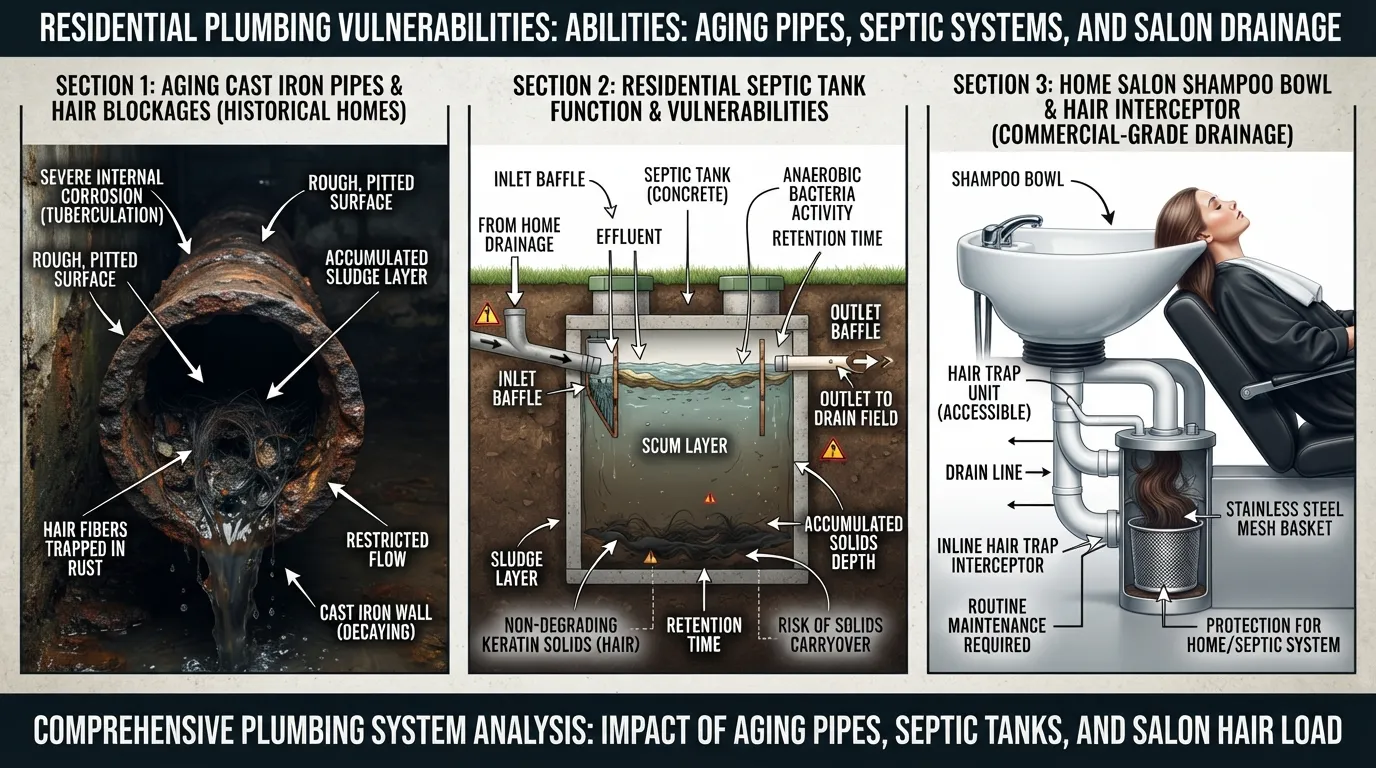
Standard bathroom plumbing handles normal daily grooming, but unique environments—such as historical homes, septic properties, and residential salons—face elevated risks from hair accumulation. Recognizing these specialized challenges helps prevent severe infrastructure damage.
Older Homes and Aging Pipes
Accelerated snagging: Older homes often feature aging cast iron or galvanized steel pipes whose interiors have become rough, pitted, or corroded over decades of use, giving loose hair strands countless micro-surfaces to grip.
Recurrent blockages: Hidden pipe degradation, root intrusion, or structural sags can trap hair mats repeatedly in the same spot. If persistent clogs or unexplained moisture suggest underlying infrastructure issues, professional leak detection and repair is necessary to evaluate pipe integrity.
Homes on Septic Systems
Non-degrading buildup: As covered earlier in our septic system analysis, hair is composed of tough keratin that does not break down via bacterial digestion in a septic tank.
Sludge management: Accumulated hair increases the solid sludge layer inside the tank, requiring more frequent professional pumping and risking costly drainfield saturation. Always keep hair waste out of septic-connected wastewater lines.
Home Barbers, Stylists, and Small Salons
High-volume exposure: Operating a home-based hair salon or barber station means dealing with a massive daily volume of clippings that far exceeds standard residential wear and tear.
Commercial requirements: Small salon setups require heavy-duty hair interceptors, inline stainless steel hair traps, and scheduled maintenance to keep high-frequency cutting waste out of residential branch lines. For professional business setups and compliance, consult our expert commercial plumbing services.
Renters and Shared Plumbing
Multi-tenant risks: In apartments, condos, or shared rental housing, individual bathroom branch lines often tie into communal vertical stacks.
Liability awareness: A severe hair clog in shared vertical lines can impact neighboring units or trigger building-wide backups, making quick reporting to your landlord or property manager essential before DIY measures worsen the issue.
What to Do With Hair Clippings After a Trim
Successfully completing an at-home haircut or beard trim doesn’t end when the shears are put down. Proper disposal and cleanup ensure that stray hair clippings are safely removed from your living space without ever endangering your bathroom drainage system.
Best Ways to Dispose of Hair Clippings
Bag and bin: Gather all loose hair from your protective cape, drop cloth, or counter tray and empty it directly into a standard household trash bag.
Compost (if applicable): Because human hair is rich in nitrogen, natural untreated hair clippings can be safely added to backyard compost bins in small amounts.
Sweep or vacuum: Always use a broom or a vacuum cleaner to pick up floor trimmings rather than attempting to sweep or wash them toward bathroom or laundry drains.
How to Clean Up Without Rinsing Hair Down the Drain
Damp paper towel: Wipe down bathroom counters and sink rims with a slightly damp paper towel to easily capture microscopic stray hairs.
Lint roller: Roll a sticky lint roller over clothing, fabric capes, and bathroom mats to lift fine, clinging hair strands instantly.
Handheld vacuum: Use a small cordless vacuum or a hose attachment to sweep up beard stubs and short buzz-cut clippings from flat surfaces.
Packing tape: Press a strip of wide tape against sinks or counters to pick up stubborn, needle-like beard trimmings that resist sweeping.
Quick Post-Trim Drain Check
Remove the stopper: Pull out or unscrew the pop-up stopper to inspect the immediate drain opening for any escaped strands.
Check for stray hair: Wipe around the rim of the drain flange to ensure no loose clippings slipped past your protective cover during the grooming process.
Run water and watch the flow: Turn on the tap at full pressure for 30 seconds, observing the drain to verify that water spirals down quickly and smoothly without any bubbling or pooling.
Frequently Asked Questions
Can I cut my hair over the sink?
Trimming your hair directly over an open bathroom sink is strongly discouraged because loose strands easily slip past stoppers, bind with soap scum, and form stubborn blockages inside the P-trap. If you must use the sink, plug the drain completely and wipe dry clippings directly into the trash.
Does hair dissolve in the drain?
Hair does not dissolve in water or break down inside plumbing lines because it is composed of a tough, fibrous protein called keratin. Unlike organic food waste, hair strands persist indefinitely, gradually tangling with soap scum, grease, and body oils to build dense blockages.
Can hair go down the toilet or shower drain?
While shower drains routinely handle daily shedding, washing heavy clippings down them risks subterranean branch-line clogs. Flushing hair down the toilet is even riskier, as it interlocks with toilet paper and wipes to create severe blockages that require immediate professional intervention.
Will hair clog a septic system?
Hair is a non-degrading solid that resists bacterial breakdown inside a septic tank, meaning it slowly accumulates in the solid sludge layer. Over time, high volumes of hair increase tank pumping frequency and can cause severe drainfield saturation and system failure.
Are chemical drain cleaners safe for hair clogs?
Harsh chemical drain openers are rarely effective on dense hair mats and pose significant safety risks, including pipe corrosion, rubber seal degradation, and dangerous chemical splashes. They leave caustic standing liquid in pipes, creating extreme hazards for anyone working on the line.
How do I cut my own hair without making a mess?
Prevent messes by trimming over a hard-surface floor covered with a protective drop cloth or sheet, or by using a specialized beard-trimming apron attached to your mirror. Always wear a cutting cape and sweep up stray clippings into a wastebasket instead of rinsing them.
How often should I clean my drain if I trim at home?
If you regularly cut your hair or trim your beard at home, inspect and clean your drain strainers after every grooming session. Performing preventative maintenance using a plastic hair snake or biological enzyme cleaner every few months keeps lines clear.
How do I get hair out of a drain without a plumber?
You can clear minor hair clogs by removing the pop-up stopper and pulling out entangled strands using a flexible plastic hair snake or wire hook. Follow up by flushing the line with hot tap water and using a cup plunger to dislodge remaining residue.
When should I call a plumber for a slow drain?
Call a professional if DIY snaking and plunging fail to restore normal flow, if multiple bathroom fixtures back up simultaneously, or if you notice foul sewage odors. When persistent drainage issues disrupt your daily routine, you can quickly book a plumber to safely clear the line.
Final Thoughts and Next Steps
Managing at-home haircuts and grooming routines successfully requires a balance of smart styling techniques and diligent plumbing protection. By taking proactive steps to keep hair clippings out of your wastewater lines, you can easily avoid stressful and costly drain blockages.
Key Takeaways
Close the drain: Always seal or cover your bathroom sink, tub, and shower drains before starting any trimming or grooming session.
Trim away from the sink: Position yourself over a wastebasket, hard floor with a drop cloth, or use a mirror-suctioned grooming bib to catch falling hair.
Use physical catchers: Equip your drains with reliable silicone protectors or stainless steel mesh strainers to intercept stray strands.
Dispose of hair properly: Always bag and bin loose hair clippings or vacuum them up rather than rinsing them down household pipes.
Call a professional early: Stop DIY efforts and contact a licensed expert the moment you notice persistent clogs, slow drainage, or multiple fixtures backing up.
Need Help With a Clogged Drain?
If a stubborn hair clog has already overpowered your best DIY efforts, you don’t have to tackle it alone. Our experienced local technicians provide comprehensive drain cleaning solutions and full-service residential care across our broader plumbing services hub to get your system flowing smoothly again.
Don’t let a slow drain turn into an emergency. Book a plumber today for fast, dependable service.
Main Services
Related Posts
Need a Plumber in Miami?
Schedule service online or speak directly with the EZ Plumbing team.
Owner-Led Local Service
Know who is behind the business before you request service. The owners, contact line and Miami service pages are published clearly.
- Named business owners
- Direct phone and social channels
- Local Miami service information
Clear Help Before You Book
Review the relevant service page, contact the team directly and use the booking page when you are ready—without relying on vague claims.
- Service-specific information
- Direct questions before scheduling
- Clear online booking route