3 Signs You Should Call a Professional Plumber and When It Can Wait
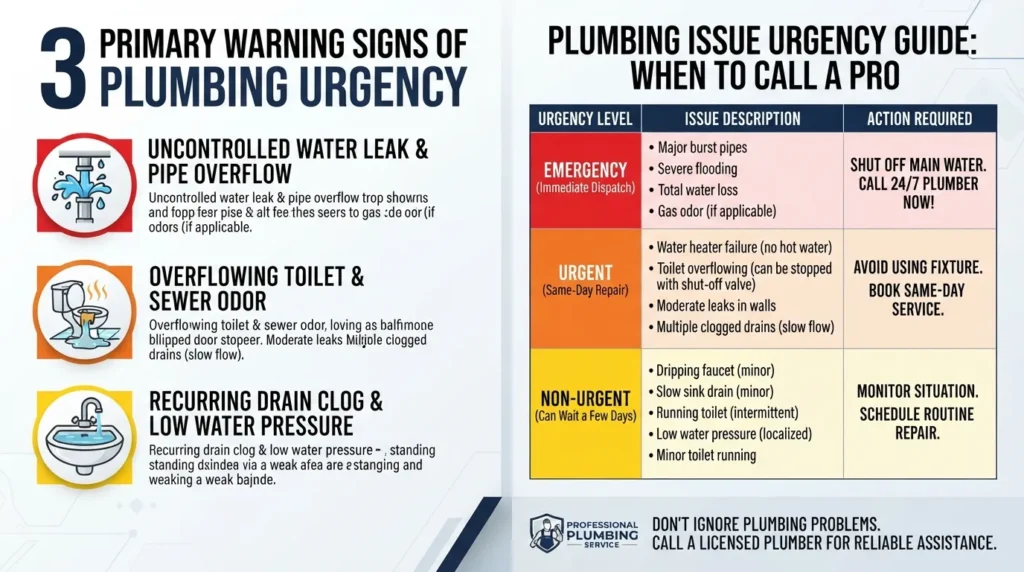
3 Warning Signs Your Miami Home Needs a Professional Plumber Immediately
When a plumbing issue strikes in a Miami home, waiting even a few hours can turn a minor fix into an expensive disaster. Certain red flags indicate that a situation has moved past a simple DIY fix and requires an immediate call to a licensed plumber to prevent catastrophic property damage.
A leak or overflow you can’t stop, or can’t find hidden behind walls or beneath flooring
Persistent sewer odors or raw sewage backing up into your sinks, tubs, or toilets
Drain or pressure problems that keep coming back despite your best efforts to clear them
Ignoring these warning signs carries a heavy financial and structural price. Unchecked moisture leads to rapid water damage, hazardous mold growth, and skyrocketing repair costs that far exceed the price of early intervention.
In South Florida, Miami’s high humidity and common slab foundation construction create a ticking clock—small, hidden leaks turn into structural decay and toxic mold outbreaks faster here than almost anywhere else.
A Leak or Overflow You Can't Stop or Can't Find
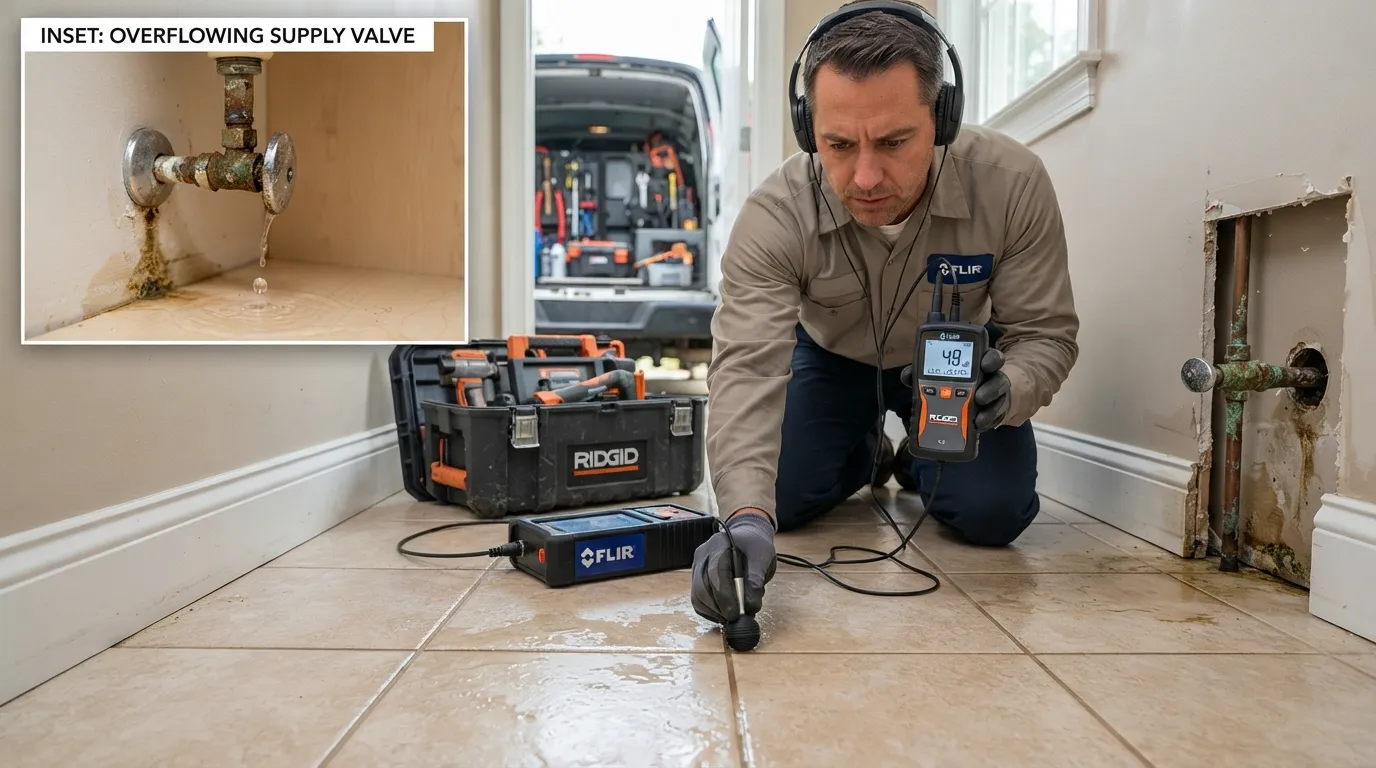
Active leaks and catastrophic overflows demand immediate intervention to protect your property. Whether dealing with a sudden structural failure or a silent hidden threat, quick action prevents thousands of dollars in property damage.
Active Leaks and Overflowing Fixtures (Call Now)
Sudden plumbing failures can quickly inundate a room, threatening your home’s structural integrity. When water continues gushing despite your best efforts, you are facing a true plumbing emergency.
Severe Overflows: An overflowing toilet that refuses to stop can quickly compromise bathroom flooring and subflooring.
Catastrophic Failures: A burst pipe or supply line break can flood drywall and insulation within minutes.
Valve Failure: Water that keeps flowing even after the main shut-off valve is closed indicates a complete isolation failure requiring professional intervention.
Hidden Leaks: The Signs You Can’t See
Not all plumbing disasters announce themselves with gushing water. According to the EPA’s Fix a Leak resources target=”_blank”}, the average household loses nearly 10,000 gallons of water a year to leaks, many of which remain completely invisible.
Unexplained High Bills: A sudden spike in your municipal utility bill without changes in consumption points directly to an underground or behind-the-wall leak.
Auditory Cues: The faint sound of running water when all indoor fixtures and appliances are turned off.
Environmental Odors: A persistent, musty smell in isolated hallways or closets indicating trapped moisture.
Visual Damage: Bubbling paint, warped baseboards, peeling wallpaper, or unexplained warm spots on your flooring.
In South Florida, slab foundations and high humidity create a severe hazard. Hidden pipe leaks beneath concrete slabs heat up the surrounding earth, supercharging mold growth and undermining the foundation faster than in drier climates. Comprehensive professional leak detection is essential to pinpoint these issues accurately without destructive guesswork.
How to Check for a Hidden Leak in 10 Minutes (Water Meter Test)
You can confirm suspicions of a silent leak using your property’s main water meter. Follow these precise steps to run a quick diagnostic test:
Turn off all indoor and outdoor water fixtures, ensuring no appliances like washing machines or ice makers are actively running.
Locate your home’s water meter box (typically situated near the front property line or sidewalk under a heavy utility lid).
Open the cover and inspect the dial for a low-flow indicator triangle, gear, or small star-shaped leak indicator wheel.
Watch the indicator to see if it is spinning; if it is moving even slightly, water is actively escaping somewhere in your system.
Take a photo of the numerical register, wait 30 to 60 minutes without using any water, and compare readings to verify ongoing volume loss.
Plumber’s Note: On our service calls, hidden leaks are most frequently found at aging supply line connections, under kitchen sinks, or running silently through underground slab lines. Water travels along the path of least resistance, meaning the actual damage point can be dozens of feet away from where the pipe first failed.
Frozen Pipes: Do They Matter in Miami?
While freezing temperatures are extremely rare in South Florida, occasional winter cold snaps can occasionally affect exposed outdoor supply lines or poorly insulated hose bibbs. Never attempt to thaw hidden pipes yourself using open flames or high-heat heating elements, as this dramatically increases the risk of pipe rupture.
When to Call a Plumber for a Leak
If you cannot locate the source of a suspected water leak, if your water meter continues spinning with all fixtures off, or if an active pipe break refuses to stop, call a licensed plumber immediately to prevent structural ruin.
Sewer Odors or Sewage Backing Up
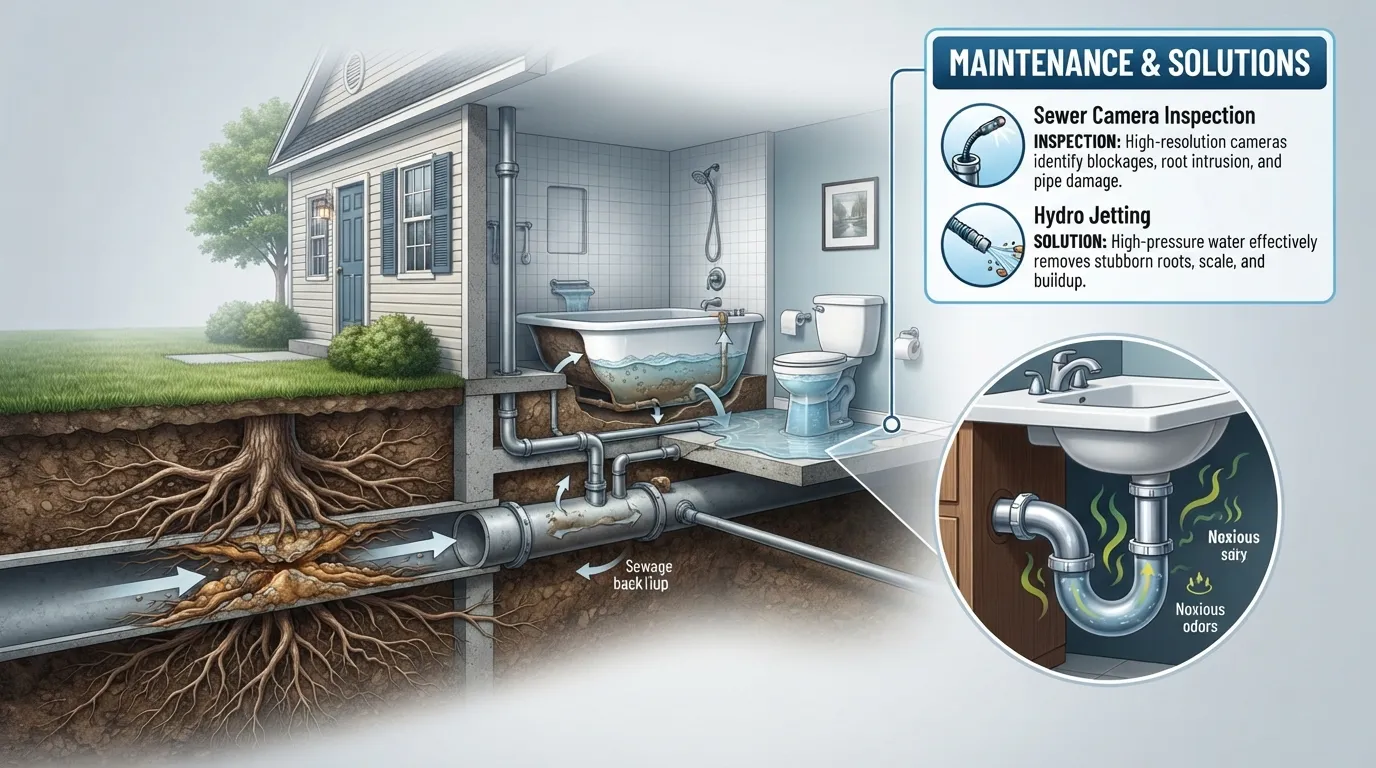
Unpleasant odors or rising wastewater indicate a compromised drainage system that requires immediate professional attention. Left unaddressed, these issues jeopardize your indoor air quality and sanitary safety.
Why Does My House Smell Like Sewage?
Foul odors wafting through your home are more than just a nuisance; they are a clear warning sign of a breach in your plumbing’s gas-blocking infrastructure.
Dry P-Traps: Evaporated water in infrequently used drain traps allows sewer gas to enter living spaces.
Wax Ring Failures: A compromised wax ring / rocking toilet leaks sewer gases directly into the bathroom.
Blocked Vent Pipes: Debris or bird nests in the roof vent stack prevent proper pressure equalization.
Cracked Lines: Structural damage or breaks in the main sewer line allow gases to escape underground or beneath the foundation.
Try This First: The Dry P-Trap Fix (1 Minute)
Before panicking over a broken sewer pipe, check your drainage traps. Run water down any rarely used drains, including guest bathroom sinks, laundry room floor drains, or utility tubs, for at least 60 seconds.
In Miami homes, intense air conditioning usage and heat cause rapid water evaporation in rarely used plumbing fixtures, frequently drying out P-traps and letting sewer odors seep indoors. If the smell disappears shortly after running water, a dry trap was the sole culprit.
When the Smell Means a Real Problem
If running water does not eliminate the odor, you are likely facing a serious system failure. Persistent smells signal that sewer gas is continuously bypassing your plumbing’s safety barriers.
Pervasive Odors: The smell continues or intensifies even after running water in all fixtures.
Multiple Room Impact: Odors are detected simultaneously in several disconnected rooms or bathrooms.
Gurgling Fixtures: Sinks or tubs make bubbling sounds when you flush the toilet or drain washing machines.
Unexplained Moisture: Wet spots or damp soil appear near outdoor cleanouts or exterior foundation walls.
Sewer gas contains hydrogen sulfide, a toxic compound that produces a strong rotten-egg odor and can cause health issues at elevated concentrations. Ventilate the area immediately by opening windows and contact a professional.
Sewage Backing Up: Treat It as an Emergency
A sewage backup is a critical plumbing emergency that demands an immediate halt to all water usage in the home. Wastewater intrusion poses severe health hazards to your family.
Simultaneous Backups: Multiple drains throughout the house begin backing up or draining extremely slowly at the same time.
Cross-Fixture Rising: Water rises up into your bathtub or shower drain whenever you flush the toilet.
Cleanout Overflow: Raw sewage begins pooling around your outdoor main sewer cleanout cap.
Never use harsh chemical drain cleaners in an attempt to clear a major backup, as corrosive agents can damage pipes and create extreme hazards if professional intervention becomes necessary. Stop flushing and using all fixtures immediately.
In the Miami area, heavy tropical downpours, aging cast iron or clay sewer lines, and aggressive invasive tree roots frequently combine to create sudden, severe main line blockages.
What a Professional Does Differently
Resolving deep mainline obstructions requires advanced diagnostic technology and heavy-duty equipment rather than standard consumer plungers.
Camera Inspections: Advanced sewer line inspection and repair uses fiber-optic cameras to pinpoint exact blockage locations, root intrusions, or pipe collapses.
Hydro Jetting: High-pressure professional drain cleaning / hydro jetting completely scours pipe walls clean of grease, scale, and stubborn debris.
Targeted Repairs: Licensed technicians evaluate whether spot repairs or full trenchless pipe replacement is necessary to restore long-term flow.
Drain and Water Problems That Keep Coming Back
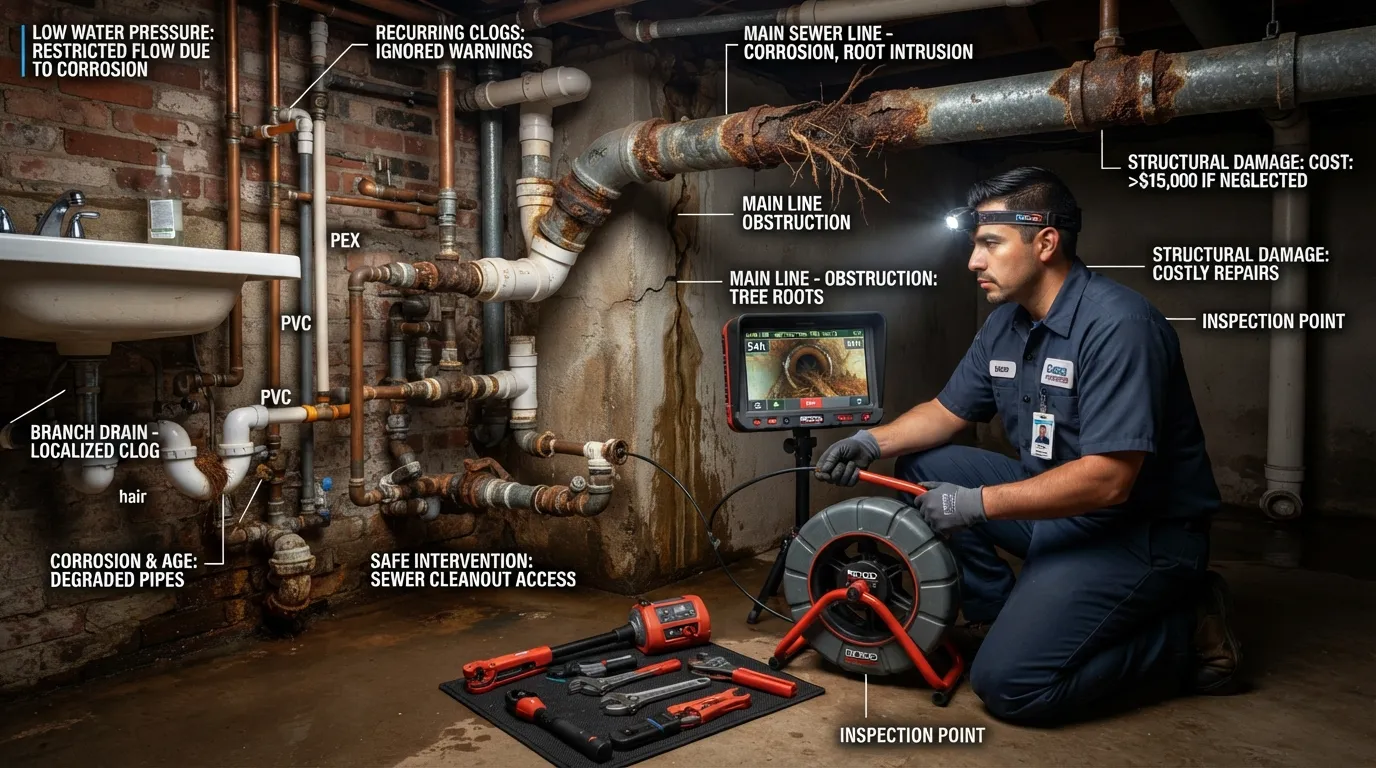
Recurring plumbing issues are rarely isolated inconveniences; they are usually symptoms of a deeper, systemic failure within your piping infrastructure. Ignoring persistent minor annoyances almost always leads to a major emergency repair down the line.
Slow Drains and Repeated Clogs
A single slow drain usually indicates a localized blockage trapped in the P-trap or immediate branch line. However, when multiple fixtures throughout the house begin draining slowly at the same time, the root cause is almost always a main line obstruction.
Safe Intervention: A standard plunger or manual snake is appropriate for clearing minor localized hair and soap clogs.
When to Stop: If plunging fails after two attempts or if clearing one drain causes another fixture to back up, stop immediately.
Corrosive Risks: Avoid chemical drain cleaners entirely. These caustic products generate high heat that can melt PVC pipes, crack older metal lines, and severely injure technicians who later service the line.
Clogged Toilet: DIY or Call a Plumber?
Every homeowner faces a clogged toilet eventually, but knowing when to abandon DIY methods prevents bathroom floods. Try using a flange plunger or a closet auger once to clear simple obstructions.
Call a professional immediately if the clog returns repeatedly despite clearing, or if flushing causes water to bubble up in your bathtub or bathroom sink. That cross-fixture reaction is a definitive indicator of a main sewer line blockage requiring recurring clogs / drain cleaning expertise.
Low Water Pressure or Discolored Water
Sudden changes in your water delivery or visual quality point to structural degradation within your supply lines. These issues rarely resolve on their own and require professional diagnostic testing.
Corroded Pipes: Aging galvanized steel or cast iron pipes accumulate internal scale and rust, severely constricting water flow.
Pressure Regulators: A failing pressure reducing valve can cause erratic pressure surges or drop flow to a trickle.
Mineral Buildup: Hard water scale can clog aerators, shut-off valves, and appliance supply lines.
Rust-Colored Water: Red or brown tinted water indicates pipe interior corrosion, a common issue in older Miami homes with aging plumbing networks.
Water Heater Warning Signs
Your water heater works continuously under high pressure, making it a critical hub for potential household damage. Recognizing early failure signs prevents catastrophic tank ruptures and sudden cold showers.
Loss of Heat: Inconsistent water temperatures or a complete lack of hot water.
Discolored Supply: Rusty or muddy hot water pointing to internal tank anode rod failure and tank wall corrosion.
Auditory Cues: Popping, rumbling, or banging noises caused by heavy sediment boiling at the bottom of the tank.
Pooling Moisture: Water droplets or puddles gathering around the base of the unit, signaling tank fractures or failing connection lines.
Professional water heater problems service ensures safe gas or electrical connections while protecting your home from sudden tank failures.
Why “Small” Problems Cost More Later
Allowing a minor plumbing issue to linger is a financial gamble that rarely pays off. On a recent service call in Coral Gables, a homeowner ignored a slowly draining shower for three months, assuming it was just hair buildup; by the time they called, tree roots had completely crushed the clay lateral line underneath the patio, turning a simple $150 rooter job into a multi-thousand-dollar trenchless excavation.
Call Now, Call Today, or Can It Wait?
Determining the exact urgency of a plumbing issue prevents unnecessary panic while ensuring you do not delay critical emergency repairs. Knowing when to act immediately protects your home, budget, and peace of mind.
Quick Urgency Guide
Use this reference table to evaluate your specific plumbing scenario and determine the appropriate response timeline:
| Situation | Urgency | What to do |
|---|---|---|
| Burst pipe, active flooding, sewage backup, strong sewer gas smell, or an uncontrollable water source | Emergency (Call Now) | Turn off the main water supply, evacuate affected areas if necessary, and contact an emergency plumber immediately. |
| Recurring leaks, multiple slow drains, complete loss of hot water, or widespread low water pressure | Urgent (Call Today) | Schedule same-day service with a licensed plumber to prevent minor issues from escalating into structural damage. |
| Dripping faucet, single slow-moving drain, or a running toilet that stops with a jiggle | Can Wait (Schedule within days) | Troubleshoot safely using basic DIY methods or book a standard non-emergency appointment at your convenience. |
When to Try It Yourself (Safe DIY) vs. When to Stop
Knowing your limits as a homeowner is the best defense against accidental property damage or personal injury. Understanding the boundary between safe maintenance and professional intervention keeps your household secure.
Safe DIY Scenarios: Clearing a minor sink clog with a flange plunger, refilling an evaporated P-trap with water, or unscrewing and cleaning a clogged faucet aerator.
Immediate Stop Triggers: Stop all DIY efforts immediately if the job involves the main sewer line, hidden pipes behind drywall or concrete slabs, gas lines, or a main shut-off valve that will not completely close.
When in doubt, bringing in a licensed professional ensures the problem is diagnosed correctly and resolved safely the first time.
What to Do Before the Plumber Arrives
When a plumbing emergency strikes, taking immediate and calculated actions can prevent thousands of dollars in secondary property damage. Knowing what steps to prioritize while waiting for professional help ensures your home remains safe and secure.
Step 1: Shut Off the Main Water Valve
Stopping the source of incoming water is the single most effective way to limit damage during a burst pipe or severe leak. Locating and manipulating your home’s main control mechanism immediately halts flooding.
Ball Valve: Features a straight lever handle; turn it a quarter turn perpendicular to the pipe to completely shut off the water flow.
Gate Valve: Features a round circular wheel handle; turn it clockwise multiple rotations until it stops tightly.
Verification: Confirm the water is off by opening a low-level interior faucet. If the valve feels stuck or rigid, do not force it with tools, as breaking an aged valve will worsen the emergency.
Step 2: Protect Your Home
Mitigating further loss requires swift containment and safeguarding your personal belongings from encroaching water.
Power Safety: Shut off your [water heater] circuit breaker and avoid standing water if there is any risk of electrical contact.
Asset Relocation: Move furniture, electronics, rugs, and valuables away from saturated flooring and drywall.
Containment: Use buckets, towels, or wet-dry vacuums to manage localized pools of standing water before they warp structural subflooring.
Step 3: Ventilate and Stay Safe (Sewer Gas or Sewage)
If your emergency involves raw sewage backups or overpowering sewer gas smells, immediate safety precautions are mandatory to protect household health.
Air Circulation: Open exterior windows and doors immediately to dissipate hazardous vapors.
Quarantine Areas: Keep children, elderly family members, and pets entirely away from contaminated rooms.
Direct Contact Avoidance: Never touch raw sewage or contaminated surfaces without proper personal protective equipment like heavy gloves and rubber boots.
Step 4: Document Everything
Thoroughly recording the condition of your property before cleanup begins streamlines the insurance claims process and ensures proper coverage.
Visual Evidence: Take clear, high-resolution photos and video walkthroughs of all damaged areas, personal property, and the plumbing source failure.
Timeline Creation: Note the exact time the incident was discovered, actions taken, and when professional services were contacted.
Tip: Locate Your Main Valve Today
Do not wait for an active flood to search for your main water shut-off mechanism. Take five minutes today to find it, attach a brightly colored identification tag, and turn the handle slightly back and forth to ensure it operates smoothly when you need it most.
How Much Does an Emergency Plumber Cost?
Understanding the financial aspects of emergency plumbing helps you make informed decisions without unexpected surprises. Transparent pricing structures ensure you can balance urgent property protection with clear budget expectations.
What Affects the Price
Several distinct factors influence the final cost of a professional plumbing dispatch, particularly when dealing with urgent or after-hours issues.
Timing: After-hours, weekend, or holiday dispatches often involve premium hourly or flat rates compared to standard business hours.
Complexity: Diagnosing and repairing hidden slab leaks or collapsed sewer lines takes significantly more labor than clearing a surface fixture.
Accessibility: Difficult-to-reach access points behind walls, beneath concrete slabs, or in tight crawlspaces require specialized equipment and extra time.
Parts and Materials: The cost of specialized replacement components, commercial-grade valves, or pipe sections.
Typical Price Ranges
The following estimates reflect standard local service pricing in the Miami market. Final pricing always depends on a thorough on-site diagnostic inspection by a licensed technician.
| Service Type | Typical Miami Price Range |
| Service Call & Diagnosis | $\$100 – \$250$ |
| Standard Drain Clearing | $\$150 – \$450$ |
| Minor Leak Repair | $\$200 – \$600$ |
| Sewer Camera Inspection | $\$250 – \$500$ |
| Water Heater Repair | $\$300 – \$950$ |
How to Avoid Surprise Costs
Protecting your budget during an unexpected breakdown comes down to clear communication with your service provider before work begins.
Upfront Estimates: Always request a clear, comprehensive estimate in writing before allowing the plumber to begin any work.
Fee Transparency: Confirm whether the service call or diagnostic fee is separate from or applied toward the total repair cost.
Scope Clarification: Ask precisely what is included in the quoted price, such as cleanup, replacement parts, and warranty coverage.
What to Say When You Call + How to Choose a Good Plumber
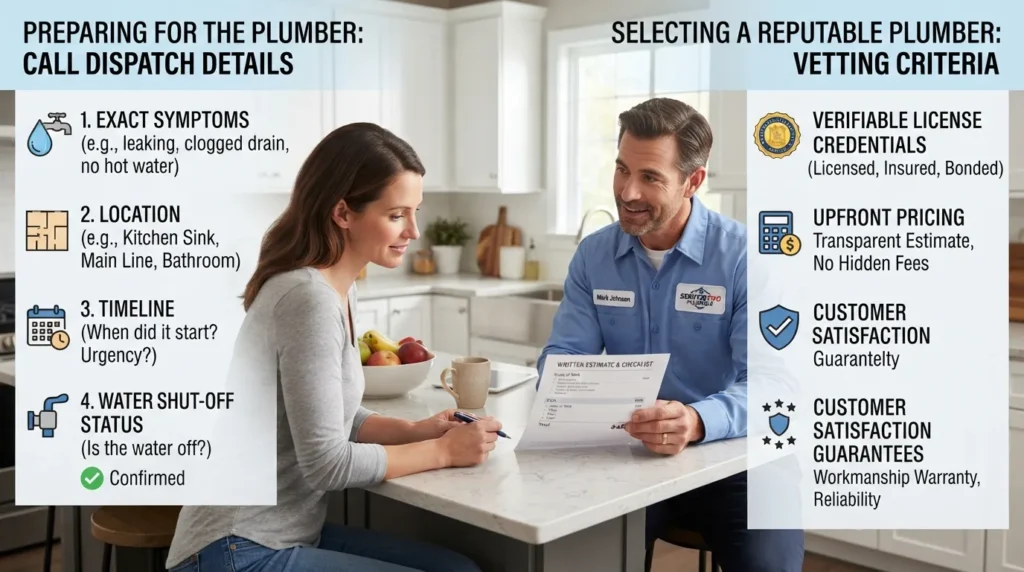
Knowing how to communicate your issue effectively and choosing the right professional ensures your plumbing emergency is resolved quickly and correctly. Clear preparation saves valuable time when every minute counts.
What to Tell the Plumber When You Call
When dispatching emergency help, providing precise details enables the plumbing team to arrive prepared with the right tools and replacement parts. Use this quick checklist when you make the call:
The Exact Symptom: Explain precisely what is happening (e.g., “Water is backing up into my shower when I flush the toilet”).
Location: State the specific room, floor, or outdoor area where the issue is occurring.
Timeline: Note when you first noticed the problem and how rapidly it has progressed.
Shut-Off Status: Inform dispatch whether you have successfully turned off the main water valve.
Visual Records: Mention if you have photos or videos ready to show the technician upon arrival.
Signs of a Good Plumber
Selecting a reputable service provider protects your home from subpar workmanship and unfair pricing. Look for these key markers of trust and professionalism:
Credentials: Fully licensed and insured with proof readily available upon request.
Transparent Pricing: Provides a clear, written estimate before starting any physical work.
Reputation: Backed by strong local customer reviews and verifiable industry ratings.
Professional Presentation: Arrives in a marked company vehicle with uniformed technicians.
Clear Communication: Explains the root cause of the issue plainly without resorting to high-pressure scare tactics.
Guaranteed Work: Stands behind their labor and parts with a solid service warranty.
Red Flags
Protect your home and budget by watching out for warning signs that indicate untrustworthy or predatory operators:
Unverified Status: An inability or refusal to provide a valid state plumbing license number.
Aggressive Pressure: Insisting that you need a total system replacement immediately without a proper diagnostic inspection.
Cash-Only Demands: Demanding large cash payments upfront before any work is scheduled or evaluated.
Should You Tip a Plumber?
Tipping a plumber is never required or expected, but it is always appreciated for exceptional emergency service, difficult crawlspace work, or after-hours dispatches. A tip of $\$20$ to $\$50$ or offering cold water on a hot Miami day is a gracious way to thank technicians who go above and beyond.
Frequently Asked Questions
Find direct, authoritative answers to the most common questions homeowners ask about plumbing emergencies, warning signs, and professional hiring practices.
What are some signs that I should call a plumber?
Critical warning signs include unstoppable water leaks, sudden drops in water pressure, persistent sewer gas odors, and sewage backing up into your sinks or tubs. If DIY methods fail or water is actively damaging your home’s structure, calling a professional is essential.
When should you call a professional plumber?
Call a professional whenever you face a plumbing emergency that you cannot isolate, such as a burst pipe, a main sewer line blockage, or a failing water heater. Calling immediately prevents minor issues from escalating into major property disasters.
What are some common reasons to call a plumber?
Homeowners frequently call plumbers to resolve recurring drain clogs, fix leaking water heaters, repair broken sewer lines, locate hidden slab leaks, and replace outdated or corroded supply pipes throughout the property.
When should I call a plumber for a clogged toilet?
Call a plumber if a toilet clog does not resolve after using a plunger or closet auger once, or if flushing causes water to bubble up in other fixtures like your shower or bathtub, which indicates a main line obstruction.
Is a plumber an emergency service?
Yes, many plumbing companies offer 24/7 dispatch for critical situations like active flooding, major pipe bursts, and raw sewage backups. You can request an immediate emergency plumber anytime an urgent hazard threatens your home.
What should I do in a plumbing emergency before the plumber arrives?
Immediately locate and shut off your home’s main water valve to stop active flooding. Turn off the electricity and water heater if standing water is nearby, ventilate the area if sewer gas is present, and document the damage with photos for your insurance claim.
How much is an emergency plumber?
Emergency plumbing costs vary depending on the time of day, severity of the problem, and labor required. Standard diagnostic service calls typically range from $\$100$ to $\$250$, with specific repair costs depending on the complexity of the job.
Should you tip a plumber who works for a company?
Tipping is never mandatory or expected, but it is a kind way to show appreciation for exceptional service, difficult after-hours work, or grueling crawlspace repairs. A cash tip between $\$20$ and $\$50$ is customary when a technician goes above and beyond.
Conclusion + Call to Action
Taking prompt action when plumbing warning signs appear is the single best way to protect your Miami home from costly structural damage, hazardous mold growth, and catastrophic water loss.
Don’t Wait for a Small Problem to Become a Big One
Unchecked leaks, lingering sewer odors, and recurring drainage failures rarely resolve on their own. Recognizing these critical red flags early puts you back in control of your home’s safety and prevents minor repairs from turning into major financial burdens.
Whether you are facing an active plumbing emergency or need expert diagnosis for a persistent household issue, professional help is just a click or a phone call away.
Author & Reviewer Expertise
Name: Michael Rodriguez, Master Plumber
License Number: CFC1428956
Experience: 18+ Years in Residential and Emergency Plumbing
Service Area: Greater Miami-Dade County & Surrounding Communities
Main Services
Related Posts
Need a Plumber in Miami?
Schedule service online or speak directly with the EZ Plumbing team.
Owner-Led Local Service
Know who is behind the business before you request service. The owners, contact line and Miami service pages are published clearly.
- Named business owners
- Direct phone and social channels
- Local Miami service information
Clear Help Before You Book
Review the relevant service page, contact the team directly and use the booking page when you are ready—without relying on vague claims.
- Service-specific information
- Direct questions before scheduling
- Clear online booking route