3 Signs a Sewer Backup Is Coming Before It Floods Your Home
Understanding the Warning Signs of a Sewer Backup
A sudden sewer backup is every homeowner’s nightmare, signaling a critical failure in your main sewer line that requires immediate professional intervention. Recognizing early warning signs like multiple clogged drains or gurgling toilets can prevent a messy plumbing emergency from causing severe property damage. Acting swiftly protects your home, safeguards your family’s health, and minimizes costly repairs before minor issues escalate.
What Is a Sewer Backup And How It's Different From a Normal Clog
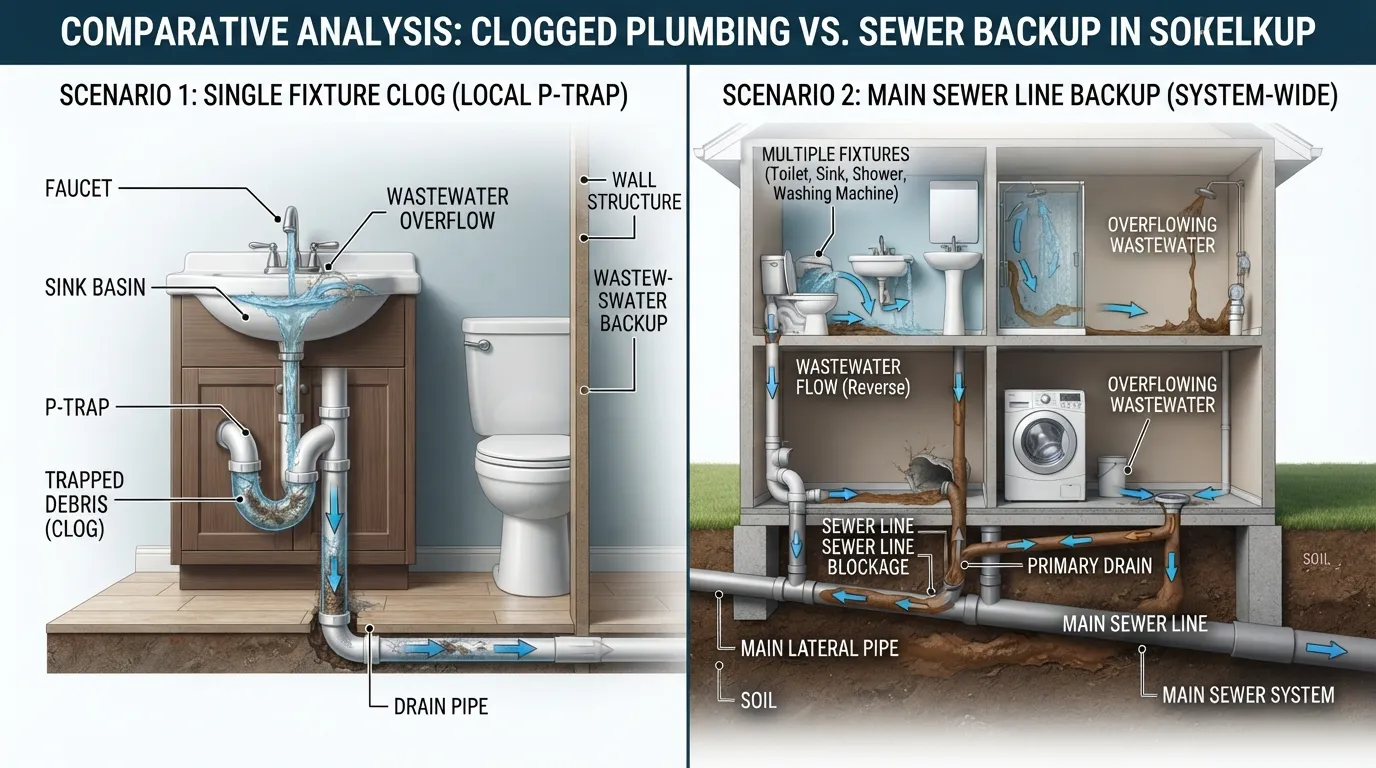
Understanding your home’s wastewater flow starts with knowing whether you are dealing with an isolated blockage or a total system failure. A standard blockage affects only one drain, whereas a main line issue disrupts the entire plumbing system by trapping wastewater and forcing it backward.
Single Fixture Clog vs. Main Sewer Line Backup
Single Fixture Clog: Affects only one drain, such as a shower, sink, or toilet, usually caused by localized debris or hair buildup near the trap.
Main Sewer Line Backup: Occurs deep within the primary pipe connecting your home to the municipal sewer or septic tank, impacting multiple drains simultaneously.
The Wastewater Behavior: While a local clog drains slowly or stops completely at one fixture, a main line backup causes wastewater to gurgle, bubble, or overflow in unexpected places throughout your house.
Why This Distinction Matters for Your Home
Misdiagnosis Risks: Treating a main line issue with standard drain cleaner or a basic hand snake only offers a temporary fix and can damage your pipes.
Scale of Impact: A localized clog is a minor inconvenience, whereas a compromised main sewer line threatens your home’s structural integrity and sanitation.
Professional Intervention: Recognizing the difference dictates whether you need a plunger or expert Sewer Line Services to diagnose deep-seated root intrusions or pipe collapses.
The Core Warning Signs of a Sewer Backup
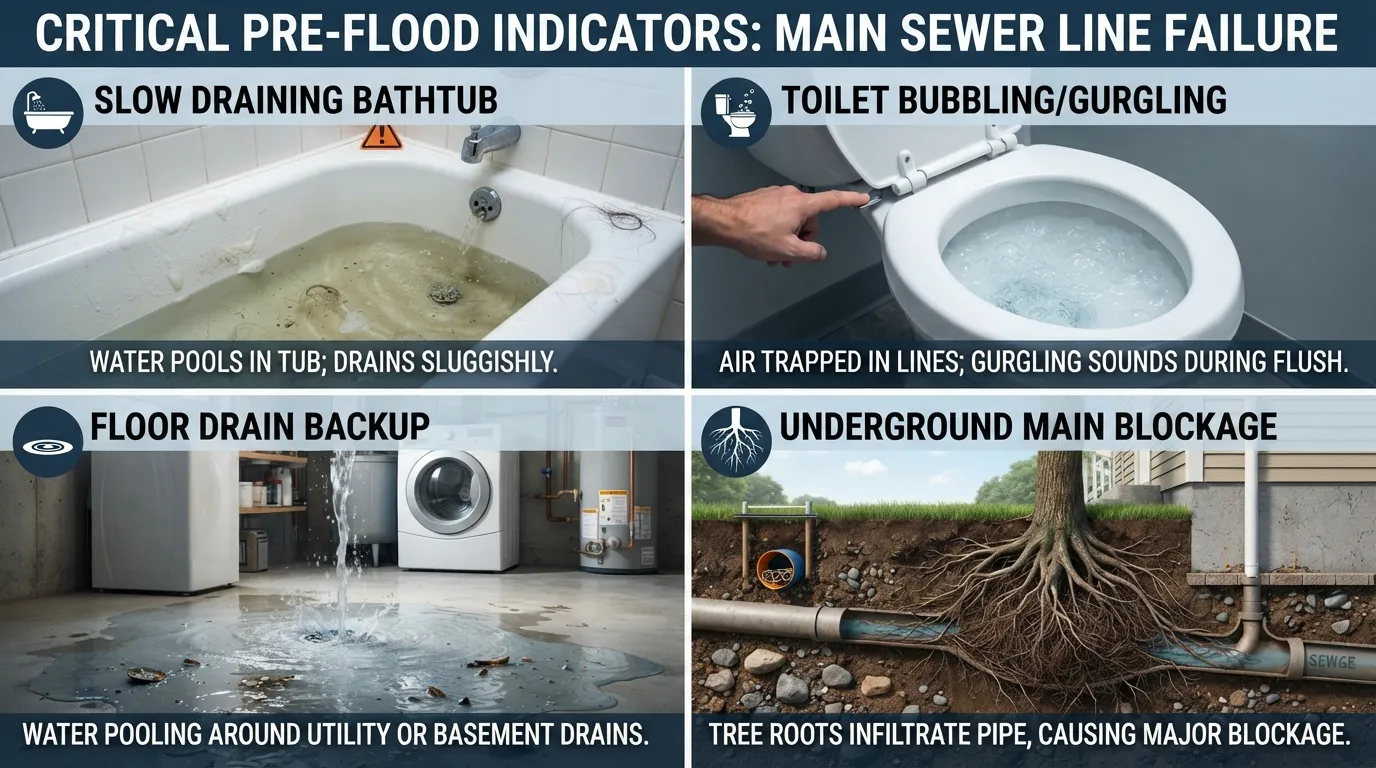
Spotting the early indicators of a main line blockage can save your property from catastrophic water damage and expensive restoration. Look out for these six critical warning signs that indicate raw wastewater is trapped and pushing back into your plumbing network.
1. Foul Odor Coming From Drains
Persistent, unpleasant sewage smells emanating from your sinks, showers, or floor drains indicate trapped gases escaping your plumbing system. When vents or main pipes are blocked, sewer gas has nowhere to go but back up into your living spaces.
Continuous Stench: A rotting-egg or sulfur smell that lingers despite regular cleaning and disinfecting.
Dry Traps vs. Blockages: While a dried-out P-trap causes occasional odors, a persistent smell across multiple rooms points directly to a deeper sewer line issue.
2. Slow Drains or Multiple Clogs at the Same Time
When a single drain flows sluggishly, it is usually a localized issue, but multiple slow drains signal a system-wide restriction. Water struggling to escape simultaneously across your kitchen sink, bathroom vanity, and bathtub proves the main line is obstructed.
Simultaneous Backups: Sinks or tubs draining unusually slow all at once.
Cascade Effect: Unclogging one fixture only causes wastewater to back up in another connected drain.
3. Water Backing Up Into the Wrong Fixture
Seeing wastewater emerge in unexpected places is a definitive indicator of a severe main line backup. If running your washing machine causes dirty water to bubble up in your shower or floor drain, the main pipe is completely overwhelmed.
Cross-Fixture Impact: Flushing the toilet causes water to rise in the bathtub or shower drain.
Appliance Overflow: Doing laundry results in standing water pooling around your floor drains or utility sinks. For severe bathroom fixtures affected by this pressure, professional Toilet Repair and diagnostic services are immediately required.
4. Gurgling or Bubbling Sounds in Pipes
Unusual gurgling noises when water drains or when you flush the toilet reveal trapped air pockets pushed through the pipes by rising wastewater. According to plumbing experts, hearing bubbling sounds instead of a smooth flush is an early red flag [00:41] that your line is failing.
Trapped Air Displacement: As wastewater forces its way through a narrowed or blocked pipe, air bubbles back up through the traps.
Audible Warnings: Listen closely for bubbling noises in your toilet bowl or sink drains immediately after running water.
5. Overflowing Floor Drains
Basement and utility room floor drains are typically the lowest points in a home’s plumbing system, making them the first place a severe backup surfaces. If you notice unexplained moisture, puddles, or pooling water around any floor drain, your main sewer line is severely restricted.
Lowest Point Vulnerability: Gravity forces backed-up wastewater out of the lowest openings in the house.
Hidden Hazards: Water pooling around basement drains often precedes a major basement flooding event if left unaddressed.
6. Sewage Smell or Standing Water in the Yard/Basement
An unexplainable soggy patch, depression in your lawn, or foul-smelling standing water outside indicates a broken or collapsed underground sewer lateral. When tree roots crush or rupture the main line outside your foundation, wastewater leaks into the surrounding soil.
Soggy Lawn Patches: Exceptionally green or spongy grass patches directly above your buried sewer line path, even during dry weather.
Severe Property Contamination: Standing water near the foundation combined with a strong sewage smell demands an immediate emergency plumbing response.
What Causes a Sewer Backup?
Identifying the root cause of a main line failure prevents repeat disasters and protects your plumbing infrastructure. Blockages and structural collapses develop over time through a combination of environmental factors, daily usage habits, and aging municipal systems.
Tree Root Intrusion
Tree roots naturally seek out moisture and nutrients, making underground sewer pipes an ideal target. Even tiny cracks or loose joints in older pipes allow roots to penetrate, grow, and completely choke the internal wastewater flow.
Aggressive Growth: Roots expand inside the pipe, trapping toilet paper, grease, and debris until a total blockage forms.
Structural Damage: As roots thicken, they exert immense pressure that can crack or crush the pipe wall entirely.
Aging or Collapsed Pipes
Plumbing materials degrade over decades, especially in older homes built with clay, cast iron, or Orangeburg piping. As pipe corrosion sets in, sections weaken, sag, or collapse under the weight of the surrounding soil.
Belly Formation: Settling ground can cause a section of pipe to slope downward, creating a “belly” where wastewater and solids pool instead of draining away.
Material Lifespan: Older metallic and porous pipes eventually rust through or fracture, requiring modern trenchless replacement.
Grease and Debris Buildup
Pouring cooking oils, grease, coffee grounds, and non-flushable items down your drains creates severe internal restrictions. Over time, grease buildup hardens along the pipe walls, drastically narrowing the interior diameter of your main line.
Sticky Traps: Grease acts like glue, binding hair, soap scum, and wipes into impenetrable blockages.
Preventative Maintenance: Routine professional Drain Cleaning removes stubborn buildup before it evolves into a full-scale emergency.
Heavy Rain and Municipal Line Overload
Severe storms can overwhelm city infrastructure, sending massive volumes of water rushing through the municipal sewer line. When public mains reach capacity, excess water can reverse flow and push back into residential lateral connections.
System Overload: Combined storm and sanitary sewers are particularly vulnerable to torrential downpours.
Backflow Vulnerability: Without an installed backwater valve, homes are at high risk of a sudden storm backup during extreme weather events.
Is a Sewer Backup an Emergency? Health & Safety Risks
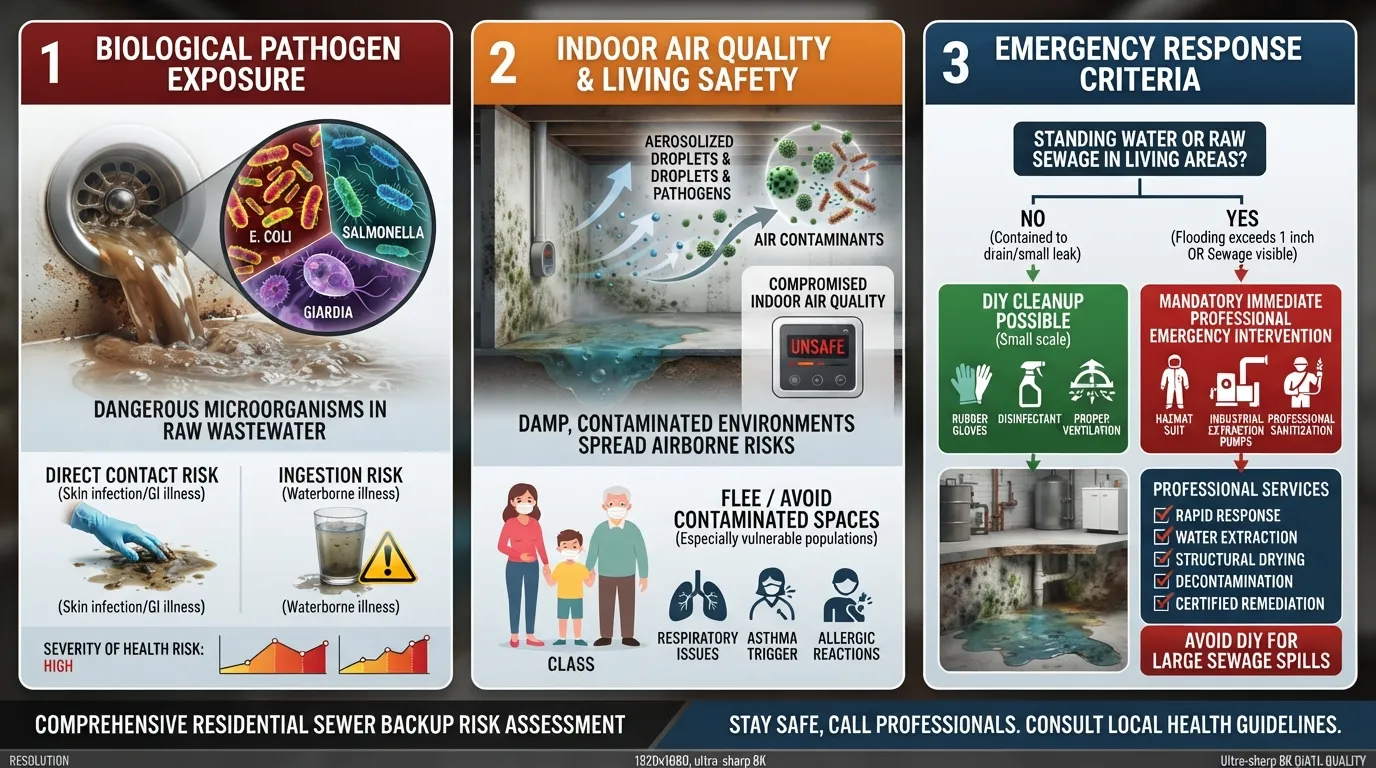
A sewer backup is an immediate biological hazard that demands urgent professional attention. Raw wastewater contains dangerous pathogens that threaten both your family’s health and your home’s structural integrity.
Health Risks of Exposure to Sewage
Raw sewage teems with harmful bacteria, viruses, and parasites that pose severe health threats upon contact or inhalation. According to the CDC Guidelines on Sanitation and Sewage Exposure, direct contact with wastewater can lead to acute gastrointestinal illnesses, severe skin infections, and respiratory distress.
Pathogen Transmission: Harmful microorganisms like E. coli, Salmonella, and Hepatitis enter the body through cuts, ingestion, or aerosolized droplets.
Respiratory Threats: Mold growth and compromised indoor air quality from damp, contaminated drywall trigger asthma attacks and chronic allergies.
Is It Safe to Stay in Your Home?
Remaining in a home actively experiencing a major sewer backup depends entirely on the scale and location of the contamination. If raw wastewater is pooling in living areas or bathrooms, the home is immediately unsafe for habitation until sanitation is complete.
Evacuation Triggers: Continuous standing sewage, unbearable odors, and total loss of functional plumbing mandate temporary relocation.
Vulnerable Populations: Children, elderly residents, and immunocompromised individuals must be removed from the premises immediately to avoid severe bacteria exposure.
When to Treat It as an Emergency
Any event involving raw sewage backing up into your living space, multiple clogged fixtures, or an overflowing floor drain constitutes a critical plumbing crisis. Waiting until morning or trying DIY fixes only worsens structural contamination and drives up restoration costs.
Immediate Action Required: Shut off your main water supply if appliances are feeding the backup and clear the area of pets and family members.
Expert Dispatch: Contact an expert Emergency Plumber right away to deploy heavy-duty extraction, hydro-jetting, and sanitation equipment before permanent property damage occurs.
Can You Fix a Sewer Backup Yourself? DIY vs. Professional
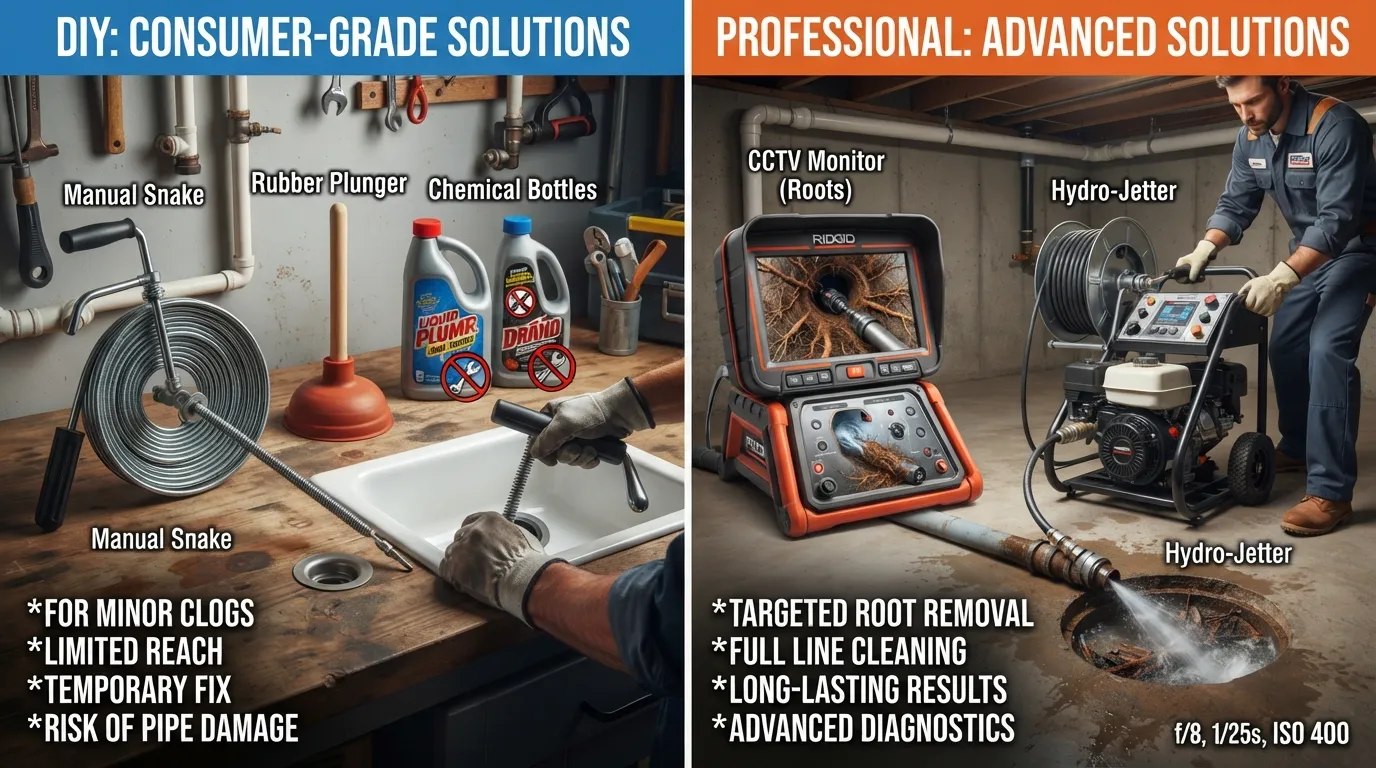
Attempting to resolve a true main sewer line failure with standard tools is often ineffective and can worsen property damage. While minor localized clogs respond well to standard DIY drain cleaning, a main line backup requires industrial-grade intervention and specialized diagnostic equipment.
What a Plunger or Store-Bought Drain Cleaner Can (and Can’t) Fix
Localized Relief Only: Plungers and standard chemical drain cleaners are designed to clear soft blockages located directly inside a single sink or toilet trap.
Main Line Ineffectiveness: Chemical cleaners cannot cut through dense tree roots, heavy grease accumulations, or structural pipe collapses deep underground.
Corrosive Risks: Pouring harsh store-bought chemicals into a slow-draining system can damage older pipes and pose severe splash-back hazards if the line is completely blocked.
Why Snaking One Drain Often Isn’t Enough
Temporary Bypass: Using a hand-held drain snake on a single bathroom or kitchen drain only pokes a small hole through the main blockage, allowing water to drain briefly before clogging again.
Systemic Obstructions: Because main line blockages affect multiple fixtures, clearing just one branch pipe leaves the primary obstruction intact.
Equipment Limitations: Consumer-grade plumbing tools lack the reach and torque required to navigate hundreds of feet of buried lateral piping and clear stubborn obstructions.
When You Need a Professional Sewer Camera Inspection
Pinpointing the Problem: Advanced technology like a sewer camera inspection allows plumbers to visually locate roots, cracks, bellies, or grease buildup inside the pipe without guesswork.
Targeted Solutions: Visual diagnostics ensure technicians use the correct remediation method, whether that involves high-pressure hydro jetting or trenchless pipe repair.
Reliable Maintenance: For lasting results against recurring clogs, professional Drain Cleaning clears the entire interior pipe wall safely and effectively.
How Much Does It Cost to Fix a Sewer Backup?
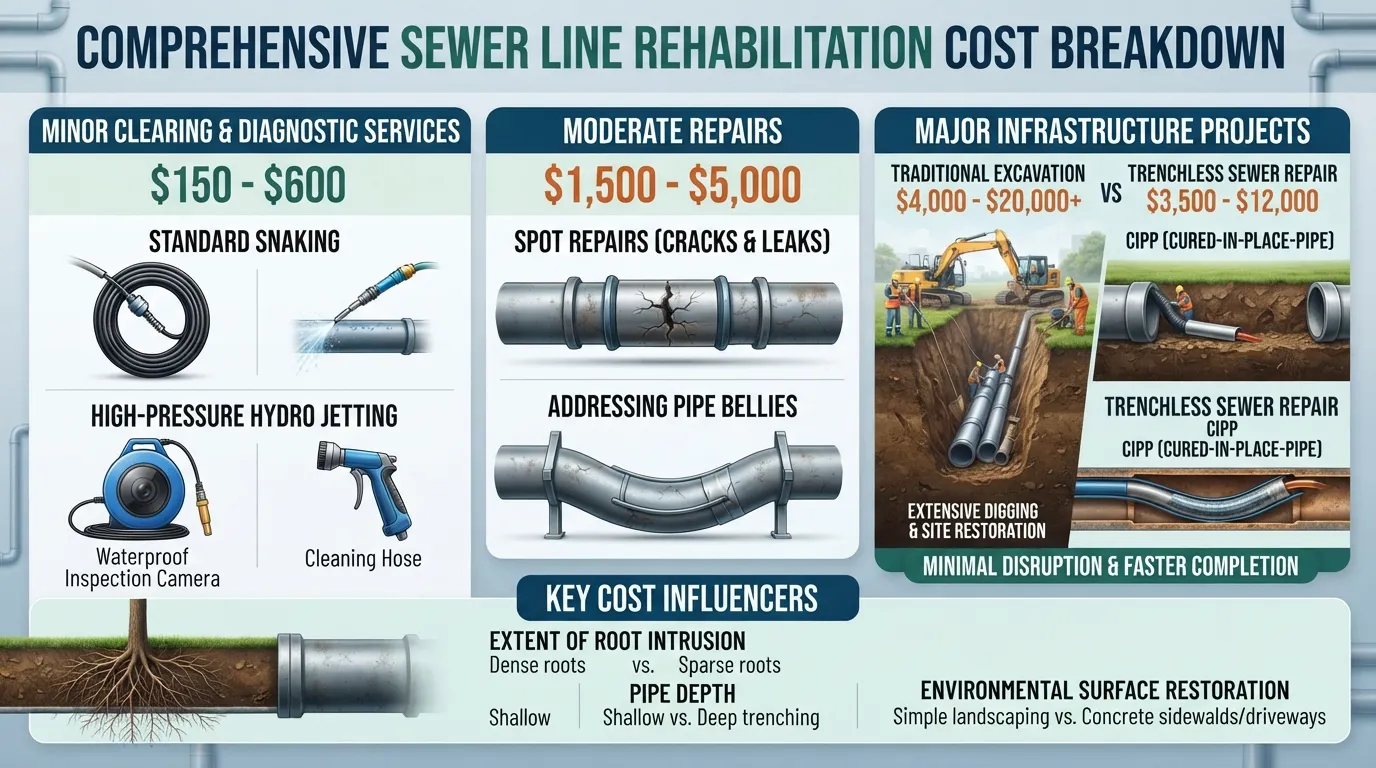
Addressing a sewer backup varies widely in price depending on whether the issue requires a simple clearing or a major infrastructure replacement. Understanding these baseline expenses helps homeowners budget effectively and recognize fair pricing when an emergency strikes.
Average Cost Range for Minor vs. Major Sewer Backups
Minor Clearing and Diagnostics: Standard snaking or clearing a localized blockage typically costs between $250 and $600, while specialized high-pressure hydro jetting cost ranges from $450 to $900 to scrub pipe walls clean.
Moderate Repairs: Fixing a localized pipe crack or spot-repairing a damaged section generally runs between $1,000 and $4,000.
Major Replacements: Complete overhauls involving trenchless sewer repair or traditional excavation range from $3,500 to $12,000 or more depending on project scope.
Factors That Affect the Final Price
Extent of Damage: Minor root intrusions require minimal work, whereas completely crushed or collapsed pipes demand comprehensive structural intervention.
Depth and Location: Pipes buried deep underground or situated beneath concrete patios, driveways, or interior flooring significantly drive up labor and surface restoration expenses.
Cleanup and Remediation: Mitigating biohazards and performing professional sanitation to resolve indoor contamination add separate specialized labor and material charges to the final sewer repair cost.
Sewer Backup vs. Septic Backup: What's the Difference?
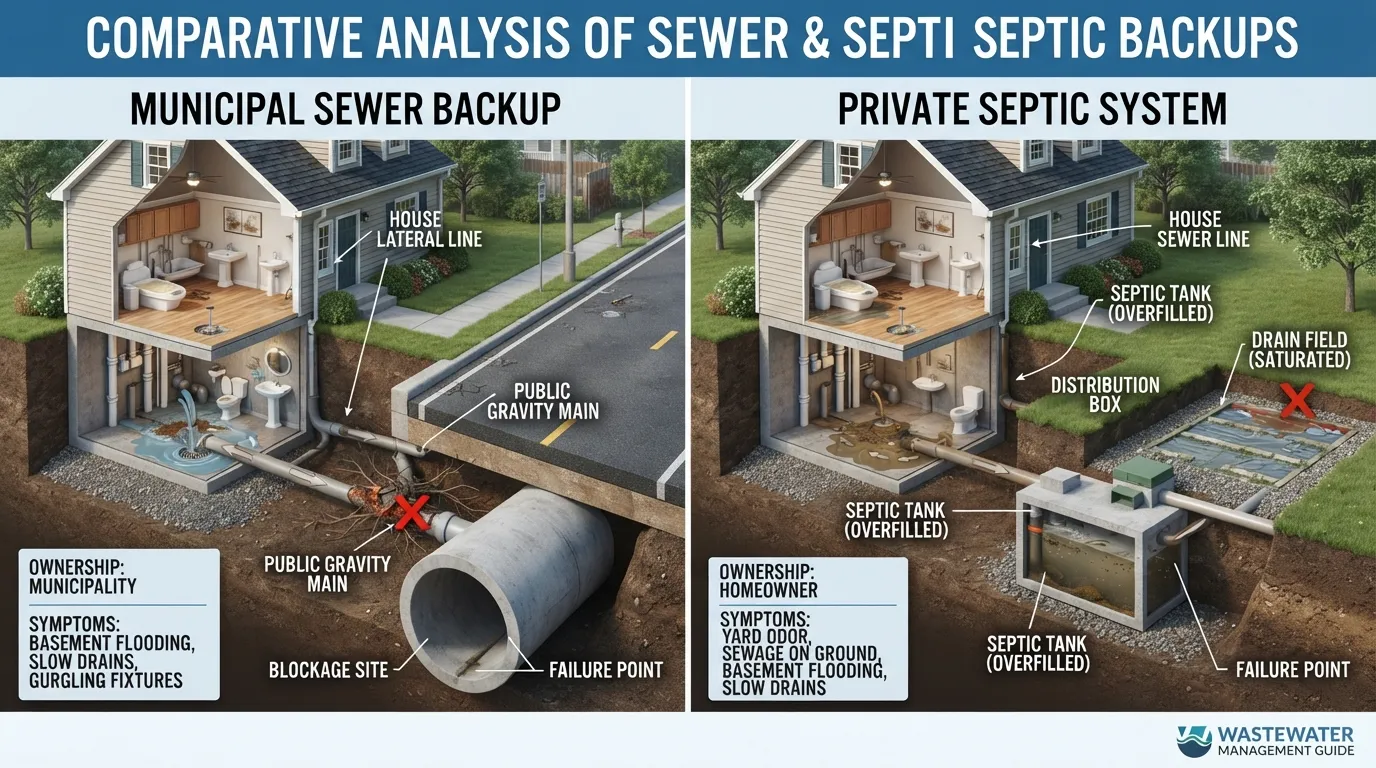
Diagnosing a wastewater failure requires knowing whether your home connects to municipal infrastructure or a private holding system. While both emergencies cause similar unpleasant symptoms, their underlying mechanics, failure points, and remediation steps differ entirely.
Municipal Sewer System vs. Septic Tank System
Municipal Sewer Infrastructure: Relies on public gravity mains and city lift stations to transport residential wastewater away from your property and toward a central treatment plant.
Private Septic System: Utilizes an on-site underground septic tank to treat solids before liquid effluent drains out into a surrounding yard drain field.
System Ownership: Homeowners are personally responsible for the lateral line connecting their house to the public main, whereas municipal agencies maintain the street-level infrastructure.
Why the Signs Can Look Similar But Solutions Differ
Overlapping Symptoms: Both a public sewer line backup and a failing septic backup cause slow drainage, gurgling toilets, and wastewater pooling in basement floor drains.
Root Causes: A municipal blockage is usually triggered by tree roots, grease buildup, or public main overloads, whereas septic failures stem from tank overfilling, drain field saturation, or failed pump chambers.
Actionable Solutions: City line issues require professional clearing or municipal notification, whereas septic problems often demand immediate tank pumping, baffle repairs, or drain field rejuvenation to prevent basement flooding. When heavy storms overwhelm surrounding groundwater levels, safeguarding your lower levels with a reliable Sump Pump installation becomes essential.
How to Prevent Future Sewer Backups
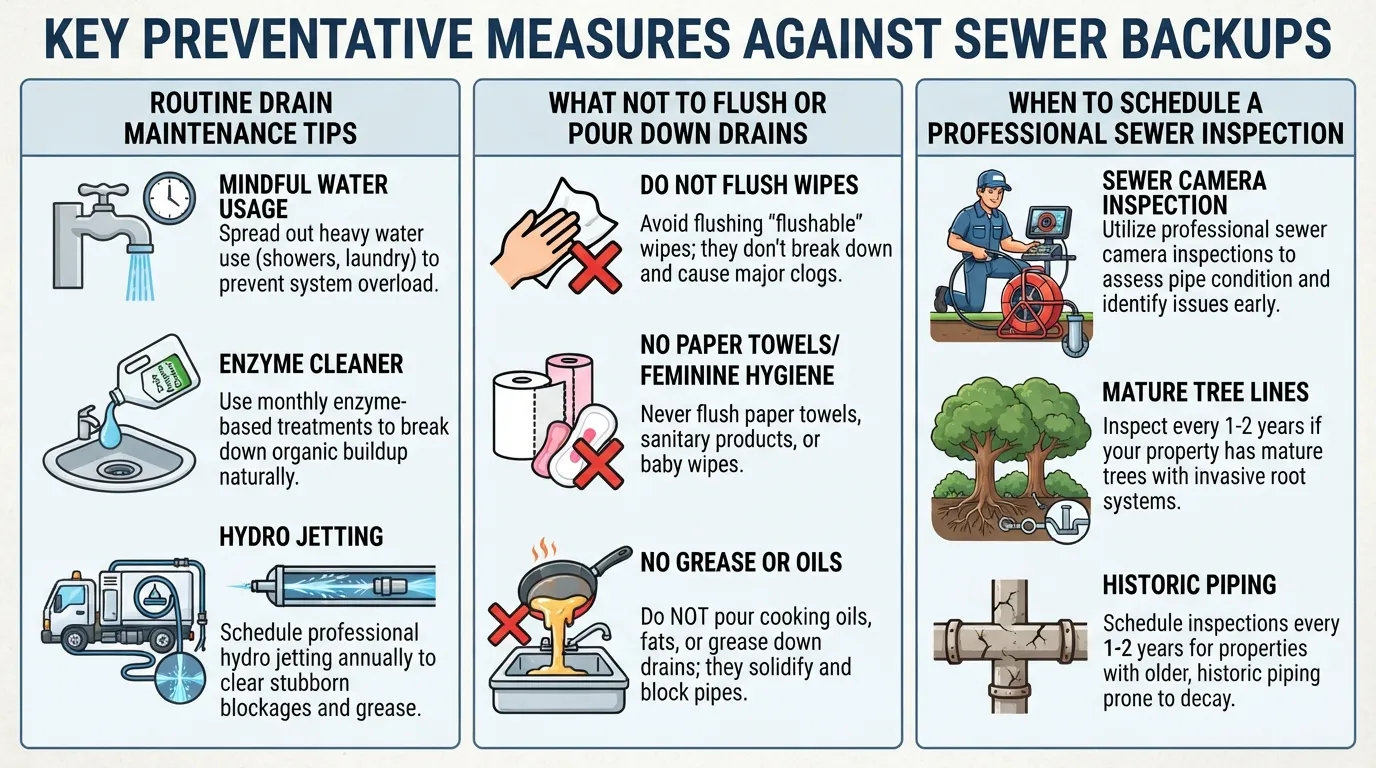
Proactive preventative maintenance safeguards your plumbing infrastructure against unexpected failures and costly property damage. Implementing smart daily habits and scheduling routine checkups ensures your wastewater flows smoothly year-round.
Routine Drain Maintenance Tips
Mindful Water Usage: Spread out heavy water-consuming tasks like back-to-back laundry loads to avoid overwhelming your main line capacity.
Enzyme Cleaners: Use monthly biological drain treatments that break down organic waste and soap scum safely without corroding older pipes.
Scheduled Hydro Jetting: Invest in professional high-pressure cleaning every few years to scour grease, scale, and mineral deposits completely from your pipe walls.
What Not to Flush or Pour Down Drains
The “Flushable” Myth: Never flush baby wipes, paper towels, cotton balls, or feminine products, as they do not disintegrate like toilet paper.
Grease and Oils: Avoid pouring cooking oil, bacon grease, or food scraps down the kitchen sink, where they solidify and trap debris.
Chemical Restraint: Limit harsh chemical drain openers that can damage pipe joints and injure plumbing technicians if mechanical snaking becomes necessary later.
When to Schedule a Professional Sewer Inspection
A Solid Sewer Inspection Schedule: Arrange a camera assessment every 1 to 2 years if your property features mature trees or historic clay piping.
Pre-Purchase Checks: Always inspect the main lateral line before buying an older home to uncover hidden cracks, bellies, or root damage.
Early Diagnostics: For comprehensive property protection and reliable Leak Detection & Repair Services, consult certified professionals to catch minor line vulnerabilities before they trigger a full-scale emergency.
Frequently Asked Questions About Sewer Backups
What are the early signs of a sewer backup?
Early warning signs include slow-draining sinks and tubs, gurgling sounds coming from your toilet or pipes, and wastewater bubbling up into floor drains. Catching these indicators before a complete blockage occurs helps prevent extensive property damage.
Multiple Slow Drains: Sluggish water movement across more than one fixture simultaneously.
Unusual Gurgling: Bubbling noises in pipes or toilets when running water elsewhere in the house.
What is the most common cause of sewer backup?
Tree root intrusion is the most frequent culprit, as roots naturally grow toward buried pipes, penetrate tiny joints, and trap debris. Other common triggers include heavy grease buildup, structural pipe collapse, and municipal storm line overloads.
Root Penetration: Aggressive tree growth cracking and choking underground pipes.
Grease Accumulation: Cooking oils and food scraps hardening along interior pipe walls.
How do I tell if my sewer line is backed up?
A main line backup affects multiple fixtures simultaneously throughout your house, unlike a local clog restricted to a single sink or toilet. If flushing your toilet causes water to rise in your shower drain or running the washing machine floods a floor drain, your main line is blocked.
Cross-Fixture Impact: Wastewater emerging in unexpected low points like basement floor drains.
System-Wide Disruption: Every plumbing fixture draining slowly or stopping completely at the same time.
How do you fix a backed-up sewer?
Resolving a severe main line backup typically requires professional equipment such as a motorized drain snake, high-pressure hydro jetting, or trenchless pipe repair. DIY tools like hand plungers or chemical cleaners only offer temporary relief for surface clogs and cannot clear deep structural obstructions.
Professional Hydro Jetting: Blasting away heavy grease, scale, and root intrusions with high-pressure water streams.
Sewer Camera Diagnostics: Pinpointing the exact location and cause of the underground blockage to determine the correct repair method.
Professional Solutions for Your Sewer Backup Emergency
A sewer backup requires swift, professional intervention to protect your home from extensive water damage and biological hazards. Ignoring early warning signs allows minor blockages to escalate into costly structural failures and severe health risks.
Taking proactive steps today ensures the safety and longevity of your entire plumbing system. Don’t wait for standing water or property contamination to force your hand—Schedule an Inspection Today with our licensed experts to diagnose and resolve your main line issues. When disaster strikes without warning, our 24/7 Emergency Plumbing Service is ready to restore safety and peace of mind to your home immediately.
Main Services
Related Posts
Need a Plumber in Miami?
Schedule service online or speak directly with the EZ Plumbing team.
Owner-Led Local Service
Know who is behind the business before you request service. The owners, contact line and Miami service pages are published clearly.
- Named business owners
- Direct phone and social channels
- Local Miami service information
Clear Help Before You Book
Review the relevant service page, contact the team directly and use the booking page when you are ready—without relying on vague claims.
- Service-specific information
- Direct questions before scheduling
- Clear online booking route