How Drain Cleaners Work: The Science Behind Clog Removal
What Are Drain Cleaners?
Drain cleaners are specialized chemical formulas or physical devices designed to dissolve, break down, or dislodge obstructions inside household plumbing pipes. They target organic matter, grease, hair, and soap scum to restore free-flowing wastewater through your drainage system.
Quick Definition: How Drain Cleaners Work in Simple Terms
Chemical drain cleaners rely on specific reactions to convert solid blockages into liquid or semi-liquid slurry that easily washes away.
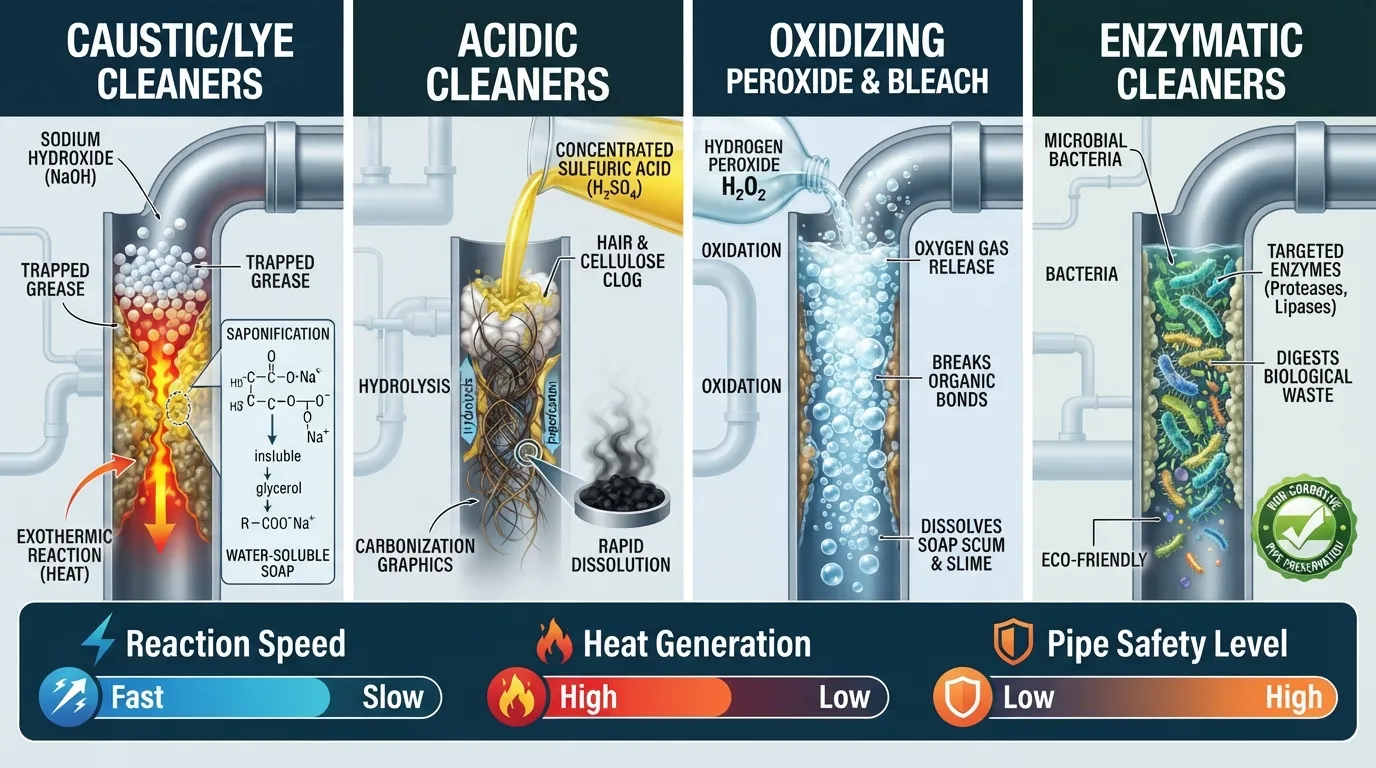
Caustic or Alkaline Cleaners: Formulated with sodium hydroxide (lye) or potassium hydroxide, these products donate electrons to the clog. They create a strong chemical reaction that converts trapped grease and fatty acids into soluble soap—a process known as saponification.
Acidic Cleaners: Formulated with high concentrations of sulfuric or hydrochloric acid, these heavy-duty liquids hydrolyze organic compounds. They rapidly break down organic matter, paper, and dense wads of hair.
Exothermic Heat Generation: As liquid chemical cleaners dissolve an obstruction, the reaction generates intense heat. This exothermic reaction softens congealed grease and fat, allowing the flowing water to flush the remaining debris out of the trap.
Enzymatic Cleaners: These bio-based formulas use non-pathogenic bacteria and enzymes to digest organic buildup over several hours, offering a safer alternative for septic systems and delicate pipes.
While off-the-shelf liquid cleaners handle minor standing water issues, severe line blockages or recurring mainline backups often require a professional drain cleaning service to safely restore your system without corroding older pipes.
Types of Drain Cleaners and How Each One Works
Drain cleaners fall into four distinct chemical and biological categories, each utilizing unique reactive mechanisms to clear obstructions. Selecting the correct formula depends on pipe material, clog composition, and safety considerations.
Caustic (Lye-Based) Cleaners — How Sodium Hydroxide Breaks Down Clogs
Caustic drain cleaners feature high concentrations of sodium hydroxide (caustic soda) or potassium hydroxide (lye), yielding a base pH level between 12 and 14. These heavy alkaline solutions give up electrons to the blockage, initiating rapid chemical breakdown upon contact.
Alkaline Hydrolysis: Hydroxide ions attack the peptide bonds in complex proteins, breaking down insoluble keratin found in hair and skin cells.
Saponification: Caustic bases react directly with trapped fats and oils, chemically converting greasy buildup into water-soluble soap molecules.
Aluminum + Hydrogen Gas Reaction: Many solid lye formulations incorporate aluminum flakes. When mixed with water, the aluminum + hydrogen gas reaction produces vigorous boiling, churning gas bubbles that physically dislodge debris while releasing intense heat.
Oxidizing Cleaners — How Bleach and Peroxide-Based Formulas Work
Oxidizing cleaners use chemical compounds like sodium hypochlorite (bleach), hydrogen peroxide, and nitrates to remove organic obstructions. These formulas draw electrons away from organic matter through rapid oxidation.
Molecular Degradation: The oxidation reaction destabilizes the organic structure of soap scum, slime, and bacterial mats, causing the material to lose structural integrity.
Gas Expansion: As the chemical reaction unfolds, it releases localized heat and oxygen gas, breaking the physical bond between the blockage and the pipe wall.
Density-Driven Penetration: Formulated to be significantly denser than water, oxidizing liquids sink directly through standing water in a sink or tub to reach the blockage point without losing potency.
Acidic Cleaners — Why Professionals Use Sulfuric or Muriatic Acid
Acidic drain openers contain concentrated sulfuric acid or muriatic acid (hydrochloric acid), bringing the solution down to a pH of 1 or lower. Due to their aggressive, hazardous nature, these products are primarily reserved for licensed plumbers or industrial applications.
Proton Transfer & Hydrolysis: Acidic formulas donate hydronium ions to organic matter, triggering rapid hydrolysis that chars cellulose (paper products), grease, and biological waste into carbonized sludge.
Exothermic Heat: Sulfuric acid reacts violently with the water present inside the trap, generating intense thermal energy that rapidly melts congealed fats.
Mineral Dissolution: Unlike alkaline formulas, strong acids readily dissolve inorganic scale, uric acid crystals, and calcium buildup inside wastewater pipes.
Enzymatic / Bacterial Cleaners — The Slow but Pipe-Safe Option
Enzymatic and bacterial drain cleaners rely on biological action rather than aggressive inorganic chemical reactions. These environmentally safe liquids feature non-pathogenic bacteria cultures combined with specialized enzymes (such as proteases, lipases, and amylases).
Targeted Digestion: Enzymes act as biological catalysts, breaking down organic waste into digestible nutrients. Proteases target hair and protein, while lipases break down grease and fats.
Bacterial Colonization: The living bacteria consume the broken-down organic material, multiplying to establish a continuous bio-film along the pipe walls.
Contact Time Requirements: Unlike instant chemical cleaners, biological options require extended contact time—typically 6 to 24 hours—to clear obstructions. They are ideal for preventive maintenance, septic system preservation, and delicate plumbing materials.
Learn more about drain cleaning solutions in this breakdown. This video demonstrates the fundamental mechanics and tools used by professionals to clear severe plumbing blockages safely.
How to Use Chemical Drain Cleaners Correctly Step-by-Step
Proper application of chemical drain openers requires strict adherence to safety protocols and precise timing to prevent pipe corrosion or chemical burns. Follow these actionable steps to ensure effective clearance without damaging your plumbing system.
Step-by-Step: Applying Drain Cleaner Safely
Put on heavy-duty rubber gloves, safety goggles, and long sleeves to protect your skin and eyes from splatters. Open windows or run an exhaust fan to dissipate harmful fumes before opening the product container.
Bail out excess standing water from the sink or tub using a small cup or sponge. Leaving excessive standing water dilutes the formula, drastically reducing its effectiveness and increasing the risk of chemical splashback.
Slowly pour the exact recommended dosage of the cleaner directly down the drain opening according to the product label instructions. Avoid splashing onto metal fixtures, porcelain surfaces, or surrounding countertops to prevent discoloration.
Set a timer and let the solution sit undisturbed. Allow the recommended contact time to pass so the chemicals can dissolve the blockage completely. Never leave caustic or acidic formulas in pipes longer than instructed.
Carefully flush with hot water for 3 to 5 minutes to sweep away broken-down debris and remaining chemical residue. Ensure the water flows freely down the drain before concluding the process.
How Long to Leave Drain Cleaner in the Drain (By Type)
Leaving chemical formulas inside pipes beyond their recommended duration can cause thermal stress, warping, or chemical corrosion. Match your wait time directly to the chemical type being applied:
Caustic (Lye-Based) Cleaners: Allow 15 to 30 minutes of contact time. Do not exceed 30 minutes, as prolonged exposure can weaken PVC joints or etch metal pipe linings.
Acidic Cleaners: Require only 5 to 15 minutes. Acidic solutions work rapidly; exceeding 15 minutes risks severe chemical corrosion on metal pipes and melted PVC connections.
Oxidizing Cleaners: Leave undisturbed for 15 to 30 minutes to allow adequate oxygen release and chemical breakdown of organic slime.
Enzymatic Cleaners: Require extended exposure, typically 6 to 8 hours (or overnight). Because enzymatic formulas are non-corrosive, long dwell times allow living bacteria to fully consume organic material without damaging plumbing walls.
Why Plumbers Often Discourage Chemical Drain Cleaners
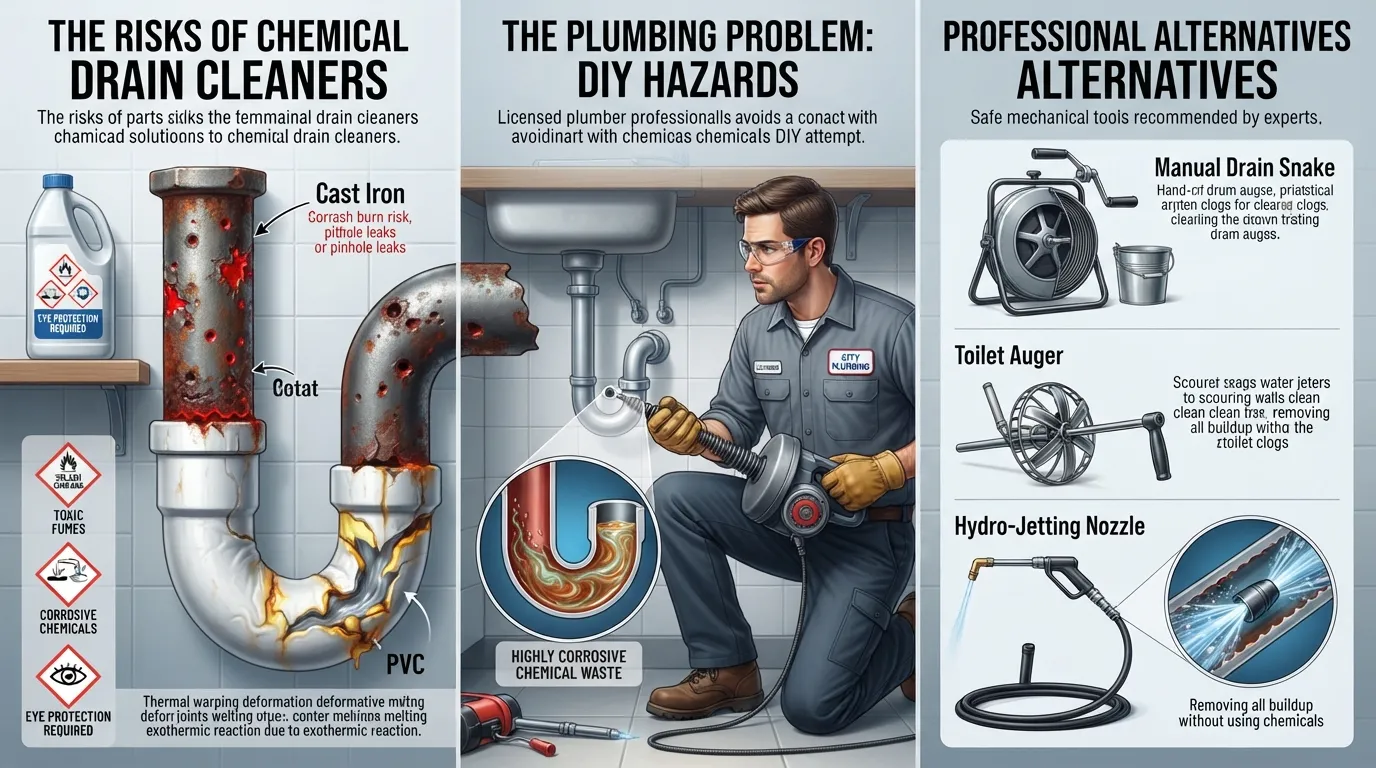
Licensed plumbers consistently advise against store-bought liquid drain openers like Drano and Liquid Plumber. While these products promise a quick fix, their aggressive chemical action frequently causes severe structural damage to domestic drainage networks and creates hazardous conditions for trade technicians.
According to safety framework classifications established by the Consumer Product Safety Commission (CPSC) directly governing corrosive household substances, high-concentration chemical drain openers present acute chemical exposure risks and severe material degradation hazards.
Common Plumber Concerns With Chemical Cleaners
Accelerated Pipe Corrosion: The exothermic reaction created by caustic bases and strong acids generates intense localized heat. This thermal energy, combined with high acidity or alkalinity, causes plastic PVC joints to warp or soften while accelerating pipe corrosion in older cast iron, galvanized steel, and copper lines.
Corroded Pipe Joints and Trap Failure: Chemicals often sit inside the P-trap when a total blockage exists. Prolonged exposure causes repeated use damage, degrading rubber gaskets, metal threads, and glue joints, leading to pinhole leaks beneath sinks.
Extreme Safety Hazards for Technicians: When chemical applications fail to clear a blockage, toxic liquid remains trapped in the sink or line. When a technician removes the P-trap or applies a mechanical snake, concentrated chemicals can splash onto skin or eyes, emitting hazardous fumes in tight spaces.
Ineffectiveness Against Hard Obstructions: Liquid drain openers cannot break down non-organic obstructions such as tree roots, metal objects, toys, or heavy mineral scale.
What Licensed Plumbers Recommend Instead
Rather than pouring caustic chemicals down the sink, professional plumbers rely on mechanical clearance methods that protect line integrity:
Manual Drain Snakes and Augers: Flexible steel cables physically hook, breakup, and remove dense hair clogs and solid foreign objects without applying chemical stress to pipe walls.
Hydro-Jetting Technology: High-pressure water streams scour grease, scale, and organic sludge off internal pipe walls, flushing lines clean without using corrosive additives.
Professional Inspection with Sewer Cameras: High-definition video camera lines pinpoint the exact location, cause, and extent of the blockage, determining whether the pipe has collapsed, suffered root intrusion, or simply accumulated debris.
if a clog worsens or plumbing is damaged after attempting chemical clearance, stop using the fixture immediately and notify your technician about any active chemical products present in the standing water before work begins.
Does Baking Soda and Vinegar Actually Unclog Drains? Myth-Busting
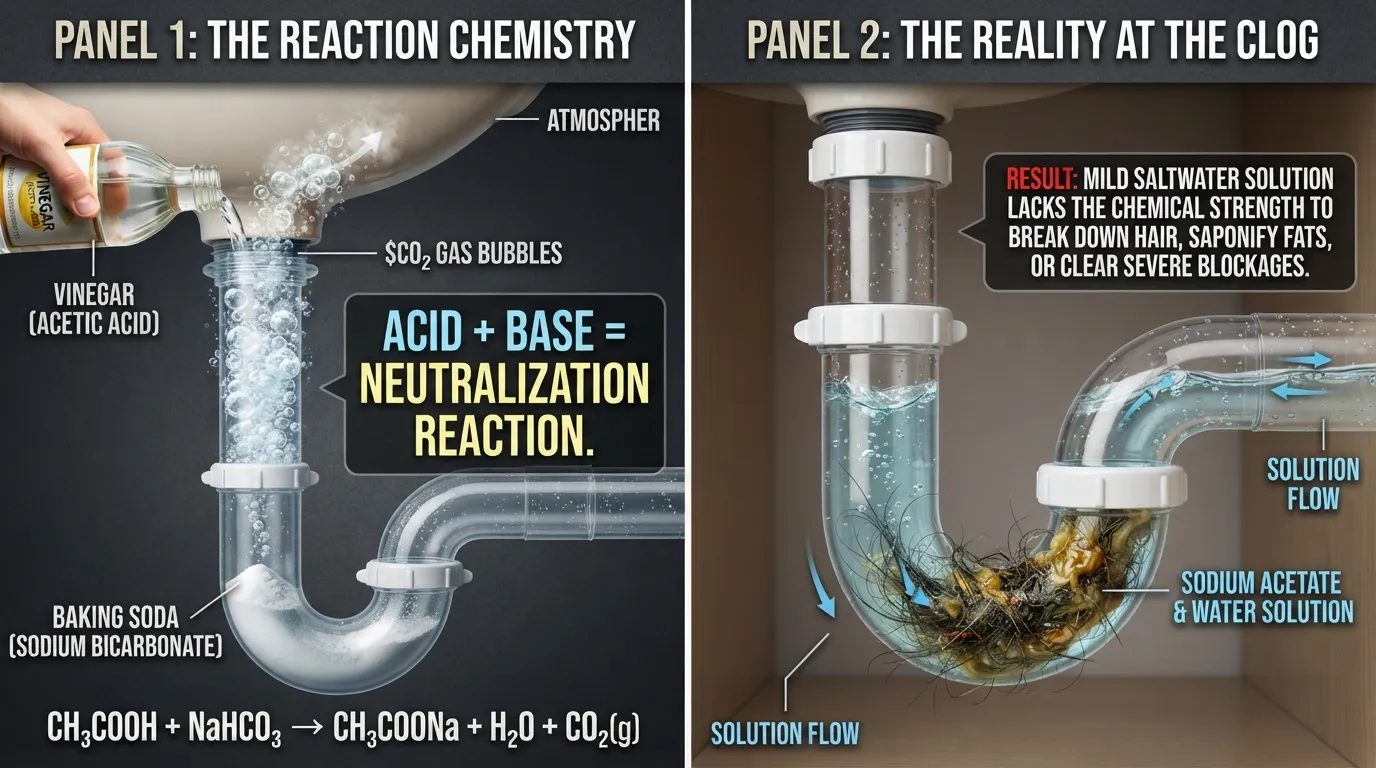
Combining baking soda and vinegar is one of the most popular internet DIY remedies for a slow drain. However, from a chemical standpoint, this widely circulated home remedy lacks the strength to dissolve dense grease, hair wads, or deep structural blockages.
The Chemistry Behind the Myth (Sodium Bicarbonate + Acetic Acid)
The belief that this combination dissolves severe clogs stems from a misunderstanding of basic chemical reactions. While the mixture fizzes vigorously, the actual end products have minimal cleaning power.
Acid-Base Neutralization: Combining sodium bicarbonate (baking soda, a base) with acetic acid (vinegar, a weak acid) triggers an immediate neutralization reaction.
Gas Production: The initial reaction creates carbonic acid, which instantly decomposes into carbon dioxide gas and water. The visible bubbling creates minor physical movement, but this gas escapes up the drain rather than forcing a clog downward.
Ineffective End Products: Once the fizzing stops, the chemical reaction leaves behind a mild solution of sodium acetate and water—essentially saltwater—which lacks the chemical strength to dissolve hair, saponify fats, or break down organic matter.
When It Might Help vs When It Won’t
Understanding where this method fails helps prevent wasted effort and delayed plumbing maintenance.
When It Might Help: The effervescent fizzing can occasionally loosen light, surface-level organic scum, minor soap buildup, or eliminate odor-causing bacteria in kitchen garbage disposals and bathroom P-traps.
When It Won’t Work: It cannot break down tough keratin in hair clogs, heavy congealed fats, solid objects, or deep main sewer line blockages.
Potential Risks: Pouring excessive baking soda into a fully blocked line can actually worsen the issue. Undissolved baking soda can settle into a thick paste against the blockage, hardening inside the pipe over time.
Chemical vs Mechanical Methods: Drano, Snakes & Hydro Jetting
Clearing a blocked pipe effectively requires matching the right tool to the severity and location of the obstruction. While chemical products offer temporary DIY convenience for minor sink issues, mechanical clearance tools provide the necessary force and precision to resolve deep, heavy-duty blockages without damaging pipe walls.
| Method | Best Used For | Primary Advantage | Major Limitation / Risk |
| Chemical Cleaners | Minor hair or soap scum in sink traps | Low cost, instant DIY availability | Severe pipe corrosion, thermal pipe damage |
| Plumbing Snake / Auger | Solid obstructions, hair clogs in P-traps | Physical removal without harsh chemicals | Cannot clear grease coating or pipe scale completely |
| Professional Hydro Jetting | Heavy grease buildup, tree roots, mainlines | Restores pipe interior to near-new condition | Requires professional operation and specialized equipment |
Chemical Drain Cleaners (Drano, Liquid Plumber) — Pros and Limits
Over-the-counter chemical options like Drano and Liquid Plumber rely on caustic or oxidizing solutions to dissolve light organic obstructions near the drain opening.
Pros: Readily available at retail stores, inexpensive upfront, and simple to apply for minor hair or soap film buildups in bath traps.
Limitations: Chemical liquids sit uselessly in static water if a total blockage prevents flow, diluting active ingredients. They cannot clear heavy grease, mineral deposits, tree roots, or solid foreign items, and repeated use accelerates pipe decay.
Mechanical Methods: Plumbing Snake / Auger
A manual or motorized plumbing snake (also called a drain auger) uses a flexible, rotating steel cable tipped with a corkscrew head or cutting blade to physically navigate bends in your piping.
Direct Debris Hooking: The spring-steel cable bores into dense hair mats, paper obstructions, or fabric items, twisting them onto the cable head so they can be pulled straight out of the line.
Safe for All Pipe Materials: Unlike chemical formulas, mechanical augers do not release heat or corrosive agents, making them completely safe for older galvanised steel, cast iron, and modern PVC lines.
Limitations: Basic handheld snakes reach only 15 to 25 feet into small lines, leaving deeper main line blockages unreachable without commercial equipment.
Professional Hydro Jetting for Severe Clogs
When dealing with a severe blockage or recurring line backup, high-pressure hydro jetting is the industry standard for complete pipe remediation.
360-Degree Cleaning: Hydro jetting systems propel water through specialized nozzles at 1,500 to 4,000 PSI, pulverizing stubborn tree roots, heavy grease, and hardened scale off internal pipe walls.
Long-Term Protection: By completely stripping away grease layers and bacterial slime instead of just poking a small hole through a clog, hydro jetting prevents immediate re-clogging.
For localized blockages, scheduling a professional drain cleaning service ensures quick removal, whereas a sewer line repair or maintenance service is recommended if roots or structural collapses affect your underground main.
Risks and Pipe Damage: What You Need to Know
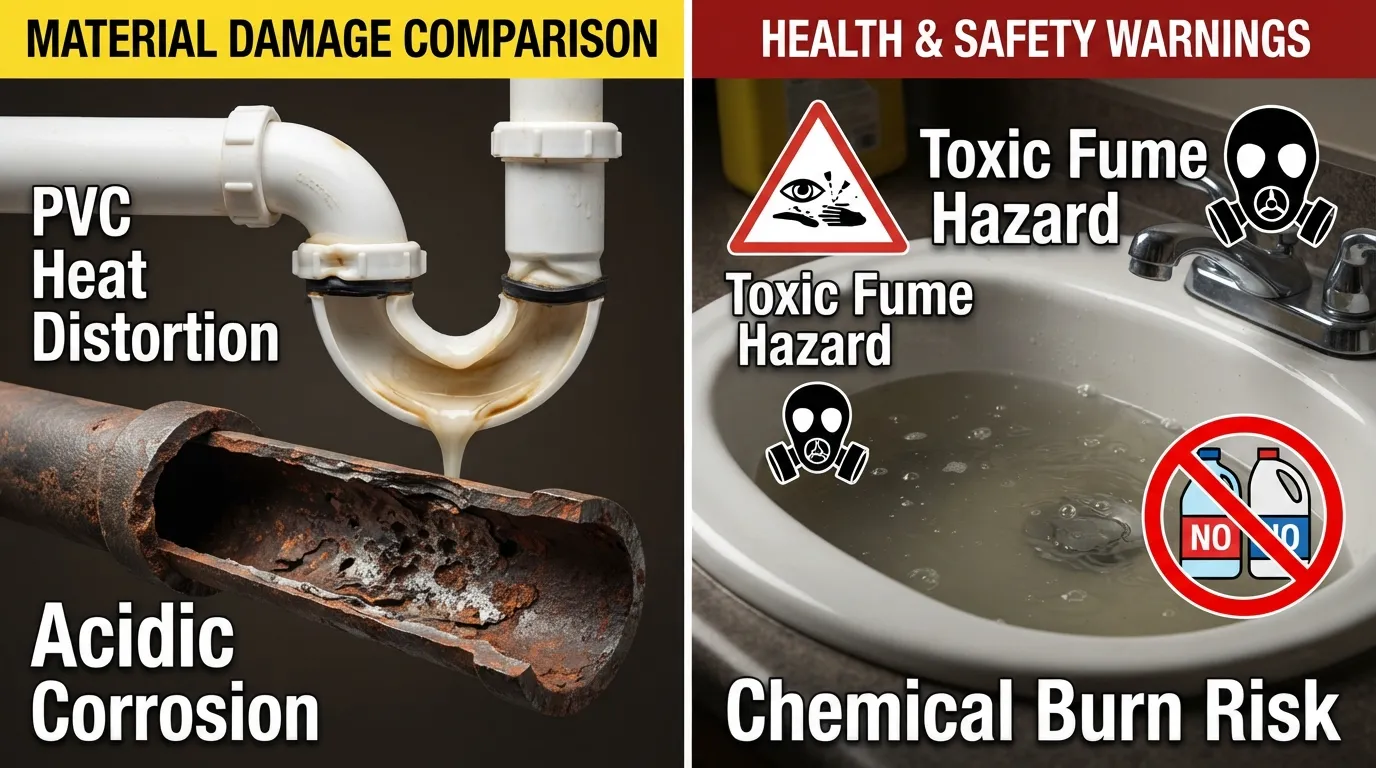
Chemical drain cleaners rely on high-temperature exothermic reactions and extreme pH levels to break down blockages. While effective against simple organic plugs, these harsh properties introduce significant structural hazards to residential plumbing and pose severe health risks to homeowners.
PVC vs Older Metal Pipes — Different Risk Levels
The risk of structural failure from chemical applications depends heavily on your pipe material, age, and existing condition.
PVC Pipe Damage: Modern poly-vinyl chloride (PVC) pipes withstand chemical corrosion, but they are vulnerable to heat. Concentrated caustic or acidic cleaners produce intense thermal energy inside static water traps, softening PVC, warping joints, and melting the solvent cement that seals pipe connections.
Metal Pipe Corrosion: Older galvanized steel, cast iron, and copper pipes face severe metal pipe corrosion. Acidic cleaners strip protective mineral lining from iron, creating micro-pitting, thinning pipe walls, and eroding threaded joints.
Standing Water Risks: Pouring chemical solutions into a fully blocked line traps corrosive agents in the P-trap indefinitely, increasing the risk of structural failure that causes pipe damage leading to leaks behind walls or under vanities.
Chemical Burns and Toxic Fume Hazards
Direct physical contact with liquid drain openers or inhalation of their vapors can cause immediate, acute medical emergencies.
Chemical Burns: Highly alkaline solutions (sodium hydroxide) and concentrated acids cause deep tissue necrosis upon skin contact. Splashes to the eyes can lead to permanent corneal scarring or blindness within seconds.
Toxic Fumes: Off-gassing from concentrated acids or oxidizing agents releases volatile chemical vapors. Inhaling these fumes causes severe upper respiratory irritation, coughing, and chemical burns to mucous membranes.
Safety Precautions: Gloves, Ventilation, Never Mix Chemicals
If you must apply a store-bought chemical product, strictly observe these fundamental safety precautions to minimize hazardous exposure:
Wear Personal Protective Equipment: Always wear heavy neoprene gloves, splash-proof safety goggles, and long sleeves to prevent skin exposure from sudden chemical back-splashes.
Maintain High Ventilation: Open all windows, door pathways, and run localized exhaust fans to maintain constant ventilation and dilute lingering air contaminants.
Avoid the Mixing Chemicals Hazard: Never pour a second chemical cleaner down a drain if the first product failed to clear the blockage. Combining acid-based drain openers with bleach releases deadly chlorine gas, while mixing acid with lye triggers an explosive chemical reaction that forcefully spews boiling caustic liquid back out of the drain opening.
How Often Is It Safe to Use Drain Cleaner?
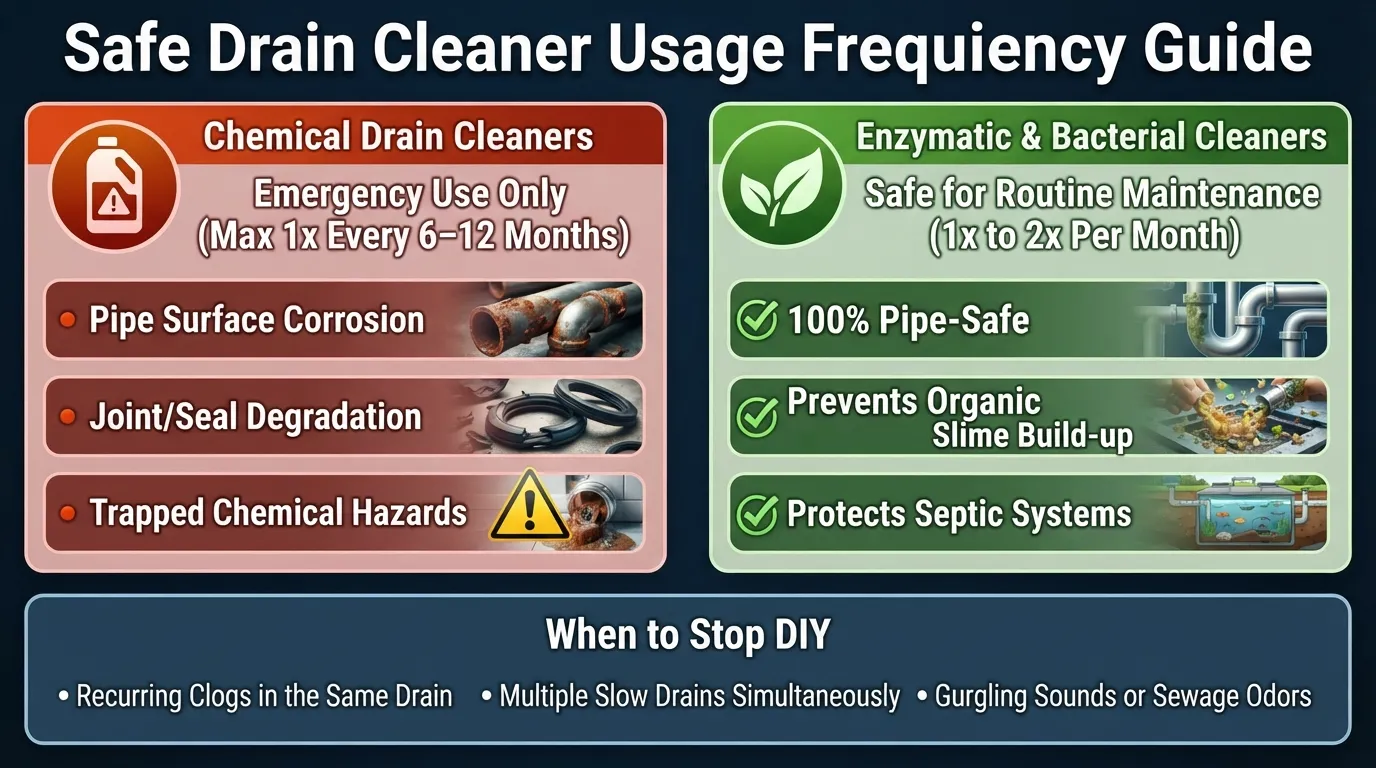
The safe frequency for using a drain cleaner depends on whether the formula uses caustic chemicals or biological agents. Using chemical drain openers repeatedly as a substitute for routine maintenance damages plumbing fixtures, whereas non-corrosive alternatives are specifically formulated for ongoing line upkeep.
Recommended Frequency for Chemical vs Enzymatic Cleaners
Chemical and biological formulas require completely different application schedules to ensure pipe safety and structural longevity:
Chemical Cleaners (Caustic, Acidic, Oxidizing): Should only be used as a rare emergency measure—no more than once every 6 to 12 months for a single fixture. Using caustic liquids weekly or monthly leads to recurring clogs caused by pipe surface degradation, which creates rough, corroded interior walls that catch passing debris.
Enzymatic/Bacterial Cleaners: Safe to apply according to a monthly or bi-weekly drain maintenance schedule. Because enzymes only digest organic waste without releasing heat or aggressive acids, they serve as ideal preventive maintenance to stop soap scum and grease buildup before total blockages occur.
Signs You Need Professional Drain Maintenance Instead of DIY
Relying on store-bought chemicals to fix persistent drainage issues often masks deeper structural problems within your plumbing network. Transition from DIY treatments to professional evaluation if you notice any of the following warning signs:
Recurring Clogs in the Same Fixture: A drain that backs up every few weeks indicates an unaddressed main line obstruction, structural pipe belly, or severe tree root intrusion that liquid chemicals cannot clear.
Multiple Slow Drains Simultaneously: When sinks, showers, and toilets across different rooms back up at the same time, the restriction sits deep within the main sewer stack rather than a single branch line P-trap.
Gurgling Sounds or Foul Sewage Odors: Audible air displacement or sewer gas backing up through traps signals improper line venting, severe waste accumulation, or a damaged sewer main that requires professional video camera inspection and hydro-jetting.
Quick Decision Guide — Sink, Shower, or Toilet?
Selecting the right method to resolve a backup depends on two variables: the affected fixture and the overall clog severity. Using the wrong application—especially chemical liquids in standing water or toilets—can damage plumbing or cause chemical burns.
Standing Water vs Slow Drain — What Each Means
Standing Water (Total Blockage): Water remains stationary without lowering in level. Avoid pouring chemical drain openers into standing water; the chemical dilutes, sits static in the trap, and generates heat that can warp PVC pipes or crack porcelain. Mechanical tools like plungers or hand augers are required first.
Slow Drain (Partial Blockage): Water drains slowly, leaving a whirlpool or gurgling sound. The line has partial flow, allowing targeted liquid chemical applications or enzymatic maintainers to reach and break down internal wall buildup safely.
Which Type of Drain Cleaner Fits Your Situation
| Fixture Type | Water Condition | Recommended Solution | Method to Avoid |
| Kitchen Sink | Slow Drain | Caustic (Lye-based) or Enzymatic Cleaner | Strong Acidic Cleaners (corrodes garbage disposals) |
| Kitchen Sink | Standing Water | Manual Plunger or Sink Snake | Chemical Cleaners (dilutes and sits trapped) |
| Shower / Tub Clog | Slow Drain | Caustic (Lye-based) or Hair-Removing Liquid | Acidic Cleaners (erodes metal drain flanges) |
| Shower / Tub Clog | Standing Water | Hand-held Zip-It Tool or Drain Auger | Chemical Cleaners (creates chemical hazard in tub) |
| Toilet Clog | Any Condition | Toilet Flange Plunger or Toilet Auger | All Chemical Cleaners (cracks porcelain; creates splash hazard) |
Slow-Draining Sink: Address grease and hair accumulation using caustic lye formulas or preventive enzymes.
Shower Clog: Remove hair mats around the stopper using a manual mechanical snake before applying liquid hair-dissolving products.
Toilet Clog: Never use chemical drain cleaners in a toilet. The heat generated by caustic chemicals can crack the porcelain bowl, and plunging afterwards risks splashing corrosive water into your face and eyes. Use a toilet auger or plunger instead.
Frequently Asked Questions
Why do plumbers say not to use drain cleaner?
Plumbers advise against store-bought liquid drain openers because their chemical action generates intense heat and acidity or alkalinity. This thermal and chemical combination softens PVC pipes, corrodes metal joints, degrades rubber seals, and fails to clear solid obstructions like tree roots or heavy grease. Furthermore, trapped chemical residue creates severe contact burn risks for plumbers performing subsequent mechanical repairs.
How do I use drain cleaner correctly?
To use chemical drain cleaners safely, put on rubber gloves and safety goggles while ensuring proper ventilation in the room. Bail out any excess standing water, then pour the recommended dosage according to product label instructions directly down the drain opening. Allow the precise recommended contact time to pass before flushing the line thoroughly with hot water for 3 to 5 minutes.
How long should you leave drain cleaner in the drain?
The dwell time depends on the chemical composition of the formula:
Caustic (lye-based) formulas: Leave for 15 to 30 minutes.
Acidic drain openers: Leave for 5 to 15 minutes.
Oxidizing cleaners: Leave for 15 to 30 minutes.
Enzymatic/bacterial maintainers: Leave for 6 to 8 hours (or overnight) to allow living bacteria time to digest organic sludge safely.
Do liquid drain cleaners really work?
Liquid drain cleaners work effectively on minor, organic obstructions such as simple hair mats and thin soap scum layers located near the fixture trap. However, they struggle or fail entirely against total blockages, tree root intrusions, heavy congealed grease, or foreign objects like toys and wipes.
What is the strongest thing to unclog a drain?
For professional applications, concentrated sulfuric acid or muriatic acid represents the strongest chemical method for breaking down heavy organic matter. Mechanically, professional hydro-jetting (operating at 1,500 to 4,000 PSI) is the most powerful method available, scouring pipe walls completely clean without chemical damage.
Why do plumbers say don’t use Drano?
Plumbers discourage products like Drano because the sodium hydroxide and aluminum flakes in the formula trigger an intense exothermic reaction. If the product fails to clear the clog, it sits trapped in the P-trap, where sustained heat and high alkalinity can warp plastic pipes, dissolve joint glues, and create a hazardous hazard for anyone servicing the plumbing manually.
What do plumbers recommend instead of Drano?
Plumbers recommend using mechanical removal methods such as manual zip-it tools, hand-held plumbing snakes, toilet augers, or plungers. For ongoing maintenance and grease prevention, professionals recommend non-corrosive enzymatic drain cleaners or professional hydro-jetting services.
Will drain cleaner ruin pipes?
Yes, repeated or improper use of chemical drain openers can ruin pipes. Chemical reactions generate localized heat that warps PVC joints, while aggressive pH levels accelerate corrosion in older cast iron, galvanized steel, and copper pipes, leading to structural leaks behind walls.
Why should you never use baking soda and vinegar to unclog a drain?
You should avoid relying on baking soda and vinegar because combining sodium bicarbonate (a base) with acetic acid (an acid) results in an immediate neutralization reaction. The short-lived fizzing generates carbon dioxide gas that escapes harmlessly out the drain opening rather than exerting pressure down the pipe, leaving behind weak saltwater that cannot break down hair, soap scum, or grease. Additionally, repeated acidic exposure can erode rubber seals, while undissolved baking soda can settle and harden into a dense plug inside a blocked line.
What is the best drain cleaner for a clogged drain?
The best drain cleaner depends on the clog composition and fixture type:
For hair clogs in showers/sinks: Thick caustic gels containing sodium hydroxide and bleach (like Liquid-Plumr Pro-Strength Hair Eliminator Gel or Drano Max Gel).
For kitchen grease and preventive maintenance: Enzyme-based biological cleaners (like Bio-Clean or Green Gobbler).
For solid objects or severe backups: Mechanical plumbing snakes or professional hydro-jetting.
Can chemical drain cleaners damage my pipes?
Yes, chemical drain openers can damage pipes by causing thermal stress in plastic PVC plumbing, eating away at thread joints, and stripping internal protective coatings in metal pipes. Leaving chemical formulas in pipes beyond the recommended dwell time greatly increases the risk of structural failure.
Are liquid drain cleaners safe for pipes?
Most consumer liquid drain cleaners are labeled as safe for modern plastic (PVC) and metal pipes when used strictly according to label instructions for occasional emergencies. However, they are not safe for frequent use, fragile septic systems, rubber pipe couplings, or older, already-corroded metal pipes.
How do I clean drains without a drain cleaner?
You can clean and clear drains without chemicals using these mechanical steps:
Plunge the Drain: Use a cup plunger for sinks or a flange plunger for toilets to create tight hydraulic pressure that dislodges minor plugs.
Use a Hair Clog Tool or Drain Snake: Feed a plastic barbed zip-it tool or steel auger cable into the pipe to hook and pull out accumulated hair and debris.
Clean the P-Trap: Place a bucket beneath the sink, unscrew the P-trap slip nuts by hand or with pliers, and clear trapped debris manually.
Flush with Boiling Water: Pour boiling water down kitchen drains weekly to dissolve fresh grease buildup before it hardens.
When to Call a Professional Plumber
While chemical products offer a quick attempt at clearing minor sink or tub slow-downs, persistent drainage issues often require professional diagnostic tools and mechanical force. Continuing to pour chemical solutions down a compromised line risks thermal pipe damage, internal corrosion, and hazardous chemical splatters.
Signs It’s Time to Stop DIY and Call a Professional
Knowing when to step away from DIY solutions prevents minor plumbing issues from escalating into structural damage:
Persistent or Recurring Clogs: If a fixture clogs repeatedly despite chemical treatments, the blockage sits deeper in the branch line or main sewer stack.
Multiple Backup Locations: Water backing up into your shower when you flush the toilet or drain the kitchen sink indicates a main line obstruction rather than an isolated fixture issue.
Standing Water with Trapped Chemicals: If you poured chemical cleaner into a line that failed to drain, the standing acid or lye solution poses an immediate chemical burn hazard to anyone attempting manual repairs.
Signs of Sewer Line Intrusion or Failure: Gurgling noises from toilets, foul sewage odors near drains, or wet patches on your lawn suggest tree root invasion or collapsed underground piping.
Book a Professional Drain Cleaning Service
If your home is experiencing severe blockages or line backups, avoid taking further risks with harsh chemicals. A licensed plumber uses video inspection cameras, heavy-duty mechanical augers, and hydro-jetting equipment to restore your pipes safely.
Schedule a professional drain cleaning service today to evaluate your plumbing system and clear stubborn blockages at the source.
Main Services
Related Posts
Need a Plumber in Miami?
Schedule service online or speak directly with the EZ Plumbing team.
Owner-Led Local Service
Know who is behind the business before you request service. The owners, contact line and Miami service pages are published clearly.
- Named business owners
- Direct phone and social channels
- Local Miami service information
Clear Help Before You Book
Review the relevant service page, contact the team directly and use the booking page when you are ready—without relying on vague claims.
- Service-specific information
- Direct questions before scheduling
- Clear online booking route