Plumbing Tips for Pet Owners: How to Prevent Clogs 2026 Guide
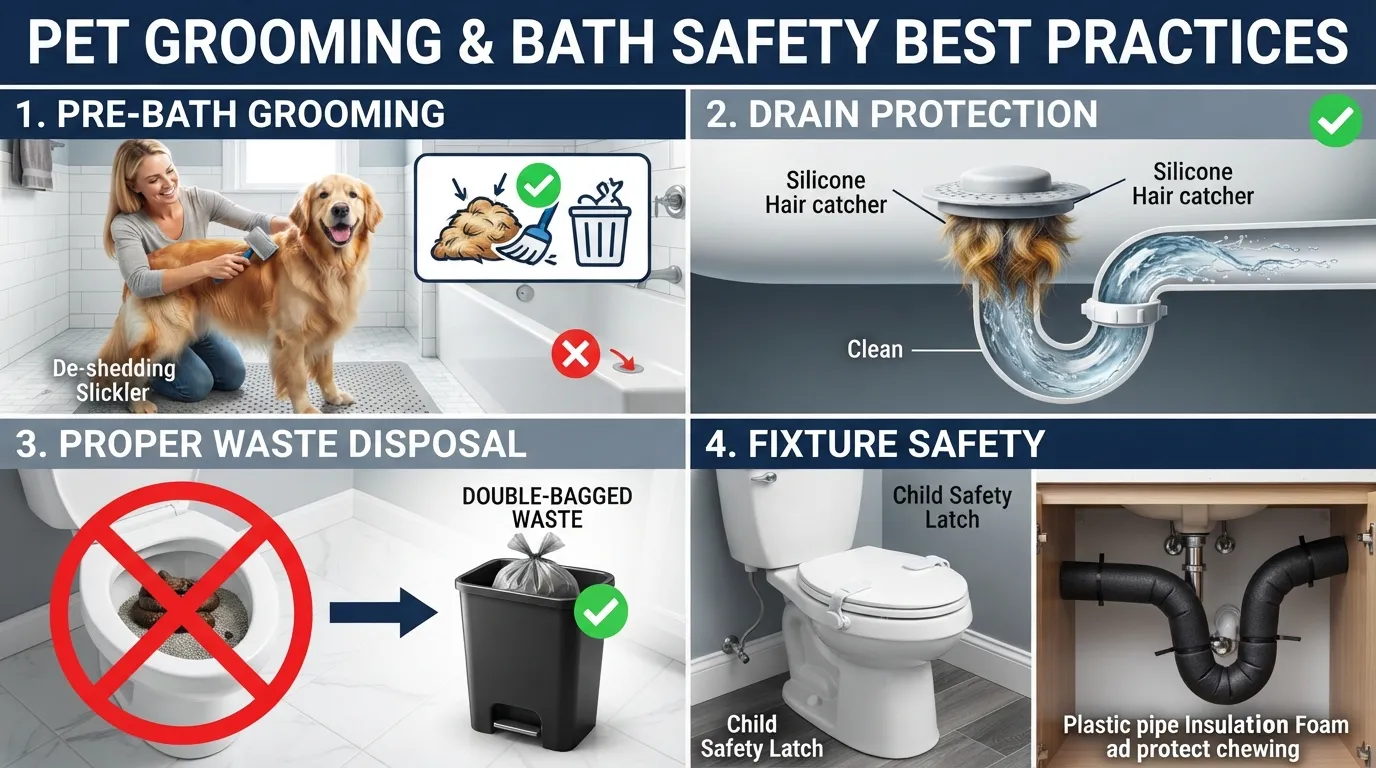
Dog & Cat Owners' Guide: How Pet Hair and Litter Destroy Drains And How to Fix It
Pet owners face unique plumbing clogs that standard DIY drain tips simply cannot resolve. When pet hair, clay-based cat litter, or dog waste enters your drainage system, it forms dense, water-resistant blockages deep within your pipes. While standard household debris easily flushes away with hot water, pet-related waste binds together, creating stubborn drain blockages that trap grease, soap scum, and mineral deposits.
Understanding how these materials react inside your plumbing allows you to protect your home’s infrastructure. Preventing severe drain damage requires a clear approach:
Pet Hair Accumulation: Shedding fur during bath time acts as a binding net inside waste lines, capturing passing solids until the pipe is entirely sealed.
Cat Litter Swelling: Sodium bentonite clay in clumping litter expands up to fifteen times its original volume when exposed to water, hardening into concrete-like obstructions.
Pet Waste Complications: Dog waste contains thick organic matter that fails to break down quickly in domestic drainage systems, posing both physical blockage risks and bacterial hazards.
Whether you are trying to clear an active backup or safeguard your pipes against future damage, implementing specialized pet-safe drainage habits ensures your system runs smoothly without costly emergency plumbing repairs.
Why Do Pets Cause Plumbing Clogs?
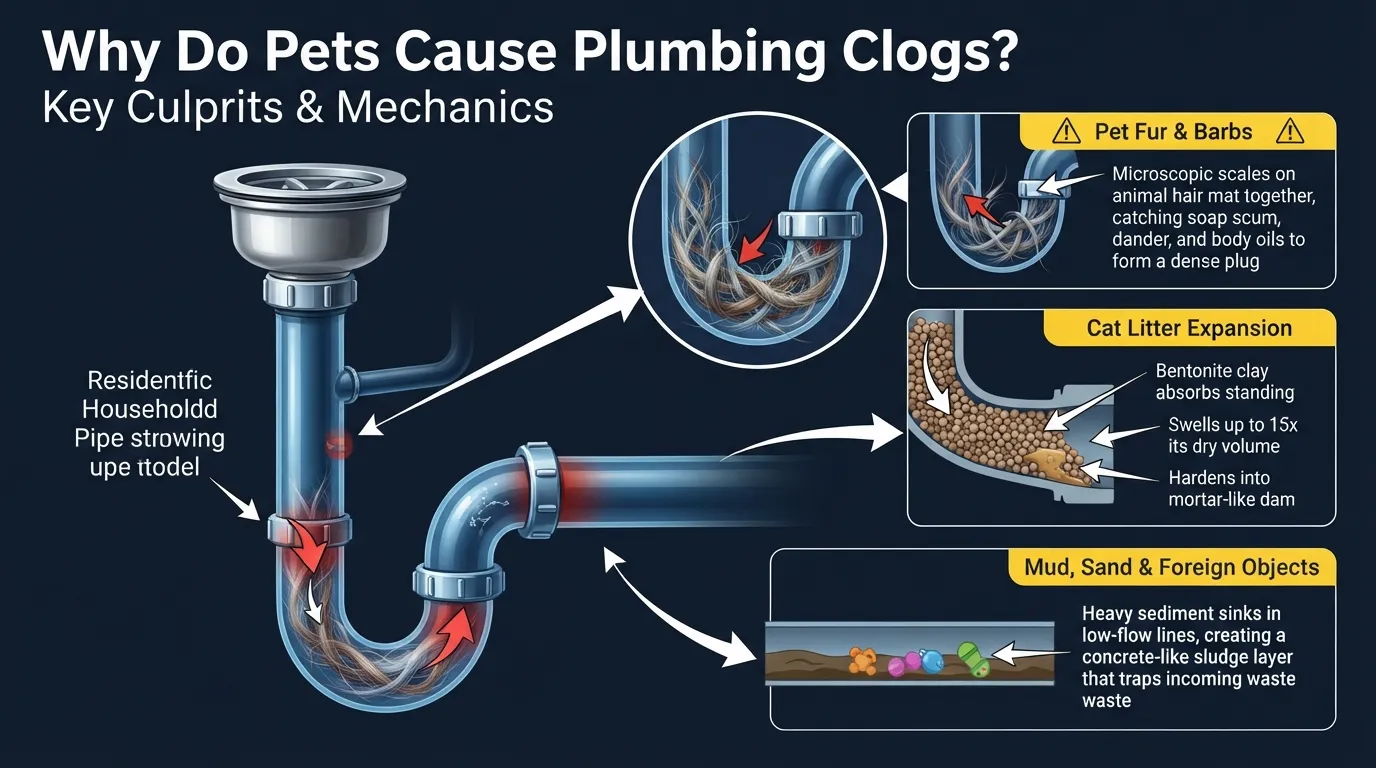
Pet-related plumbing clogs occur because animal waste products possess unique physical characteristics that traditional residential drainage systems are not built to handle. Unlike standard organic waste, substances like dense fur, heavy mud, and mineral clumping agents do not dissolve readily in flowing water. Instead, they settle inside the pipe blockage hot spots—specifically gravity-fed lines and curved fittings—creating dense, impenetrable dams that standard flushing action cannot dislodge.
Common Pet-Related Clog Culprits
Multiple everyday pet care activities introduce heavy materials directly into your drainage system, leading to chronic pipe restrictions over time:
Pet Fur: High-density shedding during baths sends large volumes of hair down the drain, where it catches on rough pipe walls and forms a tight mesh.
Mud & Gritty Buildup: Washing muddy paws introduces fine sand, silt, and dirt that settle in low-lying pipe segments, forming a heavy paste that restricts water flow.
Cat Litter: Pouring even small amounts of clay or silica litter down sinks or toilets causes rapid expansion, turning soft granules into solid obstructions.
Foreign Objects: Pet toys, chew bones, and plastic bags swallowed or carried into the bathroom can enter open drains, instantly catching inside waste pipes.
How Pet Hair Differs From Human Hair in Pipes
Pet fur acts far more aggressively than human hair inside a household P-trap and drainage network. Human hair is typically long, fine, and moves relatively freely down smooth pipe walls until it hits an existing obstruction. In contrast, pet hair features microscopic outer scales (barbs) that interlock tightly when wet, causing individual strands to mat together into a felt-like mass.
Additionally, pets shed undercoats made of ultra-short, dense fur that easily bypasses standard drain strainers. Once this dense undercoat reaches the P-trap, it combines with residual bath oils, dog shampoos, and soapy scum. This mixture hardens into a dense plug that locks onto pipe interiors, creating a permanent trap for any subsequent foreign debris passing through your waste lines.
Smart Bathing & Grooming Habits to Prevent Clogs
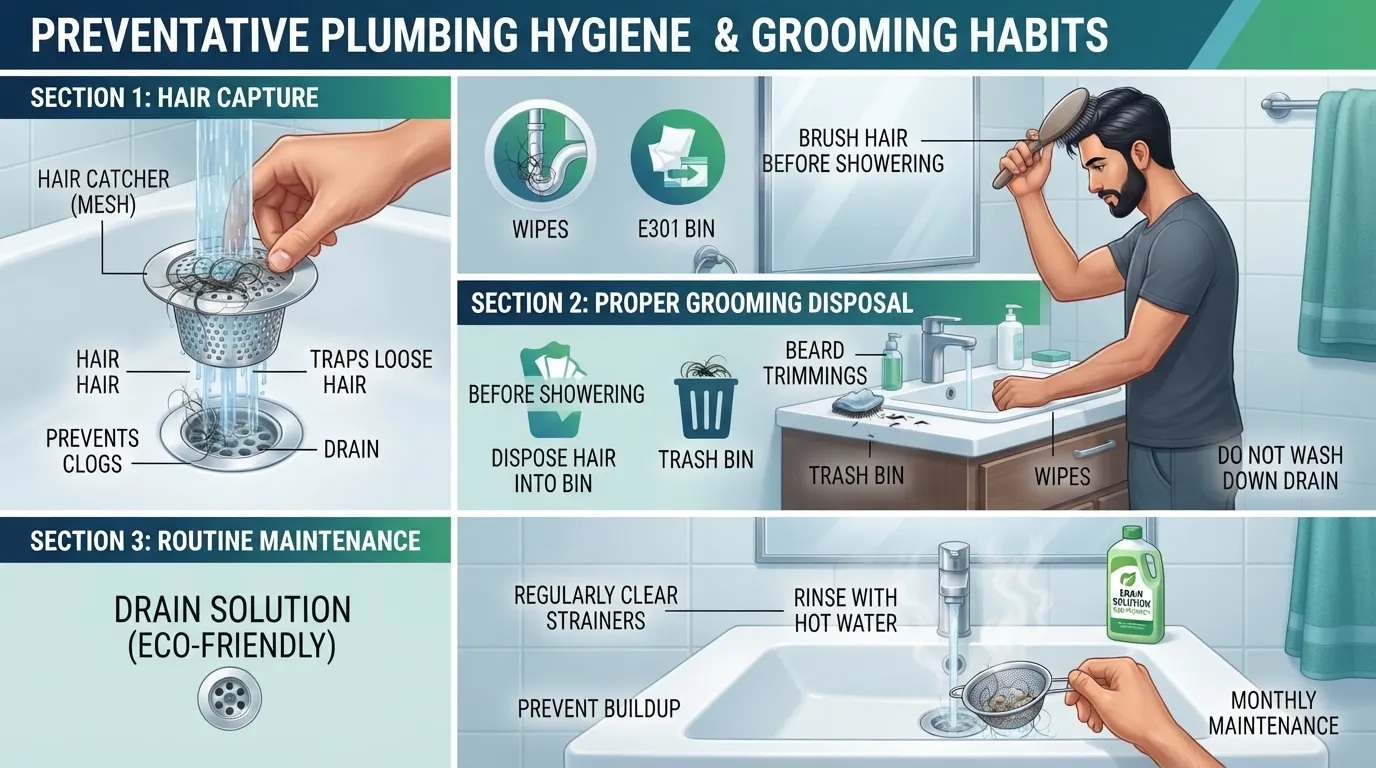
Preventing pet hair from ruining your plumbing requires simple preventative steps during your routine bathing and grooming sessions. Capturing loose coat hair before it reaches your drains keeps your indoor pipes clear and eliminates the need for aggressive chemical clearers or emergency drain augers.
Brush Your Pet Before Bath Time
Brushing your dog or cat thoroughly before running bath water removes up to 80% of loose undercoat fur that would otherwise enter your drain. Use a dedicated de-shedding tool, slicker brush, or rubber curry comb outdoors or over a dry towel to trap loose undercoat fibers.
De-Shedding Combs: Pull out dense, tangled undercoat fur before it gets wet and forms an impenetrable mat inside your pipes.
Rubber Grooming Gloves: Capture surface dander and loose topcoat hairs with simple sweeping motions on short-haired breeds.
Pre-Bath Wipe Downs: Use a damp washcloth to wipe off loose, dry coat fur before placing your pet into the tub.
Use a Drain Screen or Mesh Guard During Every Bath
Installing a dedicated mesh drain guard or specialized pet hair catcher creates a physical barrier that stops fur from ever entering your drainage system. Standard pop-up bath stoppers leave large gaps that easily let dense fur slip through, whereas specialized strainers capture even fine coat fibers.
Silicone Hair Catchers: Products like the TubShroom fit securely inside tub drains, wrapping fur around a center cylinder while letting bathwater drain freely.
Fine Stainless Steel Mesh Guards: Place removable flat mesh screens directly over open drain grates to trap surface fur and mud clump accumulation.
DIY Strainer Liners: Stretch a small piece of cheesecloth or a baby wipe under your drain cover during heavy bathing sessions for quick disposal.
Rinse Heavy Mud Outside Before Bringing Pets In
Rinsing off heavily caked mud, clay, and lawn dirt with an outdoor hose keeps heavy sediments out of your home’s indoor plumbing system. Mud contains sand, gravel, and heavy dirt particles that do not dissolve in water; instead, they sink to the bottom of horizontal waste lines, forming a concrete-like sludge.
Outdoor Garden Hose Station: Spray down legs, paws, and underbellies outside to remove heavy topsoil before tub bathing.
Paw Washing Cups: Dip muddy paws into portable, water-filled silicone cleaning cups near the entryway to trap dirt before it reaches the bathroom.
Towel Drying Pre-Rinse: Wipe off excess silt and dry debris with a damp microfiber cloth to protect indoor drain traps from heavy particulate accumulation.
If chronic coat accumulation or heavy mud buildup has already slowed your tub or sink drainage, standard home flushing methods may not clear the blockage. Scheduling professional drain cleaning removes stubborn hair mats and restores full flow to your home’s waste lines.
Best Drain Guards for Pet Owners — Product Comparison
Choosing the right drain guard keeps pet hair out of your pipes and eliminates frequent maintenance headaches during bath time. While standard strainers handle human hair, pet fur requires specialized physical barriers that catch dense undercoat fibers without restricting water drainage.
TubShroom vs. Standard Mesh Drain Screen
Selecting between an internal cylinder catcher like the TubShroom and a flat surface strainer comes down to how pet fur behaves in moving water:
| Feature / Metric | TubShroom (In-Drain Cylinder) | Standard Mesh Drain Screen (Flat) |
| Primary Mechanism | Fits inside drain; wraps hair around a hidden center cylinder | Sits on top of drain; stops debris on a flat surface plate |
| Pet Fur Efficiency | High: Captures fine undercoat fur beneath the drain lip without floating away | Moderate: Catches coarse topcoat hair, but fine fur often slips around edges |
| Water Flow Impact | Minimal: Water drains continuously through top holes even when full | High: Furred-over mesh quickly creates standing water in the tub |
| Cleaning Effort | Pull out and wipe clean with a paper towel in one motion | Requires scraping wet fur off flat, sticky metal mesh |
Silicone vs. Stainless-Steel Hair Catchers — Which Lasts Longer?
Material selection impacts both the longevity and hygiene of your bath accessories. While silicone hair catchers offer flexible fits for irregular drains at a lower cost, they last roughly 1 to 2 years before hard water, pet shampoos, and mold cause cracking or discoloration.
Stainless-steel strainers (and hybrid models like the TubShroom Ultra) offer a non-porous, rust-proof surface that lasts 3+ years. Smooth metal surfaces allow sticky pet fur and soapy dander to slide off effortlessly during cleaning, whereas soft silicone can retain oily residues over time.
What to Look for When Buying a Pet-Friendly Drain Guard
To ensure maximum protection against pet-induced plumbing backups, look for these key design features before purchasing:
Micro-Perforated Mesh: Standard strainers feature 3–5mm holes that allow fine cat or dog undercoats to pass through. Opt for micro-holes under 2mm or an internal wrapping cylinder.
Weighted or Weighted-Silicone Edge: Lightweight plastic guards shift when heavy pets step on them or when tub water fills quickly. Choose heavy stainless steel or silicone-rimmed bases that seal firmly over the drain opening.
Universal Drain Compatibility: Measure your tub or shower drain diameter first—most standard residential bath drains range from 1.5 inches to 1.75 inches. Verify whether the product requires removing your pop-up stopper before installation.
Waste Management Rules — What Never to Flush
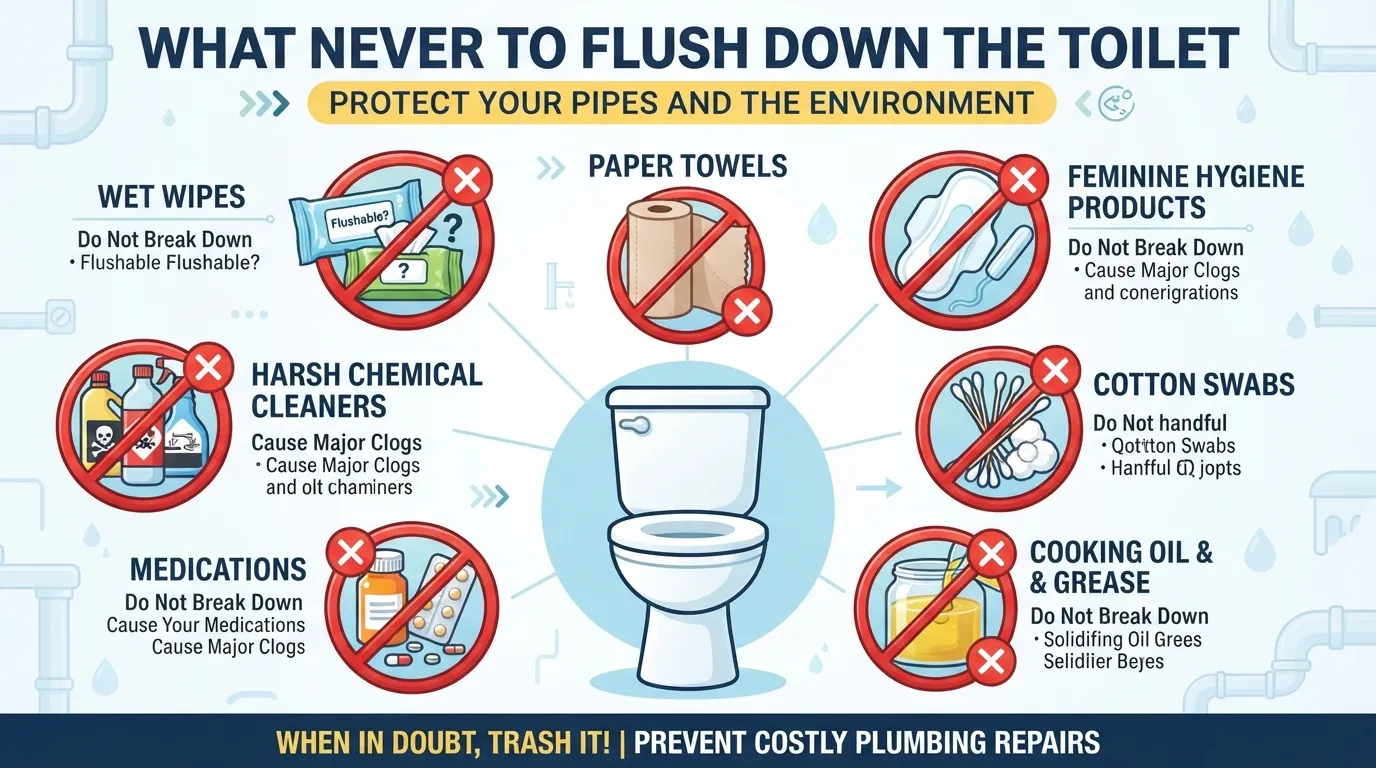
Proper waste disposal habits are crucial for protecting your plumbing system and municipal wastewater infrastructure. Misleading product packaging often convinces pet owners that flushing litter or pet waste down the toilet is safe. However, introduce these materials to household pipes, and they instantly create dense, water-resistant blockages that standard plunger attempts cannot dislodge.
Why “Flushable” Cat Litter Still Clogs Pipes
Products labeled as “flushable” cat litter remain a primary cause of severe indoor sewer blockages. While manufacturer claims suggest these litters dissolve smoothly in water, they fail to account for how litter behaves inside real-world residential plumbing systems.
Hydraulic Clay Expansion: Most natural litters rely on sodium bentonite or absorbent plant fibers (corn, wheat, wood). Once flushed, these materials absorb trapped standing water inside drain lines, swelling up to 15 times their dry volume.
Low-Flow Toilet Limitations: Modern water-conserving toilets use only 1.28 to 1.6 gallons per flush. This low volume lacks the hydraulic force required to push heavy, clumped litter all the way through long horizontal main lines to the city sewer.
Hardened Sediment Dams: As litter sits inside low-sloped or aging cast-iron pipes, the organic clay settles and hardens into a mortar-like paste that completely seals off the pipe diameter.
Can You Flush Just Pet Poop Without Litter?
Flushing raw pet poop—even without cat litter attached—presents major risks to your home’s drain pipes and municipal public health.
Unlike human waste, dog and cat stool contains heavy fur, ingested bones, grass, and high concentrations of hair that do not disintegrate easily in water. When flushed, this fibrous material catches on minor pipe rough spots, forming an anchor point for soap scum and grease.
Furthermore, feline waste carries Toxoplasma gondii, a hardy parasite that standard municipal wastewater treatment plants cannot filter out. Wastewater facilities release treated water back into local waterways, where Toxoplasma organisms survive and infect marine life, including sea otters and coastal marine ecosystems.
Proper Disposal Methods for Pet Waste
Safely disposing of cat litter and dog waste requires keeping these materials out of your drain pipes altogether. Implement these clean, municipality-approved waste management methods:
Double-Bagged Trash Disposal: Scoop used cat litter and dog waste into biodegradable waste bags, tie them securely, and place them directly into your exterior household garbage container.
Dedicated Pet Waste Digesters: Install an outdoor, in-ground pet waste digester (like a Doggie Dooley) in your yard to break down canine waste naturally using enzymes and water, completely bypassing your home’s drainage lines.
Professional Waste Removal Services: Utilize local pet waste removal companies that collect and haul dog waste off-site for high-heat industrial composting.
Toilet & Fixture Safety for Pet Households
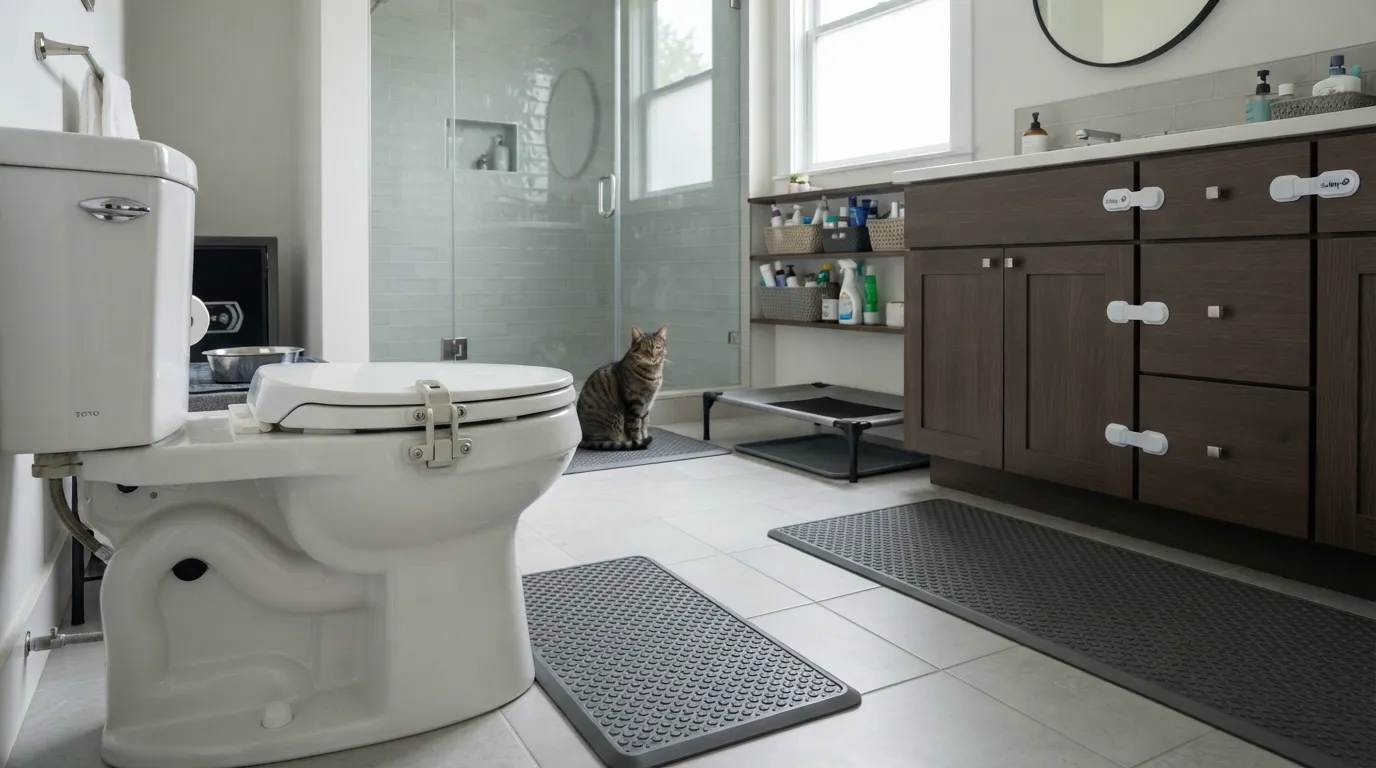
Protecting your plumbing infrastructure involves safeguarding your fixtures from curious pets. Open toilets and accessible plumbing lines present significant hazards to both your household drain health and your pets’ personal safety. Simple behavioral adjustments and protective covers prevent costly accidental clogs and keep young animals safe from toxic chemicals or structural plumbing damage.
Keep Toilet Lids Closed (Prevents Fur & Object Ingestion)
Leaving your toilet lid up creates an open invitation for pets to drop foreign objects directly into your main drain lines. Curious dogs and cats routinely knock bathroom items into open bowls, while drinking toilet water introduces health hazards and plumbing risks:
Accidental Object Drops: Pets easily bump chew toys, rubber balls, bath sponges, and grooming brushes off counters directly into open toilets, causing instant trap blockages.
Toxic Chemical Exposure: Toilet bowl cleaners, automatic drop-in tablets, and residual bleach solutions contain harsh chemicals that cause severe oral burns and gastrointestinal distress if ingested by pets.
Fur Accumulation: Long-haired pets drinking from bowls shed heavy facial and neck fur directly into standing toilet water, adding loose coat mats to your waste lines during flushing.
Instinctively closing the lid after every use—or installing a child-proof toilet lock—eliminates these hazards entirely.
Protect Exposed Pipes From Teething Puppies
Teething puppies and curious cats often chew on exposed plumbing lines beneath sinks, behind toilets, and around laundry basins. Plastic supply lines, flexible P-traps, and rubber seals are particularly vulnerable to sharp teeth, leading to sudden leaks or structural drain failures.
Install Pipe Protection Wrap: Cover exposed plastic lines and flexible hoses with hard polypropylene slit tubing or heavy-duty wire loom sleeves to create a bite-proof barrier.
Apply Bitter Anti-Chew Sprays: Treat accessible drain pipes and supply lines with pet-safe, taste-aversion sprays like bitter apple or wild cherry to discourage gnawing.
Enclose Cabinet Basins: Keep vanity doors securely closed using magnetic latches or child safety locks to restrict access to under-sink drain traps and shutoff valves.
If your pet’s chewing habits or accidental impact have resulted in exposed or damaged pipes, inspecting and repairing compromised connections promptly prevents major water damage and hidden leaks inside your walls.
Already Clogged? Safe DIY Unclogging Methods
If pet fur, mud, or cat litter has already caused standing water in your fixtures, standard flushing won’t resolve the blockage. Removing animal debris requires specialized DIY methods that clear dense mats without destroying plastic or metal pipe walls.
Baking Soda & Vinegar Method (Safe for Pipes)
Using a chemical-free baking soda and vinegar reaction breaks down grease, oil, and soap scum binding hair mats together inside your P-trap:
Pour 1/2 Cup Baking Soda: Dump dry baking soda straight down the drain opening, ensuring it reaches the clog site.
Follow with 1 Cup White Vinegar: Immediately pour vinegar down the line to trigger carbon dioxide fizzing action that pushes through sludge.
Flush with Boiling Water: Wait 15 to 20 minutes for the foam to dissolve organic binders, then flush with a kettle of hot water.
Why Plumbers Recommend Against Drano
Avoid using harsh chemical drain openers like Drano on pet hair or clay litter clogs. Chemical cleaners rely on sodium hydroxide (lye) to dissolve organic material, generating intense heat inside restricted lines:
Pipe Deformation: Chemical heat warps PVC joints, melts plastic seals, and weakens corroded metal pipes.
Chemical Traps: If chemical drain cleaners fail to pass through dense cat litter, caustic chemicals sit trapped in your pipes, creating extreme danger for plumbers during subsequent physical repairs.
Enamel Damage: Standing chemical solutions dull porcelain finishes and dissolve rubber tub stopper gaskets.
Does Dawn Dish Soap Actually Work?
Dawn dish soap effectively clears minor pet hair clogs by breaking down coat oils, dander, and bath soaps. Pouring $1/2$ cup of concentrated Dawn down a slow drain followed by hot water lubricates pipe walls, allowing tangled fur clumps to slide free. However, dish soap cannot break down solid cat litter or dense mud dams.
Zep vs. Green Gobbler — Which Natural Cleaner Wins?
Enzymatic and bio-organic cleaners dissolve hair and organic waste using natural bacterial cultures rather than harsh lye:
| Feature | Zep Commercial Drain Care | Green Gobbler Main Line Opener |
| Active Ingredient | Enzyme-producing bacteria | Monosodium bisulfate formula |
| Best Used For | Dissolving soap scum, body fat, and light fur mats | Heavy hair blockages and organic sludge build-up |
| Safety Profile | 100% safe for PVC, septic tanks, and garbage disposals | Non-corrosive to pipes; pet-safe when flushed |
| Result Speed | Works overnight (6 to 8 hours) | Rapid action (30 to 60 minutes) |
Verdict: Green Gobbler wins for fast emergency hair removal, while Zep works best as an overnight preventive maintenance treatment.
If natural solutions and enzymatic cleaners fail to restore proper flow, contact a professional drain cleaning service to clear severe main-line blockages safely with mechanical augers or hydro-jetting equipment.
Septic Tank Considerations for Pet Owners
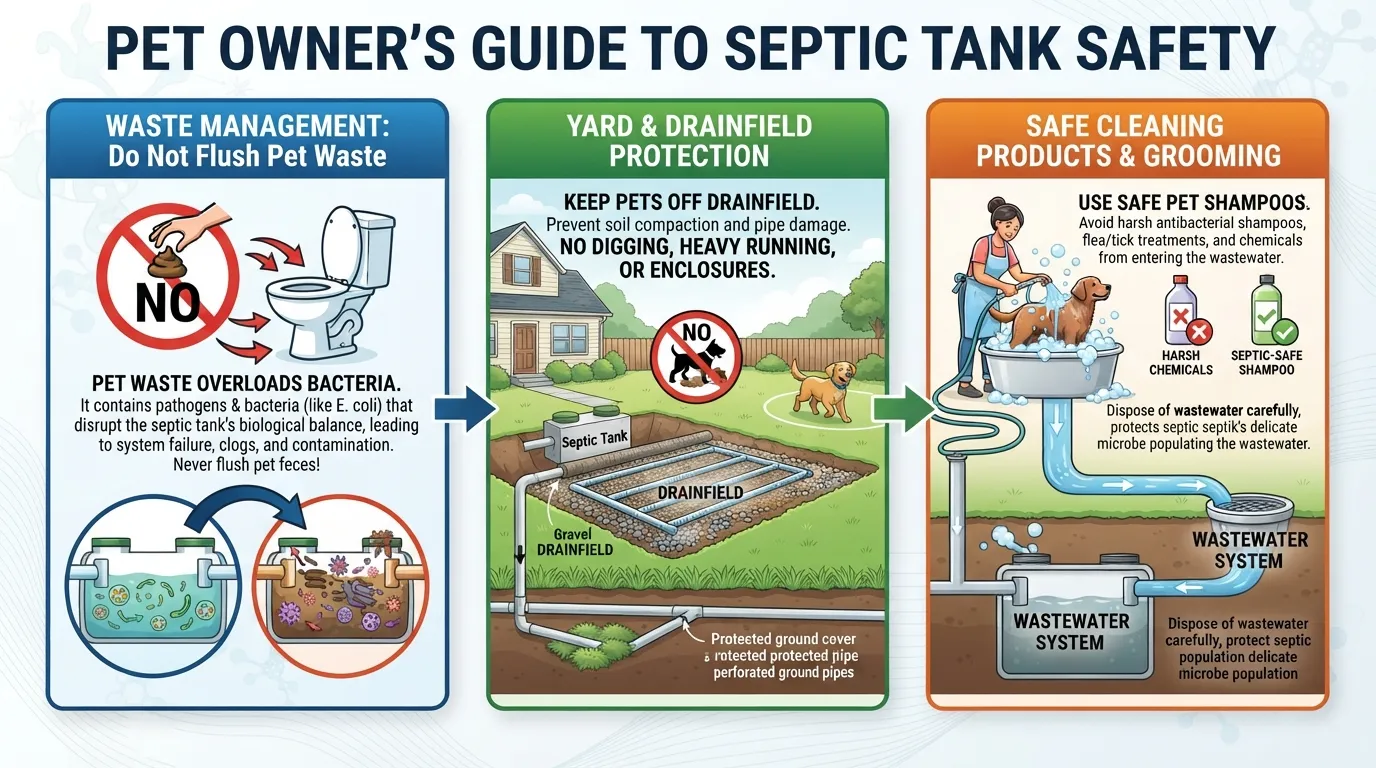
Pet owners operating on an on-site septic system face distinct operational risks compared to homes connected to a municipal city sewer line. Septic systems rely on a delicate biological ecosystem of anaerobic bacteria to digest organic solids in the settling tank before discharging clarified wastewater into the drainfield. Introducing heavy pet waste, hair mats, or clay-based litters destroys this microbial balance, accelerating sludge buildup and leading to catastrophic drainfield failures.
How Pet Waste Affects Septic Systems Differently Than City Sewer
While municipal sewer infrastructure utilizes high-volume water flows and industrial processing plants to handle solid debris, household septic tanks have strict physical and biological limitations:
Bacterial Ecosystem Disruption: Dog and cat feces contain heavy concentrations of pathogens and different digestive bacteria than human waste. Flushing pet stool introduces foreign microbes that overwhelm the natural bacterial colonies in your tank, halting the breakdown of normal household sewage.
Scum Layer Accumulation: Pet fur and coat oils do not decompose in an anaerobic septic environment. Instead, floating fur binds with household fats, oils, and grease (FOG) to form a dense, mat-like scum layer that clogs the tank’s outlet baffle.
Drainfield Soil Clogging: Fine particles from clay cat litter or washed-off bath mud do not settle at the bottom of the tank. They remain suspended in the liquid layer, eventually flowing out into the soil absorption area where they seal soil pores and cause surface sewage backups.
Following official EPA septic system maintenance guidelines requires keeping non-degradable solids, pet hair, and clay litters entirely out of on-site wastewater treatment units to prevent early system failure.
Septic-Safe Products for Pet Owners
Maintaining a healthy septic tank while caring for pets requires selecting household cleaning and grooming products that protect your system’s vital bacterial balance:
Enzyme-Based Shampoos & Cleaners: Wash pets with biodegradable, plant-based shampoos that do not contain harsh sulfates, synthetic silicone, or quaternary ammonium compounds that kill beneficial septic bacteria.
Biological Drain Maintenance Treatments: Use natural enzymatic drain cleaners containing live bacterial cultures to digest minor fur buildup in sink traps without altering tank pH levels.
Phosphate-Free Pet Stain Removers: Clean indoor pet accidents using zero-phosphate, non-chlorine enzymatic sprays to keep chemical toxins out of your leach field.
If pet fur accumulation, clay sediment, or chemical treatments have caused widespread backup across multiple household fixtures, you may be facing severe downstream sewer line issues that require professional diagnostic cameras and line clearing.
Frequently Asked Questions
What is the 135 rule in plumbing?
The 135 rule refers to the maximum allowable directional changes in a drainage pipe. Plumbers use a combination of fittings that total no more than 135 degrees of turn without adding a dedicated cleanout access point. This ensures waste flows smoothly without catching on sharp bends inside the line.
What should I pour in my drain line to prevent clogging?
Pour an enzyme-based drain maintenance cleaner down your drains once a month. Enzymes digest pet coat hair, bath soap scum, and organic dander naturally without generating heat or damaging PVC joints. A weekly flush with hot water and baking soda also keeps pipe walls slick and debris-free.
What do plumbers recommend instead of Drano?
Plumbers recommend using a mechanical drain snake, a specialized hair zip-tool, or bio-enzymatic drain cleaners like Green Gobbler or Zep. For pet fur and heavy bath debris, physical removal with a drain auger is the safest, most effective method that protects pipes from chemical burns.
Can you pour vinegar down a drain to unclog it?
Yes, pouring vinegar down a drain helps clear light buildup when combined with baking soda. The chemical reaction creates carbon dioxide gas that loosens minor soap scum and hair mats. However, vinegar alone cannot break down heavy pet hair blockages or swollen clay cat litter.
Will hair block the toilet?
Yes, flushing pet hair or human hair will cause severe toilet blockages over time. Hair does not dissolve in water and easily catches on the internal toilet trapway or rough cast-iron pipe joints. Once trapped, it acts as a net, capturing passing solids until the line seals entirely.
Can I train my cat to use the toilet, and is it plumbing-safe?
While you can train a cat to use a human toilet, it is not plumbing-safe or environmentally sound. Feline waste contains hair and dense matter that can clog domestic pipes. More importantly, cat stool carries Toxoplasma gondii, a parasite that municipal sewage treatment plants cannot eliminate from local water supplies.
When to Call a Professional Plumber
While DIY methods clear minor surface hair mats, certain pet-related blockages require heavy-duty mechanical equipment. Animal fur combined with swollen cat litter or compacted mud creates dense obstructions that household plungers and hand snakes simply cannot break apart. Knowing when to escalate the issue protects your drainage pipes from physical bursting, joint separation, and toxic wastewater backups.
Signs of a Serious Pet-Related Blockage
Recognizing the early warning signs of a severe waste line restriction allows you to intervene before wastewater backs up into your living spaces:
Multiple Clogged Fixtures: When running the bathroom sink causes water to rise in your bathtub, the blockage sits deep inside your main sewer line rather than a single fixture trap.
Gurgling Drain Noises: Hearing bubbling or gurgling sounds from your toilet or shower drain indicates trapped air pockets caused by a dense hair mat or clay litter dam downstream.
Persistent Foul Odors: Strong smells of sewage or decaying organic matter coming from your drains signal that pet waste or wet fur mats are trapped in the pipe walls, harboring bacterial growth.
Recurring Drain Slowdowns: If your tub or sink clears temporarily after using baking soda or a hand snake but clogs again within days, a deep-seated blockage remains inside the line.
Emergency Plumbing Situations to Watch For
Certain pet-related plumbing failures pose immediate property damage risks and require urgent intervention from a licensed professional plumber:
Active Sewage Backups: Raw sewage or wastewater backing up through floor drains, showers, or toilets introduces hazardous bacteria into your home, requiring immediate containment and professional line clearing.
Hardened Cat Litter Dams: Flushing sodium bentonite litter creates concrete-like plugs in main sewer lines that require a motorized drain snake or high-pressure hydro-jetting to blast away.
Uncontainable Overflow: If a clogged toilet or tub continues to overflow even after turning off the local shutoff valve, main line pressure is failing.
When DIY fixes fall short, seeking immediate emergency plumbing help prevents catastrophic structural water damage and restores your sanitation system. You can easily book a service online to have a licensed technician inspect your waste lines with HD video cameras and clear tough pet blockages safely.
Conclusion
Protecting your home from costly pipe damage comes down to adopting simple, daily prevention habits. By brushing your pets before bath time, using high-efficiency hair strainers, and keeping cat litter and pet waste out of your toilets entirely, you build a pet-proof plumbing system that resists stubborn blockages. A proactive approach to regular drain maintenance keeps your wastewater lines flowing freely and saves you from the stress of unexpected emergency repairs.
When routine maintenance isn’t enough to clear deep-seated fur mats or heavy sediment build-up, expert assistance is just a click away. Explore our plumbing services to learn how our comprehensive line-clearing solutions can safeguard your home, or Book Now to schedule a professional inspection with a licensed technician today.
Main Services
Related Posts
Need a Plumber in Miami?
Schedule service online or speak directly with the EZ Plumbing team.
Owner-Led Local Service
Know who is behind the business before you request service. The owners, contact line and Miami service pages are published clearly.
- Named business owners
- Direct phone and social channels
- Local Miami service information
Clear Help Before You Book
Review the relevant service page, contact the team directly and use the booking page when you are ready—without relying on vague claims.
- Service-specific information
- Direct questions before scheduling
- Clear online booking route