Washing Machine Drain Overflow: Causes & Fast Fixes
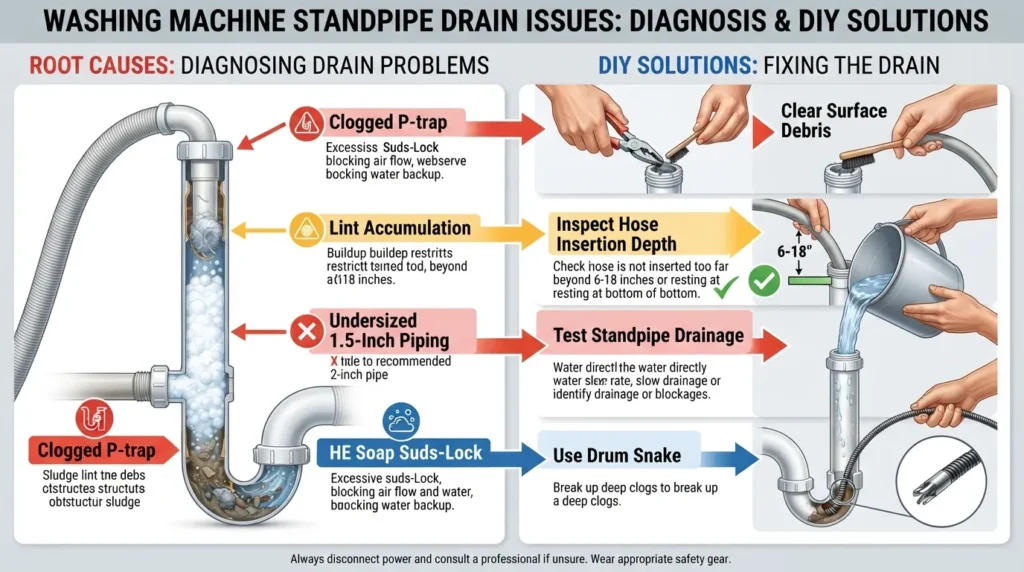
Understanding Your Washing Machine Drain Overflow
A washing machine drain overflow is an urgent plumbing emergency that usually points to a localized blockage in the standpipe or a severe restriction deeper in your main sewer line. Because modern washing machines pump water out at high volumes—often 15 to 20 gallons per cycle—even a minor restriction in your drainage path can cause wastewater to spill over onto your floor within seconds. Pinpointing whether the issue is isolated to your laundry setup or tied to your home’s main drainage system is the first step toward preventing water damage.
What’s Causing Your Washing Machine Drain Overflow?
A sudden washing machine drain overflow is almost always triggered by one of two primary culprits: a clogged standpipe or a main sewer line blockage. When the discharge hose pumps water faster than the pipe can vent and clear it, water immediately backs up and spills over the brim.
Clogged Standpipe: Lint, hair, detergent buildup, and fabric softener residue gradually coat the interior of the standpipe, drastically reducing its inner diameter.
Main Sewer Line Blockage: If your washing machine backup coincides with slow-draining tubs, gurgling toilets, or water pushing up through floor drains, the issue extends far beyond the laundry room.
Improper Pipe Sizing: Older homes often feature 1.5-inch drain pipes, whereas modern high-efficiency washing machines require a minimum 2-inch standpipe to handle high-velocity discharge.
Blocked Plumbing Vent: A clogged roof vent prevents proper airflow, creating a vacuum effect that slows down drainage and causes surging overflows.
Stopping the immediate flood requires shutting off the power to the washing machine and containing the standing water before investigating the drain line. Inspecting the height and clearance of your standpipe will quickly reveal if your plumbing configuration meets current code requirements or needs professional intervention.
Diagnose the Problem — Where Is the Water Coming From?
Pinpointing the exact physical location of the water overflow is the fastest way to isolate the root cause of your plumbing failure. Because a home’s drainage network is interconnected, the specific fixture where wastewater escapes reveals whether you are dealing with a localized clog or a whole-house main line backup.
| Overflow Location | Primary Suspect | Severity Level | Immediate Action |
| Standpipe | Clogged pipe, undersized drain, or lint buildup | Low to Moderate | Clean lint trap, snake standpipe, check pipe diameter |
| Utility Sink | Shared P-trap blockage or downstream restriction | Moderate | Clear sink trap, check branch line for grease/soap scum |
| Floor Drain | Main sewer line clog or tree root intrusion | High | Stop all water usage, call a licensed plumber immediately |
| Toilet / Shower | Vent stack failure or total main sewer collapse | Critical | Avoid flushing, seal drains, prevent raw sewage backup |
Water Overflowing from the Standpipe
When water surges directly out of the vertical pipe where your washing machine hose inserts, the restriction is almost always isolated to the laundry drain line itself. High-efficiency washing machines pump out water at rates up to 20 gallons per minute, which quickly exposes any narrowing inside the pipe.
Lint and Residue Accumulation: Decades of fabric fibers, hair, and solidified detergent combine to create dense blockages inside the standpipe or P-trap.
Inadequate Pipe Diameter: Older homes built with 1.5-inch standpipes frequently overflow when paired with modern, high-speed washing machine pumps requiring 2 inches.
Standpipe Height Issues: If your standpipe is shorter than 30 inches from the trap, water can easily splash or surge over the rim during peak discharge.
Water Backing Up into a Nearby Sink or Utility Sink
If your laundry cycle causes wastewater to bubble up into an adjacent utility sink or laundry tub, the blockage typically lies downstream where the washing machine drain ties into the sink branch line. Utility sinks share a common P-trap or wet vent with the washing machine in most home configurations.
Shared Trap Clogs: Grease, sludge, and debris from both the sink and the washer collect in the shared P-trap, slowing drainage to a crawl.
Branch Line Restrictions: The horizontal arm connecting the laundry drain to the main stack may have accumulated enough scale or soap scum to impede bidirectional flow.
Water Coming Up from the Floor Drain
Water erupting from a basement or laundry room floor drain during a wash cycle is a red flag indicating a severe blockage in your main sewer line. Because floor drains sit at the lowest point of the home’s drainage system, they act as the relief valve when wastewater has nowhere else to go.
Main Line Obstruction: Tree roots, crushed pipes, or a buildup of solid waste further down the sewer line are preventing wastewater from reaching the municipal sewer or septic tank.
Surge Volume Overload: The sheer volume of water discharged by the washing machine overwhelms the sluggish main line, forcing water backward out of the lowest available opening.
Water Backing Up into the Shower or Toilet
Seeing water push up into your bathroom fixtures when the washing machine runs points to a critical failure or heavy restriction in your primary drainage stack. Because toilets and showers sit on shared main lines, a backup here means the entire wastewater path is compromised. For persistent issues involving bathroom fixtures, professional toilet repair services may be required if the backup has damaged internal wax rings or floor flanges.
Blocked Vent Stack: A plugged roof vent restricts air pressure balance, creating a vacuum that pulls or pushes water out of low-level bathroom traps.
Total Sewer Line Collapse: Structural damage or heavy root intrusion prevents any wastewater from leaving the house, backing up the entire system.
Common Causes of Washing Machine Drain Overflow
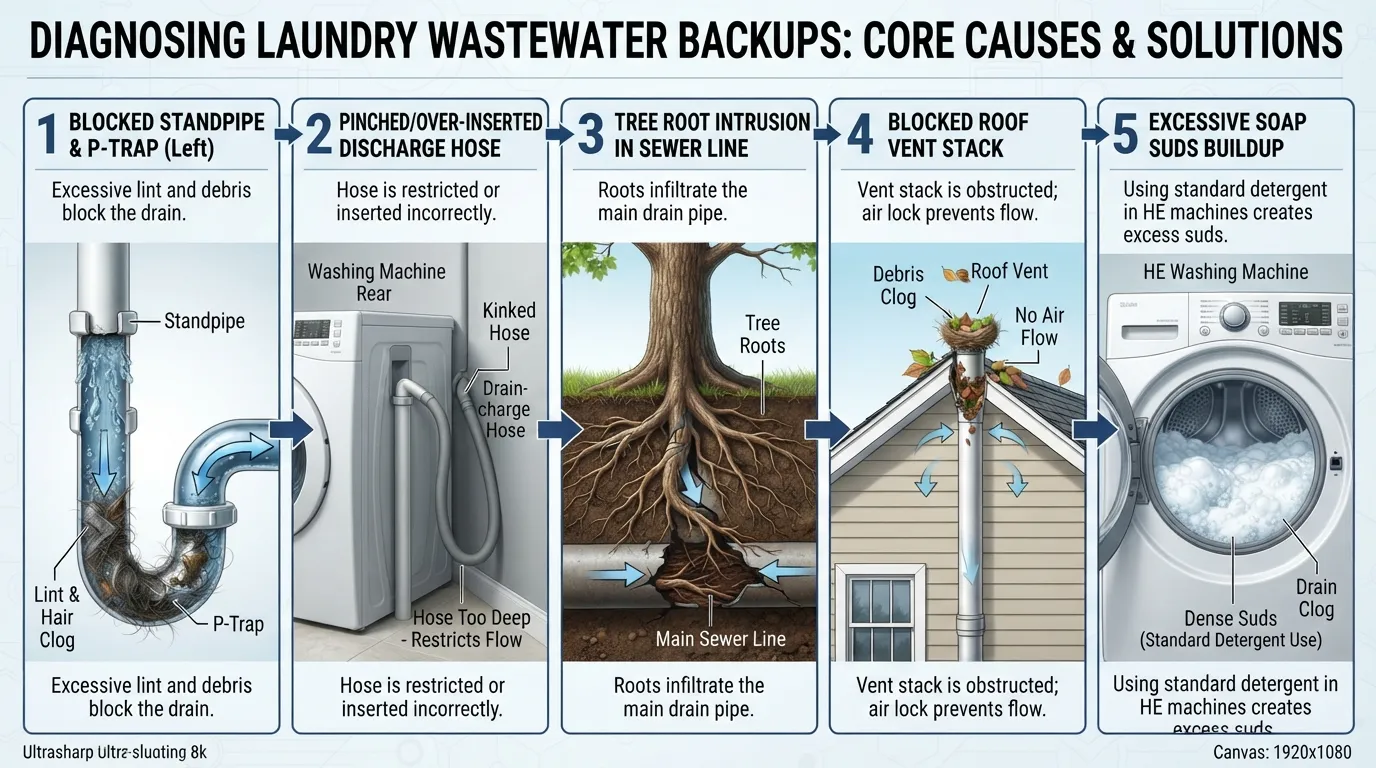
Identifying the specific trigger behind a washing machine drain overflow prevents repeated flooding and protects your home from long-term water damage. Drainage issues typically stem from mechanical blockages, improper installation configurations, or chemical imbalances within the plumbing line.
Clogged Standpipe or P-Trap
A clogged standpipe or P-trap is the most frequent cause of localized washing machine overflows. Over time, lint, hair, pet fur, and solidified detergent residue accumulate along the interior walls of the pipe, drastically constricting the passage.
Lint and Fabric Buildup: Synthetic and cotton fibers shed during wash cycles bind with sticky soap scum, forming dense blockages.
Restricted P-Trap Flow: The curved trap designed to block sewer gases also catches heavy debris, making it a primary bottleneck for fast-moving laundry water.
Slow Drainage Symptoms: Water that takes longer than usual to recede from the standpipe is an early warning sign of an impending total blockage.
Kinked or Misplaced Drain Hose
Sometimes the issue is not inside the plumbing wall, but rather with how the washing machine’s discharge hose is positioned. If the hose is pushed too far down into the standpipe or bent sharply at an unnatural angle, water cannot exit the machine smoothly.
Oversertion Bottleneck: Pushing the drain hose all the way to the bottom of the trap creates a siphon or physical blockage that impedes outward flow.
Hose Kinks: Tight bends behind the appliance restrict the high-pressure stream of pumped water, causing backpressure inside the hose.
Insecure Hook Positioning: If the discharge hook slips out of place during a high-spin cycle, water can spray directly out onto the floor.
Main Sewer Line Blockage
When a washing machine overflow occurs alongside gurgling toilets or slow-draining bathtubs, the root cause is a main sewer line blockage. For complex issues affecting the main drainage stack, professional sewer line diagnostics using high-resolution sewer cameras are often necessary to locate structural breaks.
Tree Root Intrusion: Roots seek out moisture and crack through underground clay or cast-iron sewer pipes, blocking wastewater paths.
Grease and Scale Accumulation: Decades of grease, mineral scale, and sludge buildup narrow the interior diameter of the main building drain.
Structural Pipe Damage: Settling soil or heavy traffic can cause older pipes to sag, belly, or completely collapse, halting all wastewater evacuation.
Blocked Vent Pipe
Your home’s plumbing system relies on a network of roof vent pipes to equalize air pressure and allow wastewater to flow freely. If debris blocks this vent, a vacuum effect occurs within the drain lines.
Debris and Animal Nests: Leaves, twigs, or bird nests can obstruct the roof vent opening, cutting off critical airflow.
Glugging and Slow Drainage: A starved vent creates negative pressure that causes water to stutter, surge, or back up out of the washing machine standpipe.
Excess Suds from Wrong Detergent (HE Washers)
Using standard, high-sudsing laundry soap in a high-efficiency (HE) washing machine creates a massive volume of dense foam that water cannot push down the drain fast enough. According to guidance from major appliance manufacturers like Whirlpool, HE machines require low-sudsing formulas engineered to dissolve rapidly in low-water environments.
The Suds-Lock Phenomenon: Thick suds trap water and bind together, creating a physical barrier that stalls drainage and triggers an instant overflow.
Residue Accumulation: Standard detergents leave heavy, glue-like residues inside the standpipe that capture lint and accelerate future clogs.
Undersized/Old Drain Pipes in Older Homes
Plumbing codes evolve as washing machines become faster and more powerful. Many older homes were built using drainage infrastructure that cannot support contemporary high-volume water discharge rates.
1.5-Inch vs. 2-Inch Pipes: Modern washing machines pump up to 20 gallons per minute, requiring a minimum 2-inch standpipe to prevent surging.
Narrowing Cast Iron: Aging cast-iron pipes corrode and develop interior rough patches, drastically reducing the effective diameter available for water flow.
Why Does My Sink or Shower Back Up When the Washer Drains?
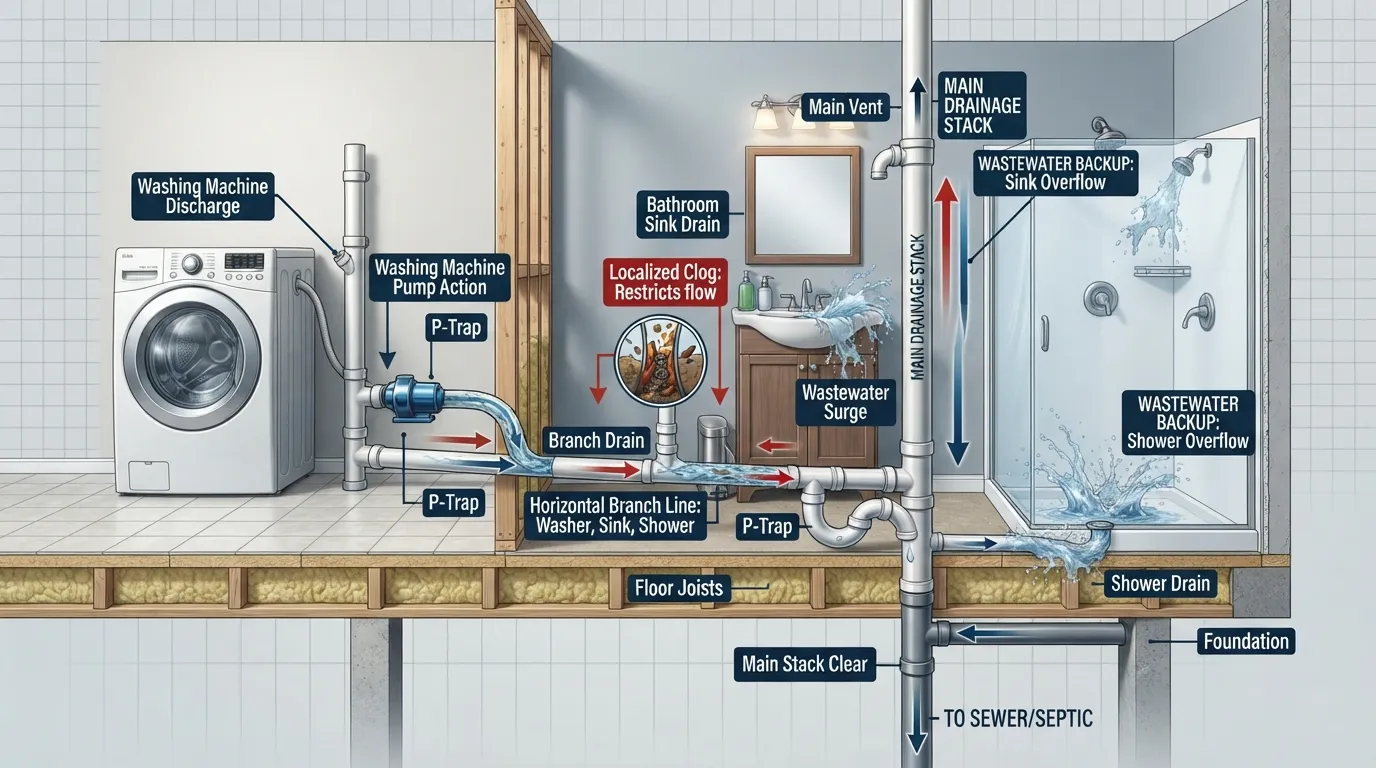
When your washing machine triggers wastewater to escape through a nearby bathroom sink, utility tub, or shower drain, it reveals an interconnected plumbing issue. Because multiple plumbing fixtures throughout your home share common branch lines and a main drainage stack, a restriction anywhere along that shared path forces surging discharge water to find the path of least resistance.
Shared Drain Line Explained
Your home plumbing network is designed so that multiple fixtures tie into shared branch pipes before feeding into the main vertical drain stack. When your washing machine enters its high-speed spin cycle, it forces out a massive volume of water simultaneously.
Branch Line Intersections: The laundry drain pipe typically connects to the same horizontal branch line used by nearby bathroom fixtures or utility sinks.
Hydraulic Pressure Surges: If the shared pipe has narrowed due to buildup, the high-pressure surge of water from the washer cannot pass quickly enough, causing it to push backward and rise out of lower fixtures.
The Venting Factor: Connected fixtures rely on shared vent lines to balance air pressure; a restriction here can cause air pockets that violently push water up through sink and shower traps.
When It’s a Simple Clog vs. When It’s a Main Line Issue
Differentiating between a localized fixture clog and a compromised main sewer line is critical for applying the correct fix. The number of affected fixtures usually tells the story within seconds.
Signs of a Simple Branch Line Clog: If only the utility sink or an adjacent bathroom sink backs up while the shower and toilets remain unaffected, the issue is isolated to that specific branch line or shared P-trap. Clearing hair, soap scum, or grease right near the intersection usually resolves it immediately.
Signs of a Main Line Emergency: If running the washing machine causes multiple downstream fixtures—such as a downstairs shower, a basement floor drain, and multiple toilets—to gurgle or overflow simultaneously, the problem is deep in your main sewer stack. This points to heavy root intrusion, structural pipe damage, or a total municipal line obstruction requiring immediate professional intervention.
Quick DIY Troubleshooting Steps
Tackling a washing machine drain overflow early can save you from costly water damage and emergency plumbing bills. Before calling for professional help, work through these systematic troubleshooting steps to isolate and often resolve minor blockages safely.
Step 1: Inspect the Drain Hose for Kinks or Misplacement
A straightforward physical check of your washing machine’s discharge hose can immediately reveal simple installation errors. If the hose is pushed too deep into the standpipe or bent sharply at an angle, drainage will back up instantly.
Check Insertion Depth: Ensure the hose does not extend more than 6 to 8 inches down the standpipe, preventing a bottom siphon block.
Eliminate Sharp Bends: Smooth out any tight kinks or twists directly behind the machine that restrict high-pressure water flow.
Secure the Hook: Fasten the drain hose securely to the standpipe using a zip tie or manufacturer bracket to prevent it from slipping out during spin cycles.
Step 2: Check Your Detergent Type
Switching to high-efficiency soap requires matching your detergent to your machine’s low-water environment. Standard soaps create a thick foam blanket that chokes out drainage capacity.
Verify HE Compliance: Look for the “HE” symbol on your detergent container to ensure it is low-sudsing.
Reduce Soap Quantities: Over-pouring detergent leaves heavy, glue-like residues inside your pipes that trap future lint and debris.
Step 3: Clear Visible Debris at the Standpipe Opening
Lint, pet hair, and plastic wrappers often accumulate right at the entrance of the standpipe or inside the removable lint trap. Removing this surface blockage restores immediate gravity flow.
Scoop Surface Buildup: Use gloved hands or small tools to clear any matted hair and lint clogging the top of the drain opening.
Inspect the Strainer: Clean out any mesh lint catchers attached to your discharge hose that may be restricting outward water passage.
Step 4: Run the Bucket Test (Pour Water into Standpipe to Test Drainage)
The bucket test is a classic diagnostic trick used by plumbers to determine whether a clog is localized to the standpipe or tied to a deeper line [01:07]. Pouring a controlled volume of water down the pipe provides an immediate read on its carrying capacity.
Pour a Gallon of Water: Slowly dump a full bucket of water directly down the washing machine standpipe.
Evaluate Drainage Speed: If the water backs up instantly, you have a localized obstruction; if it drains smoothly, your problem may be intermittent or linked exclusively to the high-pressure pump volume of the washer.
Step 5: Try a Drum Snake for Deeper Clogs
When a localized clog sits just beyond the P-trap, a hand-cranked or motorized drum snake can break through stubborn lint and soap sludge [00:30]. For persistent or recurring blockages that resist basic snaking, professional drain cleaning services can thoroughly scour your pipes to prevent future overflows.
Insert the Cable: Feed the snake cable gently into the standpipe opening until you feel resistance from the clog or trap bend.
Rotate and Advance: Crank the handle to rotate the auger bit, allowing it to hook into and break apart the dense buildup [00:47].
Flush the Line: Run water down the pipe to clear away loosened residue [01:07], and watch the demonstration below for a visual guide on clearing a laundry drain backup.
Washing Machine Overflow Error Code Modern/Digital Washers
Modern high-efficiency and smart washing machines feature built-in digital sensors designed to detect abnormal water levels before an actual flood occurs. When these sensors trigger an overflow error code on your digital display, the machine automatically halts its cycle, locks the door, and initiates an emergency drain pump sequence to protect your home.
What Does the Overflow Error Code Mean?
An overflow error code—such as an OE code on LG, an ND or LE code on Samsung, or an F8/E1 code on Whirlpool units—signals that the internal control board believes the water level has exceeded safe operating limits.
Preventative Shutdown: The appliance halts water intake immediately and locks out standard wash cycles to prevent structural flooding.
Continuous Pump Activation: You will typically hear the internal drain pump running continuously as the machine attempts to clear the perceived excess water.
Sensor vs. Reality Check: The code may indicate actual standing water in the tub, or it could simply mean a faulty sensor is misinterpreting normal operating conditions.
Common Sensor/Pressure Switch Issues
When your digital washer displays an overflow warning despite the tub being completely empty, the issue usually stems from a malfunctioning electronic component or pressure monitoring system.
Faulty Water Level Pressure Switch: This switch measures air pressure inside a small tube connected to the tub; if the tube becomes pinched, clogged with soap residue, or disconnected, the switch falsely reports a high water level.
Blocked Pressure Hose: Lint or detergent buildup inside the tiny clear plastic hose running from the tub to the pressure sensor can trap air and trick the computer into showing an error.
Control Board Glitches: Power surges or moisture exposure can cause the main electronic control board to misread sensor voltages and lock the machine into an error state.
When a Reset Works vs. When It Doesn’t
Many digital overflow errors are temporary electronic glitches that can be cleared with a simple power cycle, but physical plumbing problems require mechanical intervention.
When a Reset Works: If your washer displays an overflow code immediately after a brief power fluctuation or an accidental over-sudsing event that has since cleared, unplugging the machine for 5 minutes usually resets the logic board and restores normal operation.
When It Doesn’t: If the error code returns instantly upon starting a new cycle—or if water is physically backing up into the standpipe—a reset will not help. You must address the underlying drainage restriction, clean the pressure switch hose, or replace a defective water level sensor.
When to Call a Professional Plumber
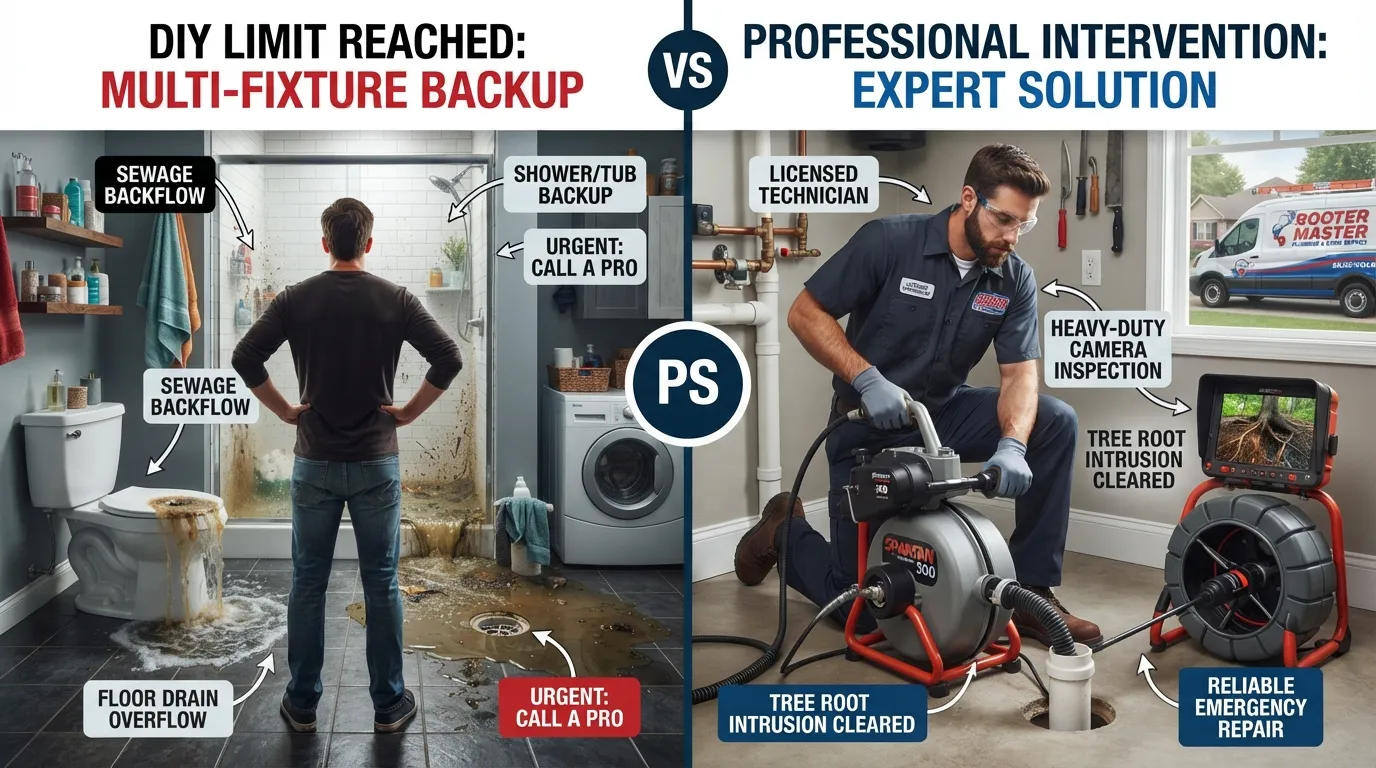
While basic standpipe clogs can often be cleared with a bucket test or a hand-held drum snake, many washing machine backups indicate deeper structural failures. Knowing when to put down the DIY tools and call an emergency plumber prevents severe water damage, structural decay, and costly property repairs.
Signs of a Main Sewer Line Problem
When a washing machine overflow is accompanied by symptoms affecting multiple independent fixtures throughout your home, the problem extends far beyond the laundry room.
Multi-Fixture Backups: Wastewater bubbling up into floor drains, bathtubs, or downstairs toilets simultaneously when the washer spins.
Persistent Gurgling: Gurgling noises echoing from bathroom toilets or sinks whenever the washing machine drains its tub.
Sewer Odors: Unpleasant sulfur or sewage smells emanating from your indoor drains, indicating a dry or compromised sewer vent and main line blockage.
Signs of Septic System Involvement
Homes operating on private septic tanks face distinct drainage challenges that require specialized attention rather than standard municipal line clearing.
Slowing Household Drains: All plumbing fixtures throughout the house draining progressively slower over a period of days or weeks.
Yard Pooling and Odors: Saturated, spongy grass or foul-smelling puddles pooling directly above your underground septic drain field.
Tank Capacity Overload: A washing machine’s high-volume discharge pushing water backward because the septic tank is full or the drain field leaching beds are clogged.
Why DIY Chemical Cleaners Can Make It Worse
Pouring commercial liquid drain cleaners down an overflowing washing machine standpipe is rarely effective and can introduce severe safety hazards.
Chemical Splatter Risks: If the clog is stubborn, harsh lye or acid-based cleaners can sit stagnant in the pipe or splash back onto your skin and floors during a wash cycle.
Pipe and Fixture Damage: Corrosive chemicals generate intense heat that can warp PVC pipes, degrade rubber seals, and ruin the finish of your washing machine hoses.
Ineffectiveness Against Sludge and Roots: Liquid cleaners cannot cut through dense lint mats, solidified detergent soap scum, or heavy tree root intrusions, making professional mechanical clearing or hydro-jetting the only permanent solution.
Prevention Tips — Avoid Future Overflows
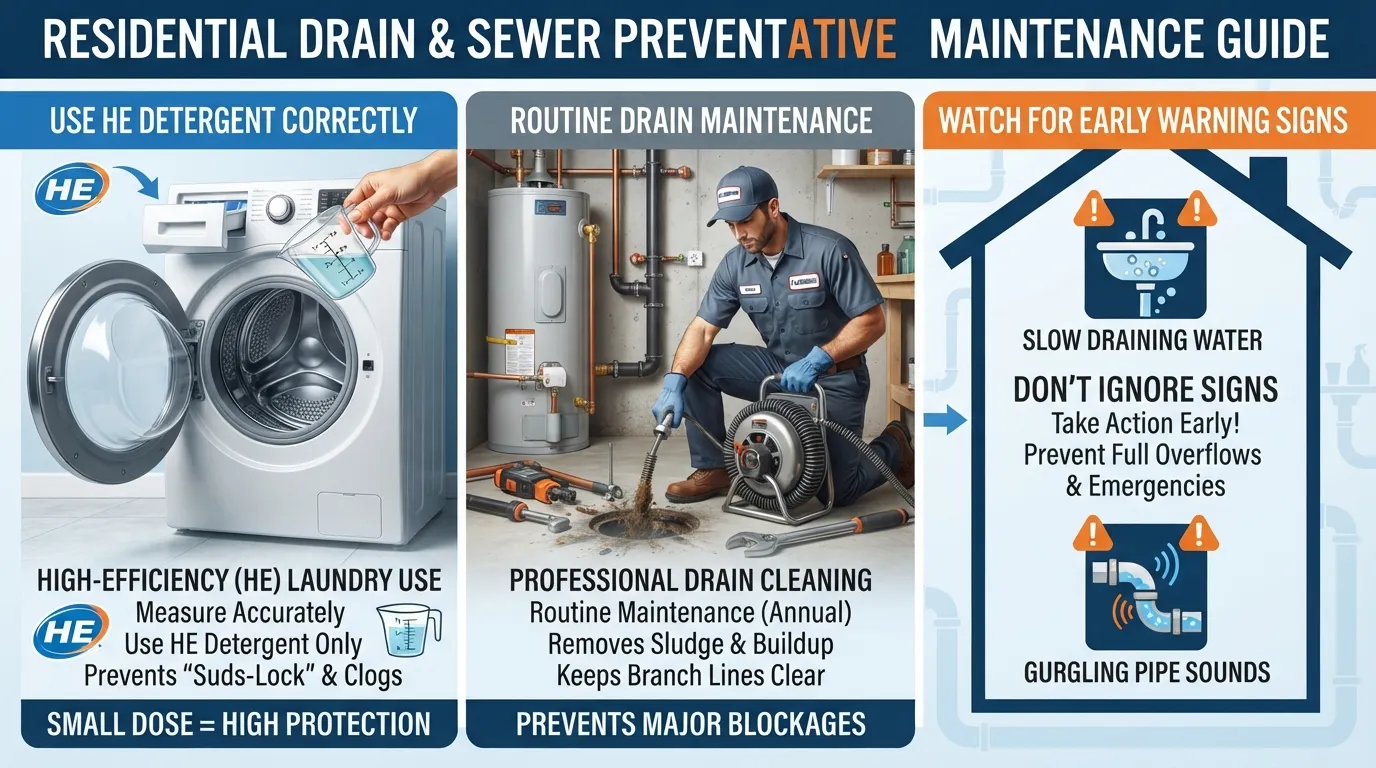
Proactive plumbing maintenance is the most effective defense against unexpected washing machine floods and costly water damage. Implementing a few simple habits and maintenance routines will protect your drainage infrastructure and keep high-volume wastewater flowing smoothly.
Use the Right Detergent for HE Machines
Matching your washing machine type with the correct chemical formula prevents heavy soap buildup and eliminates the risk of sudden suds-locks.
Stick to HE Formulas: Always use high-efficiency (HE) laundry detergents designed to dissolve rapidly in low-water environments.
Measure Accurately: Avoid over-pouring detergent; using more soap than recommended leaves a sticky residue inside your standpipe that traps lint and hair.
Schedule Routine Drain Cleaning
Preventative care stops minor soap and lint accumulation from hardening into stubborn clogs that trigger emergency overflows.
Annual Professional Scouring: Schedule periodic drain cleaning services to thoroughly clear mineral scale, hair, and detergent sludge from your laundry branch lines.
Monthly Hot Water Flush: Pour a bucket of hot water mixed with a small amount of eco-friendly enzymatic cleaner down your standpipe monthly to break down fresh organic buildup.
Watch for Early Warning Signs
Catching minor drainage restrictions before they turn into complete blockages gives you time to troubleshoot safely without water damage.
Monitor Drainage Speed: Periodically check how fast water recedes down the standpipe during a spin cycle to spot early slowdowns.
Listen for Gurgling: Pay attention to strange gurgling sounds or bubbling water in nearby sinks, which indicate trapped air and restricted pipe capacity.
Frequently Asked Questions
How to stop a drain from backing up?
Stopping an active drain backup immediately requires cutting off the source of the water and relieving pressure in the line.
Cut Power and Water: Turn off your washing machine or unplug it to halt the high-volume water pump immediately.
Contain the Standing Water: Use towels, wet-dry vacuums, or buckets to mop up overflowing water before it damages subfloors or drywall.
Identify the Scope: Check if nearby sinks, showers, or floor drains are also backing up to determine if the blockage is localized or tied to your main sewer line.
What can I pour down my washer drain to unclog it?
When dealing with a slow or clogged laundry drain, safe home remedies are preferable to harsh commercial chemicals that can ruin PVC pipes.
Hot Water and Vinegar Flush: Pour a kettle of hot water down the standpipe, followed by a cup of baking soda and white vinegar to break down fresh soap scum and grease.
Enzymatic Cleaners: Use bio-friendly, enzyme-based drain cleaners that naturally digest organic waste like hair, lint, and detergent residue without corroding pipe walls.
Avoid Harsh Acidic Cleaners: Never use heavy chemical liquid drain openers on standing water, as they can sit stagnant, boil over, or splash back violently.
How to fix a washing machine drain that is overflowing?
Fixing an overflowing laundry drain involves clearing physical obstructions and checking your mechanical setup.
Straighten the Hose: Ensure your discharge hose is not pushed too deep into the standpipe or pinched tightly behind the machine.
Clear the Trap and Pipe: Use a hand-cranked drum snake or auger to break apart matted lint and soap sludge lodged in the P-trap or standpipe.
Verify Pipe Sizing: If your home features an undersized 1.5-inch pipe that consistently overflows from high-efficiency pump volume, upgrade it to a compliant 2-inch drain line.
Why does my washing machine drain back up to the standpipe?
A washing machine backup directly out of the vertical standpipe is usually caused by restricted volume capacity or a physical restriction.
High-Volume Discharge Rate: Modern washers pump water out faster than narrow or partially clogged pipes can evacuate it.
Lint and Sludge Buildup: Years of accumulated fabric fibers and solid detergent residue have narrowed the interior diameter of the drain pipe.
Inadequate Venting: A blocked roof vent creates a vacuum effect that slows down water descent and forces it to surge upward.
How to tell if a washing machine drain pipe is clogged?
Recognizing the early warning signs of a failing laundry drain can prevent a sudden midnight flood.
Slow Recede Times: Water takes significantly longer to clear the standpipe during or immediately after a wash cycle.
Surface Gurgling: Gurgling or bubbling sounds erupt from the pipe as air struggles to escape around trapped debris.
Intermittent Overflows: The standpipe overflows only during high-speed spin cycles when water volume peaks, but handles normal trickle flow fine.
How to fix overflow error on washing machine?
Resolving an electronic overflow error code on a smart or digital washer depends on whether the issue is a sensor glitch or a physical blockage.
Perform a Hard Reset: Unplug the washing machine for 5 minutes to clear temporary glitches on the digital control board.
Check the Pressure Switch Hose: Inspect the small rubber or plastic hose running from the tub to the water level sensor, ensuring it is clear of pinched kinks or soap residue.
Clear Drainage Restrictions: If the machine displays an overflow code because it physically cannot drain water, clear the external standpipe or check for a clogged internal drain pump filter.
Final Thoughts on Washing Machine Drain Overflows
A washing machine drain overflow can quickly turn your laundry room into a stressful disaster, but understanding the root causes makes diagnosis and resolution much simpler. Whether you are dealing with a localized lint clog in the standpipe or a major obstruction in your main sewer line, acting quickly protects your home from costly water damage. While basic troubleshooting and drum snakes can resolve minor blockages, persistent drainage failures require professional intervention.
Don’t let a stubborn plumbing backup threaten your home’s structural integrity. If you need expert assistance or permanent relief from recurring overflows, schedule reliable service with our licensed professionals today through our online booking portal.
Main Services
Related Posts
Need a Plumber in Miami?
Schedule service online or speak directly with the EZ Plumbing team.
Owner-Led Local Service
Know who is behind the business before you request service. The owners, contact line and Miami service pages are published clearly.
- Named business owners
- Direct phone and social channels
- Local Miami service information
Clear Help Before You Book
Review the relevant service page, contact the team directly and use the booking page when you are ready—without relying on vague claims.
- Service-specific information
- Direct questions before scheduling
- Clear online booking route