How Often Should You Clean Your Drains? Complete Schedule & Tips
How Often Should You Clean Your Drains?
Knowing the ideal frequency for drain cleaning prevents minor blockages from turning into costly plumbing emergencies. Different fixtures throughout your home require specific maintenance timelines based on their daily usage and vulnerability to debris accumulation.
Implementing a proactive schedule safeguards your plumbing infrastructure, eliminates foul odors, and extends the lifespan of your pipes.
Quick-Reference Drain Cleaning Schedule
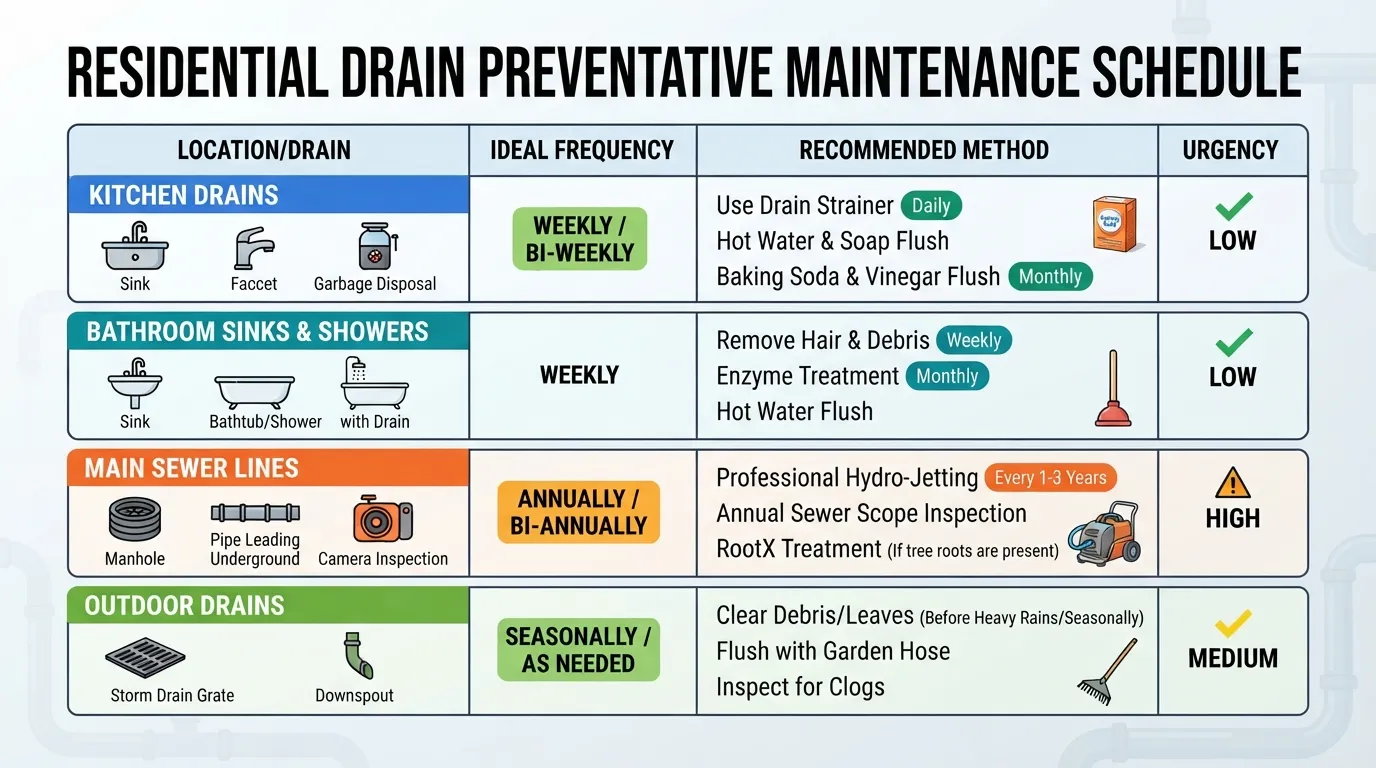
A structured maintenance routine ensures that high-use fixtures remain clear while less frequently used lines stay free of dry traps and buildup. Review the table below for a breakdown of recommended cleaning frequencies and methods for every major fixture.
| Drain Type | Frequency | Method |
| Kitchen Drain | Monthly | Hot water flush, baking soda, and vinegar |
| Bathroom Drain | Bi-weekly to Monthly | Hair catcher cleaning and enzymatic cleaner |
| Main Sewer Line | Annually to Bi-annually | Professional hydro-jetting or mechanical rooting |
| Outdoor Drains | Semi-annually | Debris removal and high-pressure hose flush |
| Toilet | As needed (Bi-monthly preventative) | Enzymatic treatments and safe plunging |
Key Factors Impacting Your Drain Maintenance Schedule
Household Size: Homes with larger families experience heavier daily usage, requiring more frequent kitchen and bathroom drain maintenance.
Pipe Material and Age: Older cast iron or clay pipes are prone to scaling and root intrusion, demanding professional inspections and cleanings more often than modern PVC pipes.
Surrounding Environment: Properties surrounded by mature trees often face root infiltration in outdoor drains and main sewer lines, necessitating preventative annual cleanings.
Why Regular Drain Cleaning Matters
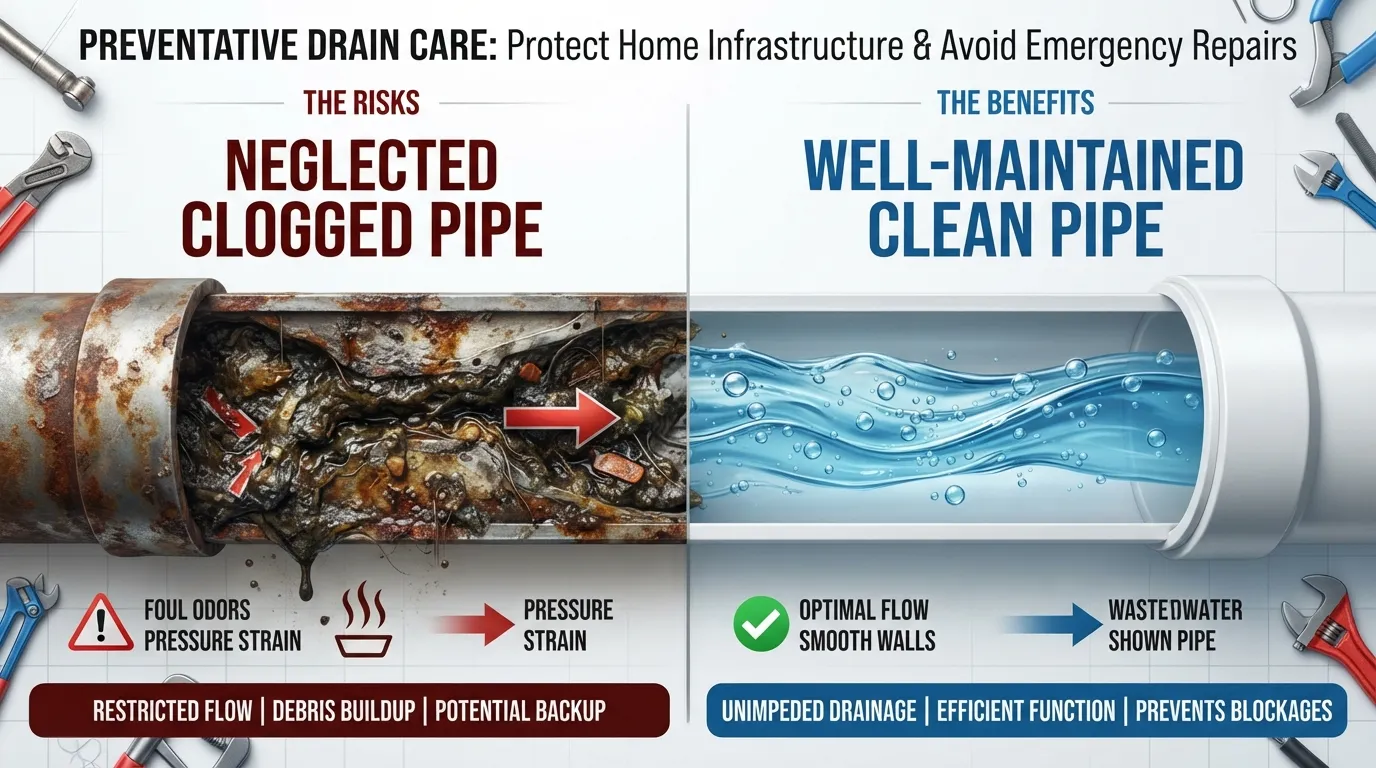
Neglecting routine drain maintenance invites severe plumbing failures, costly emergency repairs, and structural property damage. Proactive cleaning protects your household from unsanitary conditions while preserving the overall integrity of your entire plumbing system.
Prioritizing preventative care ensures smooth wastewater flow and prevents minor buildup from escalating into major structural failures.
Risks of Neglecting Drain Maintenance
Ignoring routine upkeep allows organic waste, grease, and soap scum to accumulate inside your pipes. This neglect triggers immediate day-to-day inconveniences and hazardous health risks for your family.
Foul Odors: Decomposing food particles and organic sludge trapped in kitchen and bathroom lines produce persistent, unpleasant smells throughout the home.
Wastewater Backup: Unchecked blockages eventually force contaminated water to push back up through sinks, tubs, and floor drains, creating severe health hazards.
Pest Infestation: Organic residue and standing moisture attract drain flies, fruit flies, cockroaches, and rodents looking for food and breeding grounds.
How Clogs Affect Your Home’s Plumbing System Long-Term
Beyond immediate inconveniences, chronic blockages inflict sustained, cumulative damage on your infrastructure over time. Understanding these long-term consequences highlights why preventative maintenance is essential for financial and structural peace of mind.
Accelerated Pipe Corrosion: Standing water and trapped acidic waste eat away at metal pipe walls, significantly increasing the likelihood of leaks and pipe bursts.
Joint and Seam Strain: Trapped pressure from slow-moving or clogged drains forces stress onto pipe joints, frequently causing costly underground leaks.
Diminished Home Value: Severe plumbing neglect can compromise subflooring and foundational integrity, resulting in expensive remediation costs during property appraisals or sales.
Drain-by-Drain Cleaning Schedule Detailed Breakdown
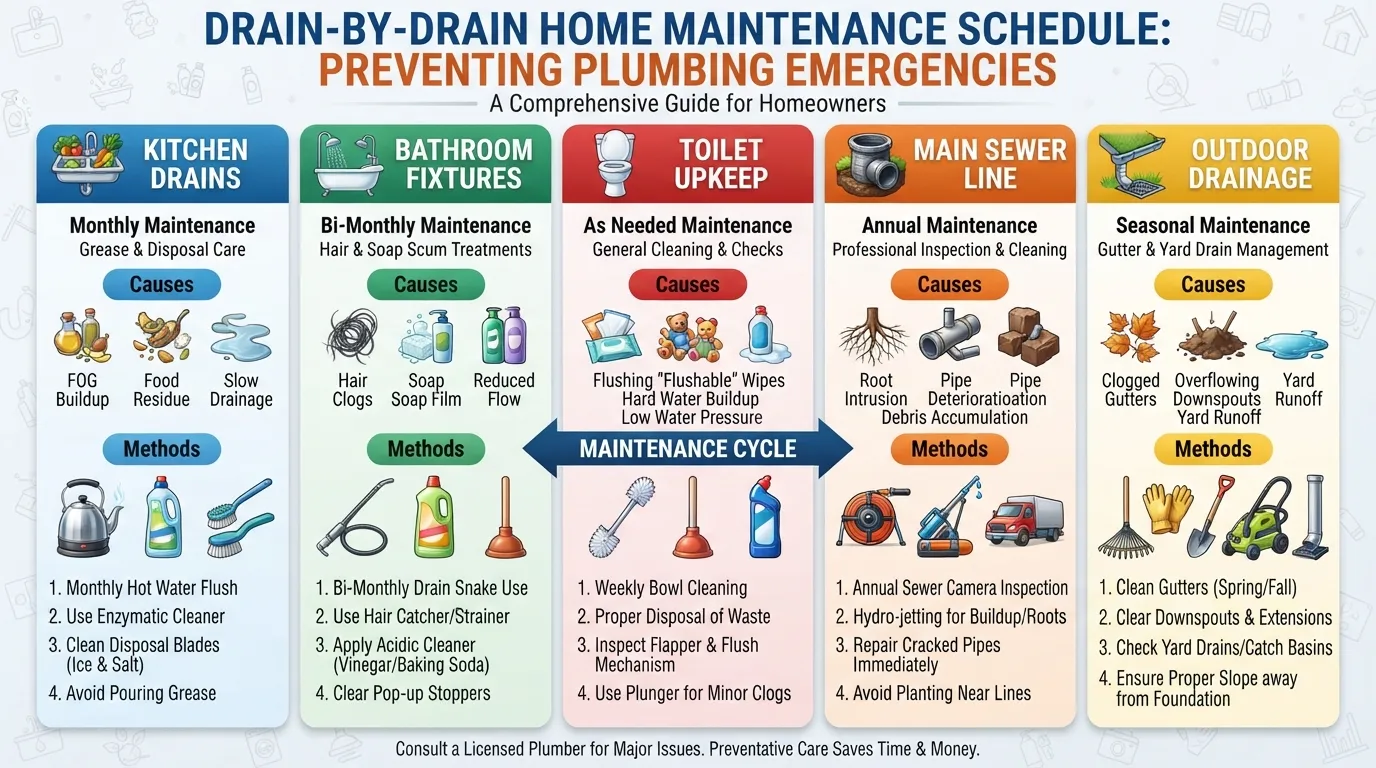
Different fixtures throughout your property require tailored maintenance timelines because they handle distinct types of waste. Understanding the mechanics behind each fixture’s vulnerability allows you to apply targeted cleaning strategies before total blockages occur.
Targeting specific maintenance needs extends pipe longevity and avoids unexpected emergency plumbing bills.
Kitchen Drains: Why Monthly Cleaning Prevents Grease Buildup
Kitchen drains endure constant exposure to cooking oils, fats, and organic food particles that rapidly cling to pipe walls. Monthly maintenance prevents these sticky layers from hardening into stubborn blockages that restrict wastewater flow.
Grease Emulsification: Hot water flushes paired with baking soda and vinegar break down early-stage oil residue safely.
Garbage Disposal Protection: Monthly treatments keep disposal blades and the underlying trap clear of fibrous waste.
Bathroom & Shower Drains: Why Every 3–4 Months (Hair & Soap Scum Science)
Bathroom fixtures accumulate a dense matrix of loose hair, body oils, and calcified soap scum that binds tightly inside P-traps. Cleaning these drains every three to four months stops slow-draining tubs and recurring sink clogs in their tracks.
Hair Binding Properties: Human hair is resistant to decay and acts as a net for floating bathroom debris.
Enzymatic Action: Using specialized bio-enzymatic cleaners dissolves organic buildup without eroding vulnerable PVC plumbing materials.
Toilets: How Often Should You Clean Your Toilet Drain?
Toilet drains handle high-volume solid waste and toilet paper, making them susceptible to sudden overflow events if misuse occurs. Regular preventative care every few months ensures unobstructed flushing and proper trap-way integrity. If you are experiencing frequent blockages or running water issues, professional Toilet Repair services can diagnose deep trap obstructions.
Foreign Object Prevention: Restricting flushes to human waste and standard toilet paper prevents non-dispersible items from lodging in the bend.
Mineral Scaling: Hard water deposits accumulate inside porcelain traps over time, narrowing the path for waste disposal.
Main Sewer Line: Why Annual Inspection Prevents Major Backups
The main sewer line gathers wastewater from every household fixture and carries it out to the municipal system or septic tank. Annual professional evaluations prevent catastrophic system failures that can flood your entire living space. Booking a dedicated Sewer Line inspection utilizes high-tech video scoping to detect root intrusion or pipe sagging early.
Camera Inspection Value: Plumbers use advanced fiber-optic cameras to look for hairline cracks or structural shifts before they collapse.
Hydro-Jetting Efficiency: High-pressure water clearing completely strips away years of accumulated scale and root fibers from sewer walls.
Outdoor Drains: Seasonal Cleaning (Fall & Spring Leaf Debris)
Outdoor area drains, patio channels, and yard catch basins face heavy loads of falling leaves, dirt, and organic runoff during seasonal changes. Clearing these lines during spring and autumn prevents severe property flooding and landscape erosion. For properties struggling with rising ground water or heavy precipitation overflow, integrating a robust Sump Pump system protects the structural foundation.
Fall Leaf Clearing: Removing wet foliage stops matted organic layers from baking into concrete-like blocks inside drainage pipes.
Spring Thaw Prep: Flushing winter sediment ensures melting snow and spring rain can drain freely away from structural foundations.
Floor Drains: Often-Overlooked Maintenance
Floor drains located in basements, laundry rooms, and garages are prone to drying out, which allows hazardous sewer gases to enter living areas. Maintaining a regular monthly water flush preserves the trap seal and prevents unwanted pest entry.
Trap Seal Protection: Pouring a gallon of water down basement floor drains every month keeps sewer gases securely blocked.
Debris Sweeping: Keeping floor grates free of dust, lint, and stray packaging ensures quick removal during unexpected plumbing leaks.
Warning Signs Your Drains Need Cleaning Now
Recognizing the early symptoms of pipe restriction prevents minor blockages from evolving into catastrophic wastewater backups. Paying close attention to subtle shifts in your plumbing performance allows you to intervene before structural damage occurs.
Catching these warning signs early saves you from emergency service fees and extensive property restoration.
For a visual breakdown of what these early warnings look like, watch this helpful overview video on identifying pipe trouble: [00:08].
Slow or Standing Water
Slow drainage is often the first and most obvious indicator that interior pipe walls are narrowing due to accumulated debris. When water takes longer than usual to empty from sinks or tubs, a restriction is actively forming.
Grease and Soap Restriction: As highlighted by Plumbing DIY Daily, sticky residue gradually catches floating particles, slowing down flow rates [00:50].
Immediate Action Required: Treating slow drainage with hot water flushes or safe natural solutions prevents complete pipeline blockage.
Gurgling Sounds From Pipes
Unusual bubbling or gurgling noises coming from your drains when another fixture is running indicate trapped air pockets. These sounds mean wastewater is struggling to move past a partial obstruction, creating a vacuum effect in your plumbing lines [00:08].
Vent Stack Issues: Gurgling can also point to blocked roof vent stacks that prevent proper air pressure balance.
Diagnostic Value: Never ignore recurring bubbles, as they frequently precede a total mainline backup.
Persistent Bad Odors
Foul, sulfur-like, or rotting food smells wafting from your kitchen or bathroom sinks mean organic sludge is decomposing inside the P-trap. If cleaning the surface sink basin does not eliminate the smell, the odor is originating deep within the pipe walls [00:08].
Bacterial Growth: Trapped food particles and hair foster rapid bacterial proliferation, generating harsh sewer gas smells [00:08].
Dry Trap Warning: Infrequently used floor drains may also allow sewer gases to escape if the internal water barrier has evaporated.
Recurring Clogs in Multiple Fixtures
When multiple drains in your home back up or slow down simultaneously, the problem goes beyond a localized trap issue. This symptom points directly to a restriction deep within the main sewer line or branch lines.
System-Wide Pressure: Simultaneous slowdowns require professional intervention, such as video camera inspections and hydro-jetting, to clear the main line.
Structural Compromise: Multiple fixture clogs can occasionally indicate root intrusion or pipe collapse requiring immediate repair.
Safe DIY Drain Maintenance Routine
Maintaining clear pipes does not always require harsh chemical drain openers that can damage older plumbing materials. Implementing a consistent, safe do-it-yourself maintenance routine protects your pipes while dissolving buildup naturally.
Adopting these simple weekly and monthly habits extends the operational lifespan of your household drainage infrastructure.
For a quick visual guide on maintaining your pipes, watch this expert tutorial: [00:00].
Weekly Routine: Hot Water Flush
Executing a weekly hot water flush is the easiest way to prevent light grease and soap residue from adhering to kitchen and bathroom pipes. Pouring a kettle of near-boiling water down high-use drains melts away fresh accumulation before it hardens.
Grease Liquefaction: Heat keeps cooking oils fluid, allowing them to wash harmlessly through the main sewer line instead of sticking to pipe walls.
Maintenance Simplicity: This zero-cost weekly habit takes less than two minutes and requires no special tools.
Monthly Routine: Baking Soda + Vinegar Method (Step-by-Step)
Natural foaming agents provide a gentle, chemical-free scrubbing action that targets organic sludge safely [01:00]. Performing this monthly routine keeps your lines smelling fresh and flowing smoothly [01:00].
Step 1: Pour half a cup of baking soda directly down the drain opening.
Step 2: Follow immediately with half a cup of white vinegar, which triggers a safe carbon dioxide fizzing reaction.
Step 3: Cover or plug the drain loosely and let the mixture sit for 15 to 30 minutes to break down grime [01:00].
Step 4: Flush the line thoroughly with a kettle of hot water to wash away loosened debris [01:00].
Using a Drain Snake or Plunger Correctly
When mild foaming solutions are not enough to clear a localized blockage, physical tools offer immediate mechanical relief [01:46]. Proper technique prevents scratching porcelain or damaging fragile pipe joints.
Plunger Best Practices: Ensure complete water coverage over the rubber cup and maintain a firm, rhythmic push-and-pull motion to dislodge trapped physical obstructions.
Drain Snake Operation: Feed a hand-auger slowly into the pipe until you feel resistance, then rotate the handle carefully to hook and pull out hair clusters or debris.
Enzymatic Cleaners as a Gentle Alternative
Bio-enzymatic drain cleaners use natural bacteria and targeted enzymes to consume organic waste, grease, and hair. Unlike corrosive chemical drain cleaners, enzymatic formulas protect PVC pipes and rubber seals from degradation.
Ongoing Breakdown: These formulas continue working long after application, breaking down microscopic residue left behind by standard washing.
Eco-Friendly Choice: Enzymatic solutions are completely safe for septic systems and do not introduce harsh toxins into local wastewater treatment facilities.
Chemical Drain Cleaners — Are They Safe?
Evaluating commercial chemical openers requires balancing short-term convenience against long-term pipe safety. Understanding how caustic compounds react with your plumbing helps you avoid costly damage and dangerous chemical exposures.
Review these essential expert answers to common safety questions before pouring harsh formulas down your pipes.
Can I Pour Vinegar Down the Drain to Clean It?
Yes, white vinegar is completely safe and effective for regular monthly maintenance when paired with baking soda. Its mild acidity helps dissolve light mineral scales and soap residue without harming PVC or metal piping.
Non-Corrosive Action: Unlike industrial openers, vinegar does not degrade rubber gaskets or modern plastic fittings.
Limitations: Vinegar lacks the strength to dissolve severe clogs, grease plugs, or deep hair masses on its own.
Does Dawn Dish Soap Unclog Drains?
Dawn dish soap works exceptionally well for dissolving greasy, minor kitchen sink slowdowns when combined with boiling water. The surfactant properties break down oil molecules so they wash smoothly through the wastewater line.
Grease Breakdown: Dish soap targets the sticky bonds holding food particles together inside the P-trap.
Application Tip: Pour half a cup of dish soap down the drain, let it sit for ten minutes, and chase it with a kettle of hot water.
How Long Is Too Long to Leave Drain Cleaner In?
Commercial chemical cleaners should never be left in your pipes longer than the manufacturer’s specified duration, usually between 15 to 30 minutes. Exceeding this timeframe allows trapped caustic compounds to overheat and melt plastic or corrode metal.
Exothermic Reactions: Chemical openers generate intense heat; staying too long in a stagnant trap can crack porcelain fixtures.
Corrosive Residue: Lingering chemical pools eat away at pipe joints and weaken structural seams over time.
Is It Safe to Leave Drano Max Gel Overnight?
Leaving Drano Max Gel or similar heavy-duty chemical gels in your pipes overnight is highly unsafe. Prolonged exposure can warp PVC lines, pit metal pipes, and create dangerous localized pressure buildups.
Material Breakdown: Corrosive lye formulas require precise timing to eat through organic clogs without attacking the surrounding pipe infrastructure.
Safe Practice: Always flush the system thoroughly with cold water immediately after the recommended waiting period.
Does Drain Cleaner Ruin Your Pipes?
Frequent use of harsh chemical drain cleaners will permanently damage your plumbing infrastructure, particularly in older homes. Caustic lye and acid-based formulas eat away at metal threads, corrode cast iron, and warp plastic pipes.
Chemical Burnout: Repeated applications weaken pipe walls, resulting in sudden leaks and expensive joint failures.
Alternative Safety: Opt for mechanical snakes or enzymatic formulas to protect your plumbing system’s structural integrity.
Do Plumbers Recommend Chemical Drain Cleaner?
Professional plumbers almost universally advise against using commercial chemical drain cleaners for routine maintenance. These hazardous products rarely solve deep-seated blockages and present severe safety hazards for technicians working on the lines later.
Risk to Technicians: Splashing residual acid or lye during manual plumbing repairs causes severe chemical burns to skin and eyes.
Preferred Solutions: Plumbers recommend preventative monthly natural cleaning or mechanical hydro-jetting over chemical shortcuts.
What Are the Symptoms of Drain Cleaner Poisoning?
Ingesting, inhaling, or getting powerful chemical drain openers on your skin or eyes triggers immediate, severe toxic reactions. Recognizing these acute symptoms ensures you can seek emergency medical guidance right away. For expert triage and safety protocols, consult the Poison Control guidance center.
Airway and Ingestion Trauma: Severe throat pain, difficulty breathing, drooling, and internal burning sensations require emergency intervention.
Tissue Burns: Splashing lye or acid into eyes or onto skin causes immediate blistering, necrosis, and potential permanent vision loss.
Why Shouldn’t You Mix Baking Soda and Vinegar for Tough Clogs?
While mixing baking soda and vinegar creates a satisfying fizzing reaction, it does not generate enough physical pressure to blast through heavy clogs. Because residential drains are open to the air via vent stacks, the carbon dioxide gas simply escapes upward rather than clearing the blockage.
Neutralization Effect: Mixing an acid (vinegar) and a base (baking soda) neutralizes their individual cleaning strengths into mostly water and carbon dioxide.
Better Approach: Use them sequentially—baking soda first, followed by vinegar, capped with a physical flush—for maximum cleaning efficiency.
What Is the Strongest Thing to Unclog a Drain?
When chemical gels and DIY snakes fail to clear an obstinate blockage, professional mechanical clearing is the safest and strongest solution. Industrial high-pressure hydro-jetting completely scours pipe walls using pressurized water streams without chemical corrosion.
Root and Scale Removal: Hydro-jetting eliminates invasive tree roots, hardened mineral scale, and heavy grease accumulation in a single pass.
Emergency Assistance: If chemical backups threaten your living space, calling an experienced Emergency Plumber prevents catastrophic property flooding.
DIY vs. Professional Drain Cleaning — Cost & When to Call a Plumber
Evaluating whether to tackle a clog yourself or hire a professional depends on the severity of the blockage and potential repair costs. Balancing immediate savings against long-term pipe health helps you make a cost-effective decision for your home.
Understanding when to transition from home remedies to expert intervention prevents minor clogs from turning into major property damage.
To see how professional techniques compare to basic home maintenance, watch this helpful overview [00:08].
Average Cost: DIY Methods vs. Professional Drain Cleaning
Handling minor maintenance yourself is remarkably inexpensive, while hiring a licensed plumber involves higher upfront service fees that save money on major repairs later. Analyzing these cost structures guides your maintenance budgeting.
DIY Expenses: Household solutions like baking soda, vinegar, and manual drain snakes typically cost under $15 per application.
Professional Pricing: Standard professional services or specialized Drain Cleaning visits generally range from $150 to $350, depending on the complexity of the blockage.
What Professional Drain Cleaning Includes (Hydro Jetting, Camera Inspection)
Licensed professionals utilize heavy-duty commercial equipment that completely restores interior pipe diameters rather than just poking a small hole through a clog. These advanced diagnostic tools ensure long-lasting results.
Camera Inspection: Plumbers feed fiber-optic cameras down the line to visually identify root intrusion, offset joints, or structural collapses.
Hydro Jetting: High-pressure water streams scour pipe walls clean of grease, scale, and debris, leaving lines operating like new.
When DIY Isn’t Enough — Signs You Need a Plumber
Recognizing the boundary between a simple household clog and a complex structural failure prevents wasted time and potential safety hazards. Certain red flags demand immediate expert intervention.
Unresolved Multiple Clogs: If snaking one fixture causes backups in another, your main sewer line requires professional evaluation.
Constant Sewage Odors: Persistent gas smells despite clean traps point to hidden pipe cracks or major venting failures.
Special Cases — Septic Systems & Exterior Drain Pipes
Certain residential plumbing setups require specialized maintenance routines that differ significantly from standard municipal sewer connections. Understanding these unique requirements prevents premature system failures and expensive structural repairs.
Adapting your maintenance schedule for specialized infrastructure safeguards your property against unexpected environmental and structural damage.
How Often Should Septic-Connected Drains Be Cleaned?
Homes operating on a private septic system require more cautious drain cleaning protocols than municipal properties to protect delicate bacterial colonies. Routine maintenance should focus on gentle mechanical clearing and enzymatic treatments every one to two months.
Bacterial Balance Protection: Harsh chemical cleaners kill the beneficial bacteria inside your septic tank, halting waste decomposition and causing solid buildup.
Preventative Pumping: Combine regular drain maintenance with professional septic tank pumping every three to five years to prevent sludge overflow into your drain field.
Is It Okay to Expose Drain Pipes on the Exterior of Your Home?
Exposed exterior drain pipes are common in certain architectural designs and climates, but they introduce unique vulnerability to weather extremes and physical damage. Proper insulation and secure mounting are essential to prevent freezing and structural leaks. If temperature drops or shifting supports create unexpected joint cracks, prompt Leak Detection & Repair Services can prevent severe water damage.
Freezing Risks: Uninsulated exterior pipes risk freezing and bursting during sudden winter temperature drops, leading to major property flooding.
UV and Weather Degradation: Sunlight and environmental elements degrade exposed plastic or metal materials over time, requiring protective wrapping or regular structural inspections.
Frequently Asked Questions
Addressing common queries about drain maintenance provides clarity and reinforces best practices for long-term plumbing health. Review these concise answers to fine-tune your home maintenance strategy and protect your piping infrastructure.
How do I know if my drain needs cleaning?
Your drains need immediate attention if you notice slow-moving water, gurgling sounds from your pipes, or persistent foul odors wafting from sinks. Catching these early warning signs allows you to use gentle preventative treatments before total blockages occur.
Visual Cues: Standing water in shower basins or kitchen sinks indicates narrowing interior pipe walls.
Odor Indicators: Unpleasant smells signal decomposing organic buildup trapped inside your P-traps.
Can drain cleaning damage old pipes?
Frequent use of harsh chemical drain cleaners will permanently damage older cast iron or galvanized pipes by accelerating corrosion. Opting for mechanical clearing or gentle enzymatic solutions preserves the structural integrity of aging plumbing systems.
Exothermic Reactions: Chemical openers generate intense heat that can crack fragile or weathered pipe materials.
Safe Alternatives: Rely on manual snakes or hydro-jetting administered by professionals for safe, non-destructive pipe clearing.
How often should commercial drains be cleaned?
Commercial drains require much more frequent maintenance than residential systems due to heavy daily usage, high grease output, and public traffic. Most commercial kitchens and retail facilities benefit from professional cleaning every one to three months.
High-Volume Demand: Restaurant grease traps and commercial washrooms demand monthly preventative upkeep to prevent business-disrupting backups.
Regulatory Compliance: Strict local health codes often mandate documented professional maintenance schedules for food-service establishments.
Conclusion & Call to Action
Implementing a consistent drain maintenance schedule safeguards your plumbing infrastructure, prevents messy backups, and saves you from unexpected emergency repair bills. Balancing monthly DIY routines with professional inspections ensures your home stays safe, sanitary, and free-flowing year-round.
Take control of your home’s plumbing health today by putting these proactive habits into practice.
Key Takeaways: Your Drain Cleaning Checklist
Review this final checklist to keep your household fixtures running at peak performance without costly disruptions.
Routine Flushing: Use hot water weekly and a baking soda and vinegar treatment monthly to keep kitchen and bathroom lines clear.
Watch for Warnings: Act immediately upon noticing slow drainage, gurgling sounds, or foul odors before they evolve into full blockages.
Know When to Call Pros: Rely on licensed experts and advanced hydro-jetting for stubborn main line clogs, root intrusion, and annual system checkups.
Ready to ensure your plumbing is in top shape? Book a Service with our expert team today to schedule your comprehensive inspection or cleaning. For all your routine upkeep and emergency repairs, trust our experienced professionals for reliable, top-tier Plumbing solutions.
Main Services
Related Posts
Need a Plumber in Miami?
Schedule service online or speak directly with the EZ Plumbing team.
Owner-Led Local Service
Know who is behind the business before you request service. The owners, contact line and Miami service pages are published clearly.
- Named business owners
- Direct phone and social channels
- Local Miami service information
Clear Help Before You Book
Review the relevant service page, contact the team directly and use the booking page when you are ready—without relying on vague claims.
- Service-specific information
- Direct questions before scheduling
- Clear online booking route