
Sink Is Smelling? Causes, Quick Fixes & Prevention Tips
Introduction to Fixing a Smelly Sink Drain
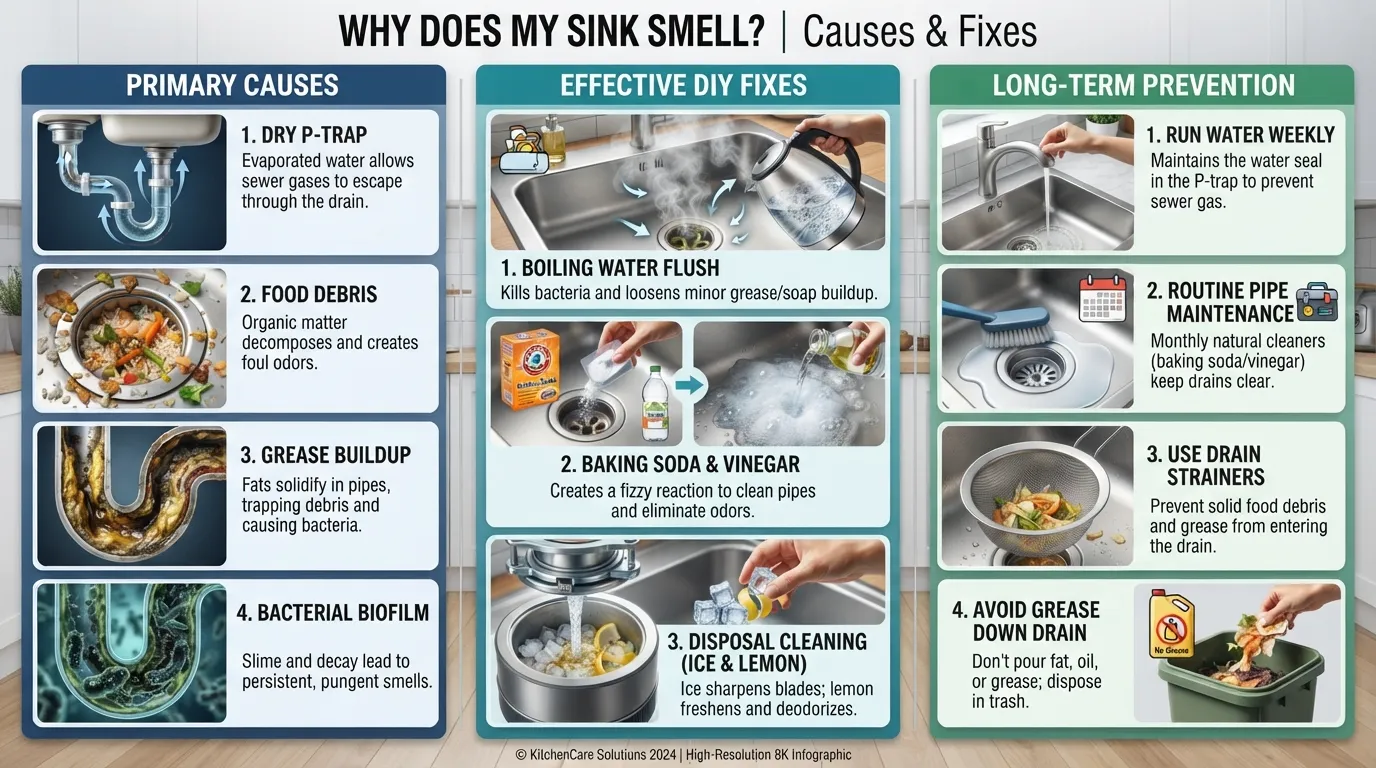
Dealing with a smelly sink can turn a routine kitchen or bathroom task into an unpleasant experience. Fortunately, most drain odors stem from a buildup of organic debris, grease, or a dry P-trap, which you can resolve quickly without professional help.
Immediate DIY Fixes: Pouring boiling water or a mixture of baking soda and vinegar can dissolve minor residue trapped in the pipe.
Component Checks: Persistent smells in a kitchen setup often require inspecting the garbage disposal for trapped food waste or clearing out the P-trap beneath the basin.
Addressing these root causes promptly restores freshness to your plumbing fixtures and prevents recurring odor issues.
Diagnose Your Sink Smell First — What the Smell Type Tells You
Identifying the exact nature of your drain odor is the most critical step before attempting any plumbing repair. Different odors point directly to distinct underlying problems, saving you time and preventing ineffective cleaning methods.
| Odor Type | Likely Source | Primary Contributing Factor |
| Rotten Eggs | Sewer Gas / P-Trap | Dried-out water barrier or broken vent pipe |
| Rotting Food | Garbage Disposal | Trapped grease, food particles, and decaying sludge |
| Musty / Mildew | Biofilm Buildup | Organic slime coating the inner walls of the pipe |
| Dead Animal | Wall or Cabinet Cavity | Structural intrusion unrelated to actual plumbing |
Rotten Egg Smell = Sewer Gas or Dry P-Trap
A distinct rotten egg smell typically indicates the presence of hydrogen sulfide gas escaping from your plumbing system. When a sink goes unused for an extended period, the water inside the dry P-trap evaporates, removing the natural seal that blocks sewer gases from entering your living space.
Pour a gallon of water directly down the drain to quickly replenish a dry P-trap.
If the odor persists, check your roof’s plumbing vent stack for leaves, nests, or ice blockages.
Rotting Food Smell = Trapped Grease & Debris in Garbage Disposal
A heavy, putrid stench reminiscent of decaying kitchen scraps usually points straight to your garbage disposal. Over time, oils, starches, and food fragments coat the underside of the rubber splash guard and the internal grinding chamber, creating a breeding ground for bacteria.
Inspect the underside of the rubber baffles for hidden buildup, as this is a primary hotspot for trapped debris.
Run ice cubes and cold water through the disposal unit to dislodge stubborn grease without damaging the metal blades.
Musty/Mildew Smell = Hidden Moisture or Biofilm Buildup
A persistent damp odor usually signifies a thick layer of biofilm lining the interior of your drain pipes. This gelatinous matrix of bacteria and fungi thrives on organic residue, continually releasing damp smells every time you run the faucet.
Scrub the upper segments of the pipe interior using a long, flexible brush designed for household plumbing.
Flush the system thoroughly with a targeted enzymatic cleaner to break down remaining organic films.
Dead Animal Smell = Possible Rodent in Wall/Cabinet (Not a Drain Issue)
An overwhelmingly pungent, flesh-like odor often leads homeowners to blame their plumbing, but it frequently signals a dead animal smell trapped behind walls or inside under-sink cabinetry. Chemical drain cleaners will not resolve this issue because the source exists entirely outside the drainage system.
Inspect the dark recesses of your base cabinets and check for structural entry points or droppings.
Contact a local pest control professional if the odor persists despite a pristine and fully functional plumbing setup.
Common Causes of a Smelly Sink Drain
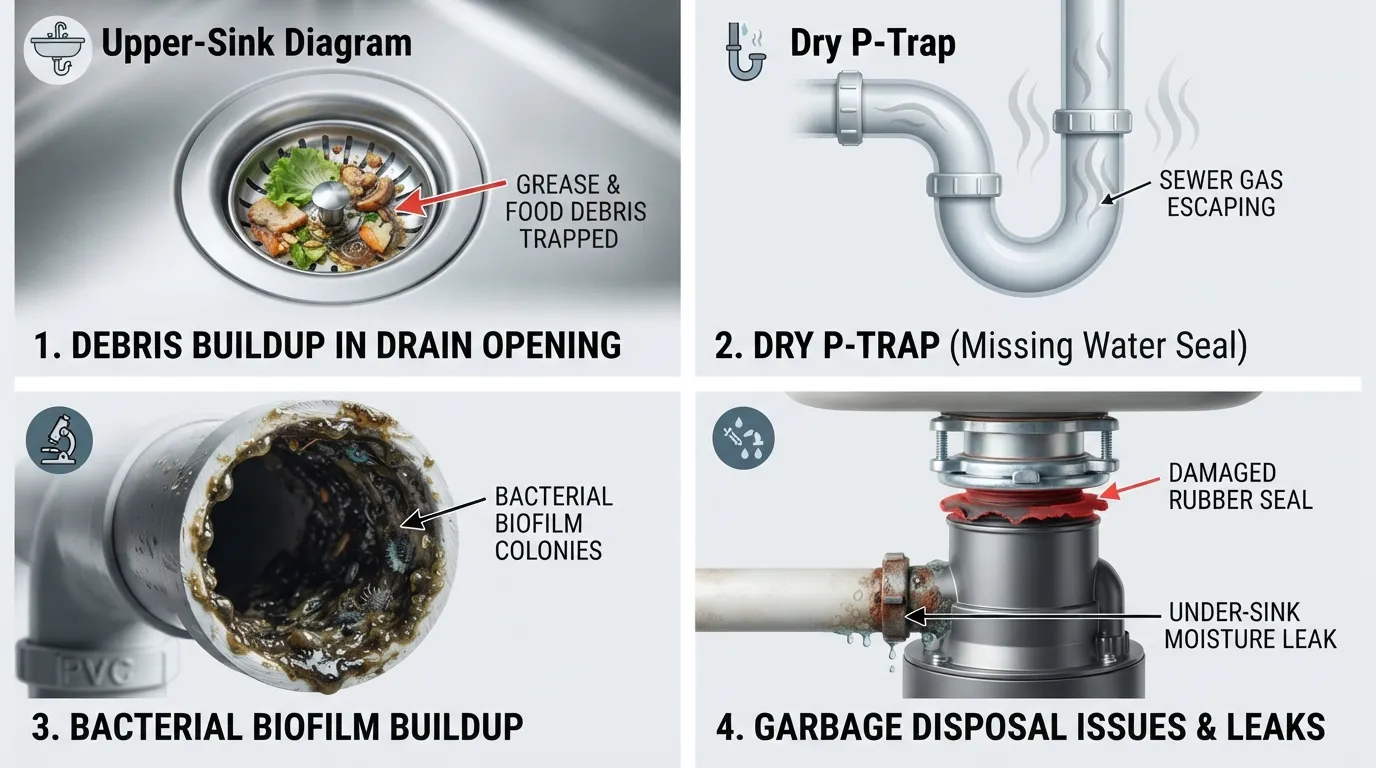
Pinpointing the exact root cause of a drain odor prevents recurring plumbing headaches and protects your indoor air quality. Most foul smells originate from overlooked maintenance issues or physical wear within the under-sink assembly.
Trapped Grease and Food Debris
Grease buildup is the leading culprit behind foul kitchen odors, as fats, oils, and cooking residues cling to the interior walls of your drainage pipes. As these organic materials sit and decay over time, they release stubborn, sour smells every time you run the faucet.
Avoid pouring liquid cooking oils or food scraps directly down the kitchen drain.
Flush pipes weekly with hot water to keep fats from solidifying along the pipe walls.
Dry or Empty P-Trap (Common in Unused Bathroom Sinks)
The P-trap is the curved section of piping beneath your sink designed to hold a small amount of standing water, which acts as an airtight seal against sewer gases. When a guest bathroom or utility sink goes unused for weeks, this water evaporates, leaving an open channel for odors to enter your home.
Run the faucet for 30 to 60 seconds to refill the trap and restore the barrier.
Pour a small amount of mineral oil down infrequently used drains to slow down future water evaporation.
Biofilm and Bacterial Buildup Inside Pipes
A slimy layer of biofilm constantly develops inside household plumbing as soap scum, hair, and organic particles adhere to pipe surfaces. This thriving microbial environment produces foul-smelling gases that rise through the drain opening.
Scrape away surface slime physically using a flexible drain brush during routine cleanings.
Use non-corrosive enzymatic treatments to break down the bacterial matrix safely without damaging PVC pipes.
A Failing or Cracked Garbage Disposal Seal
A garbage disposal seal degrades over time due to constant vibrations, harsh chemicals, and natural rubber wear. When these internal or external gaskets fail, stagnant wastewater and food particles leak into hidden crevices beneath the unit, creating an intense, localized stink.
Inspect the mounting assembly and rubber splash guard for visible tears, warping, or loose bolts.
Tighten or replace worn rubber gaskets immediately to stop wastewater seepage at the source.
Could a Hidden Leak Be the Cause? (Musty Smell Under the Cabinet)
A persistent musty odor cabinet-wide often signals a slow, hidden leak coming from loose slip joints, worn washers, or hairline cracks in your PVC piping. Trapped moisture feeds mold and mildew growth in dark, enclosed vanity spaces, making the problem worse than a standard surface clog.
Check all pipe connections with a dry paper towel to locate active drips or moisture rings.
Schedule professional leak detection and repair services if water damage extends into structural subflooring or cabinetry.
DIY Fixes You Can Try Right Now
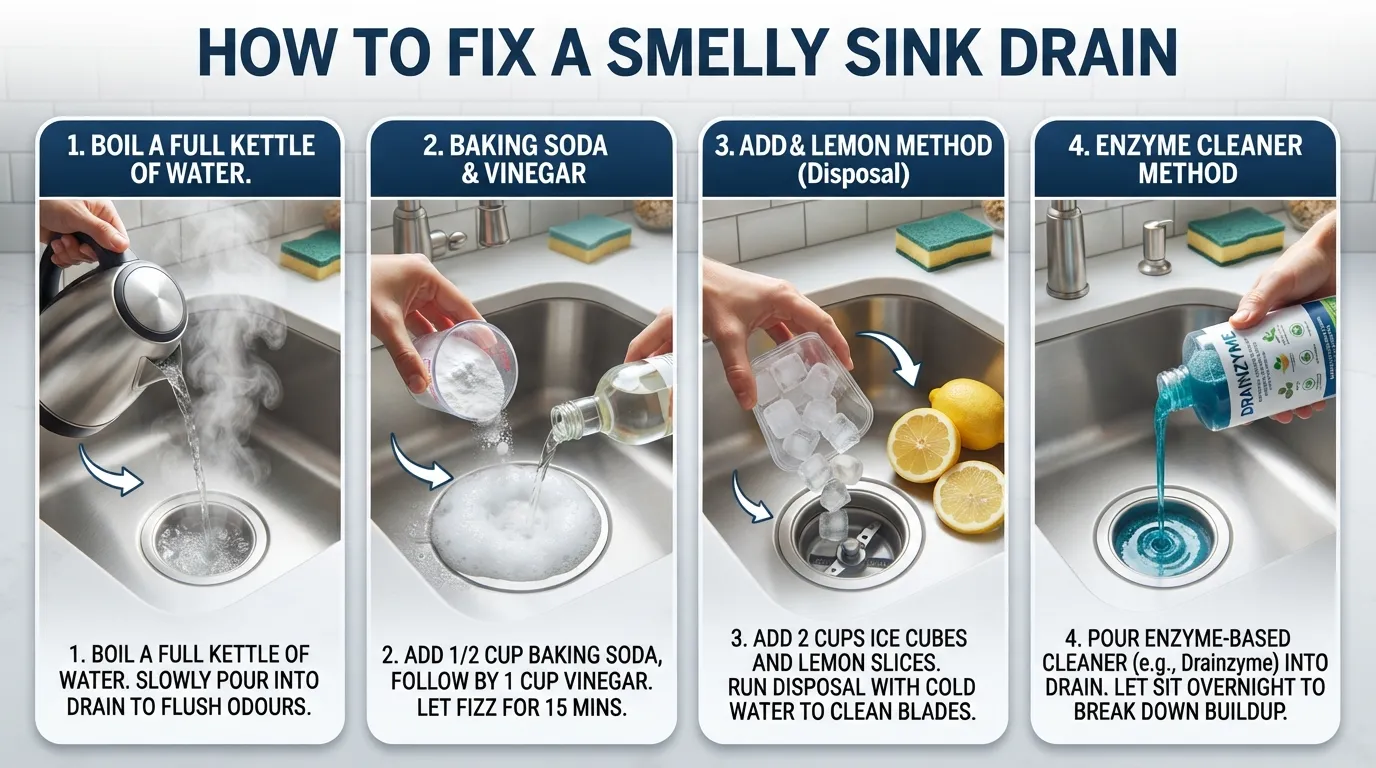
Clearing a smelly drain does not always require harsh chemical drain openers or an expensive call to a plumber. Simple, natural household ingredients can quickly break down organic residue and eliminate foul odors at their source.
Boiling Water Flush (Step-by-Step)
A boiling water flush is the fastest way to melt away fresh grease and wash away loose organic debris lining your pipes. However, use caution if your home has older PVC plumbing, as extreme heat can occasionally soften pipe joints.
Bring a full kettle of water to a rolling boil on your stove top.
Pour the boiling water slowly and steadily directly down the drain in two or three separate stages, allowing a few seconds of contact time between pours.
Baking Soda and Vinegar Method (Step-by-Step, with Wait Time)
The classic baking soda and vinegar reaction creates a natural fizzing action that lifts grime, neutralizes acids, and cuts through stubborn sludge inside the pipe walls. This method provides a powerful, eco-friendly alternative to commercial chemical solvents.
Pour half a cup of baking soda directly down the drain opening, followed immediately by one cup of white vinegar.
Cover the drain with a plug or cloth to force the fizzing reaction downward, and let it sit undisturbed for 15 to 20 minutes before flushing the system with hot tap water.
Lemon Peel and Ice Cube Trick for Garbage Disposals
Using ice cubes and lemon peels physically scours grease off the spinning impellers of a garbage disposal while neutralizing sulfurous food odors. The hard ice chips knock loose sticky food particles, and the citrus oils leave a crisp, clean scent behind.
Fill the disposal grinding chamber with two cups of ice cubes and a handful of fresh lemon peels.
Turn on the cold water tap and run the disposal until the ice completely processes, clearing away residual buildup from the blades.
Enzyme-Based Drain Cleaners (Safer Long-Term Option)
Commercial chemical cleaners can corrode metal pipes and degrade rubber seals over time, making an enzyme cleaner the superior long-term choice. These biological formulas use targeted bacteria to digest organic waste, hair, and grease safely without harming your plumbing system.
Pour the recommended amount of liquid enzyme treatment down the drain right before bed so it can work undisturbed overnight.
Avoid running water for at least six to eight hours to maximize the bacterial breakdown of internal pipe sludge.
Bleach vs. Vinegar — Which One Should You Actually Use?
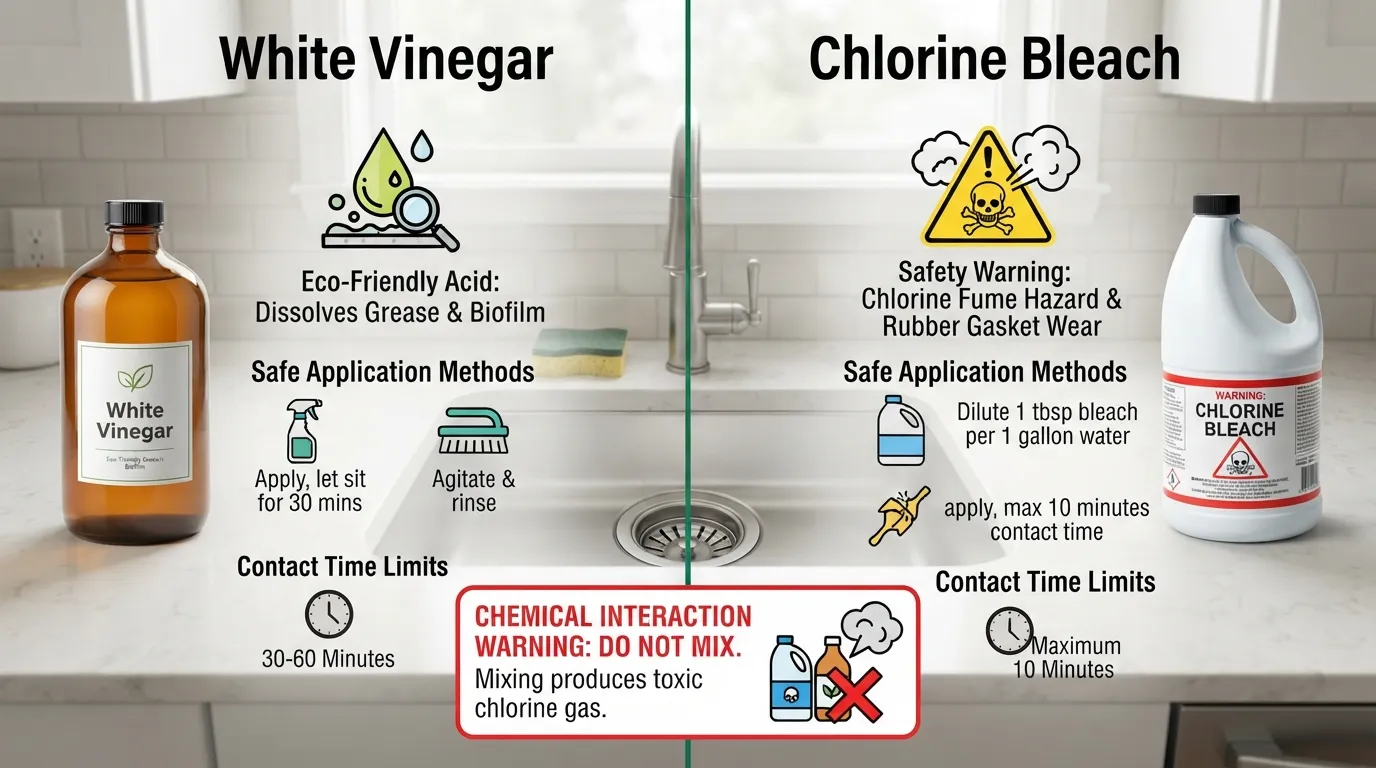
Choosing between bleach and vinegar for drain maintenance depends on whether you are targeting stubborn mineral scale, surface disinfection, or organic slime. While both liquids are common household staples, they behave entirely differently inside plumbing systems and require careful handling.
Is It Safe to Pour Bleach Down the Sink?
Pouring diluted bleach down a standard residential drain is generally safe in moderation, provided your home utilizes modern PVC or cast-iron plumbing. However, frequent use of concentrated chlorine bleach can degrade older rubber washers, deteriorate pipe gaskets, and corrode metal strainers over time.
Use a heavily diluted solution consisting of one part bleach to ten parts cold water to sanitize basin surfaces.
Limit bleach applications to occasional sanitization rather than treating routine grease clogs or structural buildup.
Bleach vs. Vinegar: Which Removes Odor Better?
Vinegar outperforms bleach when dealing with typical kitchen drain odors because its acetic acid actively breaks down alkaline grease, calcium scale, and organic sludge. Bleach acts primarily as a surface disinfectant and whitening agent, meaning it only masks odors temporarily without dissolving the underlying biofilm matrix.
Choose white vinegar for long-term organic odor elimination and daily preventive maintenance.
Reserve bleach strictly for situations requiring heavy microbial disinfection, such as mold remediation around the rim.
How Long Should Bleach Sit in the Drain?
When applying bleach for sanitization, contact time must remain minimal to protect your plumbing infrastructure from corrosive damage. Allowing bleach to sit too long inside enclosed pipe traps accelerates the breakdown of synthetic seals and joints.
Let diluted bleach sit for no longer than 10 to 15 minutes before flushing the lines thoroughly with cold water.
Never pour pure, undiluted bleach down a drain or let it sit overnight, as prolonged exposure can crack older pipes.
Warning — Never Mix Bleach with Boiling Water or Other Chemicals
Mixing household chemicals or introducing extreme heat to active disinfectants creates severe health hazards that threaten indoor air quality and personal safety. According to the Centers for Disease Control and Prevention, combining bleach with acids (like vinegar) or ammonia releases toxic chlorine fumes that cause respiratory distress.
Never combine bleach with vinegar, commercial drain openers, or boiling water, as the thermal reaction releases dangerous vapors.
Always wear protective gloves, ensure adequate cross-ventilation, and rinse lines completely with cold water before introducing any alternative cleaning agent.
How to Clean the P-Trap Deep Clean Method
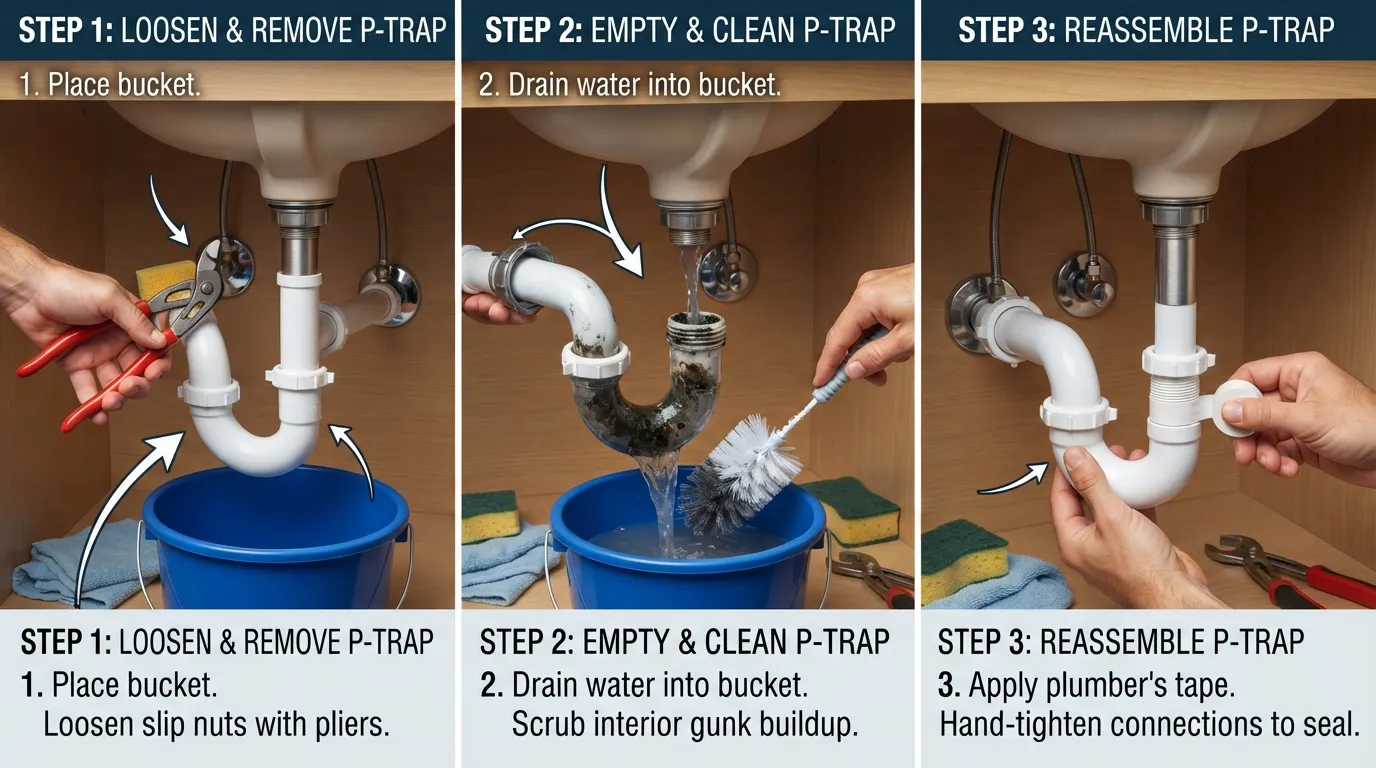
When surface flushes and natural deodorizers fail to resolve a persistent stench, the underlying issue usually involves heavy organic sludge trapped inside the under-sink plumbing. Removing and physically cleaning the P-trap eliminates stubborn blockages and instantly restores fresh indoor air.
Tools You’ll Need
Gathering the right supplies before beginning your plumbing project prevents unexpected water damage and ensures a smooth, efficient teardown.
A sturdy bucket placed directly beneath the curved pipe to catch trapped gray water.
Large slip-joint pliers or a wrench for loosening stubborn plastic or brass slip nuts.
Rubber cleaning gloves, old rags, and fresh plumber’s tape for sealing threaded connections upon reassembly.
Step-by-Step: Removing and Cleaning the P-Trap
Dismantling the trap requires patience and careful handling to avoid damaging aging PVC slip joints or stripping threaded fittings.
Place your bucket securely under the sink basin, then manually loosen the slip nuts on both ends of the curved P-trap pipe.
Lower the pipe carefully into the bucket to empty the standing water, and scrub away all accumulated gunk buildup using a long-handled bottle brush and hot soapy water.
Reattaching Without Leaks — Common Mistakes to Avoid
Proper reassembly protects your cabinetry from moisture damage and ensures the fixture remains airtight against sewer gases.
Wrap fresh plumber’s tape clockwise around male pipe threads before screwing slip nuts back into place.
Hand-tighten all connections securely, avoiding excessive wrench pressure that can crack plastic washers; for readers who prefer professional help over DIY plumbing maintenance, schedule an appointment with a professional drain cleaning service.
Is a Smelly Sink Drain a Health Risk?
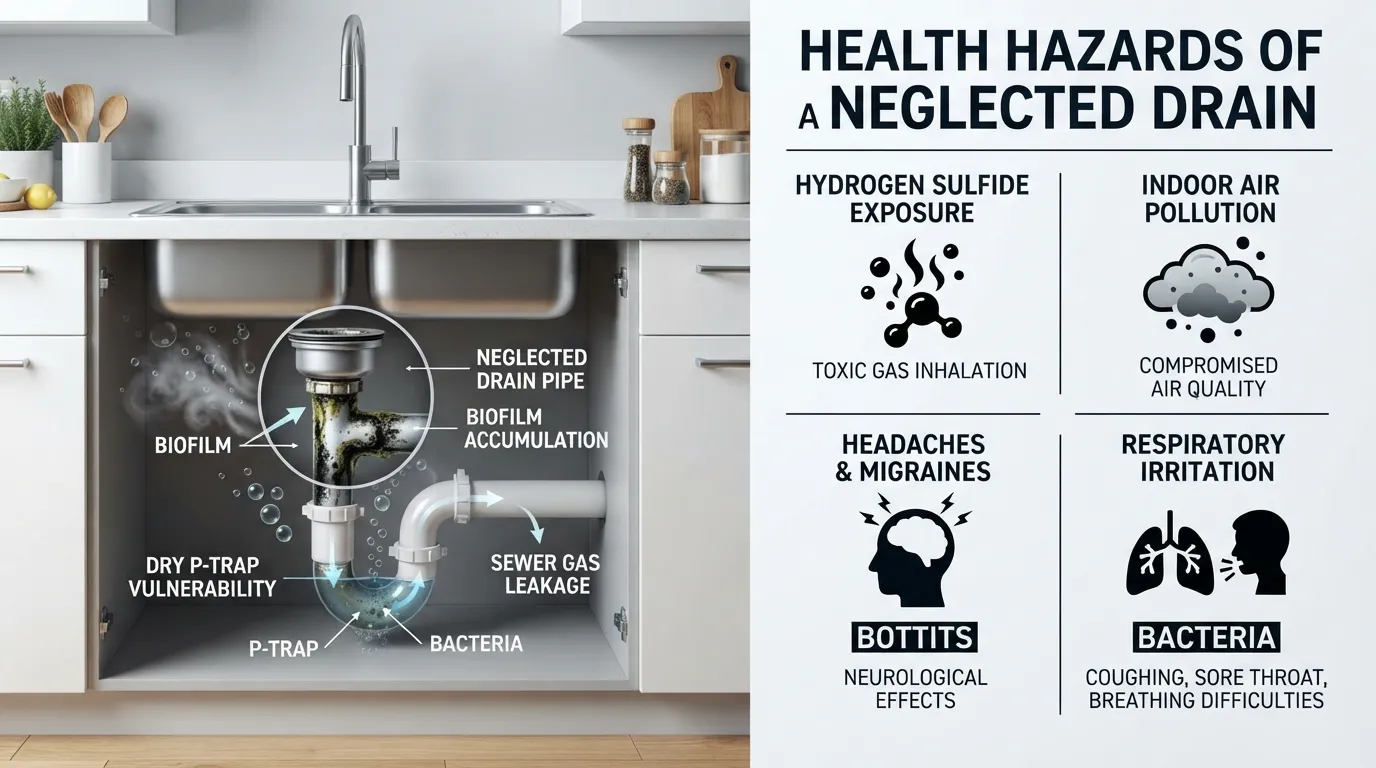
While a slightly unpleasant kitchen odor is often just an aesthetic annoyance, persistent or severe drain stenches can pose genuine risks to your household’s health and indoor air quality. Ignoring ongoing foul smells can allow harmful gases and mold spores to circulate unchecked throughout your living spaces.
What Sewer Gas Exposure Can Cause
When a dry P-trap or cracked vent pipe allows sewer gas to enter your home, it introduces a mixture of toxic compounds, most notably hydrogen sulfide. Prolonged exposure to low concentrations of these gases can trigger headaches, dizziness, eye irritation, and respiratory discomfort for sensitive individuals.
Ensure immediate air circulation by opening nearby windows whenever a heavy sulfur odor is detected.
Protect your home’s overall indoor air quality by investigating and resolving recurring drain smells rather than relying solely on room air fresheners.
When a Smell Signals a Bigger Plumbing Problem
If multiple fixtures throughout your house begin emitting foul odors simultaneously, the issue likely extends far beyond a single dirty sink basin. A persistent sewage smell often indicates a blocked plumbing vent stack or a structural failure within your main drainage system.
Check roof vent pipes for bird nests, leaves, or winter ice blockages preventing proper system airflow.
Consult our expert sewer line plumbing services to diagnose and repair deeper structural defects if multiple drains fail concurrently.
Why Does It Smell Like a Dead Animal Under My Sink?
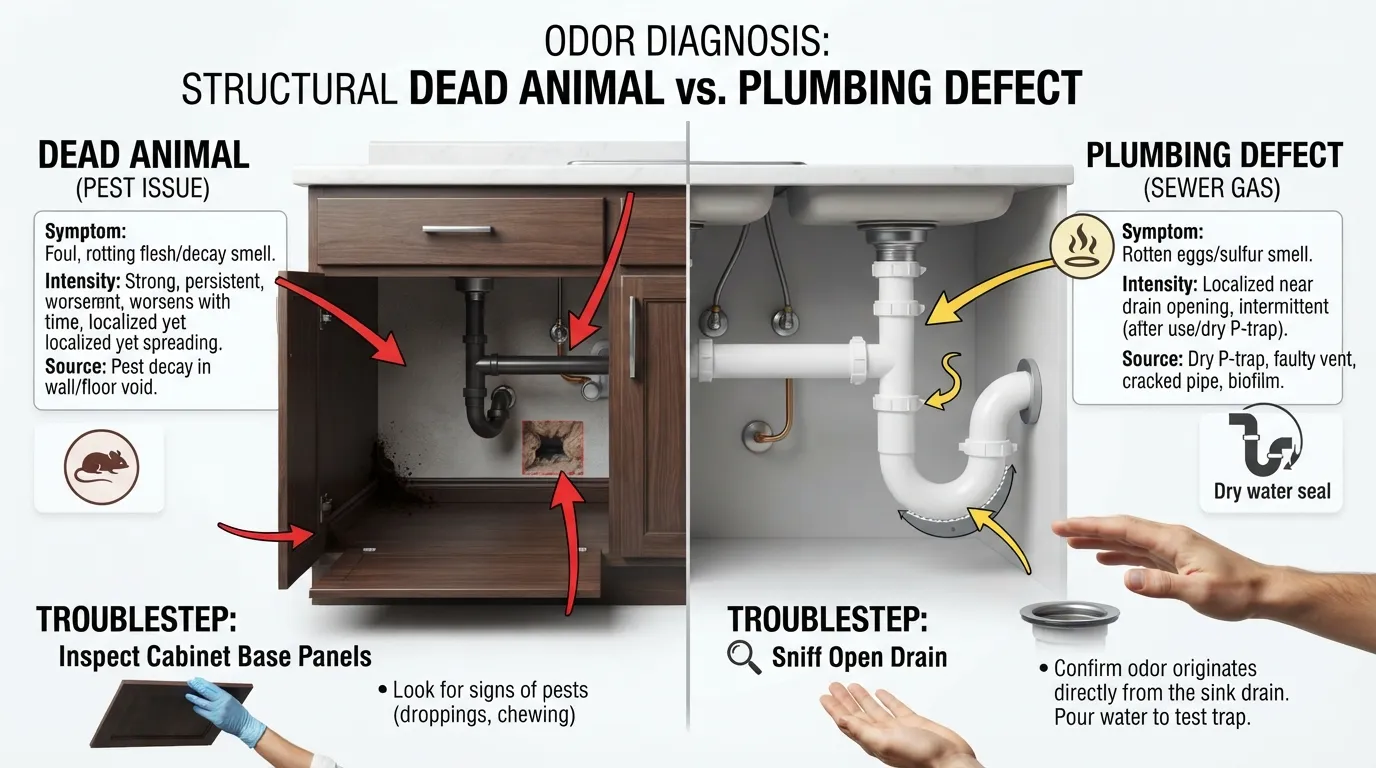
An overwhelmingly putrid, decaying scent beneath your kitchen or bathroom sink can easily lead you to believe your plumbing pipes are severely damaged. However, when the odor resembles decaying flesh rather than sulfur or rotting food, the source is frequently an external pest issue rather than a standard drain clog.
How to Tell the Difference Between Drain Smell and a Dead Rodent
Differentiating between a genuine plumbing problem and a pest intrusion saves you from wasting time on ineffective chemical drain treatments. Standard plumbing odors originate directly from inside the drain opening or overflow holes, whereas an animal carcass odor permeates the surrounding cabinetry or baseboards.
Sniff directly above the open drain pipe and compare it to the air inside the base cabinet to isolate where the heavy stench concentrates.
Note that a dead animal smell is intensely sweet, sickly, and sharp, whereas biofilm and sewer gas produce distinct sulfurous or musty profiles.
What to Do If You Suspect a Dead Animal in the Wall or Cabinet
Discovering a structural pest issue vs. plumbing issue means traditional liquid solutions like baking soda or vinegar will provide zero relief. Because the decaying organic matter resides inside a wall cavity or beneath subflooring, physical extraction or professional intervention is required.
Inspect the back panels, floorboards, and corners of your under-sink cabinet for entry holes, nesting materials, or insect activity.
Contact a licensed pest control professional to safely locate, remove, and sanitize the affected structural cavity if the odor persists despite a fully clean and sealed plumbing assembly.
How to Prevent Sink Odors From Coming Back
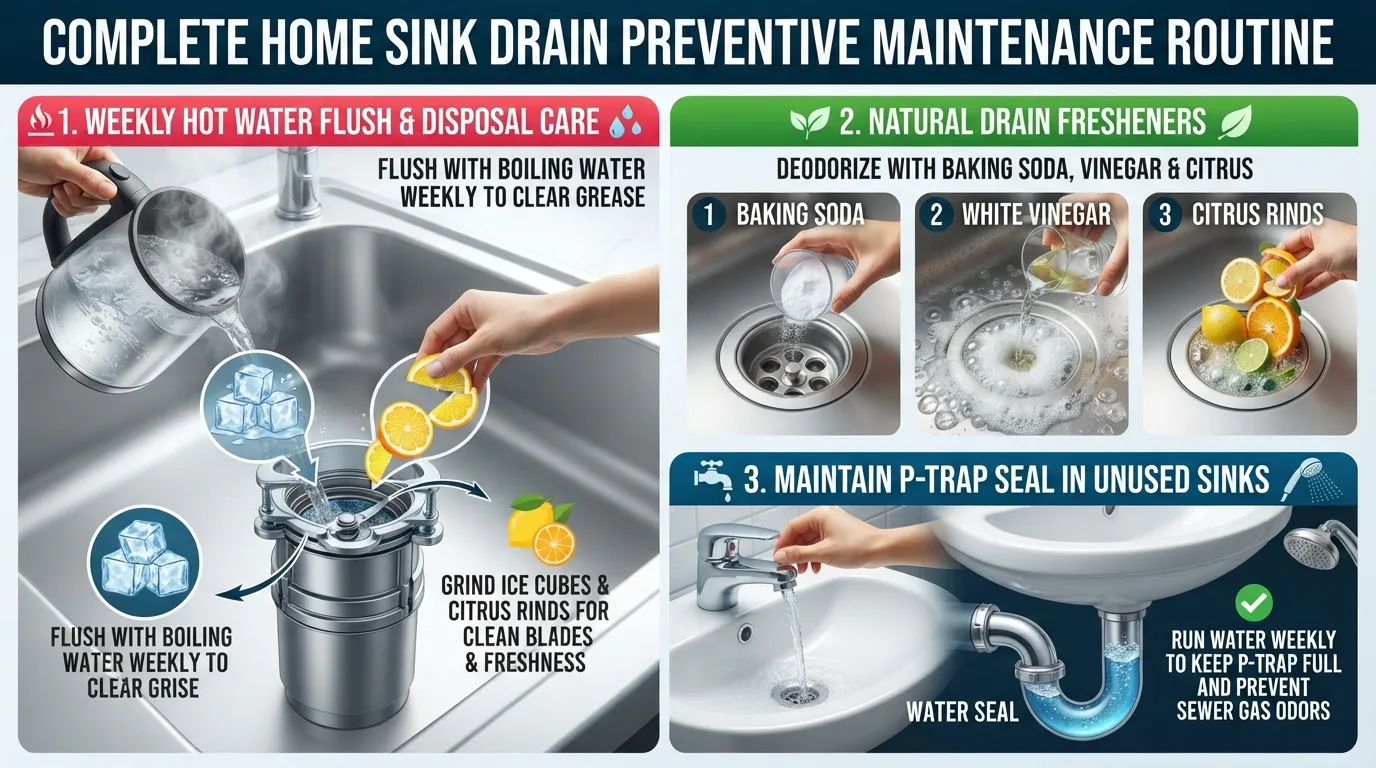
Maintaining a fresh-smelling drainage system requires consistency rather than waiting for foul stenches to return. Establishing a proactive drain maintenance schedule keeps grease, hair, and organic debris from accumulating inside your pipes.
Weekly Maintenance Routine
A simple weekly routine prevents organic sludge from forming deep inside your plumbing fixtures. Implementing these fast habits takes only a few minutes but saves you from tedious deep-cleaning jobs later.
Flush every sink with piping hot water once a week to melt away residual cooking fats and soap scum.
Clear out food particles by running cold water alongside your garbage disposal every time you process kitchen scraps.
Natural Drain Fresheners (Citrus, Baking Soda Sachets)
Relying on a natural freshener keeps your kitchen and bathroom smelling crisp without introducing harsh chemicals into your home environment. Eco-friendly treatments neutralize lingering odors safely while protecting sensitive PVC fittings and rubber seals.
Drop leftover citrus rinds or lemon wedges down the garbage disposal weekly to release fresh aromatic oils.
Apply baking soda followed by white vinegar monthly to dissolve hidden buildup and neutralize trapped organic acids [00:23].
For Unused Sinks — Run Water Weekly to Keep the P-Trap Full
Guest bathrooms, utility basins, and wet bars are notorious for generating sewer smells because they sit idle for extended periods. Establishing a reliable P-trap refill habit ensures the water barrier remains intact to block sewer gases.
Turn on faucets in spare or guest rooms for at least 60 seconds once a week.
Add a teaspoon of vegetable oil or mineral oil to infrequently used traps to slow down water evaporation significantly.
When It's Time to Call a Professional Plumber
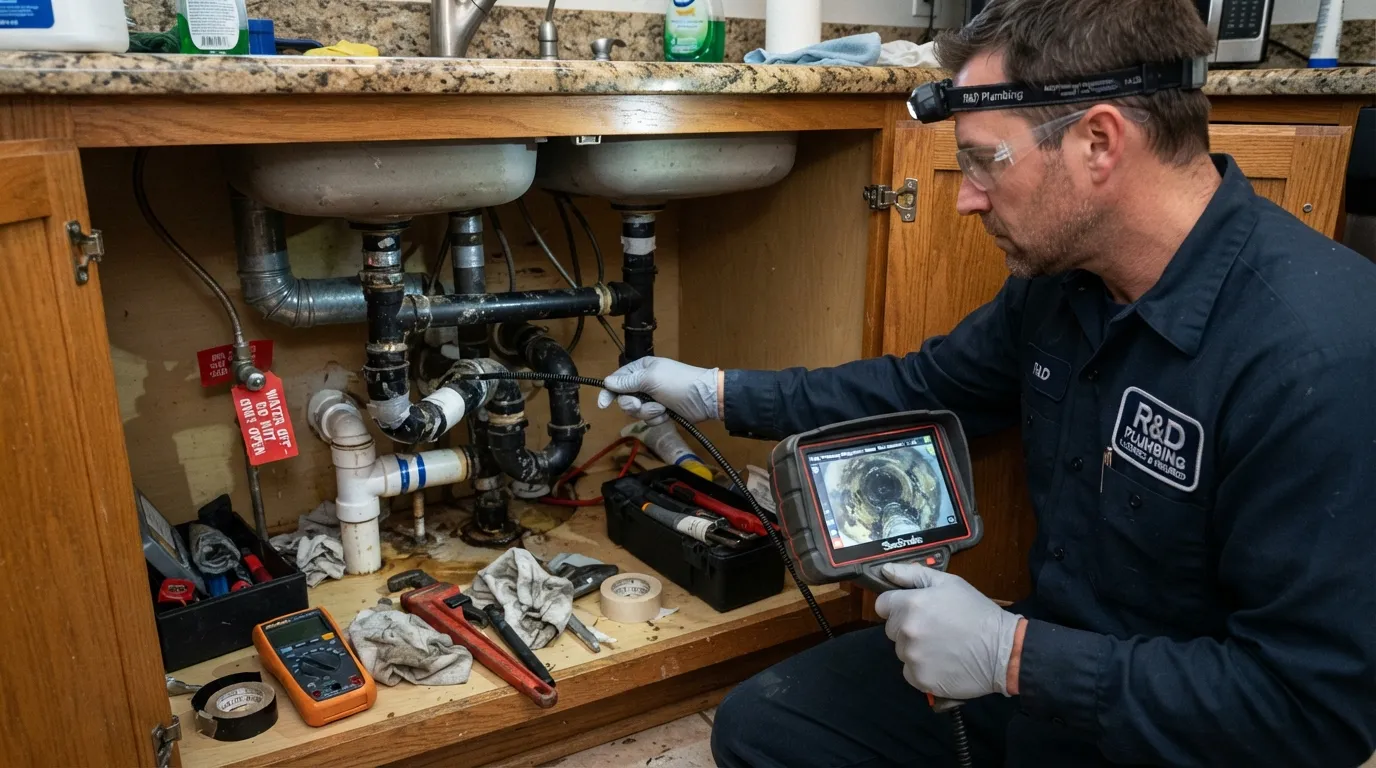
While most routine drain odors respond well to natural flushes, deep cleans, or P-trap maintenance, certain situations require expert intervention. Recognizing when a foul smell points to a complex structural failure protects your home from severe water damage and costly plumbing repairs.
Signs the Smell Isn’t a DIY Fix
If you have thoroughly cleaned your garbage disposal, scrubbed the interior pipes, and refilled the P-trap, yet the stench persists, the issue lies beyond your reach. Persistent sewage odors that return immediately after cleaning typically indicate broken vent pipes or compromised pipe joints hidden inside wall cavities.
Notice if foul odors affect multiple plumbing fixtures throughout the house simultaneously.
Watch for sluggish draining or gurgling sounds accompanying the smell, as these point to deeper line blockages.
What a Plumber Checks That You Can’t
A licensed professional plumber utilizes advanced diagnostic tools to locate issues that are invisible to the naked eye. Instead of guessing the source of the odor, experts perform comprehensive assessments of your entire drainage infrastructure.
Specialized cameras allow technicians to conduct a detailed drain inspection or sewer line inspection to find cracks, root intrusions, or collapsed pipes.
Smoke testing equipment pumps safe, non-toxic smoke through your plumbing vent stacks to instantly pinpoint hidden gas leaks behind walls.
Emergency Situations (Sudden Strong Sewage Smell)
A sudden, overwhelming wave of raw sewage filling your home requires immediate corrective action to safeguard your family’s health and safety. Addressing these emergency situations promptly prevents widespread contamination and structural damage.
Evacuate the immediate area and open windows for ventilation if the sulfur odor becomes intensely concentrated.
Shut off your home’s main water supply valve and contact a 24/7 plumber immediately if sewage begins backing up into your sinks, tubs, or showers.
Frequently Asked Questions
What can I put down my sink to make it smell nice?
Pouring half a cup of baking soda followed by a cup of white vinegar neutralizes organic odors naturally while lifting minor grease buildup. For garbage disposals, running a handful of ice cubes and fresh lemon peels or slices leaves behind a crisp, clean scent without damaging internal components.
Is a smelly sink drain a health risk?
Persistent drain stenches can pose a genuine health risk by releasing sewer gases, such as hydrogen sulfide, into your living areas. Prolonged exposure to these gases can cause headaches, dizziness, and respiratory irritation, making it vital to resolve recurring odors promptly.
What do plumbers recommend for smelly drains?
Professional plumbers recommend regular preventive maintenance, such as flushing lines weekly with hot water and cleaning the garbage disposal splash guard monthly. For stubborn buildup, experts suggest using biological enzyme treatments instead of harsh chemical solvents that can corrode pipes over time.
Can I pour bleach down the sink to get rid of smell?
Pouring a heavily diluted bleach solution (one part bleach to ten parts cold water) down a standard drain is safe for occasional sanitization. However, bleach only masks odors temporarily by disinfecting the surface without dissolving the underlying organic slime or biofilm.
Is it better to pour bleach or vinegar down the drain?
Vinegar is generally better for ongoing drain maintenance because its acetic acid actively breaks down alkaline grease and organic sludge. Bleach should be reserved strictly for situations requiring heavy microbial disinfection, as it fails to dissolve the actual source of trapped food debris.
Is it safe to pour boiling water and bleach down the drain?
It is never safe to mix bleach with boiling water, vinegar, or other chemical cleaners inside your plumbing lines. Combining extreme heat or acids with chlorine bleach creates a dangerous chemical reaction that releases toxic fumes, endangering your health and damaging pipe joints.
Can baking soda be used to clean smelly drains?
Baking soda is a safe, effective, and non-corrosive option for neutralizing acidic odors and scrubbing away mild organic pipe residue. Combining it with white vinegar creates a fizzy bubbling action that loosens trapped grease and refreshes the entire drainage system.
How long should I leave bleach in the sink drain?
When using a diluted bleach solution for sanitization, allow it to sit for no longer than 10 to 15 minutes before flushing the lines thoroughly with cold water. Never let undiluted bleach sit overnight, as prolonged exposure will degrade rubber washers and crack older pipe fittings.
Conclusion and Next Steps
Dealing with a smelly sink doesn’t have to be an ongoing household frustration. By understanding whether your issue stems from a dry P-trap, a dirty garbage disposal, or built-up organic biofilm, you can apply the right DIY solution to restore freshness. Simple remedies like boiling water, baking soda, vinegar, and routine cleanings keep most minor odors at bay.
However, if persistent sewage smells remain or structural plumbing issues arise, don’t wait for the problem to worsen. Take the next step toward a fully restored plumbing system by scheduling professional drain cleaning and repair services today.
Main Services
Related Posts
Need a Plumber in Miami?
Schedule service online or speak directly with the EZ Plumbing team.
Owner-Led Local Service
Know who is behind the business before you request service. The owners, contact line and Miami service pages are published clearly.
- Named business owners
- Direct phone and social channels
- Local Miami service information
Clear Help Before You Book
Review the relevant service page, contact the team directly and use the booking page when you are ready—without relying on vague claims.
- Service-specific information
- Direct questions before scheduling
- Clear online booking route