How to Unclog a Drain Naturally 9 Methods That Work
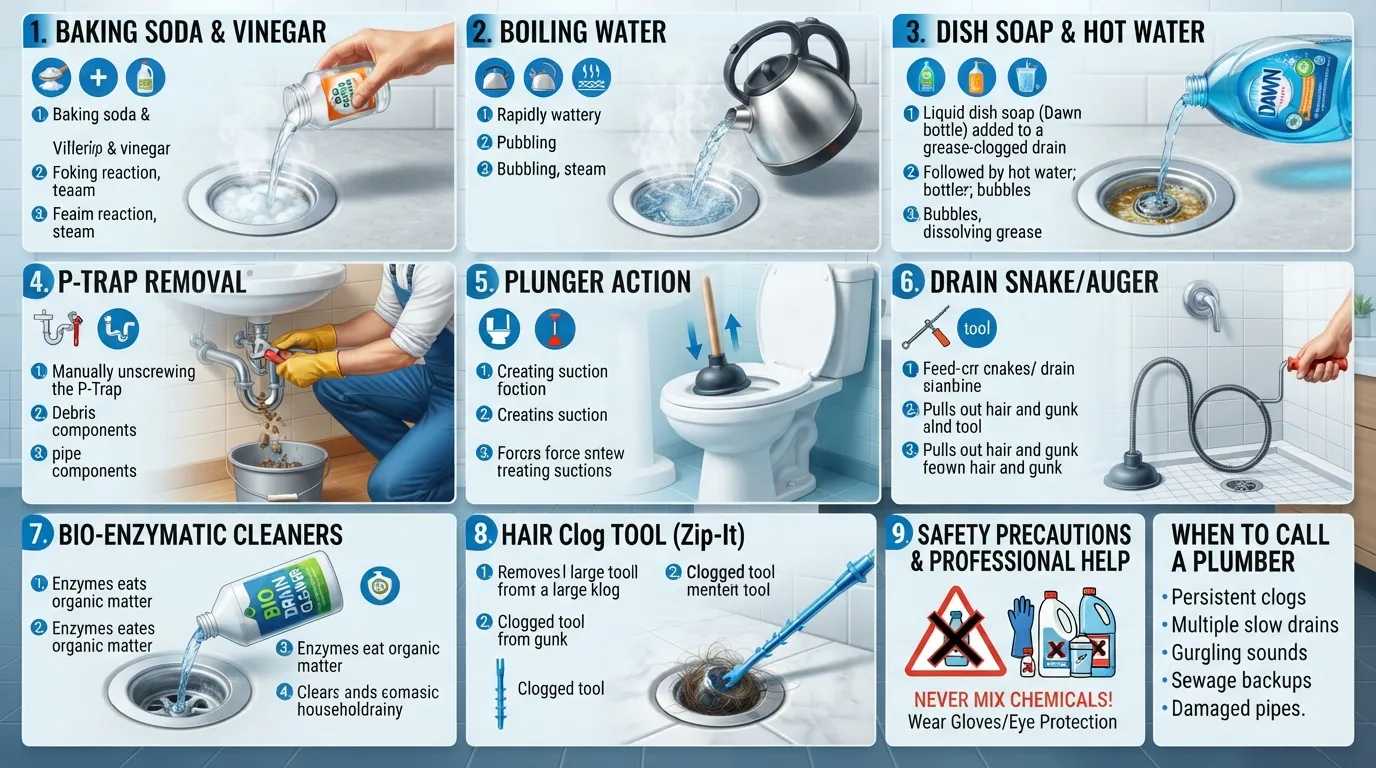
Natural Drain Cleaner Quick Fix: Baking Soda and Vinegar
Clear slow-running household drains instantly using simple, non-toxic pantry ingredients like baking soda, white vinegar, and hot water. This natural combination produces a safe chemical reaction that breaks down organic buildup without corrosive chemicals.
Baking Soda: Acts as a mild abrasive and natural deodorizer to loosen grease, hair, and grime.
White Vinegar: Reacts with baking soda to create a fizzing action that lifts debris from pipe walls.
Hot Water: Flushes loosened residue completely out of your plumbing system.
Step-by-Step DIY Drainage Method
Pour Boiling Water: Carefully pour a kettle of boiling water down the drain to heat the pipes and loosen surface grease.
Add Baking Soda: Pour one-half cup of baking soda directly into the drain opening.
Apply Vinegar: Follow with one cup of white vinegar, cover the drain loosely, and let it fizz for 10 to 15 minutes.
Final Flush: Flush the drain one final time with a second pot of boiling water to clear away dissolved particles.
Why Your Drain Is Clogged in the First Place
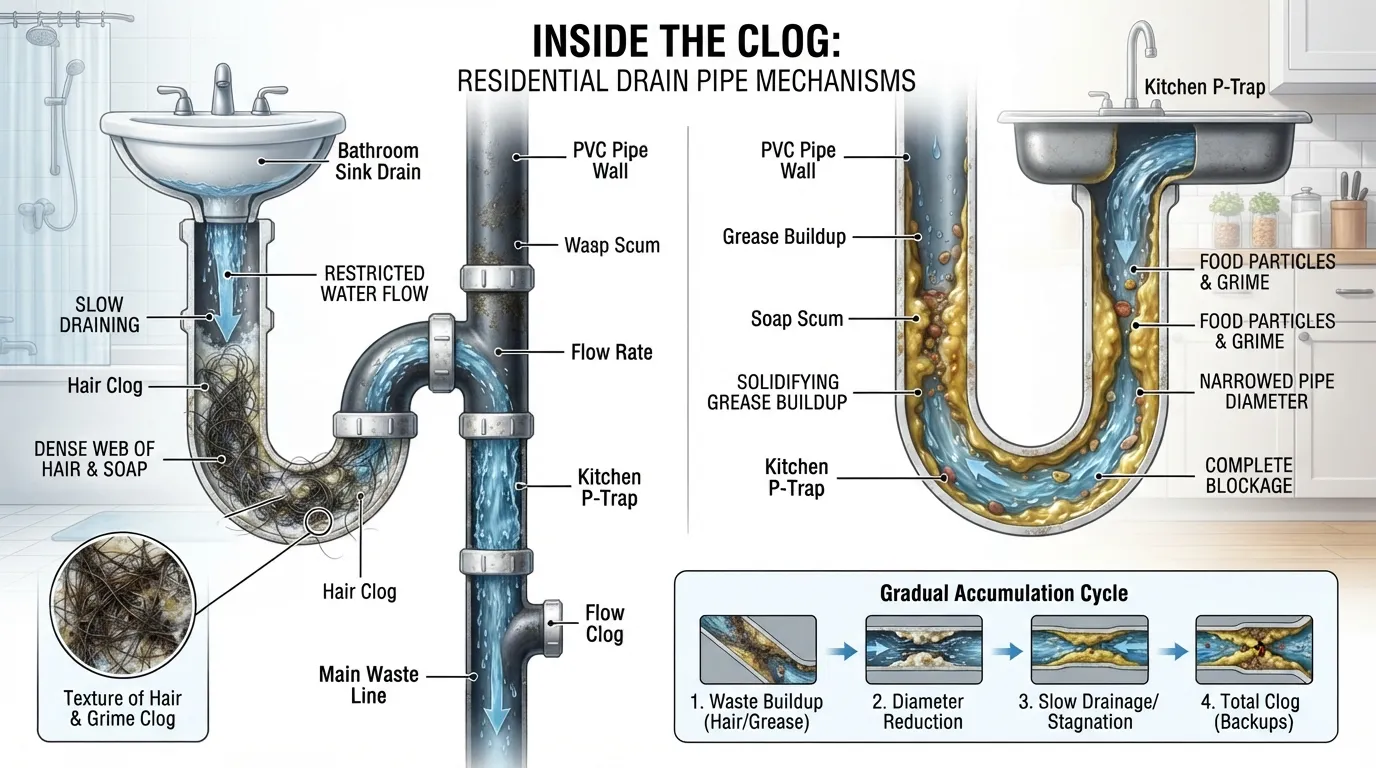
Every stubborn clog starts with a gradual accumulation of everyday waste clinging to the interior walls of your plumbing. Understanding the root cause prevents recurring plumbing failures and helps you choose the correct removal method.
Pipe Constriction: Organic materials and mineral deposits slowly narrow the internal diameter of drainage pipes over time.
Drain Specifics: Kitchen sinks typically struggle with fats and food particles, while bathroom drains accumulate hair and hygiene products.
Common Causes: Hair, Grease, Soap Scum, and Food Debris
Bathroom and kitchen fixtures deal with entirely different types of waste accumulation. Identifying the specific material responsible for the restriction makes troubleshooting significantly faster.
Hair: Combines with natural body oils and shampoo residue in bathroom drains to form dense, water-resistant webs.
Kitchen Grease: Liquid cooking fats and oils cool down inside pipes, solidifying into stubborn blockages that trap food particles.
Soap Scum: Mineral deposits from tap water mix with bar soap fat to create a sticky film coating pipe interiors.
Food Debris: Starchy foods, coffee grounds, and fibrous waste swell inside garbage disposals and trap lines.
Signs You Have a Slow Drain vs. a Full Blockage
Recognizing early warning indicators lets you fix drainage issues before they escalate into full system backups. Ignoring these symptoms can lead to severe pipe pressure and costly structural damage.
Slow Drainage: Water takes noticeably longer to empty from the basin, often leaving a swirling vortex during the final moments.
Unpleasant Odors: Trapped organic matter and rotting food particles emit foul smells directly from the drain opening.
Gurgling Sounds: Trapped air escaping through the plumbing vent or water path creates bubbling noises when fixtures empty.
Standing Water: Pooled water that refuses to drain indicates a total blockage requiring immediate intervention.
The Baking Soda and Vinegar Method Step-by-Step
Clearing stubborn clogs using household ingredients provides a safe, eco-friendly alternative to harsh commercial drain openers. This chemical-free technique breaks down organic waste without damaging your home plumbing pipes.
Safe for Pipes: Unlike acidic commercial cleaners, this method will not corrode PVC or older metal plumbing lines.
Cost-Effective Solution: Uses basic pantry staples to restore proper water flow without expensive professional service calls.
What You’ll Need (Tools & Supplies)
Gathering your materials beforehand ensures a smooth, uninterrupted cleaning process from start to finish.
One cup of baking soda
One to two cups of white vinegar
A full kettle or pot of boiling water
A rag or drain stopper to cover the opening
Step-by-Step Instructions
Execute this precise sequence to maximize the cleaning reaction inside your clogged drain pipes.
Initial Hot Flush: Pour a kettle of boiling water down the drain [00:29] to warm up the pipes and loosen surface grease.
Apply Baking Soda: Pour one cup of baking soda directly into the drain opening [00:36].
Pour Vinegar: Follow immediately with one to two cups of white vinegar [00:38] to trigger an immediate reaction.
Cover and Wait: Cover the drain loosely with a stopper or damp cloth to force the fizzing action downward into the blockage.
Final Rinse: Flush the pipe with a second pot of boiling water [00:55] to wash away dissolved debris.
Why This Reaction Works
The science behind this DIY remedy relies on a classic acid-base chemical neutralization process.
Acid-Base Reaction: Acetic acid in white vinegar reacts with sodium bicarbonate in baking soda to produce carbon dioxide gas and water.
Mechanical Agitation: The resulting fizzing and bubbling action creates physical agitation that lifts grease and hair particles off pipe walls.
Can I Pour Vinegar Down the Drain to Unclog It?
Pouring vinegar alone down a drain provides minimal cleaning power because it lacks the abrasive and reactive properties needed to break up dense blockages.
Combined Power: Vinegar must be paired with baking soda to create the foaming expansion required to clear sticky clogs.
Routine Maintenance: Plain vinegar works well for monthly deodorizing, but tough clogs demand the full baking soda and hot water combination.
Match the Method to Your Clog Type Decision Guide
Different types of plumbing blockages require tailored removal strategies rather than a one-size-fits-all approach. Matching your cleaning technique to the specific material causing the restriction ensures fast, efficient results without pipe damage.
Targeted Removal: Grease responds best to degreasing surfactants, while hair requires physical extraction or enzymatic breakdown.
Preventing Damage: Selecting the right approach protects fragile PVC joints and older metal threading from unnecessary wear.
Grease & Soap Scum Clogs -> Dish Soap + Boiling Water
Kitchen sinks clogged by cooking fats and bathroom basins blocked by soap residue demand strong grease-cutting action. Dish soap acts as a powerful surfactant that breaks down oil bonds so hot water can wash them away.
The Dawn Solution: Dish soap like Dawn clings to viscous grease layers, emulsifying stubborn oils on contact.
Application Steps: Squeeze a generous amount of liquid dish soap down the drain, follow with a kettle of boiling water, and let the mixture dissolve the barrier.
Hair Clogs -> Why Baking Soda/Vinegar Often Isn’t Enough
Bathroom sink and shower drains frequently pack dense wads of hair that resist standard fizzing reactions. While baking soda and vinegar loosen surrounding soap scum, they rarely dissolve protein-based hair strands completely.
Physical Obstruction: Hair forms tightly woven mats that trap debris, requiring mechanical pulling rather than chemical bubbling.
Alternative Tools: Switch to a plastic zip-tool or miniature plumbing snake when pantry remedies fail to restore proper flow [00:24].
How Long Does It Take for Hair to Break Down in a Drain?
Human hair features a tough outer protein sheath called keratin, making it virtually impervious to quick household dissolutions.
Natural Longevity: Hair trapped inside a dark, damp plumbing line can take years to decompose on its own.
Intervention Need: Waiting for hair to break down naturally leads to total pipe blockages, making manual removal necessary.
Solid Objects & Hard Blockages -> When to Use a Drain Snake or Zip-It Tool
Accidentally dropped jewelry, bottle caps, or heavy mineral buildup cannot be cleared with liquid solutions alone. Physical retrieval tools reach directly into the P-trap to hook and pull out solid obstructions.
Plastic Zip-It Tool: Features barbed edges designed to slide past the drain stopper and snag hidden hair clumps instantly.
Drum Auger / Drain Snake: A flexible steel cable that feeds deep into branch lines to break apart or retrieve stubborn obstructions.
Removing and Cleaning the P-Trap Manual Method
Manual P-trap removal provides a direct, highly effective solution when deep clogs bypass sink openings and baking soda mixtures fail. This U-shaped pipe section underneath your sink intentionally traps debris and water vapor, making it the most frequent hotspot for heavy blockages.
Direct Access: Opening the P-trap lets you manually pull out hardened hair, grease balls, and dropped valuables.
Preventing Leaks: Realigning and hand-tightening slip-joint nuts correctly ensures your under-sink storage stays completely dry.
Tools You’ll Need (Bucket, Wrench/Pliers)
Gathering proper containment supplies and basic hand tools prevents water spills and structural damage to your cabinet base.
A plastic bucket to catch trapped grey water and residual sludge
Adjustable slip-joint pliers or a pipe wrench for loosening stubborn plastic or metal nuts
Old towels or rags to clean up initial spills and wipe down pipe threads
Rubber gloves to protect your hands from trapped organic waste
Step-by-Step: Safely Removing and Clearing the P-Trap
Follow this precise sequence to detach, clear, and reinstall your under-sink plumbing trap without cracking the fittings.
Position the Bucket: Place your empty bucket directly underneath the curved P-trap section to catch escaping water.
Loosen Slip-Joint Nuts: Use adjustable pliers to turn the retaining nuts on both ends of the U-shaped pipe counter-clockwise.
Remove and Empty the Trap: Carefully slide the P-trap downward, dump the trapped contents into your bucket, and scrape out any internal sludge.
Clean and Inspect: Run the removed pipe section under hot water to scrub away interior buildup, checking the rubber washers for wear.
Reinstall Securely: Push the clean P-trap back into alignment, hand-tighten the slip-joint nuts, and run the faucet to verify zero leaks.
Always hand-tighten slip-joint nuts first, adding only a slight quarter-turn with pliers. Overtightening plastic nuts can easily crack the threads or warp rubber washers, leading to severe under-sink leaks.
When This Method Beats Chemical or Natural Cleaners
Manual P-trap cleaning outperforms chemical and natural solutions whenever heavy debris physically wedges itself inside the pipe bend.
Physical Obstructions: Congealed grease mats, dense hairballs, and small foreign objects cannot be dissolved by liquids alone.
Immediate Results: Direct extraction removes 100% of the blockage instantly, whereas chemical treatments may only bore a small hole through the center of the clog.
If this manual disassembly feels too complex or your home plumbing system requires professional diagnosis, professional drain cleaning services can safely resolve deep-line blockages without risking pipe damage.
Store-Bought Natural & Bio-Enzymatic Alternatives
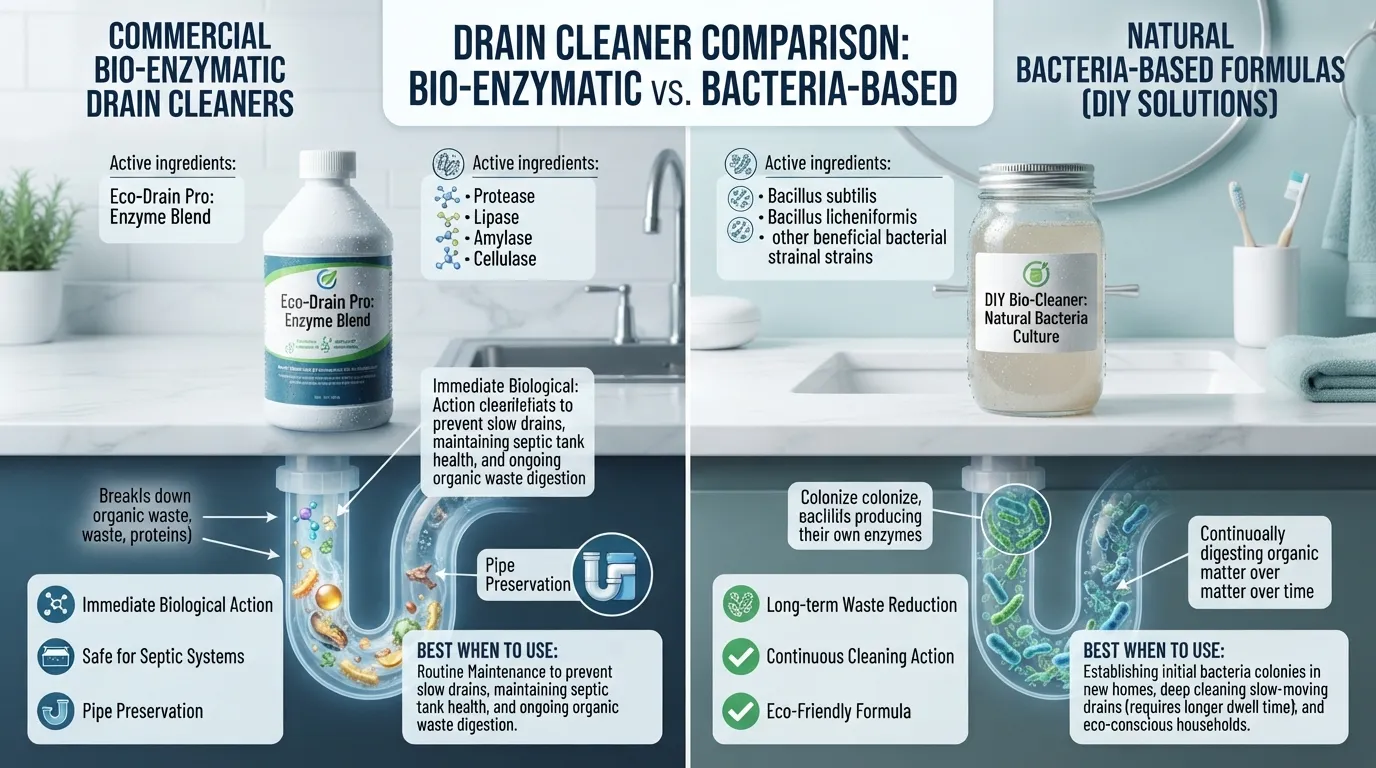
Ready-made bio-enzymatic and naturally derived drain cleaners offer a convenient middle ground for homeowners seeking eco-friendly solutions without mixing household recipes. These specialized formulas rely on targeted biological catalysts to break down organic waste without harsh, pipe-corroding chemicals.
Targeted Breakdown: Specially selected bacterial strains and natural enzymes digest specific waste materials like grease, proteins, and starches.
Plumbing Preservation: Gentle on PVC, metal piping, and household septic systems, preventing the degradation caused by industrial acids.
What Makes a Cleaner “Natural” or Bio-Enzymatic
Commercial green drain cleaners avoid caustic soda and sulfuric acid, utilizing living organisms and plant-based surfactants to liquefy blockages naturally.
Active Bacterial Cultures: Introduce safe, non-pathogenic bacteria that colonize pipe walls and continuously consume organic slime.
Natural Enzymes: Proteins like protease, lipase, and amylase accelerate the chemical breakdown of hair, soap scum, and food oils.
Eco-Friendly Surfactants: Plant-derived cleansing agents lift grease bonds without introducing synthetic phosphates or petroleum solvents into municipal water systems.
When a Ready-Made Option Makes Sense vs. DIY
Choosing between a DIY baking soda mixture and a store-bought bio-enzymatic treatment depends on your maintenance schedule and the severity of the blockage.
Best for Maintenance: Use bio-enzymatic treatments monthly to prevent slow buildup in high-use kitchen and shower lines before clogs form.
Best for Immediate Relief: Rely on the DIY baking soda and vinegar method or manual P-trap clearing for active, stubborn blockages that require instant action.
Septic System Care: Store-bought enzyme cleaners protect sensitive underground bacterial colonies, making them safer for rural homes with septic tanks than chemical bleaches.
Safety Warning - What You Should Never Do
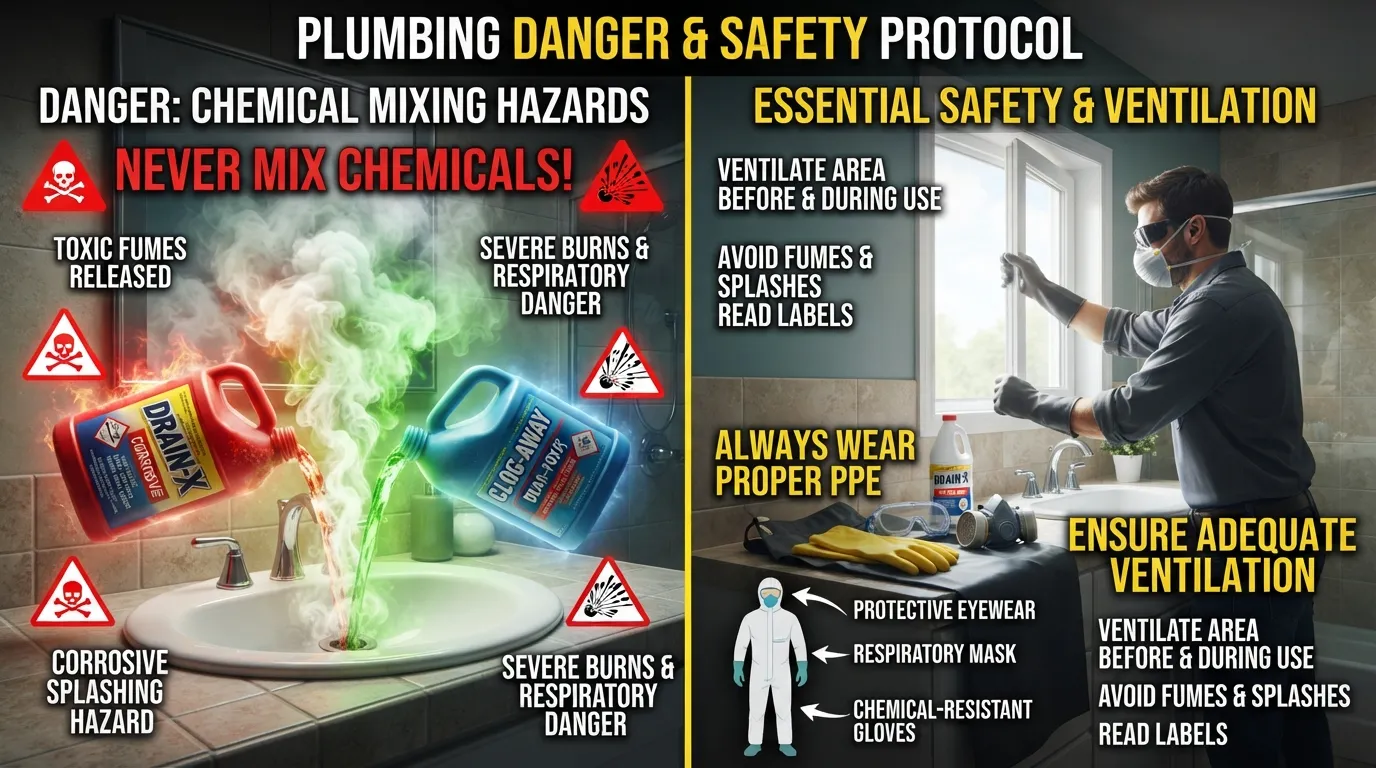
Attempting to clear slow plumbing fixtures requires strict adherence to safety protocols to prevent dangerous chemical reactions. Combining incompatible cleaning agents can release toxic fumes or cause caustic splashes that jeopardize your health and ruin plumbing lines.
Chemical Safety: Never assume that combining multiple cleaning methods yields better results; certain products react violently when mixed.
Personal Protection: Always wear rubber gloves and protective eyewear when handling backed-up water or chemical residues.
Never Mix Chemical Drain Cleaners With Baking Soda/Vinegar
Pouring commercial store-bought drain openers into a sink treated with baking soda and vinegar introduces extreme chemical hazards. Commercial products frequently contain concentrated sodium hydroxide or sulfuric acid, which react unpredictably with pantry acids and bases.
Corrosive Splashing: The sudden foaming action of a DIY treatment can cause trapped commercial chemicals to splash backward out of the drain opening.
Dangerous Fumes: According to the NJ Department of Health Hazard Alert on Mixing Cleaning Chemicals, mixing reactive household agents can release irritating gases and toxic vapors that threaten respiratory safety.
Signs You’ve Used the Wrong Combination
Recognizing immediate warning signs of an improper chemical reaction allows you to evacuate the area and ventilate your bathroom or kitchen safely.
Pungent Odors: Sharp, stinging chemical smells or choking vapors indicate a dangerous reaction occurring inside the pipe.
Unexpected Heat: Excessive bubbling or hot pipes suggest a severe exothermic reaction that can melt PVC fittings or crack porcelain basins.
Respiratory Irritation: Sudden coughing, watery eyes, or throat tightness mean you must immediately leave the room and open windows for fresh air.
Preventing Future Clogs Maintenance Tips
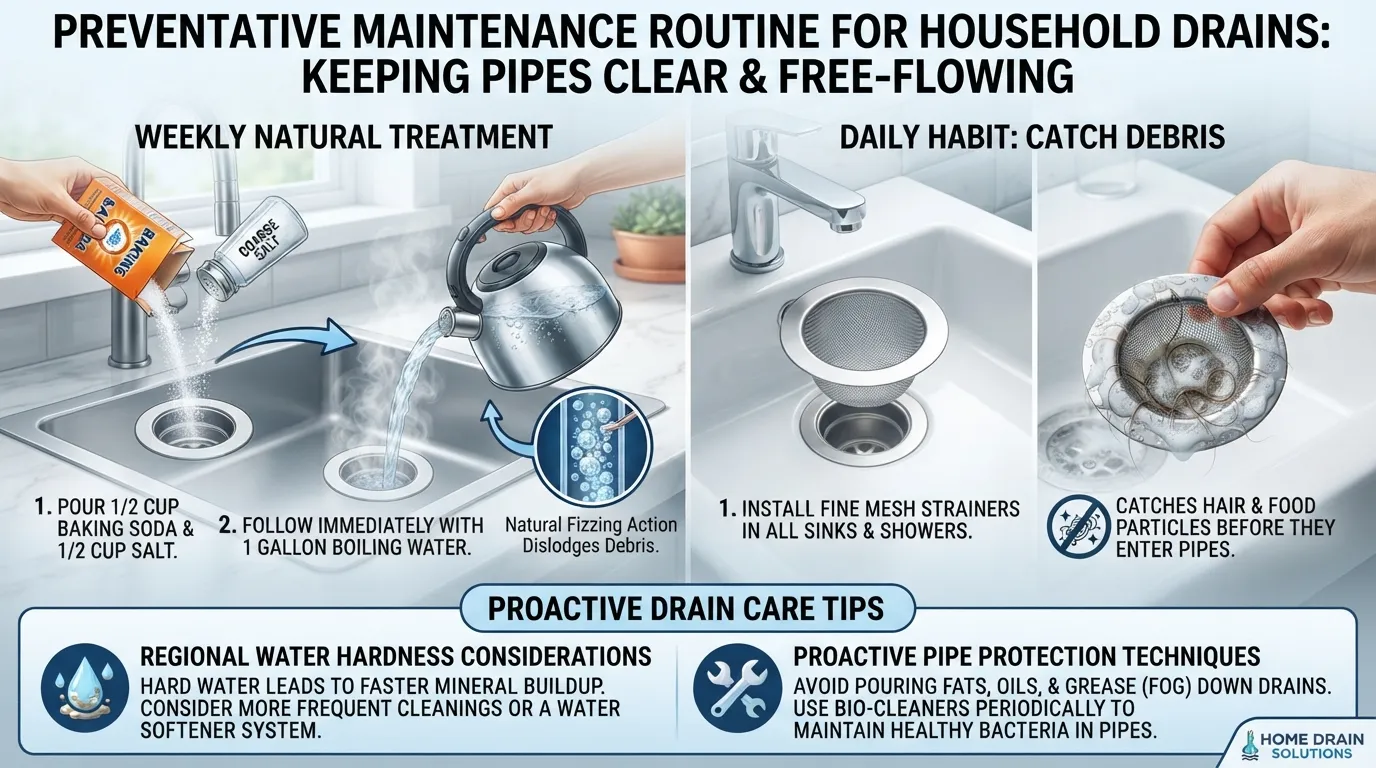
Establishing a consistent preventive maintenance routine keeps your household drainage systems flowing smoothly and eliminates the need for emergency plumbing repairs. Small, proactive habits stop organic buildup and mineral scale long before they harden into severe blockages.
Proactive Defense: Regular cleaning routines stop hair, soap scum, and grease from bonding to interior pipe walls.
Hardware Protection: Installing physical barriers catches solid debris at the surface before it ever enters your plumbing lines.
Weekly Maintenance Routine
Incorporate simple, natural treatments into your weekly household chores to keep pipe interiors clear and odor-free.
Salt and Baking Soda Flush: Pouring a half-cup of salt and a half-cup of baking soda down the drain weekly acts as a mild, abrasive scrub that strips away organic slime.
Boiling Water Chaser: Follow your weekly powder treatment with a full kettle of boiling water to flush loosened residue completely out of the system.
Mesh Strainers: Equip every kitchen and bathroom sink with fine mesh strainers to catch hair, food particles, and soap debris.
Miami-Specific Factors: Hard Water, Humidity, and Older Pipes
Regional environmental conditions introduce unique plumbing challenges that require specialized attention to prevent accelerated wear and scale accumulation.
Mineral Hardness: High calcium and magnesium levels in regional water supplies rapidly form chalky scale inside pipes, narrowing water flow.
Humidity and Slime: Warm, humid indoor climates encourage faster bacterial growth and organic slime accumulation inside unused or slow drains.
Aging Infrastructure: Historic or older residential properties often feature vulnerable clay or cast-iron lines that benefit from gentle, non-corrosive upkeep.
For comprehensive assessments and ongoing property maintenance, professional plumbing services can inspect your system and safeguard your lines against regional wear.
When to Call a Professional Plumber
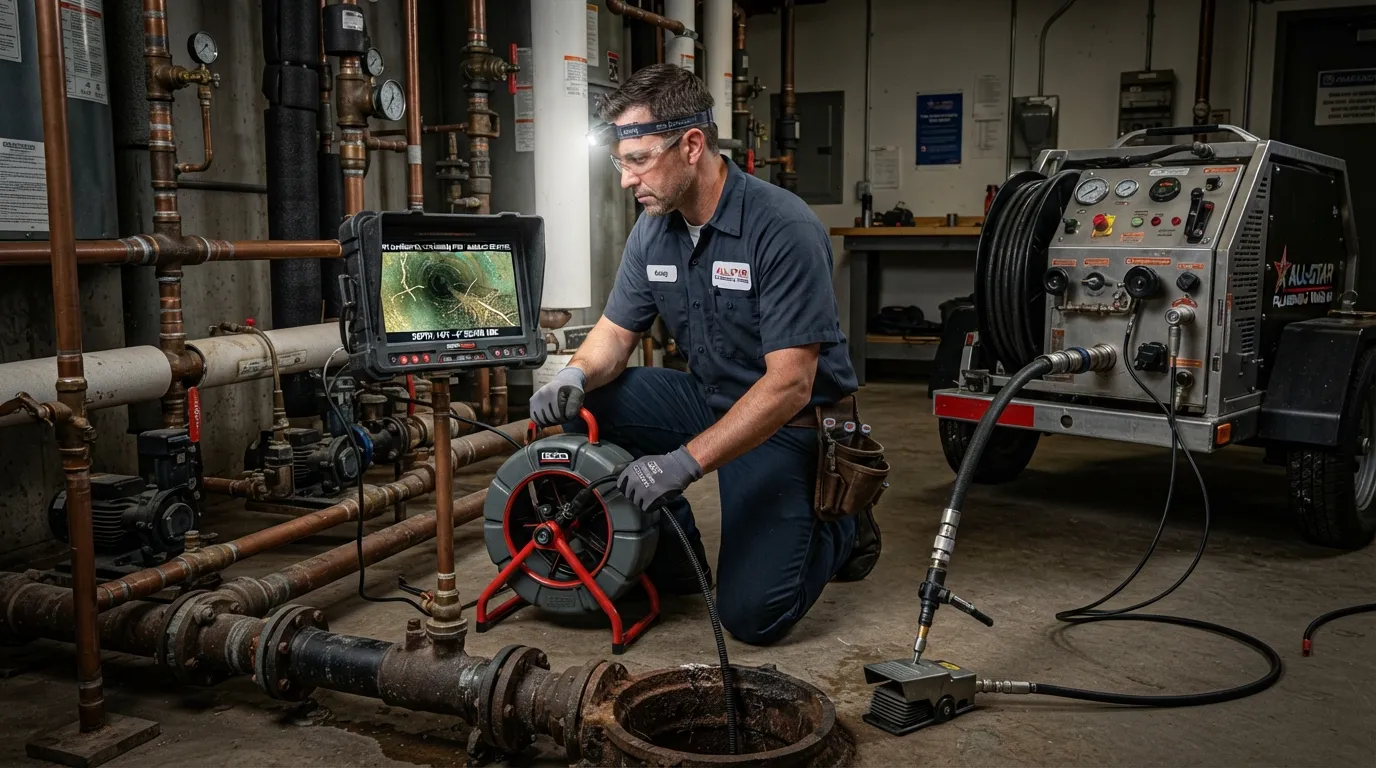
Knowing when to step away from DIY fixes prevents accidental pipe damage and ensures deep-seated plumbing failures are resolved safely. When basic pantry remedies and manual P-trap clearing fail to restore normal water flow, structural blockages require industrial-grade interventions.
Recognizing Limits: Stubborn main-line blockages and multi-fixture backups cannot be resolved with surface-level household techniques.
Protecting Infrastructure: Professional intervention safeguards aging pipe fittings from the cracks and leaks caused by aggressive amateur attempts.
Signs the Clog Is Beyond DIY
Persistent drainage issues often point to deeper, systemic flaws hiding inside your main sewer or branch lines.
Multi-Fixture Backups: When flushing your toilet causes water to bubble up into the bathtub or kitchen sink, your main sewer line is severely compromised.
Complete Stagnation: Standing water that refuses to budge despite repeated boiling water flushes and snaking indicates a solid, far-reaching obstruction.
Foul Sewage Odors: Persistent raw sewage smells indicate a broken vent stack or major blockage that requires immediate professional evaluation.
What Professional Plumbers Use Instead of Drano
Licensed plumbing experts avoid harsh, corrosive consumer chemicals like Drano because they can warp plastic pipes and etch metal lines. Instead, they rely on advanced, non-destructive mechanical technology.
Hydro-Jetting: High-pressure water streams scour pipe interiors completely clean, blasting away grease, tree roots, and mineral scale.
Drain Camera Inspection: Fiber-optic sewer cameras pinpoint the exact location and nature of a blockage without guesswork or unnecessary wall tearing.
Commercial Motorized Augers: Heavy-duty motorized snakes slice through impenetrable tree roots and dense foreign objects trapped deep within the system.
If your drainage emergency requires immediate intervention or advanced technical restoration, contacting an emergency plumber or scheduling professional drain cleaning guarantees a permanent fix.
FAQ Section
Addressing lingering homeowner questions clarifies specific troubleshooting scenarios and provides immediate solutions for complex plumbing layouts.
Targeted Answers: Quick responses to common troubleshooting queries help resolve fringe drainage problems safely.
Expert Insights: Professional perspectives prevent common DIY mistakes when handling unique sink configurations.
Does Dawn Really Unclog Drains?
Dawn dish soap effectively clears grease and oil clogs by breaking down lipid bonds, but it will not dissolve hair, mineral scale, or hard foreign objects.
Surfactant Power: Dish soap acts as a powerful degreaser that coats and lifts sticky food fats off pipe interiors.
Best Paired With Heat: For optimal results, squeeze a generous amount of Dawn down the drain followed immediately by a pot of boiling water.
What Is the Best Hair Clog Remover for Drains?
Physical removal tools like a plastic Zip-It snake or a mini drum auger provide the most reliable solution for dense hair clogs.
Keratin Resilience: Because human hair features a tough protein structure that resists chemical breakdown, physical pulling or enzymatic digestion works best.
Enzymatic Options: Bio-enzymatic drain treatments safely dissolve organic hair and slime over several hours without damaging old metal or PVC pipes.
How Do I Unclog a Kitchen Sink With Standing Water?
Clearing a basin filled with standing water requires removing excess liquid first so your cleaning agents can reach the actual blockage.
Bail Out Excess Water: Use a cup or small container to scoop out standing water into a bucket until the drain opening is exposed.
Apply Direct Treatment: Pour your baking soda and vinegar directly into the remaining water or use a plunger to force the blockage loose.
How Do You Unclog a Sink That Has Two Drains?
Double kitchen sinks share a connected under-sink P-trap and require simultaneous blocking to build up enough pressure for clearing agents or plunging.
Seal the Second Drain: Plug the opposite basin tightly with a wet rag or stopper while working on the clogged side to prevent air and water from escaping.
Balanced Pressure: This dual-basin seal ensures that plunging force or chemical expansion directs straight down into the shared blockage rather than bubbling up the other side.
Closing CTA
While natural remedies and DIY methods offer fantastic solutions for minor household blockages, stubborn main-line restrictions and recurring backups require professional intervention. Don’t let a slow drain disrupt your daily routine or escalate into costly structural damage.
Expert Diagnosis: Licensed plumbing professionals utilize advanced tools like hydro-jets and cameras to solve root issues permanently.
Guaranteed Results: Reliable service ensures your plumbing system runs safely and efficiently without the guesswork.
Ready to restore flawless drainage to your home? You can easily book now to schedule prompt, expert service and keep your plumbing running smoothly.
Main Services
Related Posts
Need a Plumber in Miami?
Schedule service online or speak directly with the EZ Plumbing team.
Owner-Led Local Service
Know who is behind the business before you request service. The owners, contact line and Miami service pages are published clearly.
- Named business owners
- Direct phone and social channels
- Local Miami service information
Clear Help Before You Book
Review the relevant service page, contact the team directly and use the booking page when you are ready—without relying on vague claims.
- Service-specific information
- Direct questions before scheduling
- Clear online booking route