4 Types of Sewer Linings for Cracked Pipes
What Are Sewer Pipe Linings?
Sewer pipe linings are advanced, trenchless rehabilitation systems designed to repair damaged, leaking, or cracked pipes from the inside out without destructive yard excavation. By forming a durable, seamless barrier within the existing infrastructure, this no-dig repair technology restores structural integrity and extends pipe longevity by 50 years or more.
What Is Trenchless Sewer Pipe Lining?
Trenchless sewer pipe lining is a modern plumbing technique that rehabilitates broken or deteriorating underground lines with minimal disruption to your property. Instead of digging trenches to unearth and replace a cracked pipe, technicians insert a specialized, resin-saturated liner or apply a coating directly into the host pipe.
Eliminates the need for heavy excavation, preserving driveways, lawns, and landscaping.
Significantly reduces labor hours and overall project completion time.
Creates a jointless, root-proof conduit that improves hydraulic flow capacity.
The 4 Main Types at a Glance
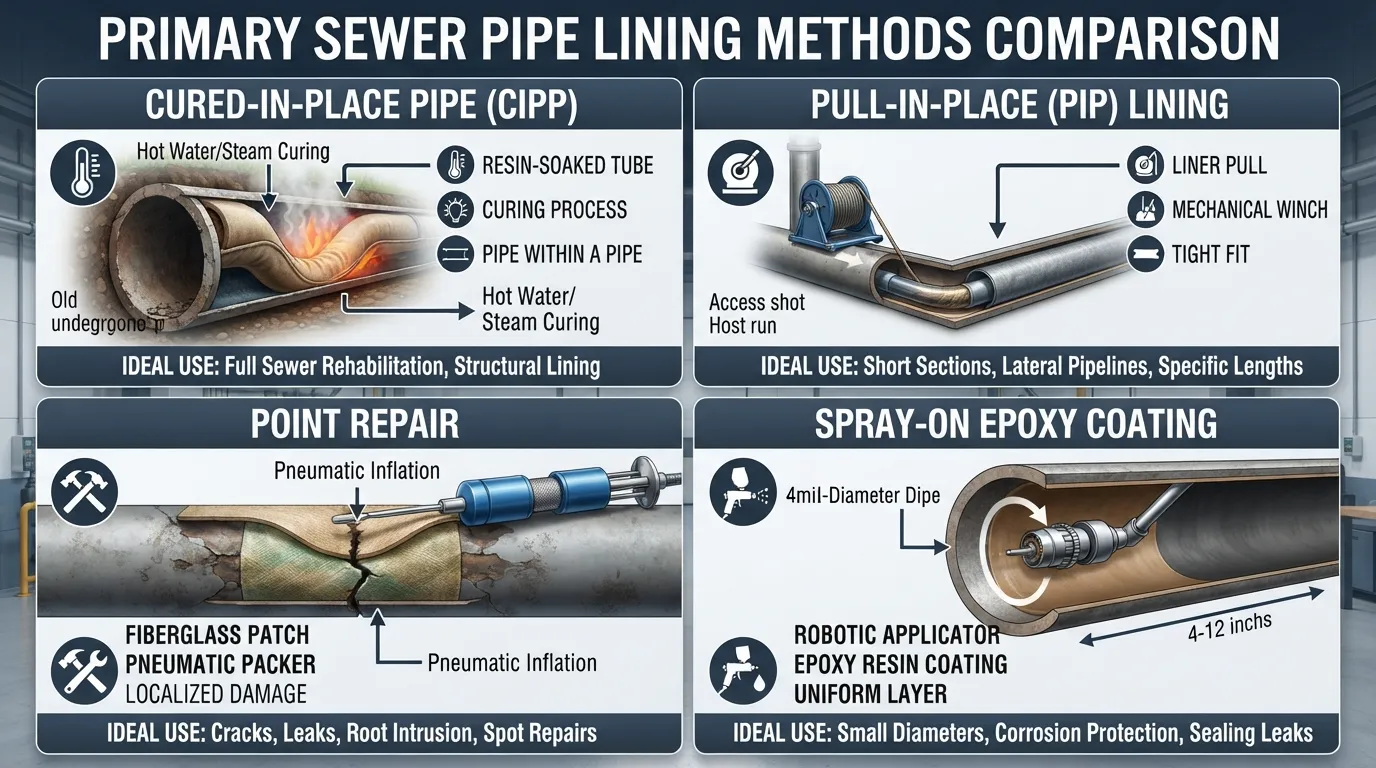
Property owners and contractors choose from four primary lining methods depending on the extent of damage and pipe material. Each approach utilizes specialized techniques to resolve specific structural issues efficiently.
Cured-In-Place Pipe (CIPP): A flexible felt tube saturated with epoxy resin is pulled or blown into the damaged pipe, then inflated and cured with hot water, steam, or UV light to form a solid new pipe within the old one.
Pull-In-Place Method: Ideal for specific diameter changes or localized upgrades, a resin-coated structural liner is pulled mechanically through the pipe run before hardening into place.
Point Repair (Spot Repair): A targeted, smaller-scale trenchless solution designed to fix isolated cracks, joint separations, or root intrusions without lining the entire length of the sewer line.
Spray-On Epoxy (Coatings): Best for smaller diameter pipes or minor corrosion, an automated robotic sprayer coats the interior pipe walls with a thick, protective epoxy layer to seal pinhole leaks and stop future deterioration.
Cured-In-Place Pipe (CIPP)
Cured-in-Place Pipe (CIPP) is the gold standard in trenchless rehabilitation, offering a seamless, structural fix for severely damaged sewer lines without disruptive excavation. This method relies on a resin-soaked felt tube or fiberglass liner inserted directly into the existing compromised pipe, where it hardens to create a brand-new pipe from within.
How CIPP Works
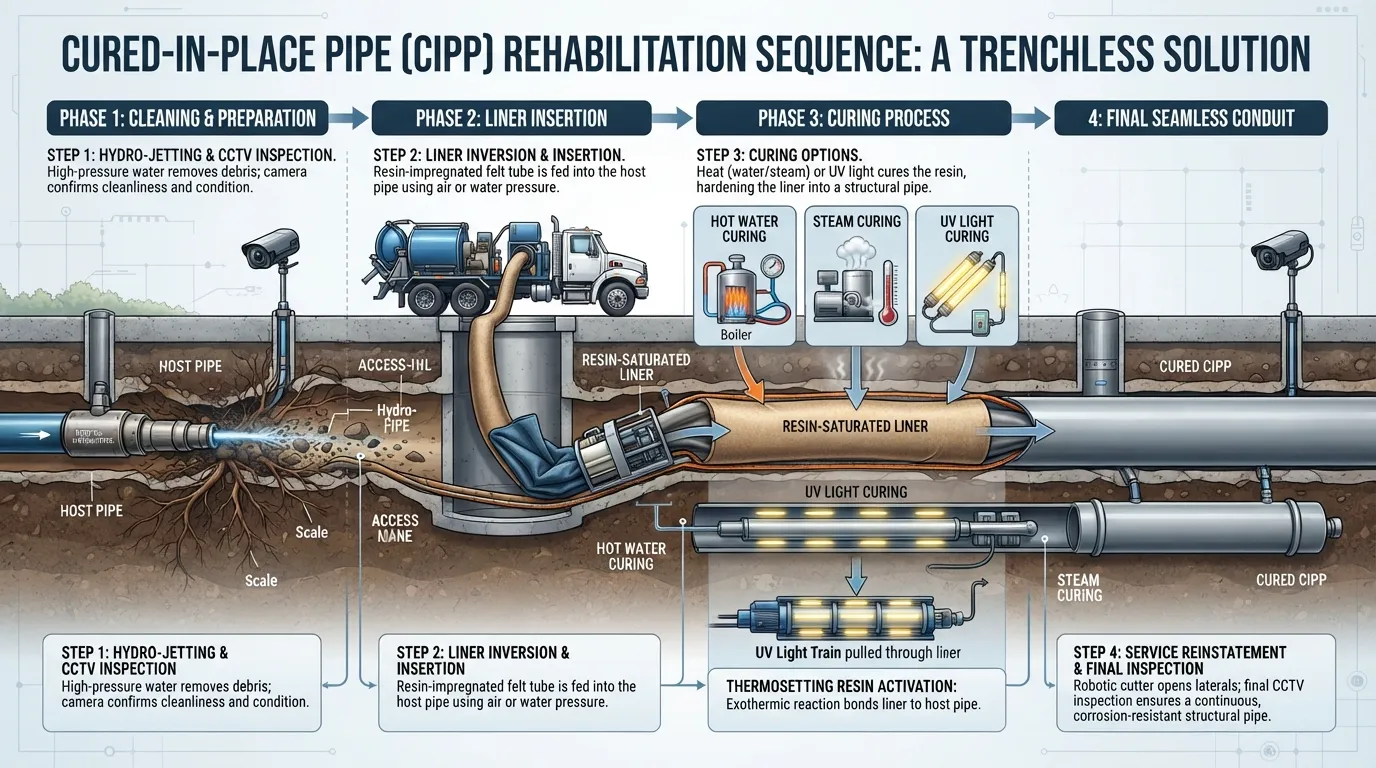
The CIPP installation process transforms a damaged underground line into a jointless, highly durable conduit through a precise, multi-step engineering method. Technicians first clean the host pipe thoroughly with hydro-jetting to remove roots, scale, and debris before measuring for the custom liner.
A flexible textile tube or fiberglass liner is saturated with a specialized epoxy or thermosetting resin.
The resin-soaked liner is inverted or pulled into the damaged pipe using air pressure or mechanical winches.
Once positioned, the liner is cured using hot water, pressurized steam, or UV light, causing the resin to harden completely and bond tightly to the interior walls.
Best Use Cases (Long Continuous Runs)
CIPP excels in scenarios requiring extensive infrastructure restoration over long distances, making it the preferred choice for municipal stormwater lines, commercial properties, and residential sewer connections. It seamlessly bridges structural gaps and seals multiple leak points simultaneously.
Ideal for continuous pipe runs spanning several hundred feet without needing multiple access points.
Highly effective for bridging missing pipe sections, offsetting joints, and sealing severe root intrusions.
Suitable for various pipe materials including clay, cast iron, PVC, and concrete.
CIPP Disadvantages
While CIPP offers unmatched structural longevity and minimal surface disruption, property owners and contractors should weigh a few logistical limitations before choosing this method. Understanding these drawbacks ensures realistic expectations for project execution and site preparation.
Requires a clean, accessible entry point (like a cleanout or manhole) to launch the liner into the host pipe.
The chemical resins used during curing produce a distinct odor that can temporarily affect indoor plumbing traps or immediate outdoor areas.
Not recommended for pipes with severe structural collapses, extreme bellies, or heavy grease blockages that prevent proper liner inflation.
Pull-in-Place (PIP) Lining
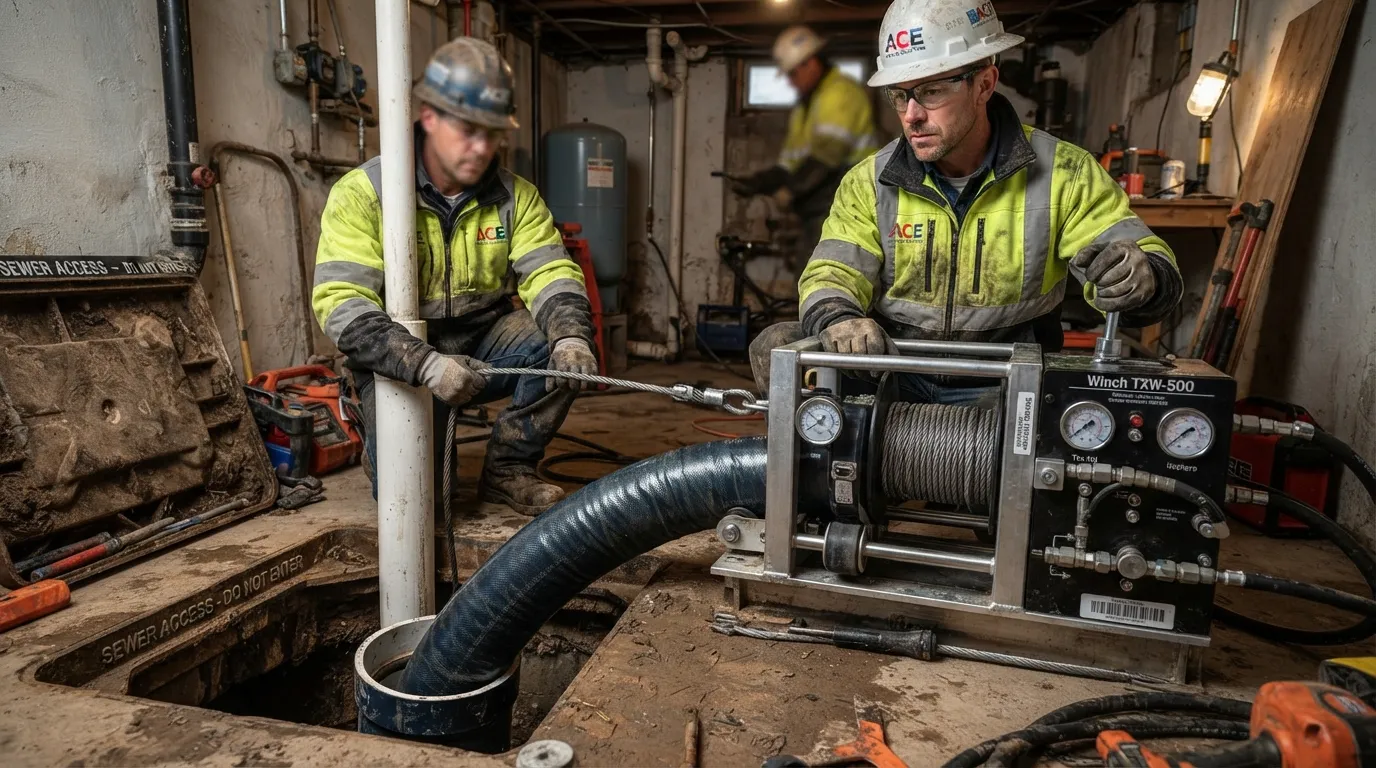
Pull-in-Place (PIP) lining is a specialized trenchless repair technique engineered for targeted sections and hard-to-reach underground utility lines. Unlike methods requiring inversion, PIP utilizes a mechanical winch system to pull a custom, resin-coated structural liner directly into place, offering precise control in restricted spaces.
How PIP Differs From CIPP
While both PIP and CIPP rely on resin-saturated materials to rehabilitate old pipes, their installation mechanics and deployment footprints differ significantly. CIPP often utilizes air inversion or large pressure drums to push the liner through long runs, whereas PIP relies heavily on controlled tension and manual placement.
PIP employs a heavy-duty winch pull to slide the resin-coated liner precisely across designated segments.
It is engineered specifically for shorter pipeline runs and localized structural reinforcement rather than hundreds of feet of continuous main.
The method provides exceptional dimensional control when navigating tricky bends, offsets, or restricted access zones.
When PIP Is the Better Choice
Choosing PIP over alternative rehabilitation methods depends on your property layout, the physical length of the damaged zone, and specific site constraints. Plumbers often recommend this approach when standard equipment cannot access expansive continuous runs.
Ideal for short-section repairs beneath concrete slabs, driveways, or interior foundations where excavation is entirely prohibited.
Highly effective in hard-to-reach sections with limited clearance for bulky CIPP inversion drums or curing rigs.
Perfect for targeted upgrades where only a specific section of pipe suffers from localized corrosion or cracking, saving time and material costs.
Point Repairs (CIPP Patch / QuickLock Sleeve)
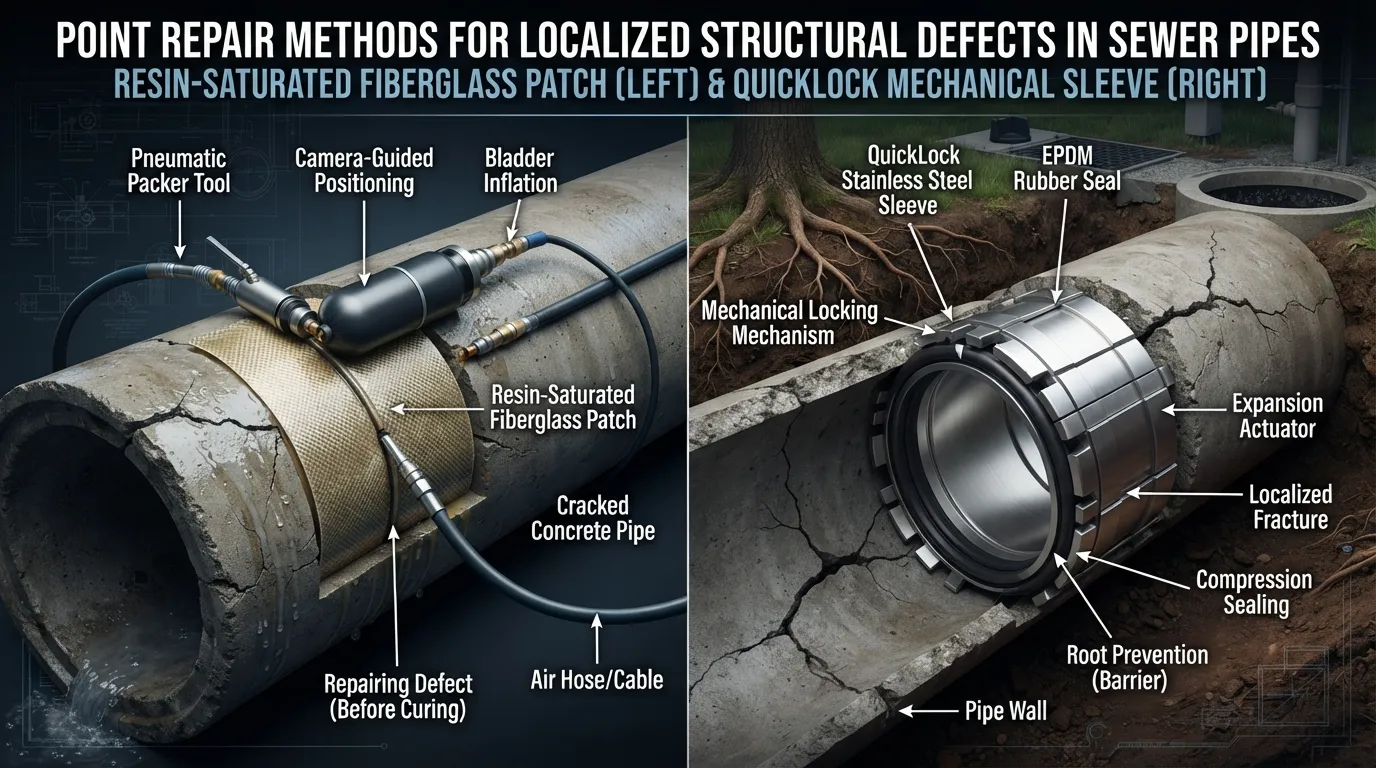
Point repairs offer a targeted trenchless solution designed to fix isolated structural flaws, localized cracks, or invasive root bundles without rehabilitating the entire sewer line. This method focuses exclusively on the damaged zone, minimizing material usage and reducing project turnaround times.
Pneumatic Packer Tool Process
The pneumatic packer method utilizes a specialized bladder system to install a short, resin-saturated fiberglass patch directly over the damaged section of pipe. Technicians guide the tool via camera tracking to ensure pinpoint accuracy [06:36].
A fiberglass mat is soaked in specialized structural epoxy resin and wrapped around a rubber pneumatic packer device.
The assembly is pushed through the pipe to the exact location of the crack or defect [06:45].
Compressed air inflates the bladder, pressing the resin-soaked patch firmly against the interior pipe walls until the material cures in place.
QuickLock Stainless Steel Sleeve
For structural damage where traditional resins may not be ideal, the QuickLock system provides a mechanical, trenchless alternative for spot repairs. It relies on engineering-grade materials to lock compromised segments back into alignment.
Features a corrugated marine-grade stainless steel sleeve lined with a durable EPDM rubber seal.
Expanded mechanically via a setting tool to form a permanent, water-tight compression fit against the pipe walls.
Requires zero drying or curing time, instantly stopping leaks and preventing root re-entry.
Ideal For: Single Cracks & Root Intrusion
Point repairs are best suited for property owners dealing with localized pipe damage rather than widespread corrosion or system-wide failure. They provide a cost-effective alternative to full-line relining when the rest of the infrastructure remains structurally sound.
Perfect for sealing isolated structural cracks caused by ground settling or shifting soils.
Highly effective at eradicating persistent root intrusions entering through a single fractured pipe joint.
Excellent for repairing minor offset joints or localized holes before they escalate into catastrophic collapses.
Spray-On Epoxy Coating
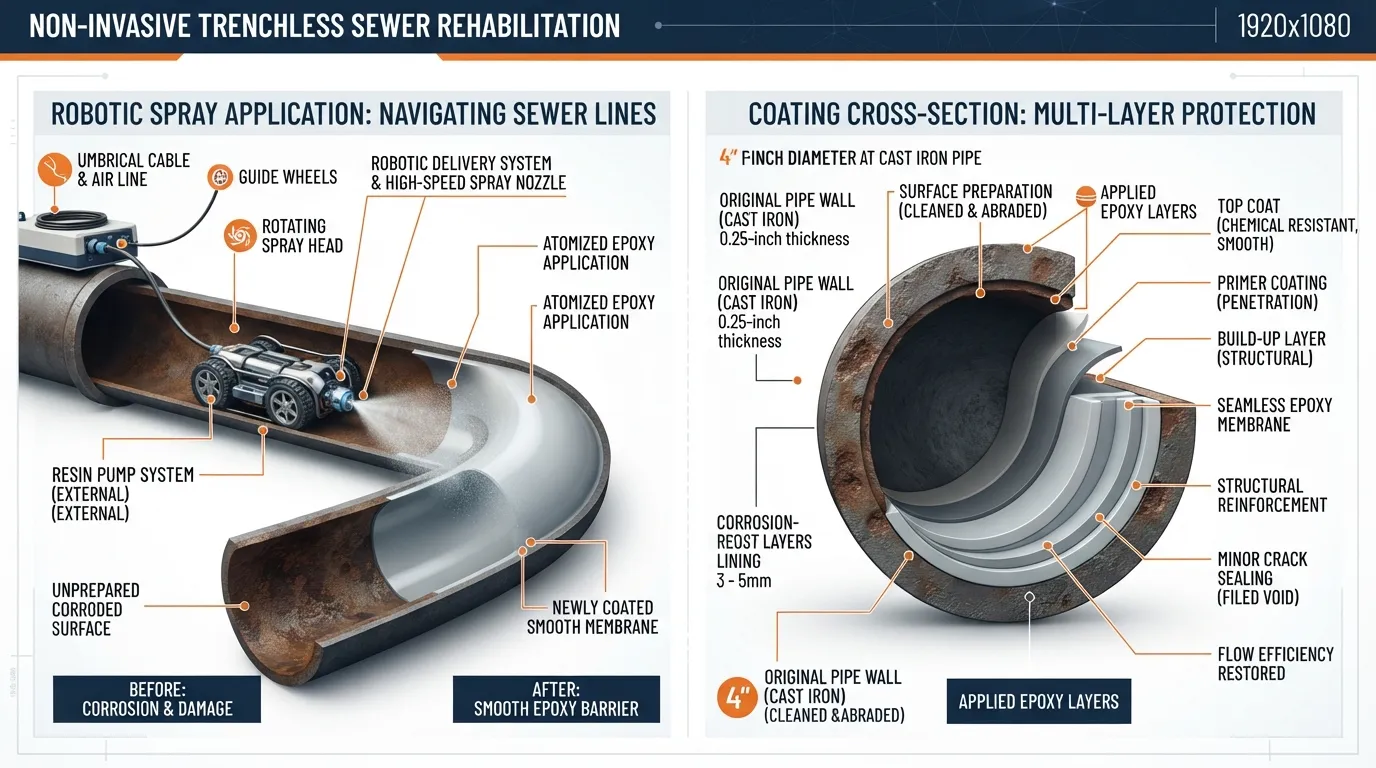
Spray-on epoxy coating is the least invasive trenchless rehabilitation technique available, specifically engineered for small-diameter pipes and minor cracking. Rather than inserting a thick structural liner, this method coats the interior walls with a specialized, corrosion-resistant resin layer to seal pinhole leaks and stop progressive decay.
Robotic Spray Application
The spray-on epoxy process utilizes advanced, computer-controlled robotic equipment to deliver an even protective membrane throughout complex plumbing layouts. Technicians navigate the device through existing cleanouts or small access points without disrupting surrounding building structures.
A specialized high-speed robotic spray nozzle travels through the pipeline while atomizing liquid epoxy resin.
The system applies multiple ultra-thin layers that bond seamlessly to cast iron, copper, or PVC pipe walls.
Real-time camera feeds allow technicians to monitor coverage and ensure every square inch receives a uniform protective seal.
Best For: Small-Diameter Pipes & Tight Bends
Property owners dealing with localized corrosion, pinhole leaks, or aging branch lines benefit greatly from spray-on epoxy because it adapts effortlessly to complex configurations. It avoids the clearance restrictions associated with traditional structural liners.
Ideal for small-diameter pipes ranging from two to four inches, including kitchen sink drains, laundry lines, and bathroom vent stacks.
Highly effective at navigating tight bends, multiple 90-degree elbows, and sudden diameter transitions where standard pull-in liners would bunch or wrinkle.
Perfect for addressing minor cracking, scale buildup, and internal wall oxidation before structural failure occurs.
4 Types vs. 5 Types — Clearing Up the Confusion
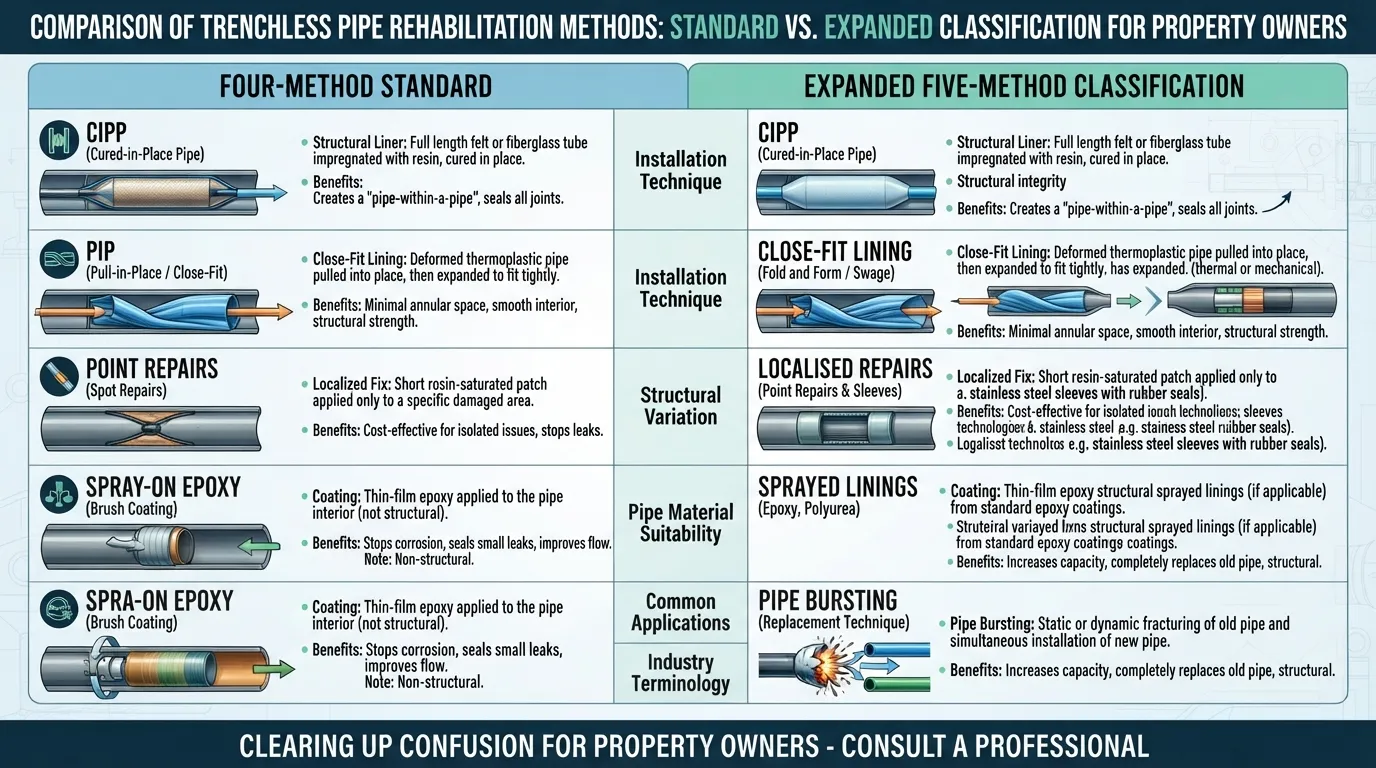
Navigating trenchless rehabilitation options often leads to conflicting industry classifications, leaving property owners uncertain whether there are four or five distinct sewer lining methods. Resolving this discrepancy requires examining how different contractors, manufacturers, and municipal standards categorize overlapping repair technologies.
Why Some Sources List a 5th Type
The confusion surrounding a fifth lining category typically stems from how organizations segment structural repairs versus localized fixes. When industry guides separate pull-in-place applications from full inversion processes or treat mechanical stainless steel sleeves as an independent category alongside traditional resin patches, the count expands.
Some technical publications isolate lateral lining or folded and formed PVC as distinct classifications rather than variations of CIPP.
Regional trade standards occasionally count structural spray coatings and pipe bursting as separate lining categories, even though pipe bursting replaces rather than lines a pipe.
Marketing terminology across different service providers can fragment standard techniques into proprietary titles, creating the impression of entirely separate technologies.
Why We Follow the 4-Method Standard
Streamlining these options into four core methods—Cured-In-Place Pipe (CIPP), Pull-In-Place (PIP) Lining, Point Repairs, and Spray-On Epoxy Coating—provides the clearest framework for practical decision-making. This four-tier standard aligns directly with current engineering definitions and Google’s AI-Overview taxonomy.
It accurately groups installation mechanics by how the material is deployed, whether continuously, structurally via winch, spot-repaired, or atomized via robotics.
It eliminates redundant terminology, helping property owners easily match their specific plumbing issue to the correct trenchless solution.
It reflects the most widely accepted classification used by modern municipal infrastructure engineers and leading trenchless plumbing associations.
Cost, Lifespan & Disadvantages Comparison Table
Choosing the right trenchless rehabilitation technique requires weighing upfront investment, long-term durability, and logistical trade-offs. Evaluating these metrics side-by-side helps property owners determine which method delivers the best return on investment for their specific plumbing infrastructure.
Comparison Table: Cost Range, Lifespan & Drawbacks by Method
Reviewing trenchless pipe lining costs, average lifespans, and inherent disadvantages in a single matrix clarifies how each method performs under real-world conditions.
| Lining Method | Average Cost Range (Per Foot / Project) | Expected Lifespan | Primary Disadvantages & Limitations |
| Cured-In-Place Pipe (CIPP) | $80 to $250+ per foot | 50+ Years | Requires a clear, accessible entry point; chemical resin odors can occur during curing; unsuitable for completely collapsed lines. |
| Pull-In-Place (PIP) Lining | $90 to $275 per foot | 50 Years | Limited primarily to shorter pipe runs; requires controlled mechanical access; potential gap between host pipe and liner if unsealed. |
| Point Repairs (CIPP Patch / Sleeve) | $600 to $1,500+ per patch | 30 to 50 Years | Only addresses localized damage; does not protect the rest of the aging pipeline from future system-wide decay. |
| Spray-On Epoxy Coating | $70 to $200 per foot | 30 to 50 Years | Restricted to small-diameter pipes (2 to 4 inches); ineffective against heavy structural breaks or missing pipe sections. |
Why Pipe Relining Can Cost More Than Expected
While trenchless drain relining costs are generally lower than traditional full excavation and replacement, certain hidden variables can drive up final project expenses. Anticipating these cost factors ensures more accurate budgeting before work begins.
Severe Pipe Preparation Needs: Extensive hydro-jetting, heavy descaling, or root removal required to clear heavily blocked lines will increase initial labor time and billable hours.
Access Point Limitations: If technicians cannot utilize existing cleanouts and must excavate a minor access hole or tunnel beneath a concrete slab, site preparation costs rise.
Pipe Diameter and Length: Larger commercial pipe diameters require specialized, high-volume resin saturations and heavier equipment, increasing material expenditures.
Does Homeowners Insurance Cover Sewer Line Lining?
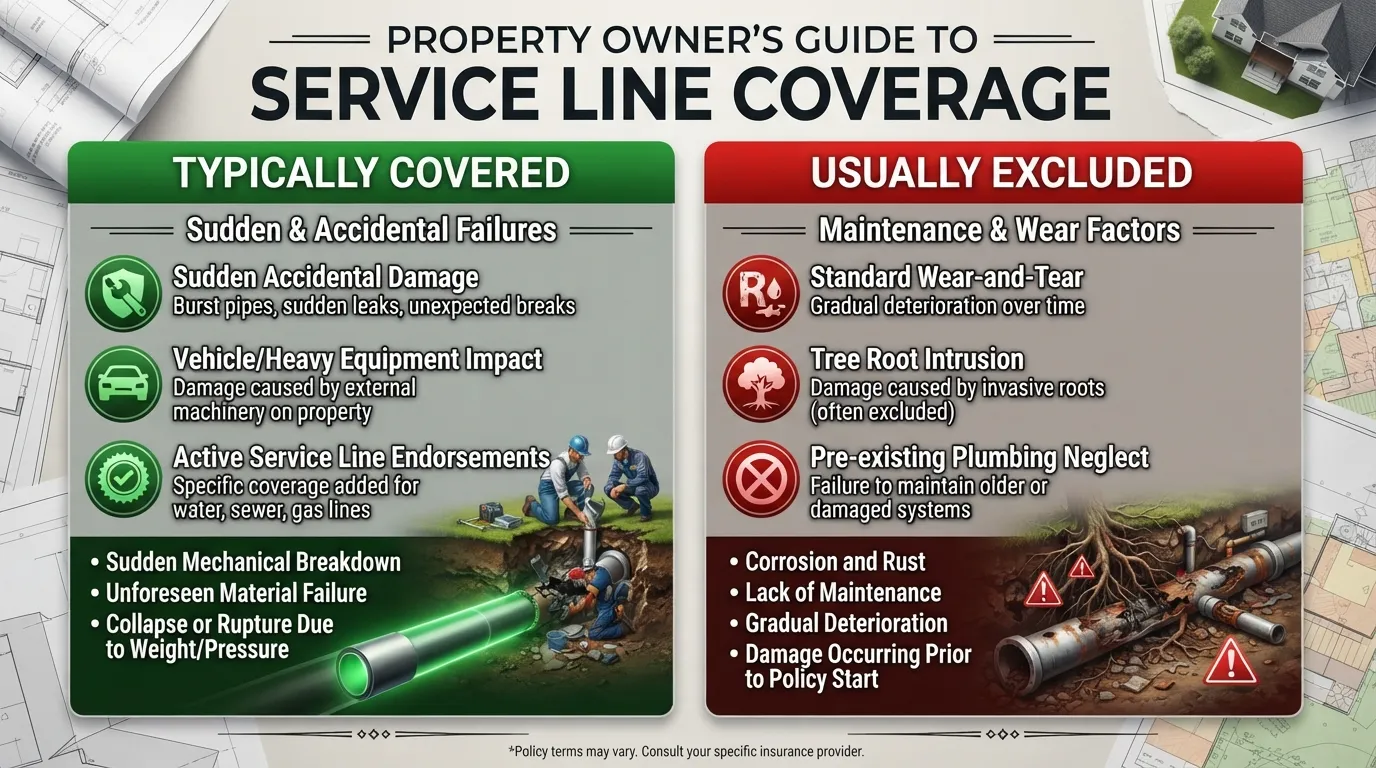
Navigating insurance coverage for underground utility repairs is a common point of confusion for property owners facing unexpected plumbing failures. Standard homeowners insurance policies generally draw a strict line between sudden, accidental damage and normal wear-and-tear when determining payout eligibility for trenchless sewer line lining.
What’s Typically Covered
Standard policies rarely cover subterranean infrastructure by default, but coverage can apply under specific circumstances where damage is caused by a sudden, external event.
Sudden Accidental Damage: If a tree branch falls, heavy machinery accidentally ruptures a line during approved construction, or a sudden vehicle impact damages shallow pipes, insurance may cover the repair.
Service Line Endorsements: Many insurance providers now offer optional service line endorsements or utility line riders. These affordable add-on coverages specifically protect against wear-and-tear, tree root intrusion, rust, and collapse for underground sewer and water pipes.
Ensuring Structural Access Costs: If covered damage requires excavating a portion of your yard or interior flooring to reach the pipe, the policy may cover a portion of the property restoration costs.
What’s Usually Excluded
Most standard homeowners insurance policies explicitly exclude underground pipes from standard protection clauses, leaving property owners responsible for maintenance-related failures.
Normal Wear and Tear: Gradual deterioration, age-related corrosion, shifting soils, and slow-moving decay are classified as homeowner maintenance responsibilities rather than insurable losses.
Tree Root Infiltration: Unless a specific service line endorsement is active, damage caused by roots slowly working their way into pipe joints is almost universally excluded.
Pre-Existing Plumbing Issues: Insurance claims will be denied if an inspection reveals that sewer line damage was present before the policy’s effective date or stemmed from long-term neglect.
Why Pipe Material and Certification Matter (NASSCO Standard)
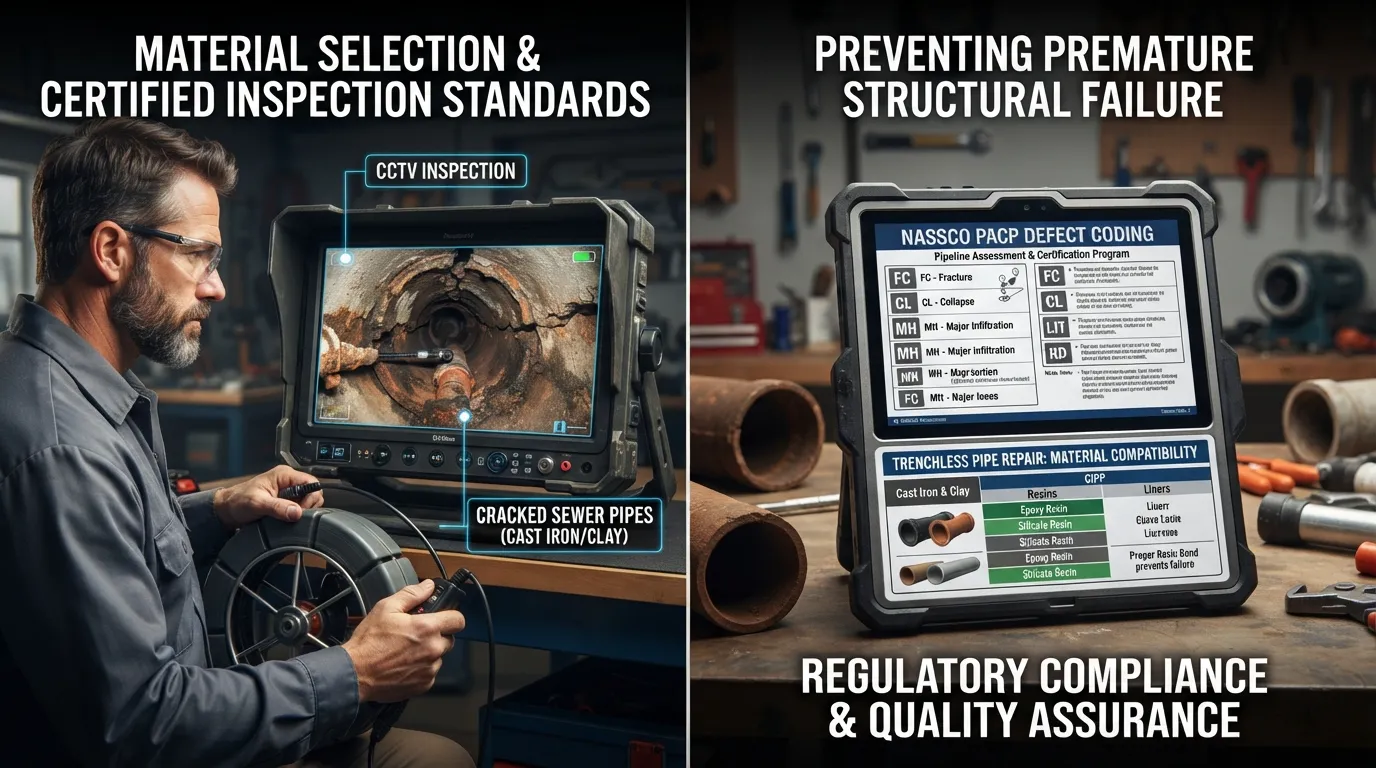
Selecting the correct trenchless application requires more than just picking a lining method; it demands strict adherence to engineering standards and material compatibility. Ensuring long-term success relies heavily on professional evaluation protocols established by leading industry authorities.
What Is NASSCO Certification?
The National Association of Sewer Service Companies (NASSCO) sets the definitive North American standard for the assessment, maintenance, and rehabilitation of underground infrastructure. Through its flagship Pipeline Assessment Certification Program (PACP), NASSCO provides a standardized language and rigorous training protocol for inspecting, coding, and diagnosing sewer defects.
Establishes uniform defect codes for structural cracks, root intrusions, joint offsets, and pipeline corrosion.
Ensures closed-circuit television (CCTV) inspection data is interpreted consistently and accurately by trained professionals.
Mandates strict quality control guidelines that govern how rehabilitation methods are selected and installed.
Why It Matters When Hiring a Trenchless Contractor
Working with a certified contractor provides an essential layer of quality assurance, safeguarding your investment against premature lining failure or improper installation. Technical expertise separates durable long-term solutions from costly short-term fixes.
Certified technicians accurately identify underlying structural conditions—such as severe pipeline ovality or hidden voids—that could cause non-certified liners to fail.
Standardized pre-inspection protocols ensure the host pipe is adequately cleaned and prepped for maximum resin adhesion.
Hiring professionals trained under recognized trenchless technology standards guarantees your rehabilitation project meets modern municipal specifications and longevity benchmarks.
How Long Does Pipe Relining Take?
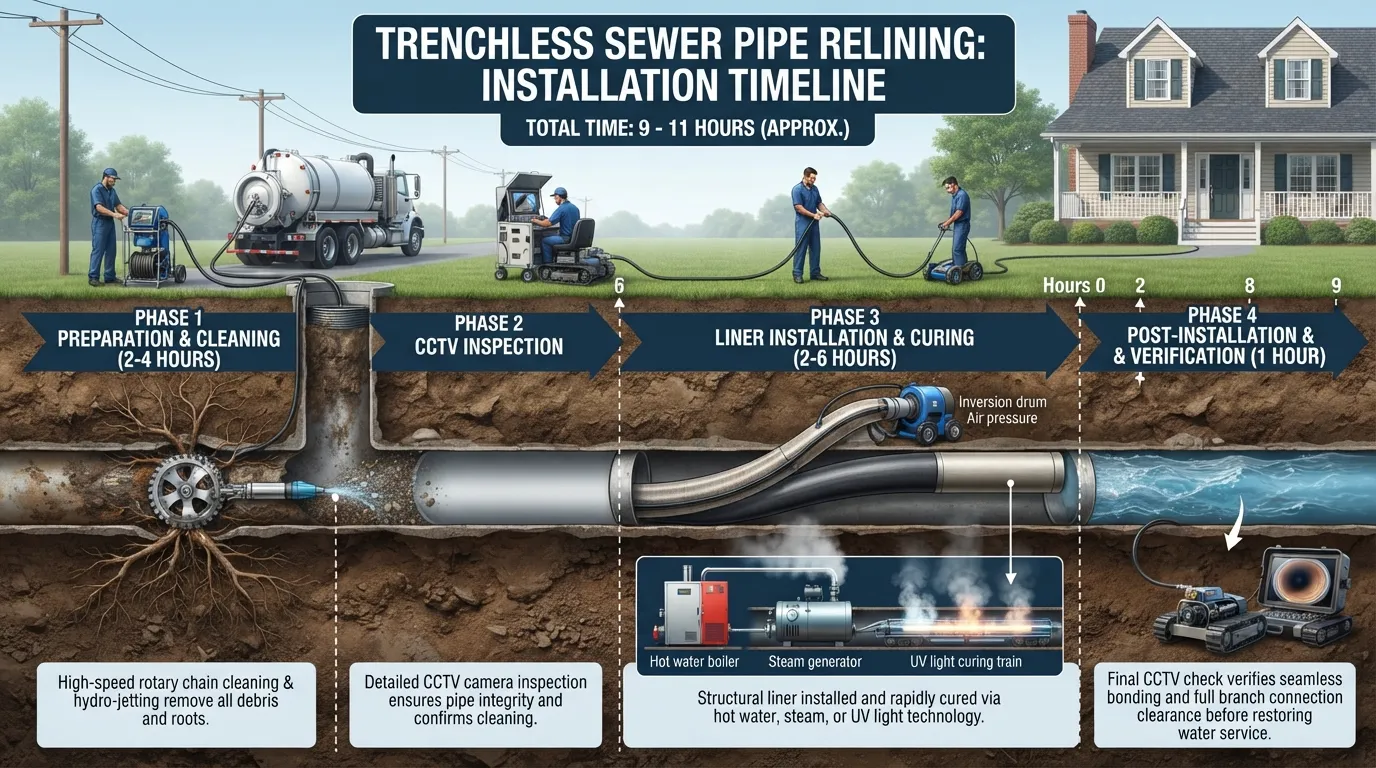
Trenchless sewer pipe relining typically takes one to two days to complete from start to finish, depending on the length of the line and the chosen repair method. This rapid timeline makes it a highly efficient alternative to traditional pipe replacement, which often disrupts property for a week or more.
Preparation & Cleaning (2 to 4 hours): Technicians run high-speed rotary chain cleaners and hydro-jetters through the pipeline to scour away roots, scale, and debris, followed by a final CCTV camera inspection.
Liner Installation & Curing (2 to 6 hours): The structural liner or patch is pulled or inverted into place, then rapidly cured using hot water, pressurized steam, or UV light technology.
Final Inspection (1 hour): A post-installation camera check verifies that the new lining is seamless, properly bonded, and fully open at all branch connections before restoring water service.
Signs You Need Sewer Pipe Lining
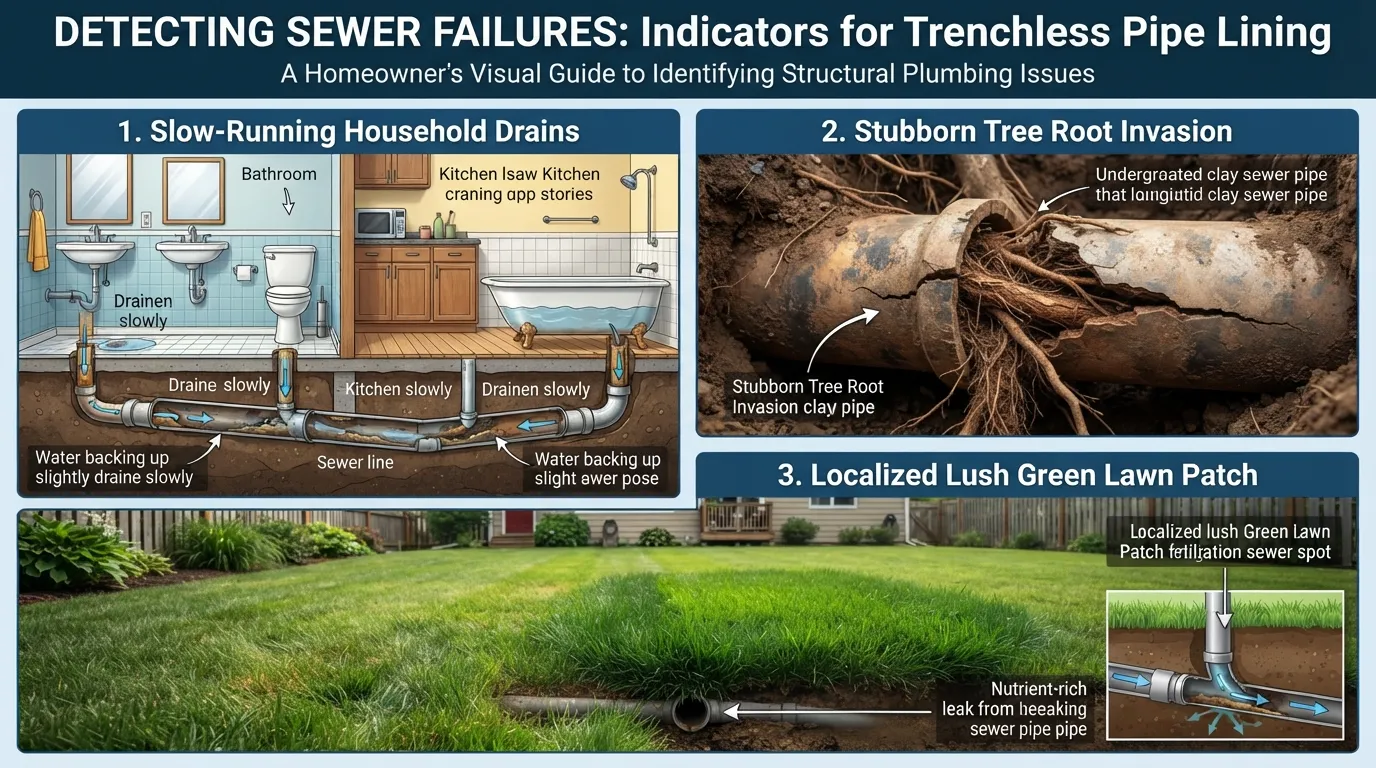
Identifying underground plumbing failures early prevents catastrophic backups, property damage, and expensive structural excavations. Recognizing the primary indicators of a compromised sewer line allows property owners to schedule professional leak detection and repair services before minor cracks escalate into complete line collapses.
Common Warning Signs
Sewer infrastructure rarely fails without warning, typically exhibiting distinct physical symptoms throughout your home and landscape as pipes deteriorate. Monitoring these indicators helps you catch structural degradation early.
Multiple Slow Drains: If sinks, showers, and toilets throughout the house drain sluggishly at the same time, the issue usually stems from a blockage or structural crack in the main sewer line rather than a single fixture.
Persistent Foul Odors: Unpleasant sewer smells lingering around your yard, basement, or lower-level drains indicate that gas is escaping through cracks, broken joints, or dry plumbing traps.
Lush Green Patches in the Lawn: Unusually vibrant, thriving grass in a specific area of your yard often signals a localized sewer leak acting as an accidental fertilizer source for your lawn.
Gurgling Toilet Fixtures: Hearing bubbling or gurgling sounds when flushing the toilet or running the washing machine points to trapped air pockets caused by obstructions or damaged pipe walls.
When It’s an Emergency vs. Routine Repair
Knowing whether your plumbing issue requires immediate intervention or a scheduled repair helps you decide when to contact a standard technician versus an emergency plumber. Prompt action prevents sewage backups from flooding living spaces.
Routine Repair: Slow-draining fixtures, minor gurgling, or localized root intrusion discovered during a routine preventative camera inspection can be scheduled as a standard trenchless relining project.
Emergency Intervention: Complete sewage backups overflowing into bathtubs or floor drains, raw sewage pooling in the yard, or total structural collapse require immediate dispatch to stop active property contamination.
Key Takeaways
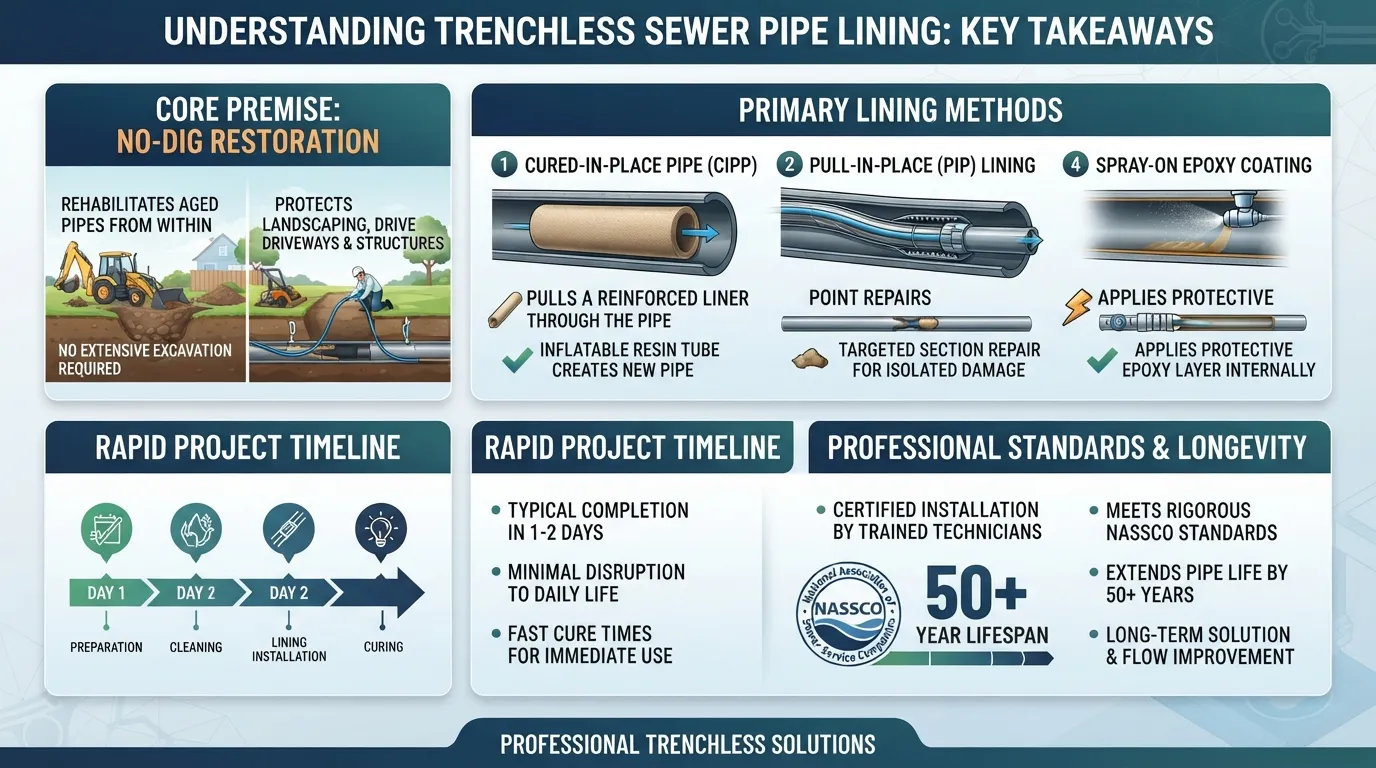
Trenchless sewer pipe lining offers a durable, no-dig alternative to traditional excavation, restoring compromised infrastructure from the inside out with minimal disruption to your property.
The four primary lining methods—Cured-In-Place Pipe (CIPP), Pull-In-Place (PIP) Lining, Point Repairs, and Spray-On Epoxy Coating—cater to specific damage types ranging from long continuous runs to isolated cracks.
Most trenchless rehabilitation projects are completed within one to two days, significantly outpacing the extended timelines and landscape destruction associated with full pipe replacement.
Professional installation backed by certified standards, such as NASSCO guidelines, ensures optimal resin adhesion, structural longevity of 50 years or more, and long-term peace of mind.
Frequently Asked Questions
Can you put a sewer liner over a collapsed pipe?
No, trenchless sewer pipe lining requires an intact, continuous host pipe to act as a mold for the new structural liner. If a pipe has completely collapsed, suffered severe structural displacement, or developed an extreme offset, a traditional dig-and-replace method or pipe bursting is required to restore functionality before any lining can occur.
What is the lifespan of trenchless pipe lining?
Properly installed trenchless sewer linings have an expected lifespan of 50 years or more, frequently outlasting traditional PVC piping. Because these seamless epoxy and resin systems resist root intrusion, chemical corrosion, and joint shifting, they provide decades of maintenance-free performance.
Which pipe materials are worst for sewer plumbing?
Older materials such as Orangeburg pipe (compressed cellulose and tar), deteriorated cast iron prone to internal scaling, and brittle clay tiles are generally considered the most problematic for modern plumbing. These aging materials are highly susceptible to root intrusion, structural cracking, and complete collapse, making them ideal candidates for trenchless rehabilitation.
Can tree roots grow back through a sewer liner?
No, tree roots cannot penetrate a properly cured sewer liner. Because methods like CIPP, PIP, and spray-on epoxy create a seamless, solid, jointless conduit from inside the old pipe, they eliminate the vulnerable gaps and cracks where roots previously entered.
Get a Sewer Line Inspection
Do not wait for a minor crack or slow drain to escalate into a catastrophic sewage backup. Scheduling a professional camera inspection is the fastest, most effective way to evaluate your underground infrastructure and determine if trenchless lining is right for your home.
Ready to protect your property and restore optimal flow? Explore our professional sewer line repair Miami services to learn more about our advanced trenchless solutions, or book an inspection today to secure your appointment with our expert technicians.
Main Services
Related Posts
Need a Plumber in Miami?
Schedule service online or speak directly with the EZ Plumbing team.
Owner-Led Local Service
Know who is behind the business before you request service. The owners, contact line and Miami service pages are published clearly.
- Named business owners
- Direct phone and social channels
- Local Miami service information
Clear Help Before You Book
Review the relevant service page, contact the team directly and use the booking page when you are ready—without relying on vague claims.
- Service-specific information
- Direct questions before scheduling
- Clear online booking route