Types of Sewer Lining for Cracked Pipes: Costs & Best Options
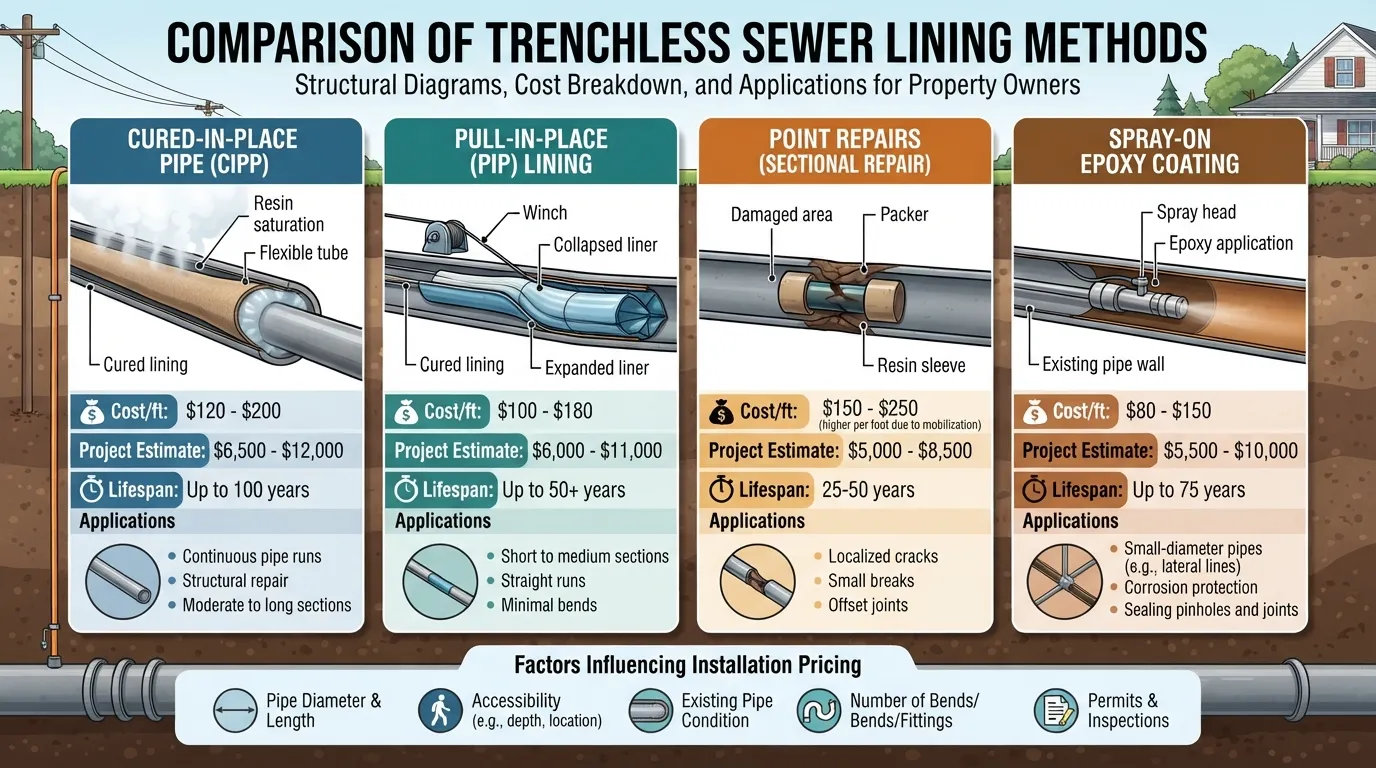
The 4 Types of Sewer Linings
Addressing a cracked sewer pipe through trenchless sewer repair requires choosing the right pipe relining method for your specific plumbing layout. Property owners can eliminate extensive yard excavation by selecting from four primary structural lining solutions designed to restore pipe integrity quickly and efficiently.
Cured-in-Place Pipe (CIPP): A flexible, resin-saturated fabric tube is inverted or pulled into the damaged host pipe, inflated with air or hot water, and cured to form a seamless, jointless structural pipe within a pipe.
Pull-in-Place (PIP): A specialized resin-coated liner is pulled through the compromised line and expanded under pressure, making it a reliable option for pipes featuring multiple bends or complex configurations.
Point Repair: A targeted, shorter trenchless sleeve used exclusively to seal isolated structural cracks, localized breaks, or leaking joints without treating the entire pipeline length.
Spray-On Epoxy Coating: Applied using a specialized robotic arm to coat smaller-diameter lines or vertical stacks, forming a protective barrier against root intrusion and minor corrosion.
What Is Trenchless Sewer Lining and Why It's Used
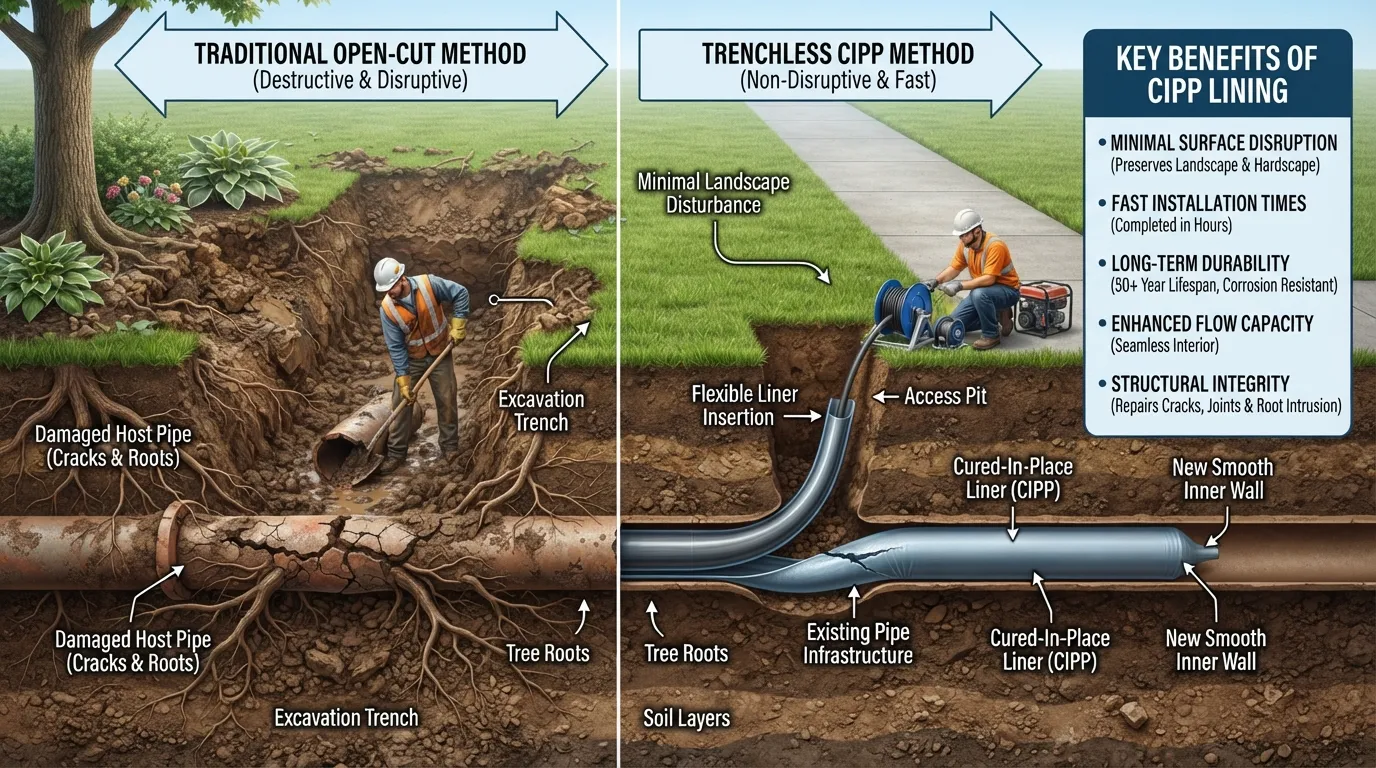
Trenchless technology has revolutionized how residential and commercial properties address severe sewer line damage without the destructive nightmare of traditional digging. By rehabilitating pipes from the inside out, modern sewer line service solutions restore structural integrity while preserving your landscaping, driveway, and hardscapes.
How Trenchless Repair Differs from Traditional Excavation
Traditional sewer repairs require heavy trenching machinery to unearth and replace entire damaged runs. This labor-intensive process often destroys concrete patios, lawns, and expensive flooring.
Minimal Invasiveness: Trenchless methods require only small access points—often just one or two small entry pits—rather than long, destructive trenches.
Time and Cost Efficiency: Most projects are completed in a single day, drastically cutting down labor expenses, property restoration costs, and tenant displacement.
Enhanced Durability: The seamless, high-grade resin liners outlast traditional clay or cast iron materials, offering decades of reliable resistance against future root intrusion.
Common Signs Your Sewer Pipe Needs Lining
Aging pipe infrastructure inevitably succumbs to shifting soil, corrosion, and pressure, signaling the urgent need for a professional leak detection repair services assessment using advanced high-definition camera inspection tools. Property owners should watch out for key warning signs:
Persistent Slow Drains: Multiple fixtures draining slowly simultaneously often point to a localized structural collapse or restriction within the main sewer line.
Foul Sewage Odors: Lingering, unpleasant gas smells inside or outside the building indicate broken pipe walls or failed pipe joints.
Unexplained Lawn Patches: Exceptionally lush, green, or soggy patches of grass in your yard usually signal an underground sewage leak fertilizing the soil.
Aggressive Root Intrusion: Tree roots naturally seek out moisture and nutrients, infiltrating tiny micro-cracks in aging sewer pipes and causing compounding blockages.
Backed-Up Toilets: Frequent toilet overflows or wastewater backing up into lower-level showers indicate a severe downstream obstruction or pipe failure.
The 4 Types of Sewer Linings for Cracked Pipes
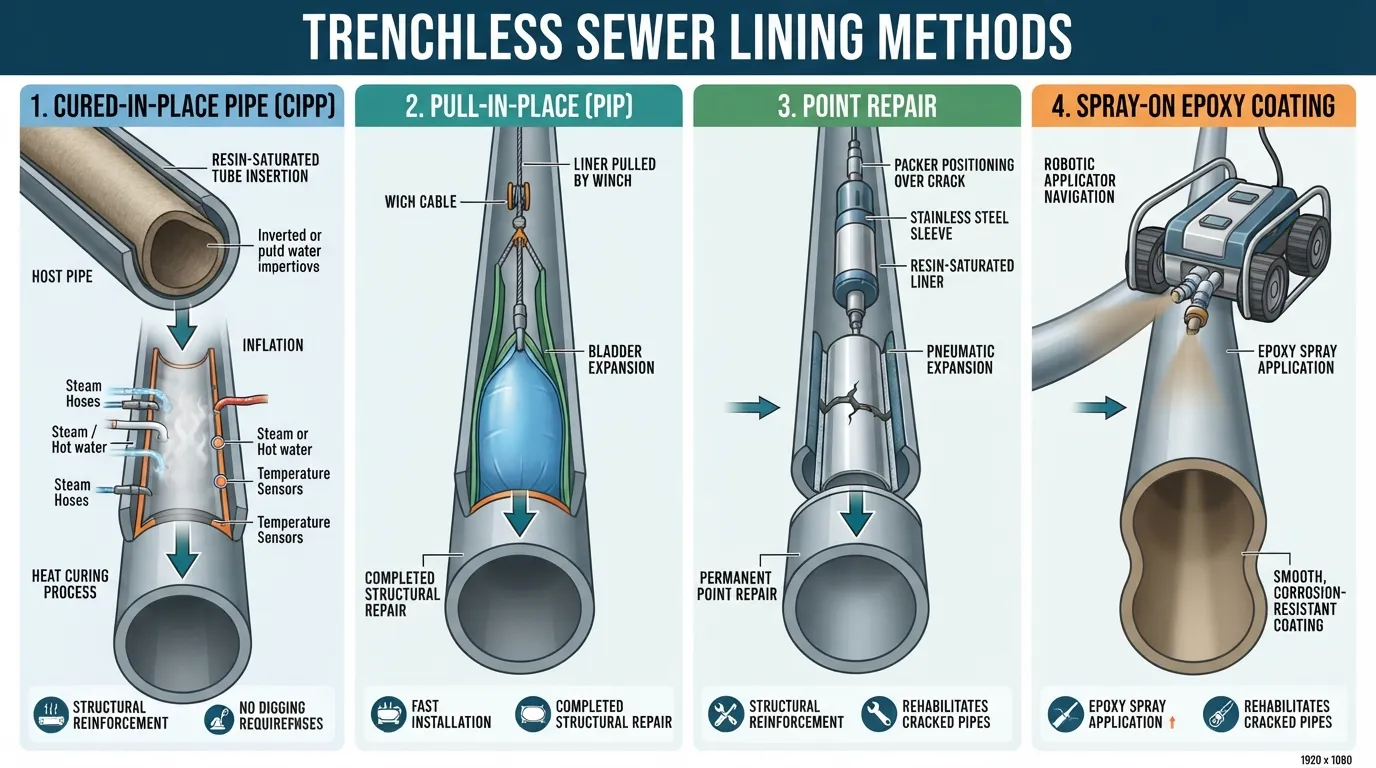
Choosing the correct structural trenchless rehabilitation method depends entirely on the specific layout, diameter, and extent of damage within your damaged pipe network. Each modern lining technique provides unique advantages for structural longevity, ensuring long-term protection against root intrusion and leaks.
1. Cured-in-Place Pipe (CIPP) Lining
Cured-in-Place Pipe (CIPP) is the gold standard for rehabilitating long, continuous pipe runs without excavation. The process utilizes a durable felt or fiberglass tube saturated in specialized resin, which is then inverted or pulled into the host pipe and expanded.
Advanced Curing Methods: Once positioned, the resin-soaked liner is fully cured using hot water, pressurized steam, or UV light technology to form a rigid, seamless structural pipe.
Ideal Applications: This method is best suited for long continuous pipe runs suffering from widespread cracking, root damage, or moderate corrosion.
2. Pull-in-Place (PIP) Lining
Pull-in-Place (PIP) lining functions as an efficient alternative designed specifically for shorter runs and complex property layouts. A heavy-duty winch and rope system safely pulls a resin-coated liner directly through the compromised pipeline.
Bladder Expansion: An internal bladder is inflated inside the liner, pressing it firmly against the pipe walls until the resin sets completely.
Ideal Applications: PIP is best for short sections and hard-to-reach areas where traditional CIPP inversion equipment cannot easily maneuver.
3. Point Repairs (QuickLock Sleeves & Cured-in-Place Patches)
Point repairs offer a targeted structural fix when damage is isolated to a specific section of the pipeline rather than an entire run. A pneumatic packer tool guides a stainless steel sleeve or fiberglass patch directly to the problem area.
Targeted Sealing: Air pressure expands the pneumatic packer, locking the sleeve or patch tightly against the pipe interior to bridge structural cracks permanently.
Ideal Applications: This technique is best for localized cracks, individual offset joints, or single spots of severe root intrusion.
4. Spray-On Epoxy Coating
Spray-on epoxy coating utilizes cutting-edge robotics to apply a protective, seamless lining layer inside plumbing networks. A specialized robotic applicator and high-pressure spray nozzle traverse the interior walls evenly.
Precision Application: The machine sprays a measured, uniform layer of epoxy that hardens rapidly to seal micro-cracks and prevent future leakage.
Ideal Applications: This solution is best for small-diameter pipes, tight bends, and complex vertical vent stacks where traditional pull-in liners cannot fit.
Cost Comparison — How Much Does Each Lining Method Cost?
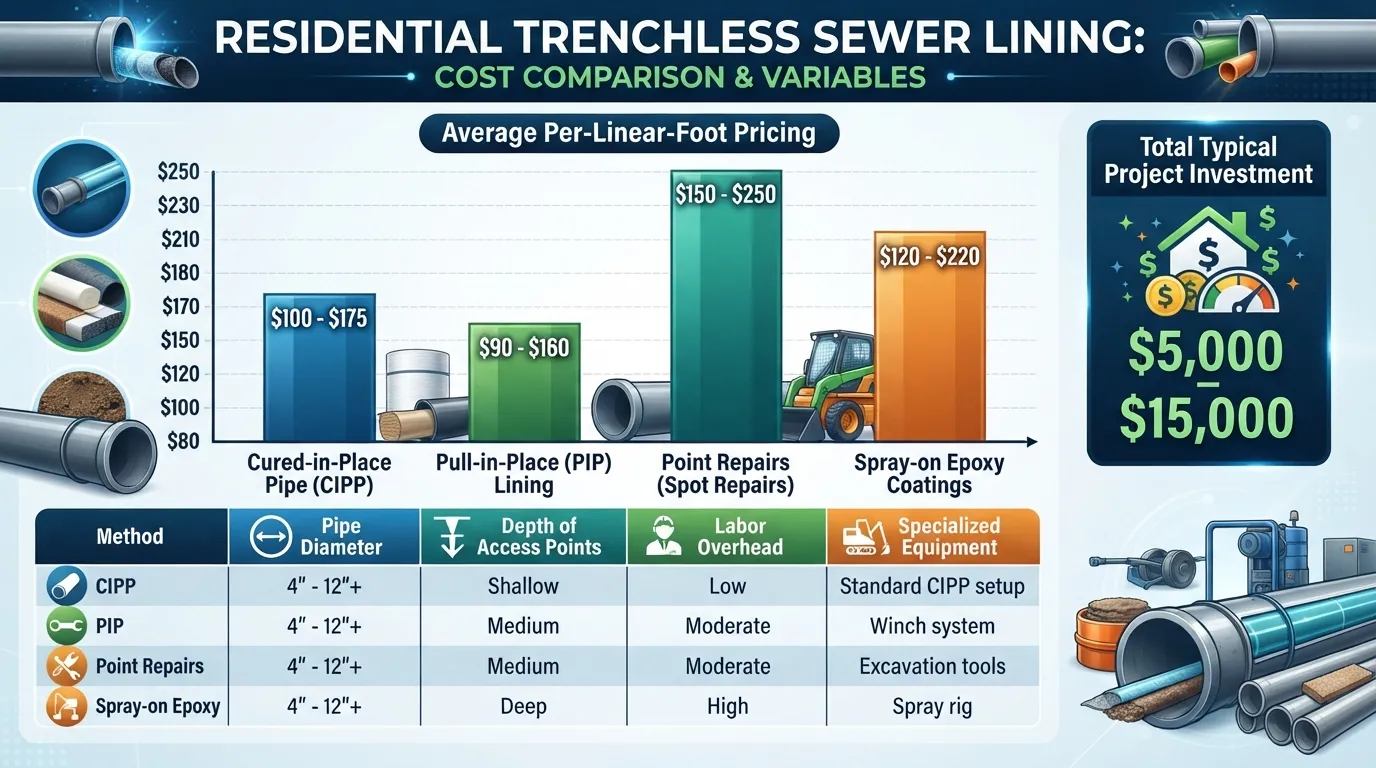
Trenchless sewer lining typically ranges from $80 to $250 per linear foot, bringing most full residential lateral projects between $5,000 and $15,000 depending on the scope. While upfront per-foot pricing can appear high, trenchless applications completely eliminate thousands of dollars in post-repair landscaping, driveway, and concrete restoration costs.
What Affects Sewer Lining Cost
Total project pricing is never one-size-fits-all; several structural and environmental variables dictate the final investment required for your property.
Pipe Length and Diameter: Longer runs command lower per-foot averages, while wider industrial pipes require heavier resin volumes and larger machinery.
Access Difficulty: Sub-basement entry points, deep burial depths, or lack of cleanout access increase setup time and labor overhead.
Method Chosen: Standard CIPP installations differ in price from specialized robotic spray-on epoxy coatings or localized point repairs.
Damage Severity: Severely collapsed pipes or heavy root calcification require extensive pre-lining hydro-jetting and mechanical descaling before application.
Why Trenchless Relining Can Cost More Than It Looks
Property owners often wonder why trenchless solutions command higher labor rates than basic plumbing fixes. The valuation reflects specialized engineering overhead rather than simple material expenses.
Advanced Trenchless Equipment: Contractors invest heavily in high-definition CCTV camera units, industrial steam/UV curing rigs, and robotic cutting tools.
Proprietary Resin Materials: Medical-grade or structural-grade epoxy resins and NSF-certified structural liners are engineered to last 50+ years under chemical and physical stress.
Technical Labor Expertise: Certified technicians must undergo rigorous training to calculate precise resin mixtures, control bladder pressures, and execute flawless structural installations.
Lifespan and Durability — How Long Does Sewer Lining Last?
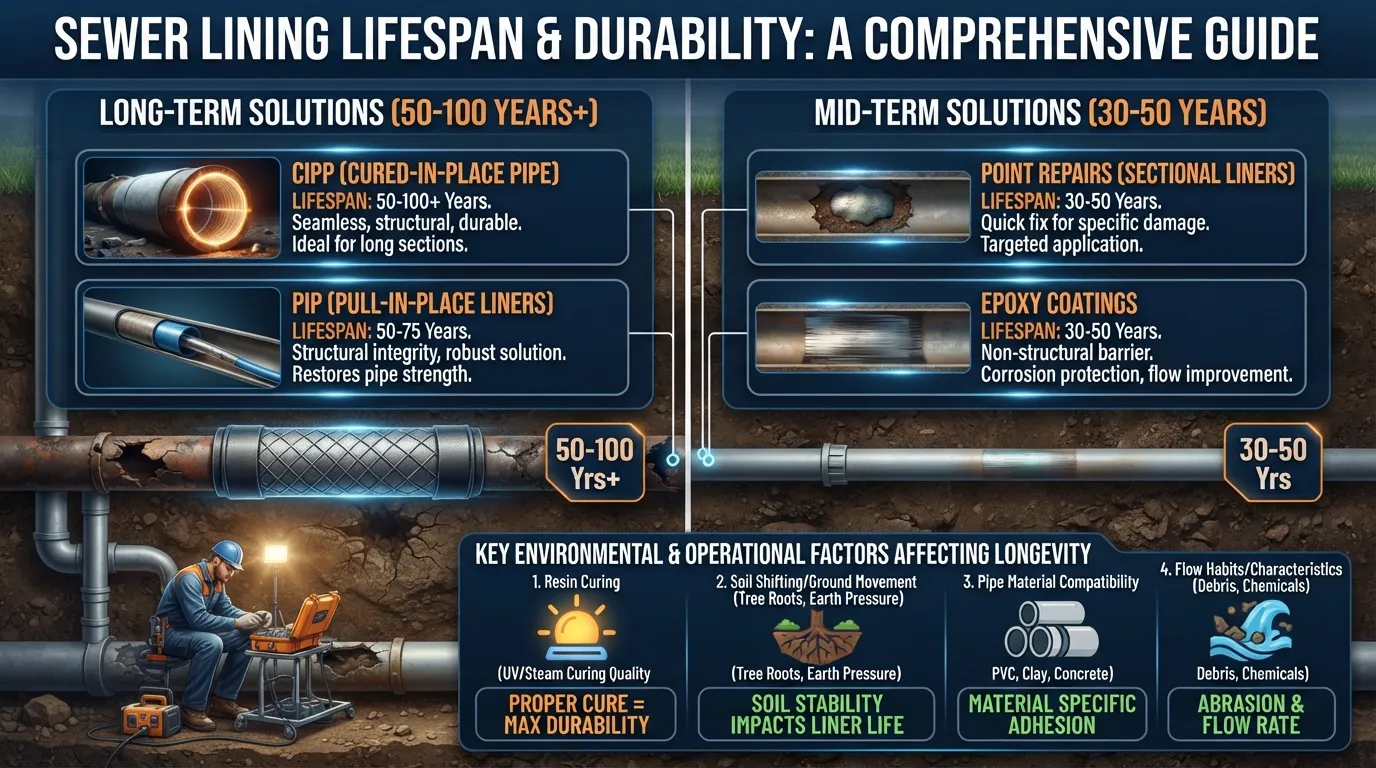
Modern trenchless sewer linings are engineered to serve as a permanent structural replacement for aging pipes, typically lasting 50 to 100 years. Because the newly formed liner creates an independent, jointless conduit inside the old host pipe, it eliminates the structural vulnerabilities associated with traditional clay, cast iron, or PVC piping systems.
Expected Lifespan by Lining Type
Different rehabilitation methods offer varying longevity guarantees based on how they interact with the host pipe structure.
Cured-in-Place Pipe (CIPP): Lasts 50 to 100 years, providing the highest structural rating and functioning as a fully independent pipe.
Pull-in-Place (PIP) Liners: Lasts 50+ years, offering exceptional durability for residential lateral lines and complex layouts.
Point Repair Sleeves: Lasts 30 to 50 years, acting as a robust permanent seal for specific localized fractures.
Spray-On Epoxy Coatings: Lasts 30 to 50 years, protecting smaller-diameter pipes and vertical stacks against corrosion and micro-cracking.
Factors That Affect How Long a Liner Lasts
While material quality sets the baseline for durability, several external environmental and operational variables dictate how well a liner performs over decades.
Resin Curing Quality: Flawless execution during the thermal, steam, or UV curing process ensures complete molecular bonding and maximum structural rigidity.
Soil Conditions and Shifting: Highly corrosive soils, seismic shifts, or heavy surface traffic can place continuous external stress on the surrounding earth.
Pipe Material Compatibility: Proper chemical pairing between the epoxy resin and the host pipe material prevents premature delamination or degradation.
Downstream Flow Habits: Avoiding harsh chemical drain cleaners and preventing abrasive foreign object disposal preserves the inner epoxy lining integrity.
Disadvantages and Limitations of Sewer Lining
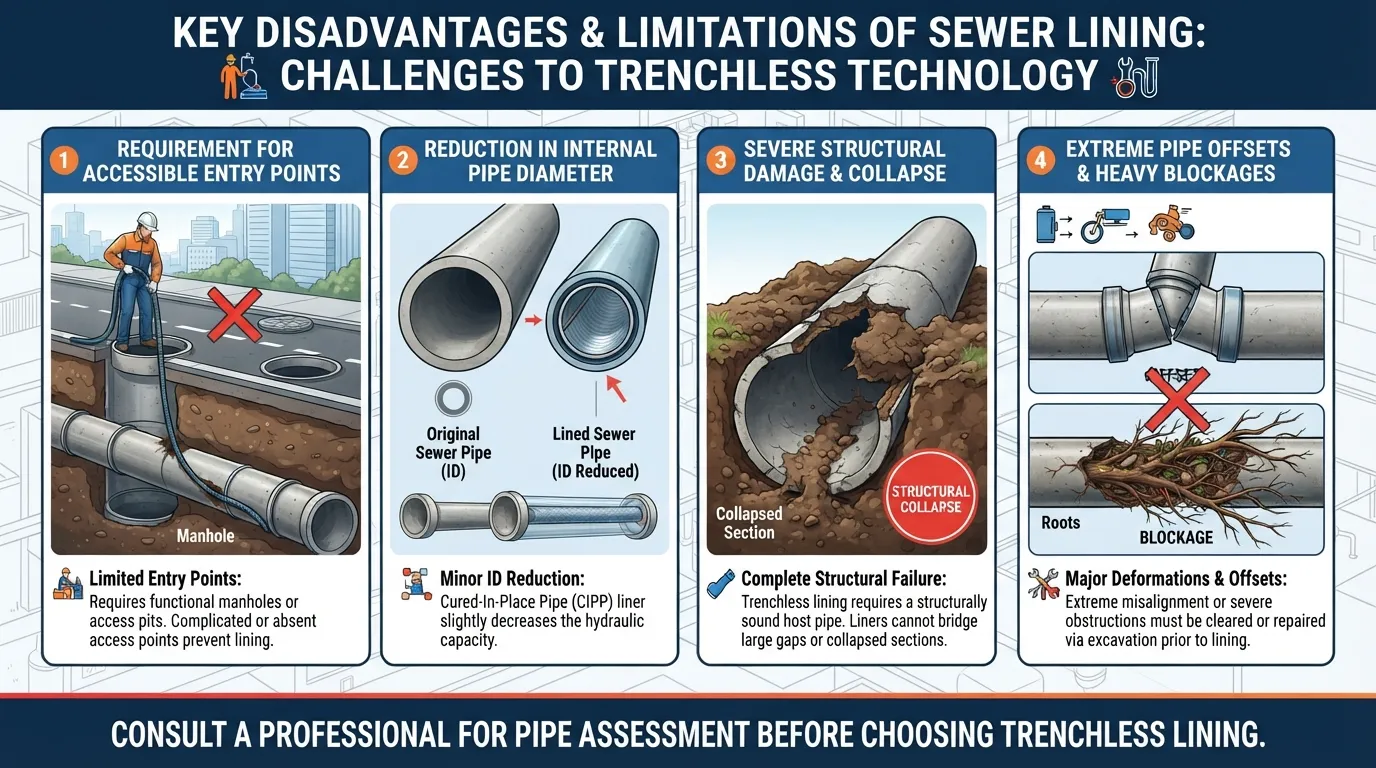
While trenchless technology offers incredible benefits, it is not a universal solution for every plumbing failure. Understanding the limitations of trenchless repair ensures property owners make informed decisions when evaluating whether relining or full excavation is genuinely required for their specific infrastructure.
Limitations of CIPP Lining
Although Cured-in-Place Pipe and other trenchless methods provide exceptional longevity, certain physical constraints can complicate or disqualify an installation.
Requirement for Access Points: Technicians must have at least one or two accessible entry points, such as existing cleanouts or excavated access pits, to insert equipment and liners.
Minor Diameter Reduction: Because a new liner is installed inside the existing pipe, the internal diameter decreases slightly by a fraction of an inch, though hydraulic flow capacity usually improves due to the ultra-smooth interior surface.
Chemical Sensitivity: Improper resin mixing ratios or inadequate curing times can result in incomplete hardening, requiring specialized mechanical extraction and re-lining.
When Lining Isn’t the Right Fix
Severe structural damage compromises the host pipe so drastically that a flexible liner can no longer bridge the gap or maintain proper grade. Traditional excavation and full pipe replacement remain necessary in specific scenarios.
Complete Structural Collapse: If a pipe has completely caved in, fragmented, or lost its surrounding earth support, there is no stable host conduit left for a liner to expand against.
Severe Offset Joints: Extreme pipe shifting or bellied lines where water pools excessively prevent liners from maintaining the correct downward drainage slope.
Extensive Root Calcification or Blockages: Heavy, impenetrable blockages that cannot be cleared via hydro-jetting make it impossible to properly seat and cure a structural liner.
How Long Does the Sewer Lining Process Take?
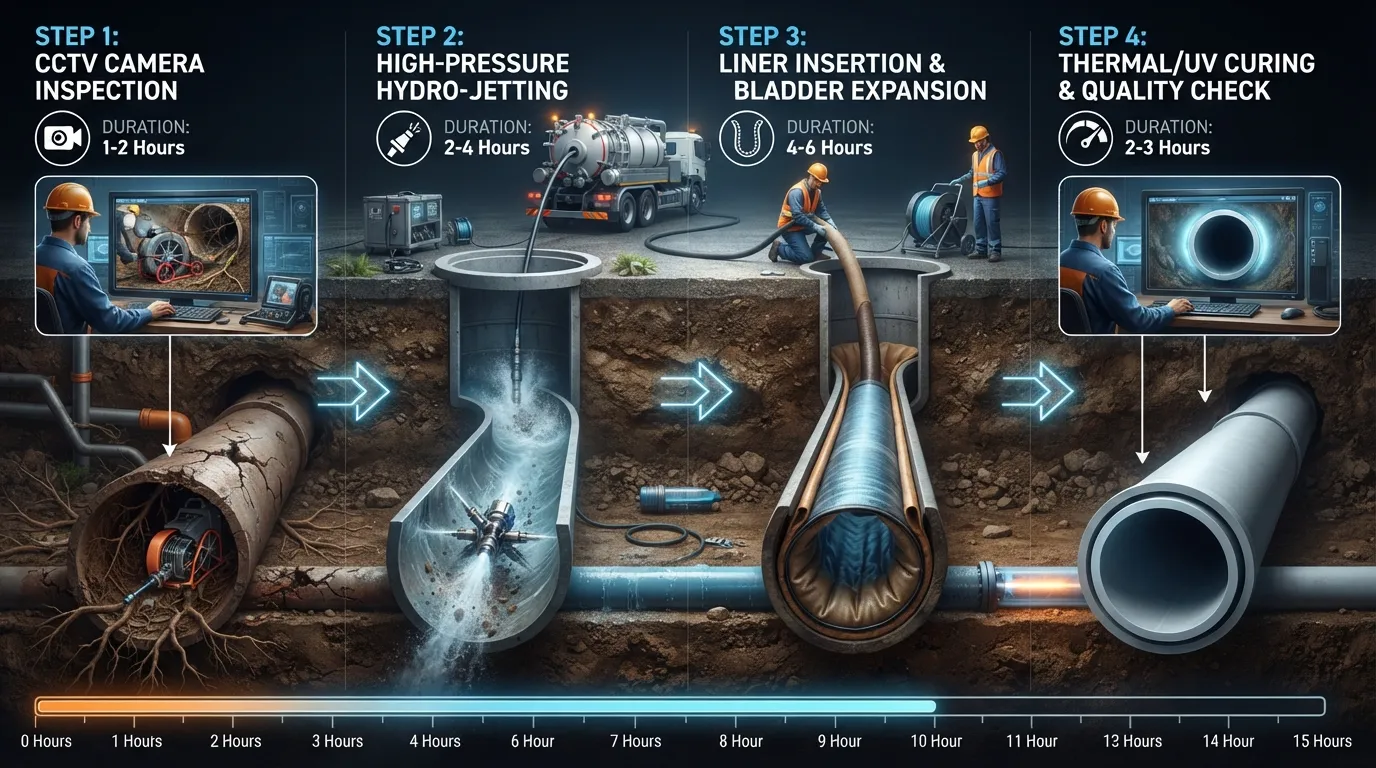
Most residential sewer lining projects are completed in a single day, minimizing disruption to your daily routine. Unlike traditional excavation that can leave your yard torn up for weeks, trenchless technology streamlines the entire rehabilitation process from initial assessment to final structural cure.
Typical Timeline: Inspection to Completion
A standard trenchless project follows a precise, multi-step engineering protocol designed for maximum efficiency and long-lasting results. Property owners requiring urgent intervention can often coordinate same-day repair solutions to mitigate property damage quickly.
Step 1: Diagnostic Camera Inspection: Technicians run high-definition CCTV cameras through the line to identify the exact location of cracks, roots, and structural damage (typically taking 30 to 60 minutes).
Step 2: Hydro-Jetting and Cleaning: High-pressure water cleaning clears away grease, scale, and root debris to ensure the bare pipe walls are pristine for the liner.
Step 3: Liner Installation and Inflation: The resin-saturated tube or sleeve is pulled or inverted into place, then expanded using air or water pressure.
Step 4: Curing and Quality Check: Using hot water, steam, or UV light, the resin hardens in place within 1 to 3 hours, followed by a final camera check to verify structural integrity.
What Can Extend the Timeline
While straightforward residential runs finish in 6 to 10 hours, certain site-specific complications can stretch the project timeline over two or more days.
Total Pipe Length: Longer main sewer runs require more time for cleaning, resin saturation, and controlled curing.
Number of Access Points: Properties with complex layouts or a lack of existing cleanouts require technicians to excavate minor access pits before starting.
Chosen Curing Method: While ambient or hot water curing can take several hours, specialized UV or steam curing accelerates the process significantly.
Does Homeowners Insurance Cover Sewer Line Repair?
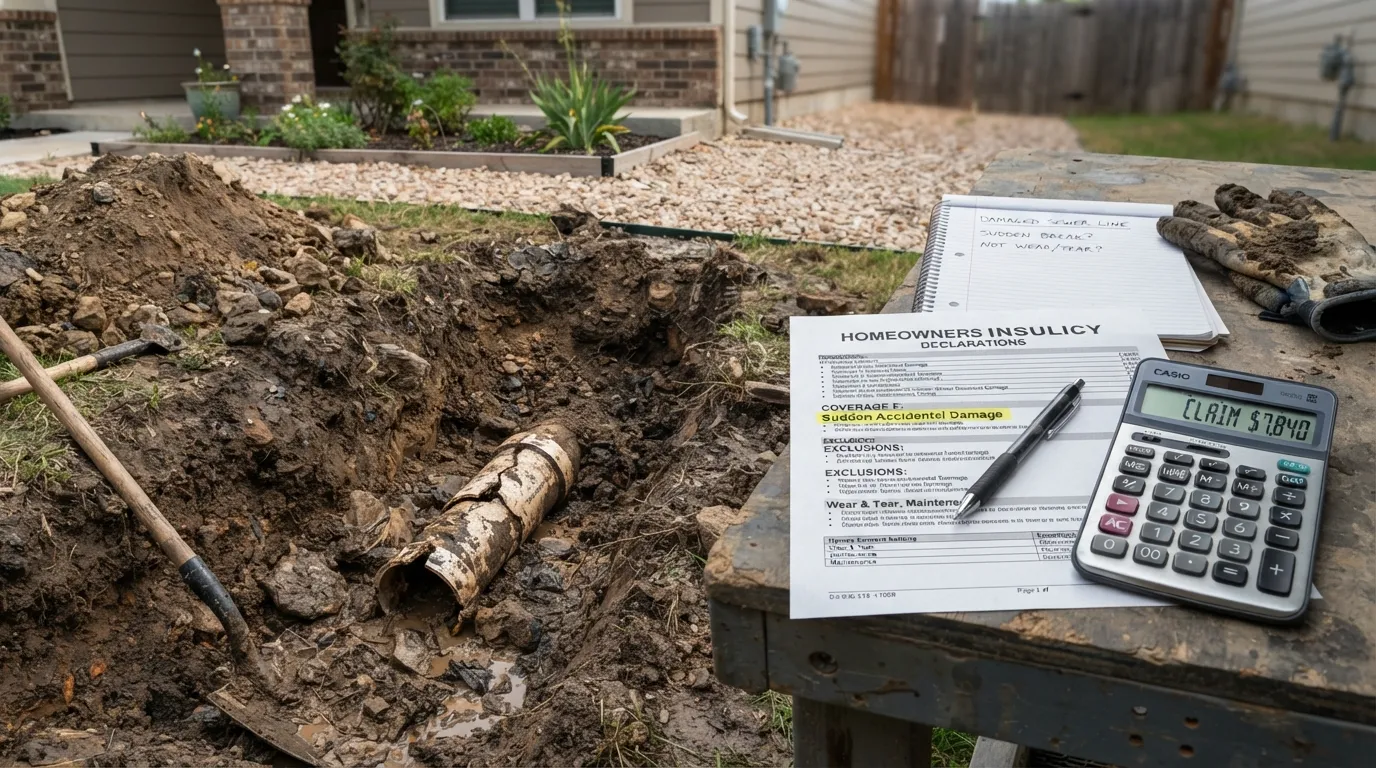
Standard homeowners insurance policies rarely cover underground sewer line repairs because insurance companies view subterranean plumbing as routine home maintenance. However, coverage eligibility depends heavily on the root cause of the damage and whether you have added specific supplemental endorsements to your policy.
When Sewer Line Damage Is Typically Covered
Standard policies generally exclude pipe failures unless the damage is tied directly to a sudden, catastrophic, and “named peril” event covered by your insurer.
Sudden Accidental Disasters: If a vehicle crashes into your yard and collapses the main sewer line, or an explosion damages underground connections, standard hazard coverage may apply.
Service Line Endorsements: Many insurance providers now offer optional service line coverage or utility line endorsements. These low-cost riders specifically protect against wear and tear, tree root intrusion, shifting soil, and rust damage to underground sewer pipes.
When It’s Usually Not Covered
Most standard policies explicitly deny sewer line claims due to the gradual nature of subterranean plumbing deterioration.
Gradual Wear and Tear: Routine aging, corrosion, and the natural breakdown of older cast iron or clay pipes are considered homeowner maintenance responsibilities.
Tree Root Intrusion (Without Endorsement): Because root infiltration happens slowly over many years, insurers typically classify it as a preventable maintenance issue rather than sudden storm damage.
Excavation and Landscaping Costs: Even if a sudden internal plumbing failure inside the home causes water backup, standard policies rarely cover the cost of digging up and replacing the exterior yard line unless a specific service line rider was purchased beforehand.
Miami's Aging Pipes and Why Lining Matters Here
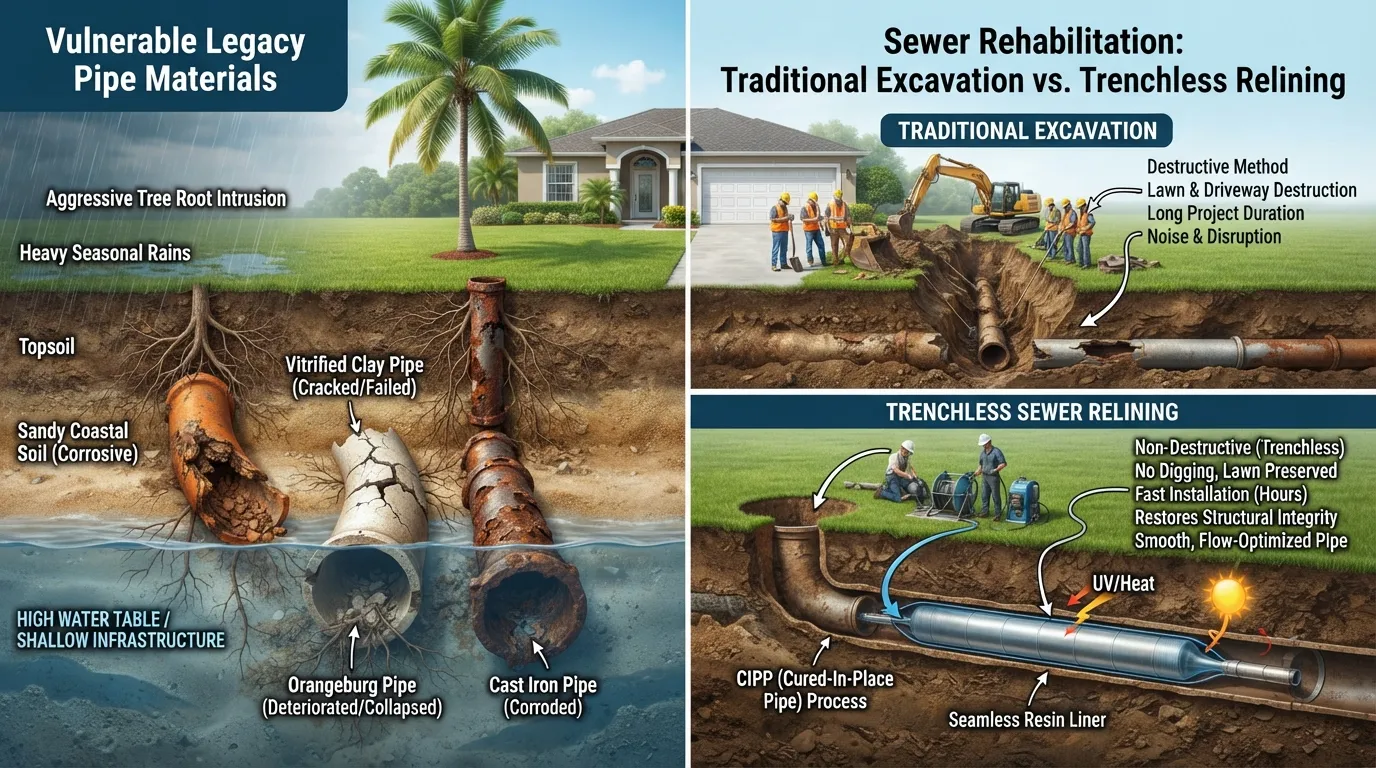
Miami’s unique coastal geography and historical architecture create severe strain on subterranean plumbing networks. Regional conditions like sandy soils, saltwater intrusion, and frequent severe weather rapidly degrade legacy pipe materials, making non-invasive trenchless rehabilitation an urgent priority for local homeowners.
Pipe Materials Most Prone to Cracking
Post-war development across South Florida relied heavily on materials that fail to withstand decades of subterranean pressure and corrosive coastal elements. Recognizing these vulnerable pipe compositions helps property owners take preventive action before catastrophic main line failures occur.
Orangeburg Pipe: Manufactured from coal tar-impregnated wood fiber between the 1940s and 1970s, Orangeburg pipe moisture-softens over time, resulting in oval deformation, blistering, and complete structural collapse under soil load.
Clay Pipe: Widely installed in homes constructed prior to the 1970s, vitrified clay pipe features numerous rigid, unsealed mortar joints that crack easily during ground shifting and invite aggressive tree roots.
Older Cast Iron Pipe: Subject to relentless interior oxidation, old cast iron pipe develops severe corrosion, internal flaking, and thick mineral tuberculation that snags solid waste and weakens pipe walls.
Why Miami Homes Are Especially at Risk
South Florida presents a harsh sub-surface environment where extreme humidity, tropical storms, and coastal water dynamics accelerate plumbing infrastructure decay. These localized stressors significantly shorten the functional lifespan of residential sewer lines compared to national averages.
High Water Table: Miami’s shallow water table keeps subterranean pipes perpetually submerged in saturated, shifting sandy soil, accelerating chemical corrosion and creating joint displacement.
Hurricane-Season Root Intrusion: Heavy seasonal rains promote rapid tropical plant growth, sending invasive root networks directly into vulnerable pipe joints in search of water—often requiring hydro-jetting or professional drain cleaning services to restore proper wastewater flow.
Older Housing Stock: Thousands of residences built during the 1950s and 1960s across Miami-Dade County still rely on original wastewater lines that have reached the end of their design life.
Signs You Need Sewer Lining Right Away
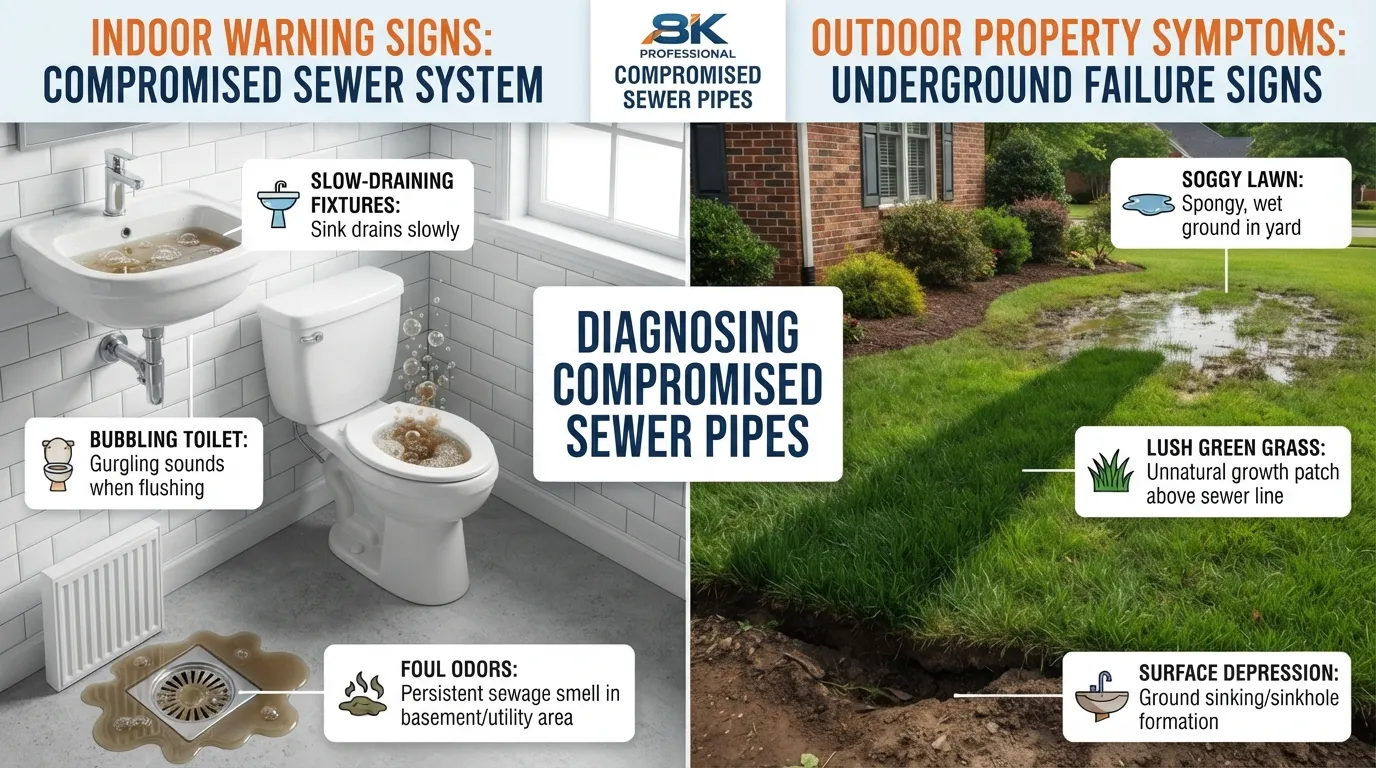
Recognizing the early warning indicators of sewer line failure can save property owners thousands of dollars in emergency mitigation and structural restoration costs. When underground pipes crack, deteriorate, or suffer root intrusion, the plumbing system immediately displays distinct behavioral symptoms both indoors and across your property.
Warning Signs Inside the Home
Interior plumbing fixtures act as the primary diagnostic window into the health of your main lateral line. When multiple fixtures malfunction simultaneously, the issue almost always stems from a compromised underground conduit rather than a localized clog.
Persistent Slow Drains: Sinks, tubs, and showers that drain sluggishly even after routine plunging or snaking usually indicate a structural restriction or pipe wall collapse.
Gurgling Toilet Fixures: Air trapped and forced backward through the drainage system causes bubbling or a gurgling toilet during unrelated water discharges, a classic symptom requiring professional toilet repair and diagnostic evaluation.
Foul Sewage Odors: Lingering, sulfur-like sewer smells inside bathrooms, basements, or utility rooms point directly to cracked pipe walls or dry P-traps caused by venting failures.
Warning Signs Outside the Home
External yard anomalies often reveal underground structural failures long before a total plumbing backup halts your daily routine. Keeping a close eye on your landscape helps catch severe line damage early.
Soggy Lawn Patches: Unexplained wet, spongy areas in your yard during dry weather indicate wastewater leaking directly from a fractured sewer pipe beneath the turf.
Lush Green Grass Strips: An isolated strip of exceptionally vibrant, fast-growing grass directly above the sewer line path signals an underground fertilizer leak feeding root growth.
Surface Depressions or Sinkholes: Severe sub-surface soil erosion caused by persistent pipe leaks washes away earth support, creating dangerous depressions or small sinkholes across your property.
How to Choose the Right Lining Method for Your Pipe
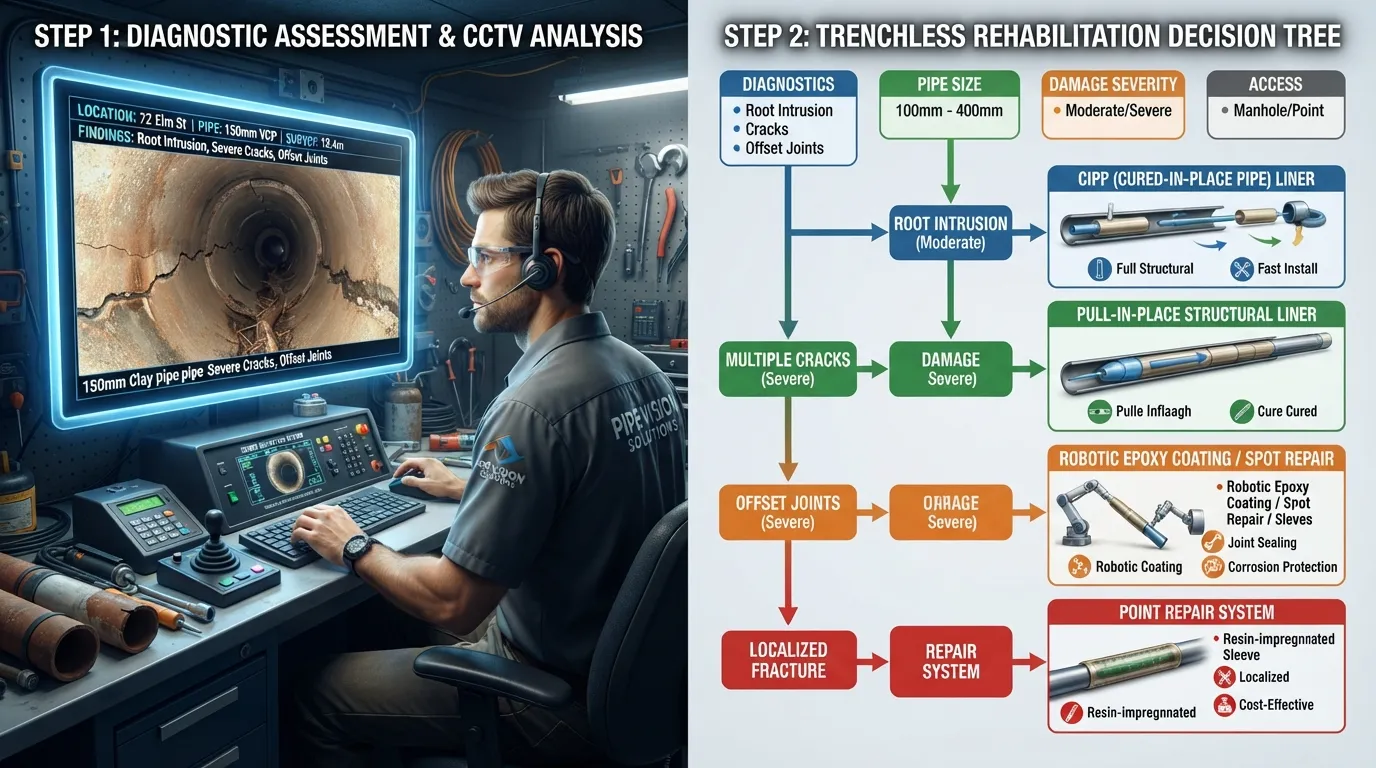
Selecting the ideal trenchless lining technique requires balancing technical specifications, pipe material integrity, and long-term property goals. Professional plumbers rely on precise diagnostic data to match the exact structural damage profile with the most resilient lining solution available.
What a Camera Inspection Tells a Plumber
High-definition CCTV inspection footage provides an uncompromised view of the interior pipeline, allowing technicians to evaluate structural dimensions and specific failure types before recommending a repair strategy.
Pipe Diameter and Material: Exact measurements dictate whether standard CIPP, pull-in liners, or robotic epoxy coatings are physically compatible with the host pipe.
Damage Severity and Location: Identifying whether cracks are isolated to a single joint or span across continuous runs helps determine if a point repair or full-length lining is necessary.
Obstruction and Offset Levels: Assessing root density, heavy scale, and offset pipe joints ensures the plumbing team performs proper preparatory hydro-jetting prior to installation.
Why Contractor Certification Matters
Trenchless rehabilitation is a highly technical engineering process that leaves zero margin for installation error. Property owners should always look for a contractor trained to NASSCO-recognized trenchless standards (National Association of Sewer Service Companies) to guarantee adherence to rigorous industry protocols.
Proper Resin Calculations: Certified technicians accurately calculate resin saturation ratios, ambient curing times, and multi-part epoxy mixtures to prevent structural failure.
Equipment Calibration: Advanced bladder pressure gauges and steam/UV monitoring equipment require specialized field training to operate safely and effectively.
Warranty Protection: Working with certified professionals ensures that the completed pipe relining project complies with local building codes and comes with comprehensive manufacturer-backed warranties.
Frequently Asked Questions
Navigating trenchless sewer rehabilitation often brings up important practical and financial questions for property owners. Reviewing these direct answers helps clarify key operational details, insurance policies, and timeline expectations before starting a project.
What are the disadvantages of pipe relining?
While trenchless pipe relining is highly effective, it does have specific limitations. It requires at least one accessible entry point (such as a cleanout or minor pit) to insert the materials, and it results in a negligible decrease in internal pipe diameter while maintaining hydraulic flow. Furthermore, severely collapsed pipes or extreme structural offset joints cannot be lined and require traditional excavation and replacement.
Will homeowners insurance cover sewer line replacement?
Standard homeowners insurance policies typically do not cover underground sewer line repair or replacement because subterranean plumbing deterioration is classified as routine home maintenance. However, coverage may apply if you have added an optional service line endorsement to your policy, or if the damage resulted directly from a sudden, catastrophic covered event.
How long does pipe relining take?
Most residential sewer lining projects are completed in a single day, typically taking between 6 to 10 hours from initial diagnostic inspection and hydro-jetting to final curing and quality verification. Larger commercial properties or complex runs with severe root blockages may require two or more days depending on site-specific access and curing requirements.
Secure Your Home With Expert Trenchless Sewer Solutions
Protecting your property from unexpected plumbing failures starts with professional diagnostics and timely intervention. Whether you are dealing with persistent slow drains, invasive roots, or aging pipe infrastructure, our team delivers advanced trenchless repairs designed to restore your plumbing network with minimal disruption.
Comprehensive Diagnostics: Our licensed experts utilize high-definition camera equipment to pinpoint exact structural issues.
Non-Invasive Restoration: Modern relining techniques eliminate the need for destructive yard excavation.
Guaranteed Durability: Every installation is backed by industry-leading standards for long-term peace of mind.
Ready to Restore Your Sewer Line? Don’t let a cracked pipe compromise your property. Schedule a professional sewer inspection today or call us directly at tel:+17862396529 to request a free estimate. Take the first step toward lasting plumbing security by visiting our booking page to secure your appointment now.
Main Services
Related Posts
Need a Plumber in Miami?
Schedule service online or speak directly with the EZ Plumbing team.
Owner-Led Local Service
Know who is behind the business before you request service. The owners, contact line and Miami service pages are published clearly.
- Named business owners
- Direct phone and social channels
- Local Miami service information
Clear Help Before You Book
Review the relevant service page, contact the team directly and use the booking page when you are ready—without relying on vague claims.
- Service-specific information
- Direct questions before scheduling
- Clear online booking route