Drain Cleaner 101: The Complete Safety & Usage Guide
What Is a Drain Cleaner?
Drain Cleaners in 30 Seconds
A drain cleaner is any substance, tool, or specialized solution designed to remove clogs, grease, hair, and organic buildup from residential or commercial plumbing lines. Whether you are dealing with a slow-running sink or a completely clogged drain, utilizing the correct DIY drain cleaning method ensures your pipes remain clear without suffering chemical or structural damage.
Selecting the right product depends entirely on the severity of the blockage and the material of your pipes. Modern plumbing maintenance relies on balancing fast-acting chemical agents, eco-friendly maintenance solutions, and physical clearing tools to protect your home’s infrastructure.
The 3 Main Types of Drain Cleaners (Chemical, Enzymatic, Mechanical)
Chemical Drain Cleaners: These are powerful liquid or gel solutions—typically formulated with sodium hydroxide, sulfuric acid, or bleach—that rely on thermal or chemical reactions to dissolve hair, grease, and soap scum rapidly. While highly effective for sudden, severe blockages, overuse can corrode older metal pipes and PVC fittings.
Enzymatic Drain Cleaners: These use natural bacteria and specialized enzymes to slowly digest organic waste, food particles, and oils lining the pipe walls. They are completely safe for daily maintenance, eco-friendly, and gentle on all pipe materials, though they require several hours or overnight to show visible results.
Mechanical Drain Clearing: This category encompasses physical tools rather than liquids, including traditional plungers, hand-cranked drain snakes, and motorized augers. Mechanical solutions are ideal for dislodging solid physical obstructions—like toys, heavy sludge, or tree roots—that chemical and enzymatic solutions cannot dissolve.
What Causes Drain Clogs? (By Drain Type)
Bathroom Sink & Shower Clogs (Hair + Soap Scum)
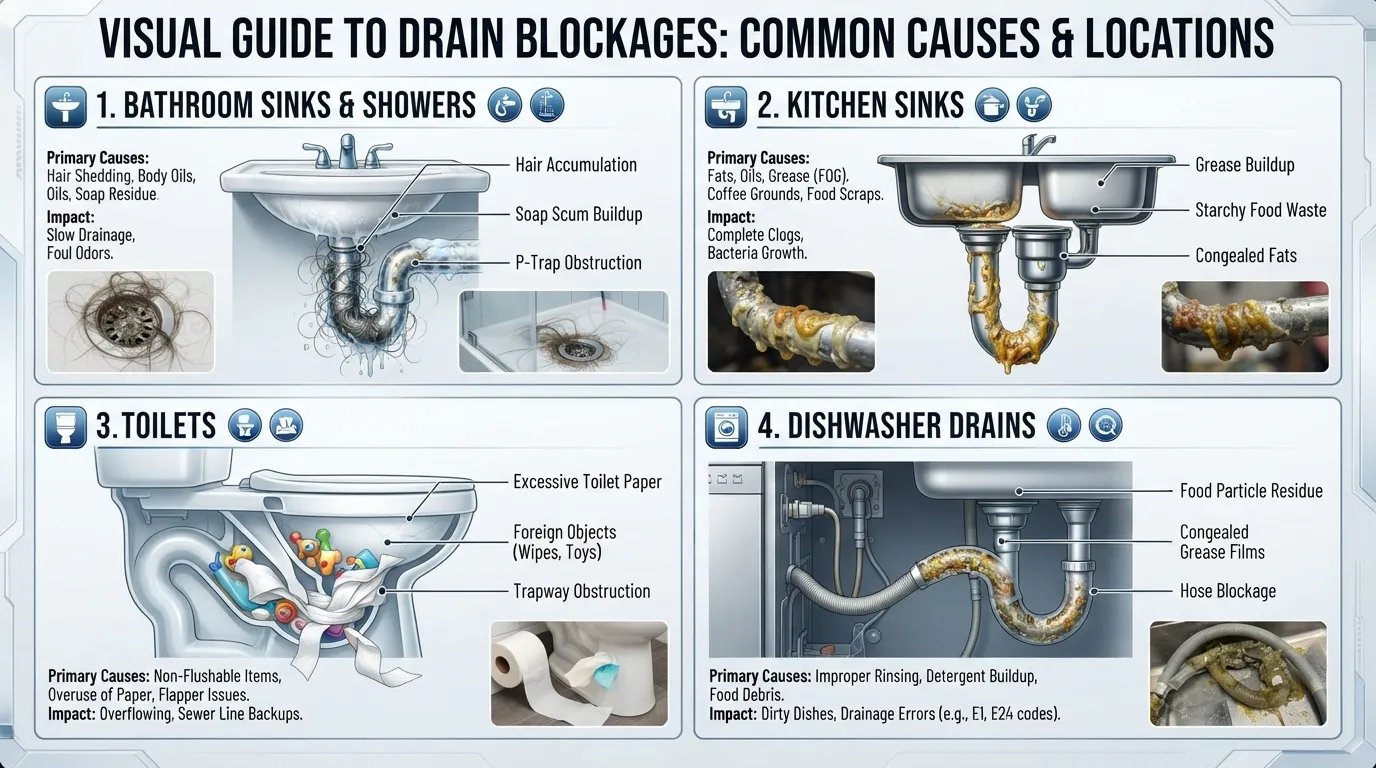
Bathroom drains primarily clog due to an accumulation of shed human hair, pet fur, and sticky soap scum binding together inside the P-trap. Over time, these fibers form a dense, impermeable mass that catches toothpaste, skin cells, and cosmetic residues, drastically slowing water drainage.
Hair Accumulation: Strands wrap around the stopper mechanism or crossbars inside the pipe, creating a net that traps debris.
Soap Scum Bonding: Hard water minerals react with soap molecules to form an insoluble residue that coats the inner pipe walls.
P-Trap Blockages: The curved section beneath the sink naturally catches this floating debris as water slows down during drainage.
Kitchen Sink Clogs (Grease, Food Waste, Sludge)
Kitchen sink blockages are usually driven by the accumulation of cooking fats, oils, grease buildup, and fine food particles discharged down the disposal or drain. When hot grease cools inside cold underground or wall pipes, it solidifies into a hardened sludge that chokes the pipe diameter.
Fats and Oils: Liquid grease hardens upon contacting cold pipe surfaces, trapping stray coffee grounds and food particles.
Starchy Residues: Rice, pasta, and flour expand when exposed to standing water, forming a pasty adhesive mass.
Sludge Formation: Anaerobic bacteria feed on trapped organic matter, producing a foul-smelling black sludge that coats the interior.
Toilet Clogs (Waste Buildup, Foreign Objects)
A toilet clog typically results from flushing excessive toilet paper, non-flushable sanitary products, or accidental foreign objects down the bowl. Because toilet trapways feature a tight, upward-curving siphon design, bulky items easily become wedged, creating an immediate and complete blockage.
Excessive Paper & Wipes: Thick wads of paper or “flushable” wipes fail to disintegrate rapidly enough to pass through the narrow trap.
Foreign Objects: Children’s toys, cotton swabs, and paper towels frequently cause abrupt, solid obstructions.
Professional Repair: Persistent or recurring toilet backups often signal deeper sewer line issues requiring specialized toilet repair services to clear main stack blockages.
Dishwasher Drain Clogs (Food Particles, Grease Film)
Dishwasher drains frequently clog when stubborn food particles, detergent residue, and grease film bypass the unit’s coarse filter and settle in the flexible drain hose or air gap. Because dishwashers discharge waste under high pressure, recurring blockages often lead to standing water pooling at the base of the machine after a cycle.
Unfiltered Food Waste: Stray vegetable peels, seeds, and bone fragments accumulate in the sump pump or low points of the drain hose.
Detergent and Grease Film: Congealed fats combined with hard water scale create a slick, sticky lining that restricts wastewater flow.
Kinked Hoses: Physical pinching or sagging in the discharge line prevents complete evacuation, trapping sludge in the system.
DIY Natural Drain Cleaning Methods
Step 1 — Boiling Water Method (When It Works Best)
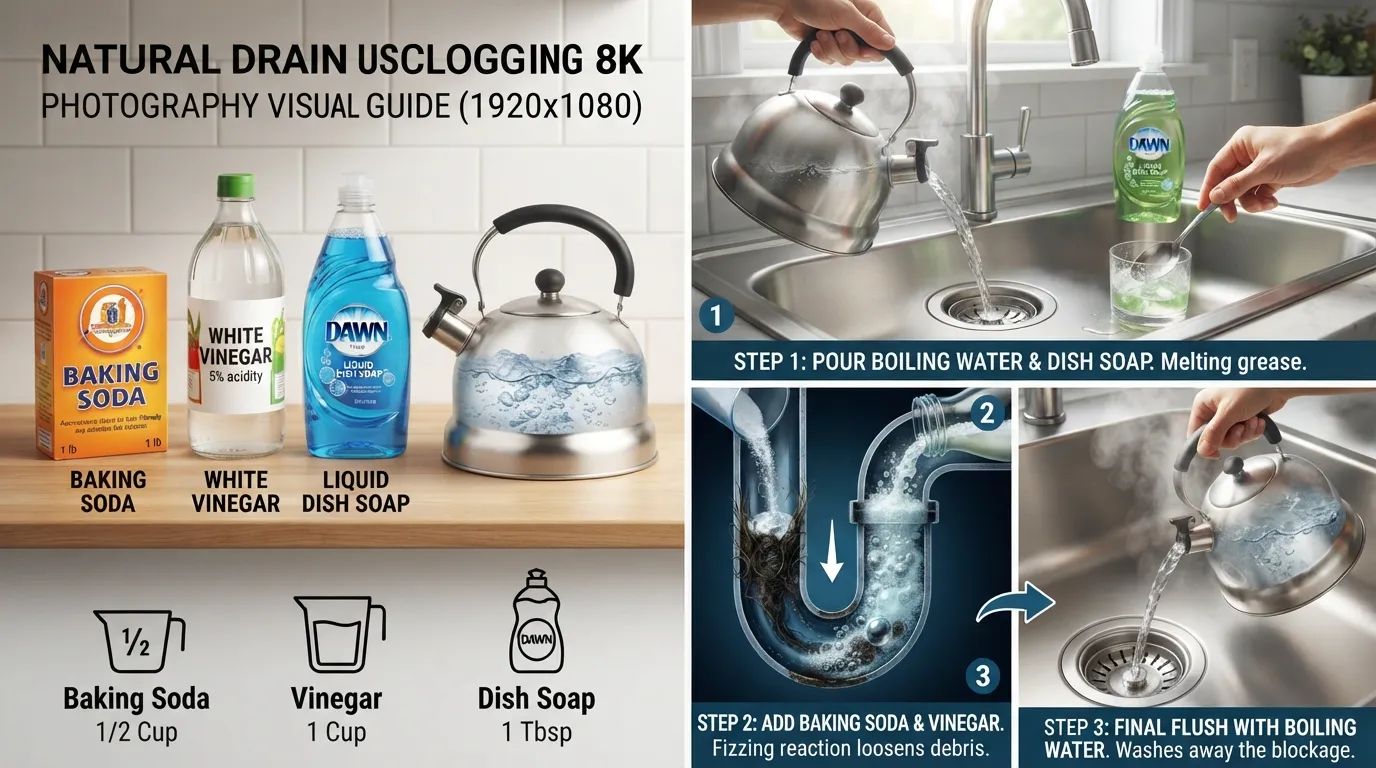
Pouring boiling water directly down your drain is the fastest, most cost-effective first-line defense for mild clogs and routine maintenance. This method works best on metal pipes (like copper or cast iron) to instantly melt and wash away congealed grease, soap scum, and light organic debris.
Targeted Application: Ideal for kitchen sinks experiencing sluggish drainage caused by fresh oil or butter accumulation.
Execution Strategy: Bring a full kettle of water to a rolling boil, then carefully pour it down the drain in two or three stages, allowing a few seconds of contact time between pours.
Important Safety Caution: Avoid using boiling water on PVC or plastic pipes, as extreme thermal shock can soften joints, warp the piping, and cause severe leaks.
Step 2 — Baking Soda & Vinegar (Exact Ratios + Timing)
The classic baking soda and vinegar treatment provides a foaming, effervescent reaction that helps lift surface grime and loosen mild organic clogs without harsh chemicals. Follow this exact measurement protocol for maximum effectiveness:
Exact Ratio: Pour one-half cup of dry baking soda directly into the drain opening, followed immediately by one-half cup of standard white vinegar.
Timing & Sealing: Immediately cover the drain with a plug or damp cloth to force the resulting fizz downward into the pipe trap. Let the mixture sit undisturbed for 15 to 30 minutes.
Final Flush: Finish the process by chasing the solution with a kettle of hot water to flush away the loosened debris and dissolved buildup.
Does Baking Soda and Vinegar Actually Work? (Myth-Busting / Science Explanation)
While popular home remedy blogs claim this combination creates a powerful chemical explosion that blasts away clogs, the chemical reality is far milder. Baking soda is a weak base (sodium bicarbonate) and vinegar is a weak acid (acetic acid), which neutralize each other upon contact.
The Science Explained: The neutralization reaction produces carbon dioxide gas and water, creating a satisfying fizz that can mechanically bubble up minor surface gunk.
Why It Falls Short: Unlike industrial chemical drain cleaners, this reaction generates zero heat and lacks the caustic strength required to dissolve dense hair mats or hardened grease blockages.
Best Use Case: Treat it strictly as an effective deodorizer and light maintenance wash rather than a heavy-duty clog remover.
Does Dawn Dish Soap Really Unclog Drains?
Dawn dish soap is remarkably effective at breaking down greasy, oily blockages due to its advanced surfactant properties. It lowers the surface tension of water, allowing it to penetrate and emulsify stubborn fat layers clinging to pipe walls.
Grease-Cutting Power: Dawn breaks down cooking oil molecules into smaller components that easily rinse away with hot water.
Step-by-Step Application: Squirt a generous amount of Dawn directly into the clogged drain, let it sit for 10 to 15 minutes to coat the obstruction, and chase it with a gallon of very hot water.
Limitations: While excellent for grease-heavy kitchen lines, dish soap will have little to no impact on solid physical obstructions like hair clusters, toys, or mineral scale.
Mechanical Drain Clearing Tools
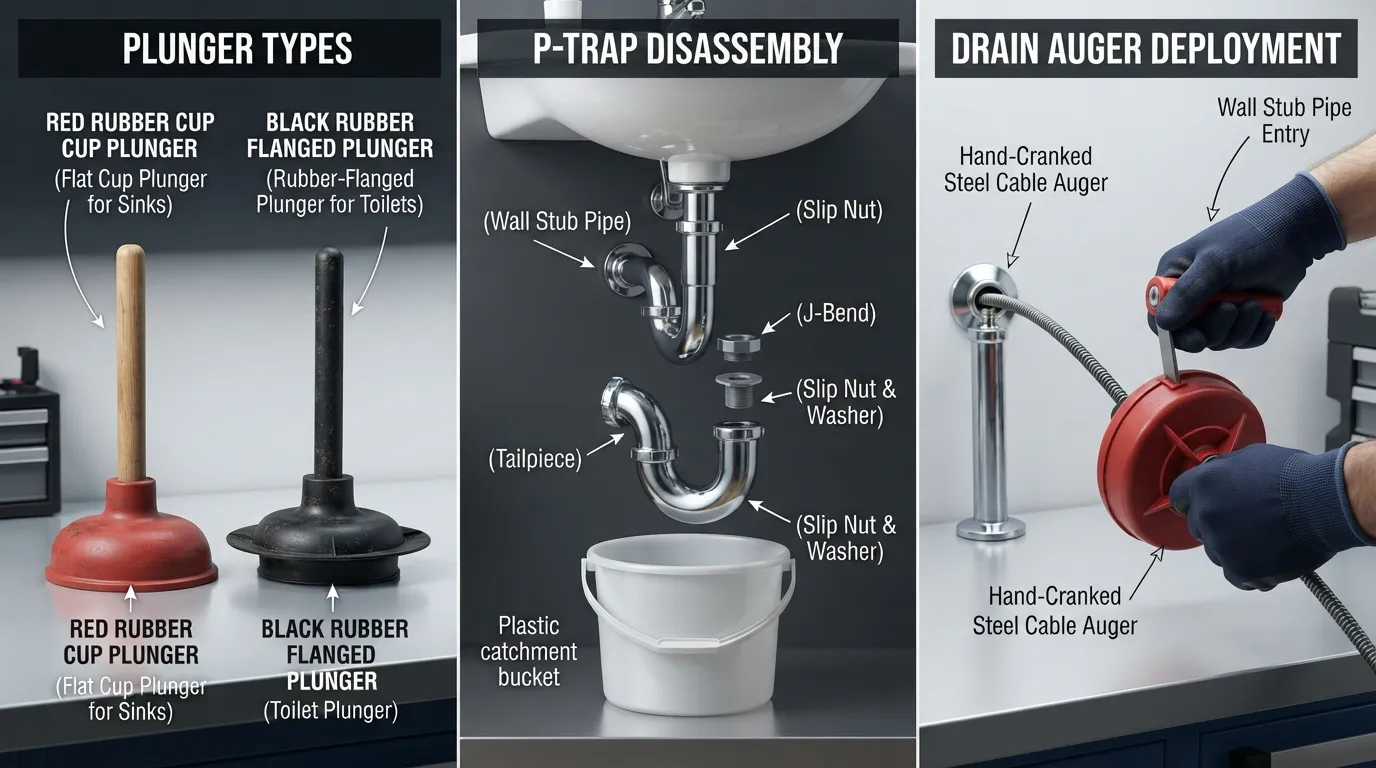
Plunger Types — Cup Plunger vs. Flange Plunger (Which One for Which Drain)
Choosing the correct plunger is essential for mechanical clog removal, as using the wrong design will fail to create the necessary hydraulic pressure. Cup plungers and flange plungers serve entirely different fixtures based on their geometry and sealing mechanics.
Cup Plungers: Featuring a flat rubber bottom with a shallow cup, these are designed exclusively for flat surfaces like kitchen sinks, bathroom lavatories, and bathtubs where a tight flat seal can be established.
Flange Plungers: Equipped with an extra soft rubber flap (the flange) extending outward from the main cup, these are engineered specifically for toilets to fit snugly into the curved drain opening and create a complete vacuum seal.
Operational Tip: Always ensure the rubber cup is fully submerged in standing water before plunging, as pushing air instead of water will break the suction and disperse the clog rather than drawing it out.
How to Inspect and Clean the P-Trap
The P-trap is the curved pipe located directly beneath your sink designed to trap sewer gases, but it also catches heavy debris, jewelry, and sludge. Inspecting and manually clearing the P-trap is often faster and safer than pouring harsh chemicals into standing water.
Preparation: Place a bucket directly underneath the P-trap to catch residual stagnant water and trapped sludge before loosening any fittings.
Disassembly: Hand-unscrew the slip nuts on both ends of the trap. If they are overtightened, use tongue-and-groove pliers wrapped in tape to prevent scratching the metal or PVC.
Manual Clearing: Remove the curved pipe section, clear out accumulated hair and debris by hand, flush it thoroughly with clean water, and reinstall the rubber washers securely before testing for leaks.
Using a Drain Snake / Hand Auger (Step-by-Step)
A drain snake or hand auger is a flexible steel cable housed in a drum or canister, designed to reach deep clogs past the P-trap that plungers cannot reach. Follow these exact steps to clear stubborn blockages safely:
Step 1 — Insert the Cable: Loosen the thumbscrew on the auger drum and feed the cable tip manually into the drain opening until you feel resistance against the blockage.
Step 2 — Crank and Engage: Tighten the thumbscrew and slowly rotate the handle clockwise while applying gentle forward pressure to hook or break apart the obstruction.
Step 3 — Retrieve and Flush: Once you feel the resistance give way, slowly crank the cable back into the drum, wiping it clean as you pull, and flush the line with warm water to clear remaining fragments.
Chemical Drain Cleaners — Correct Use & Safety Risks
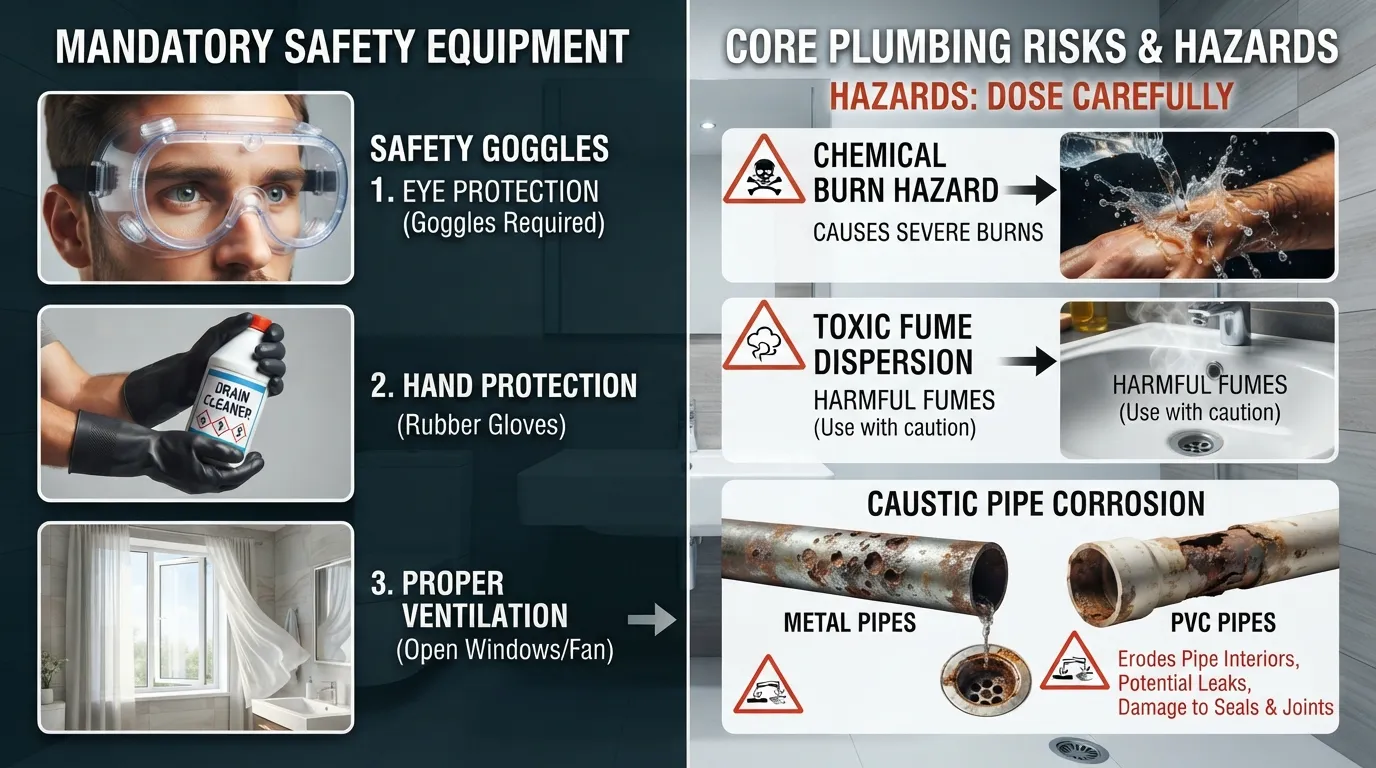
How to Use Chemical Drain Cleaner Correctly (Step-by-Step + Ventilation & Gloves)
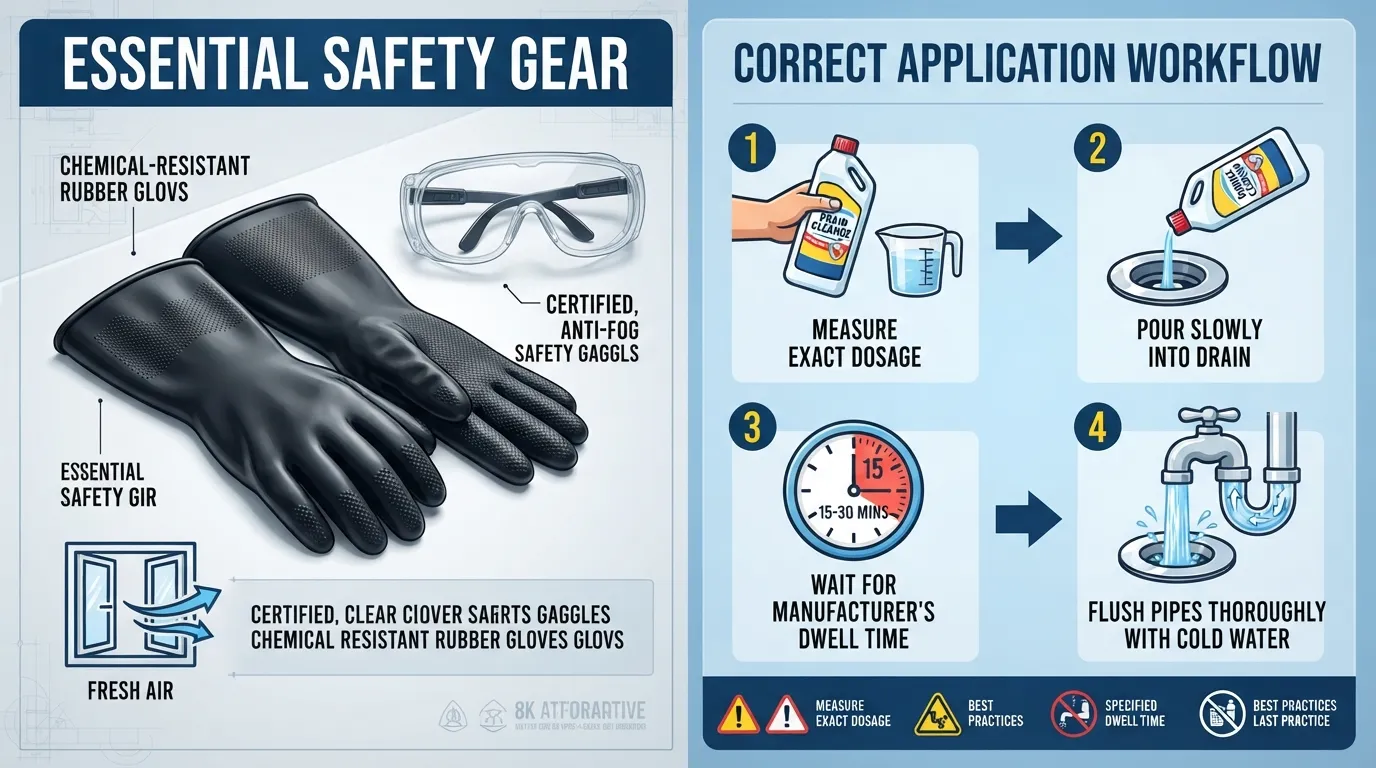
When handling commercial formulas like Drano or other liquid openers, strict adherence to product guidelines prevents severe accidents. Always prioritize personal protection before opening the container.
Gear Up: Put on chemical-resistant rubber gloves and certified safety goggles to protect against unexpected splashback.
The Brisbane PlumbersEnsure Airflow: Open nearby windows and doors or run an exhaust fan to dissipate noxious chemical fumes.
Savvy PlumbingPour and Wait: Pour the exact recommended dosage slowly down the drain, allow it to sit for the specified duration, and flush thoroughly with cold water.
The Brisbane Plumbers
Why Plumbers Warn Against Chemical Drain Cleaners
Plumbers consistently advise caution with caustic and acidic products because they pose severe, multi-faceted risks to your health and home. For detailed handling rules and hazard frameworks, consult the U.S. Consumer Product Safety Commission Guidelines for household chemicals.
Severe Chemical Burns: Caustic solutions contain active agents like sodium hydroxide that can instantly burn skin and cause permanent eye damage upon contact.
Clogged Drain AuthorityAggressive Pipe Corrosion: Repeated chemical reactions generate intense heat that can warp modern PVC pipes or severely corrode older metal pipes, leading to costly leaks.
Toxic Fumes: Mixing incompatible cleaners or letting chemicals sit in stagnant water releases hazardous toxic fumes that irritate the respiratory tract.
Savvy Plumbing
What Do Plumbers Use Instead of Drano? (Professional-Grade Alternatives)
When store-bought chemicals fail, professionals rely on heavy-duty equipment that clears obstructions physically without risking infrastructure damage. For stubborn blockages, expert technicians utilize professional-grade alternatives designed to restore full pipe capacity safely.
Motorized Drain Augers: Commercial-grade snake machines feature heavy-duty steel cables that cut through tree roots and dense sludge.
Hydro Jetting Systems: High-pressure water streaming at thousands of PSI completely scours grease, scale, and debris off interior pipe walls.
Video Camera Inspections: Miniature fiber-optic cameras pinpoint the exact source of a blockage before clearing it, eliminating guesswork.
Chemical vs. Enzymatic Cleaners — Which Is Safer for Your Pipes?
Choosing between chemical and biological formulas involves balancing speed of action against long-term safety for your plumbing system.
Speed vs. Safety: Chemical cleaners act fast through aggressive thermal reactions, whereas an enzymatic cleaner works slowly over hours by digesting organic waste naturally.
Material Preservation: Enzymatic options are 100% safe for all pipe materials, septic systems, and rubber seals, while frequent chemical use degrades joints over time.
Savvy PlumbingMaintenance Verdict: Use enzymatic formulas for routine monthly maintenance to prevent buildup, reserving chemical or mechanical methods strictly for sudden, severe emergencies.
DIY vs. Chemical vs. Professional — Comparison Table
Comparison Table (Cost, Safety, Effectiveness, Best-Use-Case)
Evaluating your options before tackling a stubborn blockage helps prevent wasted money and property damage. The following breakdown compares methods across cost, safety rating, effectiveness, and ideal application scenarios.
| Cleaning Method | Estimated Cost | Safety Rating | Effectiveness | Best-Use-Case |
| DIY Natural Solutions (Boiling water, vinegar, baking soda) | Very Low ($0 to $5) | High (Safe for all pipes) | Low to Moderate | Routine maintenance and light surface grease or soap scum. |
| Mechanical Tools (Plungers, hand augers, P-trap cleaning) | Low ($10 to $30) | High (Requires physical care) | High | Localized clogs like hair mats, dropped items, or food blockages. |
| Chemical Cleaners (Commercial liquids and gels) | Moderate ($8 to $20) | Low (Caustic and corrosive) | Moderate | Sudden organic clogs in compatible pipes when used strictly as directed. |
| Professional Services (Hydro-jetting, motorized augers) | High ($150 to $400+) | High (Executed by licensed experts) | Maximum | Main sewer line blocks, recurring backups, and heavy root intrusion. |
Which Method Should You Choose First?
Following a structured escalation path prevents you from overcomplicating a minor plumbing issue or exposing your pipes to unnecessary risks. Always start with the least invasive technique before moving to heavy-duty interventions.
Step 1 — The Non-Invasive Approach: Begin with hot water flushes or natural mixtures like Dawn dish soap to clear light, surface-level grease films.
Step 2 — Mechanical Action: If the sink remains slow, check and clear the P-trap or deploy a hand-cranked drain snake to break up physical debris.
Step 3 — Professional Intervention: Skip chemical cleaners entirely if you suspect structural damage, tree roots, or deep-seated main line failures, and call a licensed plumber immediately.
When to Call a Professional Plumber
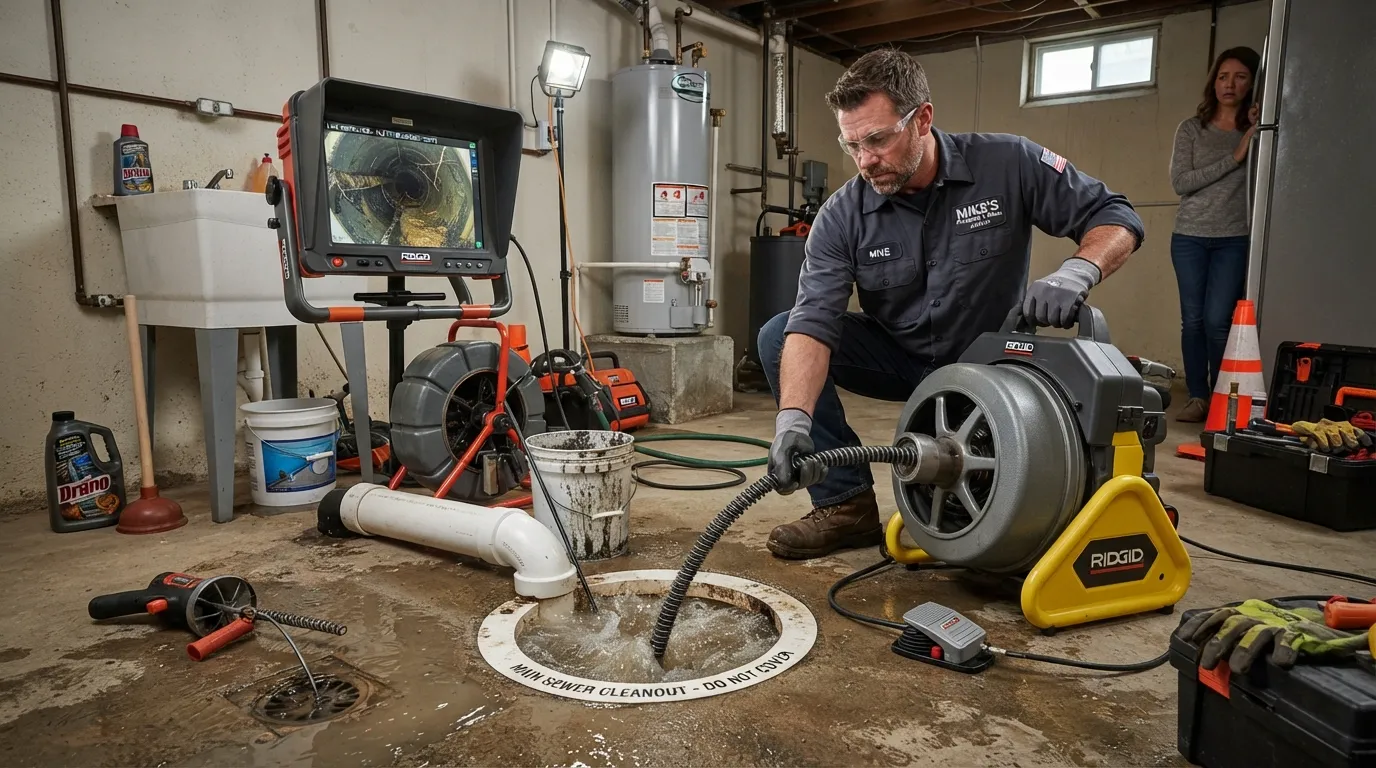
Warning Signs You Need a Professional (Gurgling, Multiple Clogged Drains, Foul Odor)
When plumbing issues extend beyond a single isolated fixture, you are likely facing a major blockage in your main branch or sewer line. Recognizing these critical warning signs early prevents catastrophic water damage and expensive structural repairs.
Gurgling Drains: A bubbling or gurgling sound coming from your toilet or tub when you run the sink indicates trapped air escaping through the plumbing vent or wastewater lines.
Multiple Clogged Drains: If your kitchen sink backs up every time you flush the toilet or run the washing machine, the obstruction is located deep within your main drainage system.
Persistent Foul Odor: A lingering smell of sewage or rotting waste usually points to a broken vent pipe, dry P-trap, or a severe, stagnant blockage trapped in the main stack.
Tree Roots & Main Sewer Line Blockages
Infiltrating tree roots seeking moisture can crack, puncture, or completely crush underground clay and cast iron sewer pipes. Dealing with complex tree roots & main sewer line blockages requires specialized diagnostic technology and heavy excavation equipment that standard DIY tools cannot provide.
Root Intrusion: Fine roots enter hairline pipe cracks and expand over time, creating a dense net that catches grease and paper waste.
Sewer Line Collapse: Aging pipes weakened by root pressure or ground shifting eventually collapse, causing total wastewater failure.
Trenchless Solutions: Modern plumbing techniques allow experts to repair or replace damaged underground lines with minimal disruption to your lawn or driveway.
Hydro-Jetting and Motorized Augers Explained
Professional plumbing intervention utilizes industrial-grade systems engineered to completely restore pipe integrity rather than providing a temporary fix. These high-powered methods clear decades of accumulated buildup safely.
Motorized Augers: Heavy-duty cable machines rotate high-torque steel cutting heads to bore through hardened scale, mineral deposits, and intrusive roots.
Hydro-Jetting Technology: High-pressure water streams operating between 1,500 and 4,000 PSI scour the entire interior circumference of the pipe, leaving walls as clean as new installation.
Comprehensive Restoration: Unlike chemical liquids that only carve a small hole through the center of a clog, hydro-jetting removes 100% of grease and sludge lining.
Emergency Situations — Sewage Backup
An active wastewater overflow or sewage backup presents an immediate biological health hazard that requires rapid professional intervention. For urgent property protection, dispatching a licensed emergency situation — sewage backup crew is critical to mitigate contamination and property damage.
Health Hazards: Raw sewage contains dangerous pathogens, bacteria, and viruses that can cause severe illness upon contact or inhalation.
Immediate Action Steps: Turn off your home’s main water supply valve if fixtures are actively overflowing, and keep all household members away from standing wastewater.
Rapid Response: Certified emergency technicians utilize industrial extraction pumps and sanitization equipment to restore safety and functionality to your home immediately.
Frequently Asked Questions (FAQ)
How do I use drain cleaner correctly?
Put on chemical-resistant gloves and safety goggles before pouring the exact recommended dosage down the drain. Ensure proper room ventilation, let the solution sit for the specified manufacturer duration, and flush the system thoroughly with cold water to wash away dissolved residue.
Why shouldn’t you use baking soda and vinegar to unclog a drain?
Baking soda and vinegar neutralize each other, producing carbon dioxide gas and water rather than generating the thermal energy or caustic power needed to dissolve dense hair mats or heavy grease blockages. Use this mixture strictly as a light surface deodorizer.
Why do plumbers say not to use drain cleaner?
Plumbers warn against commercial chemical cleaners because active caustic agents can cause severe chemical burns and rapidly corrode older metal or PVC pipes. Repeated thermal reactions can warp plumbing joints, resulting in expensive hidden leaks behind walls.
What’s the best thing to pour down a drain to unclog it?
For mild blockages and routine maintenance, a mixture of boiling water and Dawn dish soap works best to safely break down grease and soap scum. For stubborn organic buildup, enzymatic cleaners provide a safe, non-corrosive alternative.
What do plumbers use instead of Drano?
Professionals rely on heavy mechanical tools like motorized drain augers and high-pressure hydro-jetting systems. These methods physically scour pipe walls and remove 100% of blockages without introducing harsh chemicals into your plumbing system.
Can I pour vinegar down the drain to unclog it?
Yes, vinegar helps dissolve mineral deposits and light soap scum, especially when paired with baking soda for a mild bubbling reaction. However, it will not clear heavy physical obstructions, hair clusters, or solid foreign objects.
Does Dawn really unclog drains?
Dawn dish soap effectively cuts through greasy kitchen sink blockages by lowering water surface tension and emulsifying trapped oils. Pouring a generous amount followed by hot water easily clears oily buildup from pipe walls.
What’s the most powerful drain unblocker?
Industrial hydro-jetting and motorized commercial augers are the most powerful methods available for clearing severe main line clogs. Among retail products, sulfuric acid-based liquid openers are the strongest, though they carry extreme safety and corrosion risks.
Do baking soda and vinegar work better than Drano?
No, baking soda and vinegar are much weaker and cannot dissolve hair or heavy clogs like commercial Drano formulas. However, natural options are significantly safer for protecting your pipe infrastructure and avoiding chemical burns.
How do you unblock a badly blocked drain?
Start with mechanical tools like a cup or flange plunger, or clear the P-trap directly beneath the sink. If the blockage persists past the trap, use a hand-cranked drain snake or call a professional plumber to prevent pipe damage.
How do I clean a kitchen sink drain?
Pour a cup of baking soda followed by a cup of white vinegar down the drain, let it fizz for 15 minutes, and flush it with boiling water. For grease-heavy lines, use Dawn dish soap and very hot water to scour the interior walls.
Conclusion & Next Steps
Key Takeaways
Successfully managing a slow or blocked drain requires matching the right solution to the specific cause and fixture. From utilizing natural boiling water and dish soap for light grease to deploying mechanical augers for stubborn physical blockages, a methodical approach protects your plumbing infrastructure from unnecessary damage. Always reserve harsh chemical cleaners as a last resort, and prioritize safety gear whenever handling caustic products.
Still Have a Clogged Drain? Get Professional Help
When DIY methods, plungers, and natural remedies fail to resolve a persistent backup, it is time to rely on specialized equipment and licensed expertise. Avoid risking pipe corrosion or structural water damage by partnering with an experienced team for comprehensive drain cleaning solutions.
Ready to restore complete flow to your home’s plumbing system? Book Now to schedule prompt, reliable service from certified technicians today.
Main Services
Related Posts
Need a Plumber in Miami?
Schedule service online or speak directly with the EZ Plumbing team.
Owner-Led Local Service
Know who is behind the business before you request service. The owners, contact line and Miami service pages are published clearly.
- Named business owners
- Direct phone and social channels
- Local Miami service information
Clear Help Before You Book
Review the relevant service page, contact the team directly and use the booking page when you are ready—without relying on vague claims.
- Service-specific information
- Direct questions before scheduling
- Clear online booking route