
Camera Sewer Inspection: How It Reaches Tough, Hard-to-Access Places
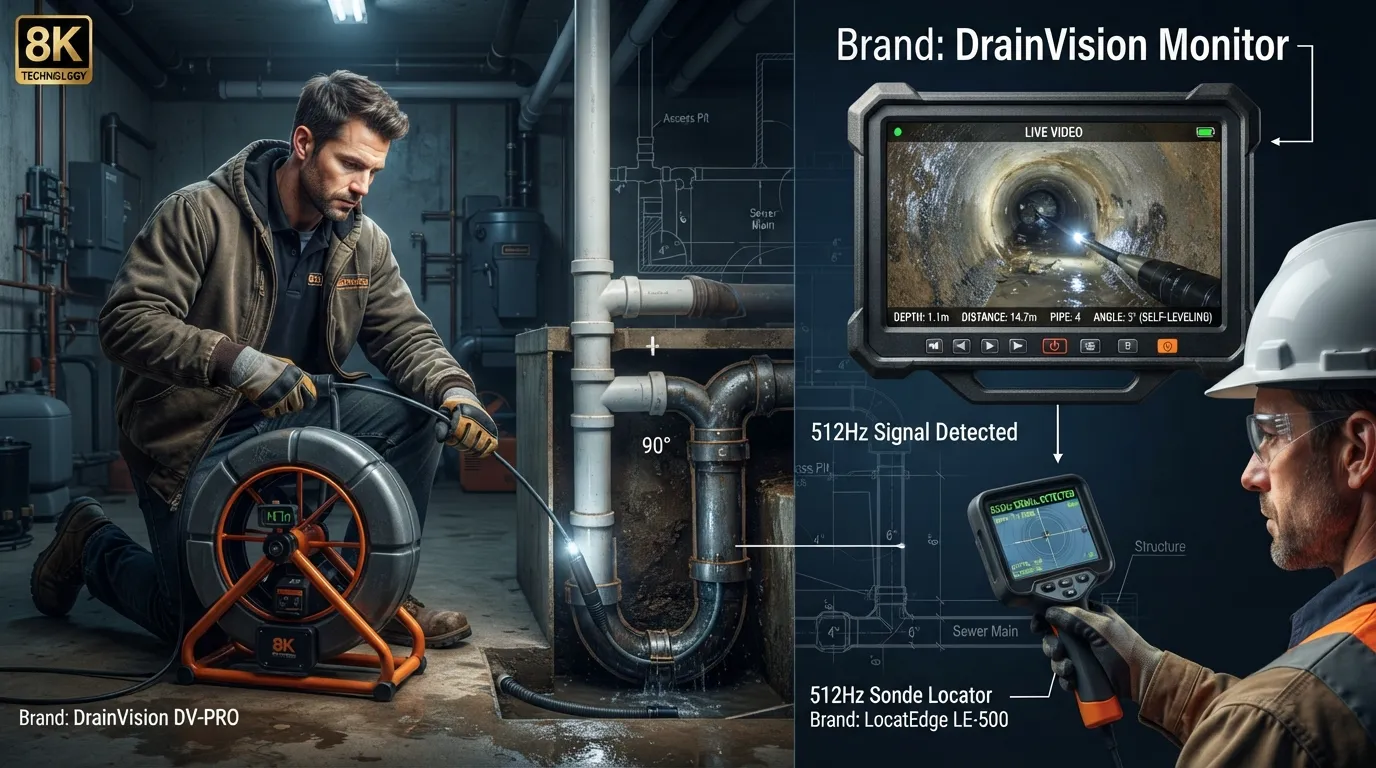
Revolutionizing Modern Plumbing Diagnostics with Advanced Camera Technology
Modern plumbing diagnostics have transformed entirely, shifting away from destructive guesswork toward precision engineering. When underground issues strike, specialized equipment allows professionals to peer directly into a sewer line without breaking a single piece of concrete or tearing up your landscape.
Utilizing a high-definition flexible rod camera, technicians can navigate complex residential and commercial pipe networks in real time. This non-invasive inspection approach pinpoints exact structural failures, blockages, and leaks with absolute surgical accuracy.
Why Some Sewer Lines Are Hard to Inspect
Traditional troubleshooting methods often fall short because underground plumbing is completely hidden from view and structurally intricate. Plumbers frequently face severe physical and geometric barriers when attempting to diagnose older or heavily damaged piping networks.
Complex Pipe Layouts: Deep burial depths, multiple 90-degree bends, and sudden vertical drops prevent direct visual access from surface entry points.
Severe Obstructions: Heavy root intrusion, collapsed sections, and hardened scale buildup block standard diagnostic tools from moving forward.
Material Degradation: Older clay, cast iron, or orangeburg pipes often feature rough interior walls, sagging slopes, and internal fractures that impede movement.
Limited Access Points: Many properties lack cleanout ports, forcing technicians to work through narrow or awkwardly positioned vertical stacks.
What This Guide Covers
Navigating underground plumbing issues requires a clear understanding of the diagnostics available for your home or commercial property. This comprehensive guide breaks down the mechanics, benefits, and practical applications of advanced video inspection technology.
Technological Mechanics: How high-resolution optics, self-leveling heads, and radio transmitters work together underground.
Navigation Strategies: The engineering methods used to maneuver equipment through tight angles and fragile lines.
Common Diagnostics: The specific types of damage—from root intrusion to structural cracks—that cameras reveal instantly.
Hiring Insights: What to expect during a professional service call and how to evaluate inspection reports.
Expert Insight: Investing in a preventive video evaluation saves property owners thousands of dollars in emergency repairs by catching minor pipe offsets before they evolve into complete structural collapses.
What Is a Camera Sewer Inspection?
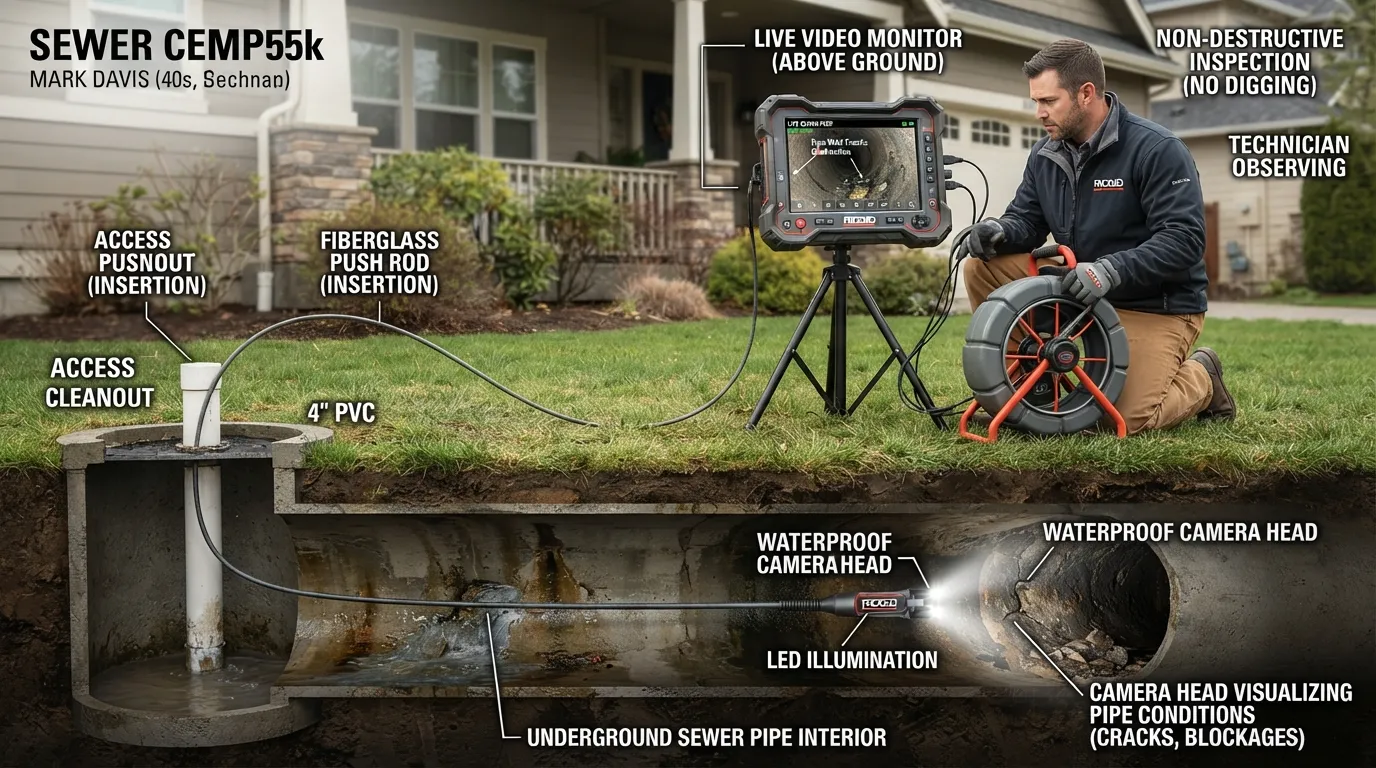
A camera sewer inspection is a high-tech, non-destructive inspection method that uses a waterproof, high-resolution camera mounted on a flexible fiberglass rod to visually examine the interior of underground pipes in real time. This advanced diagnostic tool transmits a live video feed to an above-ground monitor, allowing plumbers to instantly locate cracks, root intrusions, and blockages without digging up your yard.
How the Technology Works (Camera, Cable, Monitor)
Modern diagnostic systems rely on a tightly integrated setup of optical, mechanical, and digital components designed to navigate dark, winding subterranean environments. Each part of the assembly plays a critical role in capturing crystal-clear footage from deep inside the plumbing network.
Waterproof Camera Head: Equipped with ultra-bright LED lighting, the miniature camera captures high-definition visuals while withstanding heavy moisture and pressure.
Flexible Fiberglass Rod: The push cable balances rigidity for propulsion with extreme flexibility to glide smoothly around tight pipe bends.
Digital Control Monitor: Technicians view the live feed on a portable screen, recording the entire session for future diagnostic review and client transparency.
Radio Sonde Transmitters: Many camera heads feature built-in radio transmitters that emit a specific frequency, allowing technicians above ground to pinpoint the exact depth and location of a problem.
Why It Replaces Traditional Guesswork Methods
Historically, diagnosing a broken pipe meant guessing the location of a leak and excavating large sections of landscaping or concrete slabs until the issue was found. Video camera technology eliminates this trial-and-error approach through precise, visual-first diagnostics.
Zero Landscape Destruction: Technicians bypass destructive exploratory digging, preserving lawns, driveways, and interior flooring entirely.
Exact Problem Identification: Instead of assuming a pipe is broken, plumbers see the exact issue—whether it is grease buildup, a belly in the line, or a root mass.
Significant Time and Cost Savings: Pinpointing the exact problem area reduces labor hours, lowers repair costs, and ensures targeted fixes.
How Camera Sewer Inspections Reach Tough Places
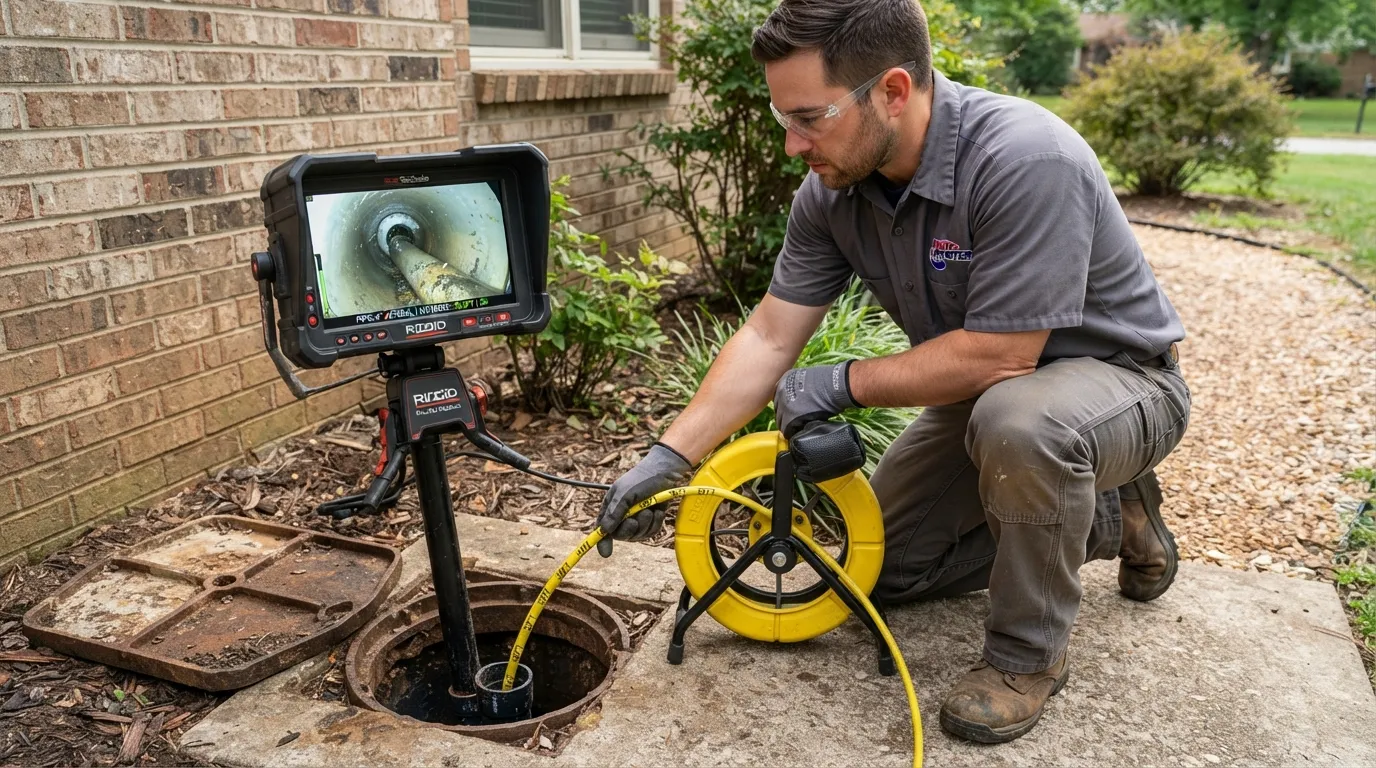
Advanced sewer cameras reach difficult locations through specialized mechanical engineering, high-flexibility push rods, and compact optics tailored to navigate complex subterranean layouts. These systems overcome spatial and structural barriers without requiring exploratory excavation.
Navigating Tight Bends and Elbows
Mrechanical resistance from 90-degree elbows and abrupt offsets is the primary hurdle when moving equipment through interior plumbing. Specialized push cables balance tensile stiffness with radial flexibility to glide smoothly past sharp directional changes.
Tapered Spring Heads: Flexible spring joints directly behind the camera lens absorb impact and guide the head around tight corners smoothly.
Low-Friction Push Rods: High-grade fiberglass or composite cables resist kinking while maintaining forward momentum through restrictive joints.
Centralizer Skids: Centering guides lift the camera off the bottom of the pipe, reducing friction against accumulated debris and smoothing navigation.
Long-Distance Runs (Cameras Rated 165ft to 250ft+)
Reaching deep municipal connections or long lateral lines requires heavy-duty reels carrying extended cable lengths without signal degradation. Professional-grade units from trusted manufacturers like HBUDS and VEVOR offer long-range camera reels rated from 165 feet up to 250 feet and beyond.
Integrated Distance Counters: On-screen digital footage counters display exactly how many feet of cable have been deployed, eliminating guesswork regarding the defect location.
Signal Shielding: High-end copper cores or fiber-optic wiring prevent video signal loss over long distances, ensuring a crisp display on the monitor.
Durable Reel Frames: Heavy-duty steel frames protect the extended cable during transport and allow controlled payout and retraction during deep runs.
Narrow-Diameter Pipes (2-inch vs 6-inch Lines)
Plumbing networks vary wildly in size, requiring versatile camera head diameters to inspect everything from small sink drains to large main lines. Miniature lenses fit into tight fixtures while larger heads suit main laterals.
Two-Inch Branch Lines: Ultra-compact camera heads under one inch in diameter easily negotiate restricted bathroom and kitchen drain pipes.
Six-Inch Main Laterals: Larger 23mm to 38mm camera heads provide optimal illumination and stability within wider sewer mains.
Interchangeable Head Systems: Modular kits allow technicians to swap camera heads mid-job depending on the pipe diameter encountered.
Vertical Drops and Multi-Story Access
Inspecting vertical stacks in multi-story buildings presents gravitational challenges that differ significantly from horizontal underground runs. Technicians use specialized retrieval and braking techniques to safely lower and pull equipment through vertical drops.
Friction Brakes: Built-in drum brakes on the cable reel prevent gravity from pulling too much line down vertical stacks too quickly.
Upward vs Downward Thrust: Specialized rigid push rods provide enough column strength to push cameras upward from a basement cleanout against gravity.
Protective Guide Sleeves: Smooth guide attachments prevent the camera housing from scraping against sharp interior pipe edges during vertical deployment.
Self-Leveling Lens Technology Explained
As a cable pushes through twisting pipes, it naturally rotates, which can cause the video feed to flip upside down and disorient the viewer. A self-leveling camera utilizes a weighted internal gimbal mechanism to keep the top of the image facing upright regardless of camera rotation.
Gravity-Driven Balance: The internal optics pivot freely on a weighted balance point, keeping the horizon level on the monitor screen.
Accurately Diagnosed Damage: Maintaining an upright orientation ensures technicians can correctly identify whether a defect is on the top, bottom, or sides of the pipe.
Professional Documentation: Clear, non-rotated video feeds make it easier to explain plumbing issues to property owners and insurance providers.
512Hz Sonde Transmitters: Pinpointing Depth & Location
Navigating a pipe is only half the battle; technicians must also know where to dig if a repair is required. A built-in sonde transmitter integrated into the camera head solves this by broadcasting an electromagnetic signal through the ground.
Active Signal Emission: The sonde emits a dedicated 512Hz frequency that travels upward through soil, concrete, and asphalt.
Surface Receiver Tracking: An above-ground wand receiver detects the signal strength and maps the exact lateral position and burial depth.
Precision Excavation: Surface marking guarantees that repair crews dig up only the exact square foot of earth required, protecting lawns and paving.
Step-by-Step: How the Inspection Process Actually Works
A professional sewer camera inspection follows a systematic, non-destructive workflow designed to safely record pipe interiors from entry point to main municipal tie-in. Knowing each phase helps property owners prepare effectively and understand what to expect during a service call.
Access Points: Cleanouts, Basement Openings, Exterior Access
Technicians begin by locating an appropriate entry portal to feed the camera cable directly into the drainage network without cutting into walls.
Exterior Main Cleanouts: The preferred access point is an outdoor cleanout plug, which provides straight-line entry into the lateral sewer line leading to the street.
Basement or Crawlspace Openings: In homes without outdoor cleanouts, plumbers access indoor stack cleanouts or floor drain connections located in the basement.
Alternative Access via Fixtures: For localized branch lines, technicians can sometimes enter through removed toilet flanges or primary utility stack access ports.
Real-Time Viewing and Issue Flagging
As the flexible fiberglass rod pushes forward, the waterproof lens transmits a continuous digital feed to the monitor screen for instant analysis.
Live Visual Diagnosis: Plumbers and property owners watch the display together to spot root intrusions, grease buildup, cracks, and structural offsets.
Digital Recording: The inspection session is recorded directly onto a digital drive or mobile device, giving homeowners a permanent file for future maintenance or real estate disclosures.
Sonde Marking and Tracing: When a severe defect is found, the technician pauses to sweep the surface with a 512Hz receiver, marking the exact spot on the ground with paint or flags.
How Long Does a Sewer Camera Inspection Take?
Most standard residential sewer camera inspections are fast, efficient, and minimally disruptive to your daily schedule.
Average Duration: A typical residential sewer line check takes between 30 to 60 minutes from setup to cleanup.
Complex or Commercial Properties: Multi-story buildings, extensive commercial lateral networks, or lines obstructed by heavy debris can extend the process to 90 minutes or longer.
Immediate Debrief: Once the run is complete, the technician reviews the highlighted problem areas and outlines recommended repair or cleaning solutions on the spot.
How to Prepare for a Sewer Camera Inspection
Proper preparation ensures the plumbing technician can complete the diagnostic run quickly and without obstruction.
Clear the Access Area: Ensure the designated cleanout port—whether in the basement, garage, or yard—is completely unobstructed by storage boxes or landscaping.
Minimize Water Usage: Refrain from running washing machines, flushing toilets, or running sink taps while the camera is actively inside the pipe.
Address Active Backups First: If you’re dealing with an active backup during inspection prep, contact an emergency plumber to clear standing water before attempting to push delicate camera equipment through blocked lines.
What Problems Do Camera Inspections Detect?
A sewer camera inspection acts as a definitive diagnostic tool that uncovers hidden structural failures, pipe degradations, and stubborn blockages deep within underground plumbing networks. By providing crystal-clear visual evidence, this technology identifies specific faults before they escalate into catastrophic structural failures or messy sewage backups.
Cracks and Structural Damage
Underground pipes endure immense pressure from shifting soil, heavy surface traffic, and aging materials, frequently leading to localized fractures and breaks.
Longitudinal and Circumferential Cracks: High-resolution footage reveals hairline fractures that weaken pipe integrity and invite tree roots inside.
Crushed or Collapsed Sections: Extreme soil pressure or ground settling can completely flatten brittle older pipes, halting wastewater flow entirely.
Sagging Lines (Bellies): Low spots in the pipe create a pool where solid waste accumulates, repeatedly causing slow drains and recurring blockages.
Corrosion and Pipe Deterioration
Older metal and composite piping systems degrade over decades of exposure to moisture, chemicals, and acidic wastewater.
Cast Iron Scaling: Decades of mineral buildup create rough, jagged interior walls that catch toilet paper and debris.
Orangeburg Pipe Failure: Laminated wood-cellulose pipes soften, blister, and warp inward over time, eventually choking off the interior flow area.
Clay Pipe Flaking: Weathered clay segments lose their structural glaze, becoming porous and susceptible to root penetration at the joints.
Misaligned or Separated Joints
As the ground beneath a home shifts naturally over time, individual pipe sections can slip out of alignment, creating vulnerable gaps.
Offset Joints: When pipe sections shift vertically or horizontally, they form a lip that catches solid waste and traps toilet paper.
Separated Couplings: Gaps between pipe segments allow surrounding soil to wash into the drain, causing voids and sinkholes above.
Loose Fittings: Commercial and residential tee fittings frequently show joint separation caused by thermal expansion or hydraulic shock.
Grease Buildup and Blockages
Kitchen waste, foreign objects, and accumulated sludge frequently choke commercial and residential plumbing systems.
Hardened Grease Plugs: Congealed cooking oils coat pipe walls, narrowing the interior diameter until complete backups occur. Addressing grease buildup and blockages often requires specialized hydro-jetting or professional drain cleaning to scour pipe walls back to bare metal.
Foreign Debris: Non-flushable items, children’s toys, and plastic bottle caps trapped in pipe fittings are easily located and identified on screen.
Sludge Accumulation: Heavy organic waste buildup creates slow drainage and foul odors that regular chemical cleaners cannot fix.
Tree Root Intrusion
Aggressive tree roots seek out microscopic moisture condensation escaping from tiny pipe joints, infiltrating the system and expanding rapidly.
Fine Root Hairs: Wispy root tendrils slip through minor joint seals, forming dense fibrous webs that catch solid waste.
Massive Root Balls: Left unchecked, roots multiply into thick blockages that completely choke out wastewater flow.
Joint Dislodgement: Expanding root masses exert outward pressure on pipe walls, forcing joints further apart and cracking brittle pipes.
Camera Sewer Inspection Cost Breakdown
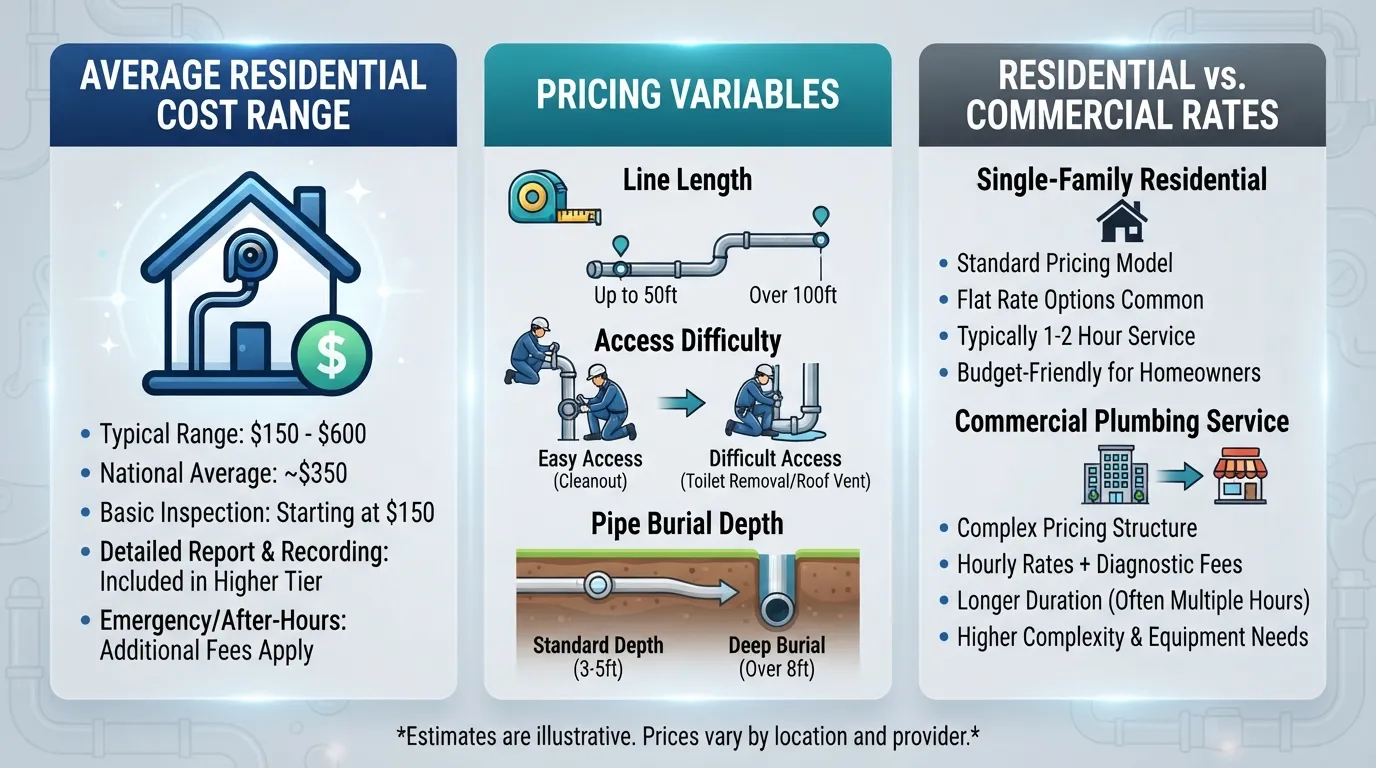
Understanding the financial investment required for a diagnostic video evaluation helps property owners budget accurately and avoid unexpected service fees. Professional sewer camera inspections offer high return on value by preventing costly exploratory excavation and pinpointing precise pipe repairs.
Average Cost Range ($100 to $600)
Most standard professional sewer video evaluations fall within a predictable baseline pricing structure depending on regional labor rates and service complexity.
Standard Residential Rates: Basic inspections generally range from $150 to $350 for accessible residential lateral lines.
Comprehensive Packages: Advanced diagnostics that include a detailed digital recording, written report, and precise 512Hz sonde location mapping typically range from $350 to $600.
Add-On Services: Combining a video run with preventive hydro-jetting or rooter clearing can adjust total project pricing.
What Affects the Final Price (Length, Access Difficulty, Pipe Depth)
Several distinct physical and logistical variables influence the overall cost of a camera inspection job.
Line Length and Reach: Inspecting long lateral runs extending past 150 feet requires specialized heavy reels and extra labor time.
Accessibility Challenges: Homes lacking clear outdoor cleanouts require technicians to pull indoor toilets or navigate cramped crawlspaces, increasing setup time.
Pipe Depth and Location: Deep municipal tie-ins or pipes buried beneath concrete slabs demand specialized sonde tracking equipment to map accurately.
Residential vs. Commercial Pricing Differences
Service pricing scales significantly when transitioning from single-family homes to large-scale business operations.
Residential Scope: Single-family homes feature straightforward lateral connections that can usually be evaluated in under an hour.
Commercial Scope: Multi-story buildings, industrial facilities, and restaurant networks feature intricate drainage arrays and extended runs. Evaluating these setups requires specialized commercial pricing structures tailored to extensive commercial plumbing footprints and detailed multi-line diagnostics.
What a Sewer Camera Inspection Can't Tell You (Limitations)
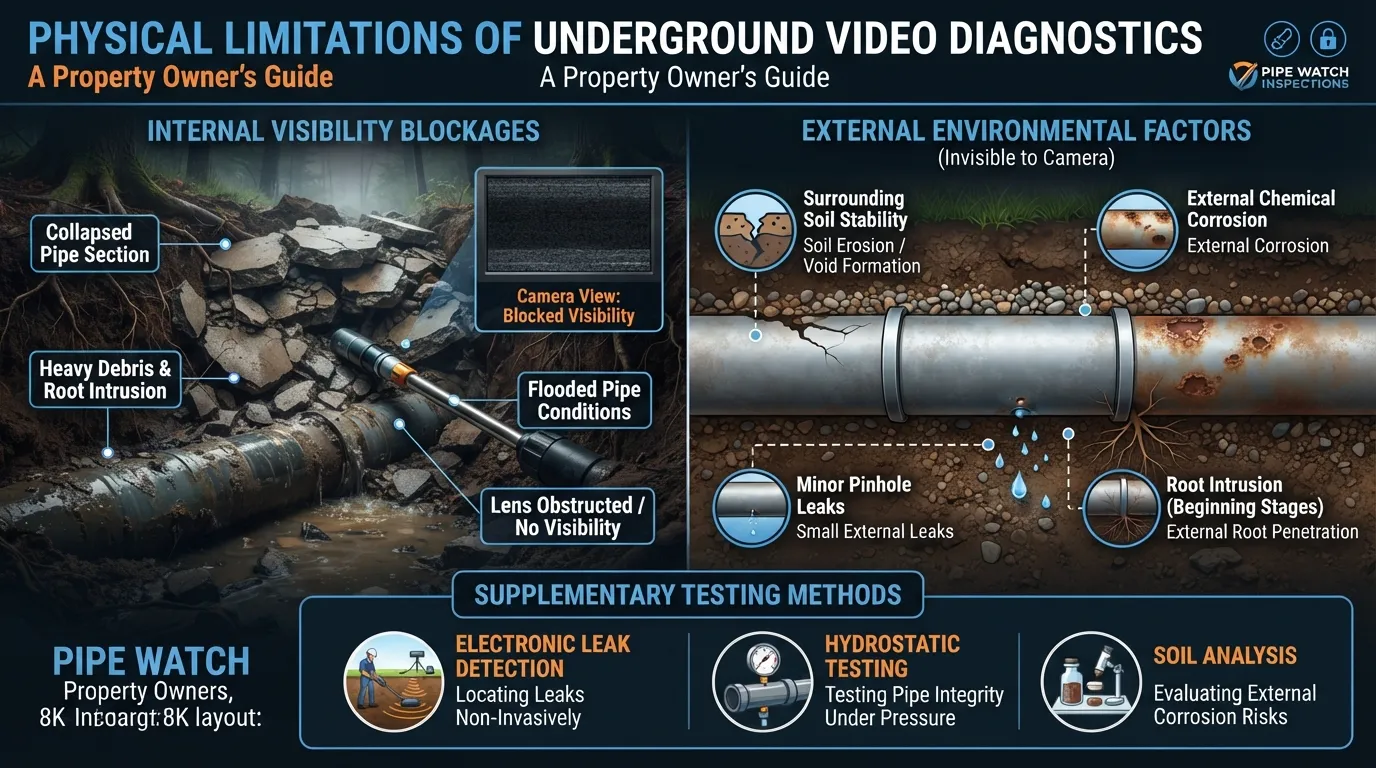
While video diagnostics offer incredible clarity, professional transparency means understanding where the technology’s physical boundaries lie. A camera cannot solve every underground riddle on its own, and recognizing these operational limitations helps property owners set realistic expectations.
Limitations With Extremely Narrow or Collapsed Pipes
Physical access inside a severely damaged or restricted drainage system can completely halt a camera run before it reaches the municipal main.
Completely Flattened Pipes: When a pipe is totally crushed or collapsed, the lens hits a physical wall and cannot push past the obstruction to view downstream sections.
Heavy Standing Water: Submerged camera heads push underwater blindly, as murky, stagnant wastewater blocks light and obscures pipe wall details.
Severe Obstructions: Dense root balls or lodged debris can block the field of view entirely, requiring hydro-jet clearing before filming can resume.
What Cameras Can’t Detect (Soil Conditions, Some Leak Types)
Internal video feeds reveal visual conditions inside the pipe wall, but they cannot assess external environmental factors surrounding the plumbing network.
Surrounding Soil Stability: Cameras cannot detect shifting soil, ground erosion, or subterranean voids developing directly underneath the pipeline.
Microscopic Seepages: Small pinhole leaks or minor sweating joints that do not actively disrupt interior flow may remain invisible on camera.
External Chemical Corrosion: Soil chemistry and groundwater acidity that attack pipes from the outside cannot be observed from the interior view.
When Additional Diagnostic Tools Are Needed
Complex plumbing failures frequently require pairing video technology with additional diagnostic tools and leak types to build a comprehensive repair plan.
Electronic Leak Detection: Acoustic listening devices and pressure testing pinpoint non-invasive water supply leaks occurring outside drainage lines.
Hydrostatic Testing: Filling lines with water and monitoring pressure drops confirms whether a pipe holds watertight integrity.
Smoke Testing: Introducing non-toxic smoke into sewer lines reveals hidden cross-connections, roof vent leaks, and broken vent stacks.
Pipe Material Matters: How Different Pipes Affect Tough-Access Inspections
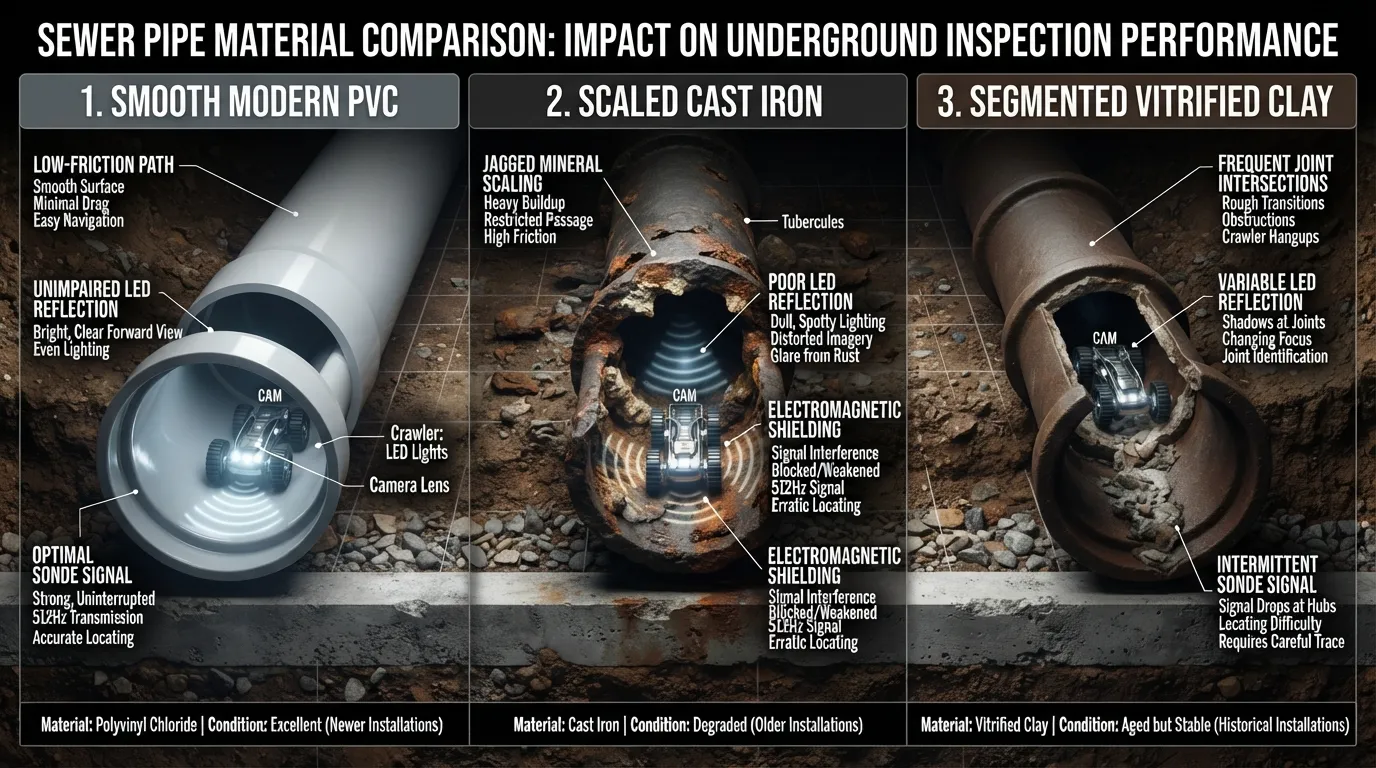
The physical composition of your plumbing network directly impacts how easily a diagnostic camera moves through the line and how accurately a sonde transmitter can map its location. Different materials create unique friction coefficients, lighting challenges, and signal interference that technicians must navigate during tough-access inspections.
PVC Pipes
Modern polyvinyl chloride lines offer the smoothest interior environment for camera navigation, resulting in clean, straightforward diagnostic runs.
Low-Friction Surfaces: The smooth plastic interior allows push rods to glide effortlessly over long distances without snagging.
Optimal Lighting Reflection: White or green PVC walls reflect LED illumination evenly, providing crystal-clear video footage of minor cracks or joint offsets.
Unimpeded Sonde Signals: Plastic material does not block electromagnetic frequencies, ensuring high signal accuracy when tracking depth with a 512Hz transmitter.
Cast Iron Pipes
Cast iron plumbing offers exceptional structural durability, but its aging interior characteristics create significant visual and mechanical hurdles.
Rough Mineral Scaling: Decades of corrosion and scale buildup create jagged interior walls that catch camera heads and obscure minor fractures.
Dark Interior Surfaces: Dark iron absorbs LED light rather than reflecting it, requiring ultra-bright camera heads to illuminate deep structural flaws.
Electromagnetic Shielding: Thick metal walls can partially attenuate or distort sonde transmitter signals, requiring precise above-ground calibration to pinpoint exact burial depths.
Old Clay Pipes
Vitrified clay pipes are common in older municipal connections and home laterals, featuring segmented joints every few feet that present unique navigational challenges.
Frequent Joint Intersections: Because clay sections are short, the camera repeatedly bumps over rigid collar joints, which can deflect push rods off-center.
Vulnerability to Root Intrusion: Rough clay joints frequently invite root growth, creating dense blockages that stop cameras in their tracks.
Porous Material Aging: Weathered clay absorbs moisture and loses its original structural glaze, creating rough patches that increase friction on push cables.
How Material Affects Camera Navigation and Signal Accuracy
Understanding how pipe material interacts with your equipment allows technicians to choose the right camera head size, skid attachments, and transmitter frequency for the job.
Tailored Equipment Selection: Plumbers switch between rigid push rods for smooth PVC and flexible, spring-supported heads for offset clay joints.
Signal Adjustments: Technicians account for metallic shielding in cast iron by adjusting receiver sensitivity to maintain pinpoint signal accuracy.
Pre-Inspection Cleaning: Heavily scaled iron or root-choked clay lines often require a quick hydro-jet pass before a camera can successfully reach the end of the line.
Camera Sewer Inspections for Home Inspections & Real Estate
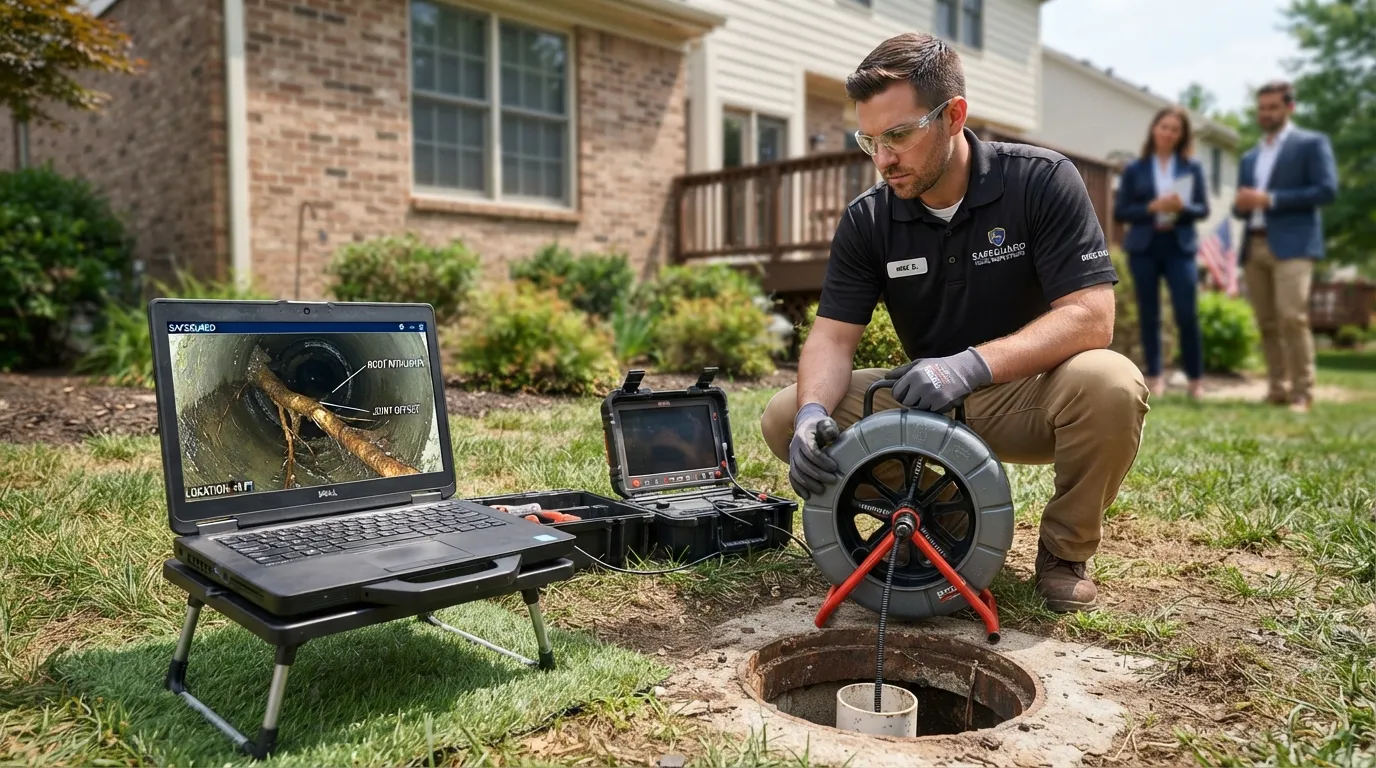
Incorporating a video sewer evaluation into a real estate transaction provides essential protection for home buyers and sellers alike. Because standard structural home inspections only check accessible fixtures, a dedicated video run is the only way to uncover hidden underground liabilities before closing.
What Fails a Sewer Inspection?
During a pre-purchase assessment, certain structural faults trigger automatic inspection failures that demand immediate seller negotiation or mandatory repair.
Collapsed or Crushed Piping: Sections of pipe flattened by ground shifts or heavy surface loads prevent wastewater from exiting the property.
Severe Structural Offsets: Disconnected joints or severe pipe sagging (bellies) that retain standing waste indicate an imminent system failure.
Advanced Root Intrusion: Dense root masses that choke the entire pipe diameter and resist standard clearing point to deferred maintenance.
What Won’t Pass a Sewer Inspection?
Minor anomalies are common in older properties, but specific conditions will prevent a clean bill of health on a real estate disclosure report.
Active Blockages and Slow Drains: Lines that back up during a standard water flow test fail functionality criteria.
Degraded Pipe Materials: Outdated infrastructure like crumbling Orangeburg or heavily scaled cast iron fails longevity standards.
Unpermitted Modifications: Improperly tied-in sump pumps or illegal branch connections violate local plumbing codes.
What Is the Biggest Red Flag in a Home Inspection?
Discovering structural compromise closest to the municipal connection presents the single largest financial and operational risk for buyers.
Main Lateral Separation: A complete break near the street tie-in requires deep excavation beneath pavement or landscaping, creating massive repair bills.
Active Subsurface Voids: Soil washing out through broken pipe joints creates hidden sinkholes beneath driveways and foundations.
Total Pipe Collapse: Finding a completely blocked or crushed main line means the home is effectively uninhabitable without an immediate, total replacement.
What Decreases Property Value the Most?
Subterranean plumbing defects directly impact home valuation, often prompting steep price reductions or canceled contracts.
Five-Figure Replacement Costs: Needing a full lateral replacement can wipe out a buyer’s remodeling budget or devalue a home by tens of thousands of dollars.
Chronic Backup History: Properties with a documented history of recurring sewage overflows struggle to attract confident buyers.
Foundation Compromise: Long-term leaks that erode structural load-bearing soil beneath concrete slabs cause widespread structural settling.
Will Homeowners Insurance Cover Sewer Line Repair?
Navigating insurance claims for underground pipe failures requires understanding standard policy exclusions. Standard homeowners insurance policies typically exclude damage caused by wear, tear, root intrusion, or gradual pipe deterioration.
Exclusion of Gradual Deterioration: Insurance providers view routine maintenance and aging pipes as the homeowner’s responsibility.
The Value of Endorsements: Property owners can often purchase optional water or sewer backup riders to cover sudden interior backup damage.
Service Line Coverage: Many insurers now offer separate service line endorsements that help pay for underground sewer line repair if a pipe breaks due to a covered peril.
Is a DIY Sewer Camera Inspection Possible?
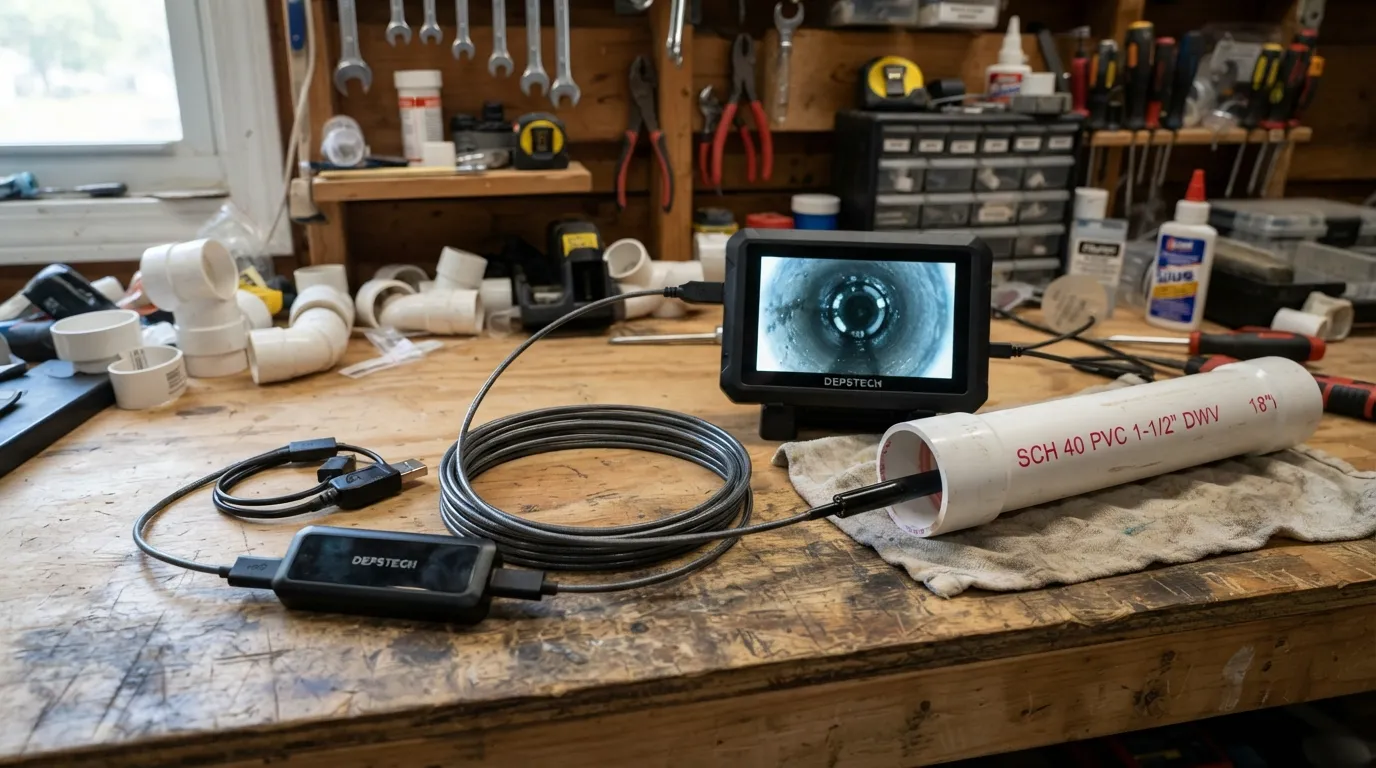
With various consumer-grade diagnostic tools available online, property owners often wonder whether they can handle a sewer inspection themselves. While purchasing a basic endoscopic camera might seem like a cost-effective shortcut, inspecting underground sewer lines requires specialized equipment and professional expertise to avoid costly mistakes.
Consumer-Grade Camera Options
The online marketplace features numerous budget-friendly scopes and endoscopes marketed directly to homeowners seeking quick plumbing answers.
Smartphone Endoscopes: Inexpensive, short-cable USB scopes are widely available for checking minor sink traps and shallow toilet lines.
Budget Push Rod Units: Consumer-grade systems ranging from $200 to $500 offer longer fiberglass cables and miniature screens for light residential use.
Basic Lighting Limitations: These entry-level units typically feature weaker LED arrays that struggle to illuminate wide 4-inch or 6-inch main sewer lines.
Why Tough-Access Areas Are Difficult to DIY
Navigating a convoluted plumbing network is far more complex than simply pushing a camera down an open pipe. Amateurs frequently encounter physical barriers that consumer tools cannot overcome.
Lack of Rigidity Control: Cheap push rods lack the column strength needed to maneuver through long runs, often kinking or coiling up inside the pipe instead of moving forward.
Absence of Sonde Locators: Consumer-grade cameras rarely feature built-in 512Hz transmitters, meaning users can locate a problem visually on a screen but have no way to track its depth or map its exact location above ground.
Risk of Equipment Sticking: Inexperienced operators can easily wedge a cheap camera head underneath a collapsed pipe offset or tight root ball, resulting in a broken cable and a much bigger plumbing emergency.
When to Call a Professional Instead
Knowing when to bypass consumer gadgets and hire a licensed professional ensures your plumbing system is diagnosed safely and accurately.
Recurring Main Line Backups: If your home experiences repeated slow drains or sewage overflows, a high-powered professional unit is required to inspect deep lateral lines.
Real Estate Transactions: Home purchases demand certified, high-definition recordings and precise depth mapping that meet strict lending and disclosure standards.
Suspected Structural Damage: When deep cracks, severe pipe offsets, or major root intrusions are suspected, professional inspection services provide the advanced equipment and technical know-how needed to map out a safe repair strategy.
How Accurate Are Sewer Camera Locators?
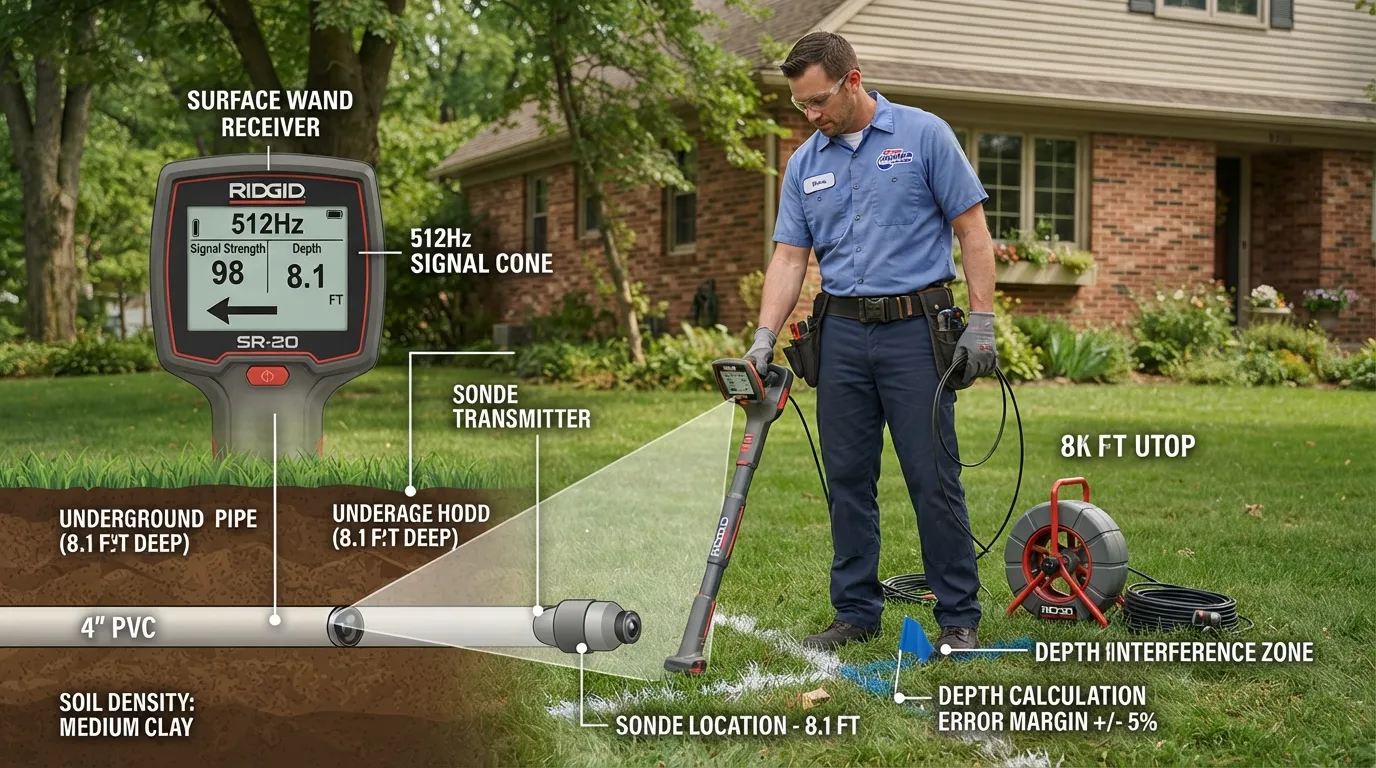
Sonde locators provide remarkable precision when mapping underground sewer lines, allowing technicians to pinpoint the exact location and burial depth of a pipe defect before any digging begins. Understanding the technical accuracy of these systems helps property owners trust the surface markings used by professional excavation crews.
Sonde Locator Accuracy Range
Professional-grade 512Hz sonde transmitters and surface receivers boast high levels of spatial precision when operated correctly.
Horizontal Positioning: Under ideal conditions, a calibrated receiver can track a sonde transmitter within a lateral margin of error of just a few inches.
Depth Measurement Accuracy: Depth readings are generally accurate to within 10 percent of the actual burial depth, provided the soil medium is uniform.
Real-Time Calibration: Technicians sweep the above-ground wand in a grid pattern to verify signal peaks, ensuring maximum targeting precision.
Factors That Affect Locator Precision (Soil Density, Depth, Interference)
While sonde locators are highly reliable, various environmental and technical variables can occasionally distort electromagnetic signals.
Excessive Burial Depth: As pipes run deeper beneath the surface, the electromagnetic signal spreads out, slightly reducing the pinpoint sharpness of the receiver’s peak reading.
Varying Soil Density: Dense clay, rocky soil, or saturated ground can refract or dampen signal strength, requiring experienced technicians to interpret subtle reading shifts.
Electrical and Metallic Interference: Nearby electrical conduits, underground utilities, or thick reinforced concrete slabs can cause signal scattering and signal interference, demanding frequency adjustments to maintain accurate surface tracking.
Is a Sewer Camera Inspection Worth It?
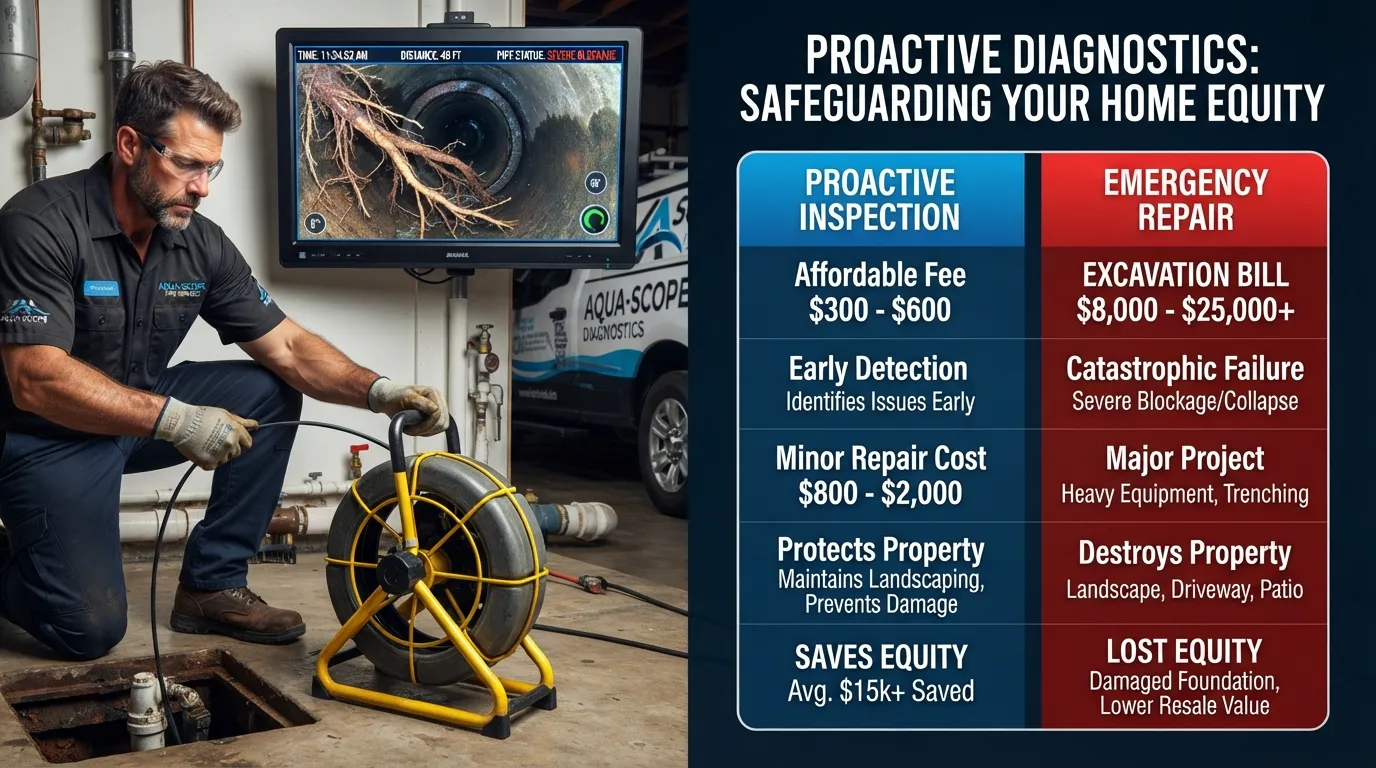
Investing in a professional sewer camera inspection delivers exceptional value by transforming underground guesswork into precise, actionable intelligence. While some homeowners hesitate at the upfront diagnostic fee, catching a minor structural defect early prevents catastrophic property damage and saves thousands of dollars in emergency plumbing repairs.
Cost of Inspection vs. Cost of Undetected Damage
Comparing the modest price of a video diagnostic to the potential expenses of a catastrophic failure highlights the true value of inspection.
Upfront Diagnostic Investment: Spending a few hundred dollars on a professional camera run provides complete visibility into your plumbing system’s structural integrity.
The High Cost of Emergency Digging: Left undetected, minor root intrusions or cracked pipe joints can evolve into total collapses, resulting in thousands of dollars in emergency excavation, pipe replacement, and landscaping restoration.
Insurance and Resale Protection: Having a documented video record protects home buyers from inheriting hidden plumbing liabilities and gives homeowners verified proof for property disclosures.
Situations Where It’s Highly Recommended
While preventive maintenance is always beneficial, certain critical scenarios make a sewer camera inspection virtually indispensable for property owners.
Buying or Selling a Real Estate Property: Evaluating the lateral line before closing ensures buyers do not purchase a home burdened by a failing, five-figure sewer repair.
Recurring Slow Drains and Backups: If plunging or basic snaking only provides temporary relief, a camera run identifies the root cause—such as a pipe belly or grease plug—once and for all.
Mature Landscaping and Tree Growth: Properties surrounded by large mature trees face a high risk of root intrusion, making periodic camera checks a smart preventative safeguard.
Frequently Asked Questions
What are the common problems found during a sewer camera inspection?
Tree Root Intrusion: Wispy root tendrils or massive root balls that breach pipe joints and choke wastewater flow.
Cracks and Structural Offsets: Line fractures, collapsed sections, and sagging pipe bellies caused by shifting soil.
Grease Buildup and Scale: Thick interior coatings in cast iron or kitchen lines that narrow the pipe diameter and cause recurring blockages.
How accurate are sewer camera locators?
Horizontal Positioning: Calibrated 512Hz sonde receivers can track lateral pipe positions within a margin of just a few inches.
Depth Precision: Depth measurements are typically accurate to within 10 percent of actual burial depth under uniform soil conditions.
How long does a sewer camera inspection take?
Standard Duration: Most routine residential lateral inspections take between 30 to 60 minutes from setup to completion.
Complex Properties: Multi-story commercial networks or extensive lines obstructed by debris can take 90 minutes or longer.
Is a sewer camera inspection worth it?
Preventive Savings: Spending a few hundred dollars on diagnostics prevents catastrophic, multi-thousand-dollar emergency excavation bills.
Complete Transparency: It provides verifiable proof of pipe health for real estate transactions, insurance claims, and peace of mind.
What fails a sewer inspection?
Total Pipe Collapses: Crushed or completely broken pipes that block wastewater from reaching the municipal main.
Severe Joint Separation: Disconnected couplings and major structural offsets that leak sewage into surrounding soil.
Will homeowners insurance cover sewer line repair?
Standard Exclusions: Traditional insurance policies exclude damage caused by normal wear, tear, tree roots, and gradual pipe deterioration.
Endorsement Options: Homeowners can often purchase optional service line coverage or water backup riders to help pay for unexpected underground pipe repairs.
How to prepare for a sewer camera inspection?
Clear Access Points: Remove storage boxes, furniture, or landscaping blocking the indoor cleanout or outdoor access port.
Reduce Water Use: Avoid running washing machines, flushing toilets, or turning on sinks while the camera is actively inside the plumbing system.
What is the biggest red flag in a home inspection?
Main Lateral Failures: Discovering a completely collapsed pipe or major structural separation right near the street tie-in creates severe financial and operational risks.
Subsurface Voids: Hidden soil washouts caused by leaking joints that threaten driveways and foundation stability.
What won’t pass an inspection?
Active Backups: Drainage lines that fail basic water flow tests or back up during use.
Outdated Infrastructure: Crumbling Orangeburg pipes or severely corroded cast iron lines that have exceeded their structural lifespan.
What decreases property value the most?
Five-Figure Repairs: Needing an immediate, total sewer lateral replacement can instantly drain a buyer’s budget and lower a home’s market value.
History of Overflows: Properties with chronic, documented sewage backups struggle to attract confident buyers and often face delayed closing processes.
Conclusion & Call-to-Action
Advanced camera technology has completely transformed plumbing diagnostics, replacing destructive guesswork with precision engineering. By offering a live, non-invasive look deep inside your piping network, a professional inspection provides total clarity and peace of mind. Whether you are maintaining older infrastructure, troubleshooting a stubborn slow drain, or evaluating a new property, knowing the exact condition of your pipes is the smartest way to protect your investment.
Key Takeaways
Precision Diagnostics: High-resolution cameras and 512Hz sonde transmitters locate the exact depth and source of plumbing failures without damaging your landscaping.
Proactive Protection: Catching root intrusion, cracks, and scale early prevents minor issues from escalating into expensive emergency excavations.
Real Estate Confidence: A thorough video evaluation provides essential leverage and transparency during property purchases and disclosures.
Book a Professional Camera Sewer Inspection
Do not let hidden underground plumbing issues catch you off guard or lead to costly emergency repairs. Take control of your home’s infrastructure today with an expert evaluation from trusted local technicians.
Schedule Your Service: Ready to uncover what is happening beneath your property? Book your appointment now to secure a professional inspection.
Explore Comprehensive Care: For other household plumbing needs, learn more about our complete residential plumbing services and let our experienced team keep your system running smoothly.
Main Services
Related Posts
Need a Plumber in Miami?
Schedule service online or speak directly with the EZ Plumbing team.
Owner-Led Local Service
Know who is behind the business before you request service. The owners, contact line and Miami service pages are published clearly.
- Named business owners
- Direct phone and social channels
- Local Miami service information
Clear Help Before You Book
Review the relevant service page, contact the team directly and use the booking page when you are ready—without relying on vague claims.
- Service-specific information
- Direct questions before scheduling
- Clear online booking route