$99 Drain Cleaning: Why the Price Never Adds Up
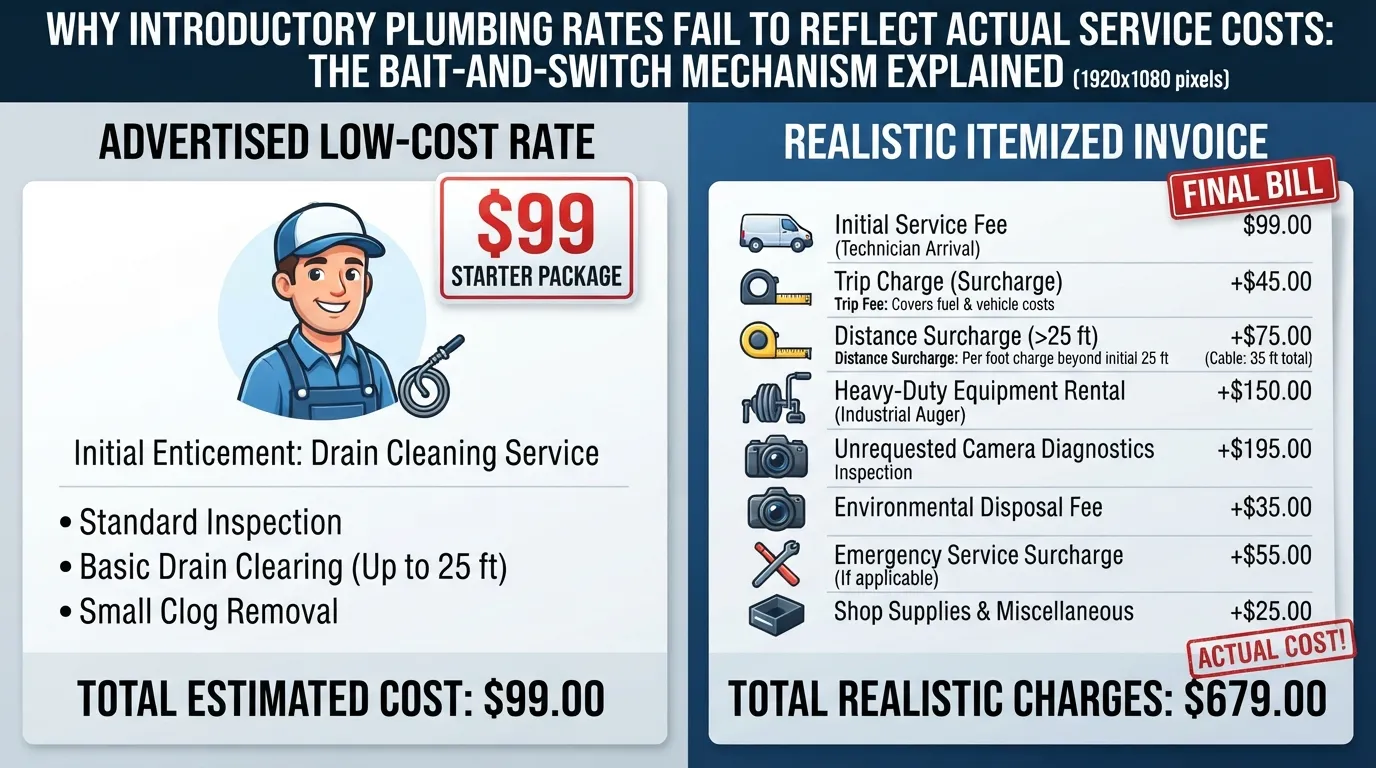
Understanding the Real Cost Behind $99 Drain Cleaning Offers
The advertised $99 drain cleaning special is a classic loss-leader pricing strategy used by plumbing companies to secure an initial appointment, and it rarely reflects the final cost of service. Once a technician arrives, standard base fees typically escalate due to hidden fees, complex clogs, or necessary supplementary work, shifting the initial bait-and-switch quote into a much higher total drain cleaning cost.
Upfront Limitations: The promotional rate usually covers only a brief, basic clearing of a readily accessible mainline or secondary drain.
The Upsell Trigger: Standard limitations mean that stubborn blockages, tree root intrusions, or broken pipes quickly fall outside the scope of the basic $99 tier.
Final Invoice Reality: Most homeowners end up paying significantly more once camera inspections, hydro-jetting, or specialized mechanical augering are added to the bill.
Navigating these promotional rates requires a clear understanding of what plumbing companies include in their base rates versus what triggers expensive add-on services. Knowing how these offers operate protects your budget from unexpected charges.
What's Actually Included in a $99 Offer?
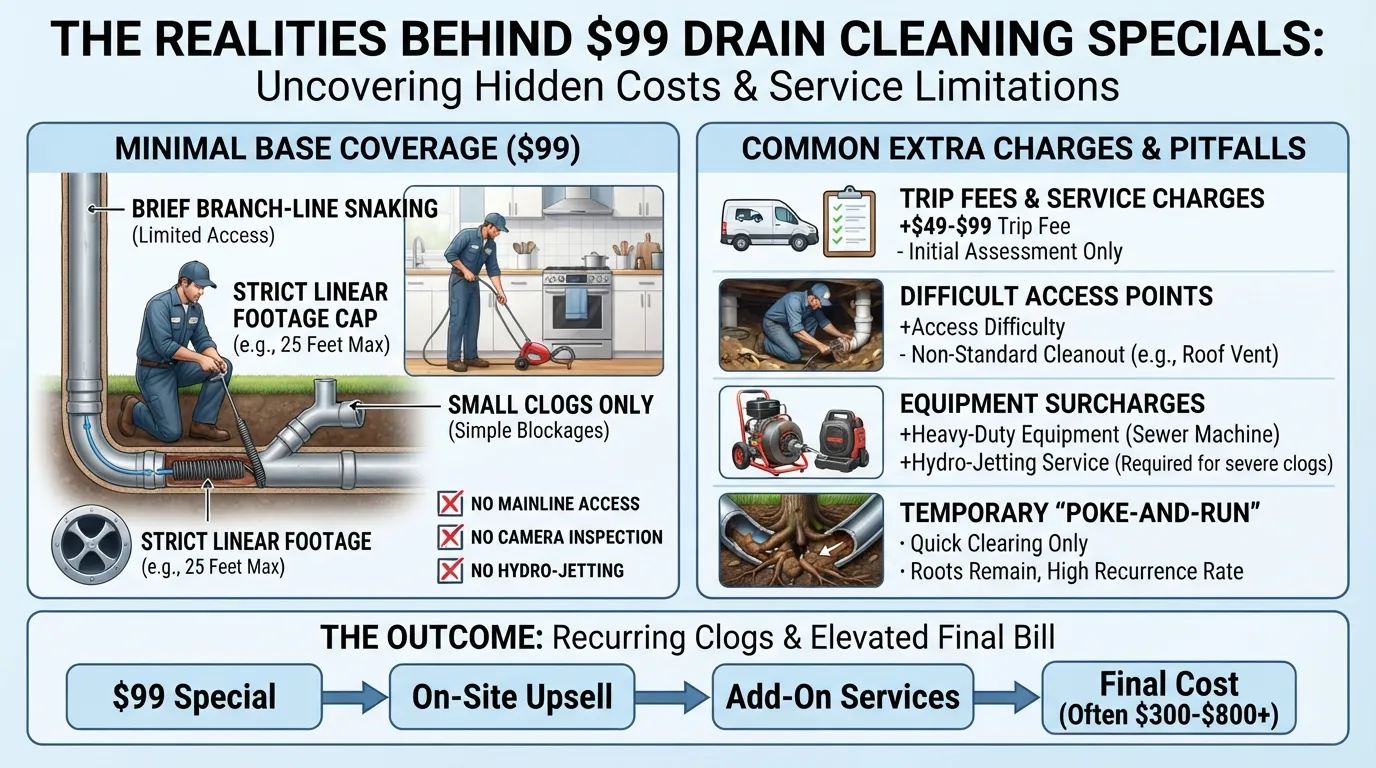
The advertised $99 rate typically covers a very narrow scope of work, designed strictly to get a technician through your door rather than to permanently resolve plumbing issues. Most basic promotions limit service to a single, easily accessible cleanout using standard, non-motorized equipment for a strictly defined duration.
The Fine Print — Footage Limits Explained
Promotional pricing almost always ties coverage to strict distance thresholds, measured in linear feet/footage from the entry point.
Distance Caps: Most introductory offers cover only the first 25 to 50 feet of accessible piping.
Surpassing Limits: If your blockage or main sewer line extends further into the system, every additional foot incurs heavy per-foot surcharges.
Accessibility Hurdles: Homes lacking an exterior or easily accessible cleanout often require technicians to pull toilets or navigate awkward crawlspaces, immediately nullifying the flat-rate promotion.
Common Add-On Fees
Once a technician begins evaluating your system, various hidden overhead charges are rapidly stacked onto the initial invoice. Homeowners frequently encounter unexpected line items that drive up the final bill before actual clearing even begins.
Trip Fee: Many companies charge a separate dispatch or service fee just to arrive at your home, which is rarely waived even if you decline the upsold service.
Equipment Fee: Heavy-duty augers, specialized rooters, or advanced machinery often carry separate daily rental or handling fees not included in the base quote.
Overtime Fee: Scheduling service during evenings, weekends, or holidays triggers steep emergency labor multipliers.
Stairway Fee: Certain service providers levy extra charges if equipment must be hauled up or down multi-story flights of stairs to reach basement or upper-level access points.
The “Poke-and-Run” Method — Why the Clog Comes Back
Cheap promotional services frequently rely on the “poke-and-run” approach, which creates an incomplete drain service and ensures a recurring clog. Instead of thoroughly scouring the pipe walls or removing the root cause of the blockage, technicians use a narrow snake to punch a quick hole through grease, scale, or debris.
Surface-Level Clearing: Water begins flowing temporarily, creating the illusion of a successful repair while leaving stubborn residue intact.
Rapid Failure: Because the underlying obstruction remains glued to the pipe interior, the blockage reforms within weeks.
Perpetual Cycle: Homeowners find themselves repeatedly calling for service, ultimately spending far more than they would have on a comprehensive cleaning from the start.
How Much Does Drain Cleaning Actually Cost? (Real Pricing Table)
Understanding the true average drain cleaning cost requires looking past promotional gimmicks to evaluate actual market rates. Total expenses vary significantly depending on where the blockage is located and the severity of the obstruction.
Average Cost by Job Type
| Fixture or Line Type | Typical Price Range | What It Usually Includes |
| Kitchen Sink / Lavatory | $150 – $350 | Basic snaking of branch lines, clearing grease or soap buildup. |
| Toilet | $100 – $250 | Removing localized obstructions or augering the toilet trap. |
| Shower / Tub Drain | $150 – $300 | Clearing hair, soap scum, and minor trap blockages. |
| Main Sewer Line | $300 – $800+ | Heavy-duty main line clearing, often utilizing professional sewer line service solutions. |
What Affects the Final Price
A standard service call fee is only the starting point; several physical and logistical factors determine your final kitchen sink unclog cost or main sewer line cost.
Access Difficulty: Lack of a proper cleanout forces technicians to remove fixtures or work in tight crawlspaces, increasing labor time.
Pipe Material & Condition: Older cast iron or delicate clay pipes require careful, slower handling compared to modern PVC.
Clog Severity: Stubborn intrusions like tree roots, heavy scale, or hardened grease demand advanced mechanical clearing or hydro-jetting.
Geographic Location: Labor rates and municipal disposal fees fluctuate significantly based on regional cost-of-living adjustments.
How Plumbers Actually Clean a Drain — Method by Method
Professional plumbing requires matching the right technical solution to the specific type, severity, and location of a blockage. Understanding how professional contractors diagnose and resolve pipeline obstructions reveals why low-cost gimmicks fall short and what proper drain clearing entails.
Drain Snaking / Augering — Best For
A drain auger or drain snake utilizes a flexible steel cable equipped with specialized cutting heads to punch through or retrieve localized blockages.
Ideal Applications: Perfect for clearing single-fixture clogs, such as hair-clogged shower drains, localized toilet traps, or minor kitchen sink blockages.
Operational Scope: The cable feeds down the pipe to break up physical obstructions like paper products or concentrated debris.
Limitation Factor: Snaking creates a pilot hole through the buildup but leaves grease, sludge, and scale coating the interior pipe walls.
Hydro Jetting — When You Need More Power
Hydro jetting delivers high-pressure streams of water (ranging from 1,500 to 4,000 PSI) through a specialized multi-directional nozzle to completely scour the interior walls of sewer and drain lines.
Ideal Applications: Necessary for heavy grease accumulation, thick mineral scale, recurring obstructions, and severe root intrusions.
Comprehensive Scouring: Unlike mechanical snakes that only poke through the center of a blockage, hydro jetting completely washes away residue, restoring pipes to a like-new diameter.
Long-Term Reliability: This method prevents rapid re-clogging by eliminating the foundational layers of buildup that attract future debris.
Camera Inspection — Diagnosing the Real Problem First
A professional camera inspection inserts a waterproof, high-definition fiber-optic camera into the plumbing system to provide a real-time visual assessment of the pipe interior.
Precision Targeting: A thorough sewer line diagnosis pinpoints the exact distance, structural condition, and nature of the damage before any tools touch the line.
Structural Evaluation: Plumbers can instantly identify collapsed pipes, severe root penetrations, bellies, or displaced joints.
Preventing Guesswork: Combining advanced diagnostics like a camera assessment with proper hydro jetting or camera inspection techniques ensures homeowners pay only for the exact repairs their system requires.
5 Red Flags You're Being Overcharged
Recognizing predatory plumbing practices protects your home and wallet from unnecessary expenses. Shady contractors often rely on high-pressure upsell tactics and hidden fees once they are inside your home, turning an advertised discount into an exorbitant bill.
Red Flag #1 — No Written Quote Before Work Starts
A reputable plumber always provides a clear, comprehensive written estimate outlining all labor, equipment, and potential variable costs before picking up a tool.
Verbal-Only Estimates: If a technician refuses to put prices in writing, they are leaving room to artificially inflate the bill once work is underway.
Blank Check Risk: Proceeding without an itemized quote strips away your ability to compare rates or decline unauthorized add-ons.
Red Flag #2 — Vague Answers About Footage or Access Fees
Promotional pricing often hides restrictive clauses regarding how deep they will snake or how they reach your pipes.
Deflecting Details: If the technician cannot clearly explain what distance is included or gives evasive answers about standard access fees, expect sudden surcharges.
Surprise Line Items: Vague communication usually precedes unexpected charges for pulling toilets or reaching secondary cleanouts.
Red Flag #3 — Pressure to Approve Extra Work On the Spot
Scam operators frequently manufacture artificial urgency, claiming catastrophic damage exists to force immediate, impulsive decisions.
Fear-Based Sales: Pushing for costly hydro-jetting or pipe replacement without offering time for a second opinion is a classic red flag.
The Right to Pause: Trustworthy professionals welcome questions and encourage homeowners to review options calmly.
Red Flag #4 — No Guarantee or Warranty Offered
Quality plumbing service stands behind its results with a definitive service warranty.
As-Is Disclaimers: If a company refuses to back their work with a short-term guarantee against recurring clogs, the clearing job was likely rushed or incomplete.
Accountability Gap: Lack of a warranty/guarantee means you pay twice when the blockage immediately returns.
Red Flag #5 — Technician Can’t Explain What They Found
An honest service provider educates the customer on the root cause of the plumbing failure using hard evidence.
Inability to Demonstrate: If a technician claims you need expensive repairs but cannot show you camera footage or explain the mechanical failure, they may be fabricating the issue.
Transparent Diagnostics: Legitimate experts walk you through their findings so you understand exactly why a specific fix is necessary.
Is Professional Drain Cleaning Worth It? (DIY vs. Pro)
While professional intervention is essential for complex blockages, minor plumbing issues can often be managed safely at home. Knowing when to tackle a clog yourself versus when to hire a licensed technician protects your plumbing system from costly damage and ensures you spend money only when necessary.
When DIY (Plunger, Natural Methods) Is Enough
For surface-level clogs or slow-draining fixtures, straightforward household tools and natural drain cleaning methods usually resolve the issue without professional assistance.
The Standard Plunger: A flange plunger for toilets or a cup plunger for sinks creates effective hydraulic pressure to dislodge loose hair, food particles, or paper.
Boiling Water & Dish Soap: Pouring hot water mixed with a small amount of dish soap down kitchen lines helps melt and wash away minor grease accumulations.
Baking Soda and Vinegar: This safe, effervescent reaction can break up light organic buildup in surface traps without releasing harsh chemicals.
Why Chemical Drain Cleaners Can Make Things Worse
Reaching for commercial liquid cleaners from the hardware store often results in severe chemical drain cleaner damage and expensive repairs down the line.
Corrosive Formulas: Most store-bought products rely on highly caustic acids or lye designed to generate extreme heat, which can quickly cause pipe corrosion in older metal or PVC systems.
Trapped Hazards: If a chemical cleaner fails to clear the clog, toxic, highly acidic water remains pooled in your pipes, creating a severe splash-back hazard for anyone or any tool working on the line later.
Material Degradation: Repeated chemical applications weaken pipe joints, warp PVC, and eventually cause pinhole leaks or structural pipe failure.
When It’s Time to Call a Professional
Attempting DIY drain cleaning past a certain point wastes time and risks worsening the underlying plumbing issue.
Multiple Fixture Backups: If water starts bubbling up in your bathtub when you flush the toilet, or your kitchen sink backs up when the washing machine drains, the blockage is deep in the main line.
Persistent Recurrence: When a clog returns days after you clear it, a deeper structural problem like tree root infiltration or a broken pipe requires professional machinery.
Total Stoppage: Complete drainage failure that resists plunging and basic manual clearing requires specialized contractor tools like hydro-jetters and camera inspections to resolve safely.
Are Blocked Drains Covered by Home Insurance?
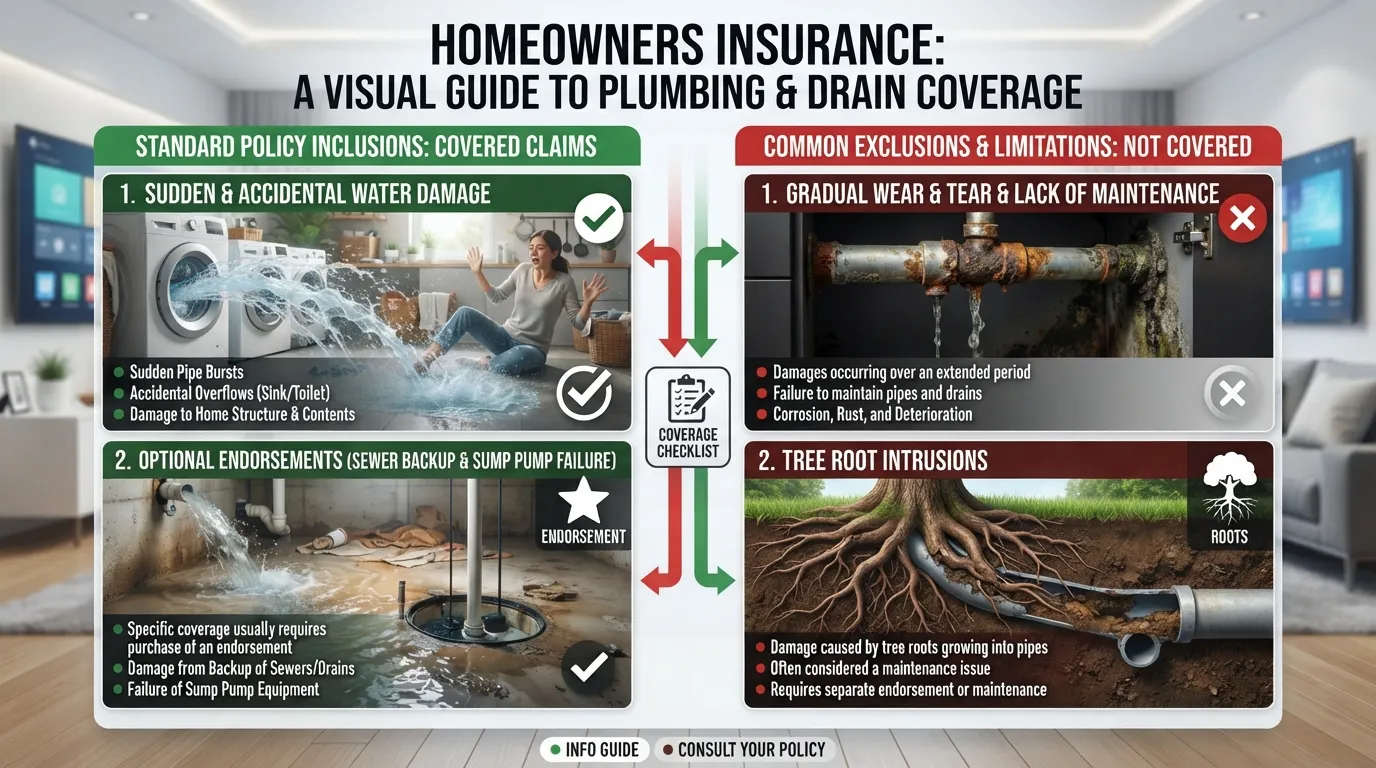
Navigating insurance claims for plumbing failures can be complex, as standard homeowners insurance policies rarely cover routine maintenance or standard clogs. However, coverage depends heavily on the root cause of the blockage and whether specific policy endorsements were added prior to the incident.
What Standard Homeowners Policies Typically Cover
Most basic insurance policies do not cover the cost of clearing a standard clogged pipe, but they may cover sudden and accidental damage caused by a plumbing failure.
Sudden Water Damage: If a pipe bursts or instantly ruptures, causing widespread water damage to drywall, flooring, or furniture, the resulting interior water damage is typically covered.
Optional Sewer Backup Endorsements: Many carriers offer an optional sewer backup coverage rider, which protects against losses when municipal or main sewer lines back up into the home.
External vs. Internal Lines: Policies sometimes draw distinct lines of responsibility between the interior household plumbing and the exterior service lateral connecting to the city main.
What’s Usually Excluded
Insurance providers strictly differentiate between sudden emergencies and preventable issues, enforcing several standard exclusions.
Gradual Damage Exclusion: A gradual damage exclusion typically applies when slow leaks, corrosion, or pipe deterioration go unnoticed over months or years, meaning the insurance company will deny claims for the pipe repair itself.
Tree Root Intrusion: Damage caused by tree root damage is frequently classified as a maintenance issue resulting from lack of preventative pipe scouring, leaving the homeowner responsible for excavation costs.
Neglect and Lack of Maintenance: If an insurer determines that a severe backup occurred because known recurring clogs were ignored, the claim will be denied due to homeowner negligence.
Is This Even Legal? The Bait-and-Switch Advertising Problem
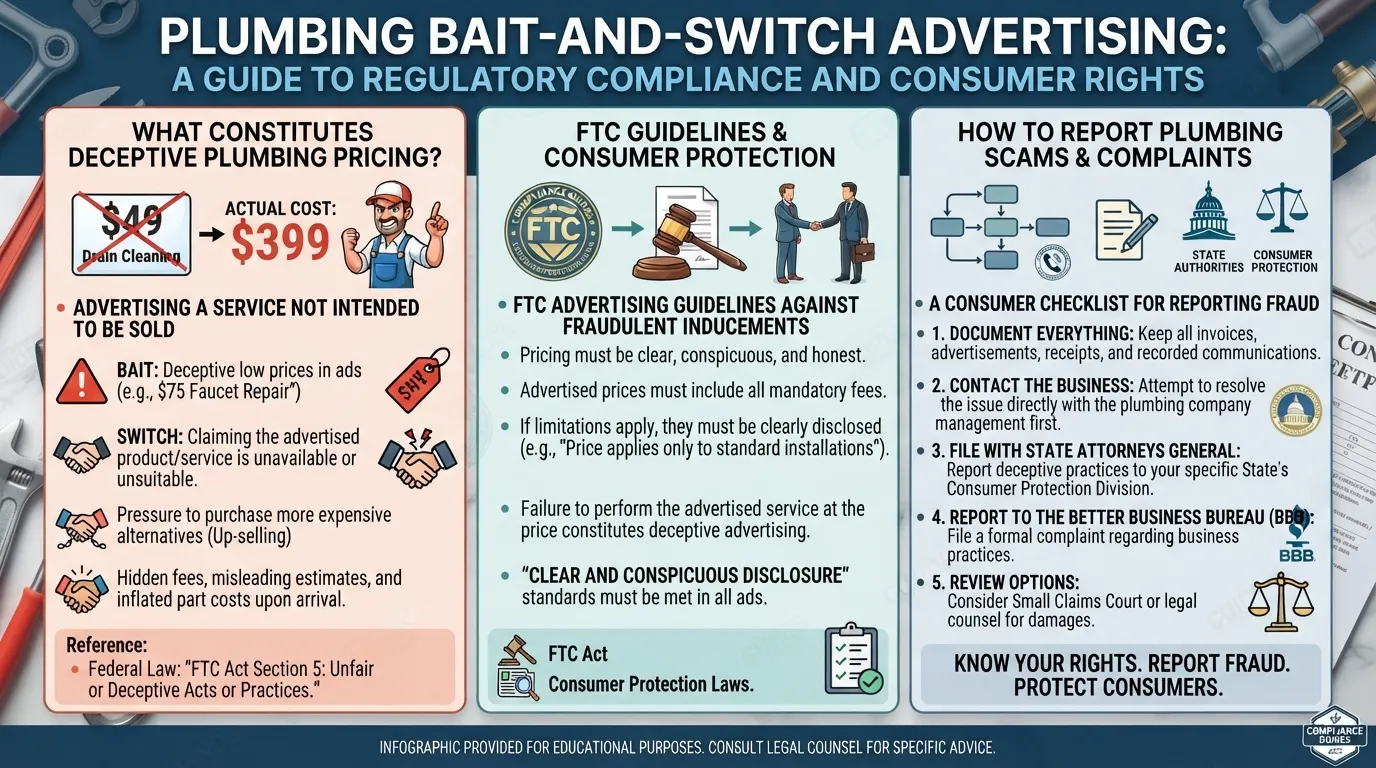
When an advertised $99 service routinely transforms into a $500 or $1,000 bill upon arrival, the practice crosses the line from aggressive sales into questionable regulatory territory. Evaluating whether these promotions violate consumer protection frameworks helps homeowners distinguish standard marketing from unlawful deception.
What Counts as Deceptive Advertising Under Consumer Protection Rules
Under federal and state trade standards, promoting a service at a rock-bottom price with no intention of fulfilling the job at that rate constitutes illegal bait advertising and deceptive pricing. According to FTC bait advertising rules, businesses break the law when they use artificially low rates solely to secure contact with a customer and systematically redirect them to high-cost alternatives.
Absence of Intent: If a company never actually performs complete drain cleaning for the advertised $99 rate, the promotion is legally considered a fraudulent inducement.
Concealed Limitations: Omitting vital prerequisites—such as requiring an accessible exterior cleanout or restricting footage to an unrealistic 15 feet—misleads reasonable consumers regarding the true cost of service.
High-Pressure Switching: Disparaging the basic service upon arrival to force an expensive, unrequested upgrade directly violates consumer protection statutes.
How to Report a Bait-and-Switch Pricing Complaint
If you experience aggressive upselling, hidden fees, or predatory pricing tactics from a local service contractor, you have direct avenues for complaint reporting and seeking recourse.
State Attorney General: Most local trade disputes fall under state jurisdiction; filing a formal consumer protection complaint with your state’s Attorney General office triggers official scrutiny.
Better Business Bureau (BBB): Submitting a review or formal dispute through the BBB creates a public record of deceptive business practices and pressures companies to resolve billing discrepancies.
Federal Trade Commission: For widespread, systemic deceptive marketing campaigns, reports can be submitted directly through consumer protection channels to flag fraudulent interstate or regional business models.
Real Example — Breaking Down an Actual Invoice
Analyzing an anonymized, real-world service invoice reveals exactly how a promotional rate spirals into an expensive bill. Reviewing line-item breakdowns provides practical insight into how hidden fees and supplementary charges accumulate during a standard service call.
The Advertised Price vs. The Final Bill
| Line Item | Advertised Quote | Actual Final Invoice | Explanation of Discrepancy |
| Base Service Fee | $99.00 | $99.00 | Covers initial dispatch and basic 25-foot snaking of an accessible line. |
| Trip / Dispatch Fee | $0.00 | $75.00 | Added upon arrival because the property was outside their standard local zone. |
| Access / Cleanout Surcharge | $0.00 | $150.00 | Charged because technicians had to pull a toilet to reach the main blockage. |
| Additional Footage Fee | $0.00 | $120.00 | Assessed for clearing 40 feet of pipe, exceeding the 25-foot promotional cap. |
| Post-Clearing Camera Check | $0.00 | $250.00 | Unrequested diagnostic fee added to verify line condition before leaving. |
| Total Cost | $99.00 | $694.00 | Final amount billed due to accumulated contingencies and add-on fees. |
What Should Have Been Disclosed Upfront
A truly transparent quote eliminates nasty surprises by establishing complete financial clarity before any work begins. Honesty regarding potential costs protects both the homeowner’s budget and the contractor’s reputation.
Complete Disclosure of Caps: Technicians must explicitly state distance limitations, cleanout requirements, and standard equipment fees over the phone before dispatching.
Itemized Estimates: Homeowners should always request an upfront quote that separates labor, diagnostic fees, and potential material surcharges into a clear line-item estimate.
The Right to Decline: A reputable service provider respects a customer’s right to pause or cancel the service if unexpected structural complications push the project past an agreed-upon budget.
Frequently Asked Questions
What Is the Biggest Cause of Blocked Drains?
The biggest cause of blocked drains varies depending on whether you are looking at interior fixtures or exterior main lines. Inside the home, kitchen drains are most frequently clogged by accumulated grease, cooking oils, and food scraps, while bathroom drains suffer primarily from hair, soap scum, and personal hygiene product buildup. Outdoors, main sewer lines are most commonly obstructed by invasive tree roots seeking out moisture through pipe joints, alongside structural shifts and collapsed lines.
What Do Plumbers Charge to Unblock a Drain?
Standard plumber charges generally range from $100 to $350 for basic, localized fixture clearing like a stubborn toilet or slow kitchen sink. However, addressing complex blockages, deep main sewer line obstructions, or emergency after-hours calls can drive total service expenses anywhere from $300 to over $800, depending on labor time, required equipment, and property accessibility.
How Much Does a Professional Drain Cleaner Cost?
The total professional drain cleaner cost depends heavily on the specific methodology required to resolve the issue effectively. Basic mechanical snaking usually falls on the lower end ($150 – $350), whereas advanced techniques like high-pressure hydro-jetting or comprehensive fiber-optic camera inspections typically range from $350 to $600+ due to the specialized equipment and labor intensity involved.
How Can You Tell If a Drain Clearing Company Is Legitimate?
Legitimate plumbing and drain cleaning companies distinguish themselves through upfront communication, transparent pricing, and comprehensive service guarantees. Trustworthy providers always supply a written, itemized estimate before starting work, clearly explain distance and access limitations over the phone, back their labor with a warranty, and never rely on high-pressure scare tactics to force immediate upgrades.
Conclusion
Falling for a $99 promotional rate often leads to unexpected expenses and incomplete service. True value in plumbing comes from relying on transparent pricing, thorough diagnostic methods, and experienced technicians who prioritize long-term pipe health over quick fixes. Protecting your home from aggressive upsell tactics starts with demanding clear, upfront communication before any work begins.
Ready to experience reliable service without hidden surprises? Book an honest, upfront quote today to connect with a trusted local plumber who puts your home first.
Main Services
Related Posts
Need a Plumber in Miami?
Schedule service online or speak directly with the EZ Plumbing team.
Owner-Led Local Service
Know who is behind the business before you request service. The owners, contact line and Miami service pages are published clearly.
- Named business owners
- Direct phone and social channels
- Local Miami service information
Clear Help Before You Book
Review the relevant service page, contact the team directly and use the booking page when you are ready—without relying on vague claims.
- Service-specific information
- Direct questions before scheduling
- Clear online booking route