How Professionals Do a Sewer Cleaning Job (Complete Guide)
What Does Professional Sewer Cleaning Actually Involve?
Professional sewer cleaning is a comprehensive, multi-stage engineering process designed to completely restore main sewer line capacity and prevent structural damage. Unlike simple DIY plumbing fixes, a professional intervention addresses the root cause of blockages deep within the private lateral or municipal connection.
Expert technicians rely on advanced diagnostics and high-powered mechanical systems to clear stubborn obstructions without compromising pipe integrity.
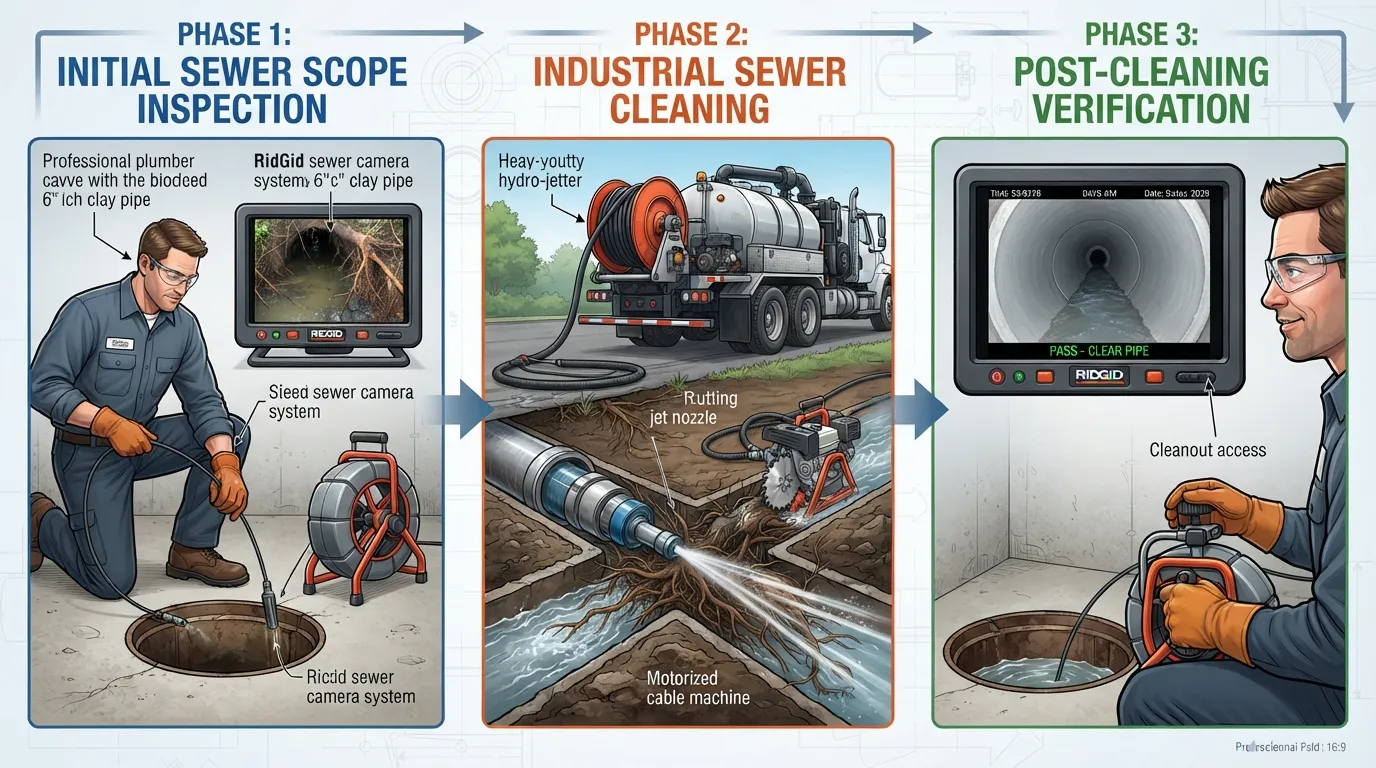
The 3-Step Professional Process (Inspection → Clearing → Verification)
Professional plumbers execute sewer cleaning through a strict, three-phase framework to ensure absolute line clearance and long-term reliability. Skipping any of these steps risks recurring clogs, property flooding, or undetected pipe fractures.
Phase 1: Video Camera Inspection: Technicians navigate a high-resolution, waterproof camera through the sewer cleanout to pinpoint exact blockages, root intrusions, and structural damage.
Phase 2: Targeted Clearing: Depending on the obstruction, professionals deploy heavy-duty tools like industrial hydro jetting or specialized drain snaking to scour the pipe walls.
Phase 3: Post-Cleaning Verification: A secondary camera run confirms that all debris, grease buildup, and roots have been entirely removed, leaving the pipe completely unobstructed.
Why Sewer Cleaning Requires Specialized Equipment (Not Just a Plunger)
Standard hand tools and residential plungers only address minor surface-level clogs trapped inside household fixtures. Main sewer lines demand commercial-grade infrastructure capable of navigating dozens of feet underground under heavy pressure.
Hydro Jetting Systems: These units utilize pressurized water up to 4,000 PSI to aggressively strip away decades of grease, scale, and calcified buildup.
Mechanical Augers and Snakes: Heavy motorized cables with specialized cutting heads slice through dense tree roots and compacted debris that manual tools cannot touch.
Locating Technology: Electronic line locators allow technicians to pinpoint the exact surface depth and location of underground pipe damage before excavation becomes necessary.
Signs You Need a Professional Sewer Cleaning Service
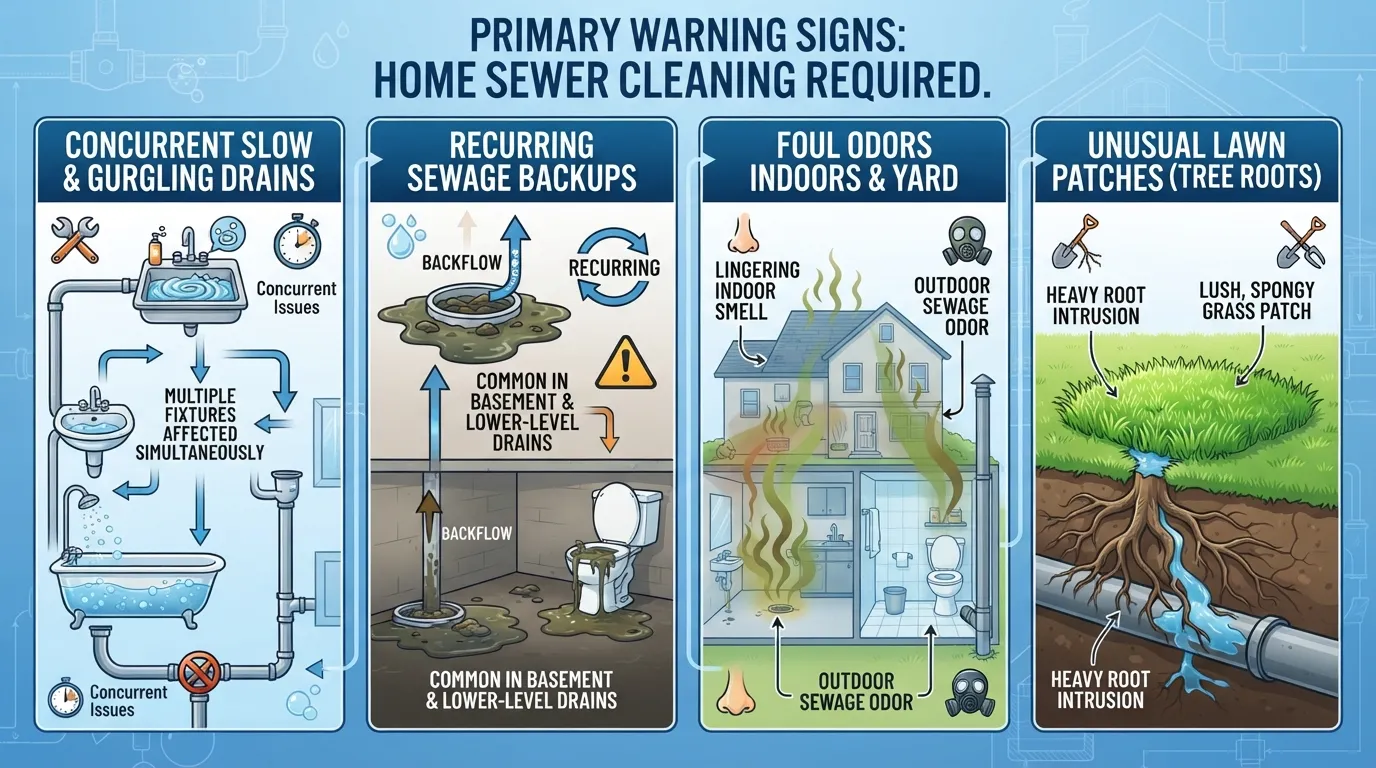
Recognizing the early warning signs of a failing drainage system prevents catastrophic property damage and expensive emergency repairs. When multiple household fixtures begin malfunctioning simultaneously, the issue usually extends far beyond a localized clog into your main sewer line.
Professional intervention becomes essential the moment standard DIY methods fail to resolve systemic plumbing behavior.
Slow or Gurgling Drains Throughout the House
When a single sink drains slowly, you are likely dealing with a localized clog in that specific pipe trap. However, when slow drains happen concurrently across showers, sinks, and toilets, it points directly to a primary vent or main line restriction.
The Gurgling Sound: Trapped air escaping through your plumbing traps creates distinct gurgling noises as wastewater struggles to pass a partial obstruction.
Widespread Impact: If flushing the toilet causes water to bubble up in the bathtub or shower drain, your main sewer line is severely constricted.
Recurring Backups in Multiple Fixtures
Unexplained sewage backups are the most definitive indicator that your sewer line requires immediate professional cleaning. Water always follows the path of least resistance, meaning a blocked main line forces wastewater backward into the lowest fixtures in your home.
Lower Level Vulnerability: Floor drains in basements or ground-floor toilets are typically the first areas to overflow during a main line blockage.
Systemic Failure: Unclogging a single fixture will provide zero relief if the underlying obstruction sits further down in the municipal lateral.
Foul Sewage Odor Indoors or in the Yard
A properly functioning plumbing system utilizes vent stacks and water traps to ensure sewer gases safely escape above your roofline. Smelling sulfur or raw sewage around your property means your sewer containment has been compromised.
Dried Ptraps: Infrequently used basement floor drains or fixtures with dried-out water seals can allow sewer gas to seep indoors.
Line Cracks: Persistent outdoor odors around your yard often signal a cracked, broken, or heavily leaking underground sewer pipe.
Lush, Overly Green Patches in the Lawn (Root Intrusion Signal)
Tree roots naturally seek out moisture and nutrients, making underground sewer pipes an ideal target for microscopic cracks. As roots infiltrate the pipe, they expand, trap toilet paper, and cause significant structural leaks that act as natural fertilizer for your turf.
Unexplained Growth: A patch of grass that remains suspiciously greener, thicker, or spongier than the rest of your lawn during dry spells usually indicates an underground sewage leak.
Early Detection: Catching tree root intrusion via video inspection before the pipe completely collapses saves thousands of dollars in trenchless or traditional pipe replacement costs.
Step 1 — Inspection and Diagnosis
An accurate diagnostic phase separates professional sewer maintenance from temporary amateur fixes. Before any heavy cleaning equipment touches your pipes, plumbers must execute a comprehensive block diagnosis to identify structural integrity. Rushing past this step can lead to collapsed pipes, improper tool selection, or recurring system failures.
Locating and Accessing the Main Sewer Cleanout
The diagnostic process begins by locating your property’s primary sewer cleanout access point, typically situated near the foundation, in the front yard, or along the basement wall.
Pressure Release: Technicians carefully relieve built-up wastewater pressure at the cleanout cap to prevent dangerous interior overflows.
Access Point Identification: Finding this capped riser allows heavy commercial equipment and inspection cameras to enter the main drainage line directly.
How Video Camera Inspection Pinpoints the Exact Problem
Once the line is safely accessed, professionals deploy a high-resolution video camera inspection (often called a sewer scope) to visually navigate the interior of the pipeline.
Visual Confirmation: The fiber-optic camera transmits real-time video footage to a surface monitor, allowing technicians to evaluate overall pipe conditions.
Precise Depth Mapping: Sonde transmitters attached to the camera head emit radio frequencies that let plumbers track the exact underground depth and surface location of any defect.
Common Causes Found During Inspection: Tree Roots, Grease, Broken Pipes
The camera scope immediately reveals the underlying root causes of your drainage failure, ensuring the correct remediation method is chosen.
Tree Roots: Aggressive root systems frequently rupture joint seals to invade underground lines.
Grease Buildup: Congealed fats, oils, and kitchen soaps narrow pipe interiors over time.
Broken / Cracked Pipes: Structural settling, ground shifts, or aging materials often result in a broken/cracked pipe or pipe belly that traps solid waste.
For a visual demonstration of how professional drain inspections and cleaning methods operate, watch the video overview above.
Step 2 — Professional Clearing and Cleaning Methods
Once the diagnostic phase identifies the nature of the blockage, professionals deploy high-powered mechanical or hydraulic systems to restore full pipe capacity. Selecting the correct technique depends entirely on whether the obstruction is a hard structural intrusion or a soft accumulation of organic waste.
Expert execution during this stage ensures complete debris removal without causing mechanical stress to aging pipelines.
Drain Snaking and Augering: How Motorized Cable Machines Break Through Clogs
For localized blockages and dense physical obstructions like tree roots, technicians rely on heavy-duty motorized equipment similar to a classic Roto-Rooter style machine.
Rotating Steel Cable: A high-strength, flexible steel shaft is fed into the line via a powerful motor, spinning specialized cutting blades at high RPMs.
Punching Through Obstructions: The spinning head bores directly through solid masses, tearing apart root bundles and compacted paper to open an immediate channel for standing water.
Hydro Jetting Explained: Using 2,500–3,500 PSI Water Pressure to Fully Clear Pipes
While augers punch a passage through clogs, hydro jetting provides total interior rehabilitation by scouring the entire circumference of the pipe wall.
High-Pressure Delivery: Specialized pumps deliver water at PSI pressure ranging between 2,500 and 3,500, propelled by reverse-facing nozzles that scrub the pipe clean.
Complete Pipe Scouring: This technique obliterates stubborn sludge, hardened mineral buildup, and residual grease that standard mechanical cables leave behind.
Which Method Is Used for Which Problem (Root Cutting vs Grease/Sludge Removal)
Plumbers match the cleaning technology precisely to the diagnostic findings to guarantee long-lasting results.
Root Cutting: Mechanical augers equipped with saw-tooth blades are deployed first to slice through thick, woody tree root invasions.
Grease and Sludge Removal: Hydro jetting is utilized to emulsify and wash away decades of congealed kitchen fats, soap scum, and organic sediment.
To see a pressure-washing technique applied directly to pipeline clearing, watch the video demonstration above How to Clean Sewer Pipes with a Pressure Washer.
Step 3 — Final Verification and Post-Cleaning Check
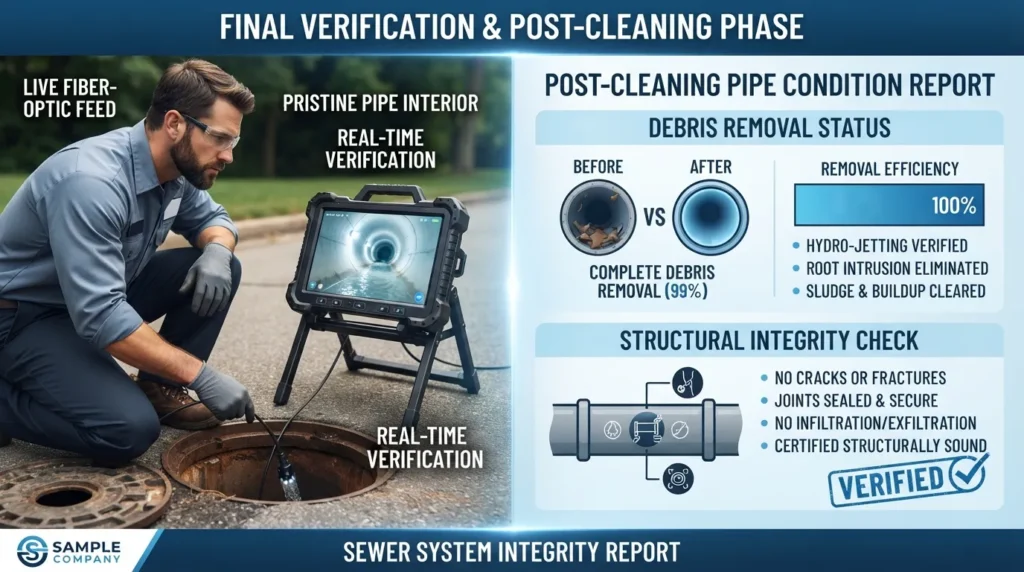
The professional sewer cleaning process never concludes with just clearing the immediate blockage. The final verification phase guarantees that the intervention was entirely successful and that hidden structural flaws are properly documented.
This rigorous quality control standard protects homeowners from repeat emergencies and ensures absolute transparency from the plumbing service provider.
Second Camera Pass to Confirm the Line Is Fully Clear
Immediately after hydro jetting or mechanical augering finishes, technicians execute a verification pass using the fiber-optic camera scope.
Complete Debris Removal: This second run visually confirms that all dislodged sludge, cut tree roots, and floating scale have been completely flushed out to the municipal main.
Flow Assurance: Plumbers watch live monitor feeds to verify that wastewater flows smoothly without pooling or encountering secondary obstructions.
Checking For Underlying Structural Damage
Cleaning away years of accumulated buildup exposes the bare interior walls of the pipe, providing an unobstructed view for a thorough structural damage inspection.
Identifying Hidden Flaws: Technicians check for cracked joints, collapsed sections, offset tiles, or severe pipe bellies that cannot be fixed by cleaning alone.
Preventing Future Failures: Discovering these vulnerabilities early allows homeowners to plan for targeted repairs or trenchless pipe lining before a catastrophic collapse occurs.
What a Clean Report Looks Like
At the end of the service, a reputable professional provides a comprehensive assessment summarizing the overall health of your private lateral.
Digital Documentation: Homeowners receive video recordings or digital photo logs showing the pristine interior of the pipe post-cleaning.
Actionable Recommendations: The final pipe condition report outlines maintenance schedules, preventative chemical treatments, or necessary structural repairs to guarantee long-term system reliability.
How Much Does Professional Sewer Cleaning Cost?
Understanding the financial investment required for professional sewer maintenance helps homeowners budget effectively and avoid surprise emergency bills. Overall expenses vary depending on the severity of the blockage, the technology required, and the structural accessibility of your private lateral.
To get an accurate quote for your home, certified plumbers evaluate several distinct labor and equipment variables.
Average Cost Breakdown by Method
Different plumbing interventions carry different price points based on the machinery and time intensity involved.
| Service Type | Average Price Range | Primary Use Case |
| Drain Snaking Price | $100 – $400 | Localized clogs, minor root cuts, and quick entry openings. |
| Hydro Jetting Cost | $350 – $1,600 | Comprehensive main line scouring, grease removal, and heavy scaling. |
| Camera Inspection Price | $125 – $500 | Pre- and post-cleaning diagnostics or standalone scoping. |
Factors That Affect Final Pricing (Pipe Length, Severity, Access Difficulty)
Total project pricing is rarely a flat rate because every subterranean plumbing layout presents unique physical challenges.
Pipe Length and Diameter: Longer lateral runs and wide-diameter commercial pipes require significantly more water volume, time, and cable length to service completely.
Blockage Severity: Light sludge accumulation clears quickly, whereas calcified mineral deposits or massive tree root invasions demand specialized cutting attachments and multiple passes.
Access Difficulty: Properties lacking an accessible cleanout may require technicians to pull toilets or excavate landscape elements, directly increasing total labor hours and final sewer cleaning cost factors.
How Long Does a Sewer Cleanout Take?
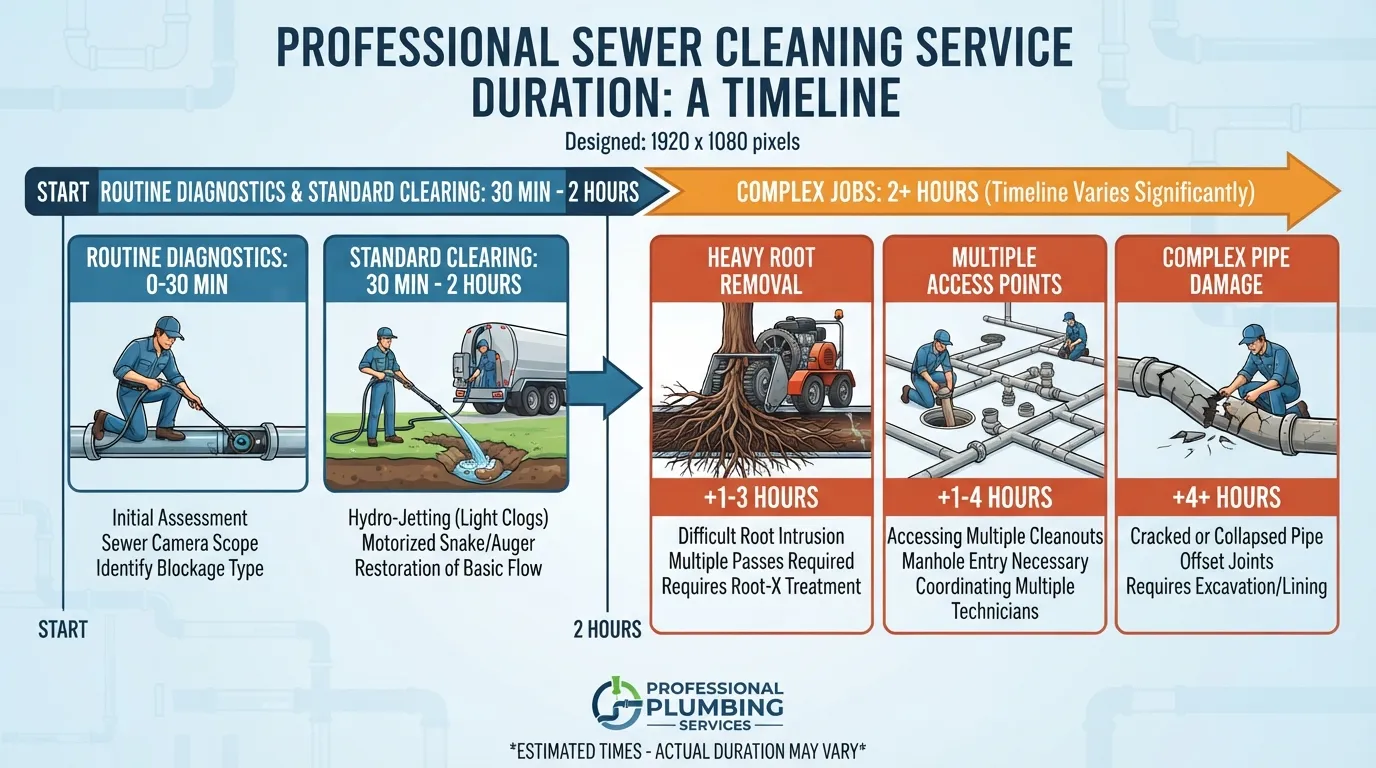
Most professional sewer cleaning jobs are completed efficiently, minimizing disruption to your daily household routine. Knowing the expected timeline helps you plan accordingly while technicians diagnose and clear your main drainage system.
The vast majority of residential sewer interventions are wrapped up within a single, brief service window.
Typical Duration for Standard Cleaning (30 minutes–2 hours)
For standard residential lines experiencing routine buildup or minor clogs, the entire maintenance process moves remarkably fast.
Rapid Diagnostics: A standard video camera inspection and initial snaking usually take between 30 to 60 minutes to complete.
Full Hydro Jetting Window: Comprehensive high-pressure water scouring generally requires 1 to 2 hours depending on total pipe length and buildup density.
What Extends the Job Time (Root Removal, Multiple Access Points, Pipe Damage)
Complex plumbing setups or severe blockages can extend the total job time significantly beyond a standard 2-hour window.
Heavy Root Removal: Severely matted tree roots require repeated passes with specialized cutting heads and hydro jet nozzles to clear safely.
Multiple Access Points: Properties with complex layouts or lacking a main cleanout may force technicians to inspect lines through roof vents or internal plumbing fixtures.
Severe Pipe Damage: Discovering collapsed sections, structural bellies, or heavy breaks during the service length requires extended diagnostic mapping and emergency remediation planning.
Professional Sewer Cleaning vs. Chemical Drain Cleaners
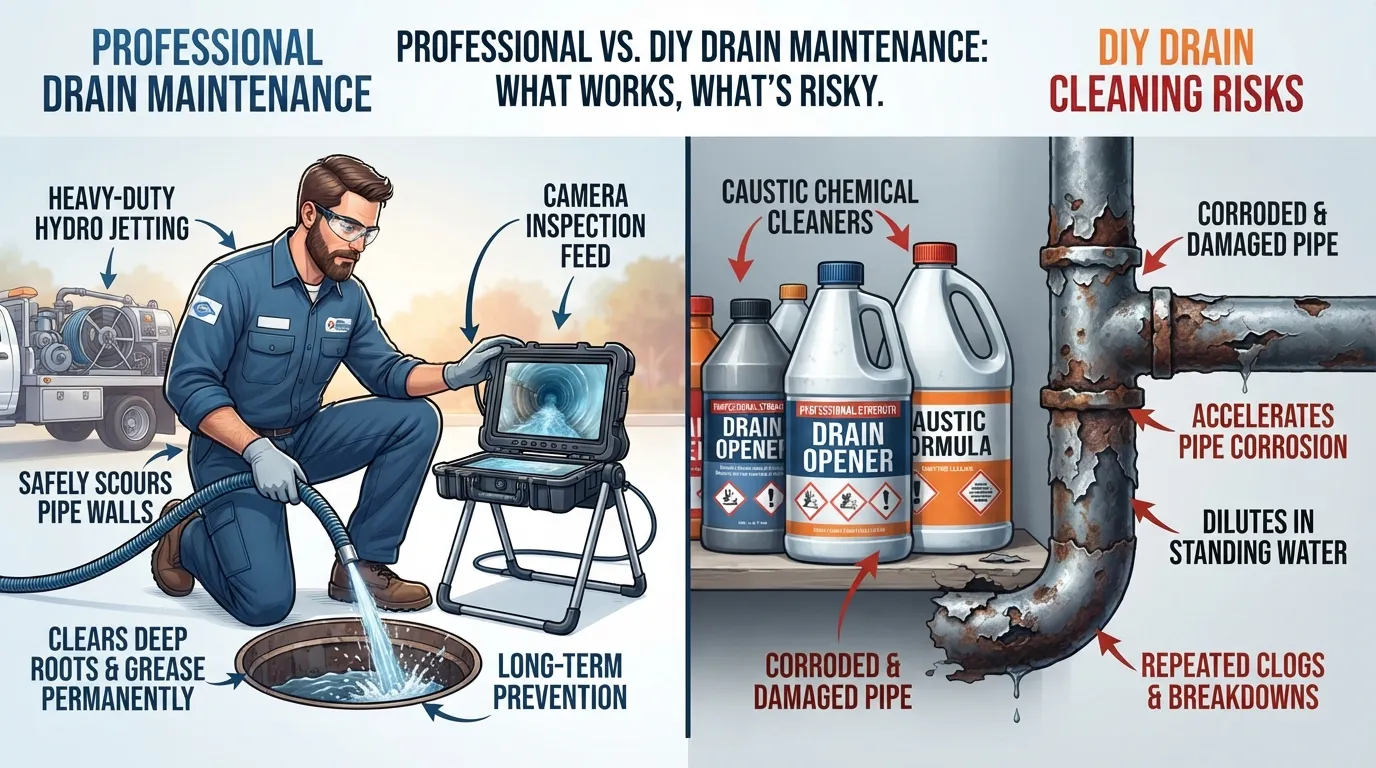
Homeowners often turn to store-bought liquids as a quick, inexpensive fix for slow drains, but these solutions rarely solve deep plumbing issues. While chemical cleaners offer a temporary Band-Aid for minor sink clogs, they fail entirely against the complex, deep-seated obstructions found in main sewer lines.
Relying on chemical formulas for severe drainage failures often accelerates pipe decay without resolving the underlying blockage.
Why Chemical Cleaners Don’t Work on Deep or Structural Blockages
Commercial chemical drain cleaners rely on caustic acids or lye to generate heat and dissolve organic matter, but their effectiveness diminishes over long distances.
Dilution and Gravity: By the time a chemical solution travels dozens of feet down into a main sewer line, it becomes heavily diluted by standing water, losing its corrosive power.
Inability to Clear Physical Mass: Liquids cannot cut through solid tree root intrusion, heavy calcified scale, or structural pipe offsets, leaving the primary obstruction completely untouched.
Pipe Damage Risk From Repeated Chemical Use
Pouring harsh chemical compounds into your plumbing system repeatedly creates severe long-term risks for your piping infrastructure.
Accelerated Pipe Corrosion: Acidic and lye-based cleaners generate intense thermal reactions that can warp PVC pipes, weaken older cast iron, and deteriorate rubber gaskets.
Hazardous Plumber Safety: Corrosive chemicals sitting stagnant behind a blockage pose a dangerous splash hazard for technicians servicing the line later with mechanical equipment.
When a Chemical Cleaner Might Be Enough (Minor, Surface-Level Clogs Only)
Store-bought solutions do have a very narrow, limited place in home maintenance when used correctly and cautiously.
Localized Sink Traps: A chemical formula may help dissolve minor hair or soap buildup trapped immediately beneath a bathroom sink or shower drain trap.
Surface-Level Maintenance: If you are searching for the best chemical to unclog sewer line, understand that chemicals should only ever serve as a minor preventative aid for localized fixtures—never for a main sewer blockage.
DIY vs. Hiring a Professional — Safety and Hazards
Attempting major subterranean plumbing maintenance without commercial expertise introduces severe physical, biological, and structural hazards. Main sewer lines are high-risk environments containing hazardous pathogens, toxic gases, and high-pressure machinery capable of causing catastrophic injury.
Understanding these professional-grade risks highlights why specialized intervention is mandatory for deep-seated line clearing.
Sewer Gas Exposure Risks
Stagnant wastewater and decomposing organic waste inside a blocked lateral produce dangerous concentrated gases that pose an immediate health threat.
Toxic Atmospheres: Hydrogen sulfide and methane gas accumulate rapidly within closed plumbing systems and can cause dizziness, nausea, or asphyxiation if released unmonitored.
Explosive Hazards: Methane gas is highly flammable, meaning unventilated exposure near open flames or electrical equipment can trigger accidental property combustion.
Confined Space and Equipment Hazards
Operating heavy motorized augers or high-pressure water systems requires extensive training and strict adherence to workplace safety standards.
Torque and Kinetic Risks: Industrial steel cables spinning at high RPMs can bind instantly on a root ball, whipping violently around and fracturing bones or tearing limbs.
Biohazard Exposure: Raw sewage carries Class 3 pathogens, bacteria, and viruses that require complete containment to prevent environmental contamination and severe household illness.
Why Technicians Use Specific PPE and Safety Protocols
Professional plumbing crews deploy rigorous safety measures to protect themselves and your property from biological and mechanical hazards.
Personal Protection: Technicians wear full waterproof gear, chemical-resistant gloves, and eye protection to shield against pressurized splash-back during cleanout cap removal.
Systematic Pressure Release: Experts use controlled venting techniques to bleed off hazardous line pressure safely before any machinery enters the pipe system.
To see how municipal and professional field teams manage underground diagnostics and high-pressure line clearing safely, watch the field demonstration video above.
How to Choose the Right Sewer Cleaning Professional
Selecting the right plumbing contractor ensures your main drainage system is handled safely, efficiently, and without hidden costs or botched repairs. Because subterranean plumbing work requires specialized diagnostic tools and heavy machinery, vetting a provider thoroughly protects your property and your wallet.
Homeowners can explore our full range of plumbing and sewer services to see how certified experts manage complex main line restorations.
Questions to Ask Before Hiring
Before signing any service agreement or allowing technicians to begin work, verify critical credentials to ensure you are partnering with an expert.
Licensing and Bonding: Confirm that the company holds an active state plumbing license and carries proper liability bonding to cover any accidental property damage.
Specialized Equipment: Ask whether they utilize both motorized augers and hydro jetting systems alongside modern video camera scopes.
Upfront Warranties: Inquire about guarantee policies covering workmanship and whether they offer follow-up inspections if a clog recurs shortly after service.
Red Flags to Avoid
Protect your home by walking away from untrustworthy operators who rely on deceptive business practices or substandard gear.
Skipping Camera Inspections: Contractors who refuse or fail to perform a pre- and post-cleaning camera scope are often guessing at the problem and may leave hidden root damage behind.
Vague or Over-the-Phone Estimates: Avoid companies that quote flat rates sight-unseen without evaluating your cleanout access, pipe length, or specific blockage severity.
High-Pressure Sales Tactics: Be wary of technicians who immediately push expensive full-line replacements without first attempting less invasive cleaning methods.
Why Choosing an Experienced Local Plumbing Team Matters
Partnering with a reputable regional local sewer service provides distinct advantages that out-of-town or fly-by-night operators simply cannot match.
Municipal Compliance: Local experts understand regional building codes, municipal lateral requirements, and local environmental waste regulations.
Soil and Climate Familiarity: Established teams know how local soil shifting, regional tree root species, and seasonal weather patterns impact underground pipe integrity in your specific area.
Residential vs. Municipal Sewer Cleaning — What's the Difference
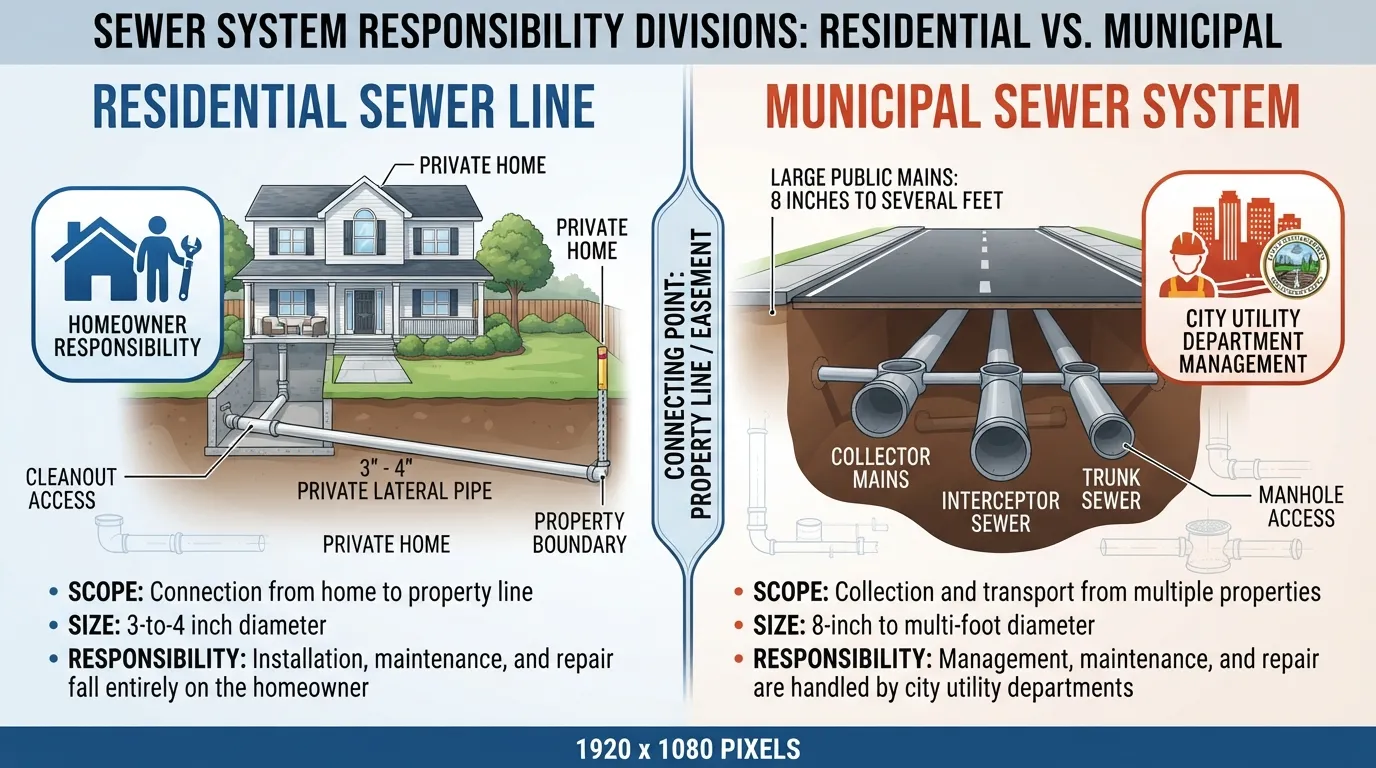
Understanding the distinction between private residential infrastructure and public utilities prevents confusion regarding who handles maintenance tasks and financial obligations. While both systems manage wastewater transport, they operate on vastly different scales, utilize distinct machinery, and fall under separate jurisdictions.
According to official city’s public utility sewer maintenance guidelines, understanding these jurisdictional boundaries is vital for every property owner.
Scope of Residential Sewer Lines vs. Municipal Systems
The infrastructure connecting your household fixtures to public processing plants is divided into private and public segments.
Residential Sewer Line: Typically a 3-to-4-inch diameter pipe (the private lateral) that transports all wastewater from your home’s internal plumbing out to the property boundary.
Municipal Sewer System: Massive public main lines ranging from 8 inches to several feet in diameter that collect discharge from hundreds of properties and route it to a regional treatment facility.
Who Is Responsible for Each (Homeowner vs. City)
Jurisdictional lines determine who bears the financial and legal responsibility when a blockage or structural failure occurs.
Property Line Responsibility: Homeowners are entirely responsible for cleaning, repairing, and replacing their private lateral line all the way to the connection at the municipal main.
City Jurisdiction: Local public utility departments maintain, clean, and repair the large communal infrastructure running beneath public streets and easements. If a backup originates in the city main, municipal crews manage the remediation.
Recommended Sewer Cleaning Maintenance Schedule
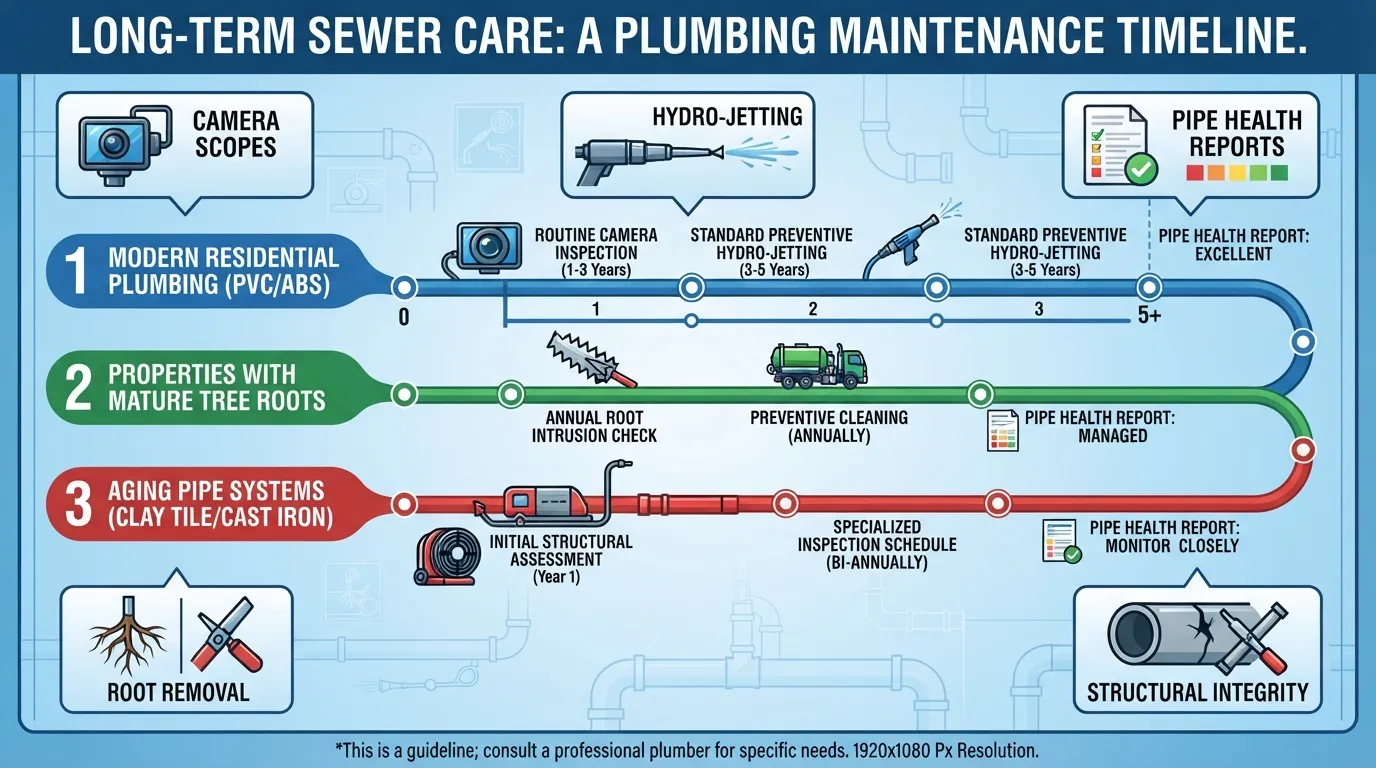
Establishing a proactive maintenance schedule is the most effective way to prevent catastrophic sewage backups and costly emergency repairs. While many homeowners only call a plumber when a complete blockage occurs, routine preventative upkeep saves thousands of dollars in structural restoration.
Implementing a structured inspection plan ensures your drainage network operates smoothly year-round.
General Guideline: Every 1–3 Years
For standard residential properties with modern piping materials, routine maintenance is recommended on a predictable timeline.
Standard Intervening Window: Scheduling a professional inspection and light cleaning every 1 to 3 years keeps grease, scale, and organic film from hardening inside your pipes.
Proactive Protection: Regular check-ins catch minor restrictions before they compound into full system failures during peak household usage periods.
Why Homes With Large Trees Need More Frequent Cleaning
Properties surrounded by mature vegetation face constant underground pressure from aggressive root systems searching for water.
Tree Proximity: If large oaks, maples, or elms sit close to your lateral line, annual preventive sewer cleaning is essential to cut back recurring root intrusions.
Joint Infiltration: Regular hydro jetting or mechanical root cutting prevents fine roots from expanding and cracking rigid pipe fittings.
Older Pipe Systems and Increased Risk
The age and construction material of your subterranean plumbing directly dictate how frequently your system requires professional attention.
Pipe Age Vulnerability: Homes built decades ago featuring clay tiles, cast iron, or orangeburg pipes are highly susceptible to structural shifting and interior corrosion.
Aging Plumbing Systems: Properties with older lines benefit from annual camera scopes and cleaning to monitor structural settling and prevent unexpected pipeline collapses.
Frequently Asked Questions
How does a professional do drain cleaning?
Professionals follow a rigorous three-step process: they begin with a video camera inspection to diagnose the exact problem, use high-powered equipment like motorized augers or hydro jetters to clear the blockage, and finish with a second camera pass to verify the line is clean.
How much money does a sewer cleaner make?
Professional drain cleaning technicians typically earn an average salary ranging between $45,000 and $75,000 per year, depending on their level of certification, geographic location, and commercial experience.
How long does a sewer cleanout take?
Most standard professional sewer cleaning and inspection jobs take between 30 minutes and 2 hours, though complex root removal or damaged lines can extend the service length.
Do plumbers clean drains themselves or use machines?
Plumbers always rely on specialized commercial machinery—such as heavy-duty motorized cable augers and high-pressure water jetters—rather than manual hand tools to clear main sewer lines effectively.
What should I expect during a professional drain cleaning service?
Expect technicians to locate your cleanout, run a diagnostic camera, discuss their findings and pricing, perform the mechanical or hydro-jet cleaning, and provide a final video verification report.
Should I call a plumber for drain cleaning, or try it myself first?
For deep clogs, multiple slow drains, or main sewer line issues, you should skip risky DIY methods and chemical cleaners and call a licensed plumber immediately to prevent property damage and health hazards.
Conclusion — Get Your Sewer Line Professionally Cleaned Today
Investing in a professional sewer cleaning service protects your home from catastrophic water damage, expensive emergency repairs, and unsanitary sewage backups. Throughout this guide, we have explored how certified plumbing experts utilize advanced diagnostics, high-powered hydro jetting, and rigorous verification passes to restore your main drainage system completely.
Understanding the process, recognizing early warning signs, and avoiding harmful chemical cleaners ensure your plumbing infrastructure remains healthy for years to come.
Key Takeaways Recap
Comprehensive 3-Step Process: Professional interventions always rely on diagnostic camera scoping, targeted mechanical or hydraulic clearing, and a final post-cleaning verification check.
Avoid Chemical Quick Fixes: Store-bought liquids fail against deep clogs and tree roots while severely accelerating pipe corrosion.
Routine Preventive Maintenance: Scheduling professional cleanings every 1 to 3 years prevents unexpected failures, especially for properties with aging pipes or large surrounding trees.
Ready to Book a Professional Inspection or Cleaning?
Do not wait for slow drains to turn into a full-scale property emergency. Partnering with licensed, experienced professionals guarantees your subterranean plumbing is serviced safely and accurately.
Book your sewer cleaning appointment now to schedule your comprehensive video inspection and restore peak performance to your home’s drainage network today.
Main Services
Related Posts
Need a Plumber in Miami?
Schedule service online or speak directly with the EZ Plumbing team.
Owner-Led Local Service
Know who is behind the business before you request service. The owners, contact line and Miami service pages are published clearly.
- Named business owners
- Direct phone and social channels
- Local Miami service information
Clear Help Before You Book
Review the relevant service page, contact the team directly and use the booking page when you are ready—without relying on vague claims.
- Service-specific information
- Direct questions before scheduling
- Clear online booking route