If you are looking at an LP water heater for your home, you probably want more than a basic definition. You want to know how propane water heaters work, whether you should choose a tankless or storage model, what size you need, how LP compares with natural gas and electric water heaters, what installation involves, and when replacement makes more sense than repair.
The short answer
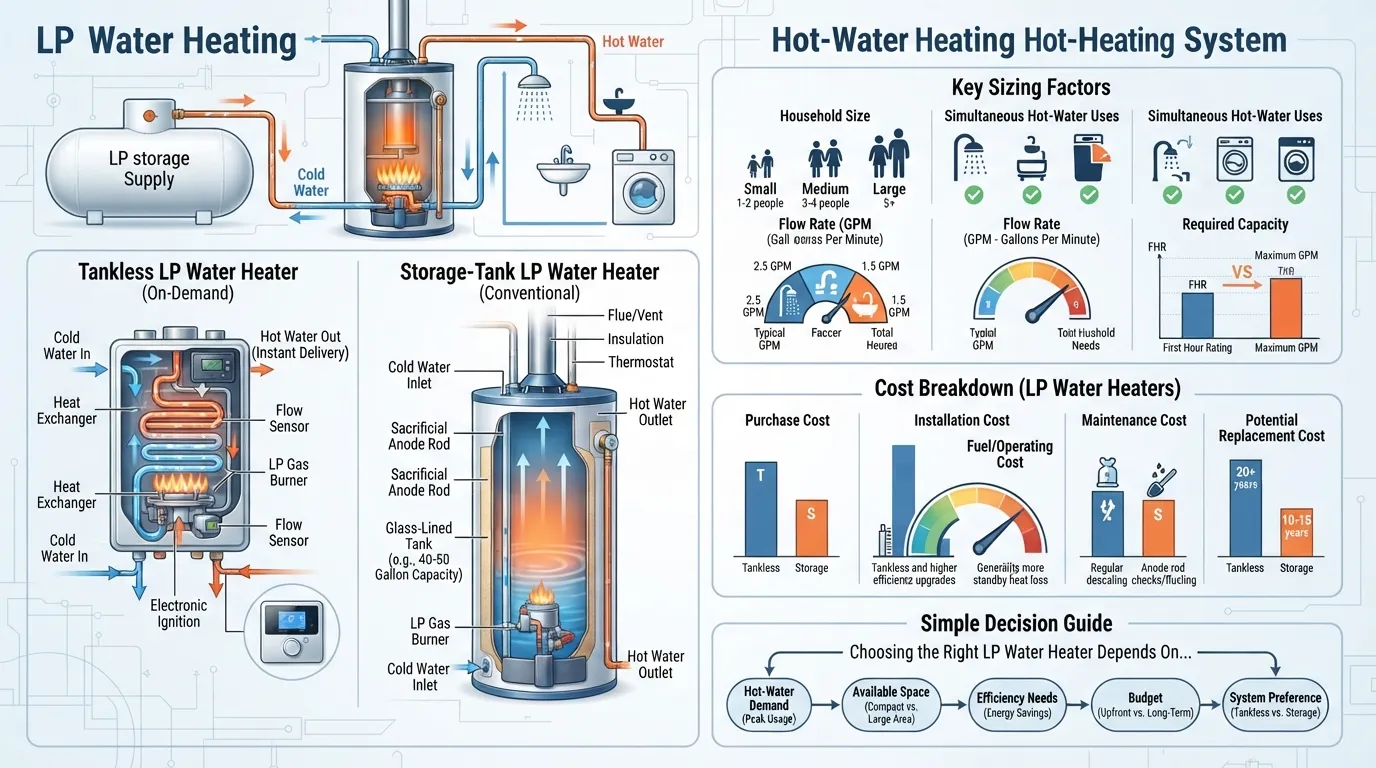
An LP water heater uses liquid propane as its fuel source to heat domestic water. Depending on the model, it can heat water as you use it with a tankless design or store heated water in a tank. The right choice depends on your household’s hot-water demand, available fuel setup, installation requirements, space, budget, and whether you are replacing an existing system.
If you are replacing an existing water heater, it is especially important not to choose a unit based on capacity or price alone. Fuel compatibility, venting, gas supply, sizing, installation requirements, and the condition of the existing system all matter.
What Is an LP Water Heater?
An LP water heater, also called a liquid propane water heater or propane water heater, is a water-heating system designed to use propane as its fuel. Propane is stored in a dedicated tank or cylinder and supplied to compatible equipment through the home’s fuel system.
LP water heaters are available in several configurations, but two of the most important are tankless and storage-tank systems.
- Tankless LP water heater: Heats water as it flows through the unit when there is a demand for hot water.
- Storage-tank LP water heater: Heats and stores a supply of hot water in a tank so it is available when needed.
The terms LP, LPG, and propane are often used interchangeably in everyday product searches. However, when selecting a water heater, you should always confirm the exact fuel type and installation requirements specified by the manufacturer rather than assuming that any gas appliance can use any gas fuel.
How Does an LP Water Heater Work?
The basic process is straightforward: propane supplies the fuel needed to heat water, while the water heater’s controls, burner or heating system, and safety components regulate operation.
- Propane is supplied from the home’s approved LP fuel system.
- The water heater receives the fuel according to the manufacturer’s requirements.
- The burner or heating system transfers heat to the water.
- In a tankless model, water is heated as it passes through the unit.
- In a storage model, heated water remains in the tank until it is needed.
- Controls and safety systems monitor the appliance during operation.
The exact components and operating sequence vary by model. That is why installation should follow the manufacturer’s instructions and applicable local requirements rather than relying on a generic installation method.
Tankless vs. Storage LP Water Heaters
One of the first decisions you will face is whether you want an instant or tankless LP water heater or a traditional storage-tank propane water heater.
Which is better? There is no universal winner. A tankless system can make sense for a homeowner who values on-demand heating and space efficiency, while a storage system may be a better fit where the household and installation are already configured around a tank. Your actual hot-water demand and the existing fuel and venting setup should guide the decision.
How Do I Choose the Right LP Water Heater Size?
Capacity is one of the most misunderstood parts of choosing a propane water heater. A bigger number is not automatically better, and the right specification depends on how your household uses hot water.
For a tankless system, pay particular attention to flow rate and temperature rise. For a storage system, the tank’s capacity and recovery characteristics are important.
Consider these factors before choosing a size
- Number of people living in the home.
- Number of showers and bathrooms.
- How many hot-water fixtures may operate at the same time.
- Shower and faucet flow rates.
- Incoming water temperature.
- Desired hot-water temperature.
- Whether the system is tankless or storage-based.
- Available gas and electrical infrastructure.
- Space and venting requirements.
Don’t choose a tankless unit by liters alone
For tankless water heaters, a capacity label such as 6L, 8L, or 12L does not by itself tell you whether the unit will meet your home’s demand. Flow rate, temperature rise, simultaneous usage, and the manufacturer’s specifications all matter.
What Size LP Water Heater Is Right for a Household?
Instead of asking only, “How many liters do I need?”, start with the way you use hot water.
A practical sizing approach
One or two people: Focus on your actual peak shower and fixture demand rather than automatically selecting a large unit.
Several household members: Consider how often multiple showers, faucets, or appliances operate at the same time.
High simultaneous demand: A system with insufficient flow or recovery capacity can struggle even if the unit appears adequate on paper.
Replacement project: Have the existing system evaluated instead of automatically replacing it with the same size. Changes in household demand or fixture usage may justify a different configuration.
LP vs. Natural Gas Water Heaters
LP and natural gas water heaters both use gas combustion to provide heat, but the fuel source and system requirements are different.
Important fuel-compatibility warning
Do not assume that a natural-gas water heater can simply be connected to propane, or vice versa. Fuel conversion is model-specific and must follow the manufacturer’s approved instructions and applicable requirements.
LP vs. Electric Water Heaters
Electric water heaters are another common alternative. The better option depends on your home’s available utilities, installation conditions, hot-water demand, operating preferences, and budget.
How Much Does an LP Water Heater Cost?
The price of an LP water heater can vary substantially by model, capacity, configuration, efficiency, installation requirements, and local market conditions. Because equipment prices change, a single online product price should not be treated as the total cost of installing a propane water-heating system.
Think about the total project cost
- Water heater equipment.
- Professional installation.
- Required venting or venting modifications.
- Gas supply or fuel-system modifications, if needed.
- Water-line modifications, if required.
- Required safety components and accessories.
- Permit or inspection requirements where applicable.
- Future maintenance and operating costs.
Buying tip: The cheapest water heater on a product page is not necessarily the lowest-cost option for your home. A unit that is incorrectly sized or requires extensive modifications can produce a very different final project cost.
What Does LP Water Heater Installation Involve?
A propane water heater is not simply a product that you connect to a gas line and water pipes. A safe installation requires the entire system to be evaluated.
A professional should consider:
- Whether the water heater is approved for the intended fuel.
- The available propane supply and equipment requirements.
- Gas pressure and applicable manufacturer specifications.
- Venting and combustion-air requirements.
- Installation location and required clearances.
- Water connections and shutoff arrangements.
- Electrical requirements for models that use electrical controls or components.
- Safety devices and manufacturer-required components.
- Applicable building, plumbing, mechanical, and fuel-gas requirements.
If you are in Miami-Dade County, local permitting requirements matter as well. Miami-Dade’s official permit guidance states that replacing a hot water heater or gas appliance can require a permit, with the exact permitting process depending on the jurisdiction and work being performed.
Do not treat gas-water-heater installation as a DIY shortcut
Gas appliances involve combustion, fuel connections, exhaust, and safety requirements. A qualified professional should handle the installation and verify the completed system according to the manufacturer’s instructions and applicable local requirements.
LP Water Heater Safety: What Should You Check?
Safety should be part of the buying decision, not something considered after installation.
- Fuel compatibility: Confirm that the appliance is designed and approved for the intended propane setup.
- Venting: Follow the manufacturer’s requirements for exhaust and combustion air.
- Gas connections: The fuel supply and connections must be installed correctly.
- Safety controls: The system should have the safety components specified by the manufacturer.
- Carbon monoxide awareness: Any fuel-burning appliance requires appropriate attention to combustion and exhaust.
- Maintenance: Follow the manufacturer’s maintenance recommendations and have problems inspected promptly.
- Leaks or unusual operation: Do not ignore suspected gas leaks, combustion problems, unusual odors, or other serious warning signs.
When Should You Repair or Replace an LP Water Heater?
If your existing propane water heater is having problems, replacement is not automatically the answer. The better decision depends on the condition of the unit, the nature of the problem, its age, repair requirements, and whether the existing system still fits your household’s needs.
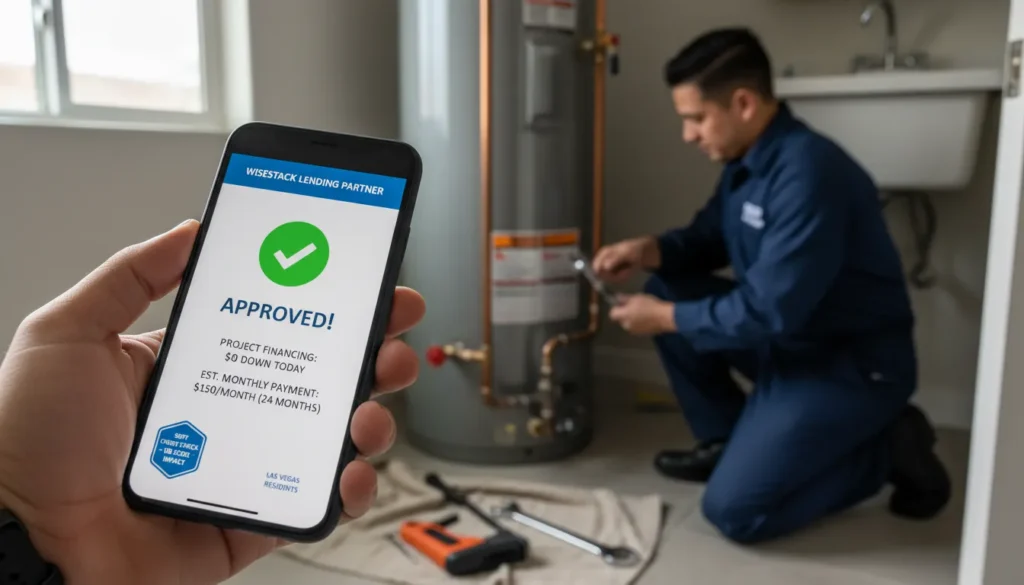
If replacement is appropriate, you can review your options for water heater replacement instead of choosing a replacement unit without evaluating the whole system.
What About a Propane Water Tank?
The phrase propane water tank can be confusing because it may refer to two completely different things.
- Propane fuel tank: Stores the propane used as fuel for compatible appliances.
- Water-heater storage tank: Stores heated domestic water in a traditional storage water heater.
A storage-tank LP water heater can therefore have both a propane fuel source and a separate tank that stores hot water. Keeping those two concepts separate makes it much easier to compare equipment.
Are LP Water Heaters a Good Choice for Miami Homes?
There is no single water-heating system that is right for every Miami home. The better question is whether an LP system fits your property’s existing fuel availability, hot-water demand, installation location, and overall plumbing configuration.
For a Miami homeowner considering propane, I would evaluate the system as a complete project rather than shopping for the lowest-priced appliance first. That means looking at the fuel supply, water-heating demand, venting, installation location, local requirements, and future service needs together.
A Simple LP Water Heater Decision Guide
Use this checklist before you buy
- Identify the fuel: Do you already have an appropriate propane supply?
- Identify the system type: Do you want tankless or storage?
- Calculate demand: How many people and fixtures need hot water?
- Check simultaneous use: Could multiple showers or fixtures operate together?
- Evaluate the installation: Can the intended location support the required gas, venting, water, and electrical connections?
- Compare total project cost: Look beyond the appliance’s sticker price.
- Check local requirements: Verify permitting and applicable installation requirements for your property.
- Plan for service: Choose a system that can be properly maintained and serviced.
Common LP Water Heater Buying Mistakes
1. Choosing by price alone
A low equipment price does not tell you what the complete installation will cost or whether the unit is appropriate for your home.
2. Choosing by capacity alone
Tankless systems require attention to flow and temperature rise, while storage systems involve tank capacity and recovery. The number printed on the box is only part of the sizing decision.
3. Assuming LP and natural gas equipment are interchangeable
Fuel compatibility must be confirmed for the specific appliance and installation.
4. Ignoring venting and installation requirements
The right water heater still needs the right installation environment. Venting, combustion air, clearances, fuel supply, and other requirements should be evaluated before purchase.
5. Replacing an old unit without checking whether your needs have changed
If your household has grown or your hot-water usage has changed, simply installing another unit with the same specifications may not solve the underlying problem.
Frequently Asked Questions About LP Water Heaters
What is an LP water heater?
An LP water heater is a water-heating appliance designed to use liquid propane as its fuel source. It may use a tankless or storage-tank design.
Is an LP water heater the same as a propane water heater?
In common usage, yes. LP refers to liquid propane, so “LP water heater” and “propane water heater” commonly describe the same fuel type. Always verify the exact appliance specifications before installation.
Are LP water heaters tankless?
They can be. LP water heaters are available as both tankless systems and traditional storage-tank systems.
Can I convert a natural-gas water heater to LP?
Not automatically. Whether conversion is possible depends on the specific model and the manufacturer’s approved conversion requirements. A professional should verify fuel compatibility before any conversion work.
Is a tankless LP water heater better than a storage water heater?
Not for every home. Tankless systems can be attractive for on-demand heating and space considerations, while storage systems may suit homes that prefer a traditional tank configuration. The right choice depends on demand, installation conditions, fuel setup, and budget.
How do I know what size LP water heater I need?
Start with household size, simultaneous hot-water use, fixture flow rates, incoming water temperature, desired temperature rise, and whether the system is tankless or storage-based. A professional evaluation can help match the equipment to the home’s actual demand.
How much does an LP water heater cost?
There is no single price that applies to every installation. Equipment type, capacity, brand, installation complexity, fuel-system requirements, venting, required accessories, and local requirements can all affect the total project cost.
Does an LP water heater require professional installation?
Because LP water heaters involve fuel, combustion, venting, water connections, and safety requirements, professional installation is the safer approach. Local permitting and inspection requirements may also apply.
Is an LP Water Heater Right for You?
An LP water heater can be a practical solution when propane is an appropriate fuel source for your home and the system is correctly selected and installed. But the best unit is not simply the one with the largest capacity, the lowest online price, or the most features.
I would start with your household’s actual hot-water demand, then compare tankless and storage options, confirm fuel compatibility, evaluate installation requirements, and calculate the complete project cost. If you are replacing an existing water heater, have the current system evaluated first so you can decide whether repair, replacement, or a different configuration makes the most sense.
Need Help Choosing or Replacing an LP Water Heater?
If you are unsure about sizing, fuel compatibility, installation requirements, or whether your existing system should be repaired or replaced, getting the system evaluated before buying equipment can save you from choosing the wrong unit.
For broader plumbing needs, you can also explore our plumbing services and learn more about solutions available for your home.
Helpful Resources
For installation and local permitting questions, consult current official guidance for your property and jurisdiction. Miami-Dade County provides information about when permits may be required for plumbing work, water-heater replacement, and gas appliances. Manufacturer documentation should also be used to verify fuel compatibility, installation requirements, and operating instructions for a specific water heater.