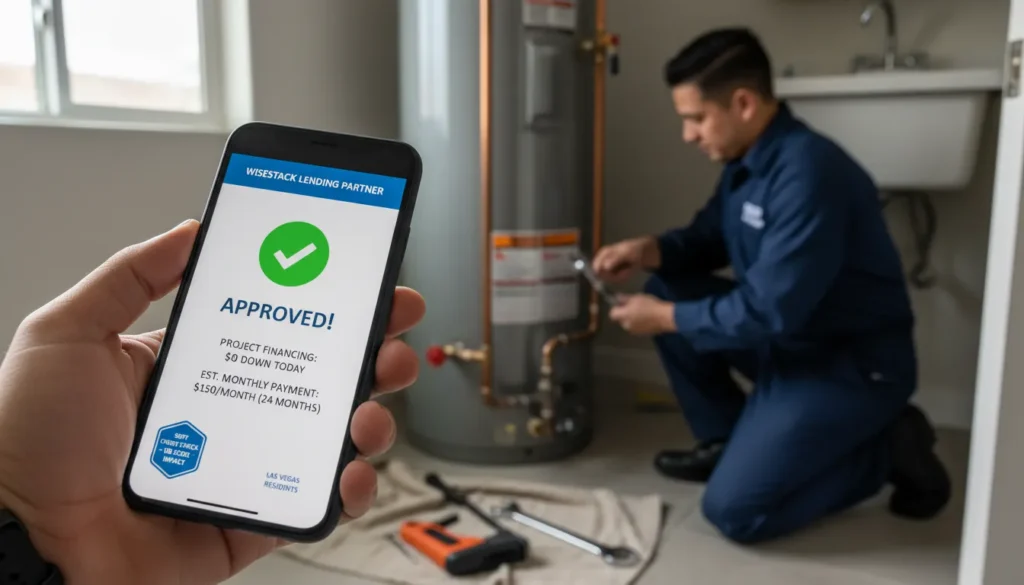
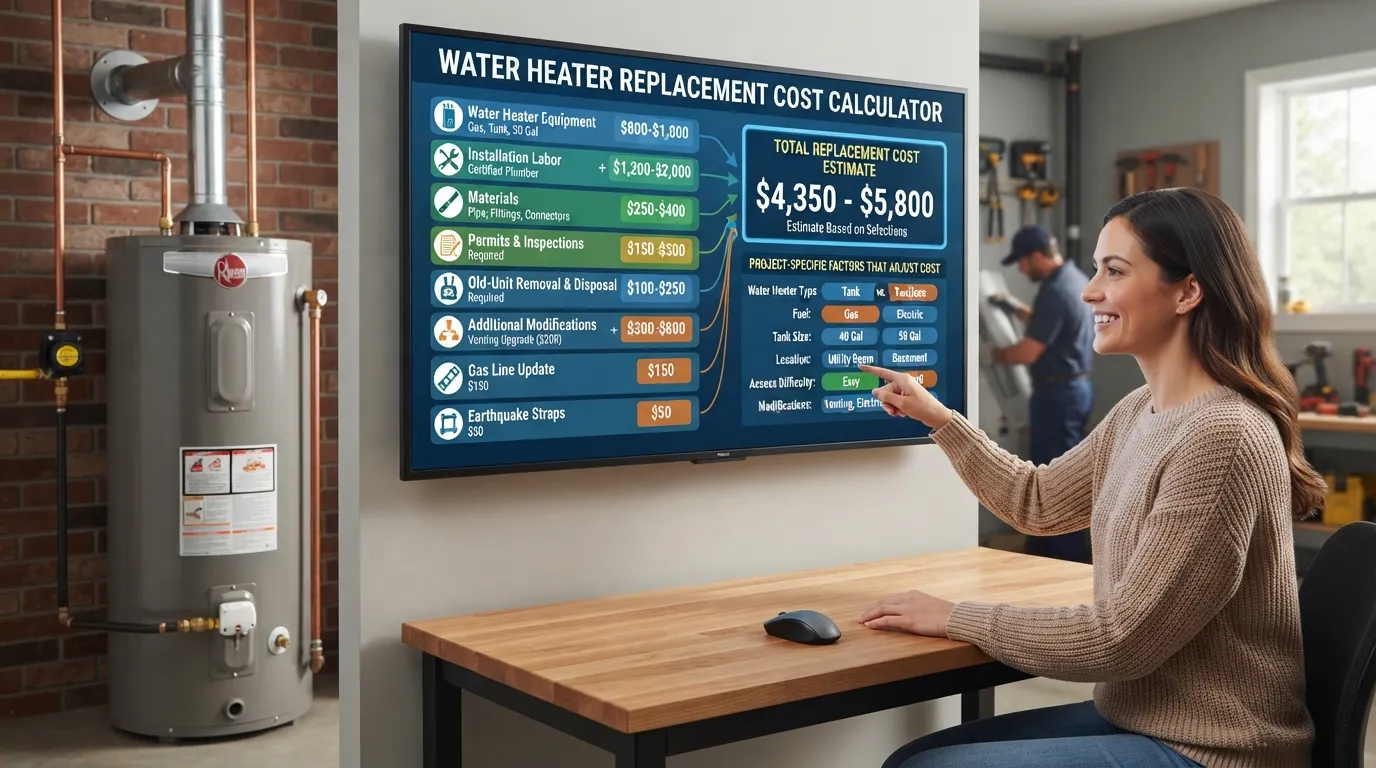
Wondering how much it will cost to replace your water heater? You can use a water heater replacement cost calculator to get a starting estimate based on the type of water heater, fuel, tank size, installation conditions, and other factors that affect the final price.
A water heater replacement estimate is not based on the heater alone. Your total project cost can include the new unit, installation labor, materials, permit requirements, removal of the old heater, and any electrical, gas, venting, plumbing, access, or location changes required for your installation.
The most accurate way to narrow the estimate is to calculate your project based on your actual heater type, fuel, capacity, and installation conditions rather than relying on one national average.
If you are replacing a water heater in Miami, your estimate can also be affected by local permitting and the exact requirements of your property and municipality. Miami-Dade County states that permits may be required for plumbing work and specifically addresses hot-water-heater and gas-appliance replacement in its permitting guidance. Always confirm the requirements that apply to your property before starting work.
For broader plumbing help, you can also explore our plumbing services or learn more about water heater replacement.
What Does a Water Heater Replacement Cost Calculator Estimate?
A good calculator should estimate more than the retail price of a water heater. The real project cost is the amount you are likely to pay to have the old system removed and the new system properly installed.
Depending on your project, the estimate may account for:
- The water heater itself
- Tank or tankless configuration
- Electric, natural gas, or propane fuel
- Tank capacity and hot-water demand
- Installation labor
- Plumbing materials and connections
- Permit or inspection requirements
- Removal and disposal of the old unit
- Access difficulty
- Moving the heater to a new location
- Changing from one fuel type to another
- Electrical upgrades
- Gas-line or venting modifications
- Other project-specific installation requirements
The Important Difference
Water heater price ≠ installation price ≠ total replacement cost. A low-priced heater can still result in a higher total project price if the installation requires additional electrical work, gas-line changes, venting modifications, difficult access, permits, or other work.
How to Use a Water Heater Installation Cost Calculator
The more accurately you describe your existing system and installation conditions, the more useful your estimate will be.
1. Choose Your Water Heater Type
Start by identifying whether you have a conventional storage-tank water heater, tankless water heater, heat pump water heater, or another system.
A like-for-like replacement is usually a different project from changing the entire type of water-heating system. For example, replacing a conventional tank with a tankless system can involve different venting, gas, electrical, plumbing, and installation considerations.
2. Select the Fuel Type
Common fuel options include electricity, natural gas, and propane. Your current fuel and the fuel you want for the replacement can significantly affect the project.
If you are keeping the same fuel and installation configuration, the project may be more straightforward than converting from gas to electric or from electric to gas.
3. Enter the Tank Size
If you have a storage tank, identify its capacity. Common residential sizes include 30-, 40-, 50-, 75-, and 80-gallon units.
Do not automatically choose a larger tank just because it provides more storage. The right capacity depends on household size, hot-water demand, recovery characteristics, available space, and the type of water heater.
4. Tell the Calculator Whether This Is a Replacement
Replacing an existing heater in an established location is different from installing a new system where none existed before. A replacement may allow the installer to use existing connections, but that does not mean every installation will be identical.
5. Check Whether the Heater Is Staying in the Same Location
Moving a water heater can increase labor and material requirements because plumbing, electrical connections, gas lines, venting, drainage, or other components may need to be modified.
6. Consider Access and Installation Difficulty
A heater that is easy to reach in an open utility area is a different job from a unit located in a tight closet, attic, garage corner, condo utility area, or another difficult-access location.
Why Your Final Quote May Be Different
A calculator provides an estimate based on the information entered. A professional quote can change after the actual installation area, connections, venting, electrical service, gas piping, access, code requirements, and existing equipment are inspected.
What Goes Into the Total Water Heater Replacement Cost?
Tank vs. Tankless vs. Heat Pump Water Heater
The cheapest replacement is not automatically the best replacement. You should consider the installation cost, available space, hot-water demand, energy use, maintenance expectations, and how long you expect to remain in the property.
The U.S. Department of Energy explains that heat pump water heaters transfer heat rather than generating it directly and can be significantly more efficient than conventional electric-resistance water heaters. They also have installation requirements related to the surrounding space, so they should be selected based on the actual installation environment rather than efficiency alone.
Why Two Water Heater Replacement Quotes Can Be Very Different
Suppose two homeowners both say they need a “50-gallon water heater replacement.” That description does not tell you enough to predict the final project price.
One installation might be a straightforward replacement in the same location with the same fuel and compatible connections. Another might require a new electrical circuit, changes to gas piping, different venting, relocation, difficult access, or additional plumbing work.
A Better Way to Read a Quote
Instead of comparing two total prices only, compare what each quote includes:
- Exact water heater model and capacity
- Fuel type
- Installation labor
- Required materials
- Permit and inspection handling
- Old-unit removal
- Electrical or gas modifications
- Venting work
- Warranty coverage
- Any exclusions or allowances
How to Tell If a Water Heater Quote Is Reasonable
A calculator cannot tell you whether every contractor’s quote is fair, because a professional quote should reflect the actual conditions of your installation. However, you can use the estimate as a starting point and then compare the scope of work.
- Confirm that the quoted heater matches the capacity and type you need.
- Check whether labor and installation materials are included.
- Ask whether permit and inspection requirements are included or separate.
- Confirm whether removal and disposal of the existing heater are included.
- Ask whether electrical, gas, venting, or plumbing modifications are expected.
- Compare warranties and equipment specifications, not just the final number.
- Ask the plumber to explain any unusually large cost difference.
Miami Water Heater Replacement: Why Local Conditions Matter
If your property is in Miami-Dade County, do not rely exclusively on a national water heater replacement calculator. Local permitting and property-specific requirements can affect the project.
Miami-Dade County’s official permitting guidance says permits are required for certain plumbing work and specifically discusses replacement of a hot water heater or gas appliance. The county also notes that each municipality in Miami-Dade County has its own Building Official for permits within that city’s limits.
Miami Permit Reminder
Permit requirements can depend on the exact work and jurisdiction. Miami-Dade also publishes specific permit exemptions for certain minor repairs and replacements. Because requirements can change and can differ by municipality, verify the applicable permit rules before starting your project.
Repair or Replace: Which Makes More Sense?
Not every water heater problem means you need a complete replacement. A repair may make sense when the underlying tank and system are otherwise in good condition. Replacement may make more sense when the unit is older, has significant corrosion or leakage, requires repeated repairs, or no longer fits your household’s needs.
Consider Repair When:
- The unit is otherwise in good condition.
- The problem is limited and repairable.
- The repair cost is reasonable compared with replacement.
- The system still meets your household’s hot-water needs.
Consider Replacement When:
- The tank is leaking or seriously corroded.
- The system has frequent or expensive failures.
- The water heater no longer provides adequate hot water.
- You want to change to a different technology or fuel.
- The cost and frequency of repairs no longer make sense.
Don’t Make the Decision on Price Alone
A lower upfront replacement cost may not be the lowest total cost over the life of the system. When comparing options, consider purchase price, installation requirements, energy use, maintenance, expected service life, warranty, and the needs of your household.
Should You Consider a Heat Pump Water Heater?
If you currently have a conventional electric water heater, a heat pump water heater may be worth considering when you are planning a replacement. The U.S. Department of Energy explains that heat pump water heaters can be two to three times more efficient than conventional electric-resistance water heaters in appropriate applications.
However, efficiency is only one part of the decision. The installation space, electrical setup, ambient conditions, hot-water demand, equipment cost, installation cost, and available incentives should all be considered.
Current incentive availability can vary by location, product eligibility, utility, and purchase date. For current incentive information, check the ENERGY STAR Home Improvement Savings tool using your ZIP code rather than relying on an old rebate amount.
What Information Should You Have Before Calling a Plumber?
You can make the quoting process easier by collecting a few details before requesting a replacement estimate.
- Current water heater type
- Fuel type
- Tank capacity, if applicable
- Approximate age of the existing unit
- Location of the water heater
- Whether you want the new unit in the same location
- Whether you want to keep the same fuel
- Photos of the heater and surrounding connections
- Any recent problems or repairs
- Whether access to the unit is difficult
How We Think About a Water Heater Replacement Estimate
Estimated project cost = equipment + installation labor + required materials + applicable permit/inspection costs + removal/disposal + project-specific modifications.
This is a useful way to understand why an online estimate should be treated as a starting point rather than a binding quote. The exact total depends on the actual equipment selected and the conditions found at the property.
Frequently Asked Questions
What is the purpose of a water heater replacement cost calculator?
It gives you a preliminary estimate based on information such as water heater type, fuel, capacity, and installation conditions. It helps you understand the potential project cost before requesting a professional quote.
Is a water heater cost calculator accurate?
A calculator can provide a useful planning estimate, but it cannot inspect your property. Your final quote may change based on the equipment selected, local requirements, access, existing connections, electrical or gas work, venting, plumbing modifications, and other site conditions.
What is the difference between a water heater cost calculator and a water heater installation cost calculator?
A basic water heater cost calculator may focus primarily on equipment pricing. A useful installation cost calculator should also consider labor, materials, permits, removal, disposal, and modifications required to install the system.
Does tank size affect replacement cost?
Yes. Tank capacity affects equipment selection and can affect the total project cost. However, size should be selected according to household hot-water demand and the characteristics of the system rather than choosing the largest available tank.
Is tankless water heater replacement more complicated?
It can be. A tankless installation can have different electrical, gas, venting, plumbing, and installation requirements than a conventional storage tank. A like-for-like tank replacement may therefore have a very different scope from a tank-to-tankless conversion.
Can I replace a gas water heater with an electric water heater?
It may be possible, but the project should be evaluated for the electrical service, circuit requirements, plumbing configuration, equipment location, and applicable code and permit requirements. Do not assume that changing fuel types is a simple equipment swap.
Can I move my water heater to another location?
Possibly, but relocation can increase the project scope because water lines, electrical connections, gas piping, venting, drainage, and other components may need to be changed.
Do I need a permit to replace a water heater in Miami?
Permit requirements depend on the work and the jurisdiction. Miami-Dade County’s official guidance states that permits can be required for plumbing work and discusses hot-water-heater replacement. The county also publishes exemptions for certain limited work, so you should verify the rule that applies to your specific property and municipality.
How can I know whether a plumber’s water heater quote is fair?
Compare the complete scope instead of comparing only the total price. Check the equipment model, capacity, labor, materials, permit handling, removal, disposal, modifications, warranty, and any exclusions. If one quote is substantially higher, ask what additional work or equipment accounts for the difference.
What should I do if my water heater is leaking?
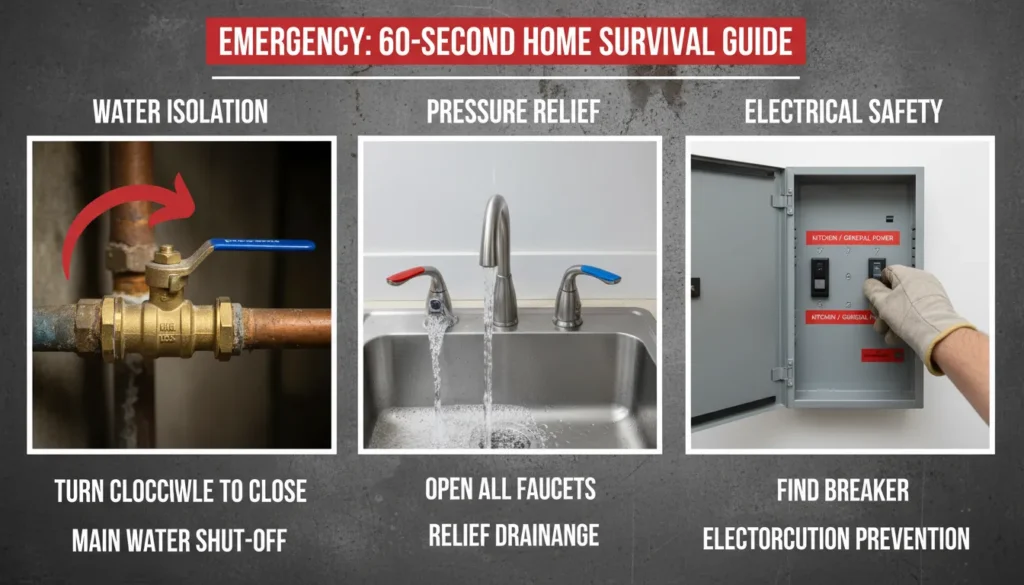
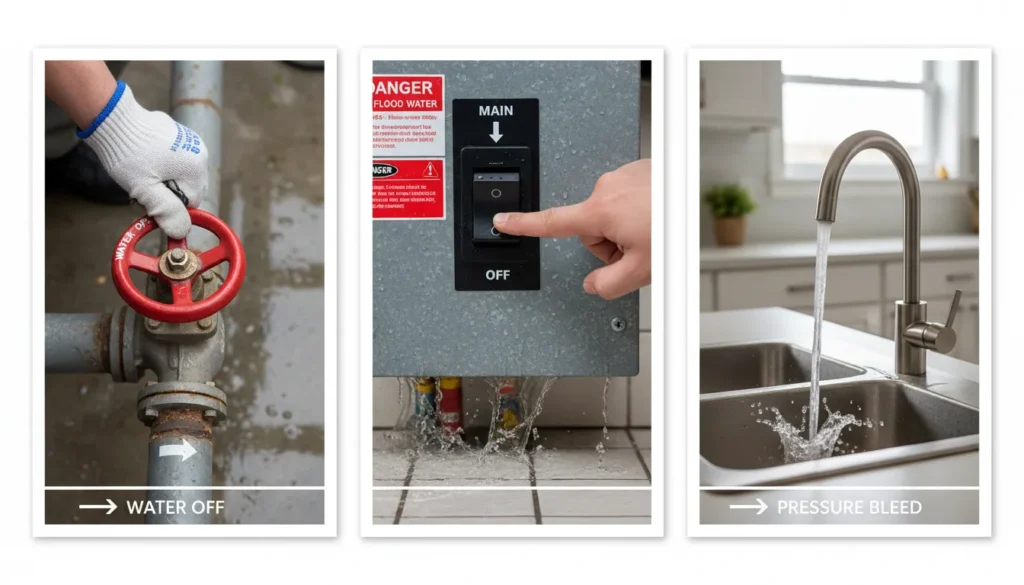
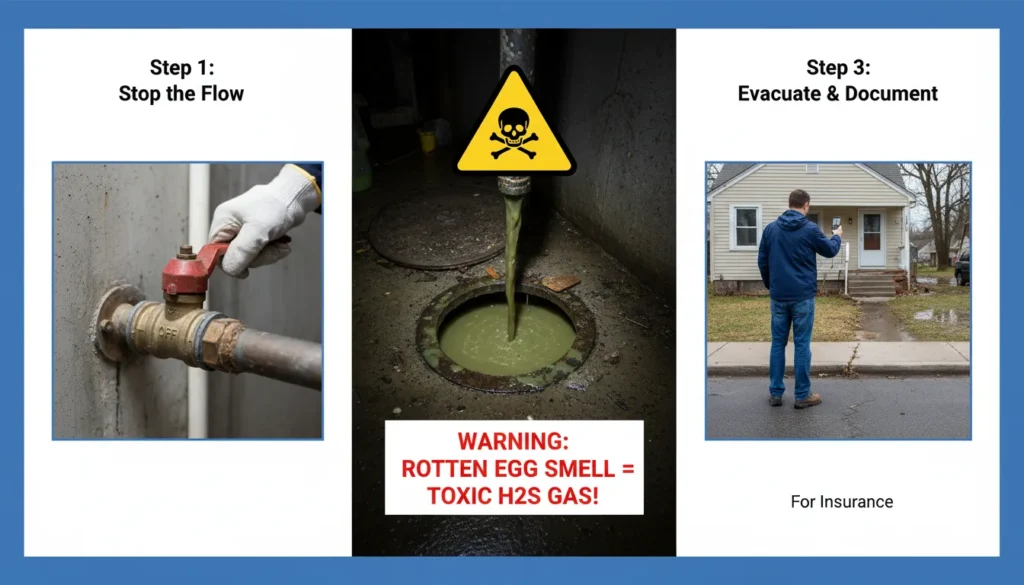
A leaking water heater should be assessed promptly because the cause and location of the leak determine whether repair or replacement may be appropriate. If there is active leaking, shut off the appropriate water and energy supply only if you can do so safely, and contact a qualified plumbing professional for an assessment.
Final Takeaway: Use the Calculator to Make a Better Decision
A water heater replacement cost calculator is most useful when it helps you understand why your project costs what it does—not simply when it produces one number.
Start with your water heater type, fuel, capacity, location, and installation conditions. Then use the estimate to compare replacement options and understand what should be included in a professional quote.
If you are planning a replacement in Miami, local requirements and the actual conditions at your property matter just as much as the national average. A professional evaluation can turn your preliminary estimate into a project-specific recommendation.
Need Help With Your Water Heater Replacement?
If you are ready to move from an online estimate to a professional evaluation, our team can help you understand your replacement options and the work your property may require.
You can also review our water heater replacement service or explore all of our plumbing services.
Related Resources
For additional information when comparing water-heating options, these resources can help:
- U.S. Department of Energy: Consumer Water Heaters — background on residential water-heater technologies.
- U.S. Department of Energy: Heat Pump Water Heaters — how heat pump water heating works and why efficiency matters.
- ENERGY STAR Home Improvement Savings — check current incentives by ZIP code.
- Miami-Dade County: How to Apply for a Permit — official local permitting guidance.
- Florida Building Commission — official Florida Building Code resources.
Important: Online cost estimates are for planning purposes only. Actual pricing, permit requirements, equipment availability, and installation requirements can vary by property, municipality, selected equipment, and project conditions. Verify current local requirements and obtain a project-specific professional quote before making a final decision.