If you searched for water heater replacement near me, you probably do not want a long lesson before getting an answer. You want to know whether your current water heater can still be repaired, whether replacement makes more sense, what kind of new unit fits your property, what affects the final installation cost, and who you can call in Miami to handle the job properly.
I’ll help you work through those decisions in that order. If your system is leaking, producing little or no hot water, repeatedly breaking down, or simply no longer meeting your household’s needs, EZ Plumbing Repair Services can inspect the problem and help determine whether repair or replacement is the more practical next step.
A plumber can diagnose, repair, replace, and install residential water heaters. Replacement becomes especially important when the tank itself is leaking, the system has recurring failures, the existing setup no longer meets your hot-water demand, or repairing it no longer makes practical financial sense.
Treat an active tank leak, water spreading around the unit, a suspected gas problem, burning smell, sparking, or another obvious safety concern as an urgent plumbing issue. Avoid dismantling gas or electrical components yourself. A fast diagnosis can help limit property damage and determine whether the problem is a repairable connection or valve issue versus a failed tank that needs replacement.
Do You Need Water Heater Repair or Replacement?
Replacement should not be the automatic answer every time you lose hot water. Some failures involve a heating element, thermostat, valve, ignition component, connection, or another serviceable part. The first useful question is not “Which new water heater should I buy?” It is “What actually failed?”
A Repair May Make More Sense When
- The tank itself is not leaking or visibly damaged.
- The issue is isolated to a replaceable component.
- The system has otherwise been reliable.
- You are not repeatedly paying for new failures.
- The unit still meets your household’s hot-water needs.
Replacement Deserves Serious Consideration When
- Water is leaking through the tank body rather than from a serviceable fitting.
- Corrosion is visible on the tank or critical connections.
- You keep losing hot water after previous repairs.
- The heater cannot keep up with normal household demand.
- You are planning a change in fuel type, capacity, location, or water-heating technology.
- The repair estimate is large enough that you would rather put the money toward a new system.
Diagnose the failed component, confirm the tank is sound, compare the repair expense with the remaining value of the system, and review the full water heater repair cost before authorizing work.
Confirm your fuel source, available space, hot-water demand and installation requirements, then compare the complete water heater replacement cost rather than looking only at the appliance price.
What Does Water Heater Replacement Cost in Miami?
There is no responsible way to give every Miami property the same replacement price. Two heaters with the same advertised capacity can require very different amounts of labor, materials and modification once you look at the actual installation.
A useful estimate should account for the complete job, not just the box price of the heater.
Tank, tankless, heat pump, point-of-use or another configuration.
Electricity, natural gas or propane can change installation requirements.
The system must be sized for how your household actually uses hot water.
Gas lines, circuits, venting, shutoffs, drains and connections may affect scope.
Tight closets, elevated locations and difficult access can make replacement more involved.
Requirements vary by property location, heater type and the exact work being performed.
If you are budgeting before requesting a quote, our future water heater replacement cost calculator will help organize these variables. For a more detailed breakdown of installer charges, see the upcoming labor cost to install a water heater guide.
Capacity-specific pricing can also matter. Homeowners comparing a common larger tank can use the future 50 gallon water heater cost resource, while a gas installation may be better served by a detailed price to install a 40 gallon gas water heater breakdown.
If you are starting from scratch rather than replacing like-for-like equipment, the new heater installation cost guide will address the additional decisions involved in a new setup.
How Professional Water Heater Replacement Works
If you have never replaced a water heater before, the process can sound more complicated than it needs to. A well-planned job is easier to understand when you break it into decisions instead of focusing only on installation hardware.
- Inspect the current heater. Determine whether the failure is repairable and identify the existing fuel, connections, venting, electrical requirements, capacity and installation space.
- Measure real hot-water demand. A replacement should fit your household rather than simply copying the old label without considering whether the old unit was correctly sized.
- Select the replacement type. Compare tank, tankless, electric, gas, propane, compact and higher-efficiency options that are practical for the property.
- Plan the installation. Identify what can remain and what must change, including shutoffs, supply lines, electrical service, venting, mounting, drain arrangements and other connections.
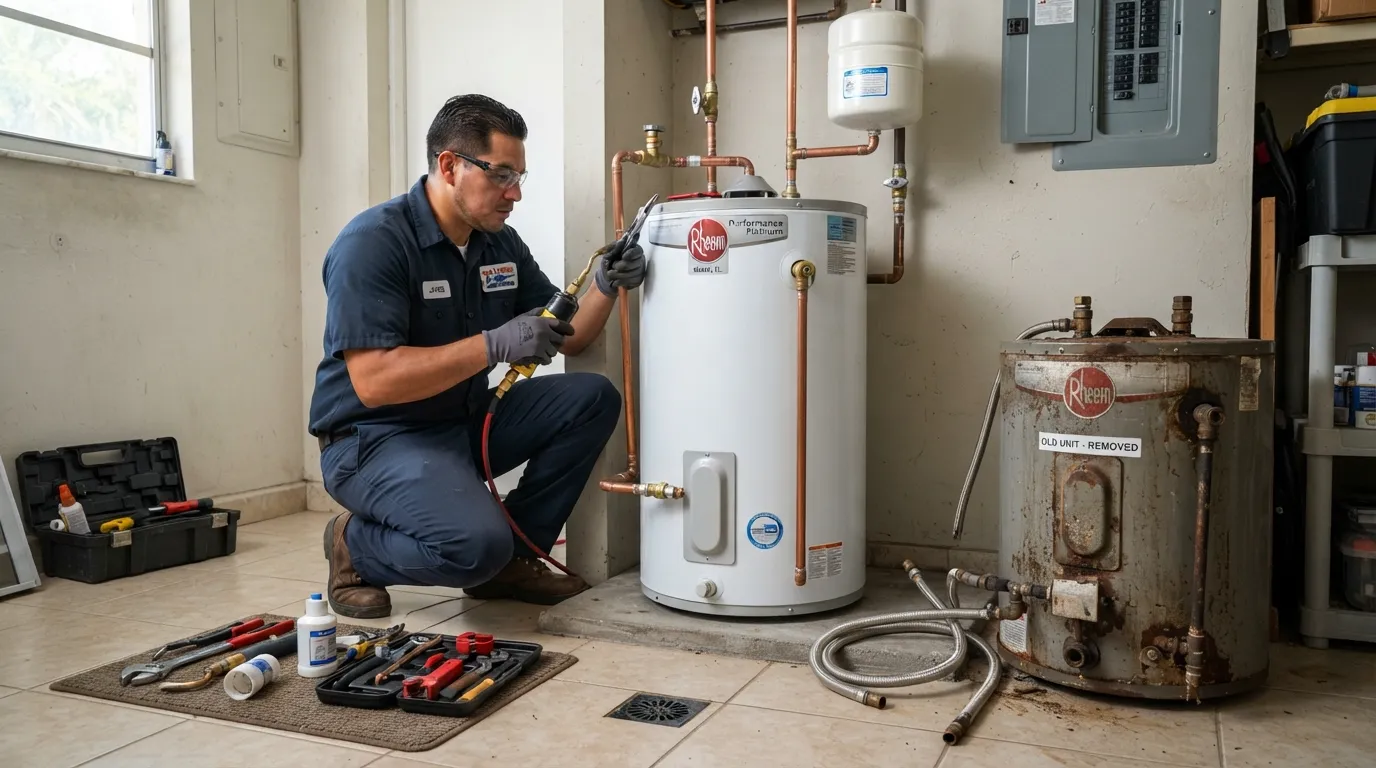
- Remove the existing unit safely. The full process of changing out a water heater involves more than disconnecting two pipes, particularly where fuel, electricity or venting is involved.
- Install and connect the new heater. The correct water heater connections and water heater mounting depend on the system and installation location.
- Test the completed system. Confirm water flow, heating operation, shutoffs, connections and other applicable safety components before putting the unit into normal service.
Some installations also require specific fittings and components, which is why the water heater installation kit topic deserves its own supporting guide instead of turning this service page into a parts list.
Gas equipment introduces additional fuel and venting considerations. If you are researching the process, the future how to install a gas hot water heater article will explain what is involved and where professional handling becomes important.
Researching DIY water heater replacement can help you understand the scope of the job, but understanding the steps is not the same as having the licensing, tools, gas, electrical or plumbing experience required for every installation. Your property location and the type of work also affect permit requirements, so verify local rules before starting.
If you are changing from a conventional tank to an on-demand system, the installation can be materially different. That is why tankless water heater installation has its own supporting topic rather than being treated as a standard tank swap.
See What a Tank-Style Replacement Involves
This educational video from Ask This Old House is useful if you want a visual overview of a tank-type replacement before speaking with a plumber. It is general education, not a substitute for Miami-Dade or municipal requirements for your property.
How to Choose the Right Replacement Water Heater
The best replacement is not automatically the biggest heater, the newest technology or the model with the most features. The right choice is the one that can meet your hot-water demand reliably while fitting your fuel source, space, infrastructure and budget.
If you want a complete selection framework, start with how to choose a water heater. If you are still learning the categories themselves, our hot water types guide will compare the major water-heating systems in more depth.
Tank vs. Tankless
- Stores a ready supply of hot water.
- Replacement may be simpler when the existing setup is already compatible.
- Available in many capacities and fuel types.
- Requires enough physical space for the tank.
- Heats water when demand occurs rather than storing a full tank.
- Can reduce the amount of floor space devoted to water heating.
- Must be sized around flow demand and temperature rise.
- A retrofit can require electrical, gas, venting or other infrastructure changes.
If tankless is on your shortlist, compare gas tankless vs electric tankless rather than assuming one fuel type is universally better.
Electric, Natural Gas and Propane
Your existing utilities often narrow the decision quickly. A property already configured for electric storage may have a different upgrade path than one with an existing gas line and venting system.
For gas-specific research, see natural gas hot water. Properties using propane can compare water heaters LP and, where applicable, a 30 gallon propane water heater.
Gas-fired systems can also differ in how combustion air and exhaust are handled. The direct vent water heater guide will explain direct vent, power vent and atmospheric arrangements without forcing all of that technical detail into this replacement overview.
What About a Water Heater and Furnace?
A furnace heats your home’s air; a domestic water heater heats water for faucets, showers and appliances. Some homeowners encounter combined or closely located systems and naturally search for a hot water heater and furnace. That topic deserves a separate explanation because equipment relationships vary by property.
What Size Water Heater Do You Need?
Capacity should follow demand, not guesswork. For a storage heater, your plumber should consider how much hot water the household uses and when that demand occurs. For tankless equipment, sizing focuses more heavily on simultaneous flow and the amount of temperature rise the heater must produce.
Instead of forcing one capacity recommendation onto every home, use the following options as starting points for deeper research.
Small-Capacity Water Heaters
- 6 gallon water heater — a compact storage option for limited-demand applications.
- 10 gallon water boiler — a small-capacity category that can include compact electric water-heating applications; verify the exact appliance type because “boiler” and “water heater” are not always interchangeable terms.
- 15 gallon water heater — another compact storage size for applications that do not need a full-size household tank.
Mid-Size Water Heaters
- 30 gallon water heater — available in multiple configurations and useful to compare by dimensions, recovery and fuel type.
- 30 gallon propane water heater — intended for properties where LP is the relevant fuel source.
- 50 gallon gas water heater — a common larger residential category where efficiency, venting and installation conditions matter in addition to capacity.
Large-Capacity Water Heaters
- 75 gallon water heater — suitable for research when hot-water demand exceeds what smaller storage systems comfortably provide.
- 80 gallon water heater — a large-capacity category that includes electric and other high-demand configurations.
- 100 gallon gas hot water heater — a much larger storage category generally associated with heavier hot-water demand and installations where capacity requirements justify the footprint.
The right size still depends on the property and usage pattern. Do not upgrade capacity simply because “more gallons” sounds safer; oversizing, physical clearance, utility requirements and recovery performance all deserve consideration.
Water Heaters for Tight Spaces and Special Applications
Not every replacement belongs in a wide utility room. Condos, small closets, workshops, additions, mobile homes and point-of-use applications can require very different equipment.
A lowboy water heater uses a shorter tank profile for spaces where height is limited. A 50 gallon lowboy electric water heater combines that shape with larger storage capacity.
A small water heater can serve applications where a conventional full-size tank would be excessive or physically impractical.
Some small systems fall into the 110 volt water heater or 120V electric water heater category. Voltage alone does not tell you whether a heater can meet your demand, so check output and intended use.
A plug in water heater can simplify certain small-demand applications, but electrical requirements and intended use still need to match the installation.
A point of use water heater is installed near the fixture it serves, such as a remote sink where waiting for hot water from a distant central heater is undesirable.
A mobile home electric water heater should be selected for the specific installation and applicable requirements rather than assuming any standard residential model is interchangeable.
Point-of-Use and Portable Tankless Options
A point of use electric tankless water heater serves a narrower demand than a whole-house tankless system and can make sense when only one fixture or small area needs localized hot water.
Other specialized categories include a portable tankless water heater and an outdoor on demand propane water heater. These should be selected around their intended environment and manufacturer installation requirements rather than treated as substitutes for every indoor whole-house system.
Should You Replace a Tank Water Heater With Tankless?
Tankless is one of the most common upgrades homeowners consider during replacement because the old heater is already being disconnected. That makes replacement day a logical time to ask whether staying with a tank or changing technologies makes more sense.
How Does Tankless Hot Water Work?
A tankless unit heats water as it moves through the system instead of maintaining a large stored volume of hot water. The complete explanation is covered in how does a tankless water heater work.
Are Tankless Water Heaters Gas or Electric?
Both configurations exist. The better option depends on available utilities, electrical capacity, gas supply, venting requirements, desired output and installation scope. Start with tankless hot water heater gas or electric, then use gas tankless vs electric tankless for the side-by-side decision.
How Do You Size a Tankless Water Heater?
Tankless sizing should account for how many fixtures may run simultaneously and how much the incoming water temperature must be raised. The future how many GPM for tankless water heater guide will walk through that calculation in detail.
If simultaneous bathrooms are your main concern, see tankless water heater for two showers rather than assuming a specific kilowatt or BTU rating will automatically satisfy two fixtures in every property.
What About Tankless Cost?
The appliance is only part of the conversion. Electrical upgrades, gas capacity, venting, mounting, plumbing changes and labor can all affect the project. That is why tankless water heater cost should be evaluated as a complete installed system.
Before deciding, also review tankless water heater installation so you know whether your property can support the model you are considering without unnecessary surprises.
Brand and Model Research Before Replacement
Brand searches often happen late in the buying journey, but a familiar name does not remove the need to confirm capacity, dimensions, fuel, voltage, venting, efficiency characteristics and compatibility with your property.
- Bradford White 80 gallon electric water heater — useful when comparing large electric storage equipment and specific Bradford White configurations.
- electric Rheem water heater 50 gallon — a focused resource for homeowners comparing a 50-gallon electric Rheem system.
- Rheem water heater 40 gallon — for 40-gallon Rheem configurations, including electric options.
- Reliance 606 water heater — for people researching this specific Reliance series or an existing unit they may be replacing.
A product page can tell you what a heater is capable of. An installation assessment tells you whether it is suitable for your actual property. You need both pieces before making a confident purchase.
Miami-Dade Water Heater Permits: Verify Before the Job Starts
Permit information deserves special attention because a generic national article cannot tell you exactly what applies to every Miami-area address.
Miami-Dade County’s general permitting guidance says work that alters, repairs or replaces regulated plumbing systems can require a permit and specifically includes replacement of a hot water heater among work that may require permitting.
The same county also publishes exemptions for certain work. For unincorporated Miami-Dade, its current exemption information includes specified electric-water-heater repair/replacement situations, including electric units up to 50-gallon capacity when performed by licensed plumbing contractors, subject to the stated conditions.
What this means for you: do not rely on a blanket “water heaters always need a permit” or “water heaters never need a permit” answer. Your municipality, heater, electrical characteristics and scope of work matter. Miami-Dade also notes that municipalities within the county have their own building officials, so verify requirements for the exact property before installation.
What Happens After Your New Water Heater Is Installed?
Replacement solves today’s failure, but routine care can help you notice problems before your next emergency. The exact maintenance schedule depends on the heater type, manufacturer guidance, water conditions and system design.
Tank Flushing and Draining
Storage tanks can accumulate sediment over time. If you want to understand frequency rather than blindly following a calendar, see how often to flush water heater.
The separate how to drain a water heater guide will cover the process and reasons for draining, while how long does it take to drain a water heater addresses a different practical question: how tank size, sediment, drainage and setup can affect the time involved.
Heat-Pump Systems
Heat-pump water heaters have different operating and maintenance considerations from conventional resistance-electric tanks, so owners should use a dedicated heat pump water heater maintenance resource rather than assuming every heater follows the same routine.
Why Use a Local Miami Plumber for Water Heater Replacement?
A replacement combines product selection with work inside your home or business. Local service matters because the installer needs to evaluate the property, not merely sell you a heater.
EZ Plumbing’s current business information lists 24/7 availability, licensed and insured service, upfront pricing and more than 10 years serving Miami. Its project gallery also shows completed water-heater work, including an AO Smith ProLine commercial installation.
Useful when a failed heater becomes an active leak or urgent loss-of-hot-water problem.
Ask what the quote includes before work starts: heater, labor, materials, modifications, disposal and any applicable permit-related scope.
A water heater can involve plumbing connections and, depending on the system, gas, venting or electrical considerations that need to be identified before installation.
You can also explore our broader Miami plumbing services and resources if your water-heater issue is part of a larger plumbing project.
Water Heater Replacement Across Miami-Dade
Water-heater problems happen in high-rise units, single-family homes, rental properties, commercial spaces and compact utility closets. The equipment and access conditions can differ, but the decision process remains the same: diagnose first, size correctly, confirm installation requirements and understand the complete quote.
EZ Plumbing currently lists service across Miami-Dade communities including Miami, Hialeah, Doral, Miami Beach, Coral Gables, Westchester, Sweetwater, Kendall, North Miami Beach, Sunny Isles, Miami Gardens, Palmetto Bay, Cutler Bay, Homestead and Florida City.
Water Heater Replacement FAQs
Do plumbers replace water heaters?
Yes. Water-heater diagnosis, plumbing disconnection, replacement and installation are common plumbing services. The exact scope can also involve gas, electrical, venting or permitting considerations depending on the system.
Who should I call for water heater issues?
A qualified plumber is a logical first call for a leaking tank, loss of hot water, water-heater plumbing problem, suspected need for replacement or questions about installing a new unit.
Do plumbers fix water heaters as well as replace them?
Yes. A good diagnostic visit should determine whether a component can reasonably be repaired before recommending replacement. Not every no-hot-water call requires a new tank.
How much does it cost to replace a water heater?
The final amount depends on the unit, fuel source, capacity, labor, access, modifications and any applicable local requirements. Use the future water heater replacement cost guide for a detailed breakdown rather than relying on a generic one-price answer.
How much is labor to install a water heater?
Labor changes with the installation. A direct replacement in an accessible location is a different job from changing fuel source, modifying connections or converting to tankless. See labor cost to install water heater for the dedicated explanation.
Can I replace a water heater myself?
Some homeowners research DIY installation, but the safe and legal answer depends on the heater, your skills and local requirements. Gas, high-voltage electrical work and incorrect plumbing connections can create serious hazards. Review DIY water heater replacement and verify local permit rules before deciding.
What size water heater should I buy?
Choose based on real hot-water demand, fuel source, available space and system recovery/output—not simply the capacity of the old tank. The how to choose a water heater guide will help you narrow the options.
Are tankless water heaters worth considering?
They can be worth comparing when you value on-demand operation or space savings and the property can support the required output. The decision should include conversion cost and infrastructure requirements, not only the appliance itself. Start with gas tankless vs electric tankless and tankless water heater cost.
Can one tankless water heater run two showers?
Possibly, but the answer depends on total simultaneous flow and the required temperature rise. Use tankless water heater for two showers and how many GPM for tankless water heater rather than selecting a unit by marketing language alone.
Do I need a permit to replace a water heater in Miami-Dade?
It depends on the property jurisdiction, equipment and scope. Miami-Dade publishes both general permit requirements and specific exemptions for certain work, and municipalities within the county have their own building officials. Check the current rule for your exact address and project before work begins.
How often should I flush my new water heater?
Follow the manufacturer’s instructions and consider system and water conditions rather than assuming one schedule fits every heater. Our how often to flush water heater guide will cover the decision in detail.
What should I do if my water heater is leaking right now?
If water is actively escaping, especially from the tank itself, treat it as an urgent plumbing problem. Avoid opening electrical or gas components and contact a plumber so the leak source and replacement need can be assessed.
Get a Water Heater Replacement Estimate in Miami
You do not need to know the perfect brand, gallon size or fuel configuration before calling. Start with the problem you have now. A useful replacement visit should help you answer five questions:
- Can the existing water heater reasonably be repaired?
- If not, what type and capacity fit the property?
- Can the new unit use the current connections and infrastructure?
- What work is included in the complete replacement quote?
- Are there permit or inspection requirements for this exact installation?
If your heater is leaking, failing repeatedly, producing no hot water or ready for an upgrade, contact our Miami plumbing team for an assessment and replacement options.
Helpful Water Heater Research Resources
If you are still comparing equipment before requesting an installation quote, these independent resources can help you research efficiency, product options and local requirements.
- Miami-Dade County: How to Apply for a Permit — official county guidance on when permits may be required and how jurisdiction affects the process.
- Miami-Dade County Permit Exemptions — useful for checking whether a particular type of repair or replacement may qualify for an exemption.
- ENERGY STAR Heat Pump Water Heaters — independent information for homeowners evaluating heat-pump water-heating technology.
- ENERGY STAR Certified Heat Pump Water Heater Product Finder — compare certified models and product information when this technology fits your property.
- U.S. Department of Energy Home Upgrade Resources — federal information on efficient home equipment, including water-heating upgrades.