How to Plunge a Toilet: 7 Pro Steps to Fix a Stubborn Clog Fast
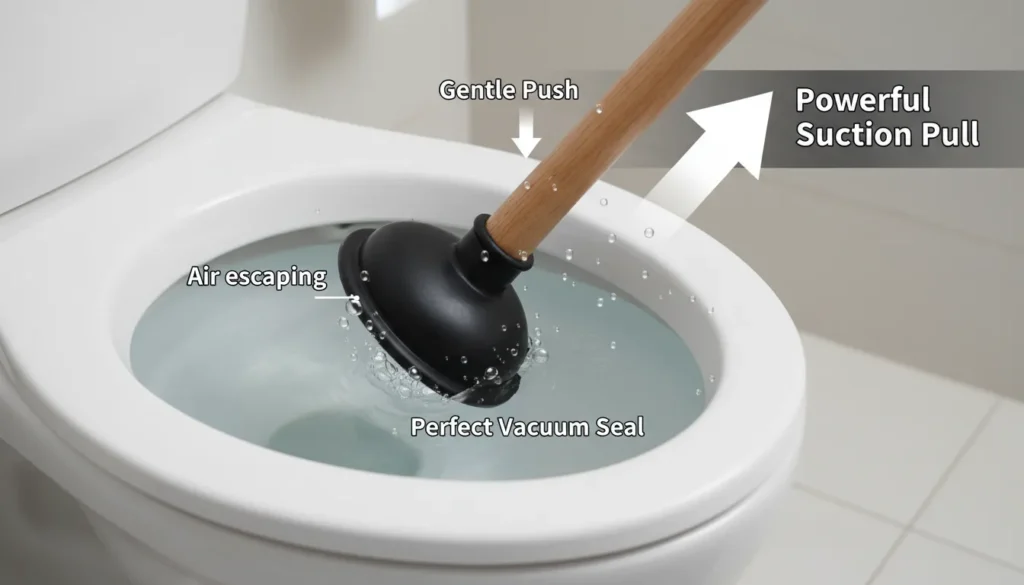
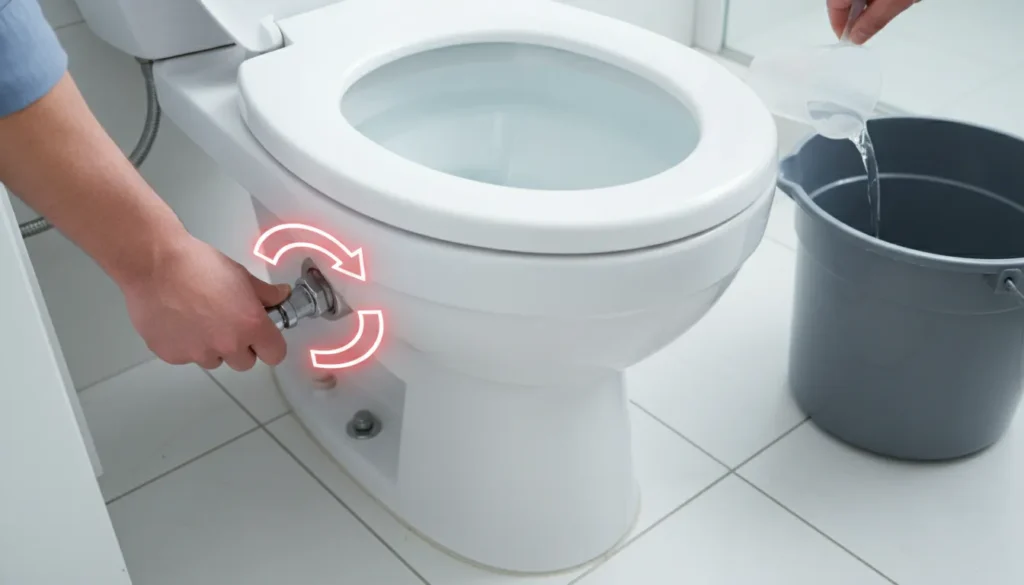
To plunge a toilet effectively, you must create an airtight seal using a flange plunger and focus on the suction pull rather than the downward push. If the water is rising, immediately turn the shut-off valve behind the toilet clockwise to prevent a messy bathroom overflow.
The “Panic” Protocol: Stop the Overflow Now
Most people fail because they start plunging while the water is still rising. This is a mistake. You cannot fix a clog while fighting a flood.
Locate the Valve: Reach behind the porcelain base and twist the water shut-off valve to the right.
The Tank Hack: If the valve is stuck, lift the lid off the toilet tank and manually push the rubber flapper down to seal the flush hole.
Don’t Flush Again: One flush is a clog; two flushes is a flood. Wait until the water level stabilizes before touching your tools.
Expert Insight: Plunging is 10% force and 90% physics. By stopping the water first, you gain control over the suction needed to dislodge the obstruction.
How to Plunge a Toilet Effectively
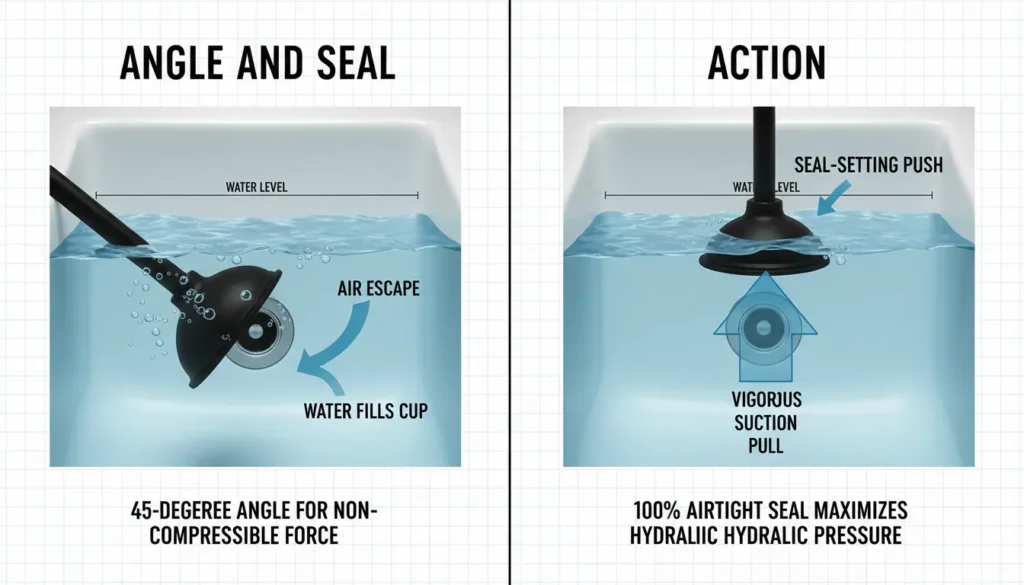
To plunge a toilet, use a flange plunger to create a tight seal over the waste inlet at a 45-degree angle to displace air with water. Pump gently once to seal, then pull and push vigorously for 15–20 cycles. The suction created by the pull-back motion is what actually dislodges the clog.
Choosing Your Weapon: Flange vs. Accordion vs. Cup Plunger
Using the wrong tool is the #1 reason clogs won’t budge. If you are using a flat-bottomed plunger, you are likely wasting your effort.
The Flange Plunger (The Pro Choice): This is the gold standard. It features a tapered rubber sleeve that fits directly into the toilet’s throat, ensuring the airtight seal needed for high-pressure suction.
The Accordion Plunger: Made of hard plastic with bellows, this tool displaces a massive volume of water. It’s the best for heavy-duty blockages, though it can be tougher to seal on modern, non-round drains.
The Cup Plunger (The Sink Only Tool): Avoid this for toilets. Its flat rim is designed for flat surfaces like kitchen sinks or bathtubs. On a curved toilet bowl, it will never form a proper seal, leading to frustrating splash-backs.
Expert Tip: Before you start, soak your plunger in hot water for two minutes. This softens the rubber, making it more pliable and allowing it to mold perfectly to your toilet’s unique shape.
How to Plunge Like a Pro
🎬 Visual Guide: Stop the Clog Fast
The “Modern Toilet” Nightmare: How to Plunge Rectangular Drains
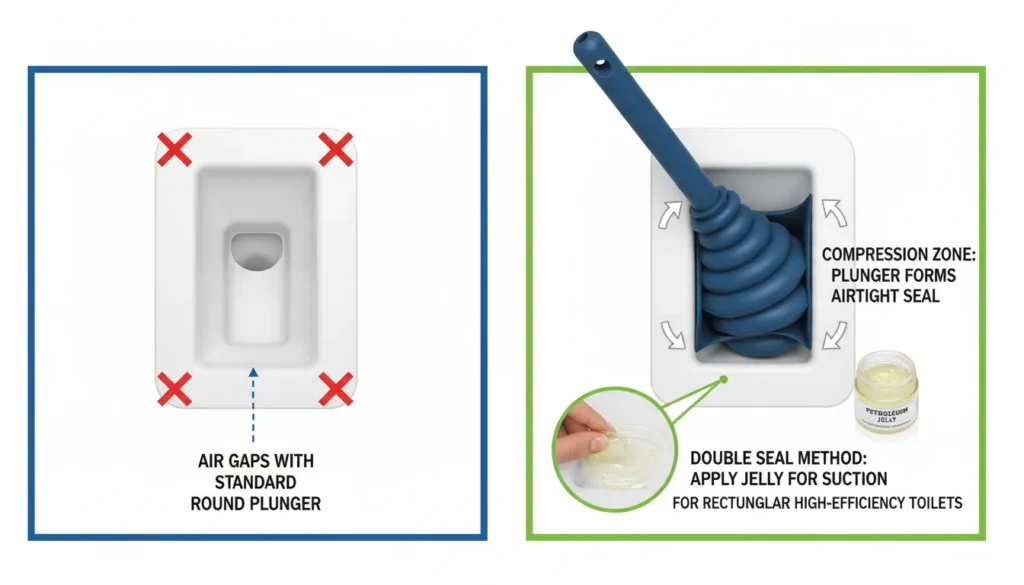
If you own a high-efficiency (HE) toilet like a Kohler K-3575, you’ve probably noticed the drain hole isn’t a perfect circle—it’s rectangular or keyhole-shaped. This is the #1 reason why standard plunging fails; a round plunger cannot create a vacuum over a square hole.
The Problem: Traditional plungers leave “air gaps” in the corners of rectangular drains, destroying the suction needed to move the clog.
The Pro Fix: Use a beehive plunger or a high-quality, soft-rubber flange plunger. Because the rubber is more pliable, you can manually “tuck” the flange into the rectangular opening to force a seal.
The “Double Seal” Secret: If you still can’t get a grip, apply a heavy layer of petroleum jelly around the rectangular rim of the drain before seating the plunger. This fills the microscopic gaps and forces the pressure directly into the P-trap.
Pro Secrets: Unclogging Without a Plunger
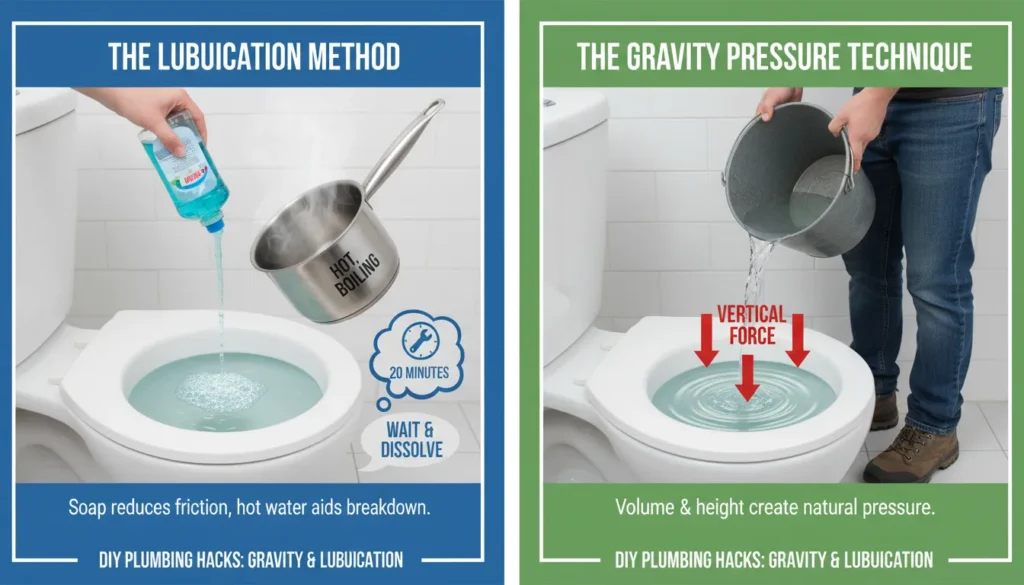
Sometimes the clog happens when you don’t have your tools handy. As an expert, I’ve seen these two DIY methods save homeowners hundreds in emergency plumbing fees:
The Dish Soap & Hot Water Method: Squirt a generous amount of dish soap (like Dawn) into the bowl. The soap acts as a lubricant for the “organic matter” causing the clog. Follow this with a gallon of hot (not boiling) water. Wait 20 minutes. Often, the clog will slide through the waste line on its own.
The Vertical Pressure (Bucket) Technique: Fill a large bucket with water. Stand up and pour it directly into the center of the toilet bowl from waist height. The sheer vertical force of the falling water often creates more pressure than a plunger ever could.
Post-Fix Hygiene: Disinfecting Like a Plumber
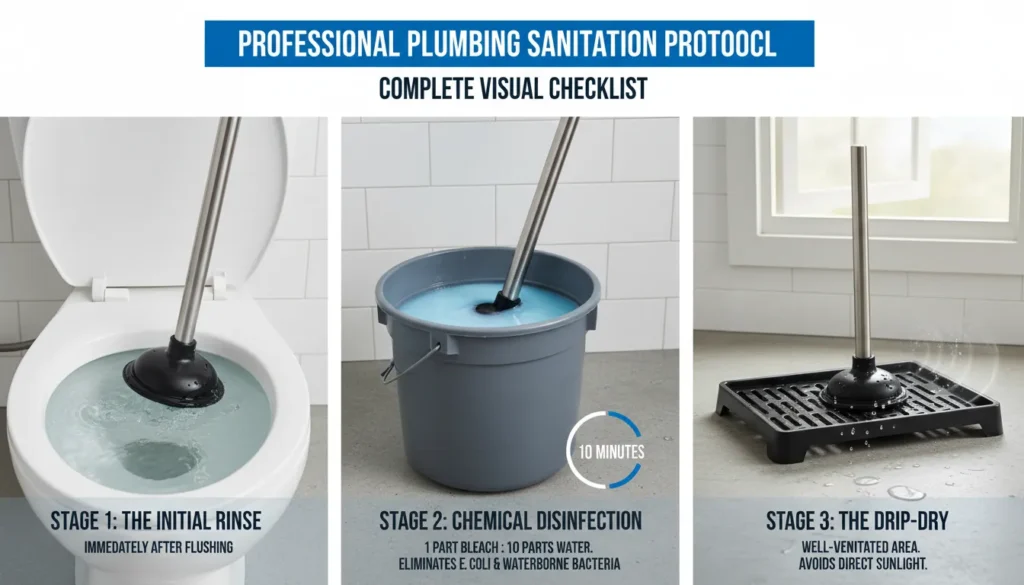
Plunging is a dirty job, and biological safety is paramount. Your plunger is now a magnet for E. coli and other pathogens.
The Rinse: Flush the toilet and hold the plunger head in the swirling clean water.
The Bleach Protocol: Mix 1 part bleach with 10 parts water in a bucket. Submerge the plunger for 10 minutes. Swish it around to ensure the inside of the cup is disinfected.
The Drip-Dry: Never store a wet plunger on the floor. Use a drip tray or hang it on a hook in a cool, dry place. Direct sunlight can crack the rubber over time, ruining your seal for the next emergency.
Deep FAQ: Answers to the “People Also Asked”
Can you use a toilet plunger on a kitchen sink?
No. Beyond the hygiene risk of transferring E. coli to food prep areas, a toilet plunger’s flange won’t seal correctly on a flat sink surface. Use a dedicated cup plunger for sinks.
What if the toilet won’t unclog after 15 minutes of plunging?
If vigorous plunging fails, the blockage is likely a solid object (toy, cell phone) or a deep line issue. Continuing to plunge can damage the wax ring seal at the base of your toilet. It’s time to use a toilet auger or call a pro.
Is it dangerous to use Drano before plunging? Extremely dangerous.
Never plunge after pouring chemical cleaners. The plunging action causes splashback, which can result in severe chemical burns to your eyes and skin.
Why does my toilet gurgle when I’m not using it?
This usually indicates a venting issue or a partial blockage in the main waste line. It’s a sign that air is being trapped, and a simple plunger won’t fix it.
When to Call a Professional (Cost vs. DIY)
While 90% of clogs succumb to a good plunger, some battles aren’t worth fighting alone. You should stop your DIY efforts and call a licensed plumber if:
Multiple Drains are Backed Up: If your shower gurgles when you flush the toilet, the problem is in the main sewer line.
Persistent Sewer Gas Smell: This indicates a cracked pipe or a deep venting failure that could be hazardous to your health.
The Floor is Loose: If the flooring around the base feels “spongy” or the toilet wobbles, the wax ring has failed, and water is rotting your subfloor.
I was recommended this blog by my cousin. I am not sure whether
this post is written by him as nobody else know such detailed about my difficulty.
You’re amazing! Thanks!