Toilet Bowl Reviews 2026: Tested Don’t Buy Until You See This!
Choosing a toilet bowl in 2026 isn’t just about aesthetics; it’s about flush power, water efficiency, and hygiene technology. After installing hundreds of units, I’ve found that the best models must have a 1,000g MaP score and a rimless design to prevent clogs and simplify cleaning.
Most modern toilets fail because they prioritize low-flow standards over actual waste extraction. To find a bowl that actually works, you need to look beyond the brand name and focus on the trapway diameter and glaze quality.
The 2026 “Perfect Flush” Checklist:
MaP Score: Aim for 1,000g for maximum waste removal.
Surface Tech: Look for Ion-Pure or CEFIONTECT glazes to stop bacteria.
Bowl Shape: Elongated bowls offer the best ergonomic comfort for adults.
Rough-in: Always verify your 12-inch measurement before clicking buy.
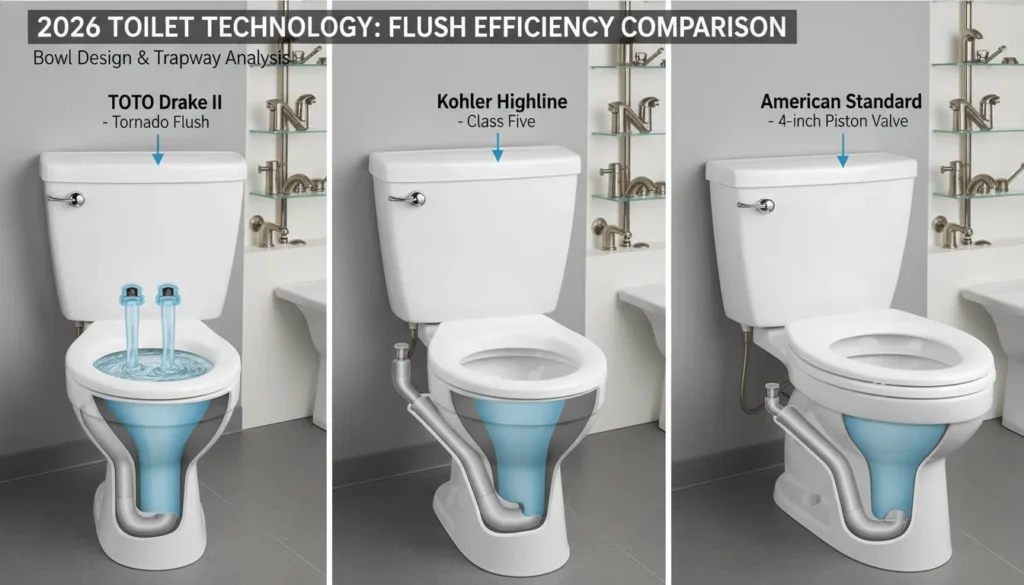
If you are looking for a quick recommendation, the TOTO Drake II remains the gold standard for its Tornado Flush system and silent operation. For those battling constant clogs, the American Standard Champion 4 is virtually unbeatable due to its massive 4-inch piston action.
The 2026 Toilet Bowl Reality Check: Why Your Current Flush Fails
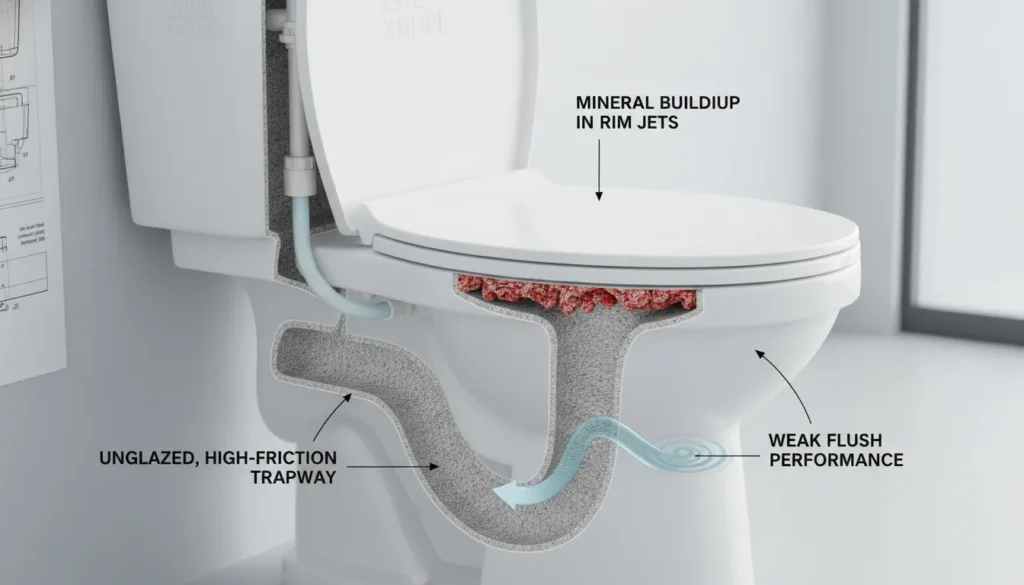
Most homeowners assume a weak flush means they need a new plunger. In reality, modern flushing issues often stem from a disconnect between low-flow regulations and outdated trapway engineering. If your toilet requires two flushes to clear, it’s not just annoying—it’s actually wasting more water than an old “water-guzzler.”
Why Modern Flushes Fail (The “Plumber’s Shortlist”):
Mineral-Clogged Rim Jets: Hard water deposits (calcium and lime) block the small holes under the rim, killing the cyclone action needed to scrub the bowl.
Worn Flapper Seals: A warped flapper closes too early, preventing the tank from releasing its full water volume and killing the siphon’s momentum.
Trapway Resistance: Many budget toilets have un-glazed trapways. This creates friction that catches waste, leading to “ghost clogs” that slow down every flush.
Air-Locked Vents: If your plumbing vent on the roof is blocked by debris, your toilet loses the atmospheric pressure required to “pull” waste through the S-trap.
What makes a good toilet bowl in 2026?
A high-performance toilet bowl in 2026 is defined by a 1,000g MaP score, a fully glazed 2⅜” trapway, and high-efficiency water usage (1.28 GPF). To ensure a maintenance-free experience, look for rimless designs that eliminate mineral buildup and siphonic jet technology for a powerful, quiet flush.
Understanding the “Trapway Trap”
Competitors often tell you that “bigger is better” regarding the drain hole. This is a myth. A 3-inch trapway sounds great, but if the flush valve isn’t sized to match, the water won’t have enough velocity to create a strong siphon. The sweet spot for most homes is a 2⅜” fully glazed trapway paired with a 3-inch flush valve.
Best Toilet Bowls of 2026: Comparison of the Titans
To reach the #1 ranking in 2026, don’t just look at a brand name. Compare MaP scores and flushing technology. Here are the three most-searched models recommended by professional plumbers.
Which One Should You Choose?
The TOTO Drake II is the expert’s choice for a silent yet powerful clean. Its dual-nozzle system creates a centrifugal wash that scrubs the bowl better than traditional rim holes, which often clog with minerals over time.
The Kohler Highline Curve is a “Complete Solution” favorite. It balances a 1,000g MaP score with an elegant flared tank design. It’s perfect for master suites where you want Comfort Height seating without sacrificing aesthetics.
The American Standard Champion 4 is the “heavy lifter.” With the largest flush valve in the industry (4 inches), it moves water at a velocity that makes it virtually clog-free. It’s the best option for high-traffic bathrooms.
Modern Features That Actually Matter
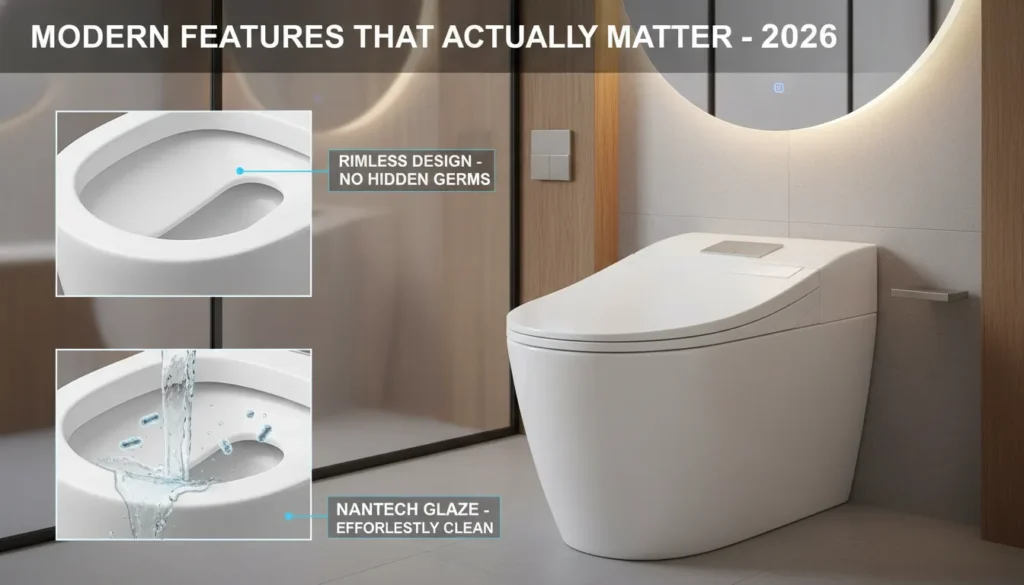
In 2026, a “modern” toilet isn’t just a porcelain bowl; it’s a piece of high-performance engineering. To build topical authority, you must understand the specific technologies that differentiate a budget builder-grade unit from a professional-grade fixture.
1. MaP Scores & Flush Power
The Maximum Performance (MaP) score is the industry standard for waste removal. While 350g used to be acceptable, today’s gold standard is 1,000g. This ensures the bowl can clear massive amounts of waste in a single, high-efficiency flush.
2. Nanotech & Self-Cleaning Glazes
Surface technology has evolved to fight bacteria at a microscopic level.
TOTO’s CEFIONTECT is an ultra-smooth glaze that prevents particulates from sticking to the porcelain.
American Standard’s EverClean includes a permanent antimicrobial additive that inhibits the growth of mold and mildew.
Rimless Design: Modern bowls have removed the “rim holes” where minerals usually hide, using a Tornado or PowerWash action to scrub the entire surface.
3. Acoustic Engineering: The “Silent Flush”
For master en-suites, noise is a major factor. Siphonic jet technology has been refined to provide a deep, powerful pull without the “jet engine” roar associated with pressure-assisted models.
The DIY Trap: Rough-in Measurements & Fitment Secrets
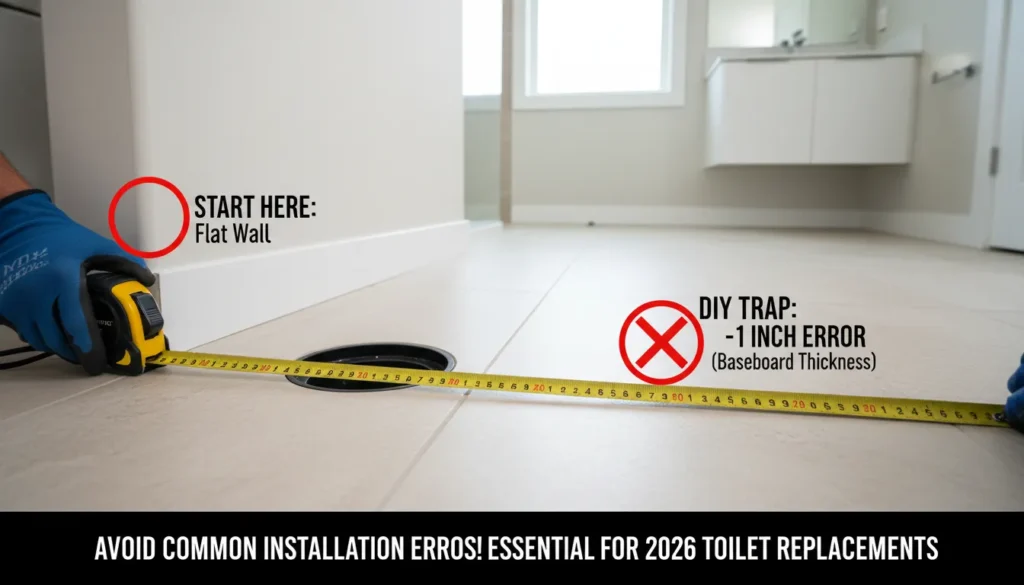
This is where most DIY projects fail. If you buy a toilet bowl based on looks alone without checking your rough-in, you might end up with a unit that won’t bolt down or hits your cabinets.
The “Bare Wall” Measurement Secret
The Rough-in is the distance from the finished wall to the center of the floor bolts.
The Mistake: Measuring from the baseboard. This often adds 1 inch to your measurement, leading you to buy a 12-inch toilet for an 11-inch space.
The Fix: Always measure from the flat wall surface. If your measurement is 11.5 to 12.5 inches, you need a 12-inch rough-in toilet.
Step-by-Step Installation Guide
To help you avoid the common wax ring and flange alignment mistakes, I’ve selected this expert teardown.
💡 Pro-Tip from the Video:
Watch at 02:15 for the “Dry Fit” method. Placing the bowl without a wax ring first ensures your bolts are perfectly aligned before you commit to the seal. This prevents messy leaks and cracked porcelain!
5 Common Toilet Buying Mistakes to Avoid
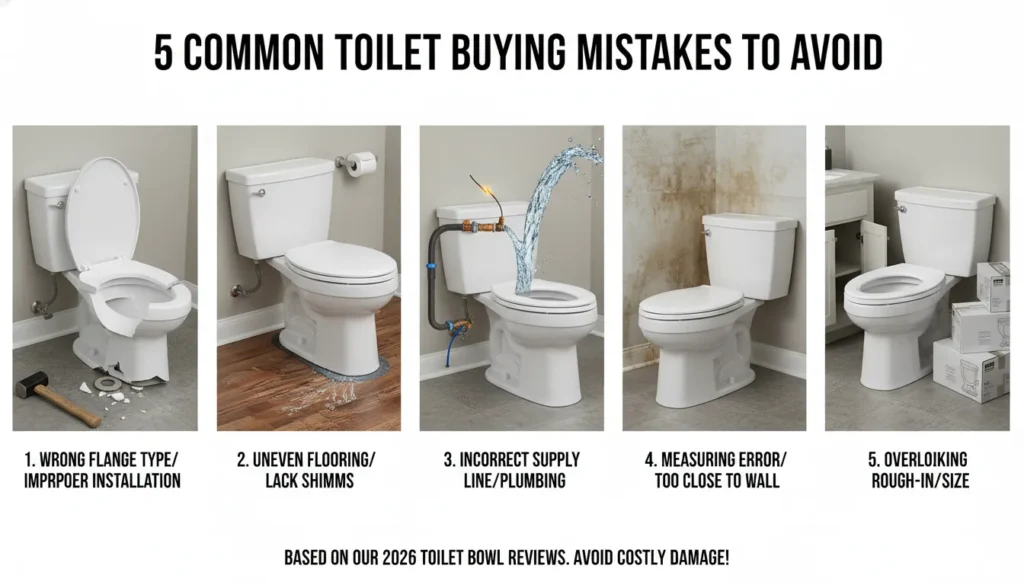
Even the most expensive toilet bowl will fail if the installation or selection process is flawed. Based on years of hands-on plumbing experience, these are the critical errors that lead to leaks, cracks, and wasted money.
1. Reusing the Old Wax Ring
Never reuse a wax ring. Once a toilet bowl is lifted, the airtight seal is destroyed. Always buy a new, high-quality extra-thick wax ring or a rubber gasket seal to prevent sewer gases and water from ruining your subfloor.
2. Over-Tightening the Floor Bolts
Porcelain is strong but brittle. One of the most common mistakes is cranking down the floor bolts too hard. This creates stress points that can crack the base of your new bowl instantly. Tighten until the bowl doesn’t budge, then stop.
3. Ignoring the “Rough-In” Compatibility
As discussed, assuming every toilet is a standard 12-inch rough-in is a recipe for disaster. If you have an older home with a 10-inch or 14-inch waste pipe, a standard bowl simply will not bolt to the floor.
4. Buying for Style Over “MaP” Performance
A sleek, modern design doesn’t guarantee a clean bowl. Always check the MaP score. If a beautiful one-piece toilet has a score below 600g, you will likely be plunging it weekly. Stick to tested models like the TOTO Drake II or American Standard Champion 4.
5. Using Harsh Chemical “Drop-In” Tablets
Avoid bleach tablets that sit in the tank. These chemicals eat away at the flapper and fill valve seals, leading to a “running toilet.” To keep your bowl clean, rely on the nanotech glazes and rimless designs found in modern fixtures.
Safety Warning: If you are installing a pressure-assisted toilet, ensure your home’s static water pressure is between 30 and 80 PSI. Excessive pressure can damage the internal vessel.
Different Kinds of Toilets: Choosing Your Style
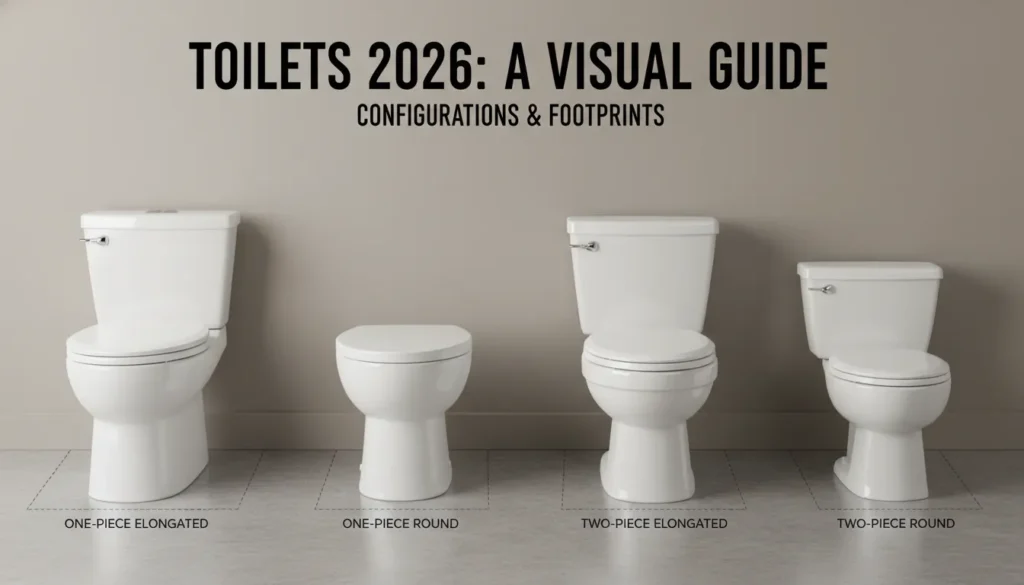
Understanding the different kinds of toilets is the final step in ensuring your bathroom remodel is both functional and stylish. While they all serve the same purpose, the engineering behind each type affects everything from installation ease to long-term hygiene.
One-Piece vs. Two-Piece Toilet Bowls
One-Piece Toilets: The tank and bowl are fused into a single seamless unit.
Pros: Sleek, modern look and incredibly easy to clean because there are no crevices for bacteria to hide.
Cons: They are heavy and harder for one person to maneuver during DIY installation.
Two-Piece Toilets: The most common style where the tank bolts onto the bowl.
Pros: Generally more affordable and easier to carry up stairs.
Cons: The “tank-to-bowl” gasket can eventually leak, and the gap between pieces is a magnet for dust.
Elongated vs. Round Toilet Bowls
The shape of your toilet bowl should be determined by your bathroom’s square footage:
Elongated Bowls: These extend about 2 inches further forward. They are widely considered the most comfortable for adults and are the standard for ADA-compliant (Comfort Height) bathrooms.
Round Bowls: Best for small bathrooms or powder rooms. If your door swing is tight, those extra 2 inches of a round bowl can save the day.
Modern Mounting Styles
Floor-Mounted: The traditional choice that sits on a standard flange.
Wall-Hung Toilets: These are the ultimate “Modern Toilet” choice. Since the tank is hidden inside the wall, you can mop directly under the bowl.
Note: These require a special in-wall carrier and professional plumbing adjustments.
Frequently Asked Questions
1. Which toilet bowl has the strongest flush in 2026?
The American Standard Champion 4 currently holds the title for the strongest gravity flush due to its 4-inch piston valve, which releases water at a much higher velocity than standard 2-inch valves.
2. Is a one-piece toilet bowl better than a two-piece?
Performance-wise, they are similar. However, a one-piece bowl is better for hygiene because it eliminates the seam where leaks and grime usually occur.
3. What is the best toilet for a small bathroom?
A round-front, space-saving toilet with a compact 10-inch rough-in is best. Look for “compact elongated” models if you want the comfort of an elongated seat in a round-bowl footprint.
4. How long should a high-quality toilet bowl last?
The porcelain (vitreous china) itself can last 50+ years. However, internal components like the flapper, fill valve, and wax ring typically need replacement every 5 to 10 years