What Are Plumbing Fixtures? Everything from Faucets to Smart Toilets!
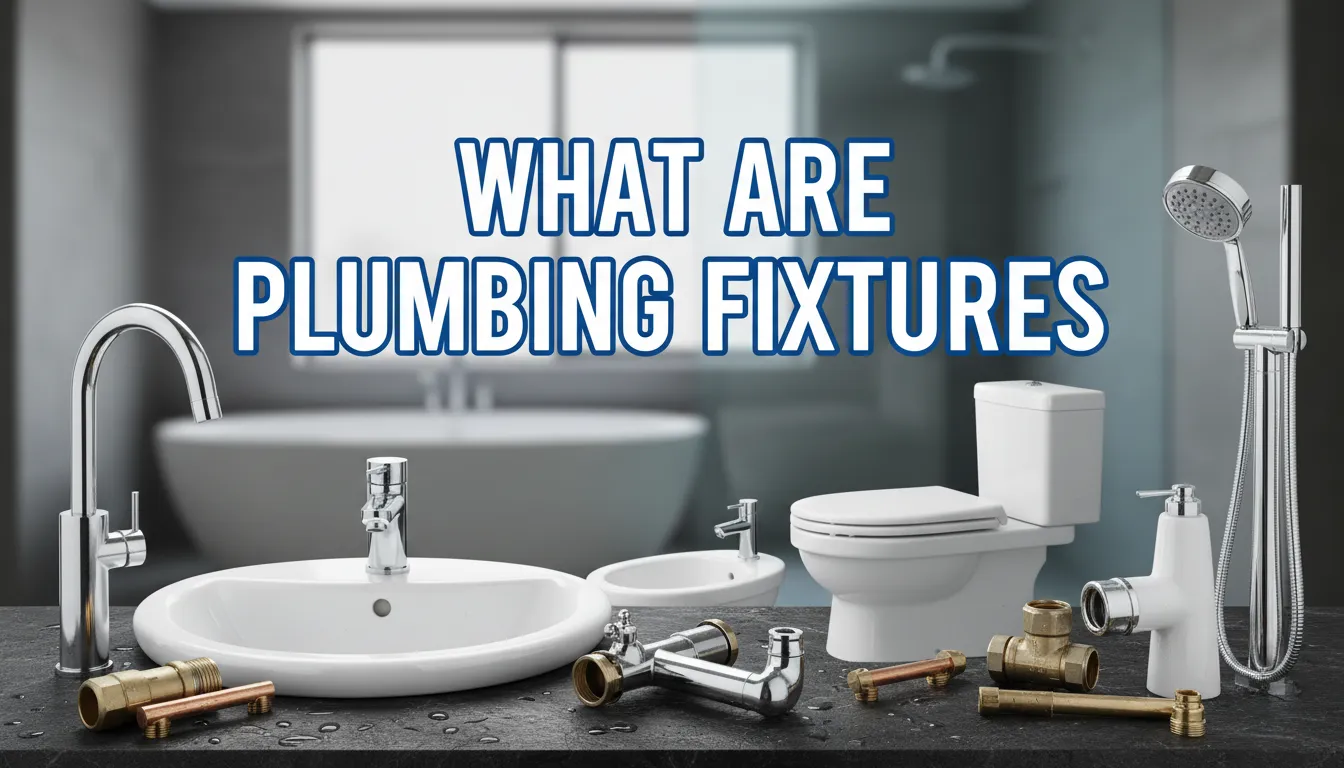
Plumbing fixtures are devices that are directly connected to a plumbing system and are designed to deliver clean water for use or safely remove wastewater from a building. In simple terms, plumbing fixtures are the parts of the plumbing system that people interact with every day, such as sinks, faucets, toilets, bathtubs, and showers.
Unlike pipes, valves, or water heaters that operate behind walls and floors, plumbing fixtures are visible, accessible, and actively used. They serve as the connection point between the water supply system that brings water into a home and the drainage system that carries wastewater away. Every time water flows into a sink or drains out of a toilet, a plumbing fixture is doing its job.
Because plumbing fixtures control water flow, sanitation, and daily convenience, they play a critical role in keeping homes, commercial buildings, and industrial spaces safe, hygienic, and functional.
Common Types of Plumbing Fixtures Found in Homes & Buildings
Plumbing fixtures come in many forms, but all serve one essential purpose: managing how water is used and disposed of within a plumbing system. Below are the most common types of plumbing fixtures found in residential, commercial, and industrial buildings.
🔹 Sinks
Sinks are among the most widely used plumbing fixtures. They are installed in kitchens, bathrooms, laundry rooms, and utility areas. Sinks are designed to supply clean water for washing and to drain wastewater safely through the plumbing system. Common styles include undermount, wall-mounted, pedestal, and double-basin sinks.
🔹 Faucets
Faucets control the flow and temperature of water delivered to sinks, tubs, and other fixtures. They can be single-handle, double-handle, touchless, or pull-down styles. Although often overlooked, faucets play a key role in water efficiency and daily usability.
🔹 Toilets
Toilets are plumbing fixtures specifically designed for the safe disposal of human waste. They rely on a combination of water flow and internal trap design to move waste into the drainage system while preventing sewer gases from entering the building.
🔹 Showers and Bathtubs
Showers and bathtubs are fixtures used for personal hygiene. Showers provide a controlled spray of water, while bathtubs allow for soaking. These fixtures are commonly installed together and may include features such as low-flow showerheads or built-in valves for temperature control.
🔹 Bidets
Bidets are bathroom fixtures used for personal cleansing after toilet use. They may be standalone units or attachments integrated with toilets and are becoming more popular for hygiene and water-saving reasons.
🔹 Utility and Laundry Tubs
Utility and laundry tubs are deep, durable fixtures designed for heavy-duty cleaning tasks. They are typically found in basements, garages, or laundry rooms and handle higher water volumes and tougher use than standard sinks.
Why Plumbing Fixtures Matter (More Than Just Convenience)
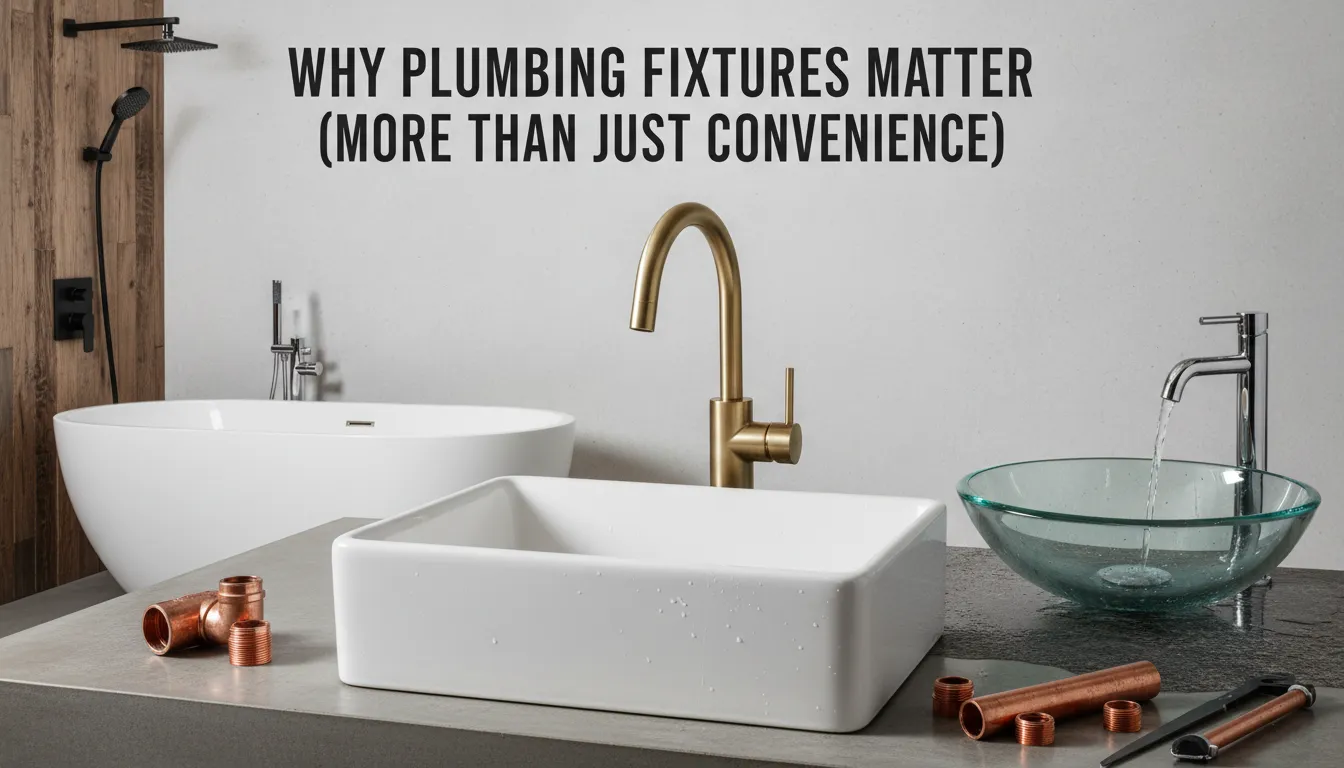
Plumbing fixtures are often taken for granted, but they play a much larger role than simple convenience. Properly designed and installed fixtures directly affect health, safety, efficiency, and the long-term performance of a plumbing system.
🔹 Daily Functionality
Everyday activities such as washing hands, cooking, bathing, or using the restroom depend on plumbing fixtures working correctly. When fixtures deliver water at the right pressure and drain wastewater efficiently, they make daily life comfortable and hassle-free.
🔹 Hygiene and Health Protection
Plumbing fixtures are essential for maintaining hygiene. Toilets, sinks, and showers help prevent the spread of bacteria and disease by safely removing waste and allowing regular cleaning. Features like built-in traps and proper drainage prevent sewer gases and contaminants from entering living spaces.
🔹 Water Efficiency and Cost Savings
Modern plumbing fixtures are designed to reduce water waste. Low-flow faucets, efficient toilets, and water-saving showerheads help conserve water without sacrificing performance. This not only benefits the environment but also lowers monthly water bills.Modern plumbing fixtures are designed to reduce water waste. Low-flow faucets, efficient toilets, and water-saving showerheads help conserve water without sacrificing performance.
🔹 Property Value and Reliability
High-quality plumbing fixtures improve the overall value of a property. Homes and buildings with well-maintained fixtures are more attractive to buyers and tenants because they signal reliability, safety, and lower maintenance costs over time.
How Plumbing Fixtures Work Inside a Plumbing System
Plumbing fixtures do not work alone. Every fixture is part of a larger plumbing system that manages water supply, drainage, and airflow. Understanding how fixtures connect with plumbing components explains why proper installation is critical for safety, performance, and long-term reliability.
🔹 Water Supply Side: How Water Reaches Plumbing Fixtures
(What Is a Plumbing Manifold?)
Clean water reaches plumbing fixtures through supply lines connected to a main distribution point called a plumbing manifold. The manifold acts as a central hub that controls how water is delivered to individual fixtures such as sinks, toilets, and showers. Each fixture typically has its own dedicated supply line, which helps maintain consistent water pressure and makes repairs easier.
Shutoff controls, such as angle stops, are installed near fixtures to allow water flow to be turned on or off without shutting down the entire system. This supply-side design ensures fixtures receive clean water safely and efficiently.
🔹 Drainage Side: How Wastewater Leaves Fixtures
(What Is a P-Trap in Plumbing?)
Once water is used, it must exit the fixture safely. This is where the p-trap plays a crucial role. A p-trap is a curved section of pipe located beneath sinks, tubs, and other fixtures. It holds a small amount of water that creates a seal, preventing sewer gases from traveling back into the building.
Every plumbing fixture connected to a drain requires a properly installed p-trap to protect indoor air quality and maintain sanitation.
🔹 Venting System: Why Airflow Matters
(What Is a Plumbing Vent?)
As wastewater flows through drain pipes, air must enter the system to keep pressure balanced. A plumbing vent allows fresh air to enter and sewer gases to exit safely above the roofline. Without proper venting, fixtures may drain slowly, produce gurgling sounds, or allow odors to escape into living spaces.
Vents are essential for smooth drainage and are required by plumbing codes for nearly all fixtures.
🔹 Vertical Drainage: Moving Waste Through the Building
(What Is a Plumbing Stack?)
A plumbing stack is the main vertical pipe that carries wastewater from multiple fixtures down through the building and into the sewer or septic system. Fixtures on different floors connect to this stack, allowing waste to move efficiently by gravity. The plumbing stack often works together with vent stacks to maintain proper airflow and pressure.
🔹 Access and Control Points: Maintenance and Safety
(What Is a Cleanout and Angle Stop in Plumbing?)
A cleanout is an access point installed in the drainage system that allows plumbers to clear blockages and perform maintenance. Cleanouts are critical for troubleshooting clogs without dismantling fixtures or pipes.
An angle stop is a small shutoff valve located near a plumbing fixture. It allows water to be turned off locally for repairs or replacement, protecting the rest of the plumbing system from disruption.
Plumbing Fixtures vs Plumbing Components (What’s the Difference?)
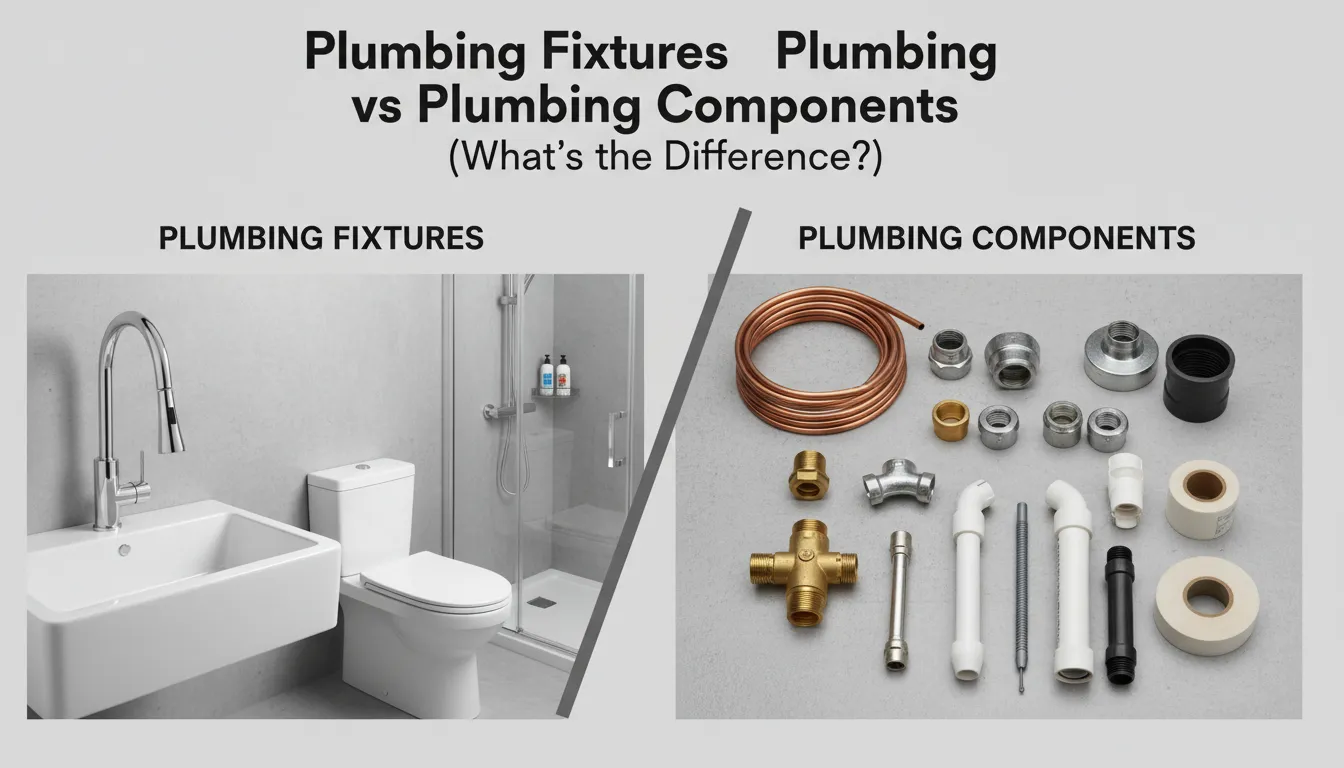
Many people use the terms plumbing fixtures and plumbing components interchangeably, but they are not the same. Understanding the difference helps homeowners, builders, and maintenance professionals better understand how a plumbing system functions.
🔹 What Are Plumbing Fixtures?
Plumbing fixtures are the visible, user-facing parts of a plumbing system. These are the devices you interact with directly on a daily basis. Fixtures are designed to deliver clean water for use or to remove wastewater safely.
Common plumbing fixtures include sinks, faucets, toilets, showers, bathtubs, and bidets. Their primary role is usability, hygiene, and convenience.
🔹 What Are Plumbing Components?
Plumbing components are the supporting parts of the system that operate behind walls, floors, and ceilings. While they are not used directly by occupants, they are essential for making fixtures work properly and safely.
Examples of plumbing components include p-traps, vents, plumbing stacks, cleanouts, angle stops, supply lines, and manifolds. These components control water pressure, airflow, drainage, and maintenance access.
🔹 Why the Difference Matters
Fixtures depend entirely on components to function correctly. A high-quality fixture will not perform well if the components behind it are poorly installed or damaged. Together, fixtures and components form a complete plumbing system that protects health, prevents leaks, and ensures reliable water flow.
Plumbing Codes, Safety, and Compliance
Plumbing fixtures and the components connected to them must follow established plumbing codes to ensure safety, health, and proper system performance. These codes exist to protect occupants from hazards such as water contamination, sewer gas exposure, leaks, and structural damage.
🔹 Why Plumbing Codes Matter
Plumbing codes define how fixtures should be installed, vented, and drained. They ensure that clean water remains uncontaminated and wastewater is removed safely. Proper code compliance also reduces the risk of mold growth, foul odors, and costly plumbing failures.
🔹 Fixture Requirements and Standards
Most plumbing codes require fixtures to meet specific standards related to:
Proper trap installation to block sewer gases
Adequate venting to maintain air pressure and smooth drainage
Approved flow rates for faucets, toilets, and showers
Secure connections to prevent leaks and backflow
Fixtures that do not meet these standards may fail inspections, cause performance issues, or create health risks.
🔹 Safety, Inspections, and Long-Term Reliability
When plumbing fixtures and components are installed according to code, the system is easier to inspect, maintain, and repair. Code-compliant plumbing also protects property value and helps ensure insurance coverage and resale approval.
For major installations or system changes, working with a licensed professional helps ensure fixtures meet all local and national plumbing requirements.
FAQs About Plumbing Fixtures
❓ Are faucets considered plumbing fixtures?
Yes, faucets are plumbing fixtures. They control the flow of water from the plumbing system and are directly used for daily activities such as washing hands, cooking, and cleaning.
❓ Do all plumbing fixtures need a p-trap?
Most plumbing fixtures connected to a drain require a p-trap. The p-trap holds water to create a seal that prevents sewer gases from entering the building, helping protect indoor air quality.
❓ What happens if a plumbing fixture is not properly vented?
If a fixture is not properly vented, drainage can become slow or noisy, and sewer odors may enter the space. Plumbing vents are essential for balancing air pressure and allowing wastewater to flow smoothly.
❓ Is an angle stop part of a plumbing fixture?
An angle stop is not considered a fixture itself, but it is a critical component connected directly to a fixture. It allows the water supply to be shut off locally for repairs or replacement.
❓ What is the role of a plumbing stack in a building?
A plumbing stack is the main vertical pipe that carries wastewater from multiple fixtures down to the sewer or septic system. It also works with vents to maintain proper airflow and drainage.
❓ Can plumbing fixtures be installed without professional help?
Some fixtures, such as faucets or showerheads, may be installed by experienced homeowners. However, fixtures that affect drainage, venting, or water supply lines should be installed by a licensed professional to ensure code compliance and safety.
Final Takeaway
Plumbing fixtures are far more than just visible items like faucets or toilets. They are essential connection points that allow clean water to enter a building and wastewater to exit safely. When plumbing fixtures work together with key plumbing components—such as p-traps, vents, stacks, cleanouts, angle stops, and manifolds—they form a complete system that protects health, improves efficiency, and prevents costly plumbing problems.
Understanding how plumbing fixtures function within the larger plumbing system helps homeowners, builders, and property managers make better decisions about installation, maintenance, and upgrades. Properly installed and code-compliant fixtures not only improve daily comfort but also increase long-term reliability and property value.
Whether you are learning the basics, planning a renovation, or troubleshooting plumbing issues, knowing what plumbing fixtures are and how they work gives you a strong foundation for maintaining a safe and efficient plumbing system.
Need expert help with plumbing fixtures?
If you’re planning to install, repair, or upgrade plumbing fixtures, speaking with a licensed plumbing professional can help ensure everything is done safely and according to local plumbing codes.
👉 Call now to get expert guidance and avoid leaks, drainage issues, and costly plumbing mistakes—before they turn into bigger problems.