- Home
- Water Damage Restoration
- Emergency Flood
24/7 Emergency Flood Response in Miami | 30-Min Arrival
When water invades your home, every second costs you thousands in structural damage and mold growth. At Ez Plumbing Repair Services, we don’t just “fix leaks”—we provide a comprehensive life-line. From high-speed water extraction to complete structural drying, our IICRC-certified experts are dispatched the moment you call. We are already on the move to ensure your property is salvaged and your family remains safe.
Why Miami Homeowners Trust Ez Plumbing During a Disaster
✅ Rapid 30-Minute Dispatch
In a flood emergency, time is your biggest enemy. We maintain local teams across Miami-Dade to ensure that from the moment you hang up the phone, our service truck is at your door within 30 minutes.
✅ Advanced Water Extraction & Drying
We use industrial-grade truck-mounted vacuums and high-velocity air movers to remove standing water and hidden moisture. This “Deep Scouring” technology prevents floor buckling and wall rot before it starts.
✅ Guaranteed Mold Prevention
Floodwater is “Category 3” (Black Water). We don’t just dry the area; we sanitize it using hospital-grade antimicrobials to ensure your home remains healthy and mold-free long after the water is gone.
- 🛡️ Zero Out-of-Pocket Stress: We offer Direct Insurance Billing. We handle the paperwork with your insurance provider so you can focus on your family.
- 🏆 IICRC Certified Experts: Don't trust a general plumber with flood restoration. Our team is specifically certified in water damage restoration and structural drying.
- ⚡ Live Support 24/7: No machines, no waiting. Talk to a real Miami flood expert the moment you dial.
What to Do During a Flash Flood Emergency? Stay Safe Now
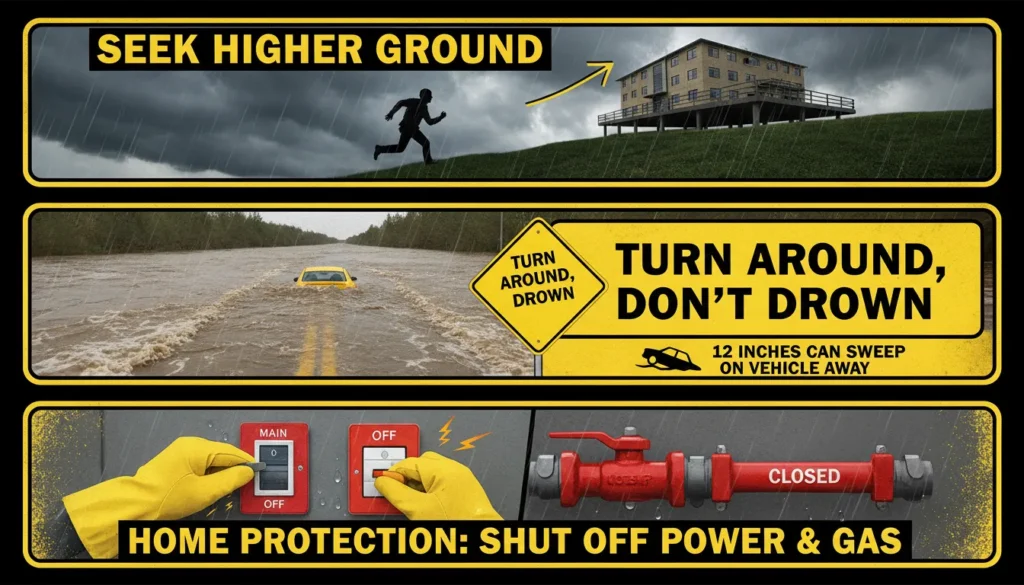
The "Turn Around, Don't Drown" Rule
Never attempt to drive or walk through floodwaters.
6 Inches: Just 6 inches of moving water can knock an adult off their feet.
12 Inches: One foot of rushing water can sweep away most small cars.
18-24 Inches: Two feet of water can carry away SUVs and trucks.
Critical Survival Checklist
✅Move to Higher Ground
If you hear a Flash Flood Warning, move to the highest floor of your building or a nearby hill immediately. Do not wait for instructions.
✅ Avoid the "Attic Trap"
If trapped in a multi-story building, move to the roof only if necessary. Never climb into a closed attic where rising water can trap you against the ceiling.
Flash Flood Warning vs. Emergency: Why Miami Homes are at Risk
In Miami, water is a part of life, but it can quickly become a threat. To protect your family, you must understand the language of the National Weather Service (NWS). There is a massive difference between a “Warning” and an “Emergency,” and knowing the difference could save your life and your property.
The NWS Alert Hierarchy: Knowing the Severity
✅Flash Flood Warning
This means a flash flood is imminent or occurring. You need to take action immediately. It usually covers a specific county or city area.
✅Flash Flood Emergency
This is the highest level of alert. It is reserved for exceedingly rare situations where a severe threat to human life and catastrophic damage is happening. This is when local emergency services are often overwhelmed.
The 4 Types of Flooding We Tackle in Miami
Miami’s unique geography means flooding isn’t just about rain. Here is the technical breakdown of how water enters your home:
Urban (Pluvial) Flooding: This happens when heavy rain overwhelms Miami-Dade’s drainage systems. Because much of our city is paved, the water has nowhere to go but into your garage or ground floor.
Coastal Flooding (Storm Surge): Driven by tropical storms or hurricanes, seawater is pushed onto the land. This is “Saltwater Flooding,” which is highly corrosive to your home’s foundation and electrical systems.
Flash Flooding: Sudden, violent surges of water caused by intense rainfall in under 6 hours. These are the most dangerous because they provide almost zero warning time.
River (Fluvial) Flooding: Occurs when local canals or rivers (like the Miami River) overflow their banks due to persistent rain, pushing water into nearby residential areas.
Miami-Dade Drainage & Flood Intensity
Miami-Dade sits on porous limestone, which usually helps with drainage. However, when the water table is high (due to sea-level rise or saturated ground), the gravity-based drainage systems stop working.
During an intense Miami flash flood, just 12 inches of rushing water can exert over 1,500 pounds of force—enough to carry away a small car or collapse a weak basement wall. This is why Ez Plumbing Repair Services uses heavy-duty, high-volume pumps that can move thousands of gallons per hour, outperforming standard residential sump pumps.
How to Protect Your Home Before the Water Rises
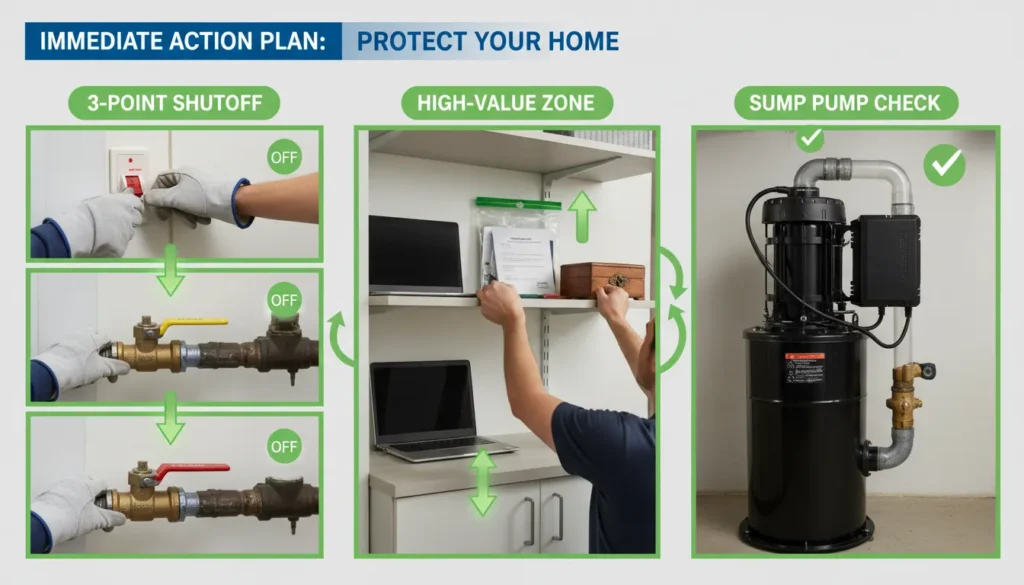
In a Miami flood emergency, the gap between a “close call” and a “total loss” is often just a few minutes of preparation. While help is on the way, you must take immediate steps to defend your property’s infrastructure. Following these FEMA-aligned defense protocols can save you thousands in long-term restoration costs.
The Critical Flood Defense Checklist
Disconnect All Utilities
Before water reaches your electrical outlets, head to your main breaker and shut off the Power. Next, turn off the Gas line and the Main Water valve. This prevents electrical fires, gas leaks, and sewer backflows that can occur when city lines are overwhelmed.
Relocate High-Value Assets
Don’t waste time with heavy furniture. Focus on “High-Loss” items: electronics, legal documents, and family heirlooms. Move them to the highest floor or a countertop. Pro Tip: If you have time, use plastic zip-ties to keep appliance cords off the floor
The "Attic Trap" Warning
If water is rising rapidly, your instinct might be to climb as high as possible. NEVER climb into a closed attic. If water continues to rise, you can become trapped with no exit. Only go to the roof if absolutely necessary, and ensure you have a tool to break through if you are forced upward.
The "Gatekeepers" of Your Home
Most flood damage can be halved with simple mechanical maintenance. To truly protect your home, you need to ensure your “mechanical defenders” are in top shape:
Sump Pump Certification: Ensure your sump pump has a battery backup. In Miami storms, the power often goes out exactly when the pump is needed most.
Check-Valves (Backwater Valves): A flood often pushes city sewage back into your home through the toilets. Installing a “Check-Valve” ensures that water can go out, but city waste cannot come in.
Note: If you are unsure about your home’s flood readiness, Ez Plumbing Repair Services provides professional pre-storm inspections. Call us at +1 786 239 6529 to secure your valves today.
The Dangers of Floodwater: Contamination & Electrical Safety
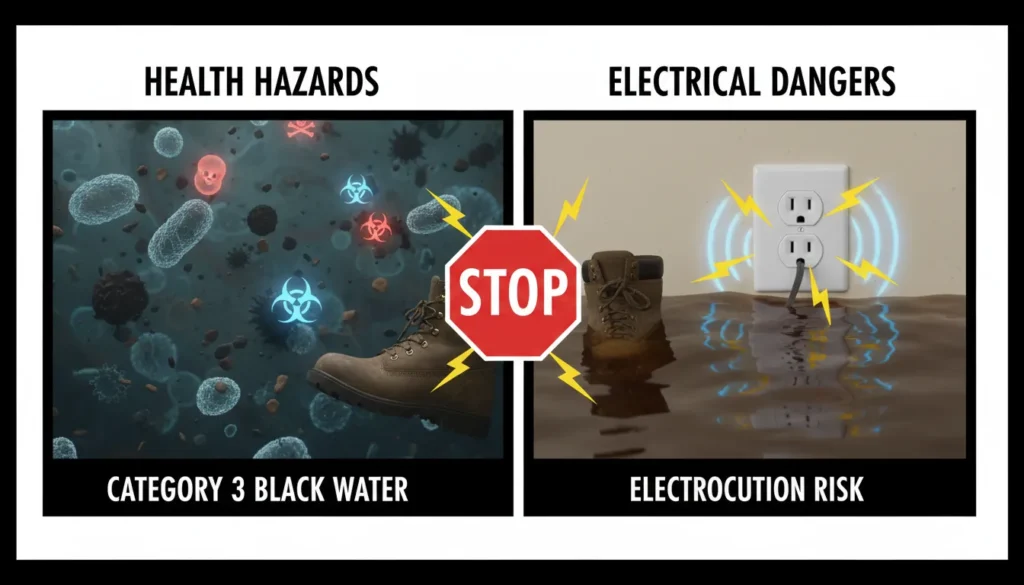
Floodwater is never “just water.” Once it enters your home, it becomes a complex mixture of biological and physical hazards. Understanding these hidden dangers is critical to protecting your health and your family while waiting for restoration experts to arrive.
1. The Toxicity of "Black Water" Category 3
In the plumbing industry, floodwater is often classified as Category 3 water, or “Black Water.” This is because as it flows over streets and through soil, it picks up:
Raw Sewage: Backed-up sewer lines release pathogens and bacteria.
Chemical Contaminants: Gasoline, oil, and lawn fertilizers mix into the water.
Physical Debris: Sharp glass, metal shards, and displaced wildlife (like rodents or insects). Rule of Thumb: Always assume floodwater is contaminated. Wash your hands thoroughly and discard any food item that has come into contact with the water.
2. Electrical Hazards: The "Buzzing" Danger
Water and electricity are a lethal combination. If your home is flooding, pay close attention to your surroundings:
Submerged Outlets: If water reaches the level of your electrical outlets, the entire standing pool of water can become energized.
The Sound of Danger: If you hear buzzing, popping, or hissing sounds, or if you see sparks, do not enter the room.
Main Breaker: Never attempt to turn off the power if you have to stand in water to reach the electrical panel.
The "Toilet" Question: Can I flush during a flood?
The Technical Answer is No. Many homeowners ask this during an emergency. You should avoid flushing toilets or using drains during a flood for one primary reason: Sewer Backflow. When city sewer mains are overwhelmed by rainwater, the pressure can force waste backward into your home. Flushing adds more volume to an already stressed system, significantly increasing the risk of a raw sewage eruption in your bathroom.
Safety Warning: If you suspect your home’s electrical system or main sewer line has been compromised, professional intervention is mandatory. Ez Plumbing Repair Services specializes in safe water extraction and sanitization to remove these invisible threats. For immediate assistance, contact us at +1 786 239 6529.
Professional Flood Recovery: Water Extraction to Dehumidification
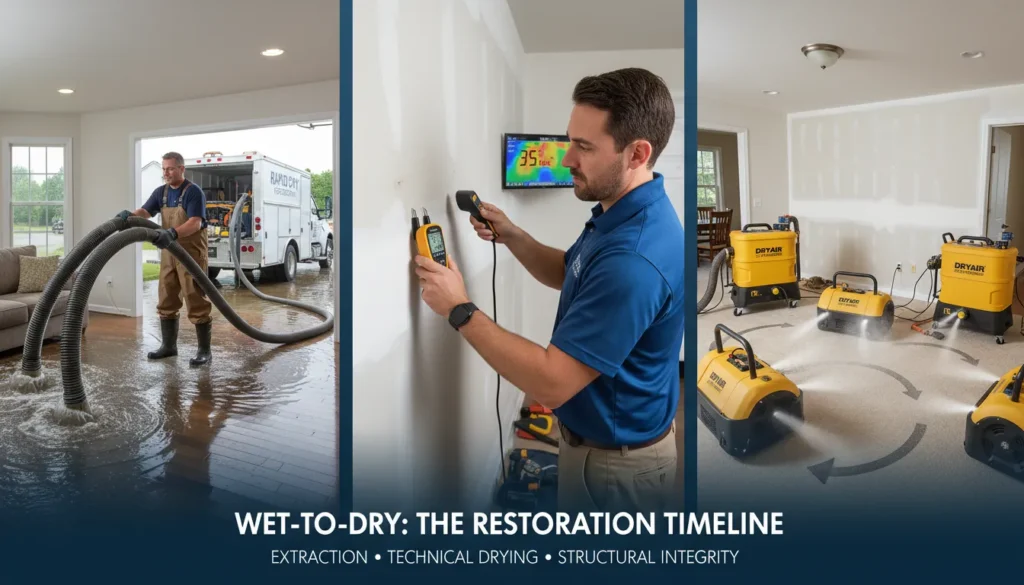
Once the rain stops, the real battle begins. Standing water is not just a nuisance; it is a ticking time bomb for your home’s structure. Without a systematic, professional restoration process, moisture seeps into drywall and flooring, leading to permanent damage and toxic mold growth within 24 to 48 hours.
Our 3-Step Scientific Restoration Protocol
1. Rapid Water Extraction The Big Pump
The first priority is removing the bulk of the water. Using truck-mounted, industrial-grade pumps, we extract thousands of gallons of water in minutes. This immediate action stops the “wicking” effect where water travels up your walls, potentially saving your electrical wiring and insulation from total ruin.
2. Professional Structural Drying
Even after the floor looks dry, the subfloor and the inside of your walls are still saturated. We deploy high-velocity air movers and LGR (Low Grain Refrigerant) dehumidifiers. This equipment scours the air of moisture and pulls water out of porous materials that a standard fan could never reach.
3. Hospital-Grade Sanitization
Floodwater is often “Category 3” or Black Water, containing sewage, bacteria, and harsh chemicals. Our team applies antimicrobial and antifungal treatments to every affected surface. This step is non-negotiable for killing dangerous pathogens and neutralizing odors.
The "Hidden Threat": Why You Can't Wait
Many homeowners make the mistake of thinking a mop and a fan are enough. Here is the reality: Mold (Ulli) starts to colonize in as little as 24 hours. If you don’t use professional-grade dehumidification, the moisture trapped behind your baseboards will create a breeding ground for black mold. This not only destroys your home’s resale value but also poses a severe respiratory risk to your family. Professional restoration is the only way to guarantee your home is truly “dry” and safe.
Need immediate extraction? Our specialized flood recovery team is equipped with the latest drying technology. Call +1 786 239 6529 to stop the damage before mold takes over.
Miami Flood Emergency: Your Top Questions Answered
When a flood strikes, quick access to accurate information can save lives and property. Based on the most frequent inquiries from Miami residents and FEMA guidelines, we have compiled these expert answers to help you navigate a water-related disaster.
A well-prepared emergency kit is your first line of defense. If you live in a flood-prone area of Miami-Dade, ensure your “Go-Bag” contains these 10 items:
Water: One gallon per person per day for at least three days.
Food: At least a three-day supply of non-perishable, easy-to-prepare food.
Flashlight: With extra batteries (avoid candles due to gas leak risks).
First Aid Kit: Including essential medications and a 7-day supply of prescriptions.
Multi-purpose Tool: To help with minor mechanical shut-offs.
Sanitation & Personal Hygiene Items: Including bleach for disinfecting.
Cell Phone with Chargers: Preferably a solar or hand-crank power bank.
Personal Documents: Copies of insurance policies, IDs, and bank records in a waterproof bag.
Emergency Blanket: To prevent hypothermia if clothes get wet.
Cash: Small denominations, as ATMs may not work during power outages.
The safest place is always on the highest ground possible.
If you are indoors: Move to the highest floor of the building. However, do not climb into a closed attic, as rising water could trap you inside with no exit.
If you are outdoors: Seek high ground immediately. Avoid canyons, drainage ditches, and underpasses where water can accumulate rapidly.
If you are in a vehicle: If water begins to rise around you, abandon the car immediately and move to higher ground. Do not attempt to drive through even shallow moving water.
If your home has been damaged by a federally declared disaster, you may be eligible for financial help. You can apply for assistance through the following channels:
Online: Visit DisasterAssistance.gov.
Mobile: Use the FEMA App on your smartphone.
Phone: Call the FEMA Helpline at 1-800-621-3362.
Documentation: Have your Social Security number, insurance information, and a description of the damage ready when you contact them.
n most cases, no. If your area is experiencing significant flooding, the municipal sewer lines can become overwhelmed. Flushing your toilet can cause “backflow,” where sewage is pushed back into your home through the drains. It is safer to wait until local authorities confirm that the sewer system is functioning normally.
In the restoration industry, floodwater is classified into three categories based on its contamination level.
Category 1 (Clean Water): From a broken supply line.
Category 2 (Gray Water): Contains significant contamination (e.g., dishwasher overflow).
Category 3 (Black Water): This is the most dangerous. Most floodwater from outdoor storms or rising rivers is Category 3. It contains sewage, silt, pesticides, and heavy metals. Even if the water looks “clear,” you should treat it as toxic. Avoid skin contact and never attempt to clean Category 3 damage with a standard household mop, as this will only spread the pathogens further into your flooring.
Experience Peace of Mind with Ez Plumbing Repair Services
When your home is underwater, you don’t just need a plumber; you need a dedicated restoration partner who understands the urgency of the situation. We know that behind every flooded room is a family seeking safety and a homeowner worried about their biggest investment. That is why our mission goes beyond mere water extraction—we are here to restore your comfort, your safety, and your life back to normal.
At the core of our service is a commitment to precision and speed. We use the most advanced thermal imaging and drying technology available in the industry to ensure that not a single drop of moisture is left behind to cause future mold issues.
Licensed, Bonded, and Insured. We handle the water, so you can handle your family.
Why We Are Miami’s First Choice in a Crisis
- Certified Expertise: Every technician is trained in IICRC water restoration standards.
- Direct Insurance Coordination: We speak the language of insurance adjusters, making your claims process seamless and stress-free.
- Local Commitment: Being based in Miami, we know the local neighborhoods and the specific flooding challenges our community faces.
