Walk In Shower with Bench: The 2026 Ultimate Guide to Luxury & Safety
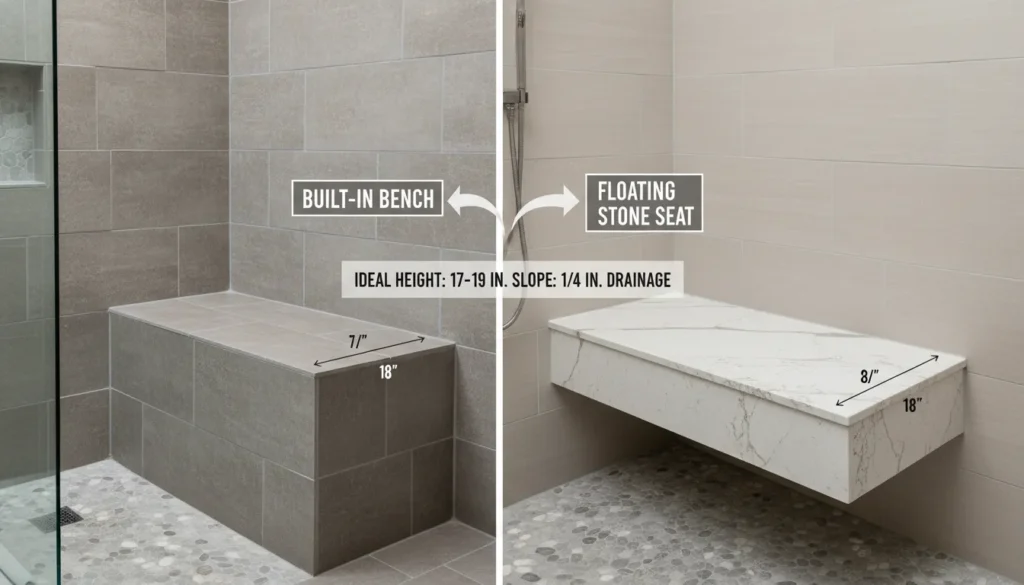
A walk in shower with bench is the perfect blend of high-end spa design and essential bathroom safety. To get the best results, your bench should be 17 to 19 inches high and feature a 1/4-inch slope to ensure water drains properly and prevents mold.
Whether you are planning to age in place or simply want a comfortable spot to shave and relax, adding a seat transforms a standard stall into a functional sanctuary.
Quick Benefits at a Glance:
Stability: Reduces slip risks for seniors and those with mobility issues.
Luxury: Mimics a high-end spa experience, especially when paired with massage jets.
Storage: Provides a perfect surface for soaps, scrubs, and inbuilt shower shelves.
Property Value: Modern, accessible bathrooms with built-in seating are a top-tier 2026 home trend.
Forget the clinical look of old hospital chairs. Today’s designs use floating quartz, natural teak, and seamless tile to keep your bathroom looking sharp while staying incredibly practical.
Why a Walk-In Shower with Bench is the Best 2026 Upgrade
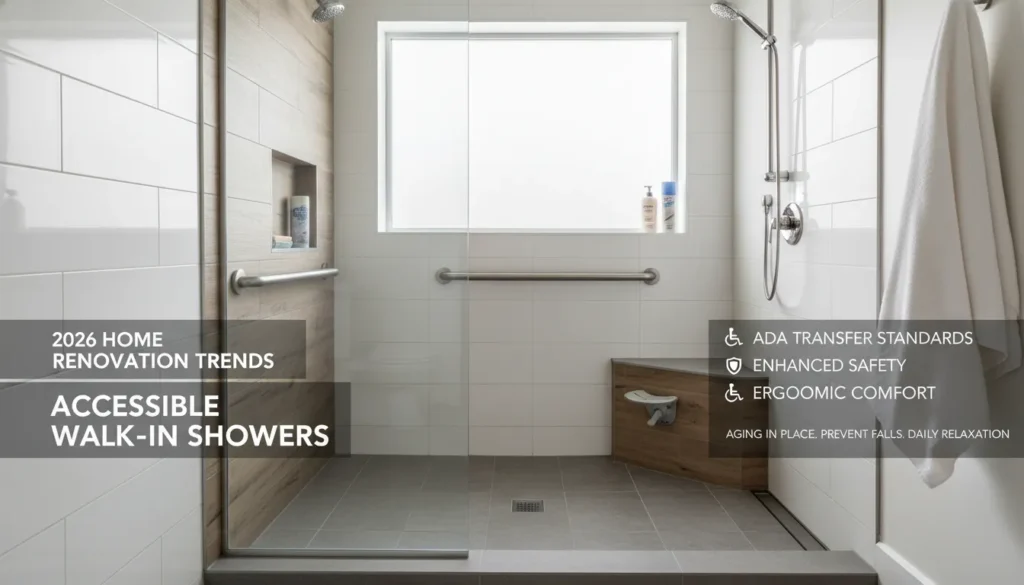
Upgrading to a walk in shower with bench is more than just a style choice; it’s a strategic investment in your home’s future. In 2026, homeowners are moving away from cramped tubs and toward curbless entry showers that prioritize long-term accessibility.
The “Why” Behind the Trend:
Enhanced Safety: At least 80% of household falls occur in the bathroom. A permanent stand up shower with seat offers a stable base, significantly reducing slip risks.
Aging in Place: Custom seating satisfies ADA transfer standards, allowing seniors to maintain independence without sacrificing a modern look.
Ergonomics: Beyond safety, a bench is the most practical spot for daily tasks like shaving or relaxing under a rainfall showerhead.
The Gold Standard Dimensions
What is the standard height for a walk-in shower bench? The ideal height for a walk in shower bench is 17 to 19 inches from the floor, which mimics the height of a standard chair for easy sitting and standing. For depth, aim for 12 to 14 inches to ensure comfort while maintaining enough floor space for standing.
Comfort and Accessibility: More Than Just a Seat
A seat for shower use isn’t just for those with limited mobility. By incorporating a built-in bench, you create a “wet room” vibe that increases your home’s resale value. Expert installers now use Pony Walls to support the bench, which also acts as a natural divider for glass partitions.
Types of Shower Bench Seating: From Built-In to Portable
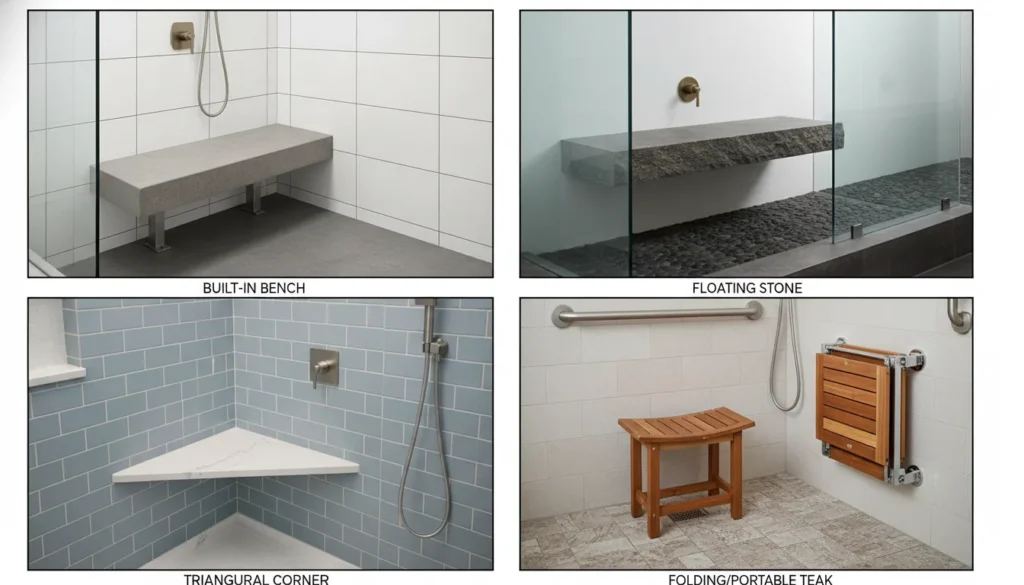
Choosing the right seat for shower use depends on your available space and how you plan to use it. Whether you are doing a full remodel or just need a quick safety fix, there is a design that fits your footprint.
1. Built-in Shower Benches: The Permanent Luxury
A built-in shower bench is framed directly into the shower walls and floor during construction. It offers the highest weight capacity (often 400lb to 800lb) and a seamless look.
Best for: Large walk-in showers and homeowners who want a high-end, spa-like finish.
Pro Tip: Use the same stone or tile as your walls to make the bench “disappear” into the design, creating a clean, modern aesthetic.
2. Floating Quartz & Stone Benches: Minimalist Magic
Floating benches are anchored to the wall studs with heavy-duty brackets, leaving the floor underneath completely open.
The Advantage: It makes a small shower feel much larger because you can see the continuous floor tile underneath.
Bonus: It’s much easier to clean since there are no floor-level grout joints to scrub.
3. Corner Seats: The Space-Saver
If you have a compact stand up shower with seat needs, a shower with corner seat is the way to go. These triangular perches take up zero standing room but provide a stable spot to prop your foot or sit briefly.
Supporting Keyword Hit: Many modern kits now include an inbuilt shower shelf directly above the corner seat for easy access to soaps.
4. Folding & Portable Options: Flexibility First
Wall-Mounted Folding Seats: Perfect for multi-generational homes. Fold it down for seniors, and flip it up when the grandkids need extra floor space.
Teak Benches: A teak bench adds natural warmth and is naturally water-resistant. It’s a great “no-install” solution if you aren’t ready for a full renovation.
Bathtub Shower Bench: These “transfer benches” straddle the side of a tub, allowing a user to sit down outside the tub and slide safely inside.
Quick Comparison: Which One Do You Need?
| Feature | Built-In Bench | Floating Bench | Corner Seat | Folding Seat |
| Weight Capacity | Highest (800lb+) | High (400lb-600lb) | Moderate | Moderate (250lb) |
| Space Required | High | Moderate | Low | Very Low |
| Cleaning Ease | Harder (More Grout) | Easiest | Moderate | Moderate |
| Cost | $$$ | $$ | $ | $ |
Technical Pro-Secrets: How to Install a Bench That Doesn’t Leak
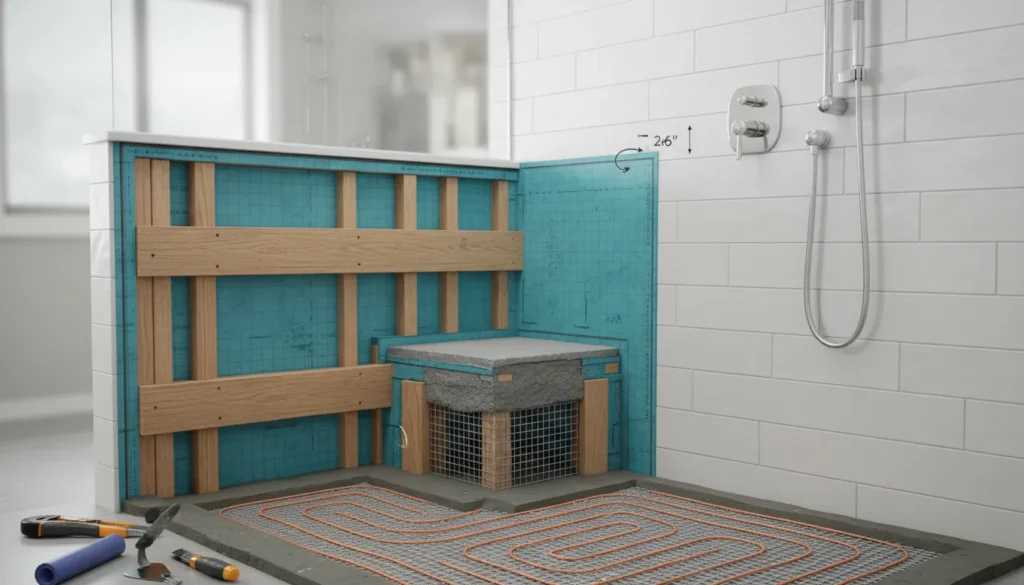
Most walk in shower with bench installations fail because of what’s happening behind the tile. As an expert, I’ve seen beautiful showers ruined by rot within two years. To build a bench that lasts a lifetime, you must focus on the “invisible” details.
The Waterproofing Checklist: Membrane Essentials
Never rely on just tile and grout to keep water out. You must use a professional-grade membrane system like Schluter-Kerdi or a liquid-applied guard.
The “Overlap” Rule: Ensure your waterproofing membrane extends at least 2 inches past the bench seams.
Structural Blocking: Before the wall goes up, install solid 2×6 wood blocking between the studs. This ensures your seat—especially a wall-mounted folding seat—is anchored to the frame, not just the drywall.
Drainage Mastery: Why Your Bench Must Have a Pitch
The biggest mistake DIYers make is building a perfectly level bench.
The 1/4″ Slope: Your seat must have a 1/4-inch per foot slope toward the shower floor.
The Result: If the seat is level, water “puddles,” leading to slimy grout and eventual leaks. A slight pitch keeps the surface dry and easy to clean.
The “Cold Seat” Solution: 24V Radiant Heat
Stone and tile are naturally cold, which can be a shock to the system.
The Secret: Install 24V radiant heating coils (like Warmly Yours) directly under the bench’s mortar bed.
The Luxury Feel: It transforms a cold stone slab into a soothing, heated spa seat. This is a massive 2026 trend that boosts both comfort and home value.
Professional Bench Waterproofing

Expert Tip: The Bullnose Circulation Hack
When tiling the front edge of your bench, always use a bullnose tile or a rounded stone edge. A sharp 90-degree tile corner can “bite” into the back of your legs, cutting off circulation and making the seat uncomfortable. A rounded edge is safer, more ergonomic, and looks significantly more professional.
5 Dangerous Mistakes to Avoid in Shower Bench Design
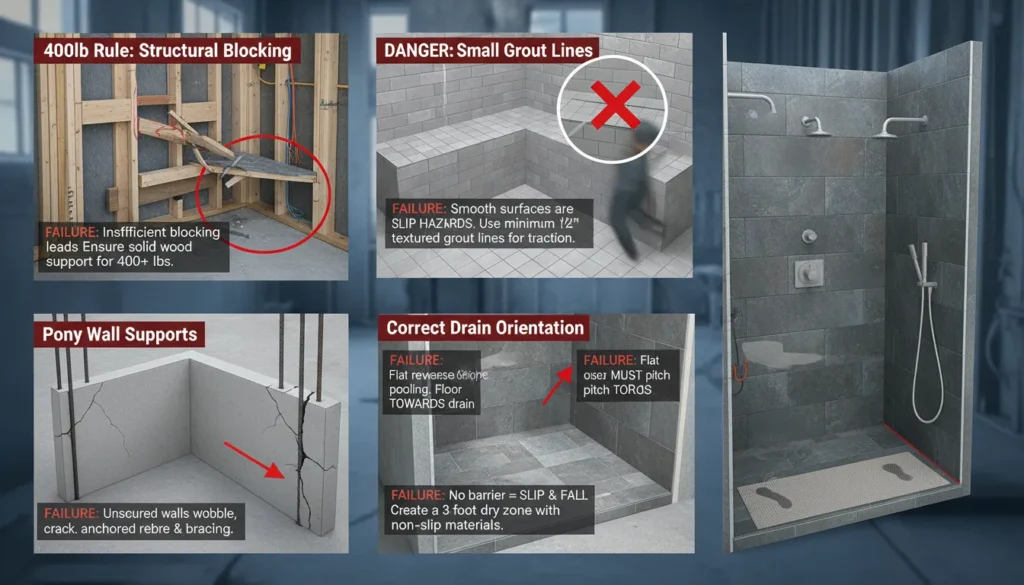
When it comes to a walk in shower with bench, small errors lead to expensive repairs. After years of inspecting bathroom remodels, I’ve identified the five most common “fail points” that ruin the user experience and the structural integrity of the home.
1. Ignoring Structural Blocking (The 400lb Rule)
You cannot simply screw a chair for inside shower or a folding seat into tile and drywall.
The Fix: You must install solid 2×6 wood blocking between the wall studs before the backer board goes up. This ensures the seat can support a weight capacity of 400lb to 800lb without pulling away from the wall.
2. Using Small Tiles on the Seating Surface
Small tiles mean more grout lines. On a seating surface, grout lines act like sandpaper on the skin and trap body oils and soap scum.
The Fix: Use a large-format tile or a single solid stone slab (like granite or quartz) for the top of the bench. This eliminates most grout lines, making it more comfortable to sit on and much easier to sanitize.
3. Neglecting the “Pony Wall” Support
A heavy built-in bench puts significant stress on a single wall.
The Fix: Build a Pony Wall (a half-wall) to support one side of the bench. This not only provides rock-solid stability but also creates a natural ledge for your inbuilt shower shelf or glass partition.
4. Incorrect Drain Alignment
When adding a bench to a tub-to-shower conversion, many homeowners forget that the bench changes the “footprint” of the floor.
The Fix: Check your drain orientation (Left, Right, or Center). If the bench is too close to the drain, water can’t move fast enough, leading to a flooded bathroom floor. Always keep at least 12 inches of clearance between the bench edge and the drain.
5. Forgetting the Post-Shower “Transition Zone”
Most slips happen when stepping out of the shower while dripping wet.
The Fix: Design the bench so you can sit and dry off completely before standing up to exit. This “Safety-Dry” transition is the most effective way to prevent falls for seniors and those with mobility issues.
Safety Warning: The “Slip Factor”
Never use high-gloss, polished tiles on a shower seat. When wet and soapy, these become as slippery as ice. Always check the DCOF (Dynamic Coefficient of Friction) rating of your tile; you want a rating of 0.42 or higher for wet surfaces.
FAQs: People Also Asked
To help you finalize your project, here are the most common questions homeowners and contractors ask about installing a walk in shower with bench.
Can I add a bench to an existing shower?
Yes, but with a warning. You can easily add a teak bench or a wall-mounted folding seat by anchoring into the studs. however, retrofitting a built-in tiled bench is risky. It requires cutting into the existing waterproofing membrane, which can lead to leaks if not resealed perfectly. For existing showers, a high-quality chair for inside shower or a folding seat is the safer, more cost-effective choice.
What is the best material for a shower seat?
For a permanent bench, solid stone slabs (granite, marble, or quartz) are superior to tile because they have no grout lines, making them more hygienic and comfortable. If you prefer a natural look, Teak is the gold standard for wood; it contains natural oils that resist rot, mold, and insects even in constant moisture.
Does a shower bench take up too much space?
Not if you choose the right design. In smaller 36″x36″ stalls, a shower with corner seat or a folding seat is ideal because it leaves the floor clear when you are standing. For larger stand up shower with seat layouts (48 inches or longer), a full-length bench adds luxury without feeling cramped.
How do I prevent mold under my shower seat?
Mold thrives where water sits. To prevent this, ensure your bench has a 1/4-inch slope toward the drain so water cannot pool. Additionally, use epoxy grout or antimicrobial sealants at the seam where the bench meets the wall. This is the #1 “fail point” for mold, and a proper seal here is essential.
What is the weight capacity of a shower bench?
A professionally installed built-in bench with proper structural blocking should easily support 400lb to 800lb. If you are using a portable bathtub shower bench, always check the manufacturer’s rating, as many are only rated for 250lb.