How Much Does a Plumber Charge to Replace a Toilet? (2026 Price Guide)
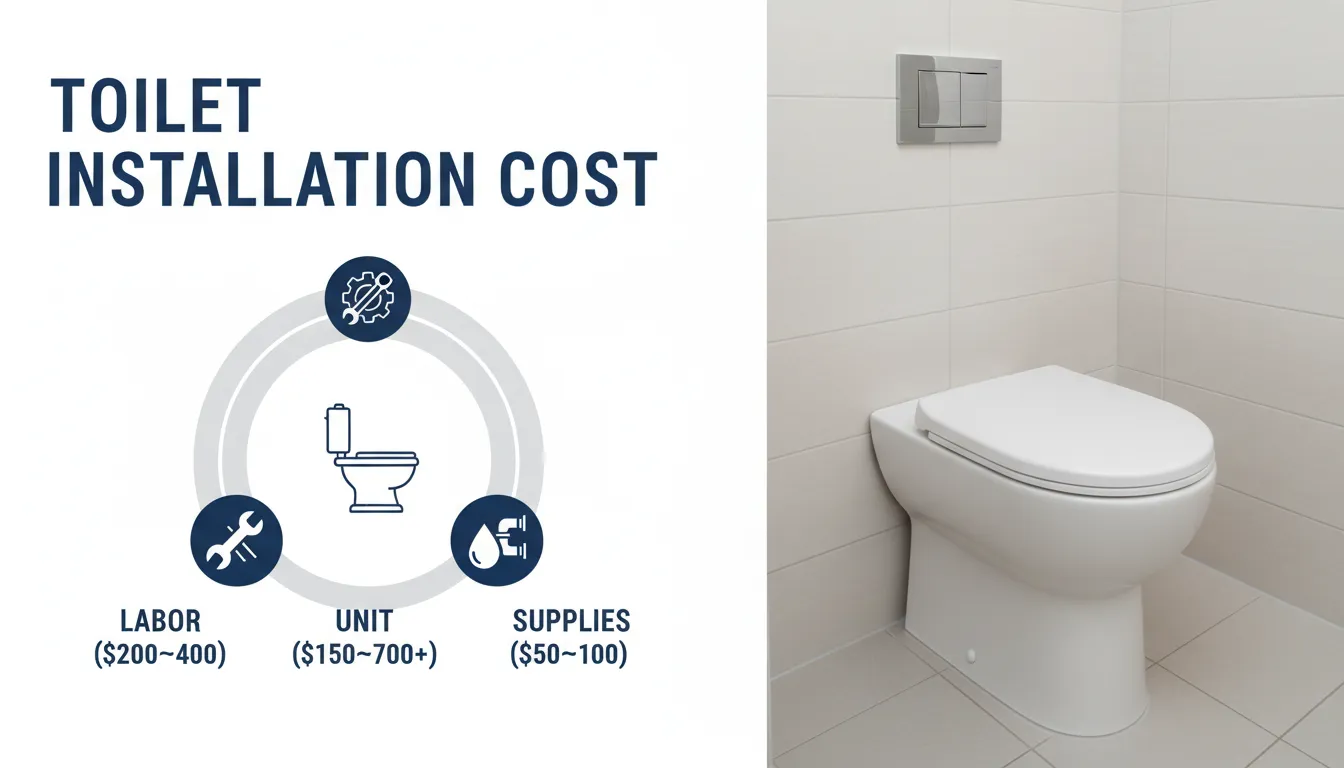
A standard plumber typically charges between $350 and $800 to replace a toilet in 2026. This price usually includes the cost of a mid-range unit and professional labor. If you have already purchased the fixture, expect to pay a flat labor rate of $150 to $480 for the installation alone.
In my years out in the field, I’ve seen homeowners get quoted “budget” prices only to be hit with a massive bill later. The reality is that while a simple “pull and set” takes about two hours, the final cost is dictated by what we find under the base.
2026 Price Snapshot: What You’ll Actually Pay
| Installation Type | Typical Cost (Parts + Labor) | Best For |
| Basic Swap | $350 – $550 | Standard 2-piece toilets; no floor repairs. |
| Mid-Range Install | $600 – $950 | 1-piece toilets or installs requiring a new Shut-off Valve. |
| High-End / Smart | $1,200 – $3,000+ | Smart Toilets with bidet features and electrical needs. |
Most licensed plumbers in 2026 also charge a Minimum Service Fee or “call-out fee” ranging from $75 to $150. This covers our travel and insurance, and it is usually applied toward the first hour of labor.
2026 Snapshot: What a Plumber Actually Charges
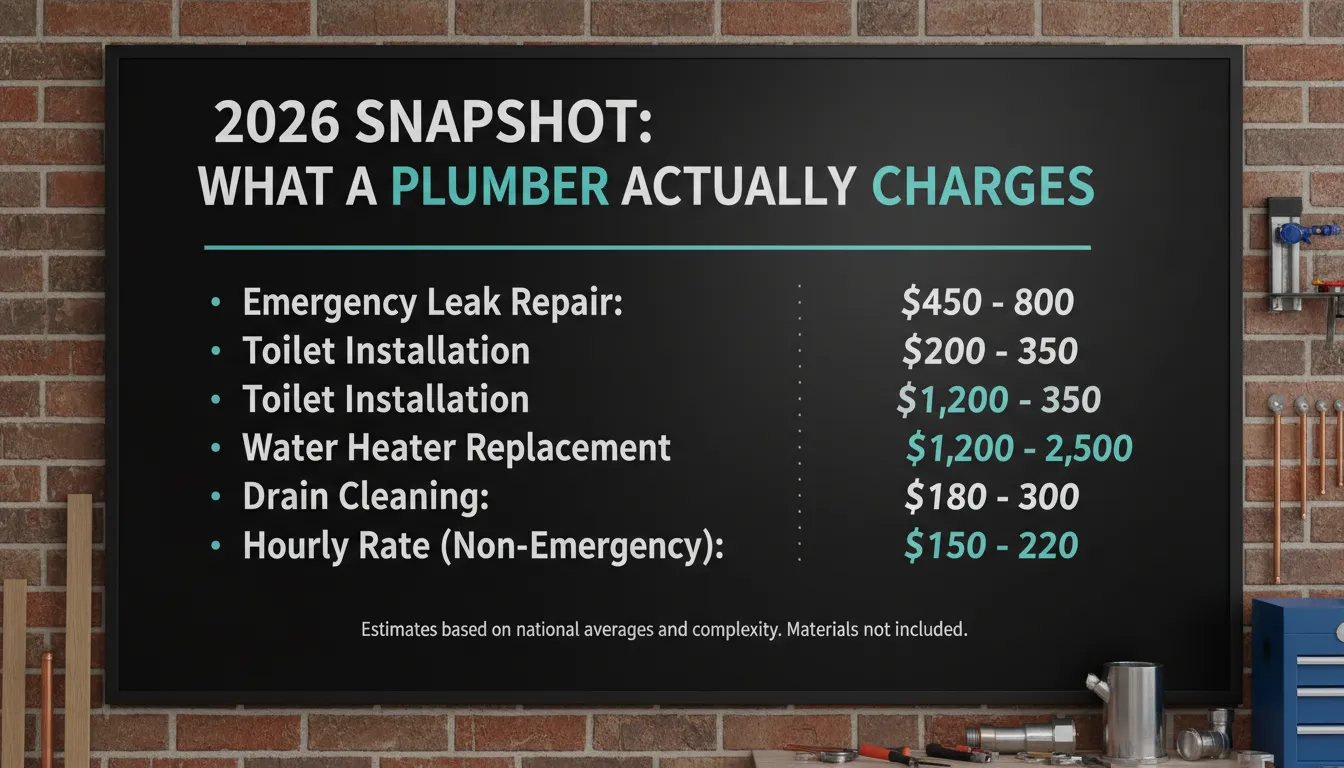
To help you budget, here is the real-world breakdown of what you’ll pay for a toilet replacement in 2026. These numbers reflect current labor rates and material costs.
| Installation Type | Labor Only | Parts + Labor (Average) |
| Standard “Like-for-Like” Swap | $150 – $300 | $450 – $800 |
| Mid-Range (With Minor Repairs) | $350 – $500 | $700 – $1,100 |
| Premium / Smart Toilet | $500 – $900 | $1,500 – $3,500+ |
The “Labor Factor” in 2026
In 2026, most licensed plumbers charge between $75 and $200 per hour. Because a standard toilet install takes about 1.5 to 3 hours, the labor portion of your bill usually starts at a minimum of $225.
Emergency Rates: If you need a toilet replaced on a weekend or holiday, expect a 10% to 30% surcharge.
Minimum Call-Out Fee: Most pros charge a flat $100 to $150 just to show up, which typically covers the first hour of work.
The “Hidden Fees” That Double Your Plumbing Bill
Most online calculators show you a “perfect world” price. In my experience, once the old toilet is lifted, the real work often begins. Here are the three “gotchas” that can turn a $400 job into a $900 headache.
1. The Rotted Closet Flange ($145 – $350 Surprise)
The closet flange is the ring that bolts your toilet to the floor. If your toilet was wobbling or leaking for a while, this part is likely rusted or cracked.
The Cost: Replacing a flange requires cutting into the drain pipe. Expect an extra $150 to $200 in labor.
Pro Secret: If the plumber says the flange is “too low” after you’ve installed new tile, you’ll need a flange extender (about $30 in parts).
2. Shut-Off Valve & Supply Line Failure ($50 – $150)
We always try to turn off the water at the wall before starting. If that old shut-off valve (angle stop) hasn’t been touched in 10 years, it will likely leak the moment we turn it.
The Cost: A new quarter-turn ball valve and a braided stainless steel supply line typically add $75 to $125 to the bill.
Why it’s worth it: Reusing an old plastic supply line is the #1 cause of floods after a new install.
3. Toilet Removal & Disposal Fees ($50 – $100)
Don’t assume the plumber will take the old porcelain throne with them for free. Toilets are heavy and landfills charge us to drop them off.
The Cost: Most companies charge a $50 to $80 haul-away fee.
Saving Tip: Some municipalities offer free “bulk waste” pickup. Check your local city schedule to save this fee.
Labor Breakdown: Flat Rate vs. Hourly Billing in 2026

When you call a plumber, you’ll likely encounter one of two pricing models. Understanding the difference can save you $200+ on your final bill.
Hourly Rates: You Pay for Every Minute ($75 – $200/hr)
Most smaller, independent shops use hourly billing. In 2026, the national average for a Journeyman plumber is $90 to $130 per hour.
The Risk: If the plumber hits a snag—like a rusted bolt that won’t budge—you are paying for every extra minute they spend struggling with it.
The Reward: If the job is truly a “clean” swap and takes only 45 minutes, you might only pay the minimum service fee plus a small labor charge.
Flat Rate: No Surprises ($250 – $500 Labor)
Larger service companies, like we do here at EZ Plumbing, often use “upfront” or flat-rate pricing. We give you a single price for the entire job before we even touch a wrench.
Why homeowners love it: Even if the job takes 4 hours instead of 2, your price stays the same. It puts the “risk” of a difficult job on the plumber, not you.
Pro Tip: Always ask, “Does this flat rate include the haul-away of the old toilet?” Some pros bake it in; others add it as an extra line item.
Why Your Zip Code Changes Everything
Plumbing labor isn’t a “one size fits all” cost. Your location is the biggest factor after parts:
Urban Hubs (NYC, San Francisco, Seattle): Expect $150 – $250/hour due to high insurance and parking costs.
Mid-Market (Dallas, Chicago, Atlanta): Typically $90 – $140/hour.
Rural Areas: Often $65 – $95/hour, but you may be charged a travel fee if you live far from the shop.
Watch: Professional Toilet Replacement Walkthrough
Professional Plumber vs. Handyman: Which is Better?
Choosing between a licensed plumber and a handyman can be the difference between a $300 fix and a $3,000 flood insurance claim. Here is how to decide who to hire for your 2026 installation.
The Licensed Plumber: The “Safe Bet” ($150 – $250/hr)
A licensed plumber isn’t just a guy with a wrench; they are certified professionals who have completed years of apprenticeship and rigorous testing.
Best For: Smart toilets, wall-mounted units, or any job where the closet flange needs repair.
The Protection: Licensed pros carry Liability Insurance. If a pipe bursts and ruins your hardwood floors, their insurance pays for it—not your wallet.
Code Compliance: They ensure the install meets 2026 local building codes, which is vital for your home’s resale value.
The Handyman: The “Budget Option” ($50 – $100/hr)
A handyman is a generalist. While many are skilled, they lack specialized plumbing credentials.
Best For: Simple, “like-for-like” swaps where you are certain the floor and valves are in perfect condition.
The Risk: Most handymen are uninsured for major water damage. If they over-tighten a bolt and crack the porcelain or the supply line leaks while you’re at work, you are likely on the hook for the repairs.
How to Save $100+ on Your Toilet Installation
You don’t have to pay full price for a professional install. Use these “insider” tactics to trim the fat off your plumbing quote:
Buy the Toilet Yourself: Retailers like Home Depot or Lowe’s often have sales. Plumbers typically add a 20-30% markup if they have to source and deliver the toilet for you.
Clear the Workspace: Plumbers charge by the hour. If we have to spend 20 minutes moving your vanity items, bath mats, and cleaning supplies just to reach the toilet, you’re paying $50 in “cleaning” fees.
The “Bundle” Hack: Need a leaky faucet fixed or a new showerhead? Ask for a multi-fixture discount. We are already at your house; adding a second small task often costs 50% less than a separate service call.
Handle the Disposal: As mentioned, haul-away fees are usually $50-$80. If you have a truck or your city offers free bulk pickup, tell the plumber to leave the old unit on the curb.
People Also Asked (FAQ)
In 2026, homeowners have specific concerns regarding plumbing technology and local regulations. Here are the most frequent questions I get asked during site visits.
How long does it take a plumber to change a toilet?
For a standard “pull and set,” a professional plumber typically finishes in 1.5 to 3 hours.
1 Hour: Removing the old unit and cleaning the flange.
1 Hour: Setting the new bowl, tank, and testing for leaks.
30 Minutes: Caulking the base and cleaning up the workspace. If the closet flange is broken or the subfloor is soft, expect the job to take 4 to 6 hours.
Do I need a plumbing permit to replace a toilet in 2026?
Generally, a “like-for-like” replacement (putting a new toilet in the same spot) does not require a permit. However, you will likely need a permit if:
You are moving the toilet to a new location in the bathroom.
You are modifying the main soil stack or drain lines.
Your local 2026 building code has strict water-efficiency requirements (common in California and Texas).
Should I buy the toilet myself or let the plumber provide it?
I always tell my clients: buy it yourself to save on markup, but let the plumber provide it for the warranty.
Buying Yourself: You save roughly 20-30% by avoiding contractor markups. The downside? If the toilet arrives cracked in the box, you are still responsible for the plumber’s hourly rate while you go get a replacement.
Plumber Provided: We charge more, but we handle the pickup, the delivery, and the full labor warranty. If the unit leaks six months later, we come back and fix it for free.
Can a handyman install a toilet legally?
Yes, in most states, a handyman can perform a simple toilet swap. However, they cannot legally modify your home’s drainage system or work on complex “wall-hung” systems that require structural changes. For high-end Smart Toilets that require electrical work, a licensed plumber (or electrician) is mandatory for safety.
Conclusion: Your 5-Point “Price Protection” Checklist
Don’t let a simple home upgrade turn into an open-ended expense. Before you sign a contract or hand over your credit card, use this professional checklist to ensure your toilet installation cost remains within budget.
Verify the “Call-Out” Fee: Ask if the arrival fee is a standalone charge or if it is applied toward the first hour of labor.
Inspect the Flange First: Have the plumber show you the state of the closet flange the moment the old toilet is lifted. This prevents “phantom” repair charges.
Insist on New Parts: Never let a pro reuse an old wax ring or supply line. These are cheap parts (under $20) that prevent thousands in water damage.
Confirm Disposal: Ensure the quote explicitly states whether haul-away and disposal are included in the flat rate or hourly estimate.
Test Before Paying: Flush the new unit 5 to 10 times and check the base with a dry paper towel. If that towel stays dry, the seal is solid.
Replacing a toilet is more than just tightening two bolts; it’s about protecting your home’s subfloor and your monthly water bill. By choosing the right pro and anticipating the “hidden” variables, you can ensure your 2026 bathroom project is a success.
Final Verdict: Why Trust EZ Plumbing Repair Services for Your Home?
Replacing a toilet is a vital investment in your home’s comfort and water efficiency. While the average cost in 2026 ranges from $350 to $800, the true value lies in a leak-free installation that protects your subfloor for decades. By understanding the variables like labor rates and parts, you can budget with total confidence.
At EZ Plumbing Repair Services, we take the guesswork out of your bathroom projects. Our licensed professionals prioritize safety and precision, ensuring every closet flange is secure and every seal is airtight. We don’t just “swap toilets”—we provide long-term peace of mind through industry-leading standards and transparent, upfront pricing.
Don’t Risk a Costly Flood—Get it Done Right Today!
A DIY mistake or a cheap “handyman” fix can lead to thousands in water damage. Contact EZ Plumbing Repair Services now for a professional, stress-free installation.
Call Us Today at +1 786 239 6529 or Click Here to Book Your Expert Installation Online to secure your flat-rate quote!