Sewer Pipe Burst Emergency: How to Stop the Damage and Fix It Permanently
How to Handle a Sewer Pipe Emergency
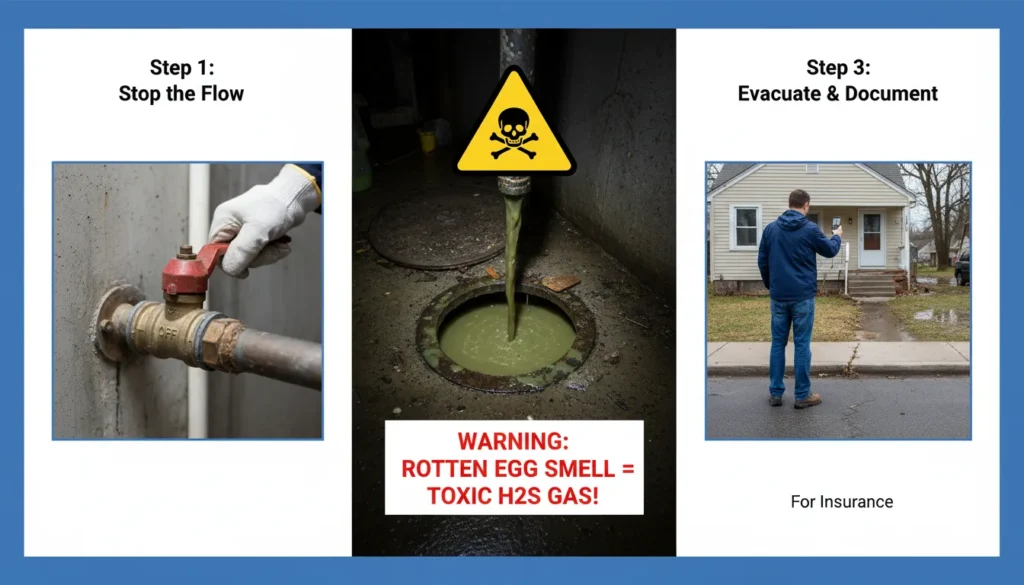
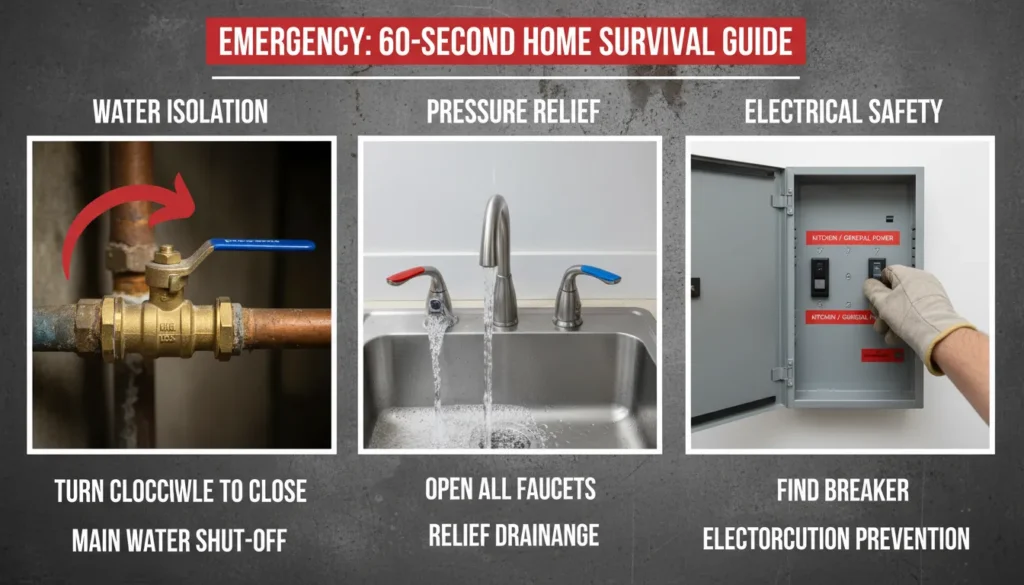
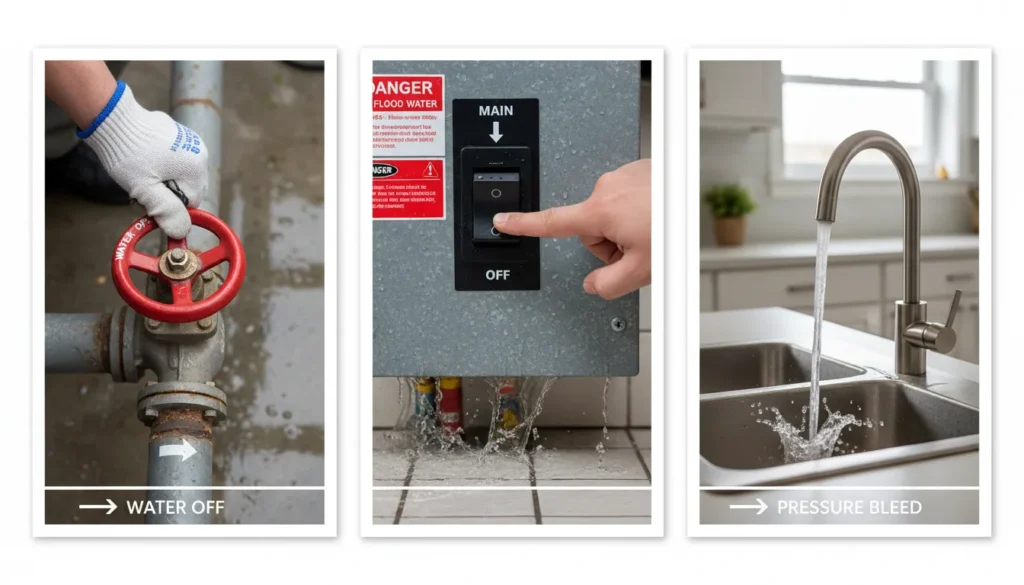
A sewer pipe burst requires immediate intervention to protect your health and property. Your first priority is to stop all water usage and locate the main water shut-off valve to kill the flow; this prevents additional waste from forced entry into your drainage system. If you smell “rotten eggs”—the signature scent of toxic hydrogen sulfide—evacuate the premises immediately and contact an emergency responder.
Critical Emergency Summary
- Immediate Action: Kill the main water flow to stop sewage accumulation.
- Health Protocol: Evacuate if toxic gas odors are present.
- Professional Recovery: Specialized cleanup is mandatory for biohazard safety.
How to Identify the Issue and React Fast
Kill the Flow: Immediately turn off the main water valve to ensure no more water enters the system. This is the single most effective way to limit property damage during a sewer-pipe-burst.
Document for Claims: Once the area is stable, take clear photos and videos of the affected area. This evidence is essential when proving the extent of the damage to homeowners insurance providers.
What You Might Miss: Hidden Indicators of Danger
Raw sewage isn’t just a mess; it’s a biohazard. Many homeowners make the mistake of attempting a DIY cleanup, but hydrogen sulfide gas is heavy and can linger in basements even after the water is gone. If you notice any “rotten egg” smells, do not rely on standard fans; professional-grade ventilation is required to ensure the air is safe to breathe.
For specialized recovery, you should arrange for a professional sewage cleanup team. Handling raw waste without proper gear poses high health risks. You can find licensed professionals and safety standards for biological hazards through the Institute of Inspection Cleaning and Restoration Certification (IICRC), which sets the industry benchmark for safe sewage remediation.
The Secondary Damage
The real danger often starts after the water is gone. If a sewer pipe burst in basement goes untreated for even 24 hours, the moisture seeps into drywall and baseboards, triggering rapid mold growth. A simple “dry out” isn’t enough; you need anti-microbial sanitization to prevent long-term respiratory issues for your family.
How to Identify a Broken Sewer Line
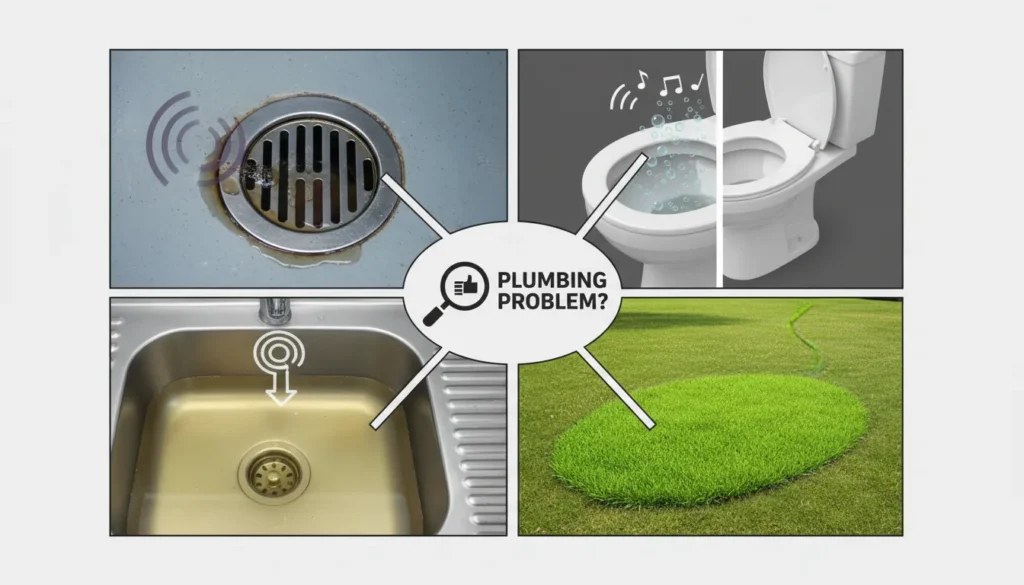
To catch a sewer pipe burst before it destroys your foundation, you need to recognize how your home “talks” to you. A breach usually reveals itself through four specific red flags: pervasive awful odors, persistent gurgling sounds from toilets, multiple slow drains or backups happening at once, and unusually lush, green, or soggy patches in the yard. Pinpointing whether the failure is a sewer pipe burst in basement flooring or a sewer pipe burst under house structures is the first step toward a permanent fix.
Executive Diagnostic Summary
- Symptom Check: Distinguishes between minor clogs and catastrophic main line failure.
- Location Mapping: Identifies risks for sub-slab and foundation-level breaches.
- Infrastructure Context: Targets high-risk areas like New York, The Bronx, and Perth.
Key Signs You Should Watch For
Sensory Warnings: If you smell “rotten eggs” near your drains or hear your toilet gurgling while the sink is running, your sewer’s airtight seal is likely broken.
System Failure: When you see multiple slow drains or backups in different rooms at the same time, the problem isn’t a local clog—it’s a main line sewer-pipe-burst that requires immediate professional attention.
Where the Problem is Most Likely to Occur
Sewer lines are most vulnerable where they deal with shifting soil or extreme age. A sewer pipe burst under house slabs is common in older properties, while a sewer pipe burst in basement drains is often the first place backup water appears. Data shows these failures are most frequent in high-density urban zones with aging pipes, such as a sewer pipe burst in New York, The Bronx, or the reactive clay soils associated with a sewer pipe burst Perth.
What You Might Miss: Hidden Indicators
Don’t ignore unusually lush, green, or soggy patches in the yard. While it might look like a healthy lawn, grass that grows significantly faster or greener than the rest of the yard is likely feeding on the nitrogen-rich effluent leaking from a broken pipe. In cold climates like The Bronx, look for “thermal melting”—areas where snow disappears faster over the path of your sewer line due to the warmth of escaping waste.
If you suspect the break is near the street, you must check your local municipal responsibility. For those dealing with a sewer pipe burst in New York, the NYC Department of Environmental Protection (DEP) provides official guidance on property line liability and how to report a main-line breach to the city.
The Saturation Sinkhole
A soggy yard is more than a landscape nuisance; it’s a structural threat. Escaping water washes away the soil “fines” (small particles) that support your pipes and foundation. Over time, this creates a hollow “void” underground. Even if your toilets are still flushing, a slow-leaking pipe can eventually cause a sudden sinkhole or a foundation crack that costs tens of thousands to repair.
Understanding the Trenchless Pipe Bursting Process
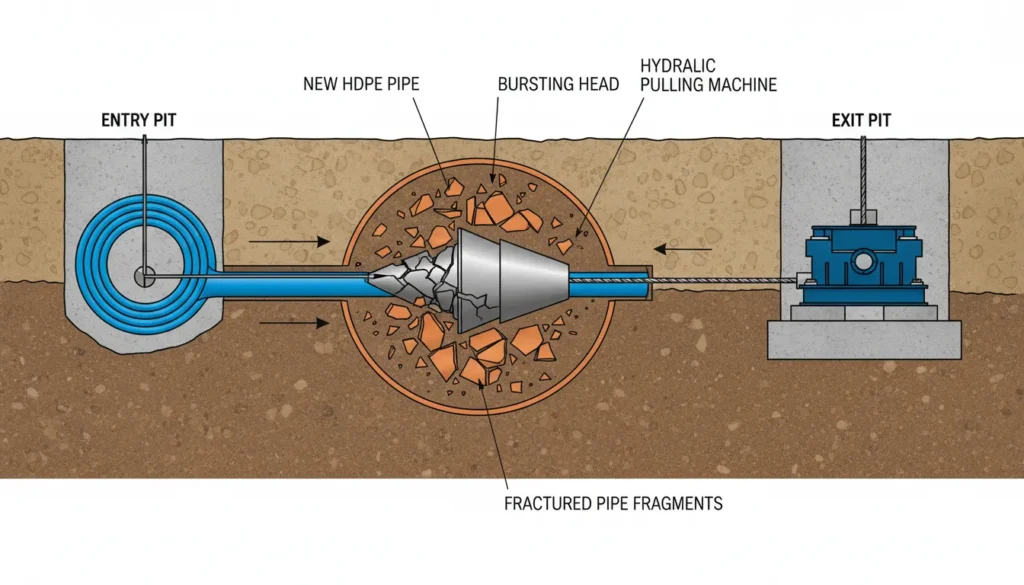
If you are facing a major sewer line failure, trenchless pipe bursting is the modern solution that saves your driveway and landscaping. Instead of digging a massive trench across your property, this method uses a “bursting head” to fracture your old, damaged pipe from the inside while simultaneously pulling a brand-new, high-density pipe into its place. This hydraulic pipe bursting technique is specifically designed to replace your main line with minimal disruption to your daily life.
Technical Process Summary
- Non-Invasive: Replaces underground lines without extensive excavation.
- Structural Integrity: Fractures old clay or cast iron and replaces it with seamless HDPE pipe.
- Efficiency: Uses hydraulic power to complete most replacements in a single day.
How the Trenchless Method Works
The Fracturing Phase: A heavy-duty, cone-shaped bursting head is inserted into your old sewer line. As it is pulled through by a hydraulic winch, it physically breaks apart the old pipe—whether it’s made of clay, concrete, or cast iron—and pushes the fragments into the surrounding soil.
Simultaneous Replacement: Attached to the back of the bursting head is your new, seamless sewer pipe. As the old one is destroyed, the new one is pulled perfectly into the existing path, ensuring your sewer-pipe-burst is fixed with a permanent, leak-proof solution.
What You Might Miss: The Benefit of “Upsizing”
A unique advantage of the trenchless pipe bursting method that many homeowners overlook is the ability to “upsize” your line. If your old 4-inch pipe struggled with flow, the hydraulic process can often pull a larger 6-inch pipe into the same space. This increases your home’s drainage capacity without the astronomical costs of traditional digging and trenching.
Seeing the Equipment in Action
To truly grasp how this technology saves your yard, many homeowners find it helpful to view a sewer pipe bursting video or a sewer pipe burst gif. Seeing the equipment move underground clarifies why this is the preferred method for a sewer pipe burst under house foundations or expensive landscaping. You can find technical demonstrations and equipment standards through industry leaders like the North American Society for Trenchless Technology (NASTT), which provides extensive resources on how these hydraulic systems protect residential infrastructure.
The Soil Friction
While trenchless pipe bursting is highly effective, it isn’t magic. The success of the pull depends on the soil conditions around your pipe. If the ground is packed with heavy boulders or if the original pipe has completely collapsed into a “pancake” shape, the bursting head may get stuck. In these rare cases, a small “access pit” might still be necessary to help the equipment clear the obstruction.
Technical Demonstration: Hydraulic Bursting
Sewer Pipe Bursting vs. Lining: Choosing the Right Fix
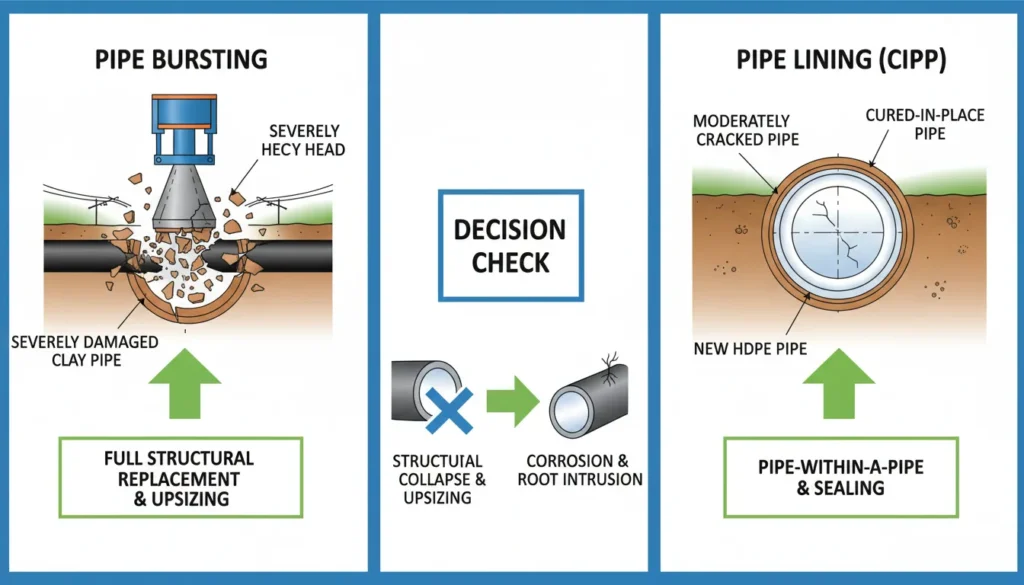
When your main line fails, you generally face two trenchless choices: replacing the pipe entirely through bursting or reinforcing it with a liner. Sewer pipe bursting vs lining is a common debate for homeowners; while bursting destroys the old pipe to pull in a brand-new one, lining involves inserting an epoxy-saturated sleeve that hardens into a “pipe within a pipe.” If your original line has structural voids or is severely undersized, bursting is almost always the superior structural fix.
Technical Comparison Summary
- Replacement (Bursting): Ideal for collapsed pipes or increasing flow capacity.
- Restoration (Lining): Best for sealing cracks when the pipe structure is still intact.
- Critical Constraints: Soil density and “pancaked” pipes can prevent hydraulic success.
How to Identify the Right Method for Your Home
The Structural Difference: Pipe bursting is a full replacement. It physically breaks the old clay or cast iron, meaning you get a 100% new, high-density polyethylene (HDPE) line. Lining, on the other hand, reduces the inner diameter of your pipe slightly, which might not be ideal if you already struggle with slow drainage.
Long-Term Durability: Bursting is preferred for a sewer-pipe-burst where the host pipe has lost its shape. Because the new pipe isn’t dependent on the old one for strength, it can last over 50 years, even in shifting soil conditions.
Where the Limitations Are Most Likely to Occur
Not every pipe is a candidate for the trenchless approach. Pipe bursting limitations often arise in “pancaked” or completely collapsed lines where the hydraulic head cannot find a path to move through. Additionally, if your sewer line has sharp 90-degree bends or “belly” sections (where the pipe dips and holds water), the new pipe will follow that same dip, potentially leading to future clogs.
What You Might Miss: The “Upsizing” Advantage
One hidden indicator that you should choose bursting over lining is your home’s current occupancy. If you’ve added bathrooms or a large family, lining will only make your pipes smaller. Bursting allows a contractor to pull a larger pipe through the old path, effectively upgrading your home’s infrastructure while fixing the sewer-pipe-burst.
Before committing to a method, it is wise to review industry standards for trenchless technology. You can explore technical white papers and performance benchmarks through the American Society of Civil Engineers (ASCE), which provides extensive research on the lifespan and reliability of various underground utility repair methods.
The “Expansive Soil” Reality Check
In areas with high clay content, soil friction can be a dealbreaker. If the ground is too tightly packed or contains large rocks, the hydraulic force required to “burst” the old pipe might exceed the machine’s limits. In these specific cases, even “trenchless” experts may need to dig a middle access pit to relieve pressure, a reality often omitted in standard sales pitches.
Sewer Pipe Bursting: Costs, Insurance, and Liability
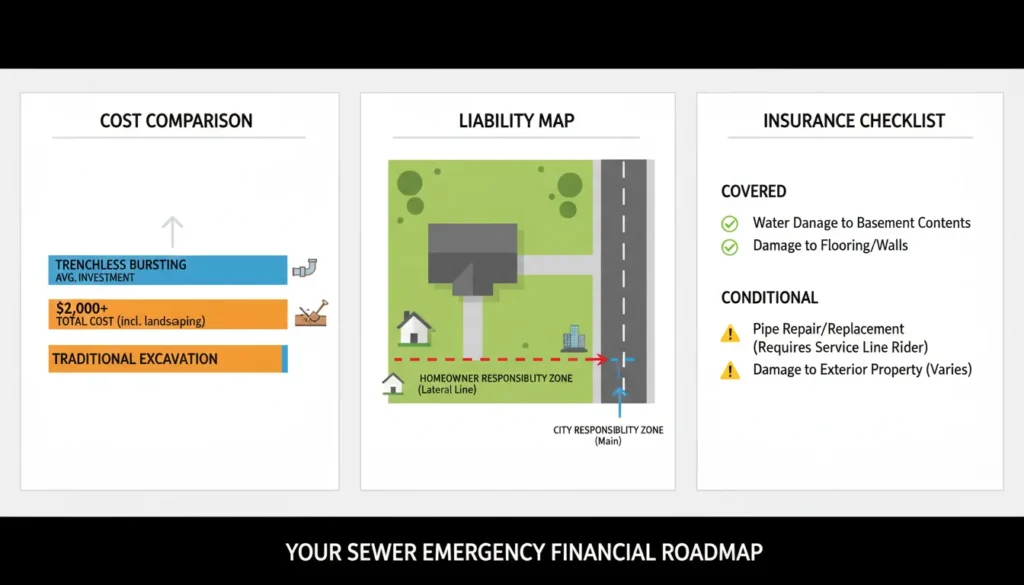
When facing a sewer-pipe-burst, the immediate concern is the financial impact. On average, the pipe bursting sewer line replacement cost falls between $1,000 and $4,000, with most homeowners landing around the $2,500 mark. While this might seem high, it is often significantly cheaper than traditional excavation because you avoid the massive expenses of rebuilding driveways, porches, or expensive landscaping that a backhoe would otherwise destroy.
Financial & Liability Summary
- Average Investment: $2,500 for most trenchless replacements.
- Cost Efficiency: Trenchless saves up to 40% by eliminating yard restoration.
- Ownership: Homeowners are responsible for the “lateral” line to the property boundary.
How to Identify Who is Liable for Repairs
The Property Boundary Rule: In almost every jurisdiction, the homeowner is the one who is liable for burst pipes located within their property lines. This includes the entire “lateral” line that runs from your house to the city’s main connection under the street.
City vs. Owner: If the break occurs directly under the public sidewalk or street, you may not be the one who pays for burst pipes. However, proving the exact location of the burst with a camera inspection is your responsibility before the city will take action.
Where the Financial Burden is Most Likely to Occur
The biggest hidden cost isn’t the pipe itself; it’s the “consequential damage.” If you have a sewer pipe burst in basement areas, the cost of remediating biohazards and replacing flooring can quickly surpass the cost of the pipe repair. Homeowners insurance often covers the water damage to your belongings and floors, but it frequently excludes the repair of the pipe that actually burst unless you have a specific “Service Line” rider.
What You Might Miss: Hidden Insurance Gaps
A common indicator of a bad insurance policy is the “Wear and Tear” clause. Most standard policies will cover a pipe if it’s hit by a shovel or collapses suddenly, but they may deny the claim if the sewer-pipe-burst was caused by old age or tree root intrusion over time. It is vital to check your policy for “Sewer Backup” and “Utility Line” endorsements to ensure you aren’t paying the full $4,000 out of pocket.
To understand the legal standards for insurance coverage regarding residential utilities, you can consult the National Association of Insurance Commissioners (NAIC), which provides consumer guides on what typical homeowners policies do and do not cover when it comes to underground pipe failures.
The Total Restoration
When comparing quotes, always ask if “reinstatement” is included. Some plumbers offer a low price for the hydraulic pipe bursting but leave you to hire a second company to patch the small access pits they had to dig. A truly cost-effective trenchless repair should include the backfilling and surface patching of the entry and exit points.
Health Risks and Structural Dangers of a Sewer Pipe Burst
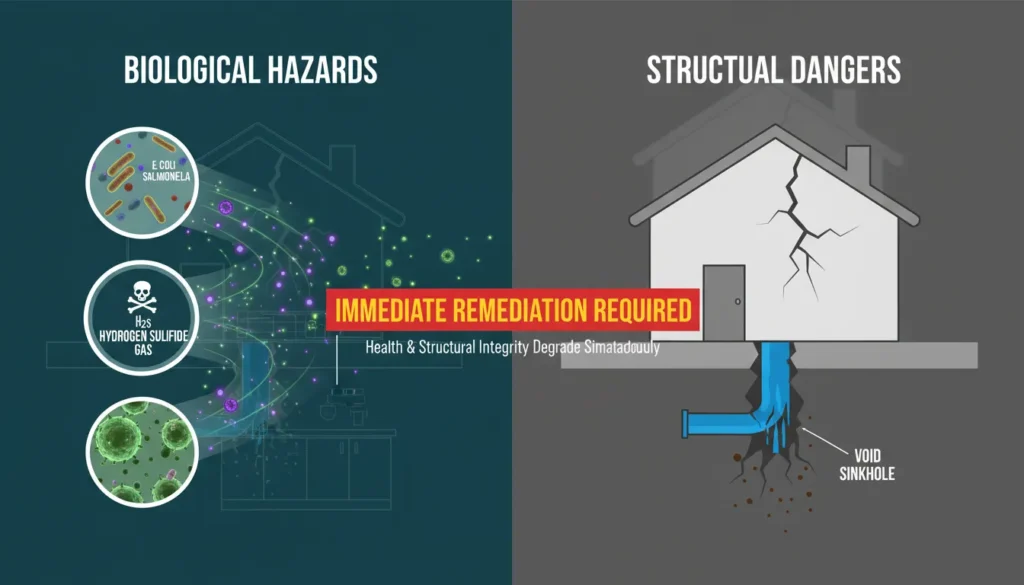
When a sewer-pipe-burst occurs, the clock starts ticking on both your health and your home’s stability. Raw sewage is a concentrated biohazard containing harmful bacteria, viruses, and parasites like E. coli and Salmonella. Beyond the liquid waste, the release of toxic sewer gases, such as methane and hydrogen sulfide, can lead to respiratory distress or even loss of consciousness in enclosed spaces like basements.
How to Identify the Health and Safety Risks
Toxic Gas Detection: If you notice a persistent “rotten egg” smell, do not wait. This is hydrogen sulfide, which can cause headaches, dizziness, and nausea. Prolonged exposure can be fatal, making immediate evacuation the only safe choice.
Rapid Mold Colonization: Sewage provides the perfect moisture and nutrient base for mold. Within 24 to 48 hours of a sewer-pipe-burst, mold spores can begin to colonize walls, flooring, and HVAC systems, leading to long-term respiratory issues for your family.
Where the Structural Damage is Most Likely to Occur
The most severe damage often happens where you can’t see it. A sewer pipe burst under house foundations can wash away the supporting soil, leading to “foundation settlement.” This manifests as cracks in your drywall, sticking doors, or uneven floors. Understanding what happens if a sewer pipe breaks helps you realize that this isn’t just a plumbing leak; it is a direct threat to the skeleton of your home.
What You Might Miss: The “Silent” Sinkhole Indicator
One hidden indicator of a major problem is a sudden drop in water pressure or strange sinkholes appearing near your foundation. When the soil becomes saturated with effluent, it loses its load-bearing capacity. This “liquefaction” can cause heavy concrete slabs in your garage or basement to crack and sink, a repair that often costs triple the price of the original pipe fix.
External Resources for Further Help
For detailed safety protocols on handling biological contaminants and protecting your family from waterborne illnesses, consult the Centers for Disease Control and Prevention (CDC) guidelines on residential water and sewage safety.
The “Secondary Infection” Reality Check
Never assume that a “dried” sewage spot is safe. Pathogens can survive in a dormant state in carpets or wood long after the liquid has evaporated. Without professional-grade antimicrobial sanitization, these contaminants can become airborne during future house cleanings, posing a delayed health risk to children and pets who spend time near the floor.
Finding the Right Professional for a Sewer Pipe Burst
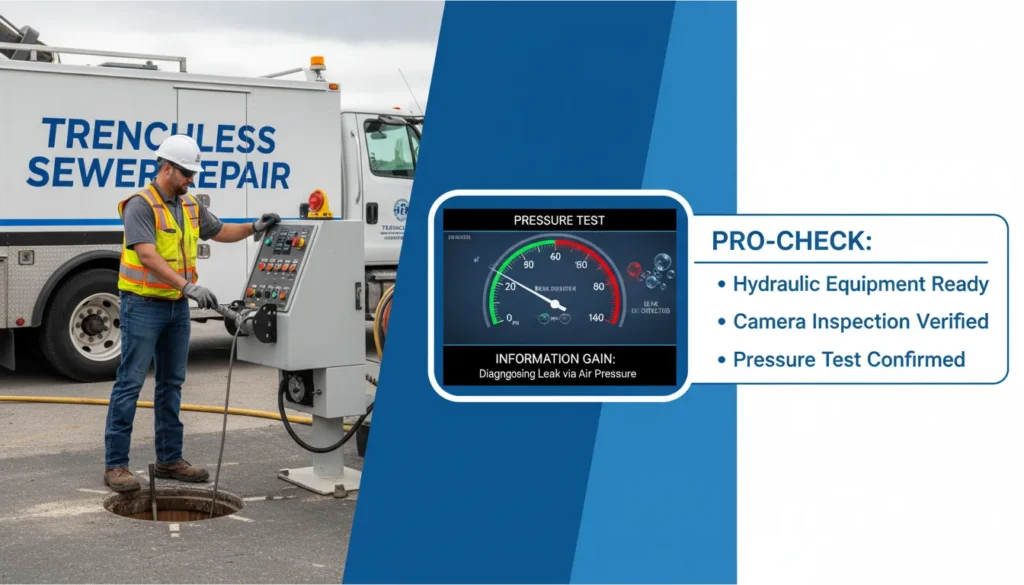
When you are ready to fix the problem, searching for pipe bursting sewer line replacement near me or sewer pipe bursting near me is the fastest way to find a specialist. Unlike standard plumbers, these experts use specialized hydraulic equipment to replace your line from the inside out. Understanding how do plumbers fix a burst pipe using these modern tools will help you vet contractors and ensure you are getting a permanent, high-tech solution rather than a temporary patch.
Professional Hiring Summary
- Expertise Search: Target “Trenchless” specialists rather than general service plumbers.
- Cost Transparency: Typical repairs for localized leaks range from $150–$500, but full bursts require hydraulic quotes.
- Technology Check: Ensure the contractor uses a “Pressure Test” for non-invasive diagnosis.
How to Identify the Right Expert and Costs
Specialized Search: Don’t just call any plumber; look for those who specifically mention “hydraulic pipe bursting.” Standard crews might only offer traditional digging, which can triple your restoration costs.
Pricing Expectations: While you might wonder how much a plumber charges to fix a leaking pipe (usually a few hundred dollars for a simple fix), a full sewer-pipe-burst replacement is a major project. Be prepared for a quote that includes the specialized machinery and high-density replacement piping.
What You Might Miss: The “Pressure Test” Indicator
A unique indicator of a high-end professional is the use of a “Pressure Test Fail” diagnostic. While many blogs suggest digging or camera work alone, a veteran contractor will often pump air into the sealed line to monitor PSI (Pounds per Square Inch) levels. If the pressure drops instantly, it confirms a physical breach and its general location without moving a single shovelful of dirt. This technical accuracy ensures you don’t pay for unnecessary “exploratory” digging.
Where the Solution is Most Likely to Be Found
To ensure you are hiring a qualified professional who follows local building codes, you should verify their credentials through official platforms. For homeowners in the United States, you can check for certified contractors and local plumbing standards through the International Association of Plumbing and Mechanical Officials (IAPMO), which ensures your repair meets modern safety and structural requirements.
The “Warranty” Reality Check
Always ask about the “Pipe Life” versus the “Labor Warranty.” The new HDPE pipe used in bursting is often rated for 50–100 years, but a contractor might only offer a 1 or 2-year warranty on the labor. A truly confident professional will offer at least a 5-to-10-year labor guarantee on a sewer-pipe-burst repair, protecting you if the soil settles and affects the new connection points.

In fact when someone doesn’t understand then its up to other
users that they will assist, so here it happens.