Professional Sump Pump Installation & Repair in Miami | 24/7 Flood Defense
Don’t let a failed pump turn your basement into a pool during the next heavy storm. At Ez Plumbing Repair Services, we provide the ultimate line of defense against groundwater and flooding. From precision new installs to 24-hour emergency repairs, our licensed specialists ensure your home stays bone-dry. We combine industry-leading hardware with advanced battery backup systems, so even when the power goes out, your protection stays on.
Why Thousands Trust Our Sump Pump Expertise
✅ Licensed Precision Installation
We don’t just “drop in” a pump. We engineer a complete drainage solution—calculating the perfect pit depth, securing check valves, and ensuring code-compliant discharge to keep water far away from your foundation.
✅ 24/7 Rapid Emergency Repair
Sump pumps don’t wait for business hours to fail. Whether it’s a stuck float switch or a burnt-out motor, our emergency team is on standby 24/7 to fix your system before the first inch of water hits your floor.
✅ Smart Battery Backup Systems
The biggest risk to your basement is a storm-induced power outage. We install high-performance backup guards that activate instantly when the grid fails, providing 10,000+ gallons of pumping power on a single charge.
- 🛡️ Licensed & Fully Insured: Complete protection for your property and total insurance compliance.
- ⏱️ Same-Day Service Guarantee: We arrive with fully stocked trucks to ensure your pump is running on the first visit.
- 💎 10-Year Labor Warranty: We install top-tier brands like Zoeller and Wayne, backed by our ironclad satisfaction guarantee.
Sump Pump Repair: Is Your System Saving or Sinking You?
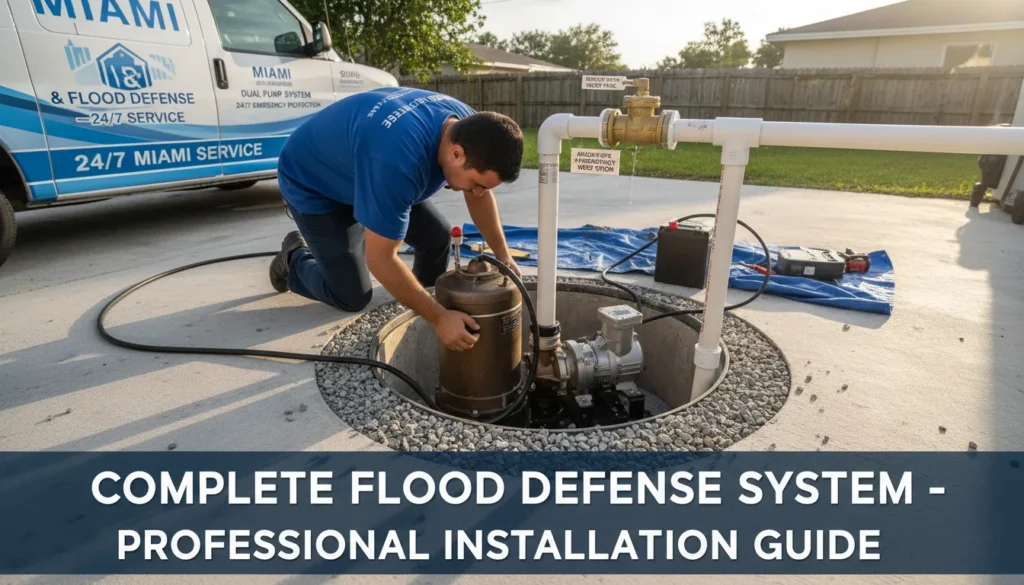
Deciding whether to fix an old unit or invest in a new installation is the difference between a dry basement and a costly flood. On average, a high-quality submersible sump pump has a lifespan of 7 to 10 years. If your system is approaching a decade of service, even a minor repair might be a temporary bandage on a failing motor.
Understanding the health of your pump is critical. If your motor is humming but not pumping, or if you hear a strange grinding noise during a storm, it’s time for an expert diagnosis before the water starts to rise.
Transparent Cost Guide: Repair vs. New Installation
To help you make an informed financial decision, here is a breakdown of current industry pricing for standard services and parts
When is it Worth Repairing?
A repair is usually the smartest move if the pump is relatively new and the issue is external, such as a clogged discharge pipe or a tangled float switch. However, if the motor itself is failing or the housing is heavily corroded, the “sunk cost” of a repair often outweighs the long-term reliability of a new, warranted unit.
Pro Tip: Always check your backup system at the same time. A primary pump is only half the battle; a reliable battery backup ensures protection when the power grid fails.
Precision Sump Pump Installation for Long-Term Security
A sump pump is your home’s last line of defense against groundwater. If it’s not installed with mathematical precision, even the most expensive unit will fail when you need it most. Proper installation isn’t just about plumbing; it’s about engineering a system that handles pressure, prevents airlocks, and redirects water permanently away from your foundation.
1. Selecting the Right Pump Architecture
Before digging begins, we determine the best pump type for your specific basement environment:
Submersible Pumps: Designed to sit inside the basin. They are quieter, more powerful, and handle debris better, making them the gold standard for finished basements.
Pedestal Pumps: The motor sits above the water level. While louder, they offer easier access for maintenance and are ideal for narrow pits where space is limited.
2. The Professional Installation Blueprint
To ensure your system lasts its full 10-year lifespan, every installation must follow these critical steps:
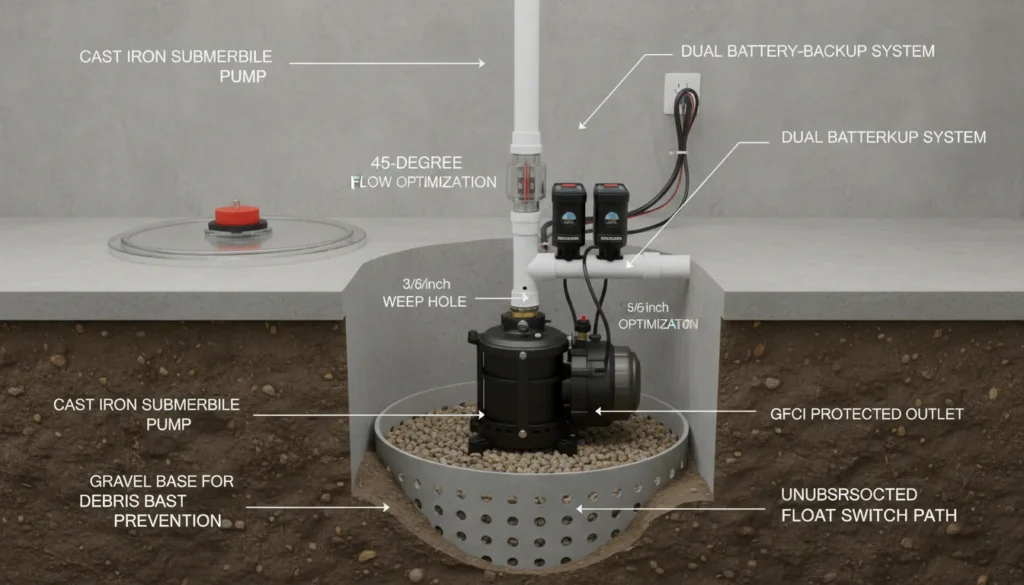
Custom Pit Excavation: We dig the basin hole 6 to 10 inches wider and deeper than the liner itself. This extra space allows for a proper drainage bed and prevents the float switch from getting pinned against the wall—a common cause of motor burnout.
Gravel Base Filtration: We place a layer of washed gravel at the bottom of the pit. This prevents mud from clogging the intake screen and provides a stable, level surface for the pump to sit on.
The “Weep Hole” Secret: This is where many DIY projects fail. We drill a precise 3/16-inch relief hole (weep hole) in the discharge pipe between the pump and the check valve. This prevents Airlock—a bubble of air that can trap the pump’s impeller, causing the motor to run while moving zero water.
Optimized Discharge Routing: Water must be moved at least 10 feet away from the foundation. We calculate the slope of the PVC discharge line to ensure gravity assists the pump, preventing water from siphoning back into the basin.
Why These Technical Details Matter
Without a weep hole, your pump could fail during the first heavy rain. Without a gravel base, dirt will destroy the impeller in months. By focusing on these “hidden” technicalities, we ensure that once the system is installed, it remains silent, efficient, and ready for any storm.
High-Performance Sump Pumps: The Brands We Trust & Install
Buying a sump pump isn’t just about picking the cheapest box off the shelf at a local hardware store. To ensure your basement remains dry for the next decade, you need a unit that matches your home’s specific water table and horsepower (HP) requirements.
Based on thousands of hours of field performance, here is a breakdown of the top-tier models that offer the best return on investment.
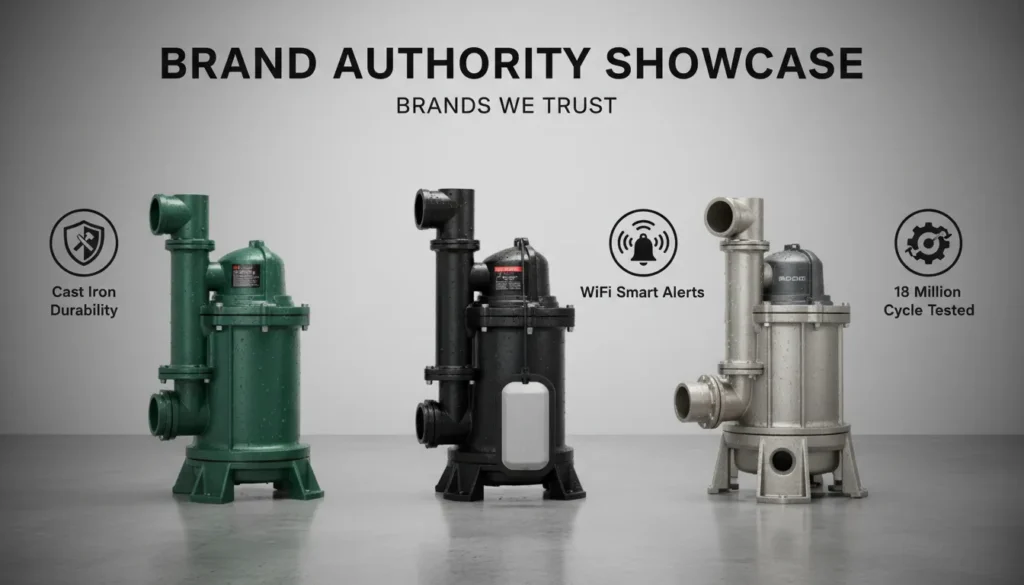
1. Zoeller Mighty-Mate (M53) – The "Plumber's Standard"
The Zoeller M53 is widely regarded by professionals as the most reliable residential pump ever built.
The Build: Unlike cheaper plastic alternatives, the M53 features a heavy-duty cast iron housing designed to dissipate heat—the #1 enemy of electric motors.
Performance: A 1/3 HP motor that moves up to 43 gallons per minute (GPH), making it perfect for standard residential groundwater management.
Verdict: This is the “set-it-and-forget-it” pump for homeowners who prioritize long-term durability.
2. Wayne CDU800 – Ultra-Quiet Power for Flood-Prone Areas
If your basement serves as a home office or living space, the Wayne CDU800 is the ideal solution for high-volume water removal without the noise.
The Build: Features an integrated vertical float switch that allows it to fit into narrow 11-inch pits.
Performance: A massive 1/2 HP motor capable of moving 4,200 gallons per hour.
Verdict: Best for low-lying areas or homes with high water tables that require a pump to cycle frequently and quietly.
3. Ridgid 500RSDS – The "Extreme Durability" Choice
For those who want a pump that has been tested to the absolute limit, the Ridgid 500RSDS is the top contender at major retailers like Home Depot.
The Build: It is assembled in the USA and officially tested to 1 million cycles. It features a unique dual-suction design that resists airlocks.
Performance: A 1/2 HP unit with a 5-year warranty, offering maximum financial peace of mind.
Verdict: Recommended for homeowners who want a premium, high-tech solution with a proven track record of longevity.
Why You Must Have a Battery Backup System
Even the most powerful primary pump is useless during a power outage—which almost always coincides with heavy storms. We specialize in installing the Big Combo CONNECT system. This smart backup includes:
Dual Protection: A 1/2 HP primary pump paired with a battery-operated secondary pump.
Smart Alerts: A WiFi-capable controller that sends text or email alerts to your phone if maintenance is needed or if the power goes out.
4 Quick Sump Pump Checks Before You Call a Pro
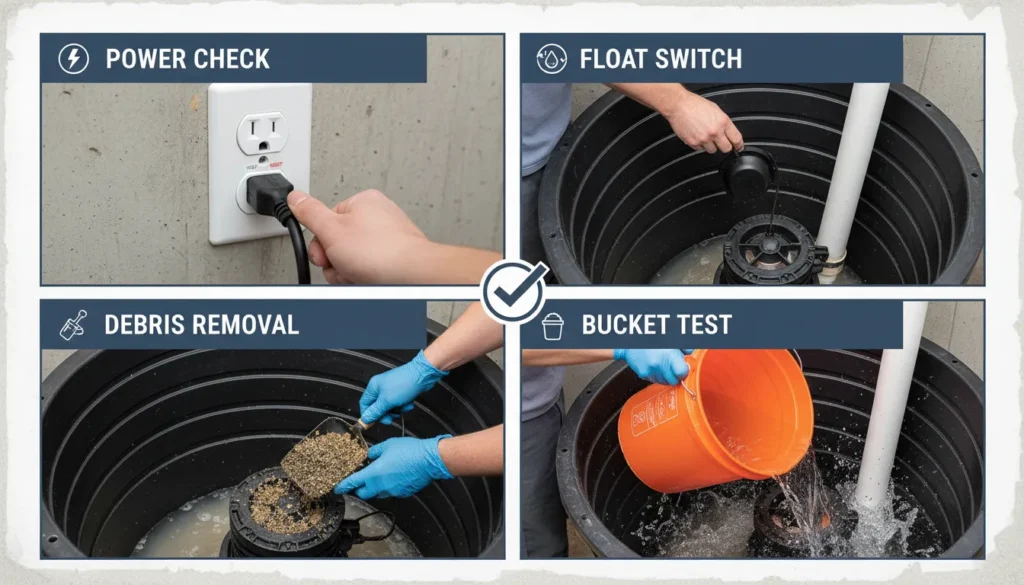
Finding water in your basement is stressful, but before you panic and assume you need a total replacement, there are a few basic elements you can inspect yourself. Many sump pump “failures” are actually simple maintenance issues that can be spotted in under five minutes.
Perform these four checks to see if your system just needs a quick adjustment:
1. Verify the Power Source
It sounds simple, but sump pumps often vibrate, which can slowly loosen the plug from the outlet. Ensure the cord is firmly connected to the GFCI outlet. Additionally, check your main electrical panel to ensure the circuit breaker hasn’t tripped due to a power surge during a storm.
2. Clear Debris from the Basin
Over time, dirt, gravel, and small debris can accumulate at the bottom of the pit. If this debris gets sucked into the intake screen, it will choke the pump and cause the motor to overheat. Peer into the pit and remove any visible obstructions to ensure the water has a clear path to the impeller.
3. Inspect the Float Switch Movement
The float switch is the “brain” of your pump—it tells the motor when to turn on. Sometimes, the pump can shift slightly inside the basin, causing the float to get pinned against the wall or tangled in the power cord. Ensure the float can move freely up and after as the water level rises.
4. The "Bucket Test"
The most reliable way to test your system is to simulate a rain event. Slowly pour a 5-gallon bucket of water into the sump pit. The pump should activate once the water reaches a certain level and quickly discharge the liquid. If the motor hums but the water level doesn’t drop, you likely have an internal clog or a failed check valve.
When Troubleshooting Isn't Enough
While these DIY checks can solve minor glitches, most sump pump repairs involve complex technicalities. Handling electrical grounding in a wet environment is extremely dangerous for a non-professional. Furthermore, securing PVC discharge lines with proper solvent welding and ensuring the “weep hole” is functioning correctly requires specialized tools and plumbing expertise.
If you’ve completed these checks and your basement is still at risk, it is time to let a certified specialist ensure your home remains protected with a code-compliant, permanent fix.
Frequently Asked Questions About Sump Pumps
Maintaining a dry basement starts with having the right information. Here are the most common questions homeowners ask about sump pump reliability, installation, and maintenance.
Yes, hiring a licensed plumber is highly recommended. While a homeowner can technically install a unit, a professional ensures the system is code-compliant, properly grounded electrically, and that the discharge lines are correctly sloped. Furthermore, most home insurance companies require professional installation receipts to cover water damage claims.
The most frequent issue is a stuck or failed float switch. Over time, the pump can shift in the basin, causing the switch to get pinned against the wall, which prevents the pump from activating. Other common problems include clogged discharge lines, debris in the intake screen, and “airlock” in the pipes.
No, a sump pump is actually a safety feature, not a red flag. It indicates that the home is equipped with an active system to manage groundwater. In many regions with high water tables, a sump pump is a standard requirement that adds value by protecting the foundation and preventing costly basement flooding.
For the majority of average-sized homes with moderate groundwater, a 1/3 HP pump is sufficient to handle 2,000 to 3,000 gallons per hour. However, if you have a very deep basement, a high water table, or a long discharge run (over 30 feet), upgrading to a 1/2 HP motor is necessary to ensure the water is moved quickly enough.
A standard submersible sump pump usually lasts between 7 and 10 years. Factors such as water acidity, the frequency of the pump’s cycles, and how well the basin is kept clear of debris will determine if your pump lasts toward the higher or lower end of that range.
Don’t Wait for the Next Storm—Secure Your Basement Today
Groundwater pressure and sudden storms don’t give warnings. A faulty sump pump can lead to thousands of dollars in foundation damage and mold growth in just a few hours. Ensuring your system is professionally installed and maintained is the only way to guarantee peace of mind when the clouds turn gray.
While we specialize in flood prevention, maintaining a dry home often requires a holistic approach to your pipes and drains. If you’ve noticed slow drains or hidden leaks elsewhere in your house, it’s a good idea to explore our full range of Plumbing Services to ensure your entire infrastructure is working in harmony. From leak detection to main line cleaning, comprehensive home protection is our priority.
Our team handles all local plumbing codes and permit requirements, so you don’t have to worry about the technicalities. We provide the expertise, the hardware, and the 24/7 reliability your home deserves.
Ready to Protect Your Basement?
Searching for 24-hour sump pump repair near me? You don’t have to wait. We are already on the way with fully stocked trucks and licensed technicians ready to secure your property.
Don’t wait for the first inch of water. Call Ez Plumbing Repair Services now:+1 786 239 6529
