Residential Sewer Line Repair & Replacement in Miami
Stop the backup before it ruins your foundation. When your main sewer line fails, every second counts. At EZ Plumbing, we combine military-grade precision with advanced trenchless technology to restore your home’s infrastructure without destroying your property. Our elite team provides 24/7 emergency diagnostics to stop sewage backups before they cause permanent structural damage to your Miami residence.
Why EZ Plumbing is Miami’s #1 Main Line Specialist
✅Trenchless "No-Dig" Mastery
We specialize in CIPP Pipe Lining, fixing your sewer lines from the inside out. This means we restore your flow without excavating your expensive driveway or tearing up your lush Miami landscaping.
✅Veteran-Led Integrity
Trust is our foundation. With EZ Plumbing’s transparent Flat-Rate pricing, the quote you receive is the final price you pay. No hidden fees, no “emergency” upcharges—just honest service.
✅HD Visual Verification
We don’t guess; we prove. Every repair is backed by a high-definition CCTV Sewer Camera Report, giving you 100% visual certainty that your line is cleared and structurally sound.
- ⚡ 45-Minute Emergency Response: We are local to Miami-Dade with rapid-response GPS dispatching.
- 💰 $0 Dispatch Fee: Your service call fee is completely waived when you choose us for the repair.
- 🛠️ Lifetime Warranty Available: We stand by our 2026 trenchless solutions with industry-leading long-term protection.
Precision Sewer Line Camera Inspection & Diagnostics
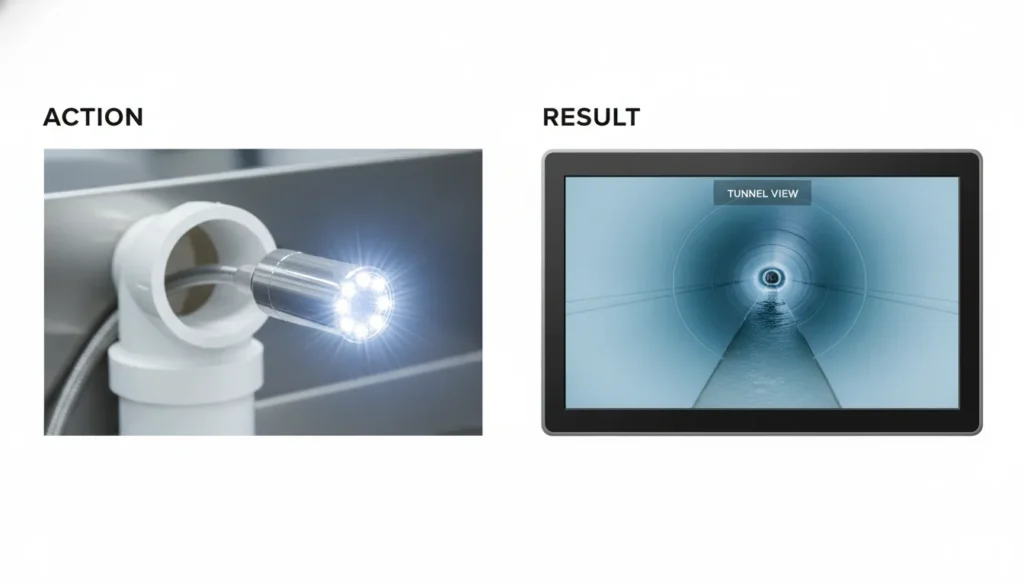
Modern sewer management begins with “Accuracy over Excavation.” To secure the structural integrity of a residential main line, a professional sewer line inspection is no longer optional—it is the industry standard. Our diagnostic protocol utilizes Ultra-HD Fiber-Optic CCTV technology to enter the lateral line, transmitting real-time, high-definition footage of the pipe’s interior directly to a digital interface. This non-invasive method allows for the identification of subterranean failures with millimeter precision, eliminating the need for exploratory digging.
What a High-Definition Sewer Line Camera Reveals
Root Intrusion: Aggressive tropical root systems often penetrate pipe joints seeking moisture. A digital scan identifies the exact entry points of these obstructions.
Pipe Bellying (Sagging): We detect “bellies” or low spots in the line where waste collects. These structural sags are often the root cause of chronic backups that standard cleaning cannot resolve.
Corrosion & Scale Buildup: In older infrastructure, particularly cast-iron systems, we identify internal oxidation and calcification that restricts flow and weakens pipe walls.
Structural Offsets & Fractures: We pinpoint shifted joints and hairline cracks before they escalate into a total system collapse.
Industry Standard: A digital sewer line camera report acts as a “health certificate” for your property’s infrastructure. It provides the empirical visual evidence required for insurance claims and long-term maintenance planning.
Trenchless vs. Traditional: Choosing the Right Repair Method
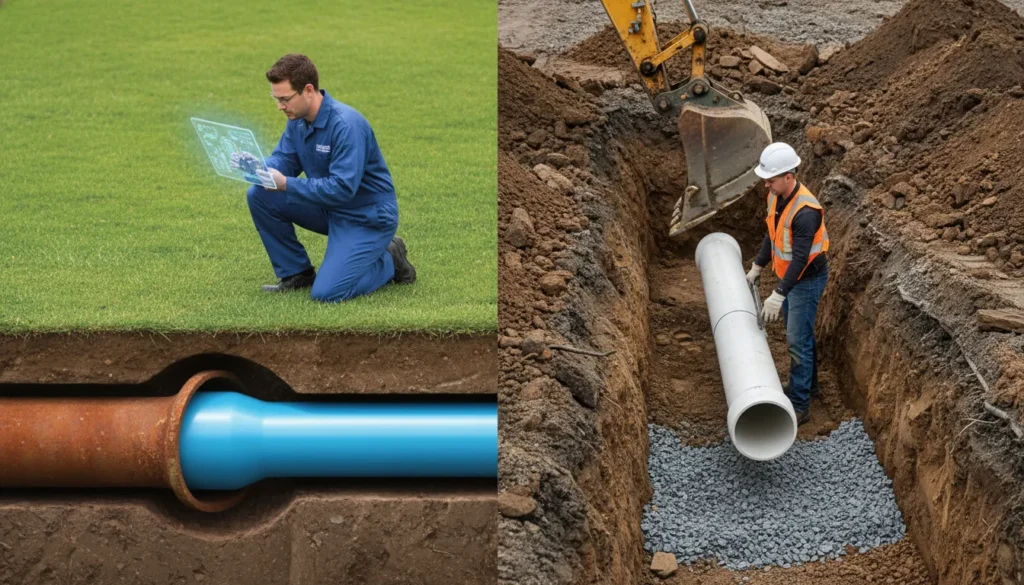
Selecting the correct restoration method is critical to the longevity of your property’s infrastructure. While traditional methods were once the only option, modern engineering now allows for “no-dig” solutions that save time, money, and landscaping. Below is the technical breakdown of the three primary methods used in 2026
Trenchless Pipe Lining CIPP: The "Pipe-within-a-pipe" Solution
Cured-In-Place Pipe (CIPP) is the gold standard for non-invasive repair. A flexible, resin-saturated liner is inserted into the existing damaged pipe. Once positioned, it is inflated and cured (hardened) using heat or UV light.
The Result: A seamless, jointless “structural sleeve” that is resistant to root intrusion and corrosion.
Lifespan: Engineered to last 50+ years.
Best For: Cracked, leaking, or root-infested pipes where the host pipe is still structurally upright.
Pipe Bursting: Advanced HDPE Replacement
When a line is too damaged for lining but a “no-dig” approach is still preferred, Pipe Bursting is the solution. A high-powered hydraulic head is pulled through the old line, physically breaking (bursting) the damaged pipe while simultaneously pulling a new, seamless HDPE (High-Density Polyethylene) pipe behind it.
The Benefit: Allows for a brand-new pipe installation with only two small access points.
Best For: Severely collapsed lines or when an increase in pipe diameter is required.
Traditional Excavation: Manual Structural Restoration
Despite the rise of trenchless tech, excavation sewer line repair remains necessary in specific scenarios. This involves using heavy machinery to dig a trench along the path of the pipe to manually remove and replace failed sections.
The Necessity: Required when a pipe has “back-pitched” (lost its slope), suffered a total structural collapse, or when municipal codes require a full visual inspection of the bedding.
How Much Does Sewer Line Repair Cost in 2026?
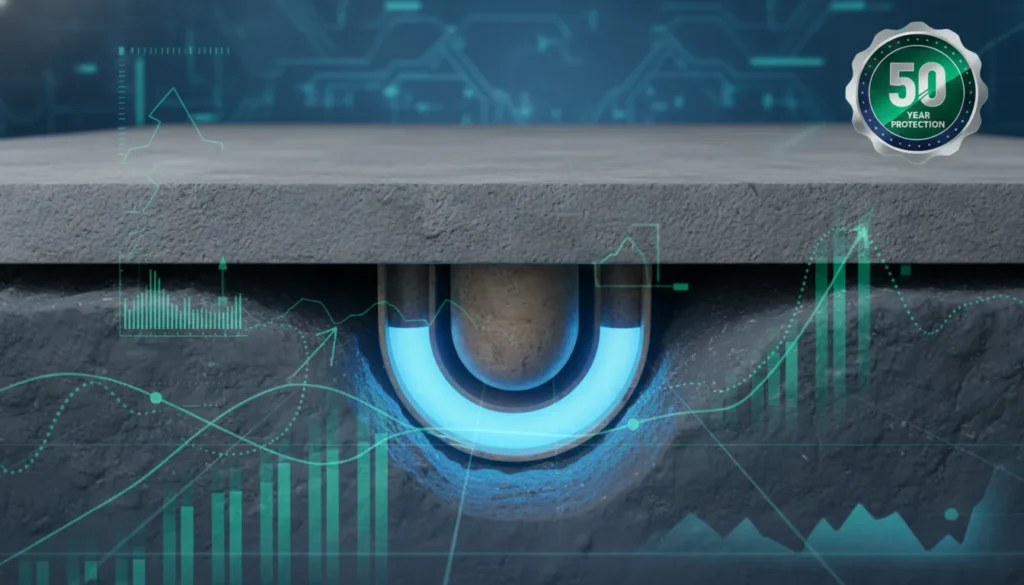
Estimating the residential sewer line repair cost requires a breakdown of depth, material, and accessibility. In the current 2026 market, homeowners should budget for three primary factors: diagnostic permits, labor intensity, and the specific technology used (Trenchless vs. Traditional).
While minor maintenance can be handled for a few hundred dollars, a full structural failure requires a more significant investment to ensure long-term property safety.
Key Factors Influencing Your Sewer Line Replacement Cost
Labor & Depth: Pipes buried deeper than 6 feet require specialized shoring and safety protocols, which can increase labor hours.
Permits & Compliance: In 2026, municipal permits for sewer work typically range from $200 to $800, depending on your specific Miami-Dade zone.
Material Selection: Transitioning from legacy cast-iron to modern HDPE or SDR-35 PVC affects the initial material cost but significantly reduces future maintenance expenses.
4 Critical Signs of a Clogged or Broken Main Sewer Line
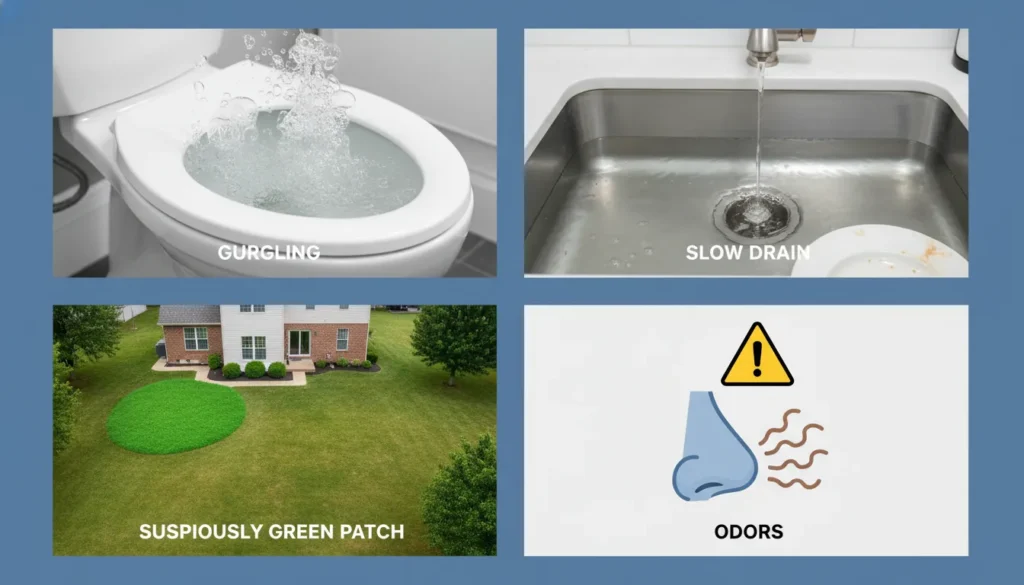
Ignoring a compromised sewer system can lead to thousands of dollars in property damage. If your home is exhibiting any of the following symptoms, a main line backup may be imminent. Recognizing these early warning signs is the first step toward a non-invasive, cost-effective repair.
Multiple Slow Drains Throughout the Home
If only one sink is slow, it’s a local clog. However, if your toilets, showers, and kitchen sinks are all draining slowly simultaneously, the blockage is likely in the main sewer line. This indicates a systemic restriction that requires professional diagnostics.
Unusual Gurgling Sounds The "Bubbling" Effect
Do your toilets gurgle when you run the bathroom sink? Or do you hear bubbling in the shower after the dishwasher drains? These sounds are caused by air trapped in the system—a classic symptom of a sewer line clogged by roots or debris.
Persistent Sewage Odors
A functional sewer system is airtight. If you smell “rotten eggs” or raw sewage in your yard or basement, it is a definitive sign of a crack or break in the line. These gases are not just unpleasant; they can be a health hazard.
Isolated "Lush Green" Patches in the Yard
While a green lawn is usually a good sign, an isolated patch of grass that is significantly taller and greener than the rest of the yard often indicates a leaking sewer pipe. The sewage acts as a fertilizer, signaling a subterranean structural failure.
Does Homeowners Insurance Cover Sewer Line Repair?
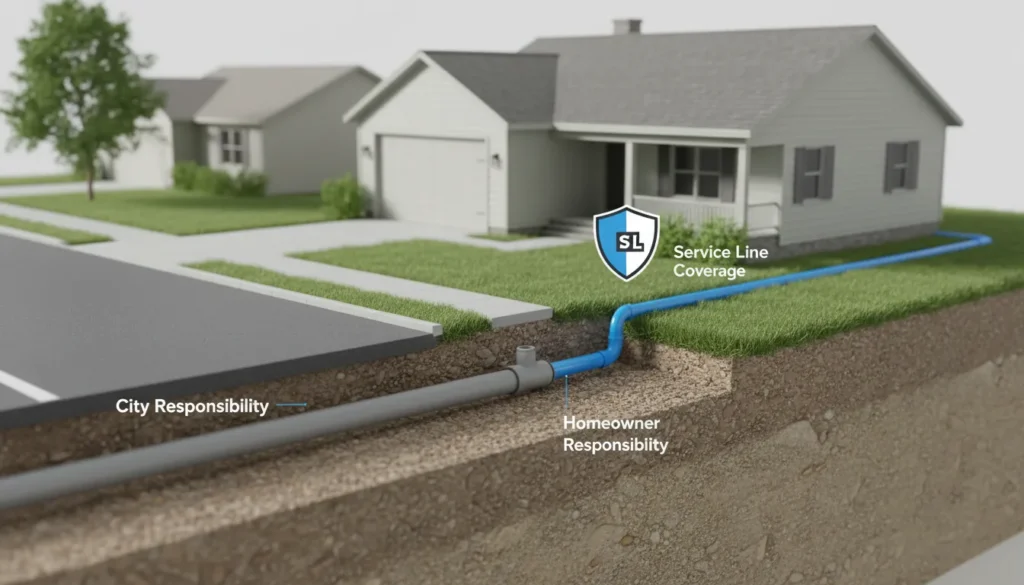
One of the most critical questions homeowners face during a subterranean failure is: Who pays for the restoration? Understanding the difference between a standard policy and specialized endorsements can save you thousands in out-of-pocket expenses. In 2026, insurance carriers have become more specific regarding “Service Line” vs. “Water Back-Up” coverage.
The Two Primary Forms of Coverage
1. Service Line Coverage (The External Pipe): This is a specific endorsement (add-on) that covers the physical sewer line repair between your house and the street. If your pipe collapses due to age, tree roots, or wear and tear, this coverage often pays for the excavation and replacement.
2. Water Back-Up Endorsement (The Internal Damage): This covers the damage caused by a backup (e.g., ruined flooring or drywall in your basement). Crucially, this often does not cover the cost of repairing the pipe itself—only the mess it created.
What is Generally NOT Covered?
Lack of Maintenance: If a sewer line clogged due to years of neglect or flushing prohibited items, most carriers will deny the claim.
Standard Policies: A basic HO-3 policy typically excludes “earth movement” or “wear and tear” on underground pipes unless you have the specific Service Line rider.
Expert Authority Tip: Always request a CCTV Sewer Camera Inspection digital file. This HD footage serves as “empirical evidence” for your insurance adjuster to prove the cause of failure (e.g., sudden collapse vs. slow corrosion), significantly increasing your chances of a successful claim.
Frequently Asked Questions About Sewer Pipe Relining
Yes. When comparing the total cost of ownership, sewer pipe relining is significantly more cost-effective than traditional excavation. While the upfront material cost for CIPP (Cured-In-Place Pipe) is higher, you save thousands by avoiding the cost of rebuilding driveways, restoring luxury landscaping, and remediating soil. It is a one-time investment that restores structural integrity without property destruction.
Modern epoxy and polyester resin liners are engineered for a 50 to 100-year structural lifespan. Because the new “pipe-within-a-pipe” is seamless and jointless, it eliminates the possibility of future root intrusion—the #1 cause of sewer failure. In 2026, most high-end trenchless installations come with a lifetime transferable warranty.
While a retail sewer line repair kit might work for a small, accessible PVC leak under a sink, DIY main line repair is not recommended. Main sewer lines are buried deep, require municipal permits, and involve hazardous bio-waste. Attempting to reline or patch a main line without pneumatic inversion equipment or HD camera verification often leads to a “double-cost” scenario where a professional must be hired to undo the failed DIY attempt.
If relining is not an option due to a total structural collapse (back-pitch), the primary sewer pipe relining alternatives include Pipe Bursting (HDPE replacement) or Directional Boring. If the line has completely lost its slope, traditional open-trench excavation remains the only viable engineering solution.
Typically, no—unless you have a specific endorsement. A standard HO-3 policy usually excludes “wear and tear” or “earth movement” for underground pipes. To be covered, you generally need a Service Line Endorsement. However, a Water Back-Up Endorsement may cover the damage inside your home (ruined floors/walls) caused by a backup, even if it doesn’t pay for the pipe repair itself.
Yes. While the material cost of Cured-In-Place Pipe (CIPP) can be higher than PVC, the Total Project Cost is significantly lower. Relining saves you from the massive secondary expenses of excavating driveways, destroying luxury landscaping, and rebuilding porches. It creates a seamless, jointless “pipe-within-a-pipe” that is immune to root intrusion.
Stop the Damage – Restore Your Sewer Line Integrity Today!
A sewer backup doesn’t just damage your floors; it threatens your family’s health and your property’s foundation. Don’t wait for a total collapse. Whether you need a precision sewer line camera inspection or high-tech trenchless sewer line repair, the elite team at EZ Plumbing is ready to provide a permanent, non-invasive solution.
We combine 2026’s most advanced engineering with localized expertise to ensure your home’s infrastructure remains sound for the next 50 years. At EZ Plumbing, we don’t just fix pipes; we restore your peace of mind.
- 24/7 Rapid Response: We arrive within 45 minutes for emergencies.
- Transparent Flat-Rates: No hidden fees, ever.
- Lifetime Warranty: We stand behind our trenchless technology.
