Expert Septic Pumping in Miami & Fort Lauderdale | Fast 24/7 Response
Don’t wait for a costly sewage backup to ruin your home. At Ez Plumbing Repair Services, we provide industrial-grade septic tank pumping and deep cleaning that goes beyond just surface suction. Starting at just $350, our certified team removes accumulated sludge and scum, restoring your system’s flow and preventing environmental hazards. We handle the dirty work so you can breathe easy and keep your family safe.
Why Miami Homeowners Trust Our Septic Experts
✅ Rapid 2-Hour Emergency Arrival
Septic failures don’t follow a schedule. Whether it’s 3 AM or a holiday, our local Miami and Broward teams are on standby with fully equipped vacuum trucks to resolve your backup before it causes permanent drain field damage.
✅ IICRC-Standard Sludge Removal
Most companies just “pump and go.” We follow a rigorous standardized protocol to ensure 100% of the heavy solids (sludge) at the bottom of your tank are removed. This scientific approach doubles the life of your septic system.
✅ No-Hassle $50 Instant Discount
We believe in fair, transparent pricing. By choosing us today, you lock in a $50 discount on your total service. No hidden “digging” fees, no surprise mileage charges—just professional service at the best value in South Florida.
- 🚨 Stop the Odor: Eliminate foul "rotten egg" smells from your yard and drains instantly.
- 💰 Avoid $10,000 Repairs: Regular pumping prevents the total failure of your drain field—the most expensive part of your home.
- 🛡️ Florida Law Compliance: Stay ahead of new state regulations with our certified maintenance documentation and digital inspections.
Signs Your Septic Tank is Full: When to Call the Pros
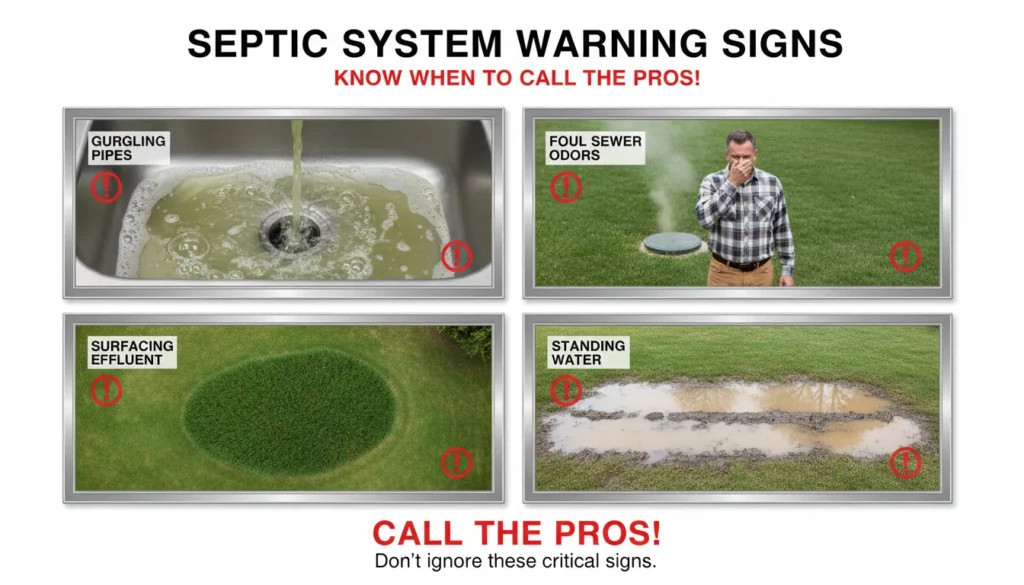
Ignoring your septic system is a gamble that most homeowners lose. Because the tank is buried underground, the damage often remains invisible until it becomes a catastrophic failure. Recognizing the early red flags can save you from a complete system replacement and keep your property safe from toxic sewage exposure.
Critical Red Flags: Does Your System Show These Signs?
If you notice any of the following, your tank has likely reached its maximum sludge capacity and needs immediate attention:
Gurgling Pipes & Slow Drains: If your toilets or sinks make a distinct “glug-glug” sound after flushing or using the shower, it means air is being trapped by backed-up waste.
Foul “Rotten Egg” Odors: Persistent sewage smells around your yard or near your indoor drains indicate that septic gases are no longer being contained by the tank.
Pooling Water or Lush Green Grass: If one area of your lawn is unusually green or remains soggy even without rain, your drain field is likely saturated and failing to process effluent.
Sewage Backups: This is the final stage—actual waste entering your bathtubs or toilets. At this point, the health hazard is immediate.
Expert Advice: The "20-Year Myth" vs. $10,000 Reality
Many property owners ask, “Can a septic tank go 20 years without being pumped?” While some systems may technically “function” for years, it is a dangerous myth.
The Truth: Over time, solid waste (sludge) builds up. If not pumped, these solids escape the tank and enter the drain field, clogging the soil pipes.
The Consequence: Once a drain field is clogged with solids, it cannot be “cleaned”—it must be dug up and replaced. In Florida, a full drain field restoration can easily cost between $7,000 and $15,000. Regular pumping at a fraction of that cost is the only way to avoid this financial disaster.
The 24-48 Hour Window: Why You Can't Wait
Once your system shows signs of backup, you are in a critical window. Sewage contains harmful bacteria, nitrates, and pathogens that can contaminate your home’s air and the local groundwater. Under Florida’s environmental standards, immediate remediation is required to prevent biological health hazards. Waiting even 24 hours can turn a simple pump-out into a massive biohazard cleanup project.
Professional Septic Tank Cleaning vs. Just Pumping
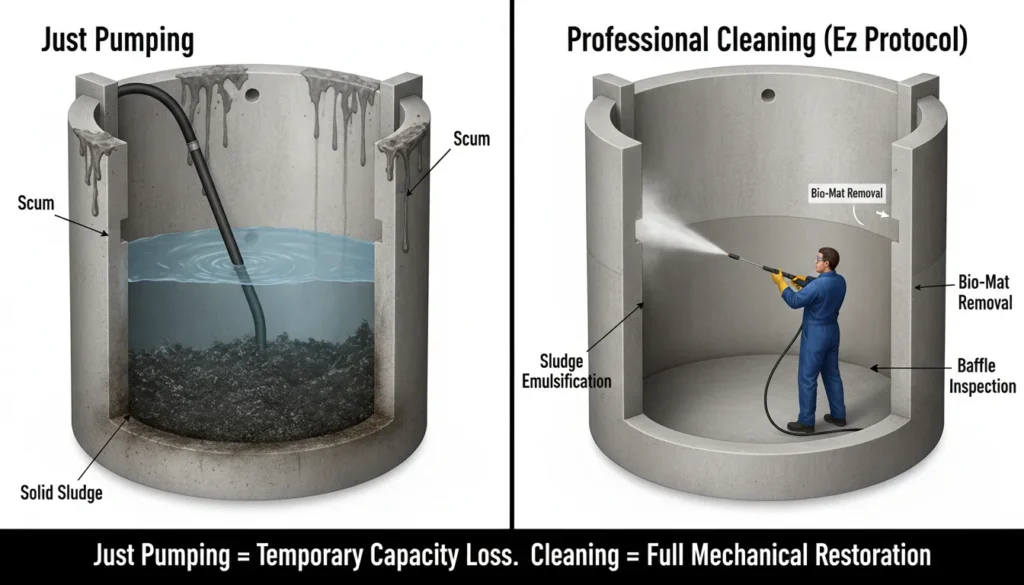
Understanding the difference between a basic liquid pump-out and a comprehensive system cleaning is critical for the longevity of your property. Many budget providers simply “skim the top,” removing only the liquid effluent (scum) while leaving the heaviest, most destructive waste behind.
The Science of Sludge Removal
A septic tank naturally separates waste into three layers: scum (top), effluent (middle), and sludge (bottom).
The Common Mistake: Basic pumping often ignores the bottom layer of heavy solids known as sludge.
The Consequence: If sludge is not thoroughly agitated and removed, it eventually flows into your drain field, clogging the soil and causing a total system failure that can cost upwards of $10,000 to replace.
Our Protocol: We utilize high-vacuum suction combined with agitation techniques to break down and extract 100% of the solid waste, ensuring your tank starts its next cycle with full capacity.
Advanced Diagnostic Equipment
To ensure precision, modern septic maintenance requires more than just a shovel. We utilize specialized technology to protect your landscape and your pipes:
Digital Tank Locating: Gone are the days of guessing and unnecessary digging. We use electronic radio-frequency locators to pinpoint the exact position of your tank lids, saving you hundreds in labor and preserving your lawn.
Fiber-Optic Camera Inspections: After the pump-out, we perform a visual scan of the tank’s interior walls and baffles. This allows us to identify hidden cracks, root intrusions, or structural weaknesses before they become emergency leaks.
Florida’s New Environmental Regulations
Florida’s unique ecosystem and high water table have led to stricter environmental mandates. Recent state laws now require enhanced nutrient reduction systems for specific new constructions and renovations, particularly on lots of one acre or less in sensitive protection areas.
These regulations aim to reduce nitrogen and phosphorus runoff into Florida’s springs and groundwater. Maintaining a strict 3-to-5-year pumping schedule is no longer just a recommendation—it is a vital part of staying compliant with evolving state health standards and protecting the local environment.
How Much Does Septic Pumping Cost in Miami & Broward?
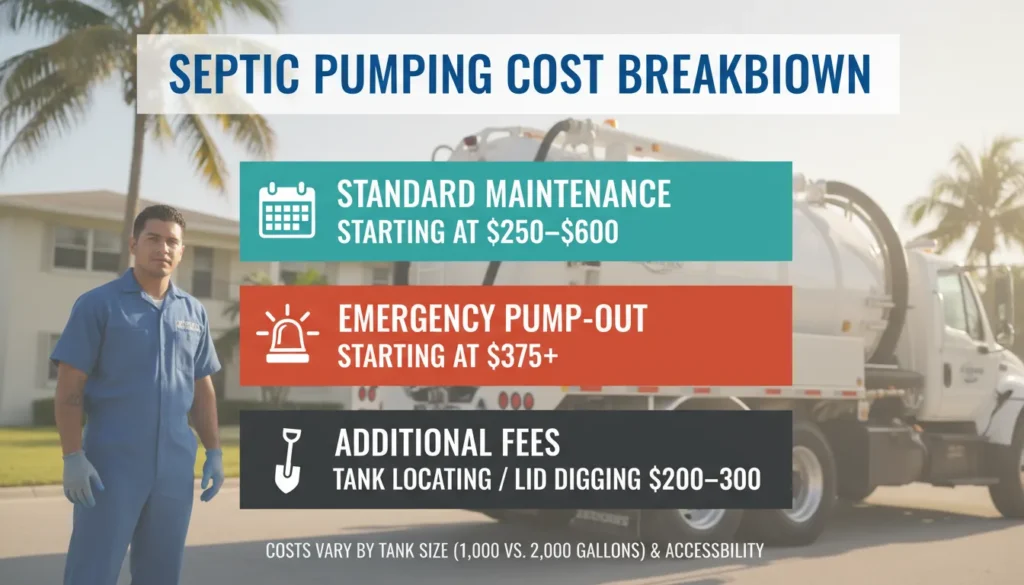
Financial transparency is the cornerstone of professional property maintenance. In the South Florida market, septic service pricing is determined by tank capacity, accessibility, and the urgency of the situation. Providing a clear budgetary framework helps homeowners make informed decisions before a minor maintenance task turns into a major structural failure.
2026 Price Breakdown: Standard vs. Emergency Rates
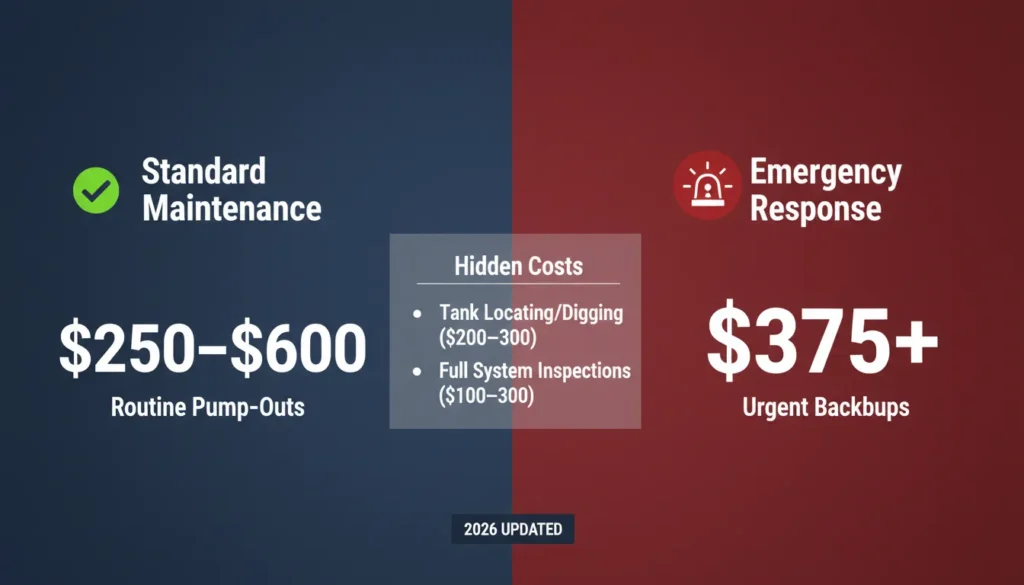
Based on current industry data for the Miami-Dade and Broward areas, the following table outlines the expected investment for professional septic services
| Service Type | Estimated Cost (2026) | Description |
|---|---|---|
| Standard Pump-Out | $250 – $600 | Routine removal of sludge and scum layers. |
| Emergency Pumping | $375+ | Rapid response for active backups or overflows. |
| Tank Locating & Digging | $200 – $300 | Required if the tank lid is buried without a riser. |
| Full System Inspection | $100 – $300 | Visual and digital camera health assessment. |
The Science of Frequency: Tank Size vs. Usage Logic
A “one size fits all” approach does not work for septic maintenance. The frequency of your pump-out depends heavily on your tank’s total capacity and the volume of wastewater your household generates.
1,000-Gallon Tanks (Standard Home): These systems generally require professional pumping every 2.5 to 3 years. If the household exceeds 4 residents, this window shrinks to 2 years to prevent solids from escaping into the drain field.
2,000-Gallon Tanks (Large Estates): While larger, these tanks typically manage a higher load. In low-occupancy homes, they may last up to 5 years, but heavy water usage (daily laundry, long showers) mandates a 3-year cycle.
The “Sludge Rule”: Regardless of time, if the sludge layer occupies more than one-third of the tank’s working volume, immediate intervention is required to prevent a permanent system collapse.
Factors That Increase Your Final Bill
Several variables can shift your costs toward the higher end of the spectrum. Accessibility is the primary driver; if a technician must spend hours probing the yard to find a buried lid, labor costs will increase. Additionally, high levels of “FOG” (Fats, Oils, and Grease) or the excessive use of a garbage disposal can thicken the waste, requiring more intensive vacuuming and specialized disposal fees.
Protect Your System: The "Never Flush" List
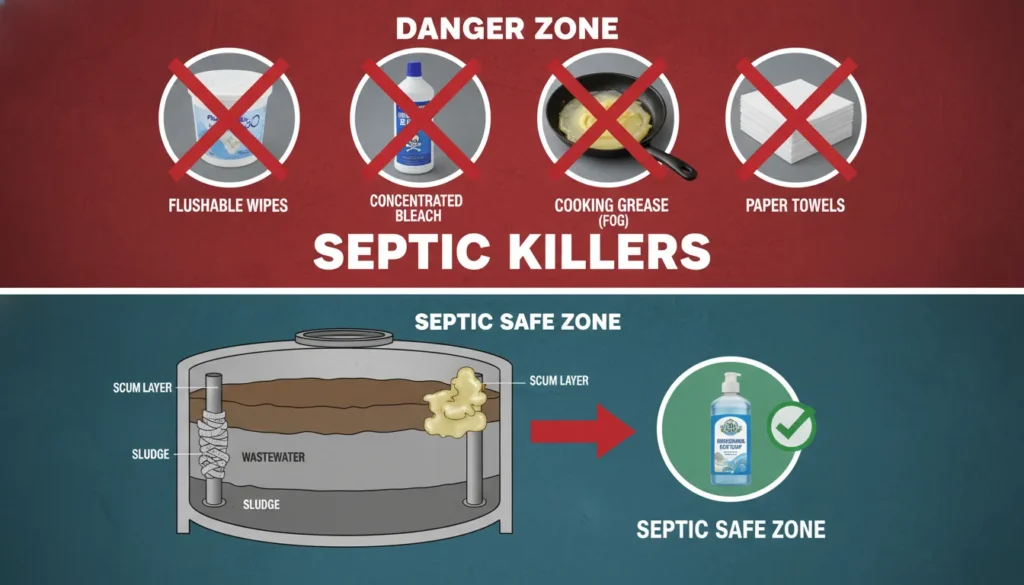
Maintaining a healthy septic system isn’t just about regular pumping; it’s about controlling the daily input into your tank. Many common household items marketed as “safe” can actually trigger catastrophic blockages, leading to thousands of dollars in emergency repairs. To keep your system running smoothly between professional services, follow these expert-vetted life hacks.
The Myth of "Flushable" Wipes
Despite what the packaging claims, flushable wipes are a septic system’s worst enemy. Unlike standard toilet paper, which is engineered to dissolve rapidly in water, these wipes are made of synthetic fibers that stay intact for years. In a septic tank, they do not break down; instead, they float and create a thick “mat” that can clog the inlet pipe or wrap around the baffle, causing an immediate sewage backup into your home.
Chemical Warning: Stop "Poisoning" Your Bacteria
Your septic tank is a living ecosystem powered by beneficial bacteria that digest organic waste. When you use harsh bleach or industrial drain cleaners, you are essentially nuking the microbial colonies required for waste breakdown.
- The Danger of Bleach: Even small amounts of concentrated bleach can kill the essential bacteria your system relies on.
- The Safer Alternative: Use mild, biodegradable soaps. For instance, standard blue dish soap (like Dawn) is a much safer alternative for cleaning. It breaks down grease effectively without destroying the bacterial flora in your tank.
The "October Vinegar Hack": A Florida Pro-Tip
In Florida’s unique humid climate, many seasoned homeowners use the “October Vinegar Hack” to maintain their system’s pH balance as the seasons shift.
The Logic: Pouring a gallon of white distilled vinegar down your drains once a year—typically in October—helps to naturally break down minor mineral scales and adjust the tank’s alkalinity.
Why it Works: Vinegar is a mild acetic acid that balances the high-pH environment created by heavy laundry detergents. This “reset” keeps your bacteria performing at peak levels through the winter months.
Quick Reference: The "No-Go" Zone
- Fats, Oils, and Grease (FOG): These solidify into "fatbergs" that obstruct flow.
- Feminine Products: Non-biodegradable and the primary cause of inlet clogs.
- Chemical Fertilizers: These can seep through the system and contaminate local Florida groundwater.
Reliable Septic Service Near Miami, Fort Lauderdale, & Hollywood
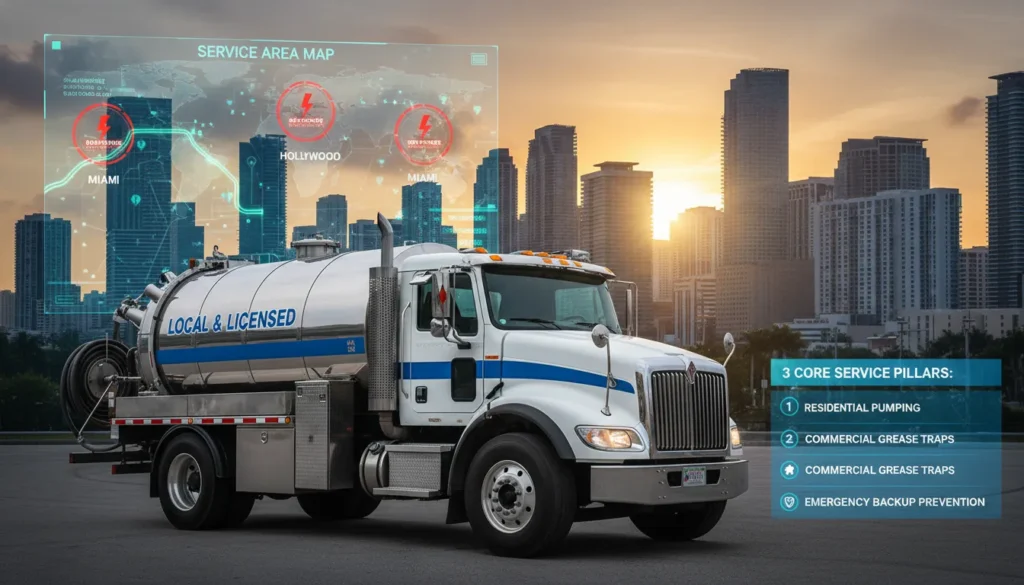
Geographic expertise is critical when dealing with South Florida’s high water table and unique soil conditions. Our specialized vacuum trucks and technicians are strategically stationed throughout the region to ensure rapid dispatch. Whether you are facing a sudden backup in a high-density urban area or need routine maintenance for a sprawling suburban estate, we understand the specific logistical and environmental requirements of your neighborhood.
Comprehensive Coverage Across South Florida
We provide full-scale septic pumping and emergency cleaning services in the following key areas:
Miami-Dade County: From the coastal properties of Miami Beach and North Miami to the busy commercial hubs of Hialeah and Doral.
Broward County: Extensive reach into Fort Lauderdale, Hollywood, and surrounding communities.
Specialized Local Knowledge: Our team is well-versed in the specific permitting and disposal regulations of each municipality, ensuring that your service is 100% code-compliant and environmentally responsible.
Why Local Homeowners Choose Us
In a market with many large franchises, Ez Plumbing Repair Services stands out by offering a personalized, boutique experience. Instead of relying on automated dispatching or remote call centers, the focus remains on technical precision and customer trust.
Direct Communication: When you call +1 786 239 6529, you speak directly to a specialist who understands the Miami and Broward landscape, ensuring your emergency is handled with local context.
Tailored Maintenance Plans: There is no “one-size-fits-all” approach here. Every household size and tank age is assessed to recommend a pumping cycle that actually saves you money in the long run.
Owner-Operated Quality Control: Senior experts oversee every high-priority job to ensure a standardized protocol is strictly followed. This eliminates the “rotating door” of inexperienced technicians often found in larger corporations.
By choosing a dedicated local provider, you receive faster response times and a deeper commitment to the long-term health of your property’s infrastructure.
Septic Pumping: Your Top Questions Answered
Providing clear, expert answers to common maintenance concerns is essential for long-term system health. Below are the most frequent inquiries from homeowners in the Miami and Fort Lauderdale areas regarding professional septic management.
No, you should never attempt to pump a septic tank yourself. Beyond the lack of industrial-grade vacuum equipment, open septic tanks emit Hydrogen Sulfide and Methane gases, which can be fatal if inhaled even in small concentrations. Furthermore, illegal disposal of septic waste carries heavy environmental fines in Florida. Professional pumping ensures that the waste is transported and treated at a licensed facility according to EPA standards.
To prevent “hydraulic overload,” it is recommended to limit laundry to 1 to 2 loads per day, spread throughout the week. Doing 5 or 6 loads in a single day (often called “Laundry Day”) floods the tank with excessive water, which pushes solid waste and sludge out into the drain field before it has time to settle. This is a leading cause of premature system failure.
A septic drain field is designed to handle only the weight of soil and grass. Never park vehicles, place heavy machinery, or build structures (like sheds or pools) over the field. Excessive weight compacts the soil and crushes the distribution pipes.
The Gravel vs. Rocks Debate: While small decorative gravel can be used for landscaping, large heavy rocks or dense paving stones should be avoided as they restrict the soil’s ability to “breathe” and evaporate moisture.
In professional plumbing, the “135 rule” (or similar slope configurations) refers to the precise pitch of drainage pipes (typically 1/8 to 1/4 inch per foot). This ensures that wastewater moves fast enough to carry solids without leaving them behind to create a clog, yet slow enough to prevent “siphoning” the water out of your traps.
The “Absolute Killers” are Fats, Oils, and Grease (FOG) and Non-Biodegradable Solids.
FOG: When grease cools, it solidifies into “fatbergs” that block the inlet pipes and prevent the natural separation of waste layers.
Chemical Killers: Pouring motor oil, paint thinners, or large amounts of undiluted bleach into your drains ruins a septic tank by “nuking” the beneficial bacteria required to digest sludge. Without these bacteria, your tank fills 4x faster, leading to a total system collapse.
Schedule Your $350 Professional Pump-Out Today
A septic system is the most expensive utility in your home, and its health depends entirely on proactive maintenance. Don’t wait for a slow drain to turn into a hazardous sewage backup that destroys your yard and drains your bank account. Ez Plumbing Repair Services is standing by with local Miami expertise and industrial-grade vacuum technology to restore your system’s flow and protect your property’s long-term value.
While we specialize in high-efficiency waste removal, our team provides a full suite of professional plumbing services to ensure your entire home’s infrastructure is leak-free and code-compliant. From digital tank locating to comprehensive pipe inspections, we provide the scientific precision required to keep your Florida home safe and sanitary.
Why Delaying Service Costs You More
- The $10k Risk: Regular pumping prevents sludge from entering the drain field—a repair that can cost upwards of $10,000.
- Health Safety: We eliminate the methane gases and bacteria that pose a direct threat to your family and pets.
- Florida Compliance: Our certified technicians ensure your system meets the latest state environmental regulations.
