Professional Pipe Repair & Emergency Sewer Services in Miami
At EZ Plumbing, we specialize in rapid, non-invasive pipe repairs to protect your home’s foundation from water damage. Our licensed experts are available 24/7 to handle everything from burst copper lines to advanced trenchless sewer relining with zero mess.
Why Choose EZ Plumbing? The 3 Best Reasons to Buy
1. Non-Invasive Leak Detection
Lorem ipsum dolor sit amet, consectetur adipiscing elit. Ut elit tellus, luctus nec ullamcorper mattis, pulvinar dapibus leo.
2. 24/7 Rapid Emergency Response
A burst pipe can cause thousands of dollars in damage in minutes. Our local Miami teams are strategically stationed to reach your doorstep within 60 minutes or less, day or night.
3. Upfront, Fixed-Rate Pricing
We believe in absolute transparency. You will receive a detailed, fixed-price estimate before any work begins. No hidden fees, no hourly surprises—just honest, expert service.
- $50 OFF Your First Emergency Pipe Repair
- Free Foundation Safety Inspection Included
- 100% Satisfaction Guarantee on All Parts & Labor
Is Your Pipe Burst or Corroded? Signs You Need Immediate Repair
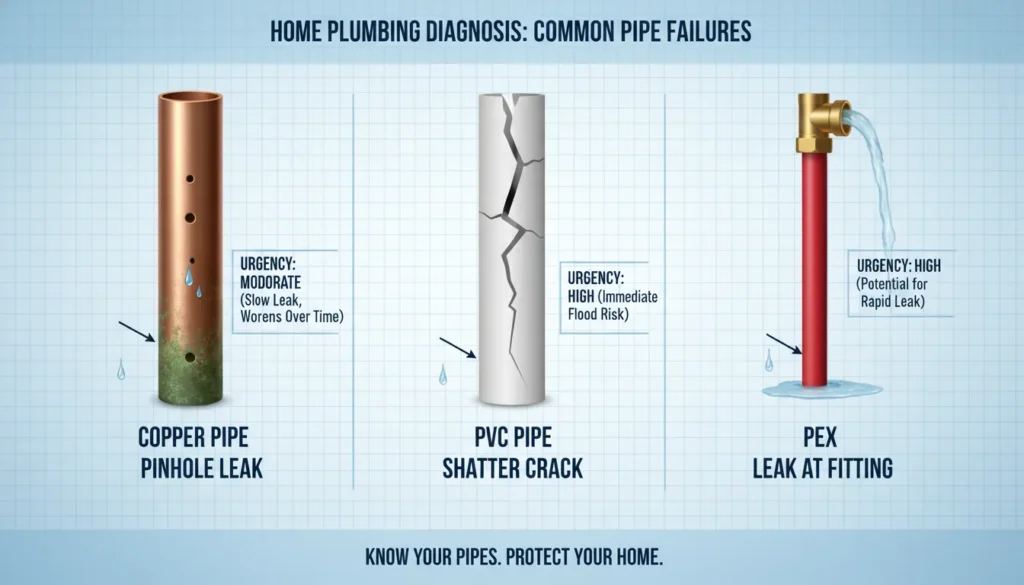
Early detection of a plumbing failure is the difference between a simple fix and a foundation-destroying flood. Different piping materials react differently to age, water pressure, and environmental factors. Recognizing these specific failure points is essential for every homeowner:
Copper Piping: While durable, copper is highly susceptible to pitting corrosion. This manifests as tiny green or white “crusty” spots on the pipe, eventually leading to high-velocity pinhole leaks that can spray water behind your drywall for weeks unnoticed.
PVC & CPVC Plastic: These materials are common in drain and cold-water lines. Over decades, the chemical structure of the plastic can become brittle. A sudden “shatter crack” along the length of the pipe is a common sign of failure, often caused by thermal expansion or excessive water pressure.
PEX Flexible Polyethylene: PEX is the modern standard due to its resistance to scale. However, it can fail prematurely if exposed to direct sunlight (UV degradation) or if poor-quality fittings cause a localized burst at the connection point.
What is the 1.414 rule in plumbing?
The 1.414 rule is a mathematical constant used by professional plumbers to calculate the “travel” length of a 45-degree pipe offset. In many homes, pipes must be redirected to bypass structural beams or vents. Since a 45-degree angle creates a right-isoceles triangle, the hypotenuse (the diagonal pipe) is always 1.414 times the length of the offset.
Technical Formula: >
$$Travel = Offset \times 1.414$$Example: If you need to move a pipe 10 inches to the side using 45-degree elbows, the diagonal pipe piece must be exactly 14.14 inches long to ensure a stress-free, leak-proof seal.
Advanced Sewer Line Repair & Replacement Without Excavation
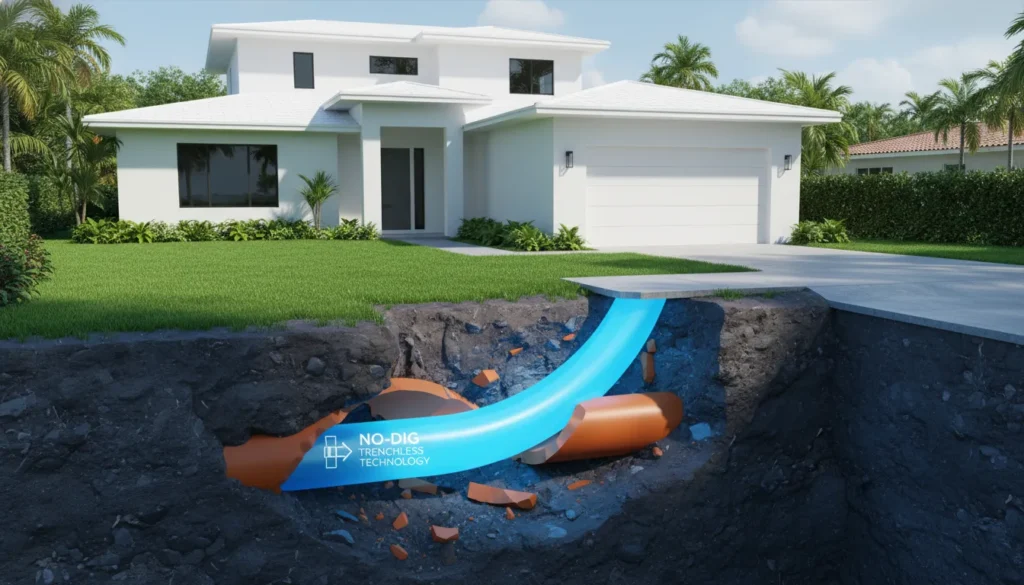
A collapsed or root-infested sewer line no longer requires a destroyed driveway or a ruined landscape. Modern plumbing engineering allows for “No-Dig” restoration, fixing your main lateral lines from the inside out. This specialized approach ensures a permanent, code-compliant fix with minimal property disruption.
The Modern Sewer Restoration Toolkit
HD Video Camera Inspections: Precision begins with visibility. A waterproof, high-definition camera is navigated through the sewer line to identify the exact location of cracks, “bellies” (sagging pipes), or invasive tree root clusters.
Professional Hydro-Jetting: Before a repair can be made, the pipe must be cleared. Hydro-jetting uses high-pressure water streams to scrub the interior walls of the pipe, removing years of grease, scale, and stubborn roots.
Trenchless Sewer Pipe Repair Sleeve: Also known as CIPP (Cured-In-Place Pipe), this involves inserting an epoxy-saturated “sleeve” into the damaged section. Once positioned, it is inflated and cured, creating a seamless, root-proof pipe-within-a-pipe that lasts for over 50 years.
The "No-Dig" Advantage: Why a Sewer Sleeve is the Smarter Choice
Choosing a trenchless solution over traditional excavation offers three primary benefits for any property owner:
Preservation of Property: Traditional methods require digging a 6 to 10-foot deep trench through your lawn, garden, or pavers. Trenchless technology usually requires only a single, small access point.
Structural Integrity: The seamless nature of a pipe sleeve eliminates joints. Since tree roots typically enter pipes through weak joints, a sleeve makes your sewer line virtually “root-proof.”
Significant Time Savings: While traditional excavation can turn a home into a construction site for a week, a trenchless “Sleeve” installation is typically completed in a single day, restoring your home’s functionality immediately.
How Much Does Sewer & Pipe Repair Cost in 2026?
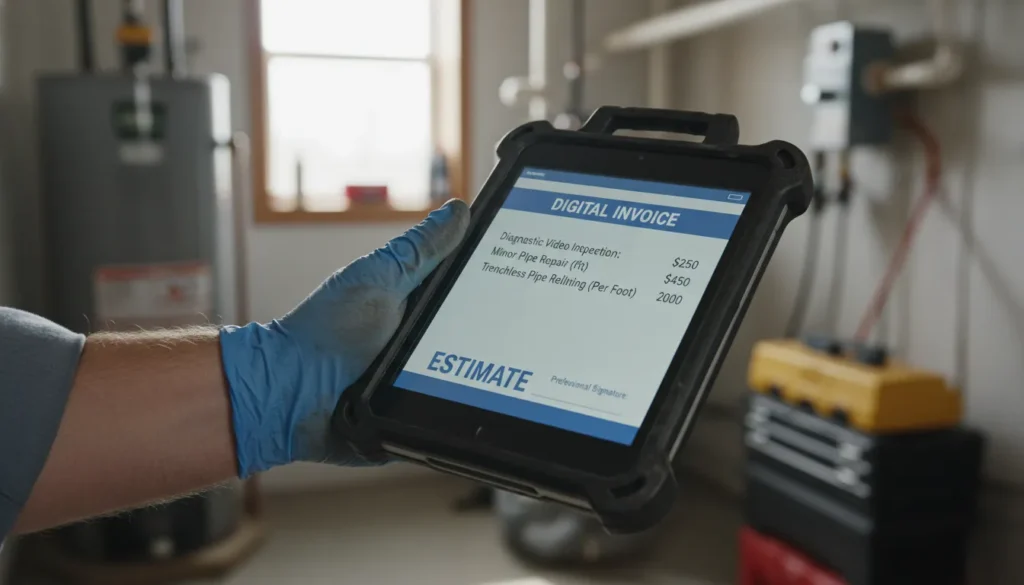
Budgeting for pipe repairs shouldn’t be a guessing game. While the final investment depends on the depth of the pipe and the severity of the damage, here are the standardized market rates for professional plumbing services in Miami:
| Service Type | Estimated Cost (Labor + Parts) |
|---|---|
| Minor Pipe Leak Repair | $250 – $450 |
| Main Sewer Line Repair | $1,500 – $4,000 |
| Trenchless Pipe Relining | $150 – $250 (per foot) |
| Emergency Leak Detection | $200 – $400 |
The 5-Step Professional Emergency Response Workflow
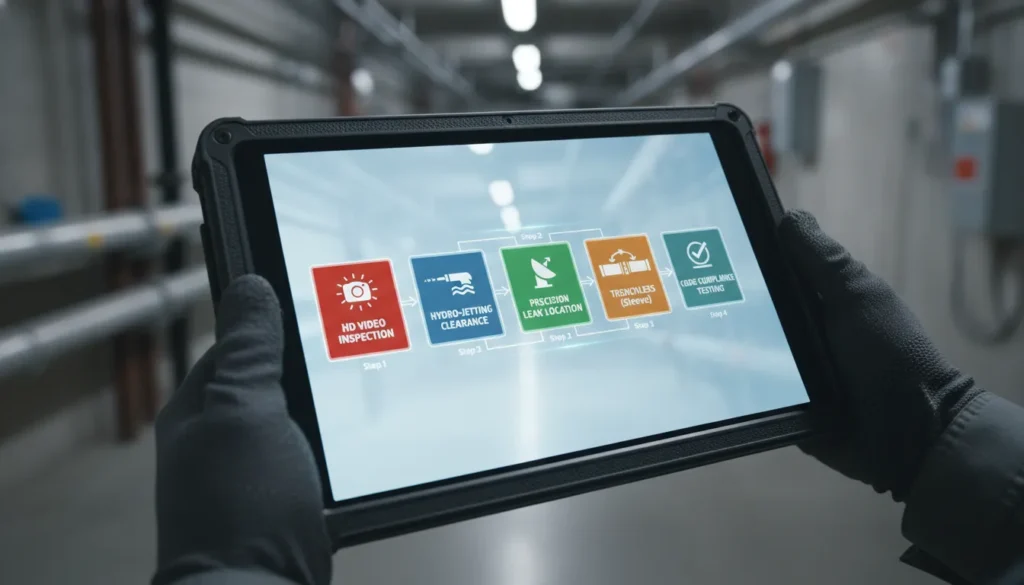
When a pipe failure occurs, every minute counts. A systematic approach is required to minimize property damage and ensure a permanent fix. Our process is engineered to move from diagnosis to a code-compliant solution within a specialized timeline:
Step 1: High-Definition Video Camera Inspection
Before any digging or cutting begins, a waterproof HD camera is inserted into the plumbing line. This allows for a real-time visual assessment of the pipe’s interior, identifying the exact nature of the failure—whether it is a crack, a collapsed joint, or tree root intrusion.
Step 2: High-Pressure Hydro-Jetting Clearance Phase
If the pipe is blocked or heavily scaled, we utilize Hydro-jetting technology. Using streams of water at pressures up to 4,000 PSI, we scrub the internal walls of the pipe. This removes grease, roots, and debris, ensuring a clean surface for the repair materials to bond correctly.
Step 3: Precision Leak & Depth Location
Using electromagnetic pipe locators and acoustic sensors, we map the exact path and depth of the underground line. This “Precision Mapping” ensures that if any access point is needed, it is placed with surgical accuracy, protecting your flooring and landscaping from unnecessary disruption.
Step 4: Trenchless Repair & Epoxy Sleeving
Once the line is prepped, a specialized epoxy-saturated liner (the “Sleeve”) is pulled into place. Using a process called “Inversion,” the liner is inflated against the old pipe walls and cured. This creates a brand-new, seamless, and structurally independent pipe inside the old one.
Step 5: Code Compliance & Final Pressure Testing
The final, most critical step is verification. We conduct a “Static Leak Test” or a “Pressure Test” to ensure the new system is 100% airtight and watertight. Every repair is cross-checked against local building codes to ensure your property remains compliant and safe.
Expert Answers to Common Pipe & Sewer Questions
Google often highlights the most direct and accurate answers to common plumbing queries. Below are the technical insights into the most frequently asked questions regarding residential pipe systems.
The most common plumbing items to fail are flexible supply lines and toilet flappers. Supply lines (the braided hoses connecting sinks and toilets to the wall) are under constant pressure and typically fail at the plastic nut or due to internal rubber degradation after 5–7 years. Toilet flappers are the leading cause of “silent leaks,” as the rubber seal warps over time due to chlorine in the city water.
Yes, licensed master plumbers are the primary professionals qualified to repair or replace main sewer lines. While some general contractors offer excavation, only a licensed plumber possesses the diagnostic tools—such as sewer cameras and hydro-jetters—and the specialized knowledge of local building codes to ensure the main line is properly graded and sealed.
The 135 rule refers to the maximum total change in direction allowed for a horizontal drainage pipe between cleanouts. According to most plumbing codes, you cannot exceed 135 degrees of total turn (e.g., three 45-degree elbows) without an accessible cleanout point. This rule ensures that a plumber’s snake or camera can navigate the line easily during future maintenance.
You can detect overcharging by looking for three things: a lack of visual evidence (refusing to show camera footage), a refusal to provide an itemized written estimate, and high-pressure “scare tactics” to prevent you from getting a second opinion. Reputable experts provide transparent, fixed pricing based on the specific linear footage or complexity of the repair.
In 2026, the average cost for a minor pipe repair ranges from $250 to $450. However, if the break is in the main sewer line or requires slab excavation, costs can scale from $1,500 to $4,000+. Trenchless relining typically costs $150–$250 per linear foot.
A Licensed Plumber is the qualified professional for pipe repair. For large-scale underground or municipal lines, a Pipefitter or a specialized Sewer Contractor may be required
Standard policies usually do not cover sewer lines due to “wear and tear.” However, if the damage is caused by a sudden, accidental event (like a tree falling), it might be covered. Most homeowners now add a “Service Line Lateral” endorsement for specific sewer coverage.
Dedicated Pipe & Sewer Solutions for Miami Homes and Businesses
Plumbing emergencies don’t stick to a schedule, and neither do we. Whether you are a homeowner in a historic district or a facility manager for a commercial complex, our team provides specialized care tailored to the unique infrastructure of South Florida.
We provide 24/7 emergency pipe repair across all major neighborhoods, including:
Miami & Downtown: Rapid response for high-rise condos and luxury apartments.
Coral Gables: Specialized care for historic homes with aging copper or galvanized pipes.
Coconut Grove & Pinecrest: Expert leak detection and trenchless sewer relining.
Doral & Hialeah: Heavy-duty commercial plumbing and industrial pipe maintenance.
No matter where you are located in the Greater Miami area, our fully-equipped trucks are stationed nearby to ensure a 1-hour response time for all urgent leaks and sewer backups.
Your Total Home Plumbing Partner
A burst pipe often leads to damaged fixtures or the need for a system-wide checkup. We don’t just fix the leak; we ensure your entire plumbing ecosystem is functioning at peak performance.
If your pipe failure was caused by a faulty fixture or if you’re looking to upgrade your kitchen or bathroom after a repair
- Location: Serving Miami, FL | Coral Gables | Doral | Coconut Grove
- Contact: Call for Emergency Service: +1 786 239 6529
- Status: ✅ Licensed, Insured, and 5-Star Rated
Excavation is just the first step; ensuring your entire infrastructure is built to last requires master-level plumbing. Discover our full suite of residential and industrial solutions on our main Professional Plumbing Services page.
