How Much Does a Plumbing Inspection Cost in 2026?
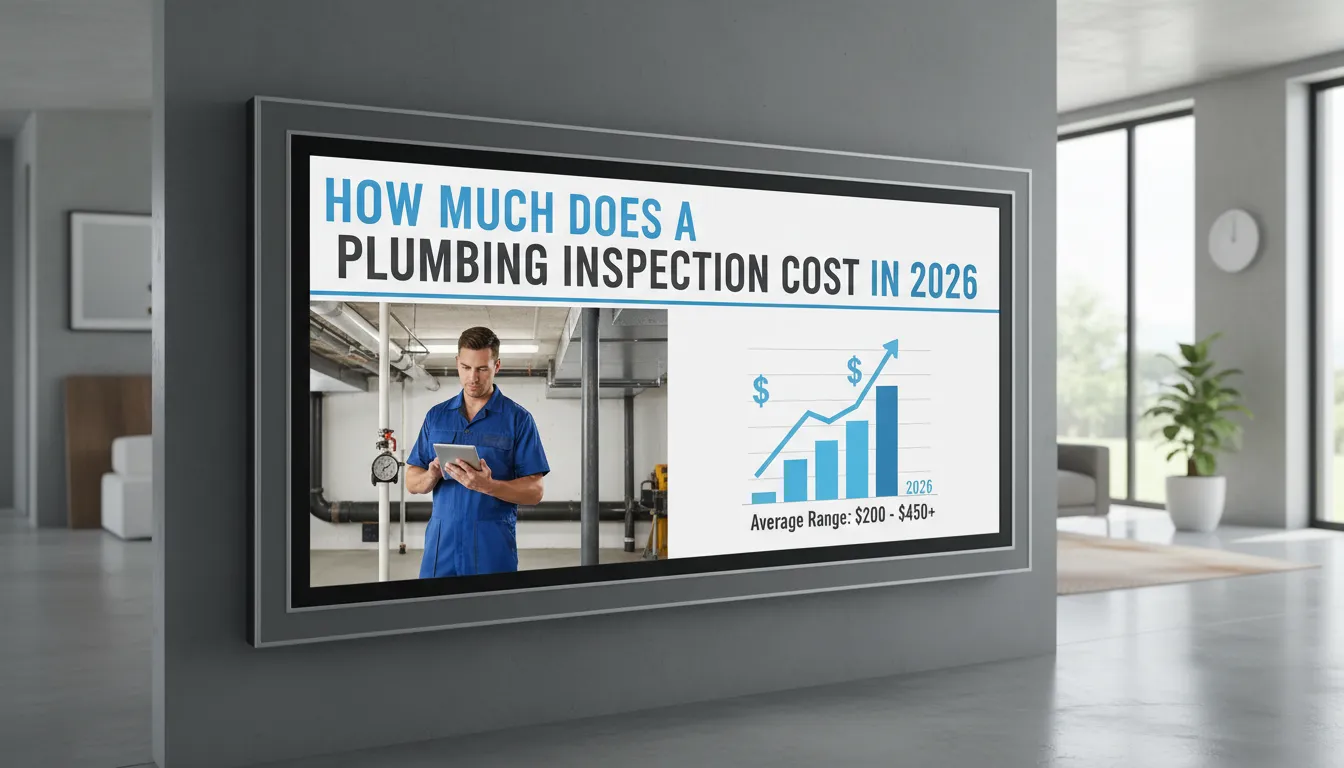
When it comes to maintaining your home, plumbing inspections are essential. A plumbing inspection helps you identify potential issues like leaks, clogs, and corrosion before they escalate into costly repairs. In fact, regular plumbing inspections can save you thousands of dollars in the long run by catching problems early.
In this guide, we’ll break down how much a plumbing inspection costs in 2026, explore the different types of inspections available, and discuss the factors that can impact the price. Whether you’re a homeowner looking to ensure your plumbing system is running smoothly or a homebuyer trying to avoid expensive surprises, understanding plumbing inspection costs is crucial.
Key takeaways:
Average cost ranges from $100 to $1,300 depending on the inspection type and property size
Plumbing inspections are an investment that can save you from costly repairs in the future
Factors such as home size, inspection type, and location can influence the final price
Factors Affecting Plumbing Inspection Costs
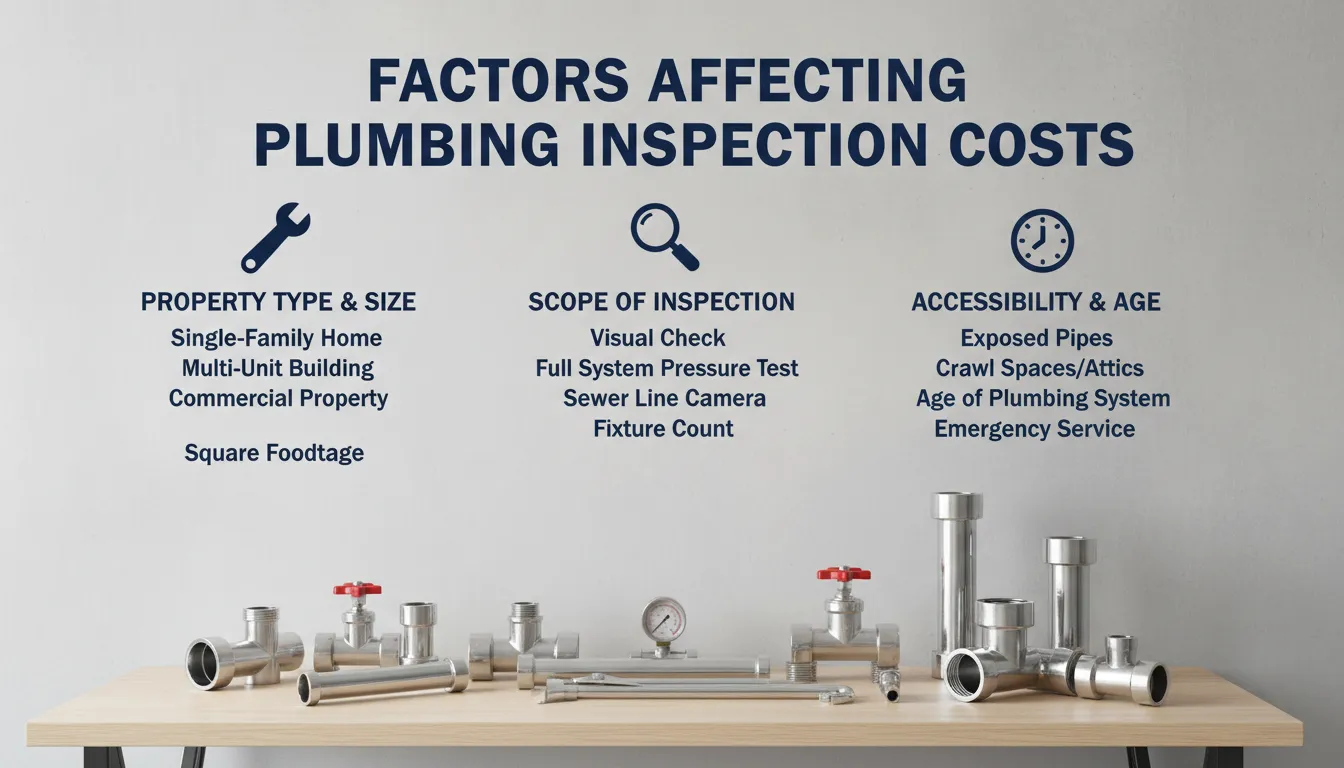
The cost of a plumbing inspection can vary significantly depending on several factors. Understanding these variables will help you determine what you’re paying for and why costs may differ from one service to another. Let’s explore the main factors that influence plumbing inspection prices.
1. Type of Inspection
There are different types of plumbing inspections, each with its own price range. The most common types include:
Visual Inspection: This is the most basic and affordable inspection. The plumber will visually check for visible issues, including leaks, damaged pipes, and water pressure problems. Cost typically ranges from $100 to $200.
Camera Inspection: A more detailed inspection, where a camera is inserted into the pipes to check for blockages, cracks, or other hidden issues. Camera inspections can cost anywhere from $300 to $1,100, depending on the extent of the inspection.
Combination Inspection: A combination of both visual and camera inspections, often the most thorough and recommended for homeowners looking to ensure their entire plumbing system is in good condition. This can range from $400 to $1,300.
Sewer Line Inspection: If you’re experiencing issues like slow drains or unusual smells, a sewer line inspection can help detect problems in the main sewer line. These inspections are usually priced between $300 to $500.
2. Property Size
The size of your home or property is another major factor in the cost of a plumbing inspection. Larger homes with more plumbing fixtures will require more time to inspect, and as a result, the cost will likely be higher. Small homes may cost less, typically around $100 to $300, while larger homes could range from $400 to $1,300.
3. Location
Where you live can significantly impact the cost of a plumbing inspection. In larger cities or areas with a higher cost of living, plumbing services are generally more expensive. Expect to pay more if you live in high-demand areas, such as New York City or San Francisco. However, smaller towns or rural areas might offer inspections at a lower price, as labor and travel costs are reduced.
4. Urgency
If you need an emergency plumbing inspection, expect to pay more. Many plumbers charge an extra fee for inspections that occur outside of regular business hours or on weekends. Emergency inspection costs can add an extra $100 to $500, depending on the situation and the plumber’s availability.
What’s Included in a Plumbing Inspection?
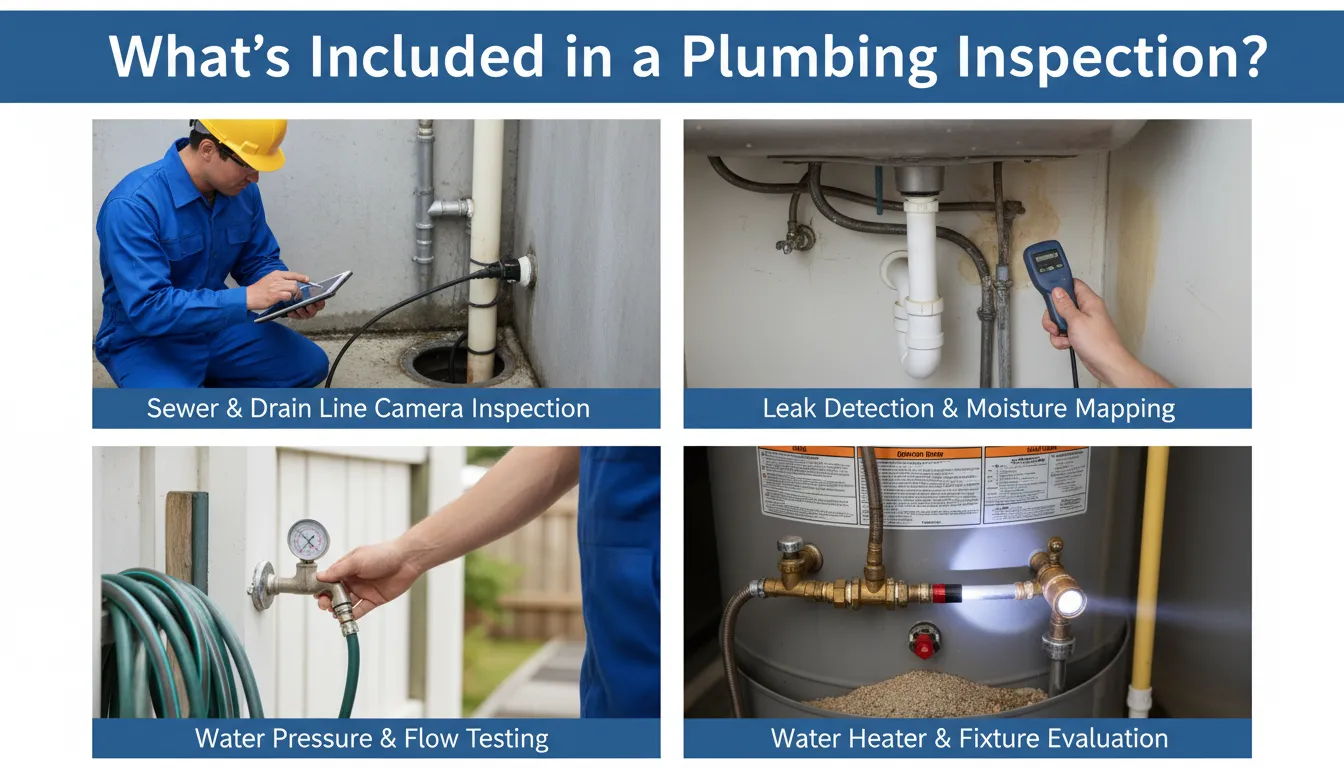
A plumbing inspection is more than just a quick check of your home’s pipes. Depending on the type of inspection, a licensed plumber will assess a variety of plumbing systems and fixtures to ensure everything is in good working order. Here’s a breakdown of what’s typically included during a plumbing inspection:
1. Water Supply System
The plumber will check the water supply system to ensure that all pipes, fittings, and fixtures are functioning properly. This includes:
Water Lines: Inspecting visible water pipes to check for leaks, corrosion, or damage.
Water Pressure: Testing the water pressure to ensure it’s within a safe and functional range.
Shut-Off Valve: Checking the main water shut-off valve to ensure it’s easily accessible and in good working condition.
2. Drainage System
Your plumbing inspection will also include a thorough check of your drainage system to ensure that everything is draining properly and that there are no blockages or damage. The plumber will inspect:
Drains: Checking all drains, including those in sinks, showers, and tubs, for proper flow and signs of clogs.
Pipes: Inspecting the pipes connected to the drains for any visible issues like leaks, cracks, or rust.
Sewer Line: Running a camera inspection through the sewer line to check for blockages, tree roots, or damage that could cause future problems.
3. Water Heater
Your water heater is a critical part of your plumbing system, and an inspection will ensure it’s functioning properly. The plumber will look for:
Leaks: Checking for any leaks or signs of water pooling around the base.
Pressure Relief Valve: Testing the pressure relief valve to ensure it’s working to prevent excessive pressure buildup.
Sediment Buildup: If needed, the plumber may flush the water heater to remove sediment and ensure it’s running efficiently.
4. Toilets and Faucets
The plumber will check toilets, faucets, and other water-using appliances to ensure there are no leaks or issues. This includes:
Toilets: Checking for leaks around the base and ensuring the flush mechanism is working properly.
Faucets: Testing faucets for leaks and checking the flow of water.
Seals and Gaskets: Inspecting the seals and gaskets around plumbing fixtures to ensure there are no leaks.
5. Outdoor Plumbing
If you live in an area where the temperature drops below freezing, the plumber will check your outdoor plumbing to ensure it’s properly protected. This includes:
Hose Bibs: Inspecting outdoor hose bibs (faucets) for leaks or damage.
Winterization: Ensuring outdoor pipes are properly winterized to prevent freezing during colder months.
6. Sewer Line (Camera Inspection)
If included in the inspection, the plumber may run a camera through the sewer line to inspect its condition. This is particularly important if you have a history of slow drains or notice unusual smells. The plumber will check for:
Tree Root Intrusion: Tree roots can invade sewer pipes, causing blockages and damage. A camera inspection helps identify this issue early.
Blockages and Debris: Checking for clogs or debris that may be blocking the sewer line.
Corrosion or Cracks: Inspecting the condition of the sewer pipe to ensure there are no cracks or corrosion that could lead to future problems.
How to Hire a Professional Plumbing Inspector
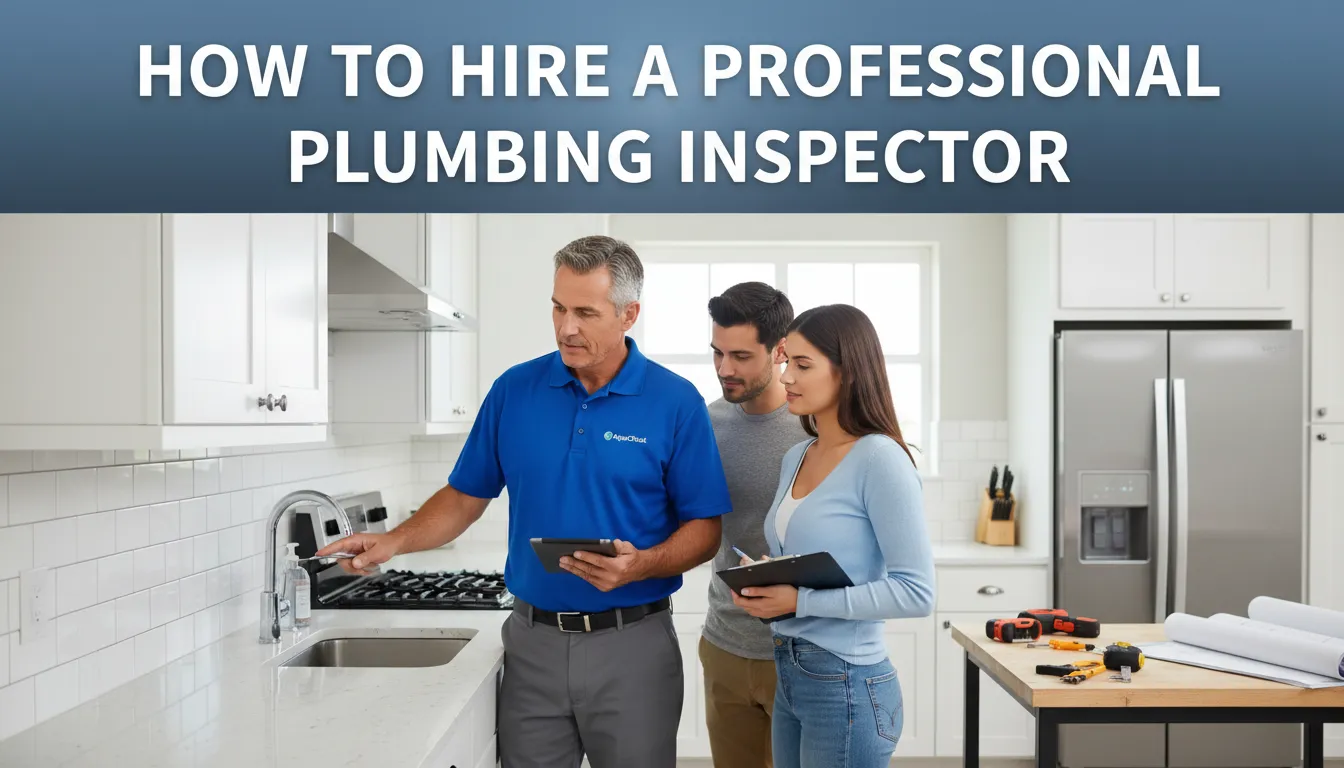
Hiring the right plumbing inspector is just as important as having the inspection itself. A qualified, experienced inspector will ensure a thorough assessment of your plumbing system and help identify potential issues before they become expensive problems. Here’s how you can ensure you’re hiring the right professional for the job:
1. Verify Licensing and Certifications
A reputable plumbing inspector should be licensed and certified to carry out inspections. This ensures they meet local and national standards for plumbing inspection. Here are some key things to look for:
State Licensing: Make sure the inspector is licensed by your state’s plumbing board (for example, a C-36 Plumbing Contractor License in California).
Specialist Certifications: Look for certifications from organizations like the International Association of Plumbing and Mechanical Officials (IAPMO) or the American Society of Home Inspectors (ASHI). These certifications show that the inspector has undergone rigorous training and meets professional standards.
2. Ask About Experience and Specialization
Not all plumbing inspectors are the same, so it’s essential to ask about their experience and the types of plumbing systems they specialize in. Here are a few questions to ask:
How many years of experience do you have in plumbing inspections?
Have you inspected homes similar to mine?
Do you have experience inspecting specific plumbing systems like sewer lines, water heaters, or old pipes?
An inspector with more experience will likely be able to identify potential issues more quickly and accurately.
3. Get Multiple Quotes
It’s always a good idea to get estimates from at least three different inspectors before making a decision. Here’s what you should compare:
Cost: Ensure the price aligns with the average cost for your area and the type of inspection you need.
Services Included: Confirm what’s covered in the inspection and ask for a breakdown of services. Some inspectors offer basic visual inspections, while others may provide more comprehensive camera inspections or sewer line checks.
4. Look for Reviews and References
Before committing to a plumbing inspector, check online reviews and ask for references. Reviews from past clients can provide valuable insights into the quality of service and reliability of the inspector. Ask for references from previous customers and speak to them about their experience with the inspector. This can help you gauge the inspector’s professionalism and thoroughness.
5. Ask About Insurance and Liability
Plumbing inspections carry some risk, especially if the inspector needs to access hard-to-reach areas. To protect yourself and your property, ensure the inspector carries liability insurance. This will cover any accidental damage that may occur during the inspection. Don’t hesitate to ask to see proof of insurance before hiring them.
6. Understand the Inspection Process
A good plumbing inspector will explain the inspection process before starting. Make sure you understand:
What will be inspected: Ask for a detailed explanation of what the inspection will cover.
The inspection report: Will the inspector provide a written report with findings and recommendations? Will they include photos or videos, especially for hard-to-see areas like sewer lines?
Costs: Confirm the cost of the inspection upfront, including any additional fees for special equipment like cameras or after-hours service.
Plumbing Inspection vs. Other Inspections
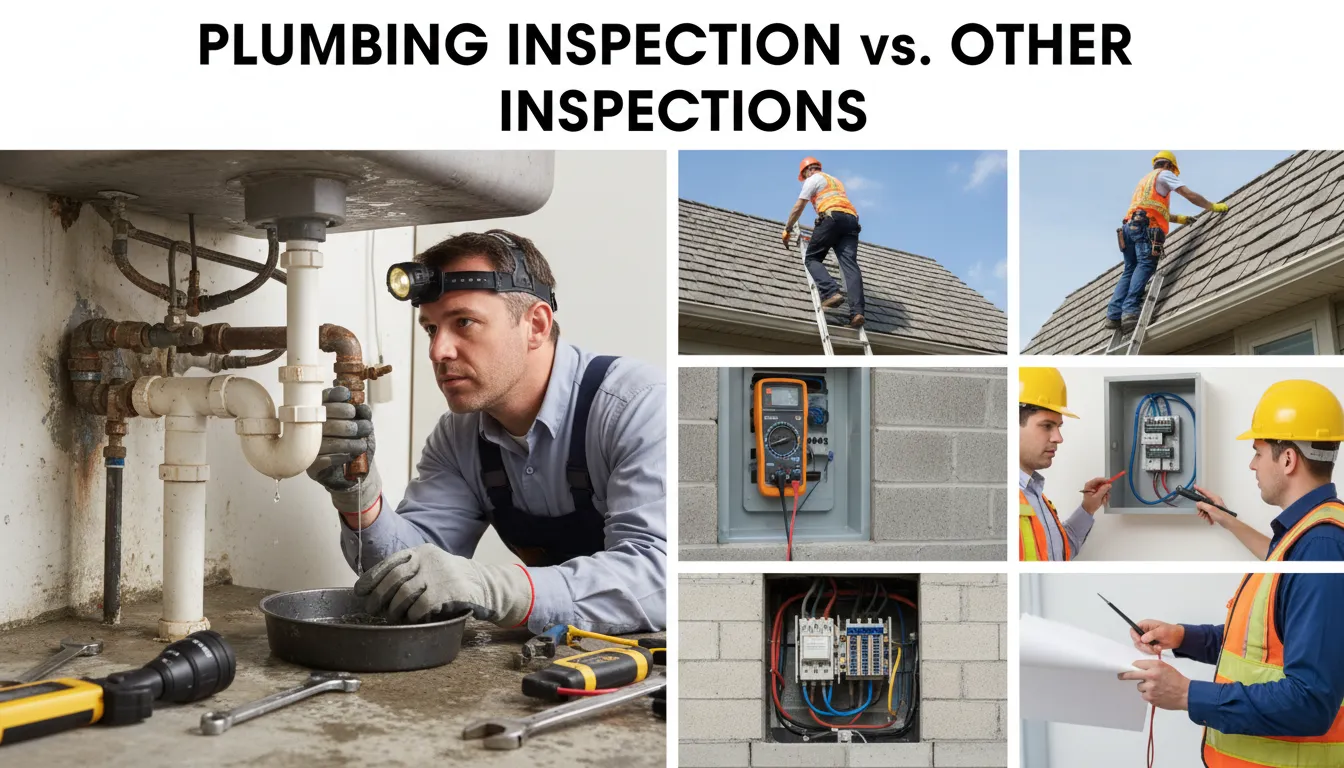
When buying a home or maintaining an existing one, you may come across different types of inspections, such as general home inspections and plumbing inspections. While both are important, it’s crucial to understand the difference and why a specialized plumbing inspection is essential. Here’s how plumbing inspections compare to other types of property inspections:
1. General Home Inspections
A general home inspection is usually part of the home-buying process, and it provides an overall evaluation of the property’s condition. During a home inspection, the inspector will typically look at:
Structural elements: Foundation, roof, walls, and windows
Electrical systems: Wiring, outlets, and circuit breakers
HVAC systems: Heating and cooling
Plumbing: A basic visual inspection of the plumbing system
However, home inspectors do not typically perform a thorough plumbing inspection, especially for hidden areas like the sewer line or water supply pipes within walls or under floors. In fact, many general home inspections only cover visible plumbing — and if there are issues deeper within the system, such as a clogged sewer line or pipe corrosion, they may go unnoticed.
Plumbing inspections, on the other hand, are more specialized and focused exclusively on your home’s plumbing system. A plumbing inspector will use cameras, pressure tests, and other tools to inspect areas that a general home inspector might miss.
2. Plumbing Inspection vs. Sewer Line Inspection
A sewer line inspection is typically an add-on service that is often recommended when there are signs of slow drainage, foul odors, or other plumbing issues. While a plumbing inspection covers your entire system, a sewer line inspection specifically focuses on:
Main sewer line health
Tree root intrusion or blockages
Pipe damage (such as cracks or rust)
Sewer line inspections can be done with a specialized camera inserted into the line to check its condition from the inside. Many plumbers recommend a sewer line inspection if your home is older or if the plumbing system has not been checked for a while.
3. Why Plumbing Inspections Are Essential
While general home inspections can provide a broad picture of a property’s condition, plumbing inspections are essential for uncovering specific problems within your plumbing system that could lead to:
Hidden leaks: Leaks in hidden pipes can cause mold, water damage, and costly repairs if not addressed.
Sewer line issues: Blocked or damaged sewer lines can lead to sewage backups or worse.
Undetected corrosion: Corrosion in pipes, especially older pipes, can lead to leaks, water quality issues, and even bursts.
Having a detailed plumbing inspection ensures you don’t miss these critical problems that could be costly to repair later.
4. Plumbing Inspection Cost vs. Repair Costs
While a plumbing inspection might cost anywhere from $100 to $1,300, the cost of plumbing repairs can be much higher, especially if issues are left undetected. For example:
Unclogging drains: $100–$275
Water heater repairs: $150–$1,300
Sewer line repairs: $150–$3,800
Pipe replacement: $500–$2,000
By investing in a plumbing inspection up front, you could prevent having to pay much larger repair bills down the road.
Plumbing Inspection FAQs
Plumbing inspections can be confusing if you’re not familiar with the process, and many homeowners and buyers have common questions. In this section, we’ll address the most frequently asked questions to help clear up any confusion and provide you with the information you need to make an informed decision.
1. How Long Does a Plumbing Inspection Take?
A plumbing inspection typically takes between 1 to 3 hours, depending on the size of your home, the complexity of your plumbing system, and whether any issues are identified during the inspection. For a small home with minimal plumbing, the inspection may be quicker, while a larger property or more complex system may require more time.
2. Is a Plumbing Inspection Worth It Before Buying a House?
Yes, absolutely! A plumbing inspection is one of the most important steps in the home-buying process. While a general home inspection may cover basic plumbing, it won’t provide the in-depth analysis that a specialized plumbing inspection can offer. A plumbing inspection can uncover hidden issues, such as:
Leaky pipes
Sewer line problems
Outdated or corroded pipes
Identifying these issues before purchasing can save you from unexpected repair costs after closing, making it a valuable investment.
3. Can I Get a Free Plumbing Inspection?
While some plumbing companies offer free plumbing inspections, these are usually basic visual checks or limited to small issues like leaky faucets. Free inspections are often used as promotional offers or tied to repair services. For a thorough and accurate evaluation of your plumbing system, it’s best to hire a licensed professional to conduct a full inspection, which may include camera inspections for sewer lines or hidden pipes.
4. What Happens if the Inspection Finds a Problem?
If the plumbing inspection uncovers any issues, the inspector will provide a detailed report outlining the problems and their severity. Depending on the problem, you can take the following steps:
Request repairs: You may choose to have the issues repaired immediately by the same plumbing company.
Negotiate with the seller: If you’re in the process of buying a home, you can use the inspection report to negotiate with the seller for repairs or a price reduction.
Plan for future repairs: Some issues may not need immediate attention but should be addressed in the near future. The inspection report will give you a timeline for when repairs should be made.
5. Does Homeowners Insurance Cover Plumbing Inspections?
Typically, homeowners insurance does not cover the cost of plumbing inspections. Plumbing inspections are considered a preventative measure, and most insurance policies only cover plumbing repairs when damage has already occurred. However, if an issue is found during the inspection that results in significant damage (such as a burst pipe), your homeowner’s insurance may cover the repair costs, depending on your policy.
6. How Much Does a Sewer Line Inspection Cost?
The cost of a sewer line inspection typically ranges from $300 to $500, depending on your location, the length of the sewer line, and whether the inspection requires advanced tools like a camera. A sewer line inspection is often recommended if you notice slow drains, strange odors, or suspect there may be a blockage or damage to the sewer line. It’s an essential part of a comprehensive plumbing inspection, especially for older homes or those with large trees near the property.
Conclusion:
Plumbing inspections are essential to maintaining a healthy home, ensuring that your plumbing system remains in optimal condition. The cost of a plumbing inspection can vary depending on the type, size of your property, and location, but the investment is well worth it. By identifying issues early, you can avoid costly repairs and ensure that your plumbing system works efficiently for years to come.
Ready to schedule your plumbing inspection? Call EZ Plumbing Repair Services now to get started and secure your home from unexpected plumbing issues!