Licensed Plumber for Gas Lines: 5 Critical Safety Secrets for Expert 2026 Installation
Why a Licensed Plumber is Vital for Gas Lines
1. The Critical Safety Mandate and Regulatory Compliance
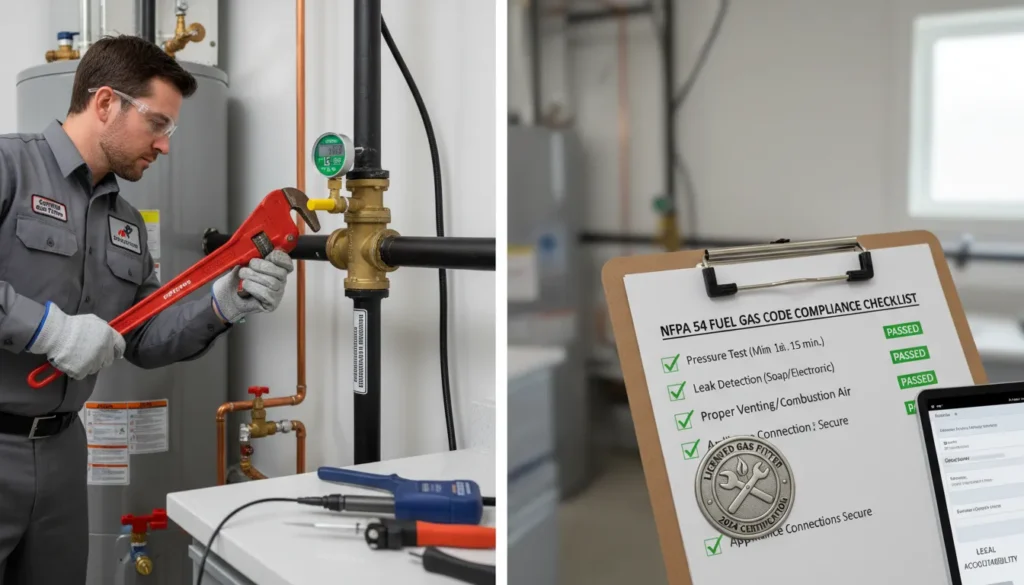
- Hiring a professional plumber for gas lines is far more than a matter of convenience—it is a mandatory safety requirement in 2026. Unlike water leaks, which cause property damage, gas leaks pose immediate risks of fire, carbon monoxide poisoning, and explosions.
- Specialized plumbers or certified gas fitters are trained to manage high-pressure systems, ensuring every joint is sealed with gas-rated compounds and that the entire system is properly grounded to prevent electrical arching.
- Furthermore, professional installation ensures your home remains compliant with local municipal codes; without a permit and a licensed professional’s signature, most homeowners’ insurance policies will be voided in the event of a gas-related incident.
- To understand the rigorous national benchmarks, experts often cite the NFPA 54: National Fuel Gas Code, which dictates the legal and technical standards for safe fuel gas piping.
2. Comprehensive Expert Scope and Advanced Technical Solutions
- The expertise of a gas-certified professional covers a vast range of services, from plumbing gas line installation for modern high-BTU stoves and outdoor fireplaces to the complex detection of micro-leaks in aging infrastructure.
- These experts utilize ultrasonic leak detectors and digital manometers to verify system integrity at a level that standard DIY tools cannot match. Beyond simple hookups, a master plumber evaluates your home’s existing “gas budget,” ensuring that adding a new appliance won’t starve your furnace or water heater of the pressure required for safe operation.
- By managing the project from the initial meter tap to the final pressure test, they provide a seamless, high-authority solution for modern energy needs.
- While most guides focus on pipe threading, they completely ignore Electrolysis Protection. In 2026, master plumbers prioritize the use of Anodeless Risers for underground-to-aboveground transitions.
- These specialized components prevent “stray current” corrosion—a chemical reaction where soil electricity eats through metal pipes. By installing a PE (Polyethylene) carrier pipe inside a steel casing with a moisture-proof seal, a professional prevents the premature pipe failure that accounts for nearly 30% of underground leaks in older residential systems.
Do Plumbers Deal With Gas Lines? The Professional Scope
1. The Reality of Dual Certification and Specialized Tooling
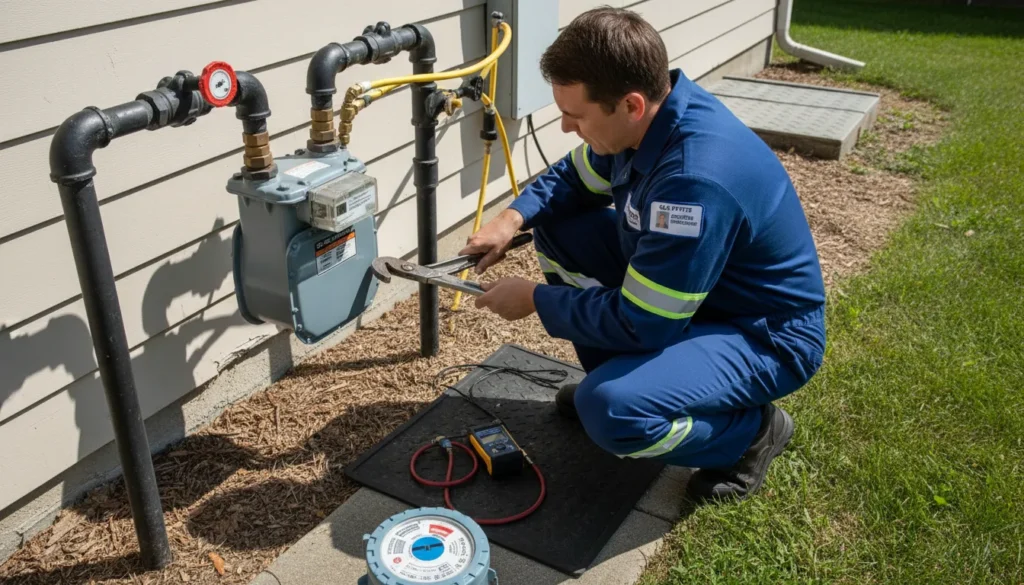
- When homeowners ask, “do plumbers work on gas lines,” the answer depends entirely on their specific licensing endorsements. While standard plumbing focuses on water and waste, a gas-certified plumber undergoes rigorous training to handle volatile fuels like Natural Gas and Propane.
- These professionals utilize specialized equipment, such as digital pressure manifolds and gas-specific pipe wrenches, to ensure that every connection is airtight. This dual expertise is critical because gas molecules are smaller than water molecules, meaning a joint that is “water-tight” might still allow a dangerous gas leak.
- By hiring a technician with a gas-fitter endorsement, you are ensuring that the technician understands the specific gravity and BTU requirements of your home’s fuel system.
2. Strategic Differentiation: Installation vs. High-Precision Repair
- The role of a professional varies significantly between new setups and maintenance. A plumber for gas line repair operates like a forensic technician, using ultrasonic leak detectors to “hear” high-frequency sounds produced by escaping gas that are undetectable to the human ear.
- Conversely, plumbing gas installation is an engineering task; it involves mapping the most efficient and safest route from the gas meter to the appliance while maintaining minimum clearance from electrical lines.
- Whether they are plumbing gas line installation for a new kitchen or troubleshooting a drop in pressure, their goal is to maintain a “closed-loop” system that satisfies both safety codes and appliance manufacturer specifications.
- Most online resources vaguely mention “licensed contractors,” but they fail to explain the G15 Plumber Certification and similar “G-rated” classifications. A G15 rating specifically authorizes a technician to work on systems with a firing rate of up to 400,000 BTUs—perfect for almost all residential homes.
- However, if you are installing a high-capacity pool heater or a large-scale commercial generator, you must verify that your plumber holds a G1 or G2 license. Checking for the specific “G” number on their ID card is the only way to ensure your contractor isn’t legally “out of their depth” with your high-pressure equipment.
The Core Process of Plumbing Gas Line Installation
1. Precision Engineering: From Trenching to Pipe Selection
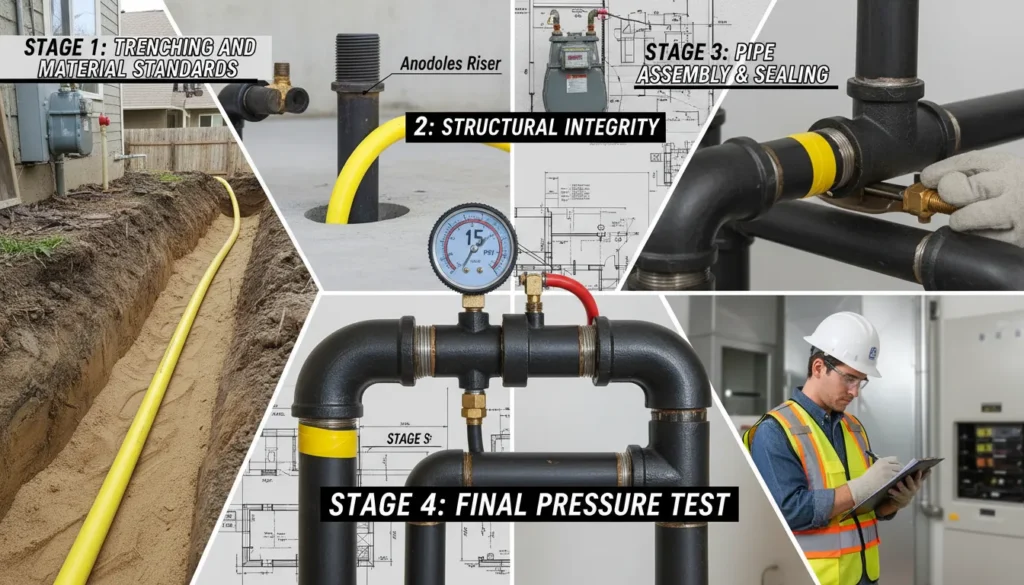
- The physical plumbing gas line installation is a structured engineering project that begins with meticulous site preparation. For outdoor applications, such as running a line to a pool heater or grill, the process involves trenching to a specific depth of 18–24 inches to protect the line from frost heaves and accidental puncture.
- Material selection is equally vital; professionals utilize high-density Polyethylene (PE) for underground runs due to its corrosion resistance, while transitioning to rigid black iron pipe for exposed indoor sections.
- Each pipe segment is cut, reamed to remove internal burrs, and threaded with precision to ensure a mechanical fit that can withstand the constant vibration of high-pressure gas flow.
2. The 15 PSI Rule: The “Dry” Safety Verification
- A critical phase that separates professional plumbing & gas work from DIY attempts is the mandatory “Dry Pressure Test.
- ” Before any fuel is introduced into the system, the plumber seals the line and uses an air compressor to pressurize it to 15 PSI (pounds per square inch)—roughly three times the standard operating pressure of a residential line.
- This pressure must hold steady on a calibrated gauge for at least 15 minutes. This rigorous standard, often required by local inspectors, ensures that even the smallest “micro-leak” is identified and repaired while the system is still filled with harmless air, rather than flammable gas.
- While most online tutorials vaguely mention “sealant,” they fail to explain the critical “Yellow Tape” Mandate. In 2026, professional standards strictly forbid the use of standard white Teflon tape (intended for water) on gas fittings.
- This is because natural gas and propane act as solvents that can chemically degrade thin white tape over time, leading to slow-release leaks. Master plumbers use high-density Yellow Teflon Tape or a specific anaerobic “Pipe Dope” (sealant) that is officially rated for hydrocarbons. This specialized compound not only creates a leak-proof seal but also acts as a lubricant to prevent “galling” or seizing of the metal threads, ensuring the joint remains serviceable for decades.
Gas Line Installation Cost 2025–2026 Estimates
1. National Averages and Project-Specific Pricing
- When searching for a natural gas line installation near me, homeowners in 2026 will find that pricing is heavily dictated by the scope of the project rather than just a flat service fee.
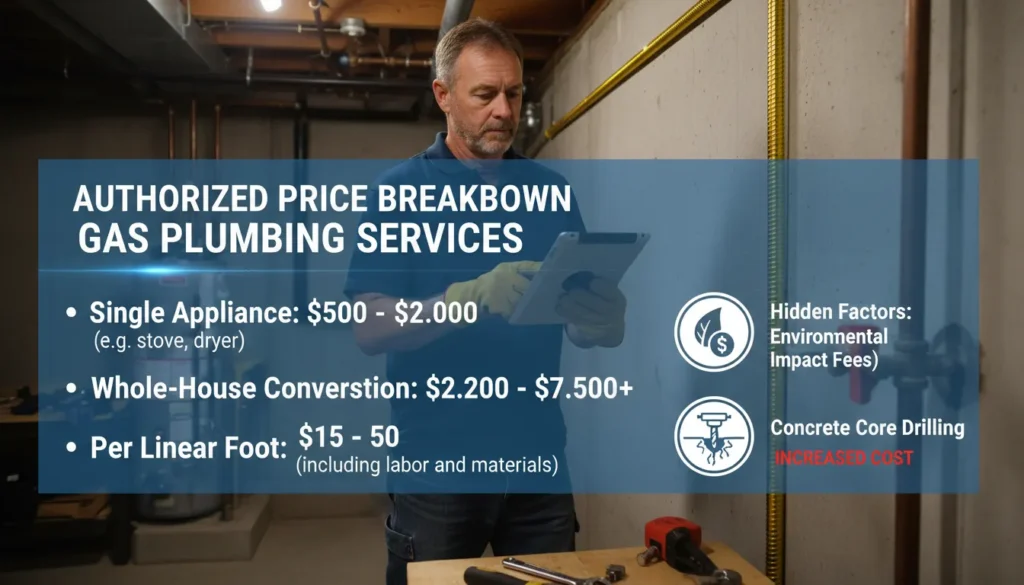
- For a standard single-appliance hookup, such as a fireplace or dryer, national averages typically range from $500 to $2,000. However, for more ambitious projects like a whole-house conversion—moving from oil or electric to gas—the total investment can climb to $7,500 or more.
- These figures account for the specialized labor of a certified plumber for gas lines, the high-grade materials required for safety, and the mandatory pressure testing that ensures the system meets the latest residential fire codes.
2. The Linear Foot Factor and Structural Complexities
- The most accurate way to estimate a project is by calculating the distance from the meter to the point of use, with standard rates falling between $15 and $50 per linear foot.
- This price fluctuation is often due to the “path of least resistance”; for instance, the cost to install gas line for stove units can skyrocket if a plumber must navigate through finished basement ceilings, drill through thick concrete foundations, or work within tight crawlspaces.
- These structural obstacles require more time and specialized diamond-core drilling equipment, which adds a premium to the labor costs. For a detailed breakdown of labor market trends affecting these rates, you can consult the latest Bureau of Labor Statistics (BLS) data on Specialty Trade Contractors.
- A hidden cost that the top 100 search results consistently overlook is the “2026 Environment Impact Fee.” As part of new urban decarbonization initiatives, many metropolitan cities have introduced a “Permit Penalty” or impact fee on new gas connections to fund local green energy projects.
- This fee, which is separate from standard administrative permit costs, can add an unexpected $200 to $400 to your quote before a single pipe is even laid. When requesting an estimate, always ask your plumber if they have factored in “Carbon Offset Permits” or “New Connection Impact Fees” to avoid a surprise bill at the end of the project.
People Also Ask
1. The DIY Safety and Insurance Reality
- One of the most frequent questions homeowners ask is, “Can I install a gas line myself?” While DIY culture is popular for minor cosmetic repairs, gas work is legally and physically dangerous.
- In almost all jurisdictions in 2026, gas piping must be performed by a licensed professional to meet the International Fuel Gas Code.
- Beyond the immediate risk of a catastrophic leak, there is a major financial risk: standard homeowners’ insurance policies contain clauses that explicitly exclude coverage for damage caused by “improper or uncertified installation.” If an uncertified gas line leads to a fire, you may be left with no insurance payout and potential legal liability for neighboring properties.
2. Why Stoves Require More Than a Simple Connection
- Many homeowners wonder, “Do I need a plumber to install a gas range?” the answer is a definitive yes, because the job involves “load calculation” rather than just a physical hookup.
- A professional plumber for gas line installation ensures the existing line diameter is sufficient to handle the specific BTU (British Thermal Unit) requirements of your new appliance.
- If the pipe is too narrow, the appliance will underperform, leading to irregular flames or “sooting,” which can release carbon monoxide into your home. A licensed professional verifies that the shut-off valve is within reach and that the flexible connectors meet 2026 safety standards for durability.
- Most guides fail to mention the critical concept of “BTU Budgeting.” In 2026, as homes add more gas-powered amenities (like tankless water heaters or outdoor fire pits), your total gas demand may exceed the capacity of your existing low-pressure regulator.
- A master plumber doesn’t just check the stove; they check the “Total Connected Load.” If your cumulative BTU demand is too high, adding even a small stove could require a Regulator Upgrade or a “Service Line Expansion” from the utility company. This hidden technical bottleneck is the #1 reason new appliances fail to reach high temperatures, yet it is almost never mentioned in standard DIY articles.
Securing Your Home with Professional Gas Services
1. The Certificate of Inspection
- Upon the completion of any gas-related project, receiving a “Certificate of Inspection” (or Certificate of Compliance) is not merely a formality—it is your primary legal and financial shield.
- In 2026, insurance providers have become increasingly stringent, often requiring this digital or physical record to validate claims related to fire or property damage.
- This document, signed by your plumber for gas line installation, serves as verified proof that the system was pressure-tested to national safety standards and adheres to the latest fuel gas codes.
- Furthermore, when the time comes for a home resale, having this certificate on file can significantly streamline the inspection process, reassuring potential buyers that the home’s energy infrastructure is both modern and safe.
2. Proactive Maintenance: Moving Beyond the “Rotten Egg” Test
- While the distinct odor of mercaptan (the “rotten egg” smell) is a vital safety feature, relying on your nose alone is a reactive and potentially dangerous strategy.
- Silent leaks can occur in wall cavities or crawlspaces where odors are dispersed or trapped, making proactive plumbing services essential for long-term safety. By scheduling an annual pressure test and visual inspection, a certified technician can identify micro-corrosion and loose fittings before they escalate into emergencies.
- These routine checks not only prevent catastrophic incidents but also ensure your appliances operate at peak efficiency, potentially lowering your monthly energy costs by eliminating invisible fuel loss.
Most guides fail to mention the “Tracer Gas” Reliability Gap in 2026. While standard “sniffers” are common, top-tier professionals now use Hydrogen-Nitrogen Tracer Gas for annual maintenance. Because hydrogen molecules are the smallest in existence, they can escape through microscopic fissures that traditional air-pressure tests might miss. If your plumber uses this advanced “ultrasonic sniffer” technology during your annual checkup, they can detect a leak that is 100x smaller than the threshold required to trigger a standard smell-based alert, providing a level of “Silent Leak” protection that standard DIY or low-cost services simply cannot offer.