- Home
- Plumber Miami FL
- Common Plumbing Problems in Miami
Common Plumbing Problems in Miami Homes and How to Prevent Them
Learn what causes leaks clogs low water pressure and sewer issues in Miami homes and know when to call a licensed plumber
Miami homes commonly face plumbing problems such as clogged drains, hidden leaks, low water pressure, running toilets, water heater issues, and sewer line backups. Some problems start small, like a slow drain or dripping faucet, but can quickly turn into water damage, mold growth, or costly repairs if ignored.
Miami’s coastal climate, high humidity, hard water, and aging plumbing systems make these issues more common than in many other areas. Older homes often deal with pipe corrosion, mineral buildup, and sewer line wear, while heavy rain and high groundwater can put extra pressure on drainage systems and underground plumbing.
Why Plumbing Problems Are More Common in Miami
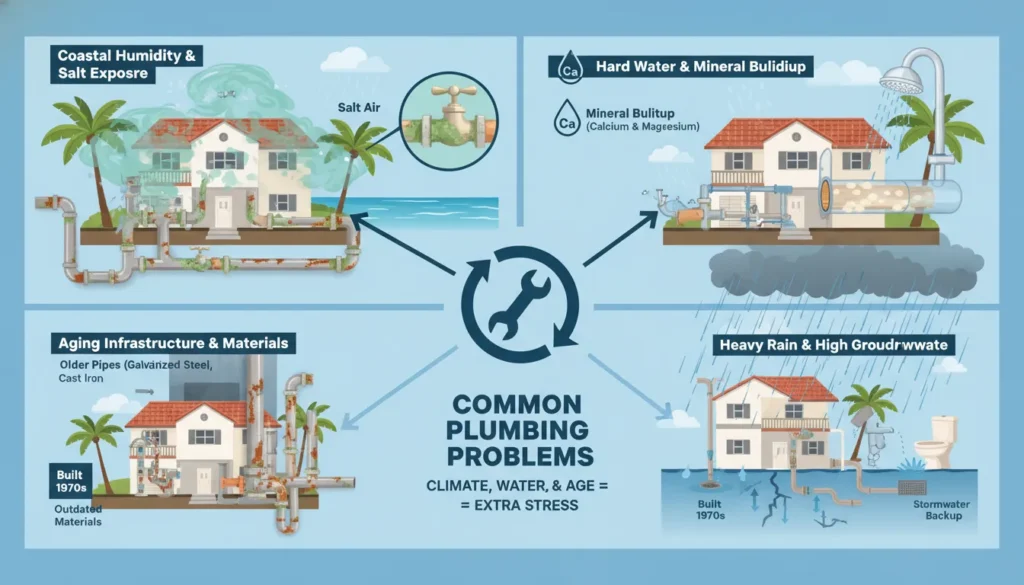
Miami’s plumbing systems face conditions that can shorten pipe life and increase the chance of leaks, blockages, and drainage problems. Climate, water quality, soil conditions, and the age of many residential plumbing systems all play a role in how often plumbing issues appear and how quickly they become serious.
Coastal humidity and salt exposure can speed up pipe wear
Miami’s coastal air carries moisture and salt that can gradually affect metal plumbing components, especially in older homes. Over time, this exposure can weaken copper, galvanized, and other metal pipes, leading to corrosion, pinhole leaks, and reduced pipe strength. Areas with poor ventilation or hidden plumbing spaces often show damage earlier because moisture remains trapped for longer periods.
Hard water can lead to mineral buildup inside plumbing systems
Minerals naturally present in water can collect inside pipes, faucets, showerheads, and water heaters over time. This buildup narrows water pathways, reduces pressure, and forces plumbing fixtures to work harder than normal. In homes where scaling continues for years, mineral deposits can also affect appliance efficiency and shorten the life of valves, cartridges, and heating components.
Older Miami homes often have aging or outdated pipes
Many older homes in Miami still operate with plumbing materials that are more vulnerable to corrosion, internal buildup, and wear. Cast iron sewer lines, galvanized supply pipes, and aging fittings often become less reliable as they age. Even if there are no visible leaks, internal deterioration can restrict water flow, weaken joints, and increase the chance of hidden failures behind walls or under floors.
Heavy rain and high groundwater can affect drains and sewer lines
Frequent rain and elevated groundwater levels can place extra pressure on underground drainage systems. When drainage lines are already aging, partially blocked, or damaged, this added pressure can slow water movement and increase the risk of backups. In some properties, sewer lines become more vulnerable during heavy rain because surrounding soil shifts and underground moisture levels rise.
Most Common Plumbing Problems in Miami Homes
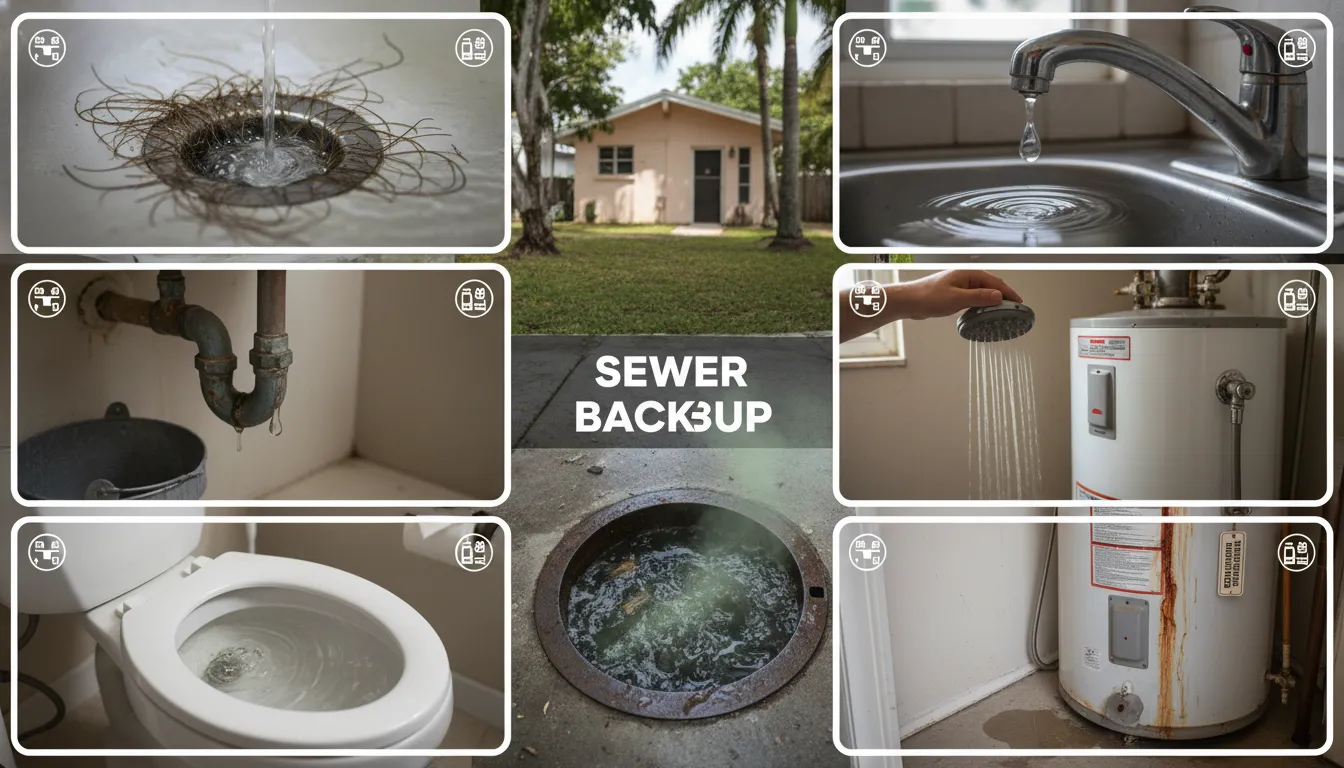
Some plumbing issues appear repeatedly in Miami homes because daily usage combines with local climate and aging systems. These problems often begin with small warning signs, but if ignored, they can lead to larger repairs and water damage.
Slow or clogged drains
Slow drains usually begin when hair, soap residue, grease, food particles, or debris collect inside kitchen, bathroom, or shower drain lines. In many homes, repeated slow drainage points to buildup deeper in the pipe rather than a simple surface blockage. If more than one drain starts slowing down at the same time, the issue may involve a larger drainage restriction that needs professional attention before it turns into a backup.
Hidden leaks and pipe corrosion
Hidden leaks often develop behind walls, under floors, or beneath slabs where early signs are easy to miss. In Miami, moisture, aging metal pipes, and long-term corrosion can gradually weaken plumbing lines until water begins escaping through small openings. Homeowners often notice higher water bills, damp areas, musty smells, bubbling paint, or mold before the actual leak becomes visible.
Running toilets and dripping faucets
A running toilet or dripping faucet may seem minor, but both can waste a surprising amount of water over time. Worn flappers, faulty fill valves, loose internal parts, or aging washers are common causes. These issues often continue quietly for weeks before being noticed, especially when water loss is gradual but constant.
Low water pressure throughout the home
Low water pressure can affect showers, sinks, washing machines, and other fixtures at the same time when there is buildup inside pipes, internal corrosion, or a developing leak somewhere in the system. In some homes, the issue appears gradually as mineral deposits narrow the pipe interior, while in others it can happen suddenly when a pressure-related component begins failing.
Water heater problems
Water heaters in Miami often work year-round, which increases wear over time. Sediment buildup inside the tank can reduce efficiency, create uneven heating, and cause unusual sounds during operation. Common warning signs include inconsistent hot water, rusty water, longer heating time, or visible moisture near the unit.
Sewer line backups and sewer odors
Sewer problems usually become noticeable through slow drains, gurgling sounds, foul odors, or water backing up in showers and tubs. In older homes, sewer lines may already have internal wear, root intrusion, or buildup that limits proper flow. Heavy rain can also add stress to underground drainage systems and make backups more likely.
Shutoff valve and fixture problems
Shutoff valves and plumbing fixtures often fail gradually as parts age or internal seals weaken. A valve that becomes difficult to turn or leaks when adjusted can become a problem during emergencies when quick water control is needed. Fixtures such as faucets, supply lines, and connectors may also begin leaking where seals and connections lose reliability over time.
Signs of Plumbing Problems You Should Not Ignore
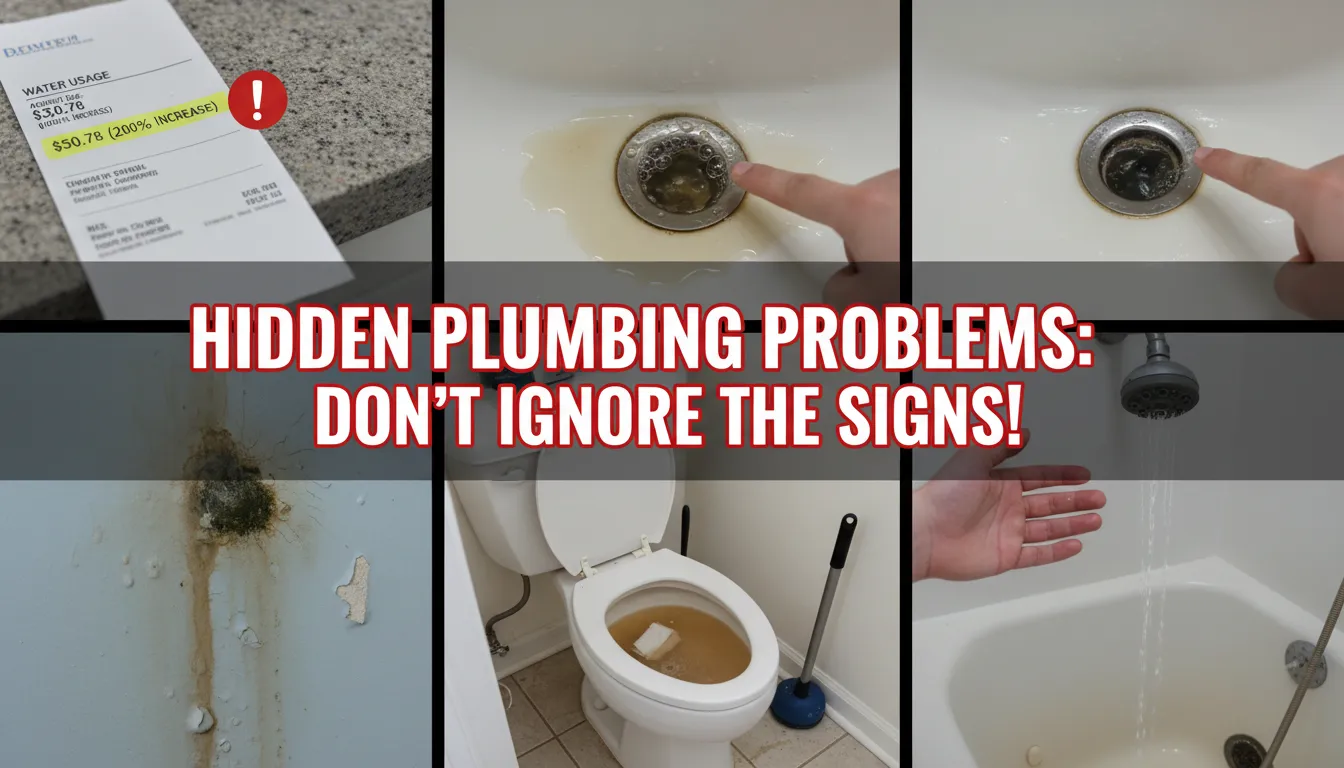
Many plumbing problems give early warning signs before major damage appears. Paying attention to these small changes can help prevent expensive repairs and reduce the risk of hidden water damage inside the home.
A sudden increase in your water bill
A water bill that rises without any clear change in daily usage often points to hidden water loss somewhere in the plumbing system. Small leaks behind walls, under floors, inside toilets, or beneath slabs can continue for weeks before becoming visible. Even a slow leak can waste a significant amount of water over time, which is why an unexpected increase in monthly usage should never be ignored.
Gurgling drains or sewage smells
Unusual sounds coming from drains or a persistent sewer odor often indicate restricted airflow, developing blockages, or trouble inside the drain or sewer line. Gurgling usually happens when trapped air struggles to move through partially blocked pipes. If sewage smells appear near sinks, showers, or toilets, the issue may involve drainage buildup, vent problems, or sewer line trouble that needs inspection.
Damp walls, bubbling paint, or mold
Moisture trapped behind walls or ceilings often appears first as bubbling paint, discoloration, soft drywall, or mold patches. These signs usually develop when a leak has been active long enough for water to collect inside hidden spaces. In humid environments like Miami, moisture can spread quickly and create conditions that encourage mold growth before the leak itself becomes obvious.
Weak showers or slow-filling faucets
A noticeable drop in water flow often means something inside the plumbing system is reducing normal pressure. Mineral buildup, internal pipe narrowing, hidden leaks, or failing pressure-related components can all contribute. When several fixtures show weaker flow at the same time, the problem usually goes beyond a single faucet and may require a broader plumbing check.
Repeated clogs that keep coming back
A clog that returns after basic cleaning usually means the blockage is deeper than the fixture itself. Repeated drain problems often happen when buildup remains inside the pipe or when larger drainage sections are partially restricted. If the same sink, shower, or toilet keeps slowing down again after temporary relief, the plumbing system may need a more complete inspection.
What Causes These Plumbing Problems in Miami Homes
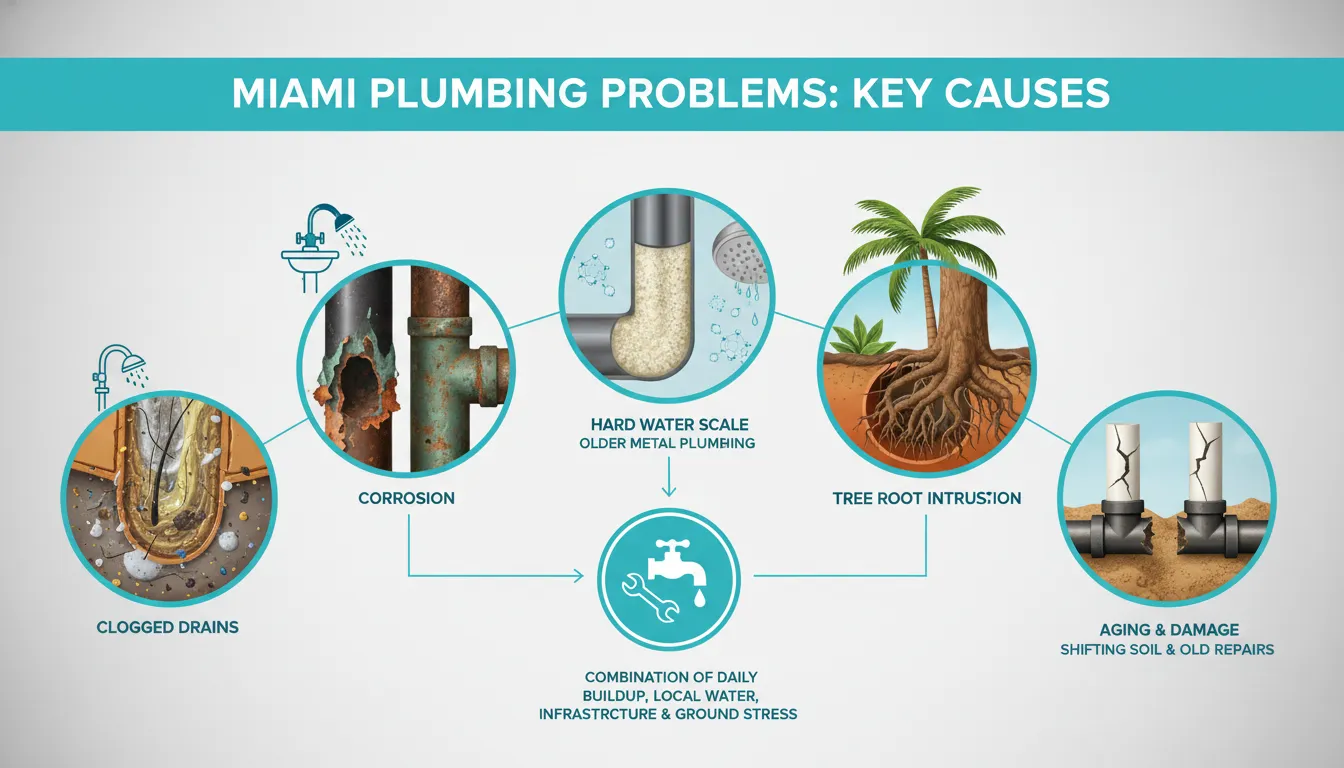
Most plumbing problems in Miami develop because several local conditions affect plumbing systems at the same time. Everyday buildup, water quality, climate exposure, and aging infrastructure often work together to create recurring plumbing issues.
Hair, grease, soap scum, and debris buildup
Daily household use allows small materials to collect inside drain lines over time. Hair commonly gathers in bathroom drains, while grease, food residue, and soap deposits build inside kitchen and utility lines. As these layers thicken, water flow becomes slower and blockages become more frequent, especially in sections of pipe where movement is already limited.
Pipe corrosion from age, moisture, and local water conditions
Older plumbing materials gradually weaken when exposed to moisture and changing water conditions over many years. In Miami, constant humidity can increase the effect of corrosion on metal pipes, fittings, and joints. As internal pipe walls deteriorate, small leaks, pinhole openings, and reduced water flow become more likely.
Hard water scale inside pipes and fixtures
Minerals carried in water slowly attach to the inside of pipes, valves, showerheads, and faucets. This scale buildup narrows internal openings and reduces normal water movement. Fixtures may begin to lose pressure, valves may stop working smoothly, and water heaters may also become less efficient as mineral deposits continue to accumulate.
Tree root intrusion and aging sewer lines
Underground sewer lines can attract roots when tiny openings or weak joints allow moisture to escape. Roots gradually grow into these spaces and begin restricting wastewater flow. In older sewer lines, this becomes more serious because pipe materials may already be weakened by age, corrosion, or previous wear.
Shifting soil, old repairs, and worn plumbing components
Ground movement, older repairs, and long-used plumbing parts can all reduce system reliability over time. Underground pipes may shift slightly as soil conditions change, while older fittings and connections become less stable with age. In many homes, earlier repairs may still function but weaken surrounding sections that later develop new problems.
DIY Fixes vs When to Call a Professional Plumber
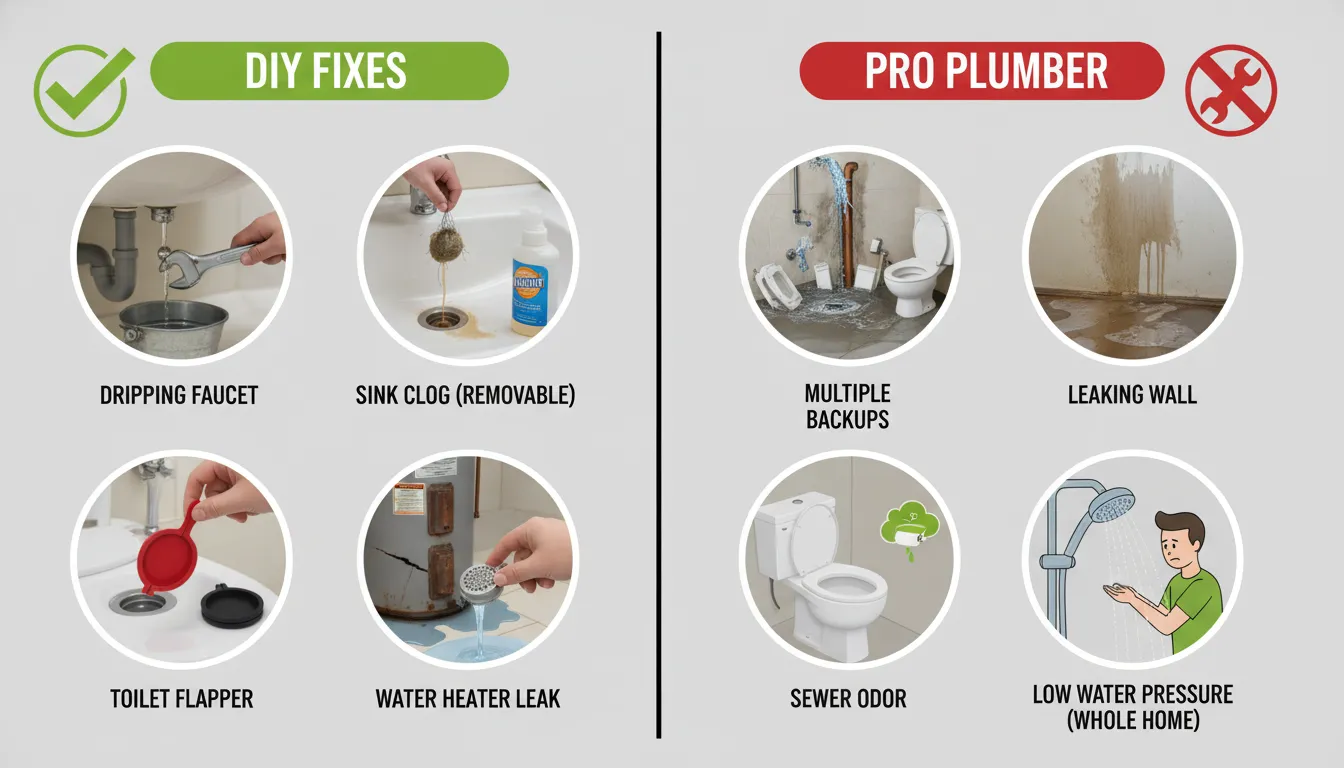
Some plumbing problems can be handled safely at home when the issue is minor and clearly visible. Others need proper tools, diagnosis, and repair experience because delay or incorrect handling can lead to larger damage.
Small plumbing issues homeowners may handle safely
Minor drain slowdowns near the surface, a dripping faucet caused by a worn washer, or a toilet flapper that needs replacement are usually manageable if the source is easy to identify. Cleaning a faucet aerator, removing visible debris from a drain cover, or tightening a simple connection can also help in some cases. Small maintenance tasks like these are often safe when there is no active leak inside walls, no unusual smell, and no sign of water spreading beyond one fixture.
Problems that should be handled by a licensed plumber
Hidden leaks, recurring clogs, sewer odors, water pressure loss across multiple fixtures, and water heater faults should be inspected by a licensed plumber because the cause is often deeper than it first appears. Problems involving underground lines, slab leaks, pipe corrosion, burst lines, or repeated backups usually require specialized equipment and accurate diagnosis to prevent larger structural or plumbing damage.
How Miami Homeowners Can Help Prevent Plumbing Problems
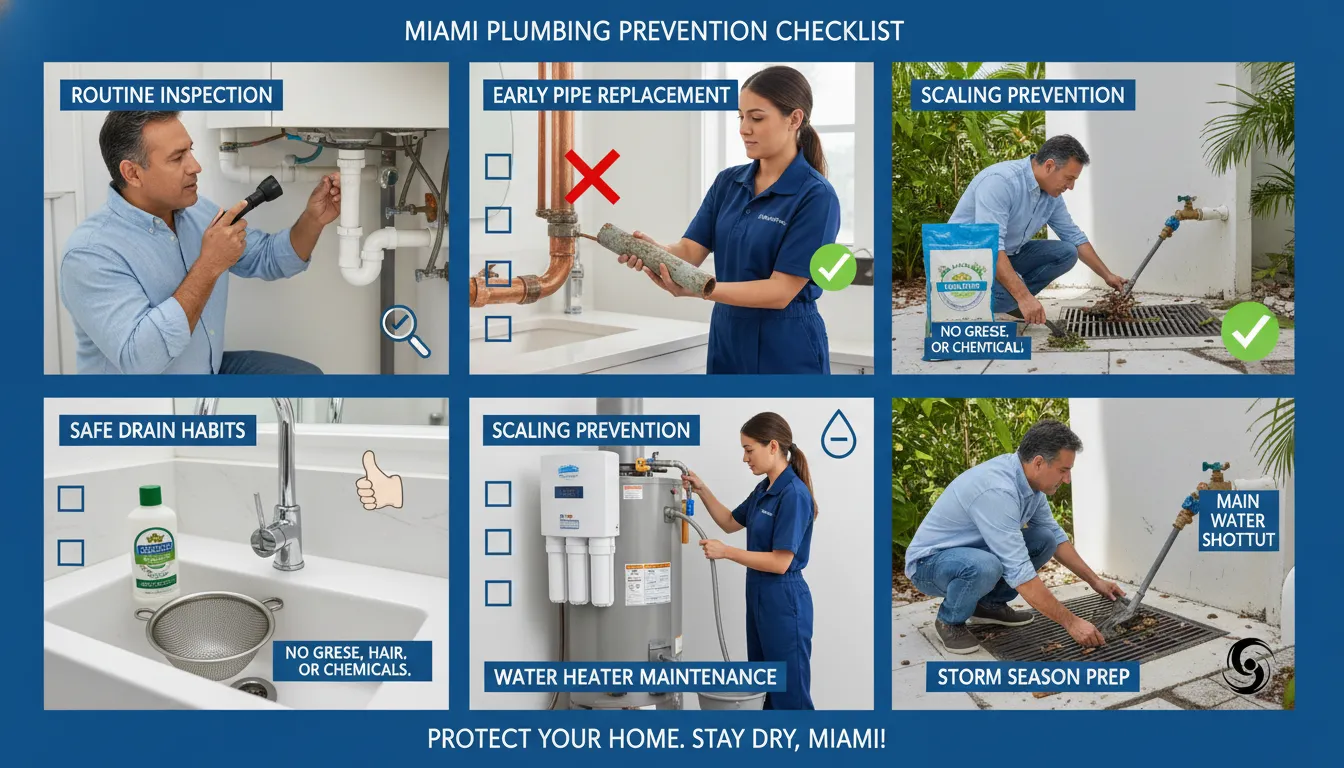
Preventive maintenance helps reduce the chance of sudden plumbing failures and keeps small issues from turning into expensive repairs. In Miami, regular care matters even more because climate, water quality, and aging systems can speed up wear inside plumbing lines and fixtures.
Schedule regular plumbing inspections
Routine plumbing inspections help identify early signs of leaks, corrosion, drainage issues, and pressure problems before visible damage appears. Many plumbing faults develop slowly inside walls, under floors, or underground, so regular inspection can catch weak areas before they fail. Homes with older plumbing systems benefit especially from periodic checks because hidden wear often goes unnoticed until a major repair is needed.
Replace old or corroded pipes before they fail
Older pipes that already show signs of corrosion, reduced flow, or repeated leaks are more likely to fail without warning. Replacing weak sections early helps prevent hidden water damage, pipe bursts, and repeated service calls. In homes with aging metal lines or outdated plumbing materials, planned replacement often costs less than dealing with sudden failures later.
Be careful about what goes down your drains
Daily habits strongly affect drain performance over time. Hair, grease, food waste, soap residue, and non-flushable materials often collect gradually and create restrictions inside pipes. Using drain covers, avoiding grease disposal in sinks, and keeping solid waste out of drains helps reduce repeated blockages and supports normal water flow.
Flush and maintain your water heater
Water heaters work more efficiently when sediment does not remain trapped inside the tank for long periods. Flushing the system helps remove mineral deposits that collect at the bottom and affect heating performance. Regular maintenance also allows worn valves, heating components, and safety parts to be checked before larger problems develop.
Reduce scaling and protect your plumbing system
Mineral buildup inside pipes and fixtures becomes more noticeable when scale is allowed to collect for years. Cleaning aerators, maintaining fixtures, and monitoring changes in water flow can help limit long-term restriction. Protecting plumbing components from scale buildup also supports better fixture performance and helps water-using appliances work more efficiently.
Prepare your plumbing before heavy rain and storm season
Before periods of heavy rain, it is important to make sure drains, outdoor discharge points, and sewer connections are working properly. Existing drainage restrictions often become more noticeable when rainfall increases and underground moisture rises. Early checks before storm season can help reduce the risk of backups, slow drainage, and added pressure on underground plumbing lines.
Common Plumbing Problems in Older Miami Homes
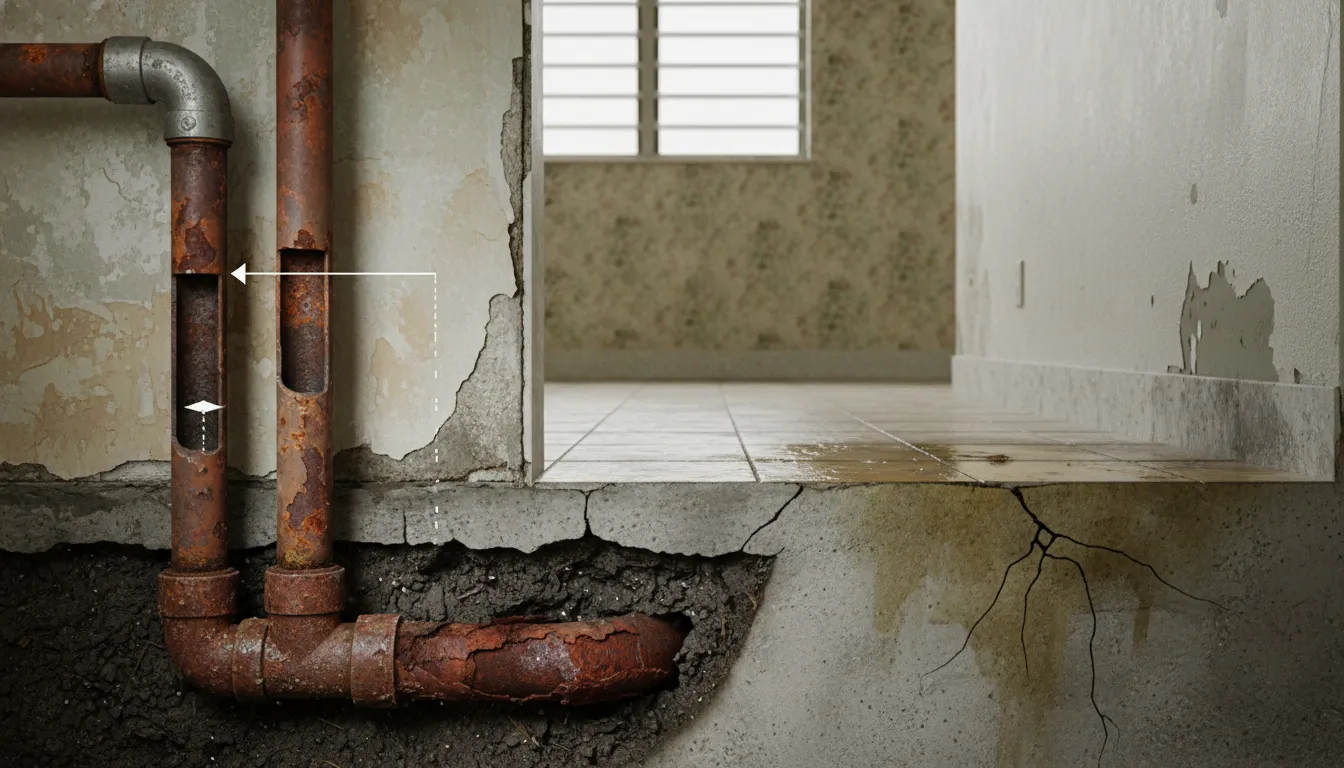
Older Miami homes often develop plumbing issues that newer systems do not face as frequently because many original materials have already been in service for decades. As plumbing ages, internal wear becomes harder to detect until drainage, pressure, or leak problems begin affecting daily use.
Cast iron sewer line deterioration
Many older homes still rely on cast iron sewer lines that gradually weaken from internal rust, scale buildup, and surface deterioration. As the pipe interior roughens, waste movement becomes less efficient and blockages become more common. Over time, weak sections may crack, allow root intrusion, or create repeated drainage problems that affect multiple fixtures in the home.
Galvanized pipe corrosion and restricted flow
Galvanized pipes often corrode from the inside as they age, which reduces the internal diameter and restricts water movement. This gradual narrowing can lower water pressure in showers, sinks, and other fixtures throughout the house. In some homes, corrosion also affects water color and causes uneven flow between different fixtures.
Hidden slab leaks and aging fittings
Leaks beneath concrete slabs often remain hidden until water damage signs appear inside the home. Moisture under flooring, warm spots, cracks, or unexplained increases in water usage may point to a developing slab leak. Aging fittings, joints, and underground connections can also weaken over time and create slow leaks that remain unnoticed for long periods.
When a Small Plumbing Issue Becomes an Emergency
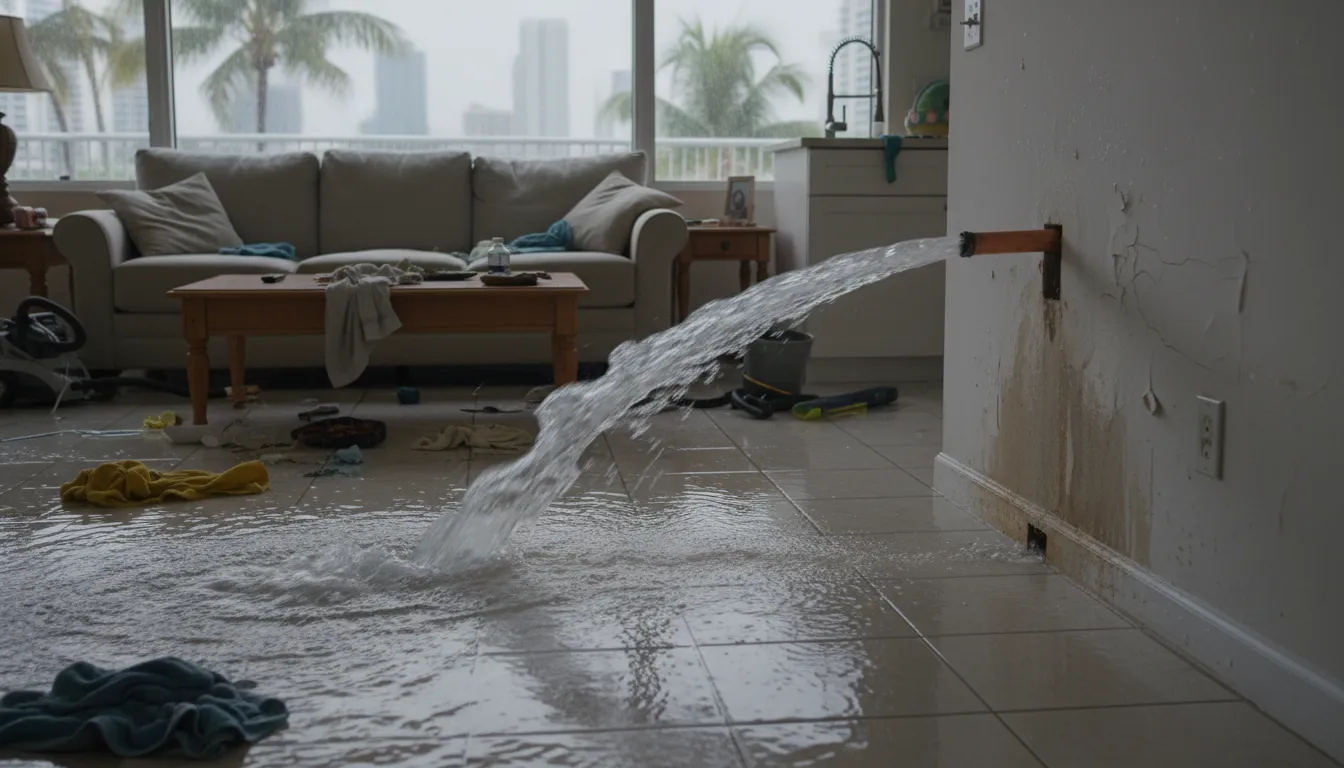
Some plumbing problems stay minor for a while, but certain warning signs mean the situation should no longer be delayed. Once water begins spreading quickly, drainage stops working, or pressure suddenly changes, immediate action becomes important to prevent larger damage.
Burst pipes and active flooding
A burst pipe can release a large amount of water within minutes and quickly damage walls, floors, cabinets, and nearby electrical areas. Even a small pipe split can become serious if water pressure continues forcing water through the damaged section. Fast shutoff and immediate repair are important because flooding can spread beyond the original plumbing area very quickly.
Sewer backups inside the home
When wastewater starts backing up into showers, tubs, sinks, or toilets, the issue usually points to a major drainage restriction or sewer line failure. This type of problem can affect hygiene, indoor air quality, and overall home safety. If multiple fixtures are involved at the same time, the blockage is often deeper in the system and needs urgent professional attention.
No hot water with signs of tank failure
Losing hot water becomes more serious when it happens together with leaking around the tank, rust-colored water, unusual sounds, or moisture near the heater base. These signs may indicate internal tank damage or pressure-related failure. Delaying service can increase the chance of water damage if the unit begins leaking more heavily.
Sudden water loss or major pressure drop
A sharp pressure drop across several fixtures often signals a larger plumbing problem than a simple fixture blockage. Hidden leaks, pipe damage, failing valves, or underground supply issues can all reduce water flow suddenly. If pressure changes happen throughout the home without warning, the plumbing system should be checked quickly before the issue worsens.
FAQs About Common Plumbing Problems in Miami
Slow drains, hidden leaks, running toilets, and low water pressure are among the most common plumbing problems in Miami homes. Drain blockages and small leaks are often noticed first because they affect daily water use quickly.
Miami’s humidity, coastal moisture, hard water, and aging plumbing materials can increase wear inside pipes, fittings, and fixtures. These conditions often speed up corrosion, scaling, and drainage problems over time.
Yes, hard water can leave mineral deposits inside pipes, faucets, and water heaters. Over time, this buildup reduces water flow, lowers efficiency, and places extra strain on plumbing components.
A plumber should be called when a clog keeps returning, affects more than one fixture, causes slow drainage throughout the house, or comes with gurgling sounds or sewer odors.
Older homes are more likely to develop sewer problems because aging sewer lines often weaken, corrode, or develop internal buildup after many years of use.
Yes, a hidden leak can reduce water pressure, especially if several fixtures are affected at the same time. Internal pipe corrosion or buildup can also cause similar pressure loss.
Final Thoughts on Common Plumbing Problems in Miami
Small plumbing issues can turn serious quickly in Miami homes
A slow drain, minor leak, weak water pressure, or running toilet may seem manageable at first, but these problems often become more expensive when they continue unnoticed. In Miami homes, climate conditions and aging plumbing systems can make small issues develop faster than expected.
Early repair and inspection can help avoid bigger damage
Early plumbing attention helps reduce the risk of hidden leaks, sewer damage, water waste, and larger repair costs. Regular inspection and timely repair often protect both the plumbing system and the home itself from avoidable long-term damage.
Need help with plumbing problems in Miami?
If you are dealing with leaks, clogs, low water pressure, sewer issues, or water heater trouble, schedule a professional inspection before a small issue becomes a costly repair.