- Home
- Plumber Miami
- How to Prevent Pipe Leaks
How to Prevent Pipe Leaks: The Ultimate Miami Homeowner’s Guide
Stop water damage before it starts. From managing South Florida’s hard water to blocking salt-air corrosion, we show you how to protect your home’s plumbing like a pro.
Quick Fix: 3 Core Strategies to Stop Leaks Today
⚡ Pressure Management (40-60 PSI): Avoid unnecessary stress on your joints by installing a pressure regulator.
💧 Mineral Neutralization: Protect your pipes from Miami’s hard water with ion-exchange softening.
📱 Smart Detection: Deploy wireless sensors to get instant leak alerts directly to your phone.
Early Detection: How to Spot a Hidden Leak
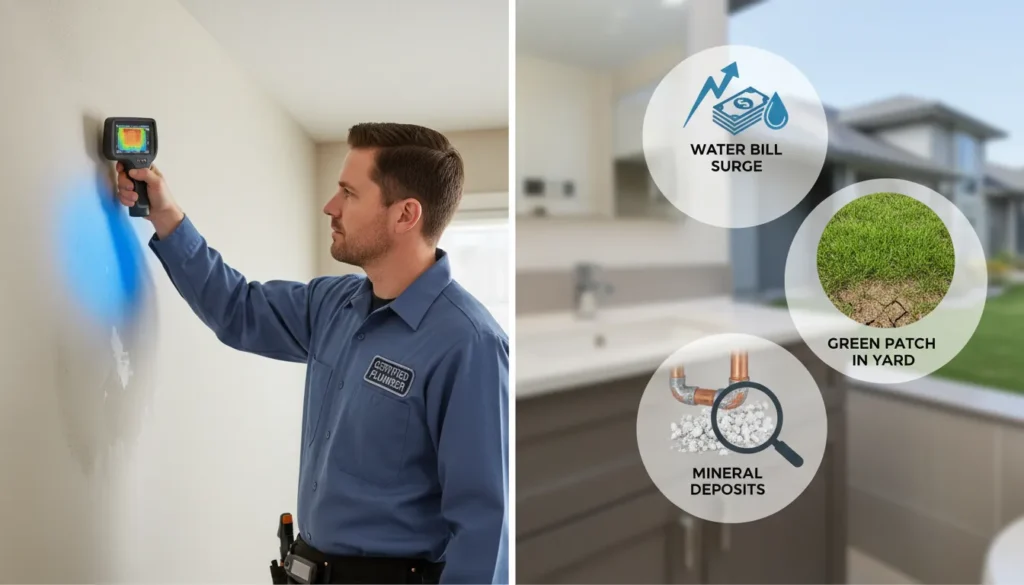
In Miami’s 70% humidity, a small leak is a ticking clock. If moisture stays trapped behind your drywall for more than 48 hours, toxic mold begins to grow. Use these three professional signs to catch a leak before it causes structural damage.
1. The “Green Patch” Lawn Sign
Miami’s sandy soil usually swallows water, making underground leaks hard to see. However, your grass acts as a natural moisture detector.
What to look for: A specific area of your lawn that is much greener, taller, or muddier than the rest of the yard.
The Professional Reality: This indicates a main supply line breach. The grass is feeding on a constant water source under the soil. This requires immediate electronic leak detection to prevent your foundation from shifting.
2. Sudden Water Bill Spikes
A spike in your bill without a change in your daily routine is the most common financial warning of a plumbing failure.
What to look for: A sharp increase in your monthly statement that isn’t related to pool filling or heavy summer irrigation.
The Professional Reality: A single pinhole leak can waste over 10,000 gallons per month. To verify, turn off all faucets and check your water meter’s “leak dial” (the small spinning triangle). If it’s moving, you have an active leak in your pressurized system.
3. Musty Smells
In a tropical climate, you will often smell a leak before you see a water stain.
What to look for: A persistent, earthy, or “mildew” odor inside your kitchen or bathroom cabinets.
The Professional Reality: High humidity prevents interior leaks from drying out. Water stays trapped in the walls, soaking the insulation and feeding mold. If you smell mildew but don’t see water, you likely have a “weeping joint” leaking slowly behind the drywall.
5 Professional Standards for Miami Plumbing Protection
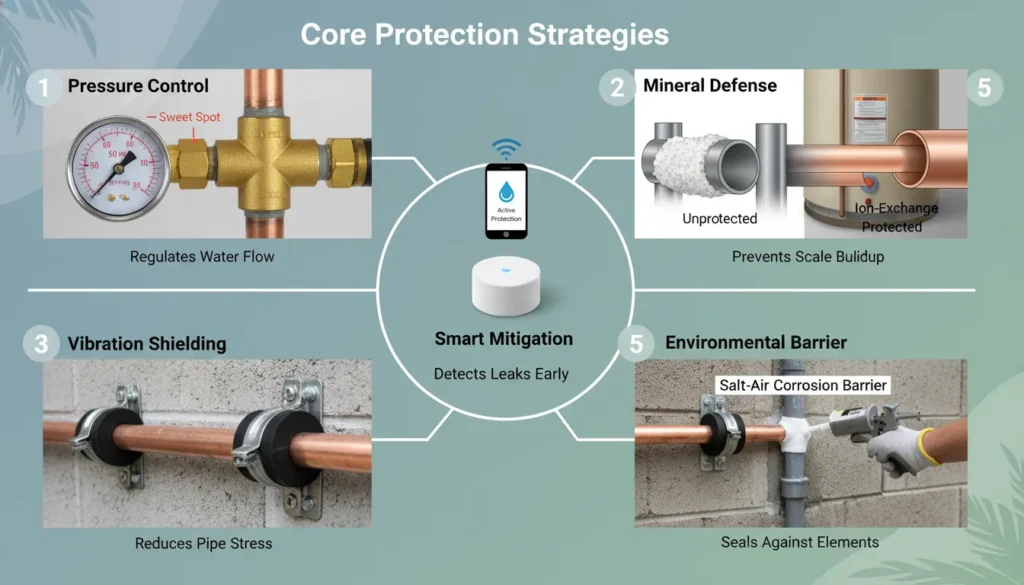
South Florida’s environmental conditions are uniquely hostile to residential plumbing. By implementing these five professional standards, homeowners can effectively neutralize the primary causes of catastrophic pipe failure.
1. Pressure Stabilization
High-velocity city water surges in Miami create constant hydraulic tension on residential pipe joints.
Technical Challenge: Water pressure exceeding 80 PSI leads to chronic stress fractures in fittings and appliance intake valves.
Professional Solution: Install a Pressure Reducing Valve (PRV). Maintaining a consistent 40-60 PSI “Sweet Spot” preserves the system’s structural integrity and eliminates the risk of high-pressure bursts.
2. Mineral Neutralization via Ion-Exchange
Miami’s water supply is sourced from limestone aquifers, resulting in an exceptionally high concentration of Calcium and Magnesium.
Technical Challenge: These minerals form “Scale”—a rock-hard internal layer that restricts water flow and triggers internal pitting (corrosion) in copper piping.
Professional Solution: Implement whole-home Ion-Exchange Water Softening technology. This system chemically displaces hard minerals, preventing internal blockages and extending the lifespan of your plumbing by 10+ years.
3. Below-Slab Integrity
Most Miami homes are constructed on concrete slabs, where the primary plumbing infrastructure is buried beneath the foundation.
Technical Challenge: Sandy soil settling and groundwater expansion exert uneven pressure on buried lines, leading to hidden Slab Leaks that undermine the home’s foundation.
Professional Solution: Utilize periodic Electronic Leak Detection. This non-invasive technology traces microscopic acoustic signatures of leaks beneath the slab, allowing for targeted repairs before structural damage occurs.
4. Kinetic Shock Absorption
The “thumping” sound heard when a faucet is closed is actually a powerful hydraulic shockwave traveling through your pipes.
Technical Challenge: Constant vibration in older South Florida homes causes “metal fatigue” in soldering and crimp fittings, resulting in hidden leaks within wall cavities.
Professional Solution: Secure all exposed piping with Industrial-Grade Padded Anchors. These stabilizers absorb kinetic energy and prevent fittings from “backing out” or loosening over time due to vibration.
5. Environmental Barrier Strategy
The salt-laden Atlantic air is highly corrosive, specifically targeting areas where pipes penetrate the home’s concrete block exterior.
Technical Challenge: Unsealed entry points allow salt air and tropical humidity to access wall cavities, accelerating exterior oxidation and sub-wall mold growth.
Professional Solution: Hermetically seal all exterior pipe penetrations using High-Grade Silicone Sealants or structural expanding foam. This blocks the primary entry point for corrosion and protects pipe joints from long-term atmospheric decay.
5 Pro-Active Steps to Protect Your Miami Home
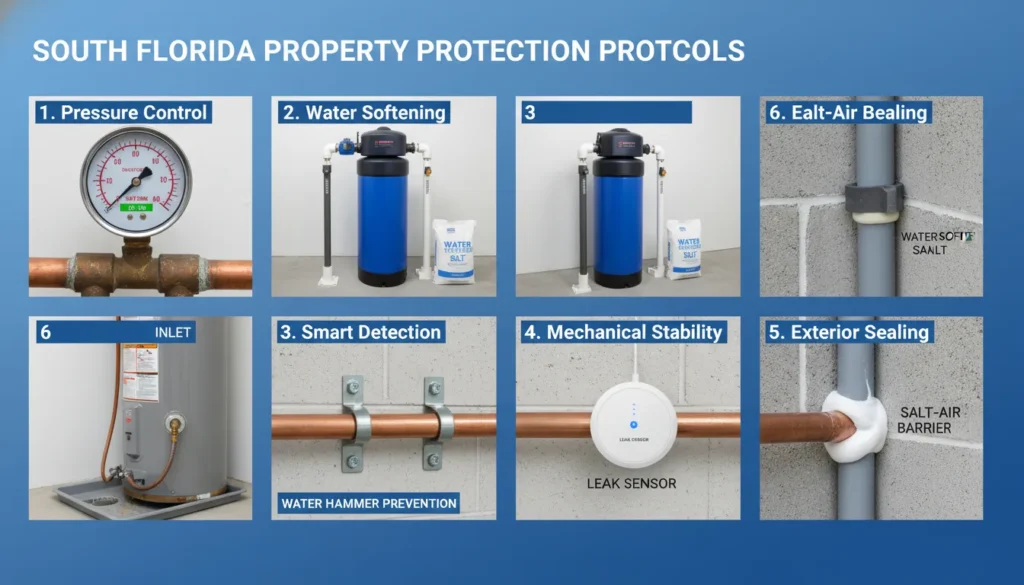
Don’t wait for a “Gush” to call us. In South Florida, prevention is 10x cheaper than a middle-of-the-night emergency repair. Follow this expert-approved roadmap to keep your pipes flowing and your floors dry.
Maintain the “Sweet Spot”: 40-60 PSI Pressure
The Problem: Many Miami homes have high city water pressure that hammers your pipe joints every time you turn on a faucet. The Insight: Water pressure over 80 PSI is a pipe-killer; it causes “stress fractures” in your fittings. We recommend keeping your home in the 40-60 PSI “Sweet Spot.” * The Fix: If your shower feels like a power washer, you likely need a Pressure Reducing Valve (PRV). This simple device acts as a bodyguard for your plumbing, absorbing the city’s high-pressure surges before they hit your interior pipes.
Neutralize Minerals with Ion-Exchange Water Softeners
The Problem: As we discussed, Miami’s water is essentially “liquid rock” that corrodes metal from the inside out. The Insight: You can’t change the city’s water, but you can treat it before it enters your pipes.
The Fix: Installing a whole-home Ion-Exchange Water Softener swaps “hard” minerals (Calcium) for “soft” ones. This prevents the “Scale” buildup that restricts flow and causes internal pitting. This single upgrade can extend the life of your copper or PEX pipes by 10+ years.
Deploy Smart Tech: Wireless Sensors & Auto-Shutoff Valves
The Problem: Most catastrophic leaks happen when you are away—at work in Brickell or spending the weekend in the Keys. The Insight: Modern plumbing is “Smart.” You no longer have to guess if there is a leak.
The Fix: We can install tiny Wireless Sensors under your sinks, water heater, and fridge. If they detect a single drop, they send an instant alert to your phone.
The Ultimate Protection: Pair these with an Automatic Shut-off Valve that kills the main water supply the second a leak is detected, saving you thousands in potential flood damage.
Anchor Your Pipes to Stop “Water Hammers”
The Problem: Do your pipes “thump” or “clatter” when the washing machine stops? That’s a water hammer. The Insight: These shockwaves vibrate your pipes, slowly loosening the joints in your walls.
The Fix: Ensure your pipes are properly anchored with padded straps. This absorbs the kinetic energy and prevents the “vibration leaks” that often occur at the weakest fittings in older Miami homes.
Sealing Exterior Wall Gaps The Foam & Caulking Method
The Problem: Your pipes enter your home through holes in the concrete block. If these aren’t sealed, Miami’s salt-heavy, humid air crawls inside your walls. The Insight: This is the #1 cause of Exterior Oxidation.
The Fix: Use high-grade outdoor silicone caulking or expanding foam to seal the gaps where pipes enter the house. This blocks the salt-air “entry point” and prevents moisture from building up inside your wall cavities where mold loves to grow.
Why Quality Materials & Expert Installation Matter
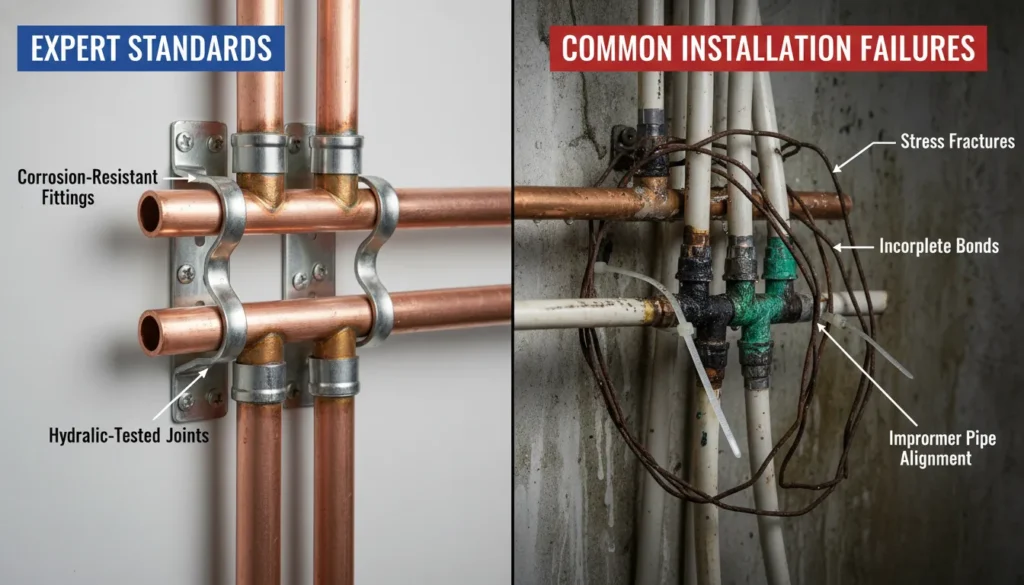
In the plumbing world, “cheap” installation is often the most expensive mistake. A single error behind your Miami drywall can sit hidden for months before turning into a catastrophic flood. Here is the technical truth about workmanship.
1. The Threaded End Vulnerability in Galvanized Pipes
Many older Miami homes still have galvanized steel pipes. When these pipes are cut to create “threads” for a joint, the protective zinc coating is stripped away. This leaves raw iron exposed to South Florida’s humidity. Without professional sealants and transition fittings, these threads rust from the outside in, leading to a snap at the joint.
2. PEX Fitting Hazards
PEX is the modern standard for flexibility, but it is sensitive to handling. If a technician leaves a tiny “nick” (scratch) or a “crease” (fold) near a crimp fitting, it creates a microscopic gap. Under Miami’s high-pressure surges, water eventually finds that scratch, leading to a slow “weeping” leak that warps floorboards over time.
3. The 12-Inch Rule for Copper Soldering
Copper joints require a perfect thermal bond. If there is even one drop of moisture within 12 inches of the joint during soldering, the “sweating” process fails. The resulting steam prevents the silver solder from bonding perfectly, creating a porous joint. While it may look solid, it will eventually crack under the vibration of a Water Hammer.
4. Internal Pipe Deburring
Every time a pipe is cut, it leaves a rough edge (burr) on the inside. If these aren’t smoothed out with a deburring tool, they create “turbulent flow.” This constant turbulence thins the pipe wall over several years, eventually leading to a pinhole leak in what should have been a solid line.
What to Do if a Pipe Bursts: The 5-Minute Protocol
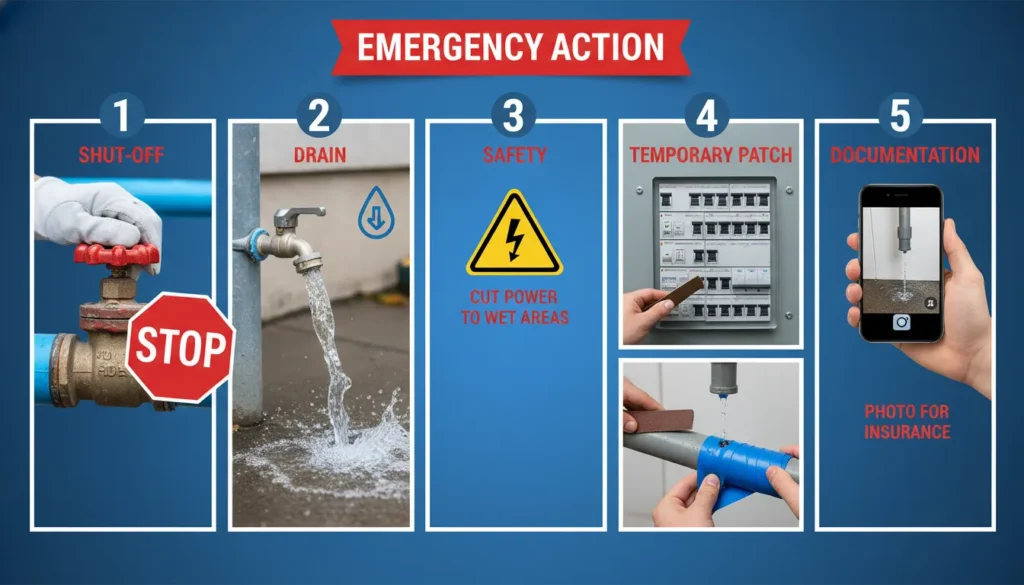
Miami’s high humidity means standing water can lead to mold in as little as 48 hours. If you are facing a major leak or a burst pipe right now, follow these exact steps to minimize damage.
1. Shut Off the Main Water Valve
Immediately locate your main water shut-off valve—usually located near the street or where the main line enters your home—and turn it clockwise until it stops.
2. Drain the Remaining System Pressure
Once the main valve is closed, open the lowest faucet in your home (typically an outdoor hose bib). This releases the trapped pressure and drains the remaining water out of the pipes and away from the leak site.
3. Ensure Electrical Safety
If the leak is near an outlet, appliances, or your electrical panel, do not step in the standing water. If it is safe to reach, turn off the breaker for that specific area of the house to prevent accidental electrocution.
4. Apply a Temporary Patch (DIY Kit)
While waiting for a professional repair, use these materials to slow the flow:
Silicone Self-Fusing Tape: Wrap tightly around the pipe to create a waterproof seal.
Epoxy Putty: Knead and press firmly over the puncture point.
The Sandpaper Rule: Always roughen the pipe surface with sandpaper before applying tape or putty to ensure a 100% leak-proof bond.
5. Document for Insurance Claims
Take clear photos and videos of the burst pipe and the resulting water damage before you begin cleaning up. This “Point of Origin” proof is essential for Florida insurance claims regarding floor or drywall replacement.
Professional Leak Detection & Repair Services in Miami
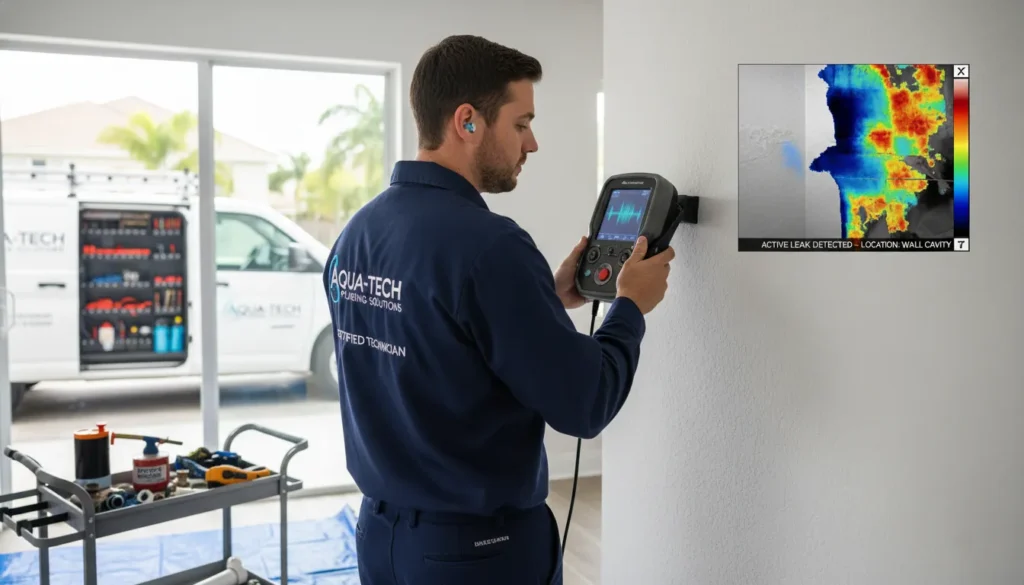
Choosing the right plumbing partner in South Florida makes the difference between a permanent fix and a recurring nightmare. At Miami Florida Plumbing, we combine decades of local experience with the industry’s most advanced diagnostic tools to protect your greatest investment.
1. Advanced Electronic Leak Detection Technology
We don’t believe in “guesswork” or tearing down your drywall just to find a drip.
The Standard: Our team utilizes Acoustic Ultrasonic Sensors and Thermal Imaging Cameras to pinpoint microscopic leaks through concrete slabs and behind walls.
The Benefit: This non-invasive approach saves you thousands in unnecessary demolition and restoration costs, identifying the exact “Point of Origin” with surgical precision.
2. Flexible Payment Plans & Comprehensive Local Warranties
A plumbing emergency shouldn’t break your bank account. We’ve designed our business model to be as stress-free as possible for our neighbors in the 305.
Financial Flexibility: We offer Zero-Down Financing and tailored payment plans to ensure you can authorize critical repairs immediately before mold sets in.
Guaranteed Protection: Every repair we perform is backed by a Transferable Local Warranty. If our fix doesn’t hold, we return at no cost to you—providing the peace of mind every homeowner deserves.
3. Licensed, Insured, & South Florida Expert Certified
In Miami, unlicensed work can lead to insurance claim rejections and code violations.
Full Compliance: We are a Fully Licensed and Insured plumbing firm. We pull all necessary permits and adhere strictly to the latest South Florida Building Codes.
Local Expertise: Our technicians aren’t just plumbers; they are specialists in Miami’s unique infrastructure—from the historic copper lines in Coral Gables to the modern PEX systems in Doral.
Frequently Asked Questions: Expert Plumbing Insights
The ideal water pressure for residential plumbing in Miami is between 40 and 60 PSI. While city supply lines often deliver water at higher pressures, anything exceeding 80 PSI puts excessive strain on your joints, water heater, and appliance valves. Maintaining this “sweet spot” is the most effective way to prevent sudden pipe bursts and chronic stress fractures in your system.
Yes, consistent high water pressure is a primary catalyst for pinhole leaks. When water travels at high velocity through copper pipes, it creates internal turbulence that slowly erodes the protective lining of the metal. Over time, this mechanical wear, combined with Miami’s hard water minerals, thins the pipe wall until a microscopic pinhole leak develops behind your drywall.
Detecting an underground water leak in Miami’s sandy soil requires looking for specific environmental cues. Check for unusually lush or “emerald green” patches of grass, unexplained mud puddles during dry spells, or a sudden drop in your home’s water pressure. For precise location without digging, we utilize Acoustic Leak Detection to pinpoint the exact vibration of escaping water beneath your landscaping.
Absolutely. Miami’s hard water is saturated with calcium and magnesium, which creates “scale” buildup inside your plumbing infrastructure. This mineral crust restricts water flow, clogs showerheads, and causes heating elements in dishwashers and water heaters to burn out prematurely. Installing an ion-exchange water softener is the professional standard for neutralizing these minerals and protecting your investment.