Does a Home Warranty Cover Plumbing? The 2026 Claims Insider Guide
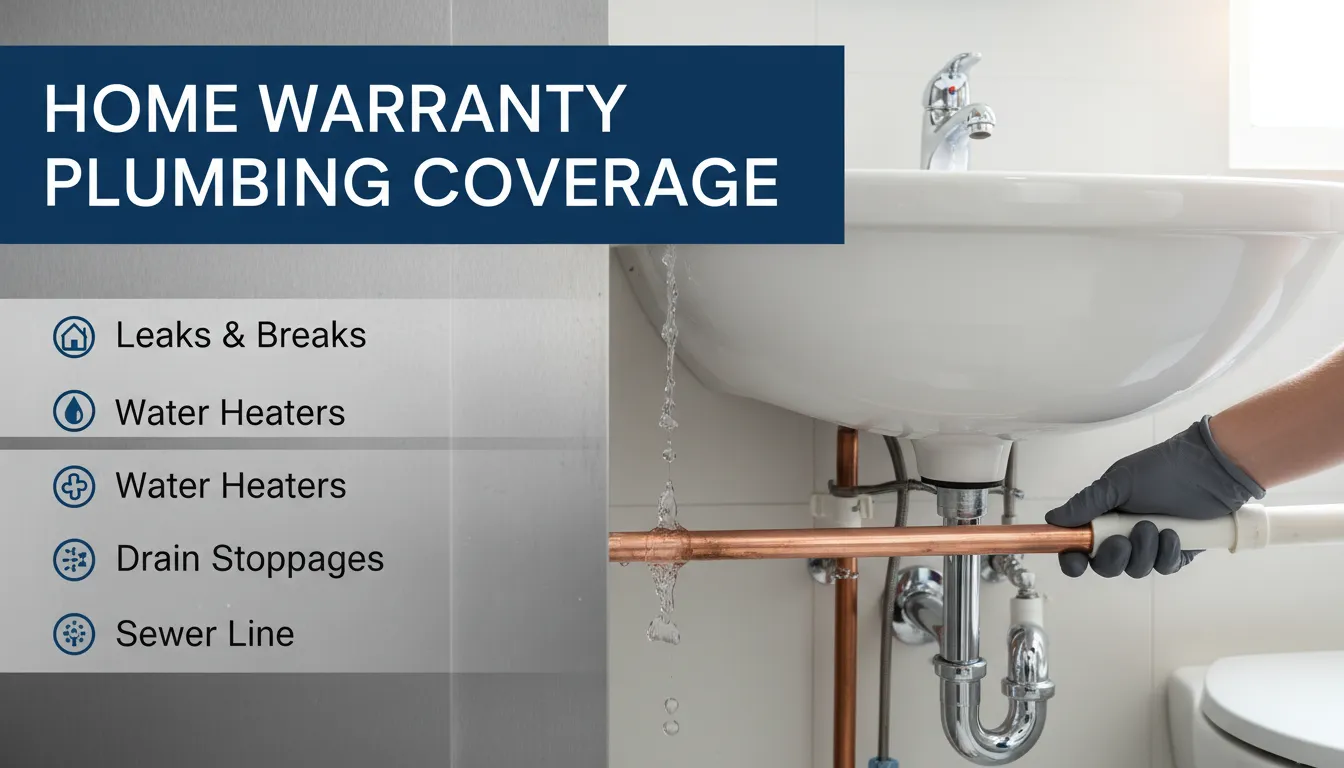
Yes, most home warranties cover your home’s interior plumbing systems, including leaks, breaks, and stoppages caused by normal wear and tear. However, coverage is usually capped at specific dollar amounts for high-cost repairs like slab leaks or main line access.
The Reality of Modern Coverage
In 2026, a standard policy isn’t just about pipes; it’s about protecting your bank account from $125+ service fees and emergency labor rates.
Whether you are dealing with a failed water pressure regulator or a clogged DWV (Drain-Waste-Vent) line, your warranty acts as a financial buffer. But there’s a catch: Coverage only triggers if the failure is mechanical.
What’s In: Leaks in PEX, Copper, or PVC supply lines and most internal stoppages.
What’s Out: Cosmetic damage, pre-existing rust, or issues caused by root infiltration (unless you have a specific rider).
As an expert who has reviewed thousands of contracts, I can tell you that the difference between a paid claim and a denied headache often comes down to how you document the issue before the technician even arrives.
The Quick Answer: What Does Home Warranty Plumbing Coverage Actually Include?
To get your claim approved, you need to know the exact boundaries of your policy. In 2026, Home Warranty Plumbing Coverage typically covers the “bones” of your system—the pipes and valves inside your home’s footprint—but leaves the “cosmetic” and “external” parts to you.
2026 Plumbing Coverage At-A-Glance
Feature Usually Covered? Typical Limit/Cap Pipe Leaks (PEX, Copper, PVC) YES No limit (Interior only) Water Heaters (Gas/Electric) YES $1,500 – $2,500 Toilets (Tanks, Bowls, Seals) YES $600 per unit Slab Leaks (Pipe Repair) YES $500 – $1,500 (Access cap) Main Line Stoppages YES Up to 100-125 feet Root Infiltration NO Unless “Limited Roof” rider added
The “Mechanical Failure” Rule
A home warranty is not a “fix-everything” service. It only pays out for mechanical failures caused by normal wear and tear.
If your water pressure regulator fails due to age, you’re covered. If you crack a porcelain sink by dropping a heavy pot, that is considered “accidental damage”—and your warranty company will deny that claim in seconds.
Pro Tip: Always check if your plan covers “Polybutylene” pipes. Many older homes still have these “ticking time bombs,” and only premium 2026 plans include them without a surcharge.
Decoding the Fine Print: The 3 Pillars of Plumbing Protection
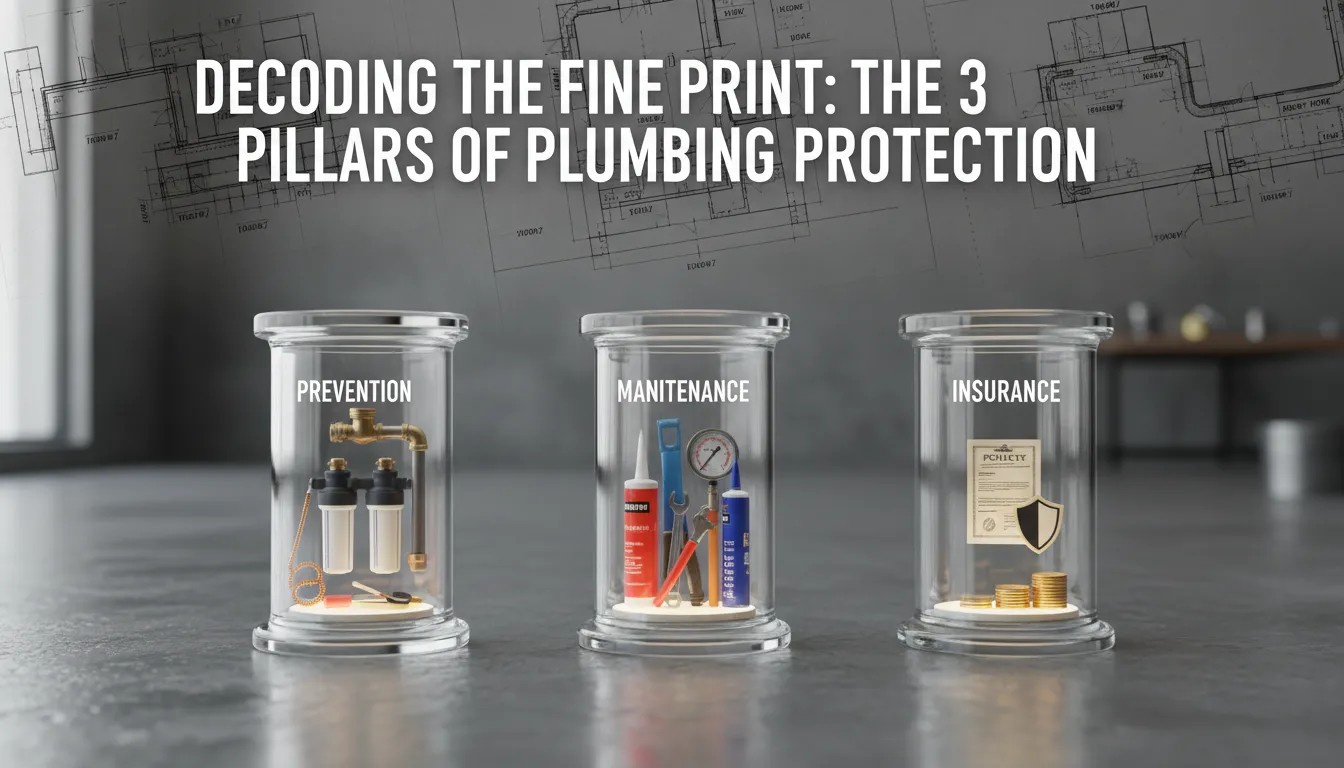
To master home warranty plumbing coverage, you have to stop looking at your plumbing as one big “system” and start seeing it as three distinct zones. Warranty adjusters categorize claims this way to determine if you’ve hit a coverage cap.
1. Water Supply Lines (The Pressurized Side)
These are the pipes that bring fresh water into your home. Because they are pressurized, leaks here are usually sudden and destructive.
What’s Covered: PEX, Copper, and CPVC pipes located within the perimeter of the main foundation.
The Fine Print: Most plans cover the pipe repair, but not the secondary damage (like soaked drywall or ruined hardwood).
Insider Secret: If your leak is caused by excessive water pressure, the adjuster will check your water pressure regulator. If that regulator was already broken and you didn’t report it, they may deny the pipe repair due to “owner neglect.”
2. Drain-Waste-Vent (DWV) Systems (The Gravity Side)
This is the “exit” side of your plumbing. It uses gravity and specific angles to move waste to the sewer or septic tank.
What’s Covered: Standard leaks in PVC or ABS drain lines and clearable stoppages.
The Trap: Most 2026 policies only cover clogs that can be reached with a 100-foot standard sewer cable through an existing cleanout.
The 2026 Reality: If the plumber has to pull a toilet to snake the drain because you lack a ground-level cleanout, you might be charged an extra $150+ “access fee” not covered by the warranty.
3. Mechanical Fixtures (Valves, Faucets, and Regulators)
These are the moving parts that control the water flow.
Coverage Limits: While the “pipes” often have high limits, faucets and showerheads are often capped at $150–$300 per item.
The “Builder Grade” Standard: If your $800 luxury brass faucet leaks, the warranty company isn’t obligated to buy you a new $800 one. Their contract usually only requires a “functional replacement” of standard builder-grade quality.
Why Claims Get Denied: 2026 Denial Prevention Checklist
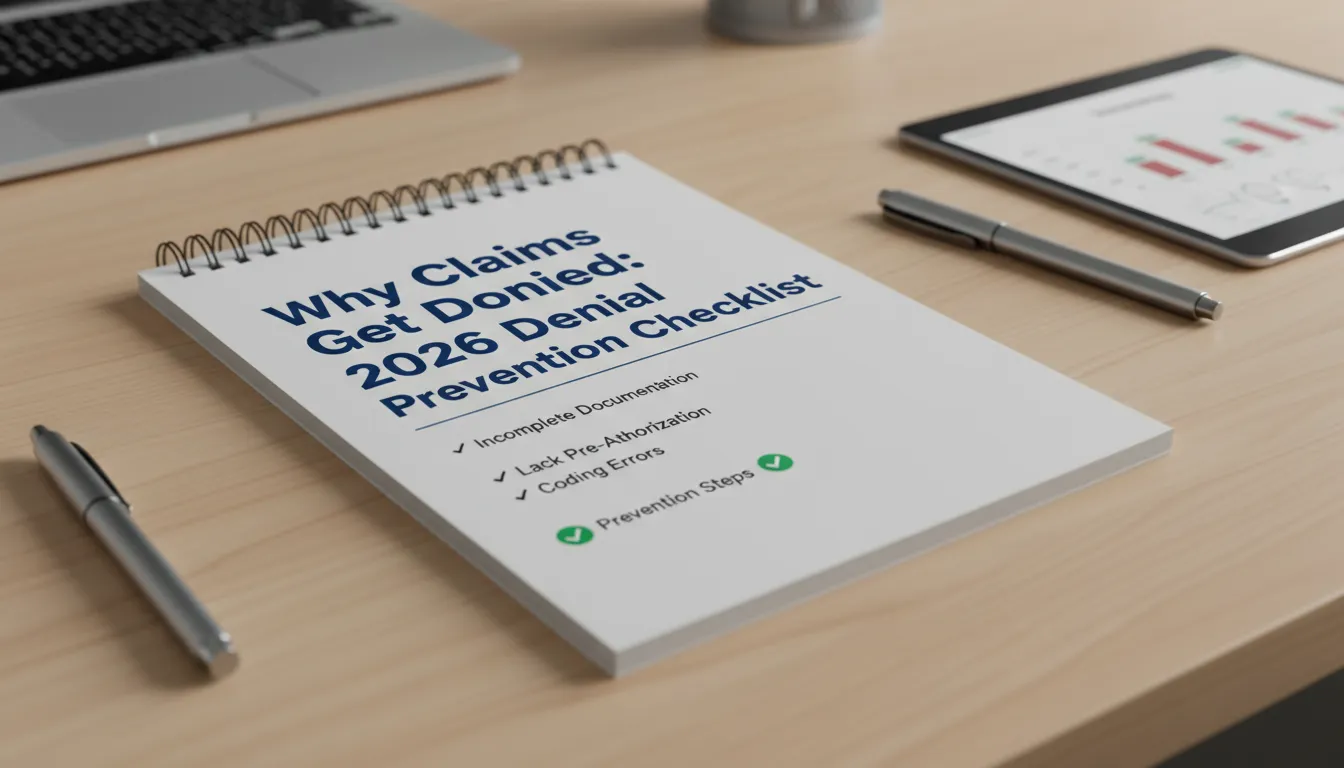
Even with the best home warranty plumbing coverage, about 30% of claims are denied on the first visit. Why? Because homeowners often provide the “wrong” information to the technician. In 2026, warranty companies use strict algorithmic filters to flag claims for lack of maintenance or pre-existing conditions.
The “Normal Wear and Tear” Threshold Defined
To get a “Yes” from the adjuster, the failure must be the result of the unit just wearing out over time.
Approved: A 10-year-old P-trap that developed a pinhole leak due to age.
Denied: A pipe that burst because you let your home drop to 40°F in the winter (frozen pipes are often excluded as “preventable”).
The Evidence of Maintenance: Why You Need a Plumbing Log
The #1 reason for denial in 2026 is “Failure to Maintain.” If a technician sees massive sediment buildup in your water heater, they will claim you never flushed it, and the company will deny the replacement.
Pro Secret: The “Plumbing Diary” Trick. Keep a simple digital folder or notebook with the following:
Annual Flush: Dates you flushed the water heater.
Valve Exercise: Dates you turned your main shut-off valve and angle stops to ensure they aren’t seized.
Anode Rod Check: Photos of your water heater’s anode rod every 3 years.
The 2026 Denial Prevention Checklist
Before you call the warranty company, run through this list to ensure your claim stays “Safe”:
Check for “Accidental” Signs: Is there a dent in the pipe? (Denied).
Verify Access: Is the leak behind a permanent kitchen cabinet? (Coverage for access might be capped at $1,000).
Confirm the “Cause of Failure”: When the plumber arrives, ask them: “In your professional opinion, did this fail due to normal age and use?” Ensure they write those exact words on the service receipt.
Expert Warning: Never mention a “pre-existing” issue. If you tell the tech, “It’s been dripping for months,” the claim is dead. To a warranty company, a drip is a “pre-existing condition” you failed to report.
What’s NEVER Covered: The Hidden “Concrete” and “Foundation” Traps
In 2026, the biggest shock for homeowners isn’t the leak itself—it’s the access cap. While your home warranty plumbing coverage might promise to fix a “pipe under the slab,” the fine print often limits how much the company will pay to actually reach it.
The Slab Leak Access Cap ($1,000–$1,500)
A slab leak occurs when a pipe bursts beneath your concrete foundation. While a plumber may only charge $300 to fix the pipe, the cost to jackhammer through the slab, or tunnel under it, can easily exceed $2,500.
The Trap: Most standard warranties cap “concrete access” at $1,000 to $1,500.
The Out-of-Pocket Reality: If the excavation costs $3,000, you are responsible for the $1,500 balance, even if the pipe repair itself is “fully covered.”
[Image: Infographic showing a “Slab Leak” with a line dividing ‘Pipe Repair’ (Covered) vs ‘Concrete Demolition’ (Capped)]
Common Plumbing Exclusions (2026 List)
Beyond foundation issues, there are several “No-Go” zones where even premium plans won’t step in:
Root Infiltration: If a tree root collapses your sewer line 20 feet into your yard, it’s rarely covered under a base plan. You usually need an “Enhanced Main Line” rider.
Chemical Damage: Using caustic drain cleaners (like Drano) can actually void your warranty. If the plumber finds chemical corrosion, the claim is instantly denied.
Outside the Perimeter: Any pipes located outside the main foundation of the home—including sprinkler systems, pool plumbing, and detached guest houses—require separate add-on coverage.
Water Softeners & Filtration: These are considered “auxiliary systems.” Unless you specifically paid for a “Water Softener” add-on, the warranty company won’t touch them.
Pro Secret: The “Reroute” Alternative
If you have a slab leak and the access costs are too high, ask your plumber about a reroute. Instead of breaking concrete, they run a new line through your walls or attic. Many 2026 warranty plans will apply your coverage toward the reroute, which often costs less out-of-pocket than a concrete excavation.
Home Warranty vs. Homeowners Insurance: The Grey Area Revealed

One of the most expensive mistakes a homeowner can make in 2026 is filing a claim with the wrong company. While both offer protection, they cover different “halves” of a plumbing disaster.
The “Primary” vs. “Secondary” Rule
The easiest way to remember the difference is the Primary vs. Secondary rule:
Home Warranty (Primary Damage): Covers the mechanical failure itself. It pays for the plumber to fix the burst pipe or replace the failed water heater.
Homeowners Insurance (Secondary Damage): Covers the consequences of the failure. It pays to replace your warped hardwood floors, soggy drywall, or moldy carpets caused by that same burst pipe.
Scenario: Your second-story toilet tank cracks and floods the ceiling below.
The Home Warranty pays to replace the toilet tank.
Homeowners Insurance pays to cut out the wet drywall, dry the floor, and repaint the ceiling.
Comparison: Who Pays for What?
| Scenario | Home Warranty | Homeowners Insurance |
| Sudden Pipe Burst | Pays to repair the pipe. | Pays for water damage cleanup. |
| Slow, Seeping Leak | Denied (Maintenance issue). | Denied (Neglect/Gradual damage). |
| Frozen Pipes | Often Denied (Preventable). | Covered (If the house was heated). |
| Sewer Backup | Clears the clog (up to 125ft). | Pays for cleanup (Needs “Backup” rider). |
| Old Water Heater Leak | Pays to replace the unit. | Pays for damage to the utility room. |
The 2026 “Insurance Trap”
In 2026, insurance companies are increasingly denying claims if they find the “source” of the leak was a preventable maintenance issue. If your home warranty denies the pipe repair because you haven’t flushed your lines in years, your insurance company may use that same “neglect” finding to deny your $10,000 floor claim.
Expert Tip: If you have a major leak, call your Home Warranty first to fix the source. Once the source is repaired, your Insurance Adjuster has much less room to argue that the damage was “ongoing” or “neglected.”
Pro Secret: The “125-Foot Rule” and Main Line Stoppages
Most homeowners assume that if their toilet won’t flush, the home warranty company will fix it regardless of where the clog is. In 2026, the industry standard has shifted, and your home warranty plumbing coverage is now strictly governed by the “125-Foot Rule.”
What is the 125-Foot Rule?
This rule specifies the maximum distance a warranty-approved plumber is required to “snake” or cable a drain line to clear a stoppage.
The Standard: Most providers (like American Home Shield) cover up to 100 feet from the access point.
The Premium Edge: A few companies, such as First American Home Warranty, have extended this to 125 feet, giving you an extra 25 feet of protection for long sewer laterals.
The “Access Point” Catch
The distance isn’t measured from the house; it’s measured from the accessible cleanout. If your main line clogs 110 feet away from your house, but you don’t have an outdoor cleanout and the plumber has to snake from a roof vent, they are already starting “behind” on the footage.
To ensure your stoppage claim is approved:
Locate Your Cleanout: If it’s buried under mulch or grass, find it before the plumber arrives. If they have to “locate” it, they may charge an extra $75–$150.
Check for Roots: If the plumber pulls back tree roots on the cable, the 125-foot rule usually becomes irrelevant. Most 2026 base plans exclude root damage entirely, classifying it as “outside influence” rather than “normal wear and tear.”
The “Hydro-Jetting” Upgrade
If a standard sewer cable can’t clear the blockage, the plumber might recommend hydro-jetting (high-pressure water blasting).
Insider Tip: Standard plans almost never cover hydro-jetting. It is considered an “advanced maintenance procedure.” Expect to pay $400–$600 out-of-pocket unless you have a high-tier “Platinum” plan that explicitly includes it.
Expert Tips: How to Handle a Plumbing Emergency Without Voiding Your Warranty
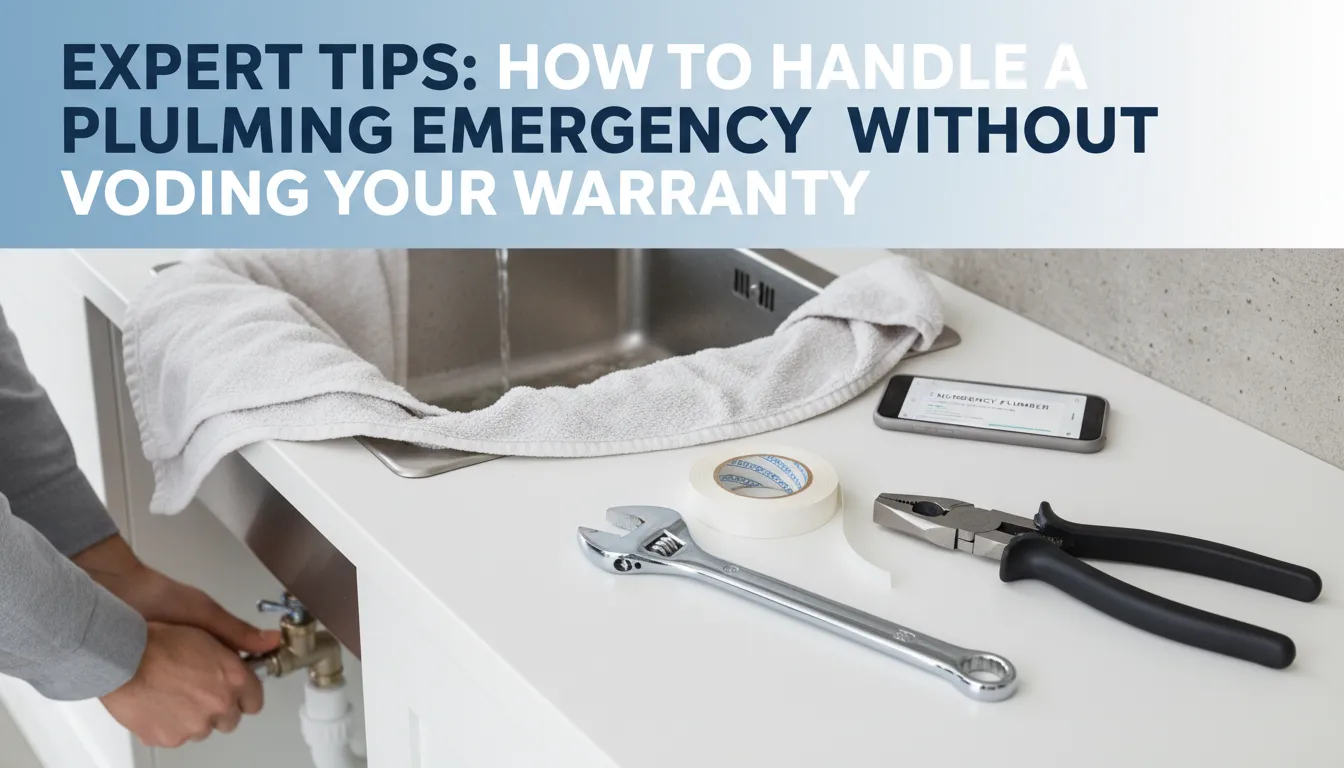
In a 2026 plumbing crisis, your first instinct is to call the nearest 24/7 plumber. Stop. If you hire an out-of-network plumber without prior authorization, your home warranty company will almost certainly deny your reimbursement claim.
The “Emergency Protocol” for 2026
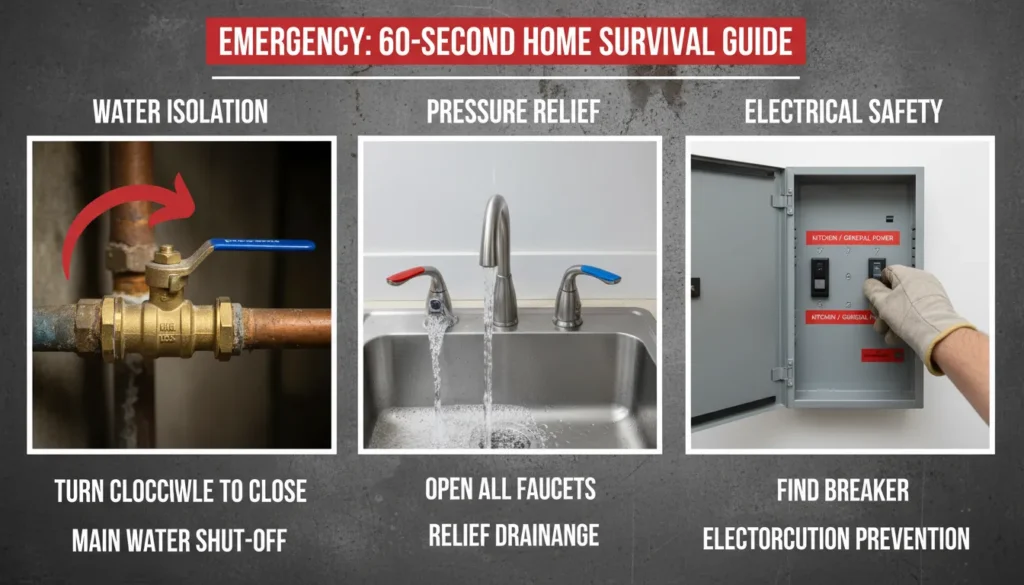
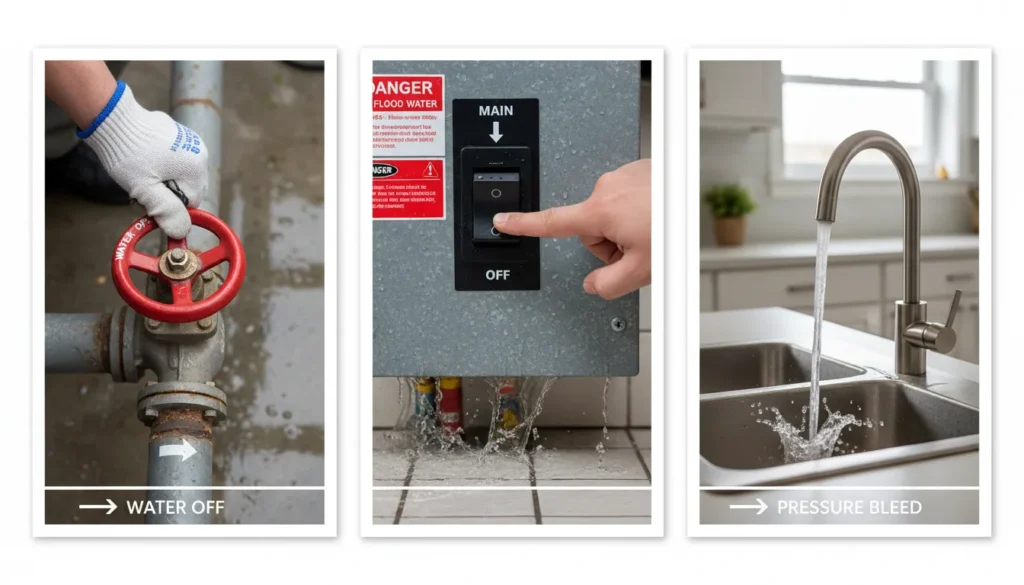
To save your home and your coverage, follow this strict sequence:
Kill the Source: Immediately turn off the main water shut-off valve. (Expert Tip: Tag this valve with a bright red ribbon today so you aren’t searching for it while your basement floods).
Contact the Warranty Provider First: Most companies, like American Home Shield or Liberty Home Guard, have 24/7 emergency lines or mobile apps. You must give them the first chance to dispatch a “network” technician.
Request “Out-of-Network” Authorization: If the warranty company can’t find a plumber within 4–24 hours, ask them for a tracking number or email confirmation that allows you to hire your own licensed plumber.
No DIY “Surgery”: You can put a bucket under a leak or use a plunger, but do not disassemble the pipes. If a technician sees a partially dismantled system, they can label the failure as “improper homeowner repair” and walk away.
Common Mistakes to Avoid
The “Drano” Trap: Never use chemical drain cleaners before a warranty visit. If the plumber finds caustic chemicals in the line, it can void the coverage for that stoppage.
The “Pre-Existing” Slip-Up: When the plumber asks when the leak started, never say “it’s been dripping for weeks.” In 2026, a “slow leak” that you failed to report is considered owner negligence.
Secondary Damage Ignorance: Don’t wait for the warranty company to “clean up” the water. They won’t. Call your homeowners insurance or a water restoration company immediately to mitigate the damage.
Safety Warning: If you smell gas or suspect a sewer backup into your living space, leave the house immediately and call 911 or your local utility. Your life is worth more than a $125 service fee.
People Also Asked (The Deep FAQ)
Homeowners in 2026 are more cautious than ever about hidden clauses. Here are the most searched questions regarding home warranty plumbing coverage, answered with today’s industry standards.
Does a home warranty cover slab leaks in 2026?
Yes, but with a major caveat. Most 2026 plans cover the pipe repair under the concrete, but they cap access and restoration (the cost to jackhammer the slab and patch it back up) at $1,000 to $1,500. If your excavation costs $3,000, you will pay the remaining $1,500 out of pocket.
Are polybutylene pipes covered by standard plans?
Rarely. Because polybutylene (PB) is notorious for sudden, catastrophic failure, most “Standard” or “Basic” 2026 plans exclude it. You usually need a high-tier “Elite” plan or a specific “Legacy Pipe” rider to get coverage for PB leaks.
Will a home warranty pay for a clogged toilet?
Yes, provided the clog is caused by normal use. If the plumber finds a toy or non-flushable wipes, the claim will be denied as “misuse.” Additionally, coverage is usually limited to clogs that can be cleared with a standard sewer cable; hydro-jetting is typically an extra out-of-pocket cost.
How much is the average plumbing service fee?
In 2026, service fees (your “deductible” per visit) range from $75 to $125. Plans with lower monthly premiums often have the $125 fee, while “high-premium” plans might offer a $75 fee. You must pay this even if the plumber determines the issue is not covered.
Does the warranty cover showerheads and faucets?
In most base plans, faucets and showerheads are covered for leaks, but replacements are limited to “builder-grade” models. In 2026, many companies like Liberty Home Guard offer this as an optional “Plumbing Fixtures” add-on for high-end or designer hardware.
Final Verdict: Is Home Warranty Plumbing Coverage Worth the Service Fee?
In 2026, deciding if home warranty plumbing coverage is “worth it” comes down to a simple math equation: Your Annual Premium + Service Fees vs. the Real-World Cost of Repairs.
The 2026 Cost Comparison
If you don’t have a warranty, a single plumbing visit in 2026 averages $114 to $178 per hour, with emergency rates soaring above $340. Compare that to a fixed warranty service fee of $75 to $125.
| Plumbing Project | Out-of-Pocket Cost (2026) | Warranty Cost (Service Fee) |
| Water Heater Replacement | $1,200 – $2,500 | $75 – $125 |
| Main Line Drain Clearing | $350 – $600 | $75 – $125 |
| Toilet Replacement (Labor + Unit) | $450 – $800 | $75 – $125 |
| Sump Pump Repair | $500 – $900 | $75 – $125 |
When It Is Absolutely Worth It:
Older Homes (10+ Years): If your water heater or sump pump is nearing the end of its life, the warranty pays for itself with just one replacement.
Low Emergency Savings: If a $2,000 surprise pipe burst would break your budget, the $45–$80 monthly premium acts as a manageable “insurance” for your cash flow.
First-Time Buyers: If you aren’t “handy” and don’t have a trusted list of contractors, the warranty company handles the logistics for you.
When You Should Skip It:
New Construction: If your home is under 2 years old, your systems are likely still under the manufacturer or builder’s warranty.
D.I.Y. Masters: If you prefer choosing your own high-end fixtures and doing the labor yourself, the “builder-grade” replacement policy of most warranties will frustrate you.
Home warranty plumbing coverage is a financial tool, not a “total home care” service. It is designed to protect you from catastrophic failure, not cosmetic upgrades. If you enter the contract knowing the $1,500 caps and keeping a maintenance log, it is one of the smartest ways to stabilize your 2026 housing budget.
Proactive Defense: Your Home Warranty Maintenance Log
In 2026, warranty adjusters look for any reason to label a failure as “lack of maintenance.” Use this log to document your routine care. If a claim is ever questioned, providing this record can be the difference between a $0 repair and a $2,000 replacement bill.
The “No-Neglect” Maintenance Schedule
| Frequency | Task | Why It Matters for Your Claim | Date Completed |
| Monthly | Visual Leak Audit | Proves you didn’t ignore a “slow drip” (Pre-existing condition). | |
| Monthly | Drain Flow Test | Bubbles or slow swirls indicate a clog before it becomes a backup. | |
| Quarterly | Valve “Exercise” | Ensures main and fixture shut-offs aren’t seized (Required for coverage). | |
| Quarterly | Food Color Toilet Test | Detects silent leaks in the flapper/fill valve. | |
| Bi-Annual | Aerator/Showerhead Cleaning | Prevents mineral buildup that causes “low-pressure” denials. | |
| Annual | Water Heater Flush | CRITICAL: Prevents sediment-related tank failures. | |
| Annual | Sump Pump “Bucket Test” | Verifies mechanical activation before storm season. | |
| Annual | Main Line Inspection | Checking the cleanout for root signs (Prevents exclusion). |
Expert Tips for Claim Success:
Take “Before” Photos: Every January, take a photo of your water heater, your main shut-off valve, and the area under your kitchen sink. This provides timestamped proof that the system was in good condition.
Save Every Receipt: If you pay a plumber for a small repair (like a washer replacement), keep the receipt. It proves you are a proactive homeowner.
The “Technician’s Note” Secret: When a warranty tech visits for a covered repair, ask them to write: “System shows signs of regular maintenance; failure due to normal wear and tear” on their report.
Why Trust EZ Plumbing Repair Services for Your Home?
Navigating home warranty plumbing coverage shouldn’t feel like a gamble. While your warranty provides a financial safety net, the quality of the repair and the speed of the service determine your long-term peace of mind. EZ Plumbing Repair Services bridges the gap between complex warranty jargon and high-quality, reliable results.
As a State Certified Contractor with over 20 years of hands-on experience, we don’t just patch leaks—we provide lasting solutions. Whether you are dealing with a stressful slab leak, a failing water heater, or a stubborn main line stoppage, our 5-star rated team uses advanced electronic leak detection and video inspections to ensure the job is done right the first time. We pride ourselves on honest, transparent craftsmanship that keeps your home safe and your out-of-pocket costs low.
Don’t let a plumbing emergency drain your energy or your wallet. Whether you’re filing a warranty claim or need an expert second opinion to avoid a costly denial, we are here 24/7 to help. Call EZ Plumbing Repair Services at (786) 239-6529 today or Book Your Service Online to get the expert care your home deserves!