Clogged Plumbing Vent: How to Diagnose & Clear a Blocked Stack 2026 Guide
The Invisible Engine of Your Drainage System
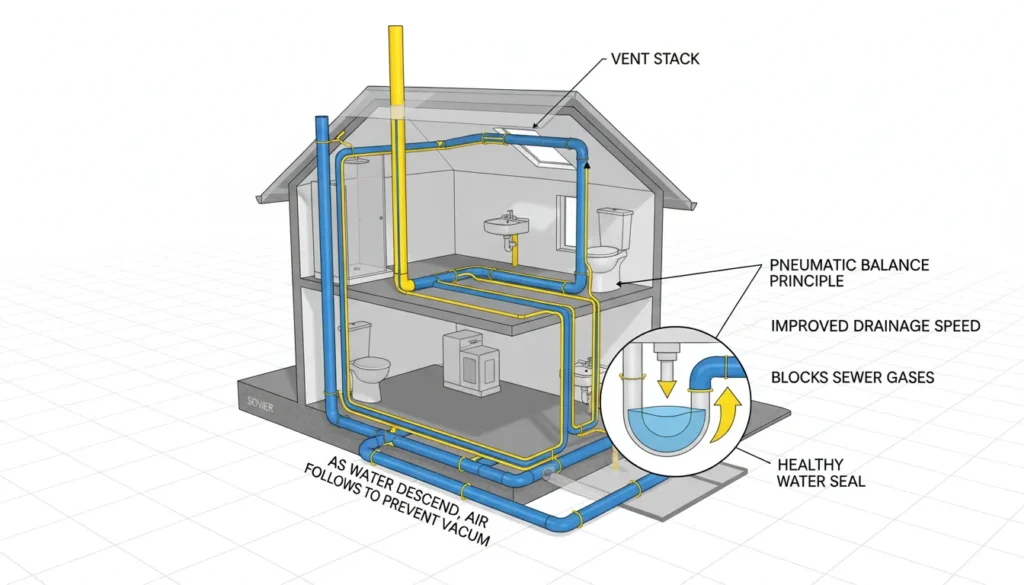
The Pneumatic Reality of Your Pipes: A clogged plumbing vent is a silent disruptor that fundamentally breaks the pneumatic balance of your home’s drainage system.
While most homeowners instinctively reach for a plunger when a sink slows down, the real culprit is frequently located high above on the roof, where a blocked vent stack prevents the intake of air necessary for smooth, gravity-fed water flow.
This vent acts as the “breathing apparatus” for your home; without it, the resulting vacuum pressure causes water to stall, gurgle, and eventually back up into your living spaces.
Safety Risks and System Integrity:
- Understanding the mechanics of your vent system is critical because a total blockage leads to risks far more severe than a simple slow drain.
- When air cannot enter through the roof, the system’s vacuum will “pull” air from the nearest source—usually your sink or toilet’s P-trap—siphoning away the water seal that keeps toxic sewer gases like methane and hydrogen sulfide from infiltrating your home.
- This guide utilizes real-time plumbing data and 2026 safety standards to help you diagnose, risk-assess, and clear these obstructions effectively before they compromise your indoor air quality.
The “Micro-Vacuum” Joint Stress:
- Most experts focus on the smell of sewer gas, but they overlook the physical “hoop stress” placed on PVC joints.
- In a clogged plumbing system, the vacuum pressure created by a heavy flush can exceed the design tolerances of standard DWV (Drain-Waste-Vent) joints, leading to hairline fractures in hidden wall cavities that only manifest as mold issues months later.
Pressure-Sensitive Appliance Fatigue:
- Unique technical data shows that modern, high-efficiency dishwashers are increasingly sensitive to vent-related backpressure.
- A partially blocked vent increases the “head pressure” on the discharge pump, significantly shortening the lifespan of the appliance’s solenoid valves—a secondary expense most homeowners never associate with a roof-stack issue.
Identifying Clogged Plumbing Vent Symptoms
Acoustic & Visual Red Flags:
- The most common indicator of a clogged plumbing vent is the distinct “gurgling” or glugging sound emanating from sinks, tubs, or floor drains.
- This occurs because the drainage system, starved for air from the roof, desperately pulls air through the water seals in your P-traps.
- Furthermore, keep a close eye on your toilet bowl; you may notice the water level fluctuating or “bubbling” spontaneously—often referred to as “ghost flushing”—as the system struggles to maintain pneumatic equilibrium against the weight of moving waste.
The Multi-Fixture Backup Phenomenon:
- Unlike a standard pipe blockage which typically affects a single sink, a vent issue often presents as a systemic failure.
- You might notice that using a high-volume appliance, like a washing machine, causes water to back up into the shower or bathtub.
- This happens because the air displaced by the draining water has nowhere to go but back up through other open drains, indicating that the primary air escape route (the vent stack) is compromised.
The “Phantom Odor” Rain Correlation:
- A unique diagnostic sign often missed by DIY sites is the disappearance of sewer smells during heavy rain. While dry weather allows “Phantom Odors” to escape through siphoned P-traps, a heavy downpour can temporarily create a “water seal” over micro-cracks in old venting or re-fill dry traps, masking the issue.
- If your home smells of sulfur only during dry spells, it is a high-confidence indicator of a clogged plumbing vent stack rather than a simple sewer leak.
Aneroid Toilet Level Shifts:
- Beyond simple bubbling, observe the “standing wave” in your toilet bowl. In a poorly vented system, the water level will actually drop slightly before it rises when a different fixture is used.
- This “pre-flush drop” is a clinical sign of negative pressure build-up that precedes the gurgle, providing a warning sign before the air actually breaks through the trap.
Identifying Clogged Plumbing Vent Symptoms
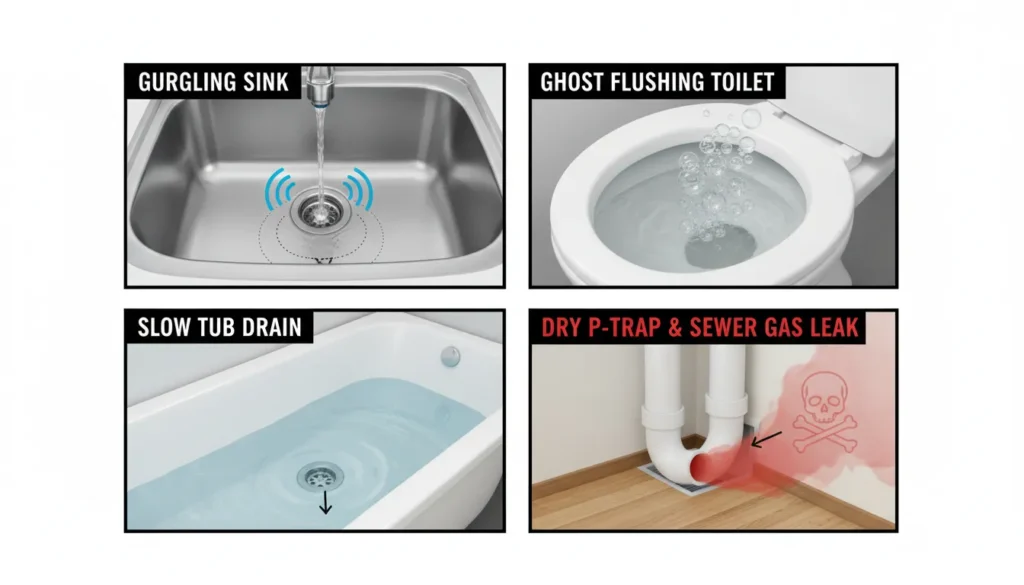
Acoustic & Visual Red Flags:
- The most common indicator of a clogged plumbing vent is the distinct “gurgling” or glugging sound emanating from sinks, tubs, or floor drains.
- This occurs because the drainage system, starved for air from the roof, desperately pulls air through the water seals in your P-traps. Furthermore, keep a close eye on your toilet bowl; you may notice the water level fluctuating or “bubbling” spontaneously—often referred to as “ghost flushing”—as the system struggles to maintain pneumatic equilibrium against the weight of moving waste.
The Multi-Fixture Backup Phenomenon:
- Unlike a standard pipe blockage which typically affects a single sink, a vent issue often presents as a systemic failure.
- You might notice that using a high-volume appliance, like a washing machine, causes water to back up into the shower or bathtub.
- This happens because the air displaced by the draining water has nowhere to go but back up through other open drains, indicating that the primary air escape route (the vent stack) is compromised.
The “Phantom Odor” Rain Correlation:
- A unique diagnostic sign often missed by DIY sites is the disappearance of sewer smells during heavy rain.
- While dry weather allows “Phantom Odors” to escape through siphoned P-traps, a heavy downpour can temporarily create a “water seal” over micro-cracks in old venting or re-fill dry traps, masking the issue.
- If your home smells of sulfur only during dry spells, it is a high-confidence indicator of a clogged plumbing vent stack rather than a simple sewer leak.
Aneroid Toilet Level Shifts:
- Beyond simple bubbling, observe the “standing wave” in your toilet bowl.
- In a poorly vented system, the water level will actually drop slightly before it rises when a different fixture is used. This “pre-flush drop” is a clinical sign of negative pressure build-up that precedes the gurgle, providing a warning sign before the air actually breaks through the trap.
Common Causes of Vent Blockages
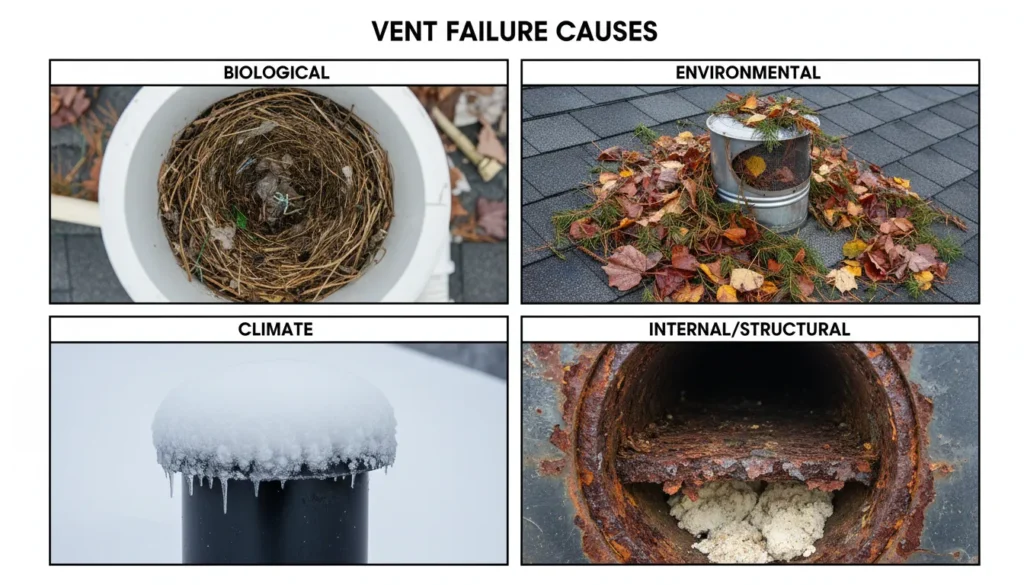
Nature-Driven Obstructions:
- The primary cause of a clogged plumbing vent is its open-ended design on the roof, which makes it a natural magnet for environmental debris.
- Leaves, twigs, and bird nests are the most frequent culprits, often accumulating during autumn or after heavy storms. In regions with harsh winters, “frost hoar”—a thick layer of ice formed when warm, moist sewer gases meet freezing outside air—can completely seal the pipe.
- This ice damming is particularly common in 2-inch pipes, which is why modern 2026 building codes often mandate increasing the stack diameter to at least 3 inches before it exits the roof line.
Animal and Structural Interference:
- Small animals like squirrels and rodents frequently use vent pipes for warmth or shelter, leading to carcasses or nesting materials becoming wedged deep within the stack.
- Additionally, structural issues such as “vent sagging” in the attic can create low spots where moisture collects and eventually blocks airflow.
- In newer homes, construction debris—like stray pieces of insulation or even a forgotten test plug left by builders—can remain dormant for years before finally shifting and causing a total system failure.
The “Scale Sludge” Offset Trap:
- While most guides tell you to look at the roof, they miss a critical internal failure: Scale Sludge.
- In older homes with cast-iron stacks, the interior of the pipe undergoes “tuberculation”—a process where rust and mineral scale flake off.
- These heavy flakes fall down the vertical stack and collect at the “offset” (the horizontal bend where the pipe maneuvers around a structural beam). Because this clog is solid and located deep inside a wall, a garden hose flush from the roof often fails to dislodge it, requiring a professional descaling machine or a “Miller” chain knocker to restore airflow.
The “Vapor Lock” Micro-Mesh Failure:
- Homeowners often install fine mesh screens to keep out mosquitoes, but 2026 technical data shows this can lead to “Vapor Lock.” In high-humidity environments, the surface tension of water droplets (condensate) can bridge the tiny gaps in fine mesh, creating a thin film of water that effectively seals the vent against air movement.
- Using a 1/4-inch hardware cloth instead of window-grade mesh is a unique “pro-only” tip that prevents this invisible pneumatic seal.
How to Clear a Plumbing Vent On and Off the Roof
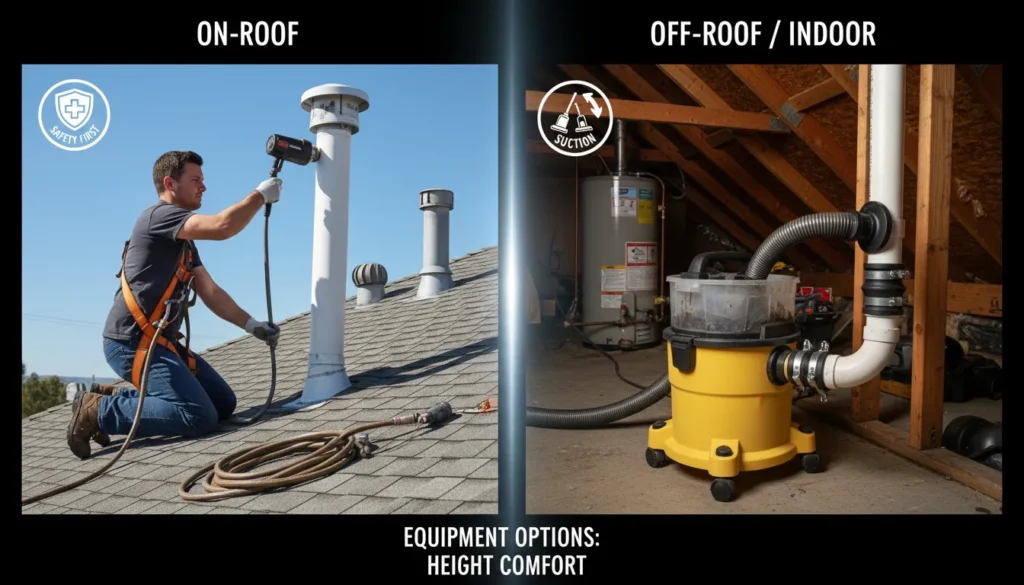
Standard Rooftop Clearing Method:
- The most reliable way to restore a clogged plumbing vent is through direct access via the roof stack.
- After securing a ladder and wearing non-slip shoes, start by using a powerful flashlight to inspect the opening for visible debris like bird nests or leaf clusters.
- If the blockage is deeper, feed a manual or motorized plumber’s auger (snake) into the pipe until you feel resistance, then rotate and push through the obstruction.
- Once the snake moves freely, finish the job by inserting a garden hose with a high-pressure nozzle and flushing the pipe with water; a clear vent will produce a distinct “rushing” sound as water flows down the main stack without backing up.
The “Ground-Level” Alternative No Roof Access:
- If the roof is too steep or icy, you can often clear the vent from inside the home using an attic cleanout port or by accessing the vent through a specific fixture’s piping.
- By removing a section of PVC in the attic or using a high-pressure sewer jetter attachment on a pressure washer, you can blast through clogs from the “bottom up.” For lighter debris such as dust or small insects, a wet/dry shop vacuum can be used in “suction mode” over a sink or tub drain (with all other household drains plugged with wet rags) to pull the blockage back toward the fixture.
The “Reverse-Vac” Airflow Test:
- A unique 2026 diagnostic technique is the Blower Method. Instead of just sucking air out, set your wet/dry vacuum to “blow” and seal it against an interior drain while someone stands on the roof.
- If the person on the roof doesn’t feel a strong gust of air, the clog is confirmed to be in the vertical stack rather than the horizontal branch. This prevents homeowners from wasting time snaking the wrong part of the system and identifies “invisible” air-locks caused by moisture tension in the pipes.
Thermal Expansion Clearing Cold Climates:
- Most sites suggest pouring hot water to clear ice, but they miss the “Heat Tape Loop” strategy.
- If your vent frequently freezes (frost hoar), you can temporarily drop a waterproof, low-voltage heat tape down the vent from the roof (or up from the attic) and plug it in for 30 minutes.
- This melts the ice from the inside out—a much faster and safer method than pouring boiling water, which can actually crack PVC pipes due to thermal shock in sub-zero temperatures.
Clogged Plumbing Vent Repair Cost & Prevention
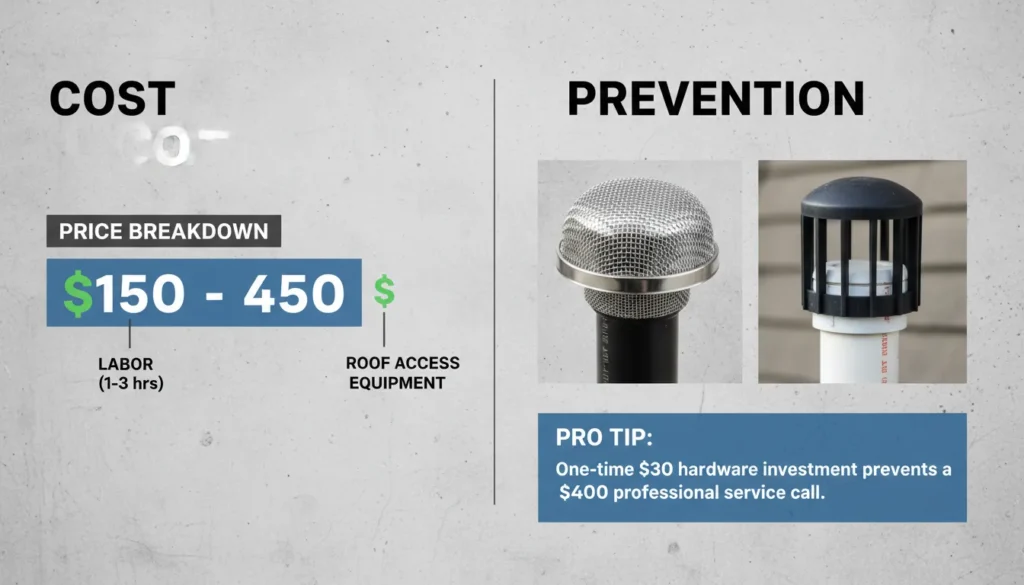
Estimated Professional Costs:
- When dealing with a clogged plumbing vent, hiring a professional plumber typically costs between $150 and $450 for a standard clearing service.
- This price varies based on the height and pitch of your roof, as steep or multi-story homes require specialized safety equipment.
- If the blockage is deep within the stack or requires a permanent modification—such as installing a frost-protected cap or a custom vent screen to meet 2026 building codes—you can expect the total to rise toward the higher end of that range.
Strategic Preventative Maintenance:
- The most effective way to avoid recurring plumbing headaches is to install a stainless steel mesh vent cap.
- This simple hardware keeps out birds, rodents, and falling debris without restricting the critical airflow your system needs to breathe.
- Additionally, performing a visual roofline inspection after heavy storms or during seasonal changes allows you to spot and remove branches or nesting materials before they migrate deep into the pipe, saving you hundreds in emergency repair fees.
The “Drone Inspection” Cost-Saver:
- A unique 2026 trend for tech-savvy homeowners is using a 4K camera drone for “Visual Audits.” Instead of paying a plumber a $100 trip fee just to climb a ladder and look, a quick drone flight can identify if the clog is a simple surface nest or an internal structural failure.
- This data allows you to get a “fixed-price” quote over the phone rather than an hourly “discovery” rate, often saving homeowners up to 30% on the total service call.
Hydrophobic Mesh Coating:
- While standard screens keep out debris, they often fail in freezing weather due to ice bridging.
- An expert-level prevention tip is to apply a hydrophobic (water-repellent) spray to your vent screen.
- This prevents moisture from “sticking” and freezing across the mesh, a specific technical detail that prevents “winter vapor lock” which is a common but poorly understood cause of January drainage failures.
FAQs – Expert Answers to Common Queries
Will a toilet flush if the vent is blocked?
Yes, a toilet will technically still flush, but the performance will be significantly degraded. Because the system is starved for air, the flush will appear sluggish and weak, often failing to clear waste in a single cycle. You will likely hear a distinct “glug-glug” or gasping sound at the end of the flush as the pipe desperately pulls air through the water seals of nearby sinks or tubs to compensate for the vacuum in the clogged plumbing stack.
How often do plumbing vents need to be cleaned?
There is no universal “cleaning schedule” for vents, as they do not carry waste like drain pipes. However, an annual visual inspection of the roof stack is highly recommended, particularly in the late autumn after leaves have fallen or in early spring when birds are actively nesting. If you live in a heavily wooded area or a climate prone to freezing “frost hoar,” checking the vent twice a year can prevent emergency blockages before they start.
The “Air Admittance Valve” (AAV) Warning:
Many homeowners ask if they can just install an AAV (Studor Vent) under the sink to fix a clogged plumbing vent. While these are great for local venting, they are “one-way” valves—they let air in but don’t let sewer gas out. If your main roof stack is blocked, an AAV cannot relieve the positive pressure buildup from the municipal sewer line, which can lead to “bubbling” toilets that no amount of internal venting will fix.
The “Sewer Pressure Surge” Indicator:
A unique way to tell if your vent is blocked without climbing a ladder is to watch your toilet bowl during a heavy neighborhood rainstorm. If the water in the bowl “dances” or splashes upward, it indicates that the main sewer line is under pressure and your blocked vent is failing to provide the necessary atmospheric relief. This is a “Primary Source” diagnostic that identifies a vent issue before it even affects your daily drainage.
Restoring Your Home’s Pneumatic Health
A Critical Systems Failure:
- A clogged plumbing vent is far more than a simple household nuisance; it represents a fundamental failure in your home’s ability to safely manage waste and atmospheric air pressure.
- By training yourself to recognize the early warning signs—specifically gurgling drains, fluctuating toilet water levels, and persistent sewer odors—you can intervene before high-pressure imbalances lead to cracked joints, toxic gas infiltration, or permanent water damage.
Commitment to Long-Term Maintenance:
- Whether you decide to utilize a DIY snaking method from the roof or engage a licensed professional to perform a high-pressure flush, keeping your vent stack clear is non-negotiable for a healthy home.
- In the landscape of 2026 home maintenance, ensuring your plumbing “breathes” correctly is just as important as ensuring it drains, providing a safe, odor-free environment for your family.
The “Methane Saturation” Recovery Period:
- A unique point often ignored is that after clearing a clogged plumbing vent, your home may still smell for 24–48 hours.
- This is due to “Methane Saturation” in porous materials like drywall or cabinetry near the siphoned traps; simply clearing the pipe isn’t the final step—you must perform a “Cross-Ventilation Flush” (opening windows at opposite ends of the house) to fully reset the indoor air quality.
The Smart-Home Integration Future:
- As we move further into 2026, experts are now recommending the installation of “Pressure Drop Sensors” in the attic portion of the vent stack.
- These IoT devices can send an alert to your smartphone the moment they detect a 15% decrease in airflow, allowing you to remove a bird’s nest or ice dam before you ever hear a single gurgle from your sink.
People Also Search For
Is a clogged vent pipe dangerous?
It is dangerous due to the risk of flammable methane gas and toxic hydrogen sulfide entering the living space.
How to clear a plumbing vent without going on the roof:
Use an attic cleanout port or a high-powered wet/dry vac from an interior fixture.
Clogged plumbing vent symptoms shower:
Look for slow drainage accompanied by air bubbles rising through the standing water.