Clogged Plumbing Vent Symptoms: What Happens When Your Vent is Blocked?
Plumbing vents, though often hidden and out of sight, play a crucial role in your home’s plumbing system. They’re the unsung heroes that regulate air pressure, allow wastewater to flow smoothly, and most importantly, expel dangerous sewer gases out of your home. When a plumbing vent becomes blocked, it can lead to a cascade of plumbing problems. But what exactly happens if your plumbing vent is clogged?
In this section, we’ll break down what a plumbing vent is, why it’s essential, and the potential issues that arise when it’s blocked.
What is a Plumbing Vent?
A plumbing vent, also known as a vent stack, is a vertical pipe that runs through your roof and connects to your main drainage system. Its primary purpose is to maintain proper air pressure within your plumbing system. By doing this, it ensures that wastewater moves freely through your pipes. Without the vent, the system would struggle to operate, leading to airlocks and drainage issues.
A properly functioning plumbing vent system also allows toxic gases from the sewer, such as methane and hydrogen sulfide, to safely escape into the atmosphere, instead of building up inside your home. These gases can be hazardous to health, so the vent plays an essential role in ensuring the air inside your house remains safe.
Why Is a Plumbing Vent So Important?
Plumbing vents are more than just pipes that release gases. They maintain a delicate balance in your plumbing system. The vent provides a path for air to enter the drainage system, which is necessary to replace the vacuum that occurs when water flows through the pipes. Without this air pressure regulation, water may not flow properly, and you could experience slow draining or even water backups.
Furthermore, plumbing vents ensure that the water in your pipes remains sealed in the P-traps (the curved sections of pipe beneath sinks, bathtubs, and toilets). The water in these traps forms a seal that blocks sewer gases from entering your home. If the vent is blocked, the pressure imbalance can cause the water in these traps to siphon out, allowing harmful gases to enter your living space.
What Happens When a Plumbing Vent is Blocked?
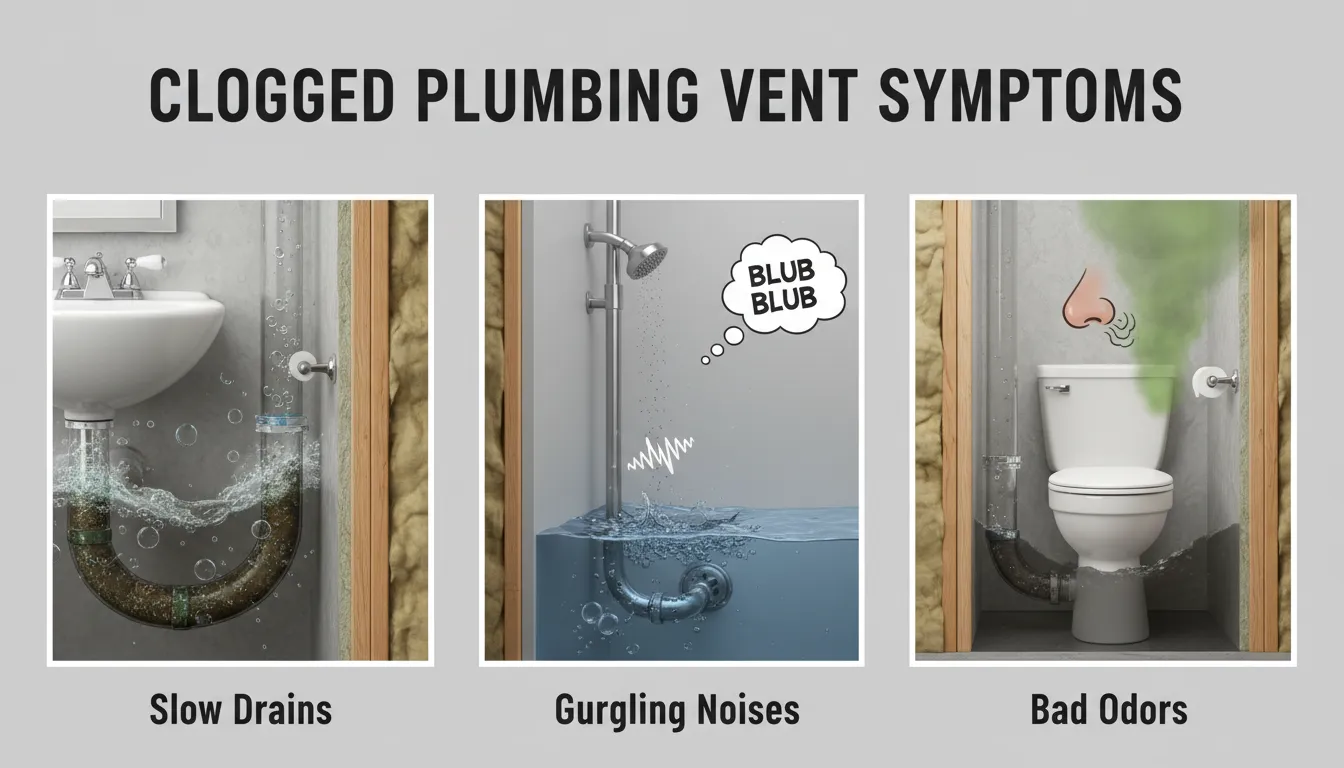
When a plumbing vent becomes obstructed by debris, leaves, nests, or even snow, it prevents air from flowing freely through the system. This blockage can cause a variety of symptoms that indicate your plumbing system is no longer operating at peak performance:
Gurgling Sounds: You may hear gurgling noises coming from your toilet or drains, especially after flushing or using the sink. This happens when air is trapped in the plumbing and cannot escape through the vent. The air then forces its way through the water in the drain, creating the familiar “glug-glug” sound.
Slow Drains: Without the proper air pressure, wastewater struggles to flow through your pipes. You may notice that multiple fixtures, such as sinks, showers, and toilets, are draining more slowly than usual. The pressure imbalance can cause wastewater to move at a much slower rate, leading to clogged pipes.
Foul Odors: A blocked vent may also cause sewer gases to back up into your home. If you notice foul odors around your drains or bathrooms, this is a clear sign that the vent is not functioning properly. Sewer gases, including methane and hydrogen sulfide, can cause headaches, dizziness, and even more serious health issues if not vented properly.
Water Backup: In more severe cases, the blockage can lead to water backing up into your sinks, tubs, or toilets. The lack of air pressure may prevent wastewater from flowing through the drain, and it could eventually spill over into your living spaces.
Conclusion
Your plumbing vent is an essential component that keeps your plumbing system functioning smoothly. When it’s blocked, it can lead to a series of frustrating problems—slow drains, foul odors, water backups, and even health risks from sewer gas buildup. The next step is to identify the common signs of a clogged plumbing vent so you can address the issue early, preventing costly repairs and potential damage.
Common Signs of a Clogged Plumbing Vent
If you suspect that your plumbing vent is blocked, it’s important to be able to recognize the signs early on. The symptoms of a clogged plumbing vent can often mimic other plumbing issues, such as clogged drain pipes or sewer line problems, making it crucial to pay attention to subtle clues. In this section, we’ll dive into the common signs that your plumbing vent is clogged, so you can address the issue before it escalates.
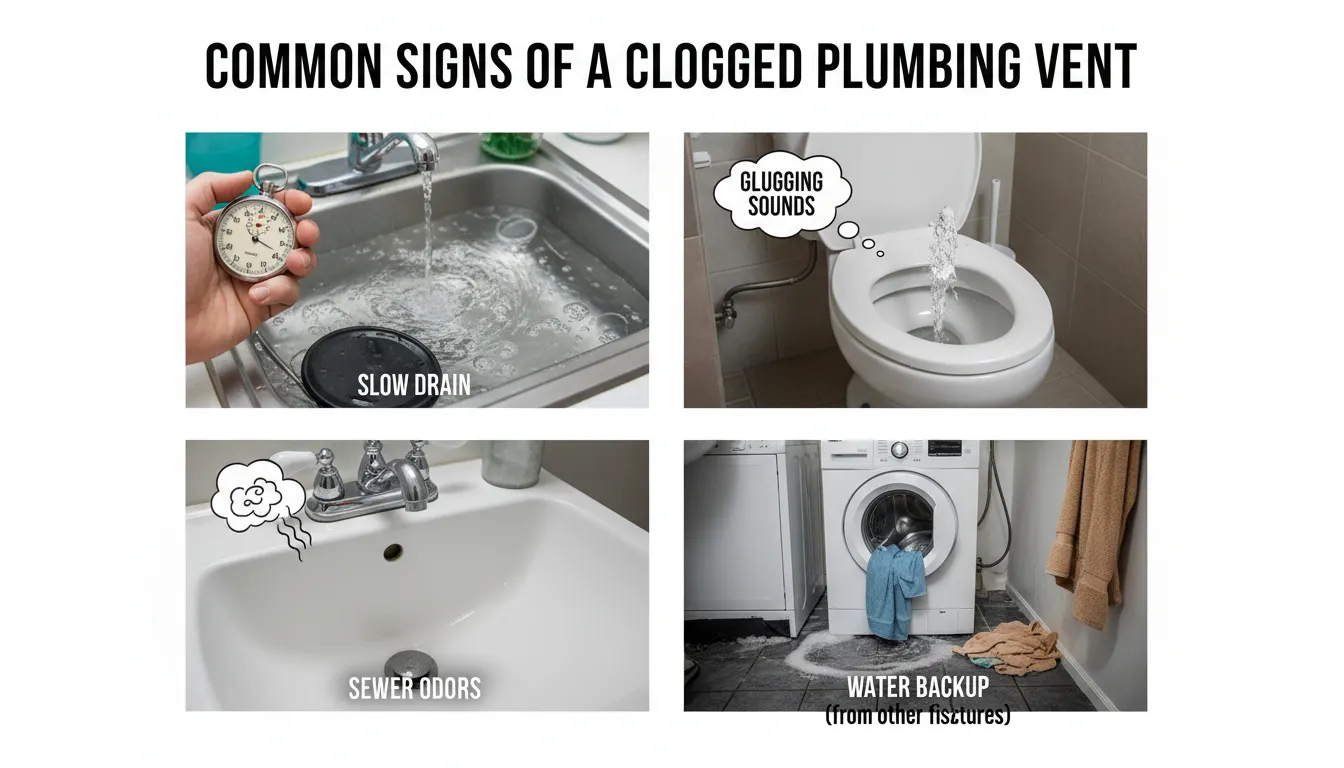
1. Gurgling Toilets or Drains
One of the most obvious and early signs of a clogged vent is hearing gurgling sounds in your drains or toilets. These sounds occur when air is trapped in the plumbing system and can’t escape properly through the vent stack. When water moves through the pipes, it creates a vacuum that needs air to replace it. If the vent is blocked, the air can’t exit the plumbing through the roof and is forced to bubble up through the nearest drain.
This is particularly noticeable after flushing the toilet or using sinks, showers, or bathtubs. The trapped air forces its way through the water in the pipes, which produces the characteristic “glug-glug” sound.
Why it happens: When the vent is blocked, there is no escape route for the air that accumulates as water moves through the plumbing system. The air then pushes through the water in the drain, causing the gurgling sound.
2. Slow or Sluggish Drains
If your plumbing vent is blocked, the air pressure in your pipes becomes unbalanced. This can lead to slow or sluggish drains throughout your home. You might notice that your sinks, bathtubs, showers, and toilets take longer than usual to drain. The water moves more slowly because the air pressure needed to push it through the system is compromised.
Why it happens: In a properly functioning system, the vent allows air to flow into the pipes and maintains the right pressure. When the vent is obstructed, there’s a lack of air circulation, which leads to slower water flow in your plumbing. The water has to fight against the vacuum created by the blockage, causing drainage issues.
3. Strange Odors (Sewer Gas Smell)
Another major indicator of a clogged plumbing vent is the presence of strange, foul odors coming from your drains. These odors are often associated with sewer gases, such as methane and hydrogen sulfide, which are produced by wastewater as it breaks down. A properly functioning plumbing vent releases these gases outside, through the roof, where they dissipate into the air. However, when the vent is blocked, these gases are unable to escape and may back up into your home, leading to unpleasant smells around your drains and toilets.
Why it happens: A blocked vent can cause negative pressure in your plumbing system, which can lead to the drying out of water seals in the P-traps. These water seals are meant to block sewer gases from entering your home. Without the vent working properly, those gases can seep back into your living space, creating foul smells.
Health note: Sewer gases are not just unpleasant; they can also be harmful to your health. Prolonged exposure to methane and hydrogen sulfide can cause headaches, dizziness, nausea, and, in extreme cases, suffocation.
4. Water Level Fluctuations in the Toilet
One of the lesser-known signs of a clogged vent is water level fluctuations in your toilet bowl. If the water level rises or falls unexpectedly, it could be a result of the pressure imbalance caused by a blocked vent. This is often a subtle indicator that your vent stack is obstructed and needs attention.
Why it happens: The vent stack is responsible for regulating air pressure in the plumbing system. If it’s clogged, the air pressure becomes uneven, causing water to fluctuate in the toilet bowl. This happens because the vent stack, which should release air pressure, is blocked, and there is no way for the system to balance the pressure.
5. Multiple Fixtures Backing Up Simultaneously
A more advanced sign of a clogged vent is water backing up in multiple fixtures at once. If flushing your toilet causes water to rise in your bathtub or sink, it could be a sign that the air pressure in your plumbing system is severely compromised. When the vent is blocked, the air pressure builds up inside the pipes, preventing wastewater from flowing freely. This blockage can cause water to back up into various parts of the plumbing system, leading to an overflow.
Why it happens: When a vent is blocked, it disrupts the air flow that keeps water moving smoothly through the system. This causes a pressure buildup, leading to backups in multiple fixtures simultaneously.
Conclusion:
Recognizing the signs of a clogged plumbing vent early can save you time, money, and prevent long-term damage to your plumbing system. If you notice any of the symptoms outlined above—whether it’s gurgling drains, slow draining, foul smells, fluctuating water levels, or backflow in multiple fixtures—it’s crucial to investigate further. The next step is to understand why plumbing vents get clogged and how to fix them before they cause more serious issues in your home.
Common Causes of Plumbing Vent Blockages
A clogged plumbing vent can cause serious issues in your plumbing system, from slow drains and gurgling sounds to the buildup of dangerous sewer gases in your home. In this section, we’ll explore the common causes of vent blockages, so you can understand why it happens and take steps to prevent it from occurring in the first place.
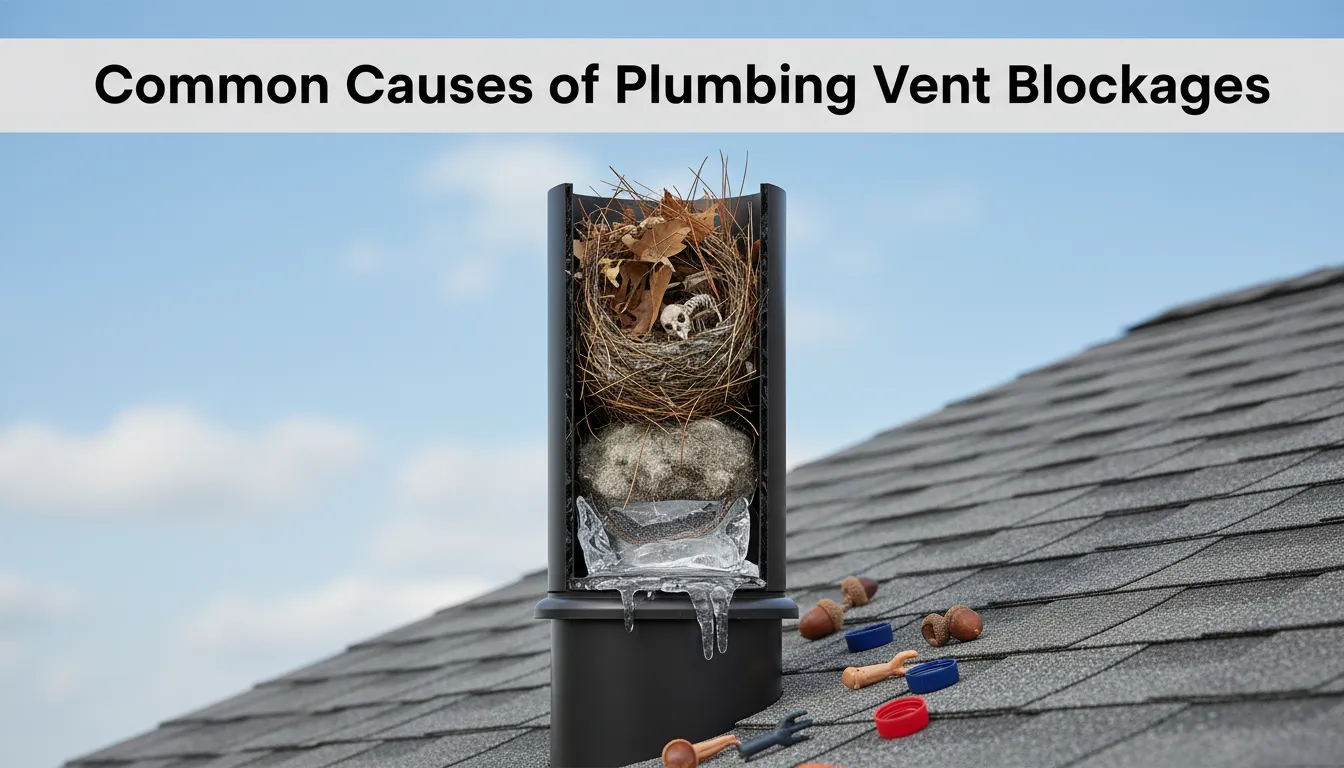
1. Debris (Leaves, Twigs, and Dust)
One of the most frequent causes of plumbing vent blockages is the accumulation of natural debris, especially in the fall. Leaves, twigs, and dust can easily find their way into the vent opening on the roof. Over time, these materials build up and form a thick layer of debris, which can completely obstruct the vent. This is especially common in homes surrounded by trees or in areas with heavy winds or storms.
Why it happens: Vents are typically exposed on the roof, making them vulnerable to environmental debris. When leaves or other organic materials enter the vent, they can create a barrier that blocks airflow and causes the vent to clog.
Prevention Tip: To prevent leaves and twigs from blocking your plumbing vent, consider installing a vent cap or screen. These simple additions allow air to flow freely while blocking larger debris from entering.
2. Bird and Animal Nests
Birds and small animals often see plumbing vents as the perfect place to build their nests. Bird nests, in particular, are a common cause of vent blockages. Once inside the vent, they can create significant obstructions that prevent air from circulating through your plumbing system. In some cases, rodents may also find their way into vents, especially if they are left unchecked for long periods.
Why it happens: The vertical vent pipe provides a sheltered, elevated space that is ideal for animals to make their nests. If these nests go unnoticed, they can cause a complete blockage of the vent.
Prevention Tip: Regularly inspect your vent opening, especially if you live in an area with lots of birds or wildlife. Mesh screens or caps can be installed to prevent animals from entering the vent.
3. Ice Formation (in Cold Climates)
In colder climates, ice buildup is a significant concern for plumbing vents. During winter, snow and ice can accumulate on the roof and enter the vent pipe. As the temperature drops, the moisture in the air freezes inside the vent, causing it to become completely blocked. This can prevent the vent from releasing sewer gases and allow harmful gases to build up inside the home.
Why it happens: When snow or ice enters the vent opening, it can freeze, creating a physical barrier that prevents air from circulating. This is especially true if the vent pipe is not properly insulated or if it’s exposed to the elements.
Prevention Tip: In colder climates, consider insulating the vent pipe or installing a weatherproof cap to prevent ice from forming inside the vent. Regular inspections during winter months are essential to ensure the vent remains clear.
4. Tree Roots Intrusion
While it may seem unlikely, tree roots can actually cause vent blockages. Roots naturally grow toward moisture and warmth, and plumbing pipes, including vent pipes, provide an ideal environment. Over time, tree roots can infiltrate underground plumbing systems, blocking the vent or causing other plumbing issues. This problem is particularly common in older homes with mature trees nearby.
Why it happens: Tree roots seek out water sources, and plumbing pipes often provide a path for roots to follow. If your vent pipe is connected to underground plumbing lines, roots may eventually find their way into the system, creating blockages that affect the vent.
Prevention Tip: If you suspect tree roots have infiltrated your vent system, it’s important to have a professional plumber perform an inspection. Root barriers can be installed around plumbing systems to prevent root intrusion.
5. Construction Debris or Improper Installation
During construction or home renovations, debris such as dirt, dust, or leftover building materials can find their way into the vent pipes. In some cases, improper installation of the vent pipe can also lead to blockages. For instance, if the vent pipe is not positioned correctly or if there are sharp bends in the pipe, it can become more susceptible to debris accumulation.
Why it happens: Construction or renovation projects often leave behind debris, and in the rush to complete the work, the vent system may not be properly sealed. Poor installation practices can create weak points where debris can build up, causing blockages over time.
Prevention Tip: During any renovation or construction work, ensure that your plumbing system is properly sealed and inspected. If you suspect debris has entered your vent system, schedule a professional inspection to have it cleaned out.
Conclusion:
A plumbing vent can become clogged for a variety of reasons, from natural debris and animal nests to ice formation and tree root intrusion. Regular maintenance and preventative measures, such as installing vent caps, insulating pipes, and performing routine inspections, can help keep your plumbing vents clear and prevent costly repairs. Understanding the common causes of vent blockages is key to addressing potential issues before they escalate into major plumbing problems.
Health Risks of Clogged Plumbing Vents
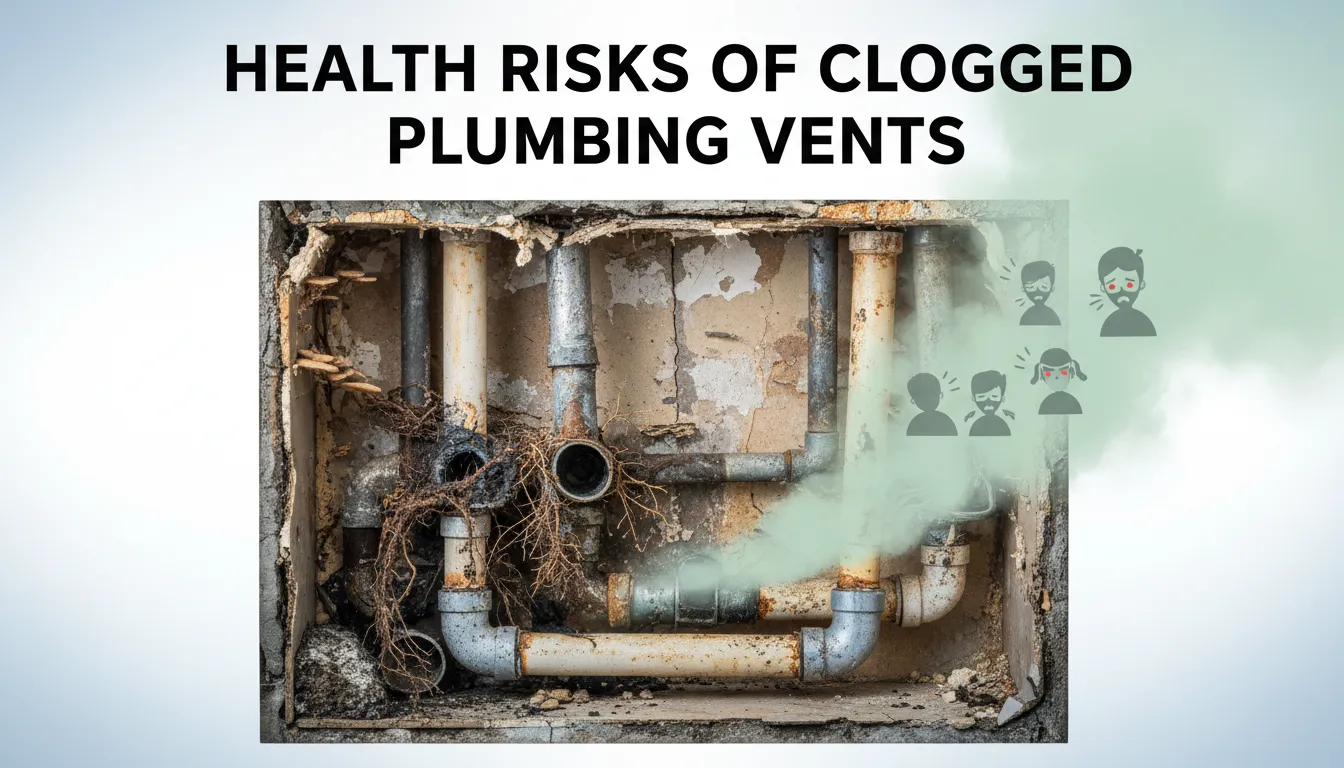
When your plumbing vent is clogged, it’s not just a minor inconvenience—it can also lead to serious health risks. While we typically think of plumbing issues as an annoying but fixable problem, a blocked vent can result in dangerous conditions in your home, particularly from the buildup of sewer gases. In this section, we’ll explore the potential health hazards that arise when your plumbing vent is obstructed and why it’s crucial to address the issue quickly . Sewer gases, including methane and hydrogen sulfide, can cause headaches, dizziness, and even more serious health issues if not vented properly out of the living space.
1. Sewer Gas Buildup: A Silent Danger
One of the primary functions of your plumbing vent is to release sewer gases—such as methane, hydrogen sulfide, and ammonia—safely outside your home. These gases are a byproduct of the breakdown of wastewater, and when a vent is blocked, they have nowhere to go. As a result, they can back up into your home, causing unpleasant odors and posing significant health risks.
Methane is colorless and odorless, but it is highly flammable and can lead to an explosion if accumulated in an enclosed space.
Hydrogen Sulfide has a distinct “rotten egg” smell and can cause nausea, headaches, dizziness, and in extreme cases, respiratory failure if inhaled in large quantities.
Ammonia is another common sewer gas that can irritate the eyes, nose, and throat, and prolonged exposure can damage your respiratory system.
Why it happens: When the vent is blocked, these harmful gases can’t escape through the roof and instead leak back into your home, where they accumulate and pose serious risks to your health.
Health Risks:
Short-term Effects: Headaches, dizziness, nausea, and fatigue are common symptoms of exposure to sewer gases.
Long-term Effects: Prolonged exposure to high levels of methane or hydrogen sulfide can cause chronic respiratory issues and may lead to more severe health problems.
Fire Hazard: Methane is highly flammable, and the accumulation of this gas in confined spaces could pose a serious fire or explosion risk.
2. Impact on Indoor Air Quality
A clogged plumbing vent not only lets sewer gases enter your home but also significantly affects your indoor air quality. Poor air circulation caused by the vent blockage can result in an increase in humidity, contributing to the growth of mold and mildew. This can lead to poor indoor air quality, making your home a breeding ground for allergens.
Mold and Mildew Growth: If sewer gases aren’t vented properly, the increased moisture in your home can lead to mold and mildew growth, particularly in bathrooms and basements. Mold spores can trigger allergies, asthma attacks, and worsen respiratory conditions.
Why it happens: When the vent is blocked, air can’t flow freely through the system, and moisture can accumulate, creating a favorable environment for mold and mildew to grow.
Health Risks:
Allergies and Asthma: Mold exposure can worsen asthma symptoms and trigger allergic reactions in sensitive individuals.
Chronic Respiratory Issues: Prolonged exposure to poor indoor air quality can contribute to long-term respiratory problems, particularly for children and the elderly.
3. Increased Risk of Waterborne Illnesses
When a plumbing vent is clogged, it can cause backflow issues in your pipes. This means that wastewater can flow backward, potentially contaminating clean water supplies and causing the spread of harmful bacteria and viruses. For instance, water from sinks, toilets, and showers may flow into your drinking water, leading to serious health risks.
Bacteria such as E. coli and Salmonella can be introduced into your drinking water, leading to food poisoning and gastrointestinal illnesses.
Viruses such as norovirus can spread through contaminated water, causing vomiting, diarrhea, and stomach cramps.
Why it happens: The pressure imbalance caused by a clogged vent can result in the siphoning of water from the P-traps beneath sinks and toilets. When the water seal is broken, there’s nothing to block harmful sewer gases and wastewater from re-entering the pipes.
Health Risks:
Gastrointestinal Illnesses: Backflow of contaminated water can result in serious illnesses, particularly foodborne illnesses from bacteria like E. coli.
Infections: Sewer water may contain harmful bacteria and viruses that can lead to infections, especially if water is ingested or comes into contact with open wounds.
4. Carbon Monoxide Buildup (In Rare Cases)
In rare instances, a clogged vent can contribute to carbon monoxide (CO) buildup in your home. While the vent’s primary purpose is to release sewer gases, the pressure imbalance it causes could interfere with the operation of fuel-burning appliances like gas water heaters or furnaces. If these appliances are not vented properly, carbon monoxide could accumulate, posing a deadly risk to your household.
Why it happens: If the vent is clogged, it may cause issues with the venting of other appliances, such as gas heaters, leading to carbon monoxide buildup inside your home.
Health Risks:
Carbon Monoxide Poisoning: Prolonged exposure to carbon monoxide can lead to headaches, dizziness, confusion, nausea, and, in severe cases, can be fatal.
Conclusion:
Ignoring a clogged plumbing vent can lead to serious health risks. From the buildup of toxic sewer gases like methane and hydrogen sulfide to poor indoor air quality and the risk of backflow contamination, a clogged vent can negatively affect the health and safety of your household. It’s crucial to address vent blockages early on to prevent these issues from escalating. Regular maintenance and prompt repairs can ensure your plumbing system functions properly, maintaining the safety and comfort of your home.
How to Troubleshoot a Clogged Vent Pipe (DIY Methods)
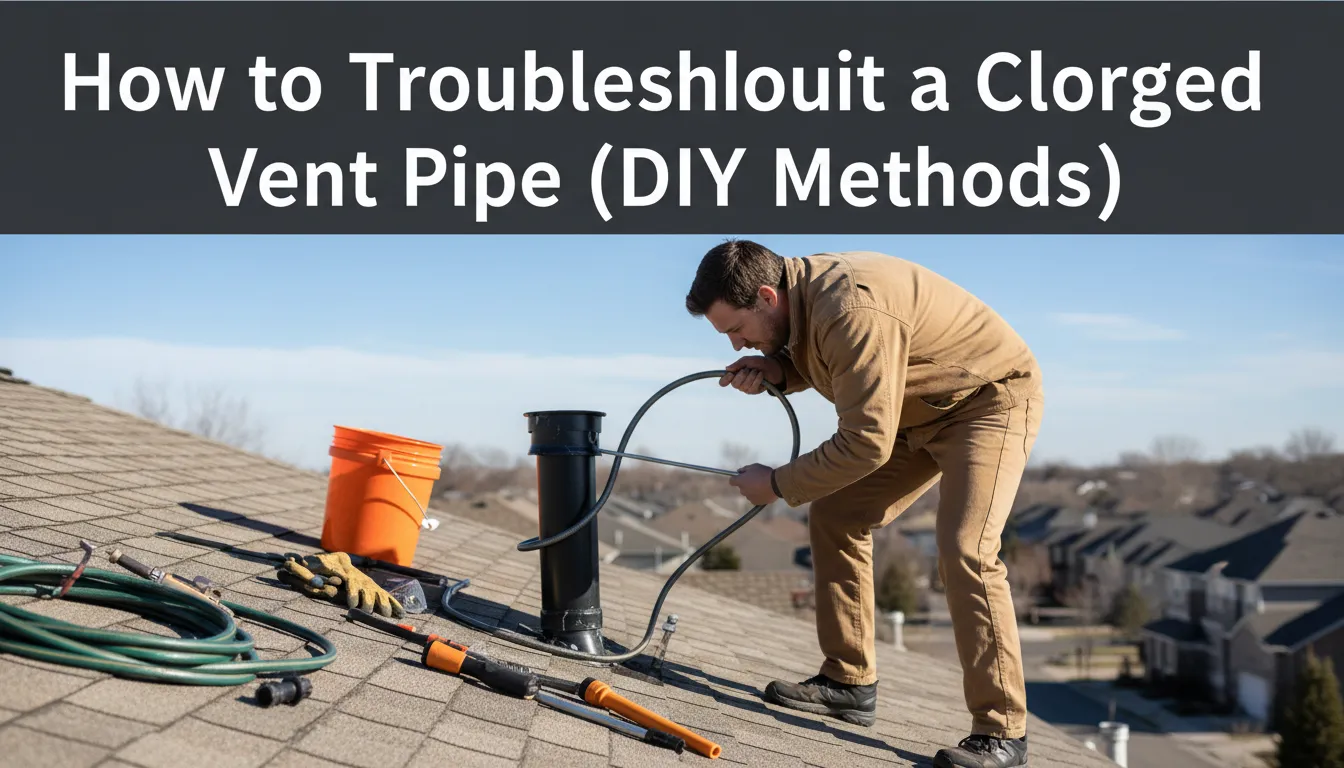
If you’re experiencing signs of a clogged plumbing vent, it’s important to act quickly to prevent further damage and costly repairs. In this section, we’ll walk you through some DIY methods for diagnosing and clearing a clogged vent pipe. These steps will help you determine if the vent is the source of the problem and, in many cases, allow you to clear minor blockages without needing professional help.
1. Inspect the Vent Pipe Opening on the Roof
The first step in troubleshooting a clogged plumbing vent is to inspect the vent pipe opening on your roof. This is often the easiest place to start, as debris like leaves, twigs, or even animal nests can easily block the vent.
What to do: If you feel comfortable and it’s safe to do so, climb up to the roof and check for any visible blockages at the opening of the vent pipe. You may be able to see leaves, sticks, or other debris that have accumulated.
What to look for: Look for large obstructions that could be blocking the pipe. If you see debris, remove it carefully and clear the opening.
Tip: Always prioritize safety when accessing the roof. If you’re not comfortable or able to safely climb to the roof, consider using a ladder or hiring a professional to inspect the vent.
2. Use a Garden Hose to Clear the Vent
If there’s no visible debris at the opening, or you’re unsure about the source of the blockage, you can use a garden hose to flush out any minor blockages in the vent pipe. This method is effective for removing small debris or loosening stubborn material blocking the pipe.
What to do: Insert the garden hose into the vent pipe opening on the roof. Turn on the water and let it flow down the pipe to clear out any loose debris that may be causing the blockage.
What to look for: Watch for water flowing out of the vent opening. If water begins to flow freely, it could mean that the blockage has been cleared. If the water backs up or flows slowly, the vent might still be clogged further down the pipe.
Tip: If you’re unable to access the roof or if the blockage seems deeper in the system, you can also try using the hose from the ground. Just make sure the water pressure is sufficient to clear the clog.
3. Use a Plumber’s Snake (Drain Auger)
For deeper or more stubborn blockages, a plumber’s snake (also known as a drain auger) is an effective tool that can reach further down the vent pipe and break up the obstruction. This tool is ideal for clearing out solid clogs that can’t be dislodged by water pressure alone.
What to do: Insert the snake into the vent pipe opening on the roof and feed it down the pipe. Turn the handle to allow the snake to work its way through the pipe and break up any blockages it encounters.
What to look for: As you push the snake further down, you may feel resistance. Continue turning the handle to work through the blockage. Once the resistance disappears and water starts flowing freely, you’ve likely cleared the clog.
Tip: If you’re using a plumber’s snake, go slowly and be careful not to damage the vent pipe. If you feel the snake hit something hard, you might be dealing with a more serious blockage that requires professional intervention.
4. Baking Soda and Vinegar Solution
Another DIY method for clearing a clogged vent is the classic baking soda and vinegar solution. While this method is more commonly used for drain blockages, it can also help clear minor blockages in the vent system by loosening debris and grime buildup inside the pipe.
What to do: Pour 1/2 cup of baking soda into the vent opening, followed by 1/2 cup of white vinegar. The combination will fizz and help break down any small debris inside the vent pipe. Let the solution sit for about 15-30 minutes before flushing the vent with hot water.
What to look for: After allowing the mixture to sit, check if the water flows freely when flushed down the vent. If the blockage is cleared, the water will drain smoothly.
Tip: This solution works best for minor blockages or grime buildup and may not be effective for more severe blockages.
5. Check for Frozen Pipes (Cold Climates)
If you live in a region with cold winters, frozen pipes could be the cause of your clogged vent. Ice buildup inside the vent pipe can block airflow and prevent sewer gases from escaping. This is especially common in poorly insulated areas of the home.
What to do: If you suspect freezing, you can try to thaw the pipe gently using a hair dryer or a heat lamp. Avoid using an open flame, as this could damage the vent pipe or cause a fire.
What to look for: Once the ice has thawed, check for any signs of water flow through the vent pipe. If water begins to flow freely again, the blockage has likely been resolved.
Tip: To prevent future freezing, consider insulating the vent pipe in cold areas of your home to keep it protected from low temperatures.
Conclusion:
Troubleshooting and clearing a clogged plumbing vent doesn’t always require a professional plumber, especially for minor blockages. By following the DIY methods outlined above—inspecting the vent opening, using a garden hose, employing a plumber’s snake, and trying a simple baking soda and vinegar solution—you can often clear the clog and restore your plumbing system to full functionality.
However, if these methods don’t resolve the issue, or if you encounter more severe blockages or damage, it’s time to call in a professional plumber. Vent blockages that go untreated can lead to serious plumbing issues, so it’s important to act quickly.
When to Call a Professional Plumber

While many minor vent clogs can be cleared with DIY methods, there are times when the problem is more serious and requires the expertise of a professional plumber. Ignoring vent blockages or trying to tackle them yourself without the proper tools or knowledge can lead to further damage, costly repairs, and even health risks from trapped sewer gases. In this section, we’ll discuss when it’s time to call a professional and what you can expect from a licensed plumber.
1. If DIY Methods Don’t Work
You’ve tried all the DIY methods—using a garden hose, plumber’s snake, or even a baking soda and vinegar solution—but the vent still isn’t clear. If these methods don’t resolve the problem, it’s time to bring in a professional plumber. A clogged vent may be deeper in the pipe, or the blockage could be caused by something that requires specialized tools or expertise.
What to do: If you’ve exhausted all DIY options and still experience symptoms like slow drains, gurgling sounds, or foul odors, it’s time to call in a professional.
Why it matters: Professional plumbers have access to specialized tools, such as camera inspections, to accurately diagnose the problem and reach blockages that DIY methods can’t handle.
2. When the Blockage is Deep or Out of Reach
A blockage in the vent pipe could be located deep within the system or in an area that’s hard to reach. For example, tree roots may have infiltrated the vent line, or the blockage could be buried beneath layers of debris or within underground plumbing systems. In these cases, it’s best to let a professional plumber handle the issue.
What to do: If you suspect that the blockage is deep in the vent pipe or within the main drain line, contact a plumber who can perform a thorough inspection using specialized equipment.
Why it matters: Professional plumbers use tools like hydro-jetting, which uses high-pressure water to clear tough blockages, or camera inspections, which allow plumbers to pinpoint the exact location of the clog without the need for guesswork.
3. If You Suspect Tree Roots Are Involved
Tree roots are a common culprit in plumbing issues, especially in older homes with mature trees nearby. Roots naturally seek out water sources, and they may invade plumbing systems, including vent pipes. If you’ve noticed signs of a blockage, like slow drains or water backups, and live near trees, there’s a good chance roots are the cause.
What to do: If you suspect that tree roots have entered your plumbing vent, don’t try to clear the blockage on your own. Roots can cause extensive damage to pipes, and attempting to clear them without proper tools can make the situation worse.
Why it matters: Professional plumbers have specialized equipment designed to handle tree root intrusion, such as rooter machines or hydro-jetters. They can clear the blockage and even install root barriers to prevent future issues.
4. If the Blockage is Caused by Structural Issues
Sometimes, the vent pipe itself may have structural issues that are causing the blockage. This could be due to poor installation, aging pipes, or even damage caused by extreme weather conditions. If your vent pipe is cracked, collapsed, or improperly installed, the blockage may require more than just cleaning.
What to do: If you suspect the vent pipe is damaged or improperly installed, it’s important to call a professional plumber for an inspection. They will evaluate the condition of the vent system and recommend necessary repairs or replacements.
Why it matters: Plumbers can assess the integrity of your vent pipe and make the necessary repairs. If the pipe needs to be replaced, they will ensure it’s installed correctly to prevent future issues.
5. If You Experience Sewer Gas Buildup or Backflow Issues
A clogged vent pipe can cause sewer gases to back up into your home, leading to foul odors and potential health risks. If you notice signs of sewer gas buildup, such as rotten egg smells around your drains or bathrooms, or if you’re experiencing backflow issues in multiple fixtures (e.g., water rising in the toilet when you use the sink), you need to call a plumber immediately.
What to do: If you’re dealing with sewer gases in your home or water backup in multiple fixtures, do not ignore the issue. Call a professional plumber right away to diagnose the problem.
Why it matters: Sewer gases, including methane and hydrogen sulfide, are toxic and can pose serious health risks if left unaddressed. A plumber can clear the vent, fix the pressure imbalance, and prevent further exposure to harmful gases.
6. For Regular Maintenance and Inspections
Even if you don’t currently have a clog, it’s important to schedule regular maintenance inspections for your plumbing vents. A licensed plumber can check the vent system for signs of damage or debris buildup and clean the vents before they become clogged.
What to do: Contact a professional plumber at least once a year for a plumbing system inspection. This will help identify potential issues early and prevent costly repairs down the road.
Why it matters: Preventive maintenance is much less expensive than emergency repairs. Regular inspections can help avoid major plumbing issues, such as clogged vents, tree root intrusions, and pipe corrosion.
Conclusion:
While many vent blockages can be resolved with DIY methods, some problems require professional attention. If you’ve tried the DIY approaches and still experience issues like slow drains, gurgling toilets, or foul odors, it’s time to call a professional plumber. Licensed plumbers have the expertise and equipment to clear deeper blockages, diagnose structural issues, and prevent long-term damage to your plumbing system.
Don’t let a clogged vent lead to serious health risks, water damage, or costly repairs. By calling a professional plumber early on, you’ll ensure that your plumbing system remains in optimal condition, and your home stays safe and comfortable.
Preventive Maintenance Tips for Plumbing Vents
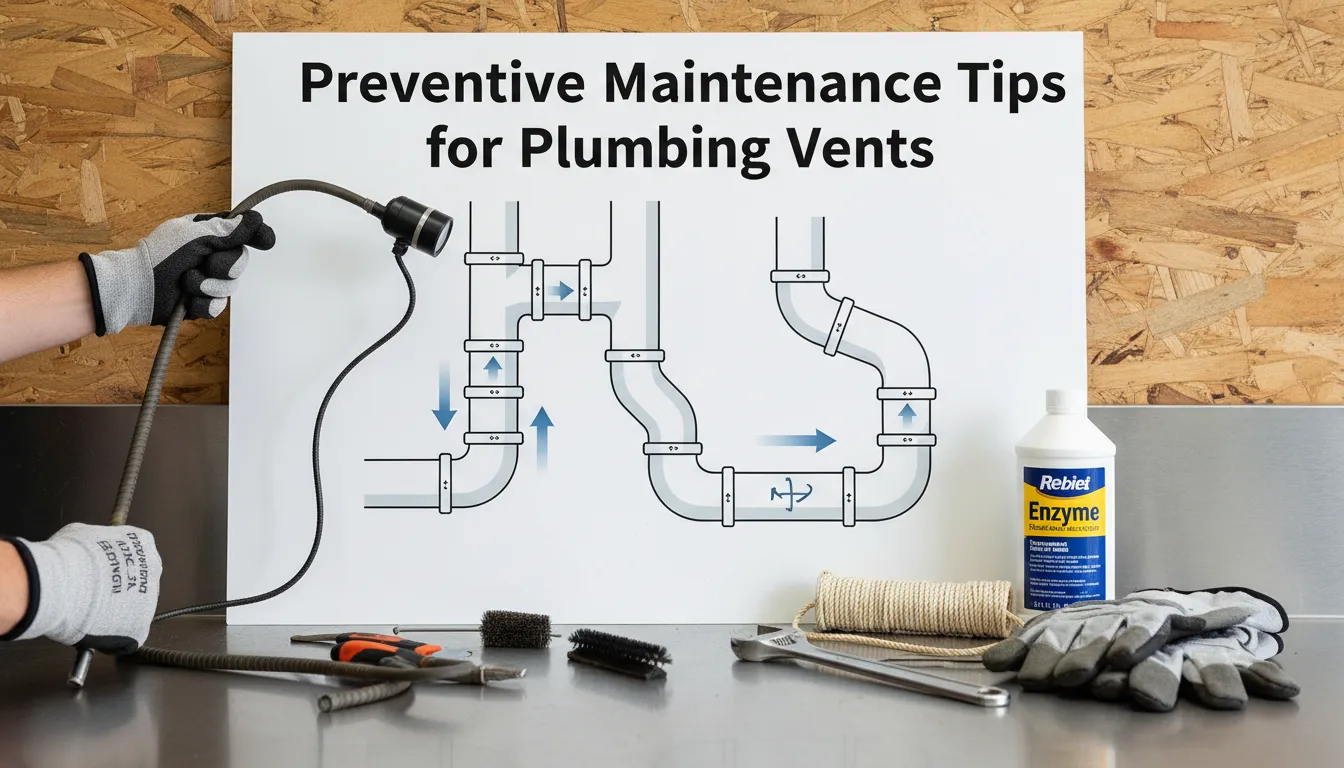
Preventing clogged plumbing vents is key to avoiding the costly and frustrating issues that come with vent blockages. Regular maintenance not only ensures your plumbing system works efficiently but also helps extend the lifespan of your pipes and prevent health risks associated with sewer gas buildup. In this section, we’ll discuss actionable preventive maintenance tips that can keep your plumbing vent clear and your home’s plumbing system in top shape.
1. Regular Roof Inspections
Since plumbing vents are located on your roof, it’s essential to inspect them regularly to ensure they’re free of debris. Over time, leaves, twigs, and other debris can accumulate, blocking the vent and preventing proper airflow.
What to do: Inspect your plumbing vent opening on the roof at least once a year, ideally in the fall when debris is more likely to accumulate. Check for leaves, sticks, bird nests, and other debris that could block the vent.
Why it matters: Regular roof inspections help catch potential blockages before they cause significant plumbing issues. It’s especially important after a storm or heavy wind to ensure that your vent is still clear.
Tip: Always prioritize safety when inspecting your roof. If you’re uncomfortable with heights or if the roof is difficult to access, consider hiring a professional to perform the inspection.
2. Install a Vent Cap or Screen
One of the most effective ways to prevent debris from entering your plumbing vent is to install a vent cap or mesh screen. These devices cover the opening of the vent and act as a barrier against leaves, twigs, and animals, allowing air to flow freely while blocking larger particles from entering the pipe.
What to do: Have a vent cap or mesh screen installed over the opening of your plumbing vent. These are relatively inexpensive and can be found at most hardware stores.
Why it matters: A vent cap or screen prevents debris and animals from blocking the vent, ensuring that air can flow freely and the vent remains functional. It also reduces the chances of animals like birds or rodents nesting inside the vent.
3. Keep Trees and Shrubs Trimmed
If your home is surrounded by trees or shrubbery, it’s crucial to regularly trim back branches and foliage that may obstruct the vent. Overhanging branches can drop leaves and twigs into the vent, and tree roots can eventually invade the plumbing system, causing serious blockages.
What to do: Trim back any trees or shrubs that are near your plumbing vent. Keep branches at least 5-6 feet away from the vent opening to prevent debris from falling into it.
Why it matters: Tree roots are a major cause of vent and pipe blockages, especially in older homes. Keeping vegetation trimmed reduces the risk of roots infiltrating your plumbing system and obstructing the vent.
4. Insulate the Vent Pipe (For Cold Climates)
In cold climates, one of the most common causes of plumbing vent blockages is ice formation. Snow and ice can accumulate on the roof and enter the vent pipe, freezing and blocking airflow. Insulating the vent pipe can help prevent this issue, ensuring that your vent remains clear during the winter months.
What to do: Insulate exposed vent pipes, particularly those on the roof or in areas where they may be exposed to freezing temperatures. You can use foam pipe insulation or specially designed vent pipe insulation sleeves.
Why it matters: Proper insulation helps prevent ice from forming inside the vent pipe, which can cause blockages and disrupt the function of your plumbing system. This will also help avoid water damage and costly repairs.
5. Regular Plumbing Inspections
Scheduling regular plumbing inspections is one of the most effective ways to prevent plumbing vent issues. A licensed plumber can check the condition of your vent system, perform any necessary cleaning, and identify any potential problems before they become major issues.
What to do: Arrange for a professional plumbing inspection at least once a year. During the inspection, ask the plumber to check the condition of the vent stack, roof vent, and the overall plumbing system.
Why it matters: Professional inspections ensure that any signs of wear, debris buildup, or early blockages are identified early. They can also spot issues such as cracked vent pipes or improper installations that could lead to clogs.
6. Keep an Eye on Drainage and Venting Symptoms
Being proactive in noticing signs of vent blockages or drainage issues can help prevent further complications. If you begin to notice signs like gurgling toilets, slow drains, or foul odors, address them immediately before they worsen. Early intervention can help you avoid more costly repairs.
What to do: Regularly monitor the drainage in your home. If you notice any changes, such as gurgling sounds or slow-draining sinks, toilets, or bathtubs, investigate further to determine if the vent could be the issue.
Why it matters: Catching problems early allows you to address minor blockages before they escalate into major issues, saving you time, money, and hassle down the road.
Conclusion: Keep Your Plumbing Vent Clear with EZ Plumbing Repair Services
Preventive maintenance is the best way to ensure that your plumbing vent stays clear and your plumbing system runs smoothly. EZ Plumbing Repair Services offers expert plumbing inspections and repairs to help maintain your home’s plumbing efficiency. Regular inspections, installing vent caps, trimming trees, and insulating pipes in cold climates can significantly reduce the risk of clogs and keep your home’s plumbing system functioning at its best.
At EZ Plumbing Repair Services, we prioritize proactive plumbing maintenance to prevent issues before they become costly, time-consuming problems. If you’re experiencing any signs of a clogged plumbing vent or need professional plumbing support, don’t hesitate to contact us. Our expert team is here to provide timely and reliable services to keep your home’s plumbing in optimal condition.
Contact EZ Plumbing Repair Services Today to schedule an inspection or repair! Ensure the safety and efficiency of your plumbing system with our trusted and professional services.