Sewer Line Inspection Guide 2026: Protect Your Home Investment with High-Tech Video Proof
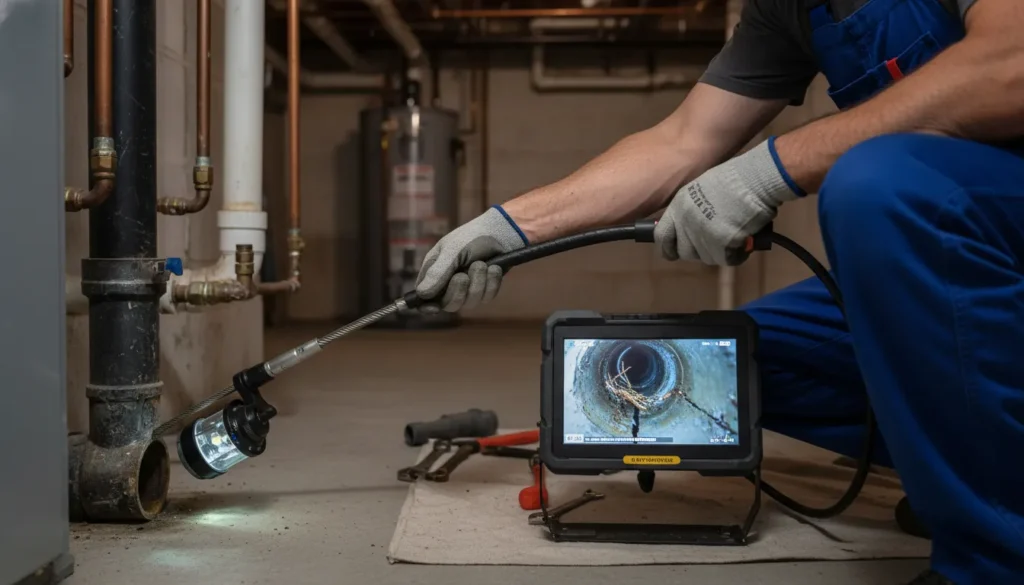
A sewer scope inspection is like an X-ray for your home’s underground pipes. At EZ Plumbing, we use a tiny, high-tech waterproof camera on a long cable. We slide this camera inside your main sewer line to see what is happening underground without digging up your yard. This 30 to 60-minute check-up finds hidden problems like cracks, tree roots, or clogs before they turn into a plumbing nightmare.
Why is it Valuable for You? Imagine buying a house and then finding out the underground pipes are broken. Fixing them can cost between $3,000 and $25,000! By choosing EZ Plumbing for a sewer line evaluation, you find these “invisible” problems early. This gives you the power to ask the seller to fix the pipes or lower the house price before you buy it.
Who Needs This?
Homebuyers: Don’t get stuck with a “money pit.”
Old Homes: If the house is older than 20 years, the pipes might be rusting or breaking.
Tree Lovers: Big trees have roots that love to grow inside pipes and block them.
Is a Sewer Line Inspection Necessary?
When you buy a house, you hire a home inspector to check the roof, the walls, and the lights. But there is one big problem: A standard home inspection cannot see through the ground. Most inspectors only check if the water flows down the drain, but they don’t see what is happening inside the pipes buried deep under your yard. This is why many people ask, “Should I get a sewer scope inspection?” The answer is almost always Yes.
Why Your Home Inspector Might Miss the Big Stuff:
The Underground Blind Spot: A typical home inspection stops where the pipes go into the floor. They have no way of knowing if the main line is cracked, leaking, or full of debris.
Old Pipe Materials: Many older homes have pipes made of clay, cast iron, or even tar paper (Orangeburg). These materials can crumble or rust over time without showing any signs above ground.
Hidden Tree Roots: Even if the sinks and toilets work today, hungry tree roots could be slowly breaking your pipes apart right now, leading to a total collapse later.
Your Secret Weapon: Negotiating Power The best part about a sewer inspection when buying a house is that it gives you “Negotiating Power.” If the camera finds a crack, a “belly” (sagging pipe), or a root blockage, you are not stuck with the bill.
With a detailed inspection report, you can:
Ask the seller to fix the issue before you sign the final papers.
Negotiate a lower sale price so you have the cash to fix it yourself later.
Walk away from a bad deal if the sewer damage is too expensive to repair, saving you from a $10,000 mistake.
5 Signs You Need a Sewer Camera Inspection Now
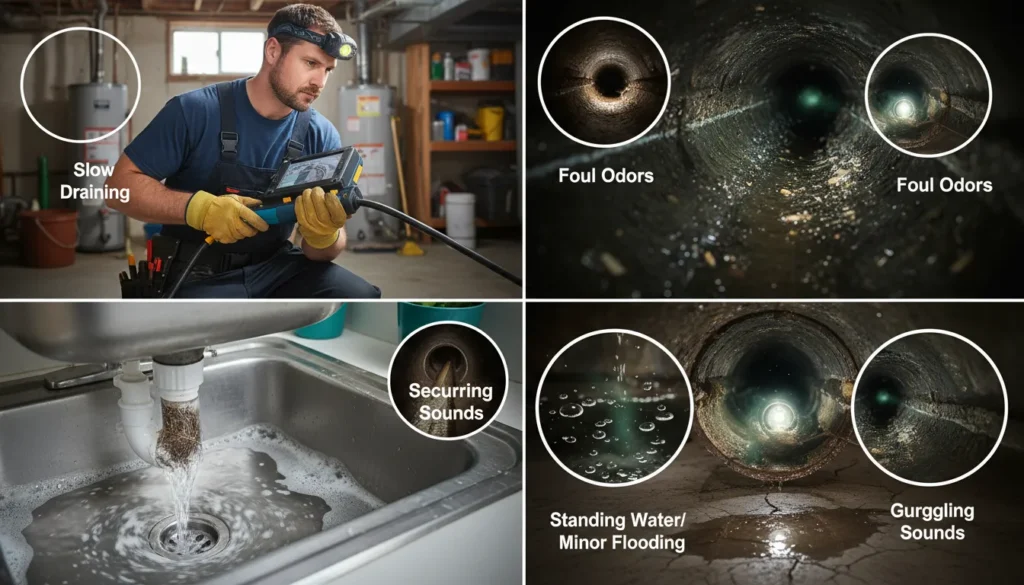
If you notice any of these signs, you should get a sewer camera inspection immediately. Waiting can lead to a failed sewer inspection later or even a flooded basement.
1. Recurring Backups and Clogs
If your toilets or sinks clog more than once a month, the problem is likely deep in the main line. A camera can see if it’s a simple blockage or a broken pipe.
2. Slow Drains in Multiple Areas
When only one sink is slow, it’s a local clog. But if the bathtub, kitchen sink, and laundry drain are all slow at the same time, your main sewer line is failing.
3. Persistent Sewer Smell
A healthy sewer system is airtight. If you notice a sewer smell or foul odors in your yard or basement, it means there is a crack or a loose joint in the pipes allowing sewer gas to escape.
4. Unusually Lush Green Grass Patches
If one part of your lawn is much greener and thicker than the rest, it’s a major red flag. This often means a sewer pipe is leaking “fertilizer” (sewage) into the soil, feeding the grass above.
5. New Cracks in the Foundation
A leaking sewer line can wash away the soil under your home. If you see new cracks in your foundation or “sinkholes” in your yard, a broken pipe could be the hidden cause.
How Much Does a Sewer Line Camera Inspection Cost in 2026?
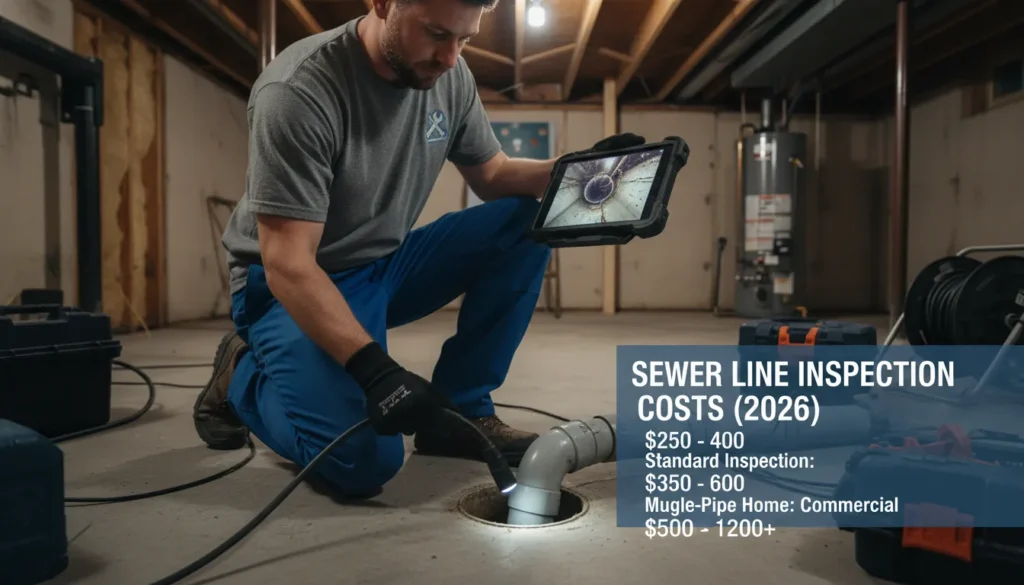
When planning your home-buying budget, knowing the sewer line inspection cost is essential. On average, a professional inspection in 2026 ranges between $250 and $500. While this is an upfront expense, it is a small price to pay for peace of mind compared to a $10,000 main line replacement.
Factors That Affect Your Sewer Line Camera Inspection Cost
The final price depends on how easily the technician can reach your pipes. Here is what changes the cost:
Access Point Availability: If your home has an outdoor “cleanout” pipe, the job is fast and cheaper.
Toilet Removal: If there is no cleanout, the technician may have to remove a toilet to enter the sewer line, which adds to the labor cost.
Length of the Line: Most inspections cover up to 100 feet. If your house is very far from the city street, a longer cable may be needed.
Video Documentation: Some companies include a digital video file in the base price, while others may charge extra for a narrated report.
| Service Type | Price Range (2026) | Best For |
|---|---|---|
| Standard Scope | $250 – $350 | Homes with cleanouts |
| Advanced Scope | $350 – $500 | Older homes (via Toilet) |
| Septic Inspection | $500 – $800 | Large rural properties |
| Emergency Rush | $550+ | Same-day urgent reports |
Why It Is a Smart Investment
A sewer line camera inspection cost is actually an insurance policy for your bank account. Finding a “belly” (sagging pipe) or a root clog before you buy a home allows you to ask the seller to cover the repairs. If you skip this step, you inherit the problem and the full repair bill the day you move in.
What Does a Sewer Inspection Look Like?
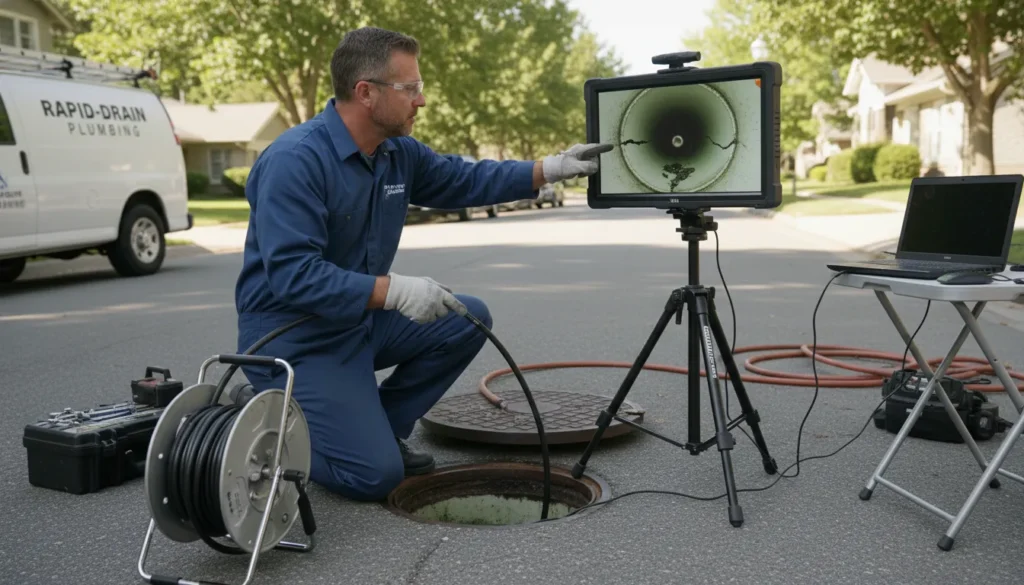
Many homeowners worry that a video camera line inspection will be messy or involve digging. At the professional level, the process is actually very clean, quiet, and fast. Here is exactly how we look inside your pipes without breaking a single tile.
Locating the Access Point
The first step is finding the “Cleanout”—a small pipe with a cap, usually located in your yard or basement. If your home doesn’t have one, we can carefully remove a toilet to access the main sewer line. This ensures we reach the very start of the system.
Camera Insertion and Navigation
We insert a high-resolution, HDR waterproof camera attached to a flexible fiber-optic cable. This camera is built to handle dark, wet environments and has powerful LED lights to show every detail clearly.
Real-Time Monitoring & Assessment
As the camera travels through the pipe (up to 100 feet or more), the technician watches a real-time video feed on a high-definition monitor.
We look for “Bellies” (standing water).
We check for Root Intrusion (tiny cracks where roots enter).
We identify Pipe Material (Clay, Cast Iron, or PVC).
Digital Report & Video Documentation
Once the inspection is finished, you don’t just get a verbal “it’s okay.” You receive a full digital report. This includes the recorded video file and photos of any problem areas. You can use this video to show your insurance company or as proof during house price negotiations.
Common Issues Detected: What’s Hiding in Your Pipes?

An underground pipe can look fine from the outside while being a disaster on the inside. During a video camera line inspection, we look for specific “red flags” that can cause expensive backups. Here are the most common problems hiding in your sewer system:
Tree Root Intrusion (The Silent Pipe Breakers)
Trees are beautiful, but their roots are “water-seekers.” Even the smallest hairline crack in a clay or concrete pipe allows moisture to leak out. Tree roots detect this moisture and grow toward it, eventually forcing their way inside the pipe. Once inside, they grow into a thick “root ball” that catches grease and toilet paper, leading to a total blockage.
Bellied or Sagging Pipes (The Pool Effect)
A “belly” happens when a section of the sewer pipe sinks lower than the rest, usually due to soil shifting or poor installation. Because sewer lines rely on gravity to move waste, a sag creates a standing pool of water. Over time, heavy waste (like sludge and paper) settles in this pool, causing constant clogs that a simple “snake” cannot fix.
Pipe Corrosion & Offsets (The Aging Factor)
Older homes often have pipes made of Cast Iron or Orangeburg (bituminized fiber).
Corrosion: Cast iron pipes rust from the inside out, creating a rough surface that snags waste.
Offsets: This happens when two sections of pipe move apart at the joint, creating a “lip” that catches debris or allows sewage to leak into the surrounding soil.
Special Considerations: New Construction & Septic Systems
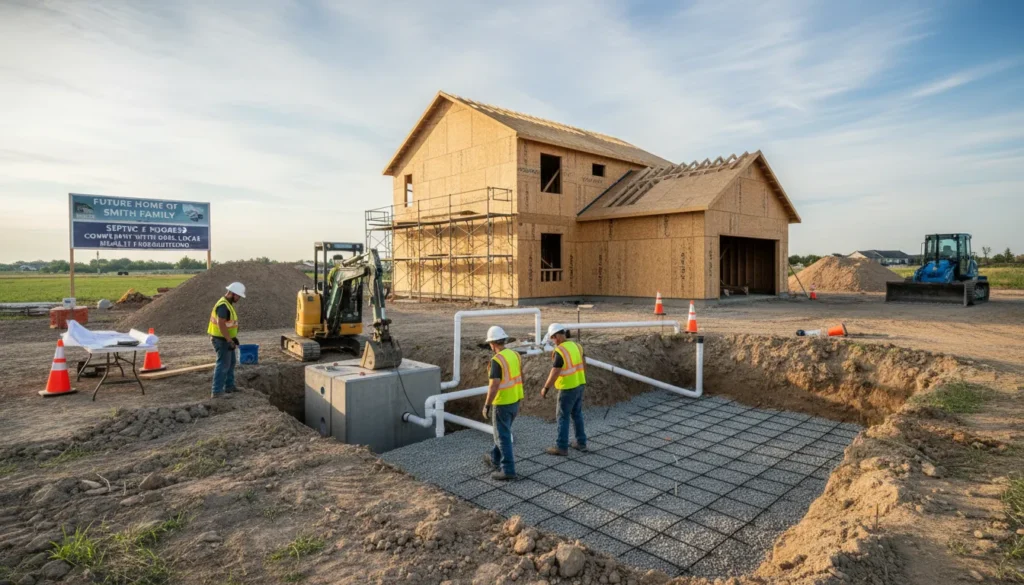
Many people assume that if a house is brand new, the plumbing must be perfect. However, even modern homes can have hidden underground issues that only a camera can find. Whether you are moving into a new build or a rural property, here is what you need to know.
Is a Sewer Line Inspection Necessary for New Construction?
The short answer is Yes. While the pipes are new, the ground around them is not always stable. During the building process, several things can go wrong:
Construction Debris: It is common to find rocks, chunks of wood, or even hardened concrete inside new sewer lines left behind by workers.
Pipe “Bellies” from Soil Settling: When a new house is built, the soil is moved around. If the ground settles unevenly, a section of the new PVC pipe can sag (create a belly), leading to clogs before you even move in.
Heavy Machinery Damage: Large trucks and excavators driving over the yard can sometimes crush or crack new pipes buried just a few feet down.
Septic System Inspection Cost and Importance
If you are buying a home in a rural area, you likely have a septic tank instead of a city sewer connection. A septic system inspection cost usually ranges from $500 to $800, which often includes a camera scope of the “inlet” and “outlet” pipes.
A camera inspection for a septic system is vital because:
Tank Levels: We can see if the tank is overfilled or leaking into the yard.
Baffle Health: The camera checks the “baffles” (filters) that stop solid waste from entering your absorption field.
Drain Field Protection: If solids leak into your drain field, the repair can cost over $15,000. A $500 inspection is a much better deal!
Frequently Asked Questions
For older homes (built before 2000), we recommend a video camera line inspection every 1 to 2 years. If you have large trees near your sewer line or notice slow drains, an annual check-up can catch root intrusions before they cause a total pipe collapse. For newer homes, once every 5 years is usually enough.
In most cases, standard homeowners insurance does NOT cover sewer line repair caused by wear and tear, tree roots, or old age. Insurance typically only pays if the damage is a “sudden and accidental” event (like an explosion). This is why a $300 inspection is so valuable—it finds problems that your insurance won’t pay for later.
The lifespan of your sewer system depends entirely on the material used when it was installed:
Clay Pipes: Usually last 50–60 years. They are prone to cracking and root intrusion.
Cast Iron: Can last 75–100 years, but they suffer from internal rust and “scaling.”
PVC (Modern Plastic): Designed to last 100+ years. These are the gold standard for modern plumbing.
Orangeburg (Tar Paper): Common in the 1950s–60s, these often fail after only 30–50 years.
While you can rent a camera, we do not recommend a DIY sewer inspection. Professional cameras are high-resolution (HDR) and self-leveling. More importantly, an expert technician knows the difference between a harmless “cobweb” and a hairline “crack.” A wrong guess could cost you thousands in missed repairs.
This is one of the biggest advantages of a video camera line inspection.
The Drain Snake: If the camera shows a small, simple clog (like a clump of paper), a standard drain snake is enough to punch a hole through it.
Hydro Jetting: If the camera reveals thick tree roots or years of heavy grease buildup (sludge), a snake won’t work. You will need Hydro Jetting, which uses high-pressure water to scrub the pipe walls clean like new. Without the camera, you might waste money on a snake that doesn’t actually fix the problem.
Schedule Your Sewer Scope Inspection Near You
Underground pipes are “out of sight, out of mind”—until they aren’t. Don’t wait for a sewage backup to flood your basement or ruin your new home investment. Whether you are a homebuyer looking for peace of mind or a homeowner noticing slow drains, EZ Plumbing is here to give you a clear view of what’s happening underground.
Why Choose EZ Plumbing?
High-Definition Video: We don’t just tell you there’s a problem; we show it to you in HDR.
Non-Invasive Technology: No digging, no mess, and no damage to your property.
Expert Honest Reports: We provide a digital copy of the footage for your records or negotiations.
Stop Guessing. Start Seeing. > A small investment today can save you $10,000+ in future repair costs. Our team at EZ Plumbing is ready to provide you with the most accurate video camera line inspection in the area.