- Home
- Water Damage Restoration
- Basement Flood Cleanup
24/7 Emergency Basement Flood Cleanup in Miami | 30-Min Response
Standing water in your basement is a ticking time bomb for mold growth and structural failure. At Ez Plumbing Repair Services, we provide a high-velocity lifeline to Miami homeowners in crisis. We don’t just pump water; we execute a scientific restoration process—from rapid extraction to deep dehumidification—ensuring your foundation is preserved and your family is safe. Our team is dispatched the moment you dial, arriving with industrial-grade equipment to stop the damage before it becomes permanent.
Why Calling Us Is Your Best Decision Right Now
✅ Instant 30-Minute On-Site Arrival
In a basement flood, every minute counts. We maintain local emergency units across Miami-Dade to guarantee a 30-minute response time. We are already moving toward you before the water can seep into your structural beams.
✅Advanced LGR Dehumidification
Standard fans aren’t enough for a basement’s porous concrete. We use industrial Low Grain Refrigerant (LGR) dehumidifiers that scour moisture from the air and foundation, preventing “Ulli” (mold) from colonizing your home within the first 24 hours.
✅ Zero-Hassle Insurance Billing
Don’t let paperwork add to your stress. We coordinate directly with your insurance provider and handle the billing process for you. Our experts know exactly what adjusters need to see to ensure your claim is processed smoothly.
- ✅ IICRC Certified Restoration Specialists
- ✅ $50 OFF Emergency Service
- ✅ 24/7 Live Support – No Machines, Just Experts
My Basement Flooded: What to Do Right Now?
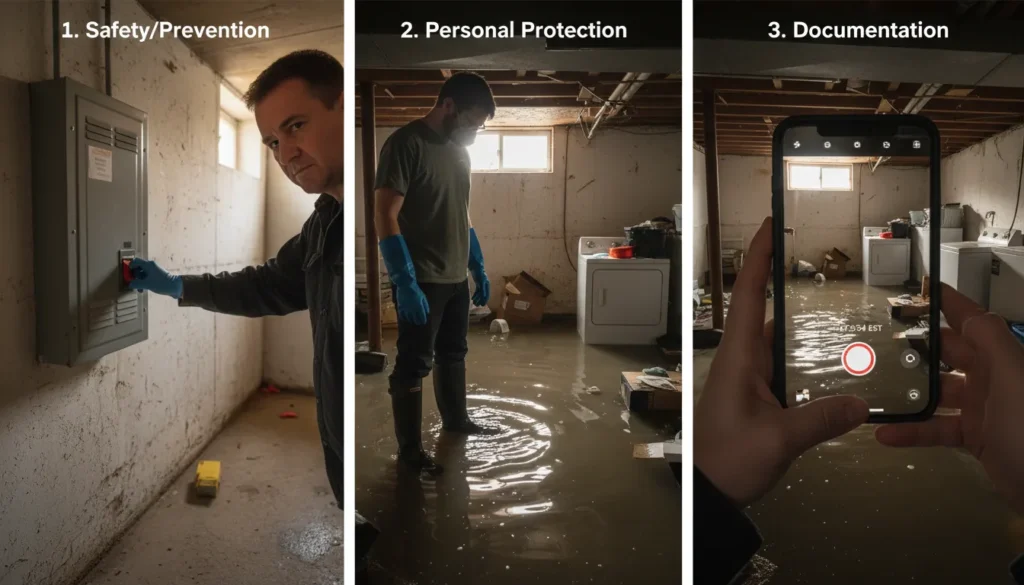
A flooded basement is more than just a property issue; it is a high-risk environment. Before our technicians arrive on-site, you must prioritize your physical safety and the integrity of your home. Following these emergency protocols will help you minimize health risks and prepare for a successful restoration.
The 3-Point Utility Shutoff
Do not enter the standing water until you have neutralized the following utilities. If your shutoff valves or breaker box are already submerged, stay back and wait for professional assistance.
Electricity: Turn off the power at the main breaker. Water is an excellent conductor of electricity; even low-level flooding can lead to lethal shocks if it reaches outlets or appliances.
Gas Supply: If your basement houses a gas-powered water heater or furnace, shut off the gas. Floodwaters can extinguish pilot lights, leading to dangerous gas accumulation.
Water Main: If the flooding is caused by a burst internal pipe, close the main water valve immediately to prevent further volume accumulation.
Personal Protection: Handling "Category 3" Risks
Floodwater is rarely sanitary. Most basement floods are classified as “Black Water” (Category 3), which often contains sewage, bacteria, and chemical runoff.
Rubber Boots & Gloves: Never enter floodwater in regular shoes or bare feet. Protective gear is essential to prevent skin contact with pathogens and hazardous debris.
N95 or N100 Masks: Within hours, stagnant water begins to release bacterial aerosols and musty odors. A high-quality mask protects your respiratory system from mold spores and toxic air.
Strategic Documentation for Insurance Claims
Before the extraction process begins, you must document the “Proof of Loss.” While we assist with the billing process, your initial evidence is the anchor of your claim.
Visual Evidence: Take high-resolution photos and videos of the water levels against the walls and all submerged belongings.
Focus on High-Value Items: Capture detailed footage of the furnace, washer/dryer, and drywall corners. This prevents insurance adjusters from claiming the damage was pre-existing.
Professional Basement Recovery: Beyond Simple Water Removal
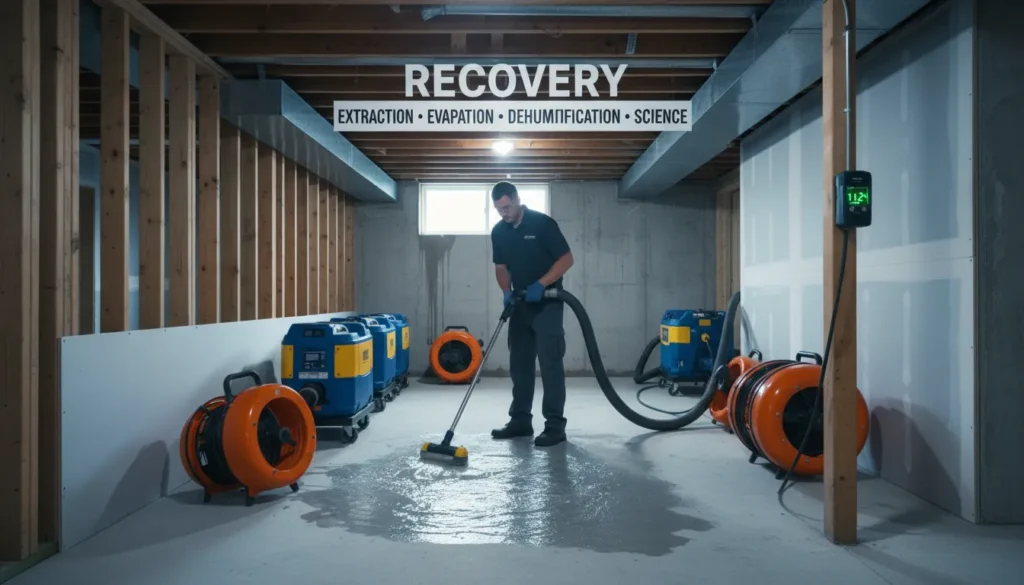
Many homeowners initially attempt to handle a flooded basement using a household mop or a standard shop-vac. While this might remove the water you can see, it fails to address the water you cannot see. A basement is a porous environment; without professional-grade intervention, moisture remains trapped within the substrate, leading to long-term structural decay.
Industrial Extraction: The Power of Truck-Mounted Systems
A standard consumer-grade vacuum lacks the lift and CFM (Cubic Feet per Minute) required to pull water out of deep carpet padding or concrete pores. Our industrial truck-mounted extraction units move thousands of gallons of water in a fraction of the time. This rapid removal is critical because the longer water sits, the deeper it saturates into the “bones” of your home, making restoration significantly more difficult and expensive.
The 24-Hour Mold Rule
In the humid Miami climate, mold spores (Ulli) don’t wait. Microscopic fungi begin to colonize damp organic materials like drywall, baseboards, and insulation within 24 to 48 hours. A “DIY” cleanup often leaves behind enough residual humidity for mold to thrive behind the walls, hidden from view. By the time you smell that “musty” odor, the biological contamination has already spread, often requiring thousands of dollars in professional remediation.
Scientific Structural Drying: LGR Technology
Removing standing water is only step one. The real challenge is “evaporative drying.” We utilize LGR (Low Grain Refrigerant) Dehumidifiers, which are far more powerful than standard household units. These machines pull moisture out of the air and, more importantly, out of the dense concrete foundation and wooden wall studs. Coupled with high-velocity air movers, this process creates a “dry vortex” that ensures your basement is restored to its pre-loss condition, preventing wood rot and structural instability.
Basement Flood Cleanup Cost & Insurance: What You Need to Know
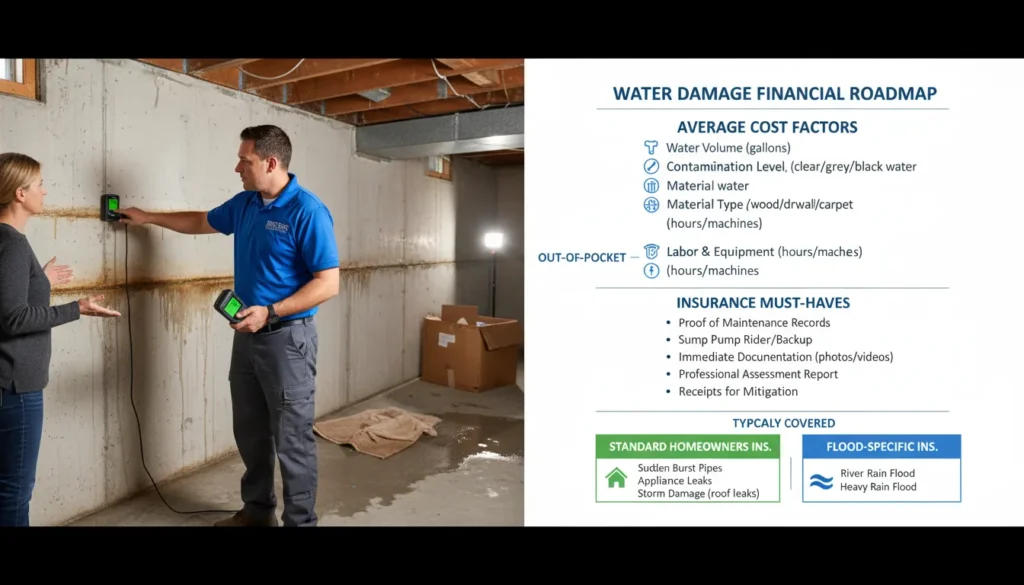
Understanding the financial aspect of water restoration is essential for any homeowner in a crisis. Many people delay calling for help because they fear high out-of-pocket expenses, but waiting often leads to much costlier structural damage and mold remediation.
Estimated Costs: Breaking Down the Numbers
While every flood is unique, professional cleanup costs in Miami typically range from $1,500 to $7,000. The final price depends on several factors:
Water Volume & Source: Extracting clean pipe-burst water is generally less expensive than handling “Black Water” (sewage) which requires specialized hazmat disposal.
Basement Size: The square footage directly affects the number of industrial LGR dehumidifiers and air movers required to achieve a “dry” certificate.
Material Porosity: If your basement has finished drywall and carpeting, the labor for controlled demolition and disposal will influence the final estimate.
Insurance Coverage: Flooding vs. Sump Pump Failure
A common point of confusion is what insurance actually covers. It is vital to distinguish between these two scenarios when speaking with your adjuster:
Sump Pump Failure/Sewer Backup: Most standard homeowners’ policies cover this if you have a specific “Water Backup” rider. This covers the cleanup and the repair of the affected area.
External Flooding: Rising groundwater or storm surge usually requires a separate policy through the National Flood Insurance Program (NFIP).
Pro-Tip for Adjusters: When reporting the claim, be precise about the source. Avoid generic terms and state exactly where the water originated to ensure your policy triggers correctly.
Our Direct Insurance Billing Process
At Ez Plumbing Repair Services, we believe that your focus should be on your family’s safety, not on complex insurance paperwork. We act as your advocate during the restoration process:
Direct Coordination: We work directly with your insurance carrier to provide the detailed moisture maps, thermal imaging, and documentation they require.
Claim Documentation: We provide a comprehensive “S500 Standard” report that justifies every step of the drying process, making it difficult for adjusters to deny your claim.
Zero Upfront Stress: In many cases, we can bill the insurance company directly, minimizing your out-of-pocket burden during this stressful time.
How to Prevent Future Basement Flooding During Heavy Rain
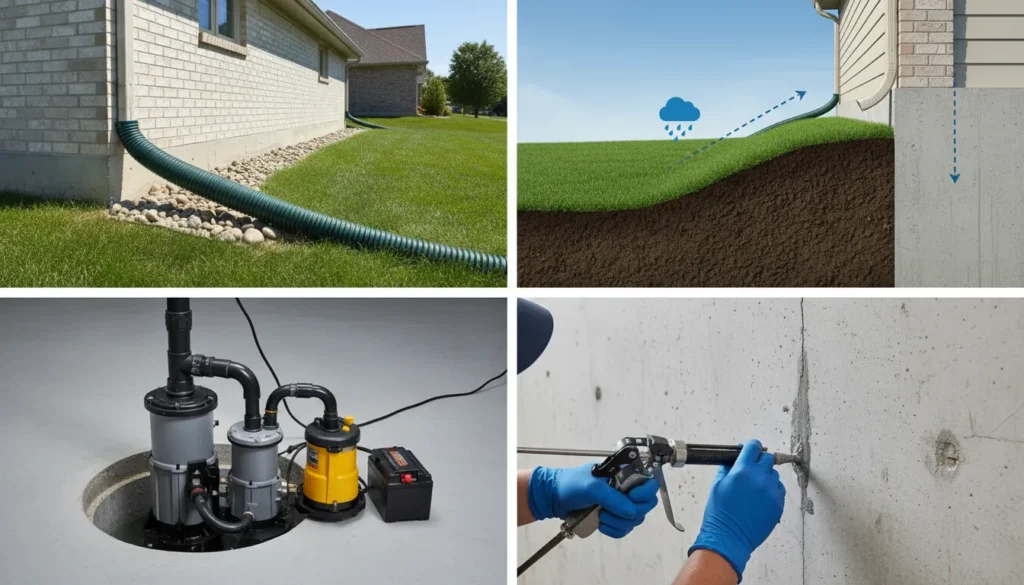
Cleanup is only half the battle; ensuring your home remains dry during the next Miami storm is the ultimate goal. Basement flooding is often preventable with strategic maintenance and a proactive defense system. By implementing these expert-recommended safeguards, you can significantly reduce the risk of future water intrusion.
The Lifeline: Sump Pump Battery Backups
In Miami, heavy rain is almost always accompanied by lightning and power outages. If your primary sump pump relies solely on grid power, it will fail exactly when you need it most.
The Solution: Installing a battery-powered backup system ensures your pump continues to evacuate water even during a blackout. This is the single most effective investment for long-term basement protection.
External Defense: Gutters and Landscaping Grading
Roof runoff is a primary cause of foundation pressure. If your gutters are clogged or your downspouts drop water right at the base of your home, it will eventually seep into the basement.
The 10-Foot Rule: Ensure your downspout extensions carry water at least 10 feet away from the foundation.
Positive Grading: The soil around your home should slope away from the walls. If the ground is flat or slopes toward the house, rainwater will naturally pool against the concrete, leading to “hydrostatic pressure” leaks.
Structural Integrity: Sealing Foundation Cracks
Over time, even the strongest foundations can develop hairline fractures due to soil shifting or heat. During a heavy downpour, these cracks act as entry points for groundwater.
Hydraulic Cement: For active leaks or visible cracks, we recommend using professional-grade hydraulic cement. Unlike standard caulk, hydraulic cement expands as it sets, creating a watertight seal that can withstand high water pressure from the outside.
How to Prevent Future Basement Flooding During Heavy Rain
Navigating a flooded basement is overwhelming. To help you make informed decisions, we have compiled answers to the most critical questions homeowners ask during a water crisis.
Statistically, the most common cause of basement flooding is Sump Pump Failure. This usually happens during heavy storms when the pump cannot keep up with the water volume or if there is a power outage. Other frequent causes include blocked gutters, poor yard grading that slopes toward the foundation, and sewer backups from municipal lines.
Mold (Ulli) is highly opportunistic and can begin to colonize as quickly as 24 to 48 hours after initial water exposure. Because basement concrete is porous and often lacks sunlight, it creates the perfect breeding ground. This is why professional dehumidification must begin immediately—even if the surfaces feel dry to the touch, moisture trapped inside wall studs can trigger mold growth.
The cost of basement flood recovery varies based on the water category and the square footage. On average:
Minor Clean Water Flood: $1,500 – $3,000.
Major Flood with Reconstruction: $7,000 – $15,000+.
Category 3 (Sewage) Cleanup: Costs are typically higher due to the specialized sanitization and hazardous waste disposal required.
Note: Early intervention usually reduces these costs by 40%.
When speaking with an insurance adjuster, accuracy is vital. Avoid saying “I think” or “Maybe” regarding the cause of the flood. Do not admit fault or suggest that the damage might be old or due to lack of maintenance. Instead, stick to the facts: “The basement flooded on Date due to Source.” Let our certified restoration experts provide the technical documentation to ensure your claim is handled fairly.
While a pipe can burst on any day of the year, basement flooding typically peaks during two specific periods:
1. Early Spring (The Thaw) In many regions, this is the highest risk period. As snow melts rapidly and the ground is still partially frozen, the soil cannot absorb the excess water. This leads to high hydrostatic pressure against foundation walls, forcing water through hairline cracks.
2. Late Summer & Fall (Hurricane & Storm Season) In coastal or tropical areas like Miami, the primary threat is from June through November. Heavy tropical downpours and hurricanes can overwhelm even the best sump pump systems. When the ground becomes “saturated” (cannot hold any more water), the excess has nowhere to go but into your basement.
3. The “Flash Flood” Factor Regardless of the month, any period of intense, short-duration rainfall (over 1 inch per hour) can cause flash flooding. If your gutters are clogged or your yard slopes toward the house, your basement is at risk every time a storm clouds over.
Restore Your Home with Miami’s Trusted Flood Experts
A flooded basement is one of the most stressful challenges a homeowner can face. Beyond the standing water lies the worry of expensive repairs, lost belongings, and the health of your family. At Ez Plumbing Repair Services, our mission is to take that burden off your shoulders. We don’t just offer a service; we offer a return to normalcy.
By choosing our team, you are securing a partner that understands the urgency of the situation. We combine decades of local experience with the most advanced restoration technology available in the industry. Our goal is to ensure that your home is not only dry but safe, sanitized, and structurally sound for years to come.
The Peace of Mind Guarantee
Licensed, Bonded, and Insured: We operate with full professional accountability. Your property is protected from the moment we step through the door.
IICRC Certified Quality: We adhere to the highest industry standards for water damage restoration and mold prevention.
Compassionate Service: We handle the water, the equipment, and the insurance paperwork—so you can focus on taking care of your family.
Don’t wait for the damage to double. Every hour you wait allows moisture to seep deeper into your home’s foundation. Join the thousands of Miami residents who trust us to protect their most valuable asset.