- Home
- Water Damage Restoration
- Water Damage Cleanup
24/7 Water Damage Cleanup & Emergency Extraction in Miami | Get $50 OFF Today
At EZ Plumbing, we specialize in rapid-response water restoration to protect your home from structural decay. Our certified Miami team is available around the clock to ensure your property is dried, sanitized, and safe within hours.
3 Reasons Why We Are the Best
✅45-Minute Emergency Arriva
We understand that every second counts in a flood; our local Miami units are always on standby.
✅ Advanced Structural Drying
: We don’t just “remove water”; we use industrial dehumidifiers to eliminate hidden moisture that causes mold
✅ Direct Insurance Coordination
We handle the paperwork for you, working directly with your insurance provider to minimize your out-of-pocket costs.
- ✅ Zero Risk: Licensed, Insured, and IICRC-Certified Technicians.
- ✅ Instant Savings: $50 Discount applied to all first-time emergency calls.
- ✅ Health First: Hospital-grade EPA disinfection to kill 99.9% of bacteria/pathogens.
Immediate Steps for Water Damage: What to Do in the First 60 Minutes?
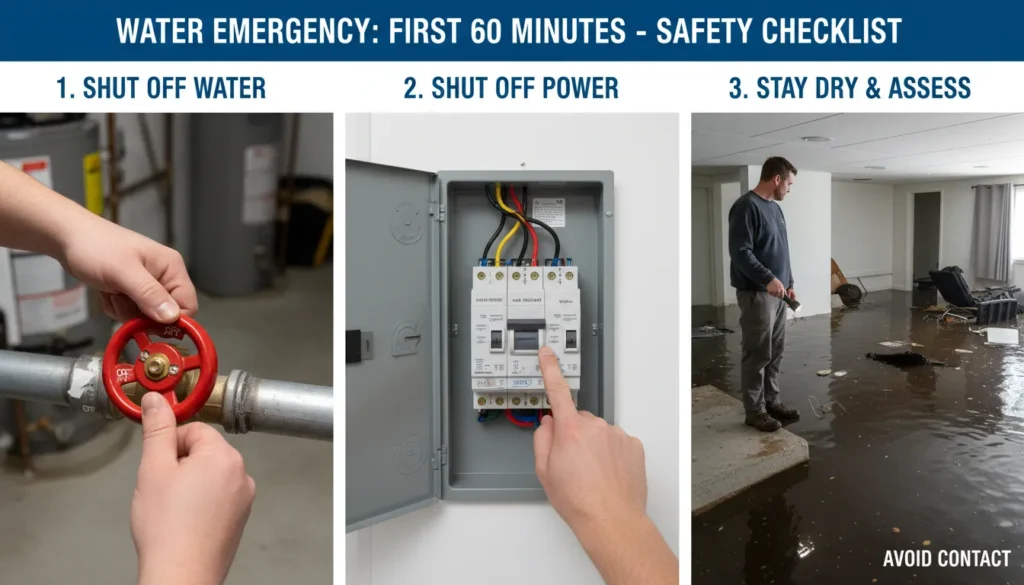
When a pipe bursts or a backup occurs, the first hour is critical to preventing permanent structural rot and mold growth. Follow these emergency protocols immediately:
Stop the Water Source: Locate and turn off the main water shut-off valve to prevent further flooding.
Ensure Electrical Safety: If safe to reach, turn off the circuit breakers for the affected area to eliminate the risk of electrocution.
Identify Water Category: Avoid all contact with “Category 3” water (blackwater or raw sewage), as it contains harmful pathogens and biohazards.
Document the Damage: Take clear photos and videos of the standing water and affected belongings for your insurance claim.
Initiate Industrial Extraction: Professional-grade pumps and dehumidifiers are required to remove moisture from porous materials like drywall and hardwood.
Our Advanced 4-Step Water Restoration Process
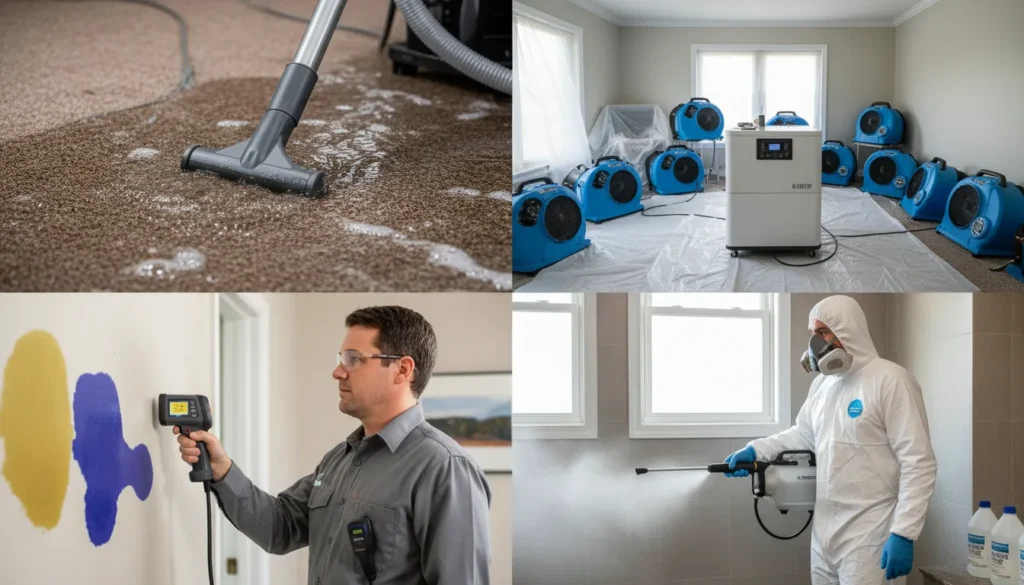
Restoring a property after a flood requires more than just surface-level cleaning. Our systematic approach utilizes industrial-grade science to ensure every drop of moisture is accounted for.
1: Emergency Water Extraction
The restoration begins with the immediate removal of standing water to stop the saturation of porous materials. We utilize high-powered submersible pumps and truck-mounted vacuum systems capable of extracting thousands of gallons per hour. This rapid response minimizes the “wicking” effect where water travels upward through drywall and insulation.
2: Structural Drying & Dehumidification
Once standing water is removed, the environment remains humid. We engineer the airflow using High-Velocity Air Movers and LGR (Low Grain Refrigerant) Dehumidifiers. This process pulls deep-seated moisture from the building’s “bones”—studs, subfloors, and headers—preventing long-term structural rot.
3: Thermal Imaging Moisture Detection
Water is often invisible to the naked eye, hiding behind baseboards and inside wall cavities. We deploy Infrared Thermal Imaging Cameras to map moisture pockets. This non-invasive technology allows us to pinpoint exactly where drying is needed without the “guesswork” of tearing down functional walls.
4: EPA-Approved Sanitization
The final step is the elimination of biological threats. We apply hospital-grade, EPA-registered disinfectants to all affected surfaces. This neutralizes harmful pathogens, bacteria, and mold spores, ensuring the air quality and surfaces are safe for residential re-entry.
2026 Water Damage Cleanup Costs: Repair vs. Restoration
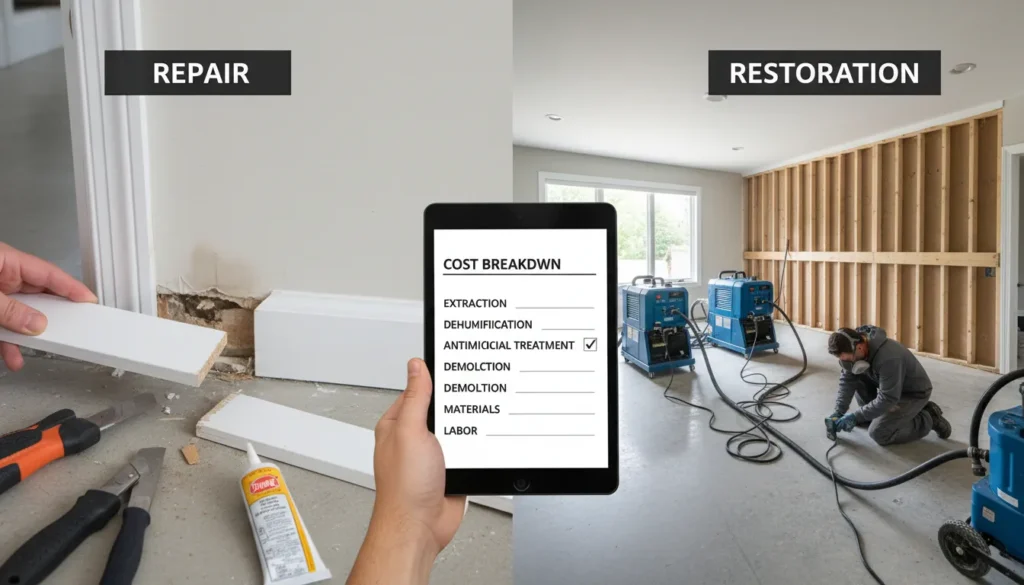
Understanding the financial impact of water damage is essential for making informed decisions. While every incident is unique, current 2026 market data for the Miami area provides a baseline for professional extraction and restoration services.
| Service Type | Estimated Cost (Miami) | Timeframe |
|---|---|---|
| Minor Pipe Burst | $1,000 - $3,500 | 1-2 Days |
| Whole Floor Flooding | $7,000 - $15,000+ | 3-5 Days |
| Sewage Backup Cleanup | $2,000 - $5,000 | 24-48 Hours |
Factors Influencing Your Total Investment:
Water Category: “Category 1” (clean water) is significantly less expensive to remediate than “Category 3” (sewage/blackwater), which requires intensive biohazard sanitization.
Structural Saturation: The longer water sits, the deeper it penetrates subfloors and drywall, increasing the drying time and equipment costs.
Material Replacement: Costs vary based on whether high-end materials like solid hardwood or custom cabinetry need specialized drying or total replacement.
Insurance & Out-of-Pocket Mitigation
Most standard homeowners’ insurance policies cover “sudden and accidental” water discharge. Professional restoration includes comprehensive documentation—thermal images, moisture maps, and daily drying logs—to ensure your claim is processed accurately, often resulting in minimal out-of-pocket expenses for the homeowner.
Frequently Asked Questions
Immediately shut off the main water valve to stop the flow and turn off the electricity at the breaker box if the area is flooded. Move high-value items to a dry location and document the damage with photos for insurance. Contact a professional extraction team within the first hour to prevent structural rot.
In 2026, minor repairs (like a small pipe leak) typically cost between $1,000 and $3,500. However, full-scale structural restoration for a flooded floor can range from $7,000 to over $15,000, depending on the water category and drying time required.
Mold spores can begin to colonize and grow within 24 to 48 hours of initial water exposure. If the humidity levels remain above 60% and the temperature is warm, the growth process accelerates rapidly.
Most policies pay for “sudden and accidental” damage (like a burst pipe). They generally do not pay for “gradual damage” caused by lack of maintenance, slow seepage, or long-term leaks that were ignored.
Common early symptoms include persistent sneezing, itchy eyes, skin rashes, and respiratory congestion. Individuals with asthma or weakened immune systems may experience shortness of breath or chronic fatigue shortly after exposure.
To kill 100% of mold and its spores on non-porous surfaces, EPA-registered antimicrobial disinfectants or a professional-grade hydrogen peroxide solution are required. However, on porous materials like drywall or insulation, the material must usually be removed because the mold roots (hyphae) grow inside the material.
Look for musty odors, visible dark spotting on walls, or bubbling/peeling wallpaper. For “hidden” mold, professionals use Thermal Imaging Cameras and moisture meters to detect dampness behind walls where mold thrives.
The Service Authority Layer
Water damage is a progressive disaster that requires immediate professional intervention. While we stop the leak today, we ensure your property remains a safe, dry, and healthy environment for the future.
🛠️ Core Solutions: For all residential repairs, leak detections, and full-system inspections, visit our primary Plumbing Services hub to see how we keep Miami homes running smoothly.
🌊 Specialized Recovery: If you are dealing with a flood or sewage backup, our expert Water Damage Restoration team is available 24/7 to provide industrial-grade extraction and structural drying.
Emergency Conversion Zone
Every second counts. Standing water travels 1 inch per hour through drywall, doubling your restoration costs every few hours. Don’t wait for mold to compromise your family’s health and safety.
✅ $50 Instant Discount Applied for Emergency Calls
- Service Area: Rapid 45-minute dispatch to Miami, Coral Gables, Hialeah, and Miami Beach.
- Availability: 24/7/365 Emergency Water Extraction, Drying, and Sanitization.
- Health First: Hospital-grade EPA disinfection to kill 99.9% of bacteria/pathogens.