
9 Expert Ways to Keep Dog Hair From Going Down Drain Stop Costly Clogs!
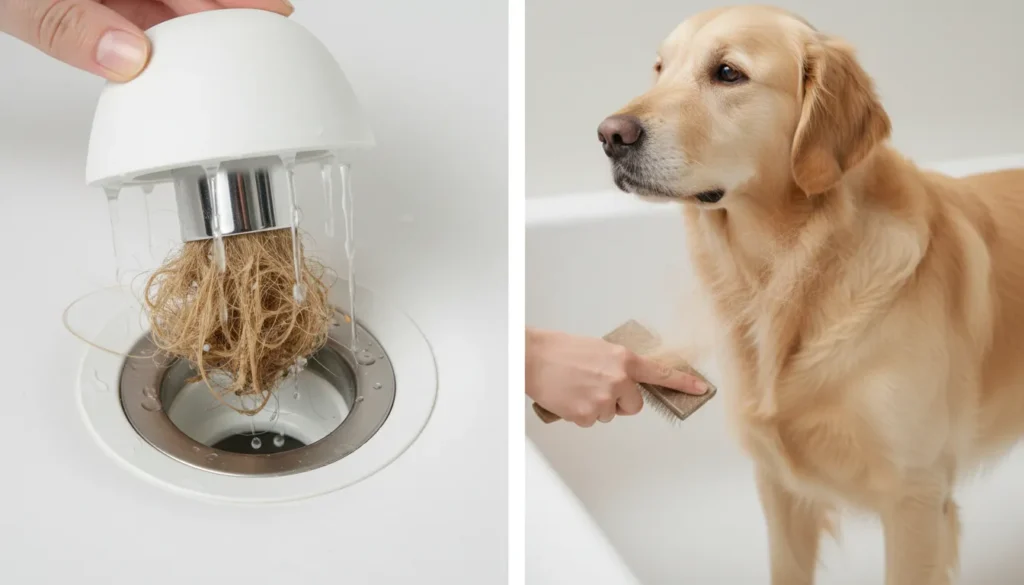
Bathing your dog shouldn’t end with a $500 plumbing bill. To keep dog hair from going down the drain, you must use a multi-layer defense: brush the coat thoroughly while dry, install a silicone-rimmed hair catcher, and neutralize soap scum with enzymatic cleaners.
Most pet owners fail because they treat dog hair like human hair. It’s not. Dog fur is packed with keratin proteins and microscopic “scales” that act like Velcro inside your pipes. When this fur hits soap scum, it creates a waterproof mat that standard drain cleaners can’t touch.
If you are tired of standing in a swamp of dirty water every time you scrub your pup, you need a strategy that stops the hair before it enters the P-trap.
How to Keep Dog Hair From Going Down the Drain Fast?
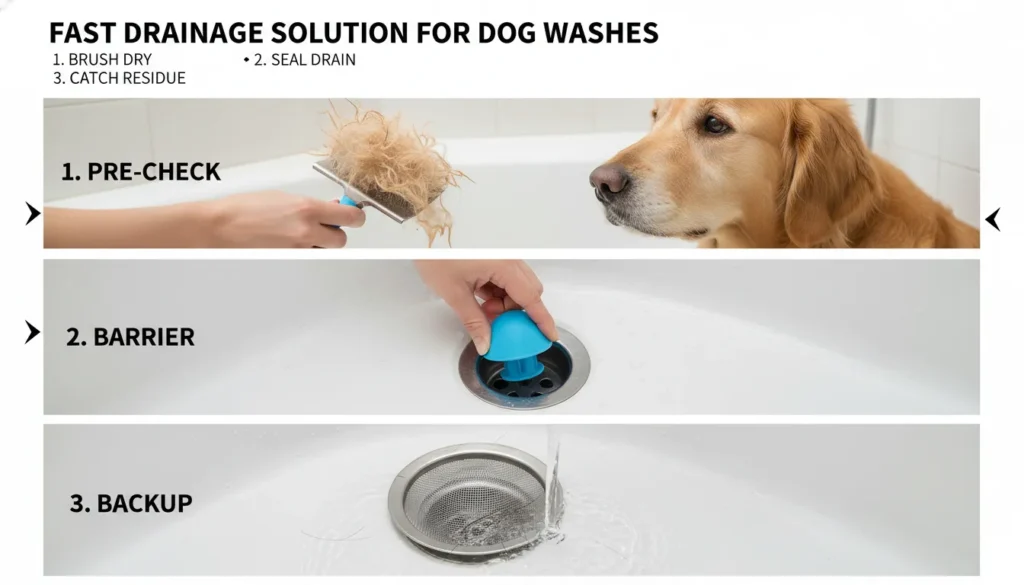
To stop dog hair from clogging your drain immediately, follow the “Triple-Shield” method:
Step 1: Brush your dog while the coat is completely dry to remove loose undercoat fur.
Step 2: Insert a Silicone-rimmed hair catcher (like a TubShroom) to create a watertight seal that hair cannot slip under.
Step 3: Use a mesh strainer over the primary drain for double-layer protection during the final rinse.
The Physics of Dog Hair: Why Traditional Cleaning Fails
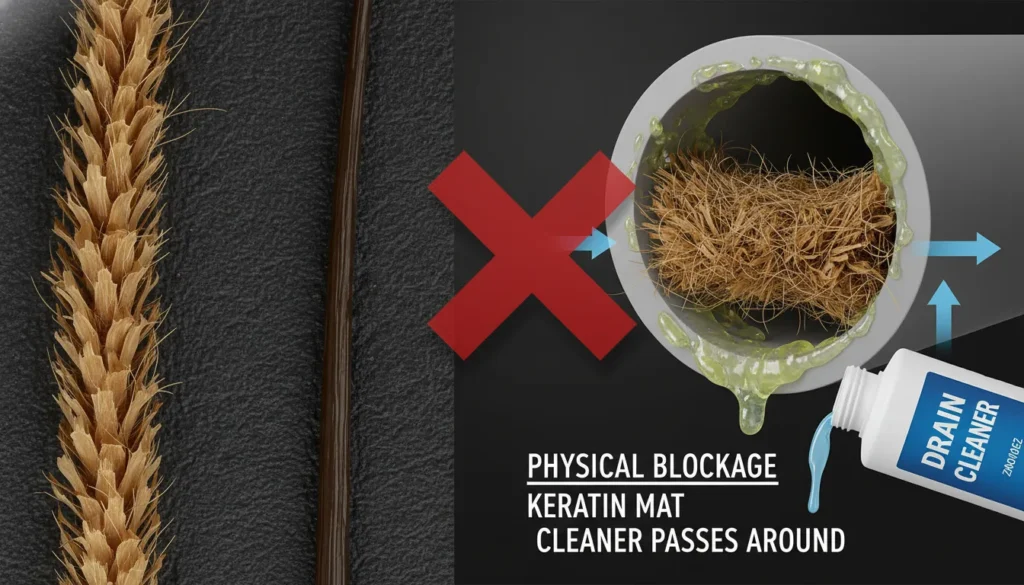
Most homeowners wonder why a tiny bit of fur causes a massive backup. The answer lies in Plumbing Physics. Unlike human hair, dog fur has a jagged cuticle structure.
When fur enters your pipes, it doesn’t just flow through. It snags on the rough interior of metal pipes or the sticky Biofilm (slime) inside PVC.
Keratin vs. Vinegar: The Myth Buster Section
If you’ve been told to use baking soda and vinegar, stop immediately. Dog hair is made of Keratin, a tough structural protein. Vinegar is a weak acetic acid that is chemically incapable of breaking down keratin. Using it only creates a “fizzy” show without actually clearing the blockage.
The Soap Scum Matrix (How Hair Becomes Concrete)
The real “silent killer” of your drains is the Soap Scum Matrix. When the fatty acids in pet shampoo mix with calcium and magnesium in your tap water, they form a thick, waxy gray sludge. This sludge acts like industrial glue, trapping individual dog hairs and hardening them into a solid, waterproof mass inside the P-trap.
Pre-Bath Rituals: Catching 80% of Fur Before the Water
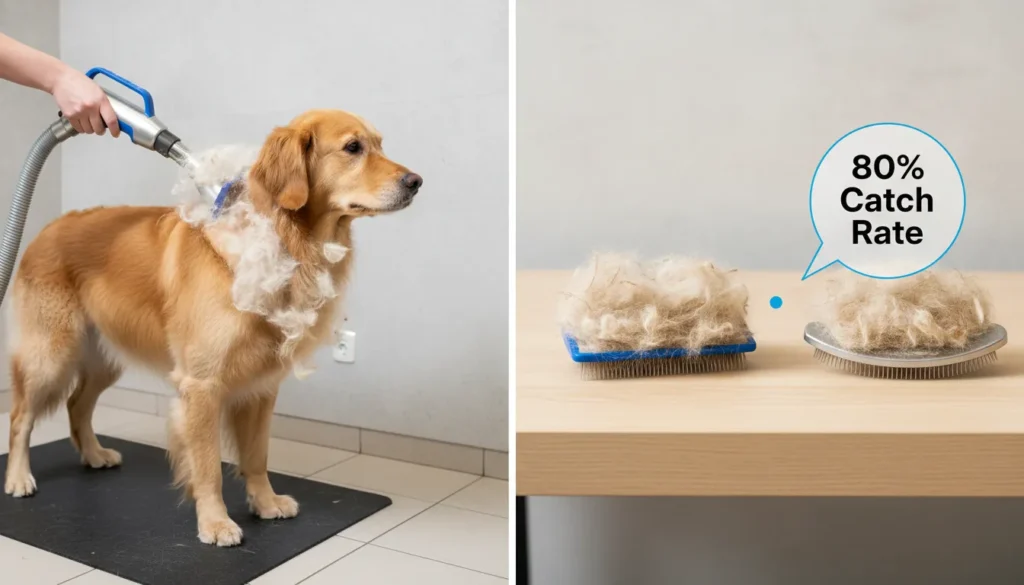
The most effective way to protect your plumbing is to ensure the hair never enters the tub. Once dog fur is wet, it clumps and becomes nearly impossible to catch with standard filters.
The Dry-Vacuum Attachment Technique
This is the “Pro-Secret” that high-end groomers use. Instead of just brushing, use a Grooming Vacuum Attachment (often called a de-shedding vacuum).
The Logic: These tools use suction to pull the loose undercoat away from the skin and directly into a canister.
Efficiency: This removes up to 80% of shed-ready fur before it can touch a drop of water. If your dog is sound-sensitive, use a low-decibel pet vacuum specifically designed for this purpose.
Slicker Brushes vs. De-shedding Tools
Not all brushes are equal when it comes to drain protection.
Slicker Brushes: Best for removing surface tangles and “tumbleweeds.”
De-shedding Tools (like the Furminator): These reach deep into the undercoat. If you have a double-coated breed (like a Golden Retriever or Husky), a de-shedding tool is mandatory.
Pro Tip: Always brush against the grain first to loosen deep hair, then with the grain to pull it away.
The Ultimate Hardware Guide for Every Drain Type
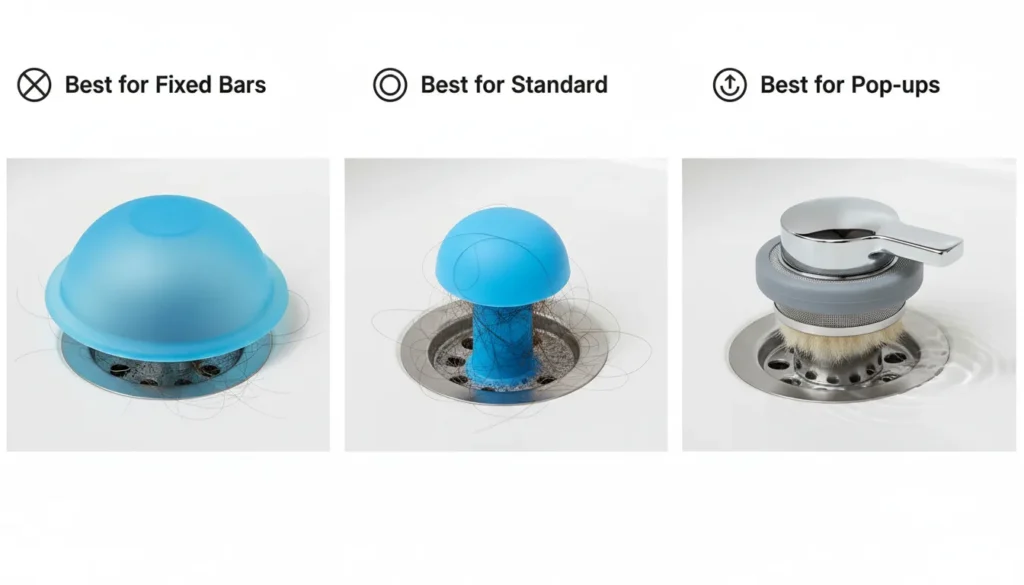
One size does not fit all. Your drain type determines your success.
The “Fixed-Bar” Drain Hack (Solving the Forum Frustration)
If your bathtub has permanent metal bars (crosspieces) that don’t come out, standard “drop-in” strainers won’t work.
The Solution: Use an External Silicone Dome. These sit over the entire drain area and use suction cups to stay in place.
The DIY Hack: If you’re in a pinch, take a fine nylon mesh (like from a laundry bag) and secure it over the bars with a waterproof rubber band. It catches the fine “micro-fur” that slips past bars.
Silicone Shrooms vs. Magnetic Stainless Steel Guards
Silicone Shrooms (TubShroom): Best for standard 1.5-inch drains. They catch hair inside the drain, keeping the unsightly mess out of view while you bathe.
Magnetic Guards: Ideal for modern pop-up drains. They snap onto the metal stopper and catch hair at the rim.
Pro-Plumber Hack: The “Add-A-Trap” Method
Sometimes, even the best surface catchers aren’t enough for heavy shedders. Professionals often use an “Inline Hair Trap” for long-term protection.
In this section, we feature a specialized video that shows the “Add-A-Trap” method. This is a game-changer for people who bathe their dogs weekly. Instead of relying on a tiny strainer, this hack involves a secondary filtration layer that can be cleaned in seconds without touching the “sludge.”
🔥 Pro Tip: See the “Add-A-Trap” Method in Action!
Most plumbing clogs happen because hair bypasses the first strainer. In this video, you’ll see how professional groomers use a secondary “Sink Shroom” technique to ensure 100% of fur is captured before it hits the P-trap.
Post-Bath Maintenance: The Deep Flush Protocol
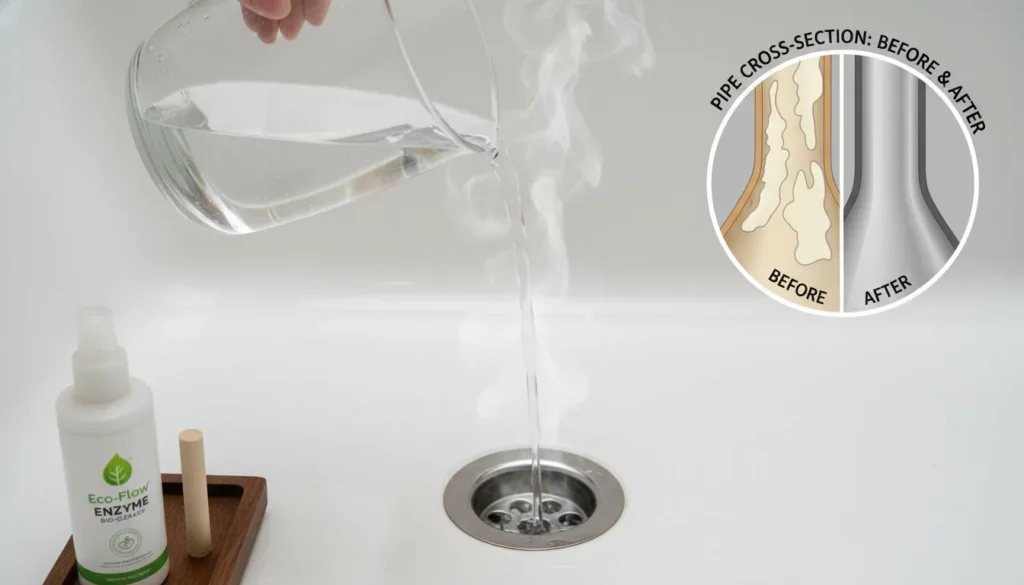
Once the dog is out of the tub and towel-dried, your job isn’t done. The first 10 minutes after a bath are critical for preventing “The Clog.”
Why Boiling Water Can Damage Your PVC Pipes (Safety Warning)
You’ll often read advice to pour boiling water down the drain. Be careful. * The Risk: Most modern homes use PVC (plastic) pipes. Boiling water (212°F) can soften the glue at the joints or even warp the plastic over time, leading to silent leaks behind your walls.
The Expert Way: Use very hot tap water (around 140°F) to flush the drain. This is hot enough to melt grease and soap scum without risking a $2,000 repiping job.
Enzymatic Bio-Cleaners: The Safe Alternative to Harsh Chemicals
Traditional drain cleaners use sulfuric acid or lye, which “cook” the hair into a hard mass and eat through your pipes.
The Solution: Use Enzymatic Bio-Cleaners. These contain live bacteria that literally “eat” the organic matter (skin cells, oils, and hair) trapped in your pipes.
The Routine: Drop one enzyme stick or a scoop of powder into the drain monthly. It’s safe for septic systems and won’t damage your plumbing.
5 Dangerous Dog Bath Mistakes (Avoid These!)
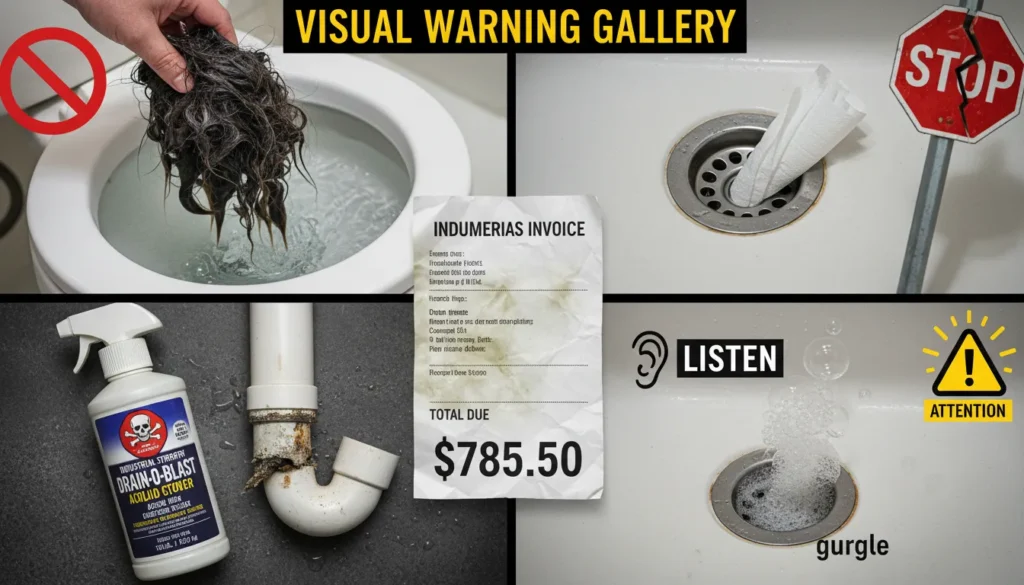
To keep your plumbing in top shape, you must avoid these common but “drain-destroying” habits that many pet owners overlook.
Mistake 1: Using Baby Wipes as Drain Filters. Some blogs suggest placing a baby wipe over the drain. Do not do this. Baby wipes are made of non-biodegradable synthetic fibers. If the water pressure sucks the wipe into the pipe, it creates an instant, massive obstruction that requires a professional snake to remove.
Mistake 2: The “Toilet Flush” Shortcut. Never flush clumps of dog hair down the toilet. Unlike toilet paper, hair is non-dissolvable. It will snag on the rough edges of your sewer main, eventually leading to a full-house backup.
Mistake 3: Skipping the Post-Bath Rinse. Soap scum is a “silent glue.” If you don’t rinse the tub floor and the first 2 feet of the drain with hot water immediately after the bath, the soap dries and “glues” any stray hairs to the pipe walls.
Mistake 4: Using “Liquid Fire” Drain Cleaners. Harsh acid-based cleaners can reach temperatures high enough to melt plastic pipes or corrode old metal ones. Always opt for mechanical removal (a zip-it tool) or biological enzymes.
Mistake 5: Ignoring “The Gurgle.” if you hear a gurgling sound after a bath, it’s a sign that air is struggling to pass through a developing hair-ball. Address it now with a zip-it tool before it becomes a total blockage.
People Also Asked
Q: Can I use a washcloth, dryer sheet, or baby wipe as a temporary drain filter?
A: While some DIY tips suggest using a washcloth or baby wipe, plumbers strongly advise against it. These materials are non-biodegradable and can easily be sucked into the pipe by water pressure, creating a massive, deep-pipe obstruction. Always use a purpose-built mesh, silicone (like TubShroom), or stainless steel strainer.
Q: Can I use human hair dissolvers (like Drano) on dog hair?
A: Human hair dissolvers are highly caustic and often fail on dog fur. Dog hair is thicker and coated in more sebum (natural oils), which protects it from these chemicals. Mechanical catchers or enzymatic cleaners are 100% more reliable and safer for your plumbing.
Q: Why is “Dry Brushing” before a bath so critical for my drains?
A: Brushing removes loose undercoat fur while it is dry and lightweight. Once fur gets wet, it clumps and becomes heavy, making it much easier for it to slip past surface guards and sink deep into your P-trap.
Q: How do I clean a drain that is already running slow after a dog bath?
A: The most effective tool is a Zip-It tool (a thin, barbed plastic strip). Slide it into the drain, twist, and pull to physically extract the hair-rope. Follow this with a gallon of hot water mixed with grease-cutting dish soap to clear any remaining sludge.
Q: Is it better to bathe heavy-shedding dogs in a utility sink or outdoors?
A: For heavy shedders (like Huskies or Labs), using a utility sink with a removable lint trap or an outdoor bath is ideal. This prevents massive volumes of fur from ever entering your home’s primary indoor drainage system.
Q: Does cold water help prevent hair clogs?
A: No, warm water (100°F-120°F) is actually better for prevention. Cold water causes the fats in dog shampoo and natural skin oils to solidify quickly, which acts like “glue” to bind hair to the pipe walls. Warm water keeps these oils liquid so they can flush away.
Q: How do I handle loose hair that escapes during the scrubbing process?
A: Practice Manual Interception. Keep a small container nearby and scoop up clumps of floating fur immediately. Do not wait until the end of the bath, as the final rinse pressure can force trapped hair past the strainer and into the pipes.
Q: What is the best drain catcher for dogs with very “Fine” hair?
A: For breeds with fine fur (like Yorkies or Maltipoos), a Fine Mesh Stainless Steel Strainer is superior to silicone “shrooms.” The micro-holes are small enough to ensure even the thinnest hairs are caught.