Does Plumbing Use Electricity? The Essential 2026 Safety Guide
🏠 The Rule: City water works via gravity, but well pumps, sump pumps, and tankless heaters will fail instantly without power.
⚠️ Electrical Risk: Your metal pipes act as a grounding path; touching faucets during a storm can be dangerous due to lightning surges.
🚽 Emergency Fix: You can bypass electric pump failures by using a “Bucket Flush” to keep your toilets operational during an outage.
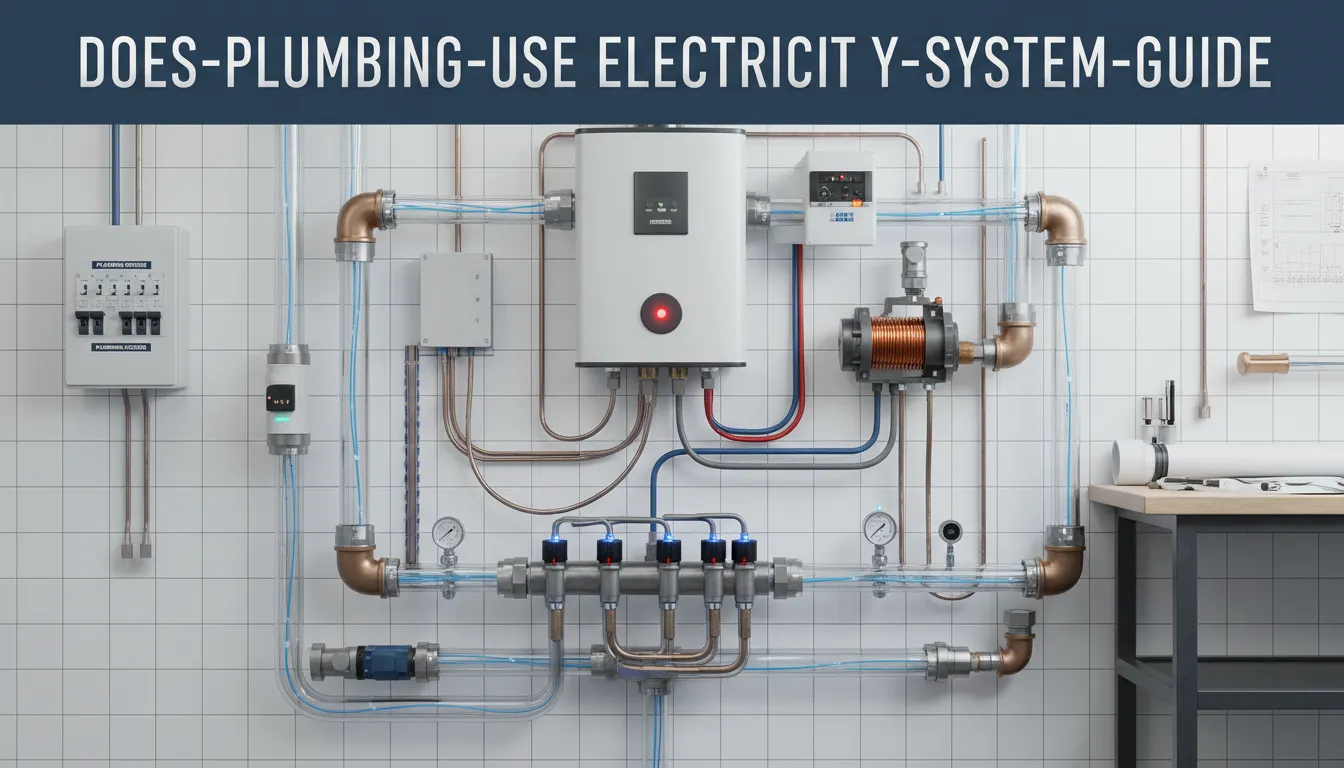
Most standard plumbing systems do not use electricity to move water, relying instead on gravity and municipal pressure. However, modern homes often require electricity for well pumps, water heaters, and sump pumps to function. If your home uses an electric pump or a high-efficiency gas heater, your water supply may stop during a power outage.
Quick Survival Checklist
City Water: Usually works via gravity-fed towers.
Well Water: Stops immediately without a backup generator.
Hot Water: Tankless and power-vented units will fail.
Toilets: Standard gravity-flush models remain operational.
As a senior specialist, I’ve seen homeowners assume “gas” means “guaranteed water.” In reality, 2026 building codes often require electronic control boards and solenoid valves that stay shut when the power dies. Understanding the link between your pipes and your breaker panel is the only way to prevent a flooded basement or a dry tap.
The Direct Answer: Will Your Water Work Without Power?
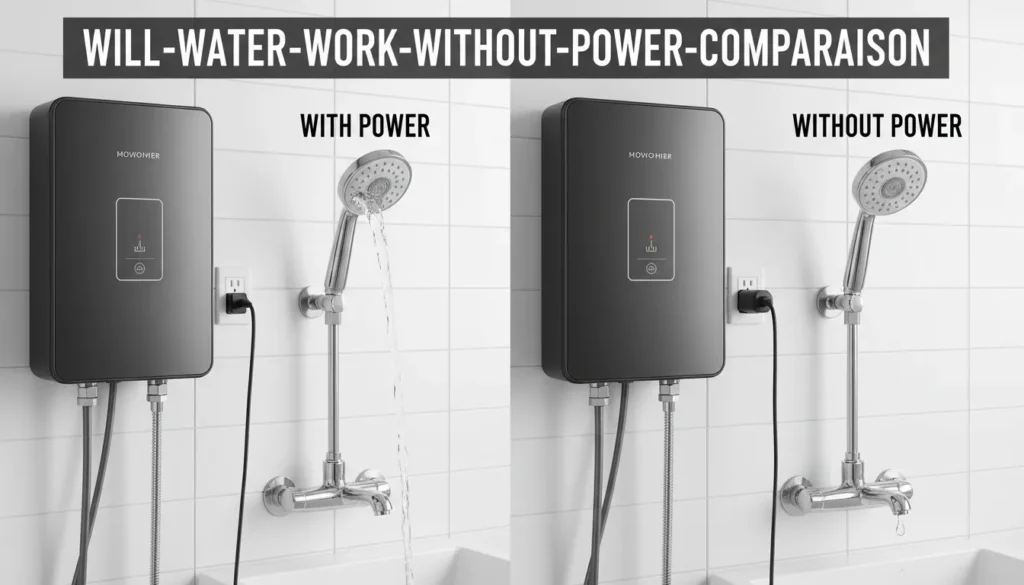
Yes, your water will typically work during a power outage if you are on a municipal (city) supply, as these systems use gravity-fed water towers. However, if your home relies on an electric well pump, water flow will stop immediately once the pressure tank empties.
Whether your plumbing stays active depends on your water source and your home’s mechanical setup. Here is the breakdown:
- City Water Users: You are usually safe. Municipalities store water in elevated tanks, using gravity to push water into your pipes without needing electricity at your house.
Well Water Users: You are at risk. Your submersible well pump requires 230V of electricity. No power means no water.
High-Rise/Condo Living: Most large buildings use electric booster pumps to reach upper floors. Expect an immediate loss of pressure.
- The 2-Minute System Check
| System Component | Works Without Power? | The “Why” |
| Standard Toilet | YES | Gravity-fed flush. |
| Cold Water Tap | YES (City) / NO (Well) | Relies on external pressure. |
| Sump Pump | NO | Needs a motor to move water. |
| Tankless Heater | NO | Needs electricity for the igniter. |
5 Modern Plumbing Systems That Require Electricity
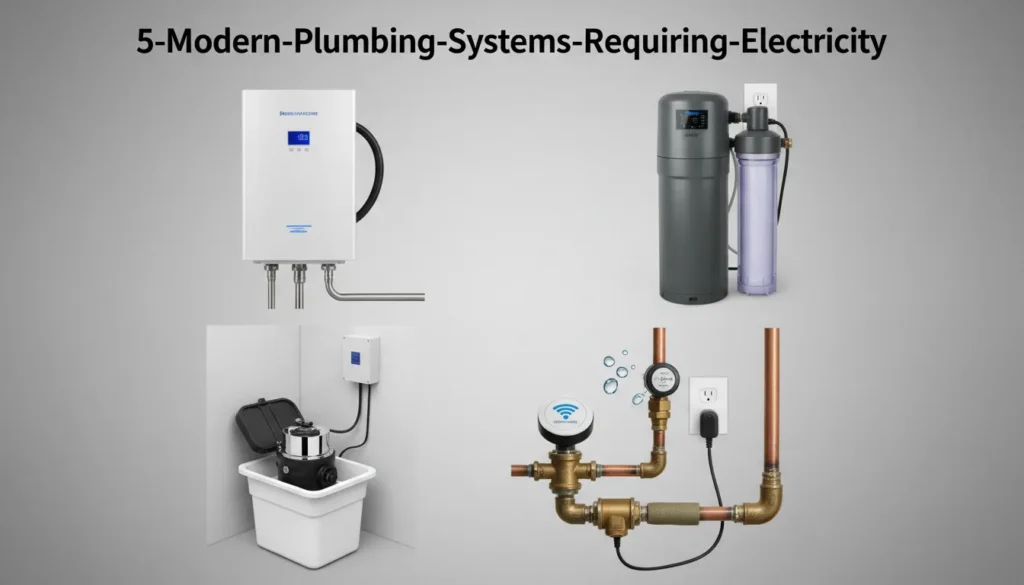
- Modern plumbing has evolved far beyond simple pipes and valves. In 2026, many “standard” home features are now hybrid systems that blend water flow with sensitive electronic components. Here are the five most common systems that will fail when your breakers trip.
- 1. Well Water Pumps and Pressure Tanks
- If you live in a rural area, your water starts at a submersible well pump. This pump pushes water into a pressure tank (measured in PSI). Once the power dies, you only have the water currently stored in that tank—usually just 10 to 50 gallons. After that, your faucets will run dry.
- 2. Sump Pumps and Sewage Ejectors
- These are your home’s primary defense against flooding. A sump pump sits in a pit and kicks on when water levels rise. Without electricity, the pump’s motor won’t turn. During a storm-related outage, this is a critical failure point that often leads to basement flooding within minutes.
- 3. Tankless and Power-Vent Gas Heaters
- Don’t let the “gas” label fool you. Modern tankless water heaters use an Electronic Control Board (ECB) to regulate temperature and fire the igniter. Even traditional tank heaters now often use power-venting fans to exhaust fumes safely. If the fan or control board loses power, the system shuts down the gas for safety.
- 4. Modern Smart Toilets and Bidet Seats
- Luxury “Smart Toilets” rely on solenoid valves and electric sensors to flush. While some have a hidden manual override, many high-end models become unusable. Similarly, bidet seats lose their heating and pumping capabilities instantly.
- 5. Water Softeners and Reverse Osmosis (RO)
- Most water softeners use a timed regeneration cycle powered by electricity. If the power cuts mid-cycle, the unit can get stuck, potentially causing a drop in water pressure or sending salty brine into your household lines. RO systems with electric booster pumps will also cease to filter effectively.
The Hidden Electrical Connection: Grounding and Bonding
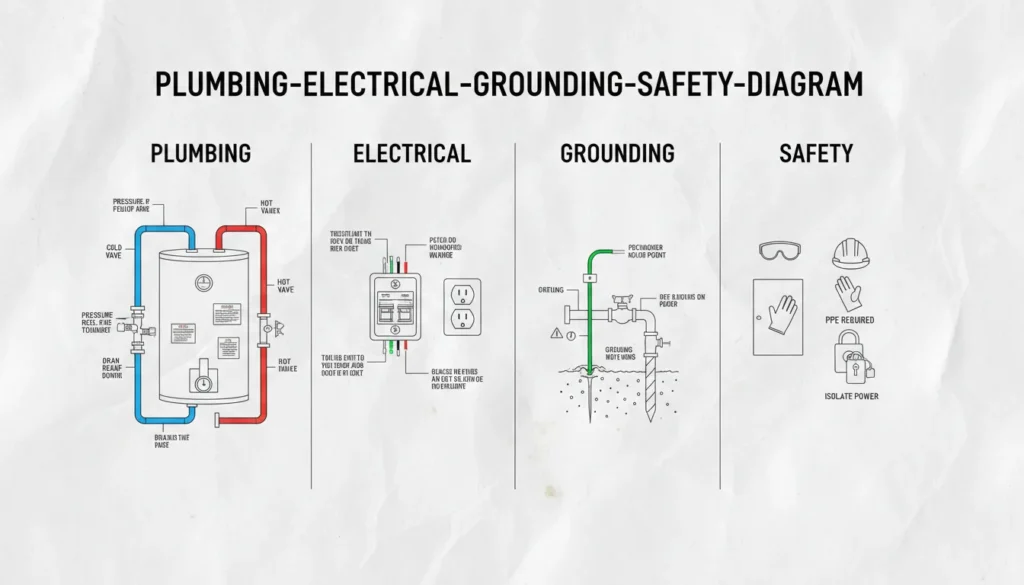
- Most homeowners don’t realize that their plumbing is a vital part of their home’s electrical safety system. In the trade, we call this Equipotential Bonding. For decades, metal water pipes have been used as a “path of least resistance” to safely direct stray electricity into the earth.
- Why Touching a Faucet in a Storm Can Be Dangerous
- During a lightning strike or a power surge, electricity looks for the fastest way to the ground. If your plumbing system isn’t properly bonded to your electrical panel, your metal faucets can actually become “live.”
The Grounding Path: Your main water line is usually connected to your electrical service panel via a grounding electrode conductor.
The Risk: If there is a fault in your wiring during an outage, the plumbing system may carry current. Never perform plumbing repairs during a lightning storm.
- The PEX Pipe Warning: Don’t Break Your Home’s Ground
- As a senior specialist, this is the #1 mistake I see DIYers make. If you replace a section of old copper pipe with PEX (plastic), you are breaking the electrical continuity of your home.
Pro Secret: If you “break” a metal line with plastic, you must install a bonding jumper (a copper wire clamped to both sides of the repair). Without this, your plumbing may no longer be safely grounded, increasing the risk of electric shock or fire during a surge.
How to Flush Your Toilet When the Pumps are Down
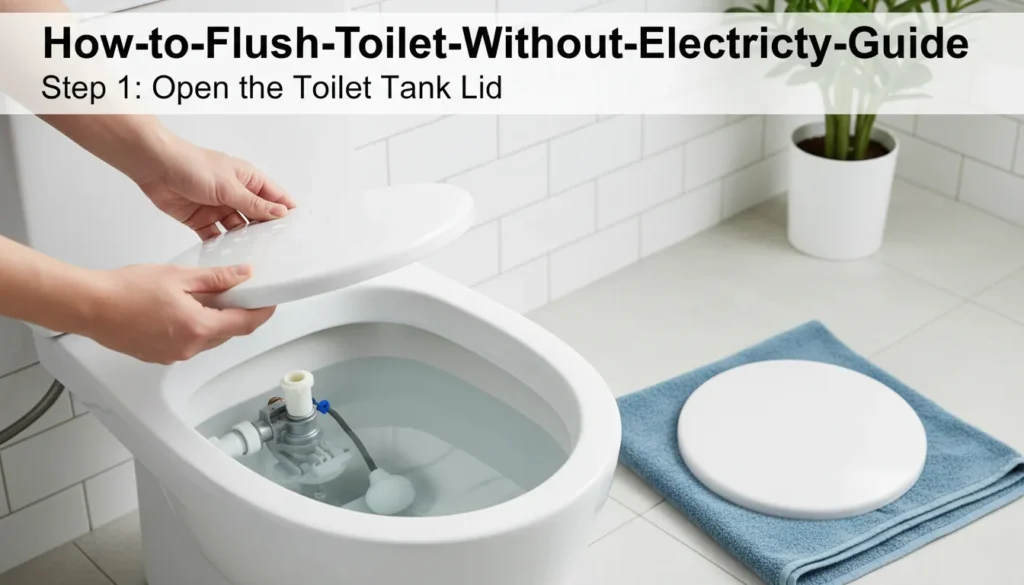
- If your home relies on a pump that has lost power, your toilet tank won’t refill on its own. However, as long as your drainage pipes are clear and use gravity flow, you can still use the “Bucket Flush” method.
- The “Bucket Flush” Technique
- This is a simple physics trick. You don’t need the handle; you just need head pressure.
Fill a bucket: Use about 1.5 to 2 gallons of water.
The Fast Pour: Do not pour slowly. Dump the water into the bowl quickly and all at once.
The Result: The sudden volume creates a vacuum effect (siphon) that forces the waste down.
Watch: Emergency Plumbing Workarounds
Watch: Emergency Plumbing Workarounds and the bucket flush method.
Common Mistakes: Why “Gas” Doesn’t Always Mean “Works”
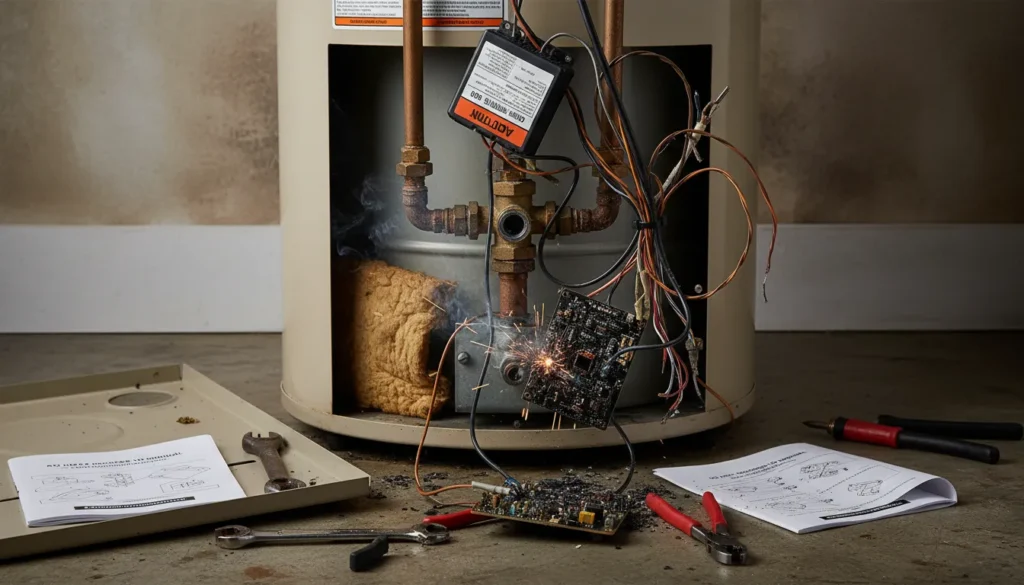
- One of the biggest pieces of misinformation in the plumbing industry is that gas appliances are immune to power outages. In a 2026 home, this is rarely true. As an expert, I see homeowners wait hours for hot water that will never come because they don’t understand their system’s ignition source.
The “Electronic Ignition” Trap: Most modern high-efficiency gas water heaters have replaced the old-fashioned “standing pilot light” (the tiny flame that stays lit 24/7) with electronic igniters. No spark = no flame = no hot water.
The Power-Vent Failure: If your water heater has a plastic (PVC) exhaust pipe instead of a metal one, it likely uses a Power-Vent fan. This fan requires electricity to push carbon monoxide out of your home. If the fan can’t spin, the system’s safety sensors will prevent the burner from firing up.
Smart Shut-off Overload: If you have a smart leak-detection system, a power surge during restoration can occasionally trigger a false positive, locking your main water valve. Always check your control hub if you have power but no water.
People Also Asked (Deep FAQ)
Can you get electrocuted through plumbing during a power outage?
Yes, though it is rare. If a power line falls on your home or your electrical system has a “ground fault,” electricity can travel through metal pipes. Avoid showering or touching metal fixtures during a lightning storm or immediately after a major electrical failure.
How long will city water work without electricity?
City water can last anywhere from a few hours to several days. While the water flows via gravity from towers, those towers are eventually refilled by large municipal pumps. Most cities have massive backup generators, but during a prolonged regional blackout, pressure will eventually drop.
Do gas water heaters have electric igniters?
Yes, almost all “Energy Star” rated and tankless gas models built in the last 10 years use electronic igniters. Only older “Atmospheric Vent” models with a standing pilot light function completely without electricity.
Can I take a shower during a lightning storm?
It is highly discouraged. Because your plumbing is bonded to your home’s electrical ground, a lightning strike to your house or a nearby utility pole can send a surge through your metal pipes and the water stream.
Final Expert Verdict
Does plumbing use electricity? For the basic movement of water in a city home, no. But for the safety, heating, and waste management of a modern USA household, yes. To protect your home, always ensure you have a battery backup for your sump pump and know exactly where your manual bypass valves are located.
Can I take a shower during a lightning storm? It is highly discouraged. Because your plumbing is bonded to your home’s electrical ground, a lightning strike can send a surge through your metal pipes and the water stream.