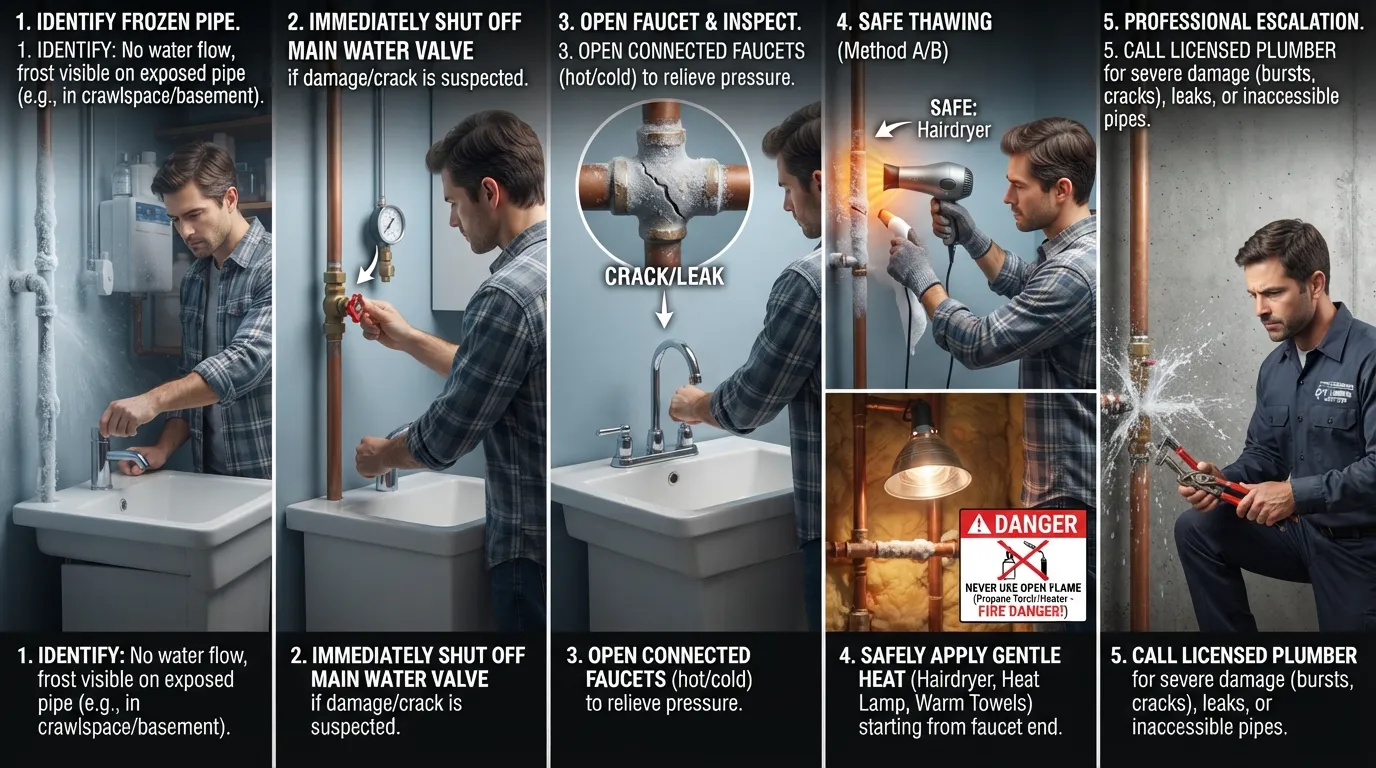
If you think a water pipe has frozen, act before the ice melts completely. The safest approach is to shut off the water, open the affected faucet, check for visible damage, and thaw an accessible pipe gradually with gentle heat. If you find a crack, active leak, major flooding, or a frozen section you cannot safely reach, stop the DIY process and get professional plumbing help.
What should you do first if your pipes freeze?
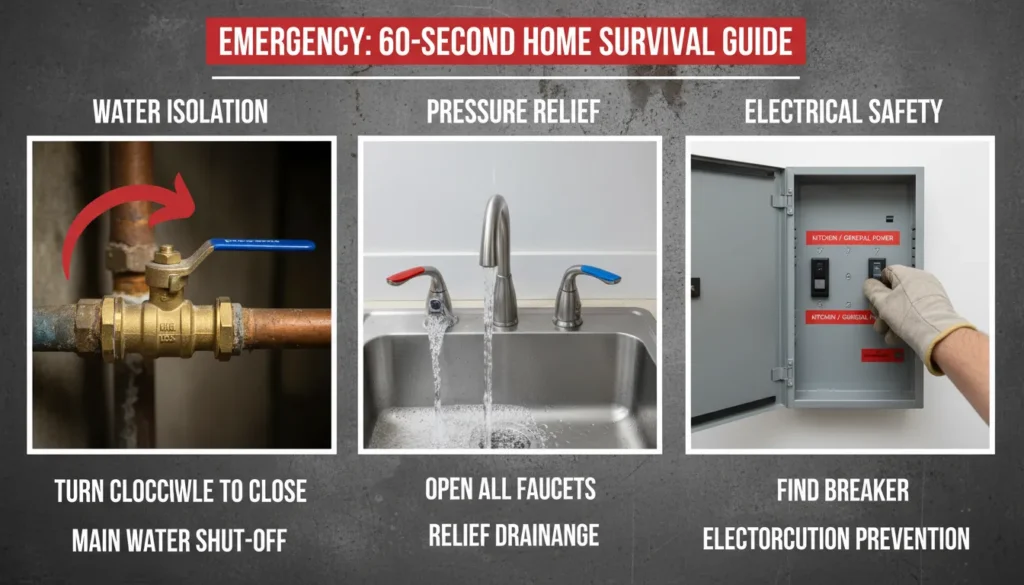
First, shut off the main water supply if you suspect a frozen pipe could have cracked, then open the faucet served by the frozen line. Next, inspect exposed plumbing for splitting, bulging, frost, or water. If the pipe appears intact and you can safely reach it, use gentle heat to thaw it gradually. Never use an open flame.
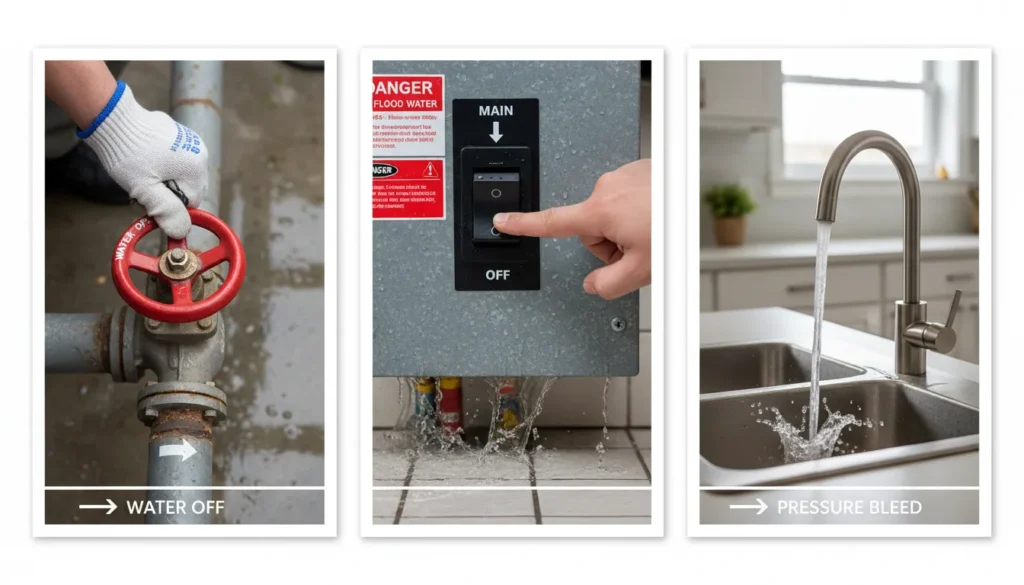
- Locate and shut off the main water valve if there is a meaningful risk of a burst or leak.
- Open the affected faucet to provide a path for water and relieve pressure as the ice melts.
- Inspect accessible pipes for cracks, bulges, frost, or leaking water.
- Apply gentle heat to an exposed frozen section, starting near the faucet and moving toward the blockage.
- Watch carefully as the pipe thaws because a damaged section may begin leaking when water flow returns.
How to Tell If a Pipe Is Frozen
A frozen pipe does not always look like a block of ice. In many cases, the first clue is a faucet that produces little water or no water at all. You may also notice frost on an exposed section of pipe, unusual pressure changes, or a plumbing fixture that suddenly stops working during very cold weather.
If only one faucet or fixture has little or no water while other fixtures work normally, the frozen section may be isolated to that branch of the plumbing system. If water is unavailable throughout the home, check whether the main water supply has been shut off or whether there may be a larger plumbing problem.
Frozen Pipe or Burst Pipe? Know the Difference
One of the most important things to understand is that a pipe can be frozen and damaged at the same time. The absence of visible water does not prove that the pipe is intact. That is why you should inspect accessible plumbing before applying heat and continue watching the area while it thaws.
Step-by-Step: What to Do When Water Pipes Freeze
1. Turn Off the Main Water Supply When a Burst Is Possible
If you see a crack, split, bulging section, active leak, or signs of flooding, shut off the main water supply immediately. This limits the amount of water that can enter the plumbing system if the frozen section has failed.
If you are dealing with an exposed frozen pipe that appears intact, you still need to understand where your main shutoff valve is before you begin thawing. That way, you can react quickly if water starts escaping as the ice melts.
2. Open the Faucet Connected to the Frozen Line
Open the faucet supplied by the suspected frozen pipe. As the ice begins to melt, water needs somewhere to move. An open faucet can also help you recognize when flow starts returning.
Do not confuse an open faucet with leaving the main water supply on when you have an obvious burst. If the pipe is visibly damaged or leaking heavily, the priority is stopping the water supply.
3. Find the Frozen Section
Start with areas where pipes are exposed to cold air or inadequate insulation. Common vulnerable locations include exterior walls, basements, crawl spaces, garages, attics, cabinets, and areas around openings where cold air can reach plumbing.
If you find one frozen pipe, do not automatically assume it is the only affected section. Check other accessible faucets and vulnerable plumbing areas, especially after prolonged cold weather.
4. Inspect the Pipe Before Applying Heat
Look for frost, ice, cracks, splits, bulges, discoloration, or water around the pipe. If the frozen section is behind a wall, beneath concrete, or otherwise inaccessible, forcing a DIY solution can create more problems.
A frozen pipe inside a wall deserves extra caution because you may not be able to see damage until the pipe begins leaking. If you cannot safely reach the suspected frozen section, professional diagnosis is usually the better choice.
5. Thaw an Accessible Pipe With Gentle Heat
If the pipe is exposed, appears intact, and you can safely reach it, apply heat gradually. Suitable approaches can include a hair dryer, a heating pad designed for appropriate use around the pipe, or warm towels.
Begin near the faucet and gradually work toward the frozen section. The purpose is to thaw the ice progressively rather than create an extreme temperature change at one point on the pipe.
Why start near the open faucet?
Starting near the faucet gives melting water a path to move through the plumbing system. As the frozen area thaws, restored flow can also help you recognize that the blockage is beginning to clear. Keep watching the pipe for unexpected leakage.
6. Warm the Surrounding Area
You can also increase the temperature around accessible plumbing. Opening cabinet doors beneath sinks can allow warmer household air to reach pipes. Maintaining a warmer indoor environment can also help vulnerable areas gradually warm.
Do not place a heat source where it can create a fire, electrical, or other household safety hazard. Keep any heating device away from water and use it only according to its safety instructions.
7. Watch Closely as Water Flow Returns
Do not walk away simply because the faucet starts running again. Continue checking the exposed plumbing while the pipe finishes thawing. A pipe that was damaged while frozen may begin leaking once water pressure and flow return.
If you see water where it should not be, shut off the main water supply and arrange for the damaged pipe to be repaired.
Never use an open flame to thaw frozen pipes
Do not use a blowtorch, propane torch, or another open-flame device to thaw plumbing. Extreme heat can create a serious fire hazard and can damage the pipe.
Use gentle, controlled heat instead. If the pipe cannot be safely reached or thawed without hazardous equipment, stop and get professional help.
What Not to Do When Pipes Freeze
- Do not use an open flame. Avoid torches and other flame-based methods.
- Do not ignore a visible crack. A frozen pipe can already be damaged even when water is not yet leaking.
- Do not apply extreme heat to one small area. Gradual, controlled warming is safer.
- Do not assume no water means the entire plumbing system is frozen. Check individual fixtures and the main supply.
- Do not pour random substances down a drain to thaw a water-supply pipe. A frozen supply line and a clogged or frozen drain are different plumbing problems.
- Do not keep thawing a pipe that is inaccessible or visibly damaged. That is a point where professional help becomes the safer option.
What If Your Pipes Freeze and You Have No Water?
If a faucet suddenly stops producing water during freezing conditions, a frozen supply line is one possible explanation. First determine whether the problem affects one fixture or multiple fixtures.
- Check whether other faucets have normal water flow.
- Make sure your main water supply has not been intentionally or accidentally shut off.
- If only one area is affected, inspect accessible plumbing near that fixture.
- Look for frost or ice on exposed sections.
- Keep the affected faucet open while safely investigating.
- If the pipe is accessible and appears intact, use gentle heat to thaw it.
- If the pipe is inaccessible, damaged, or leaking, stop the DIY process and contact a plumbing professional.
This approach is better than assuming that every no-water situation requires the same thawing method. The location and condition of the plumbing matter.
What If Your Pipes Freeze Overnight?
If you wake up and discover that a faucet has little or no water after a cold night, do not immediately force the faucet or reach for an extreme heat source.
Start with the same emergency sequence: check the water supply, identify the affected fixture, inspect accessible plumbing, open the affected faucet, and look for signs of damage. If the pipe appears intact and accessible, warm it gradually while monitoring the area.
If you discover a leak as the pipe begins to thaw, stop and shut off the main water supply.
Can Frozen Pipes Thaw on Their Own?
Yes, frozen water can eventually thaw as temperatures rise, but waiting for a pipe to thaw naturally does not guarantee that the plumbing is safe.
The important issue is not simply whether the ice will melt. A frozen pipe can be under damaging pressure, and a damaged section may not become visibly leaky until water starts moving again.
That is why the better approach is to monitor the situation, keep the appropriate faucet open, identify accessible frozen sections, and respond quickly to any sign of a leak or pipe damage.
How Long Can Pipes Stay Frozen Before They Burst?
There is no reliable universal countdown that tells you a frozen pipe will burst after a specific number of hours. Risk varies with conditions such as how cold the plumbing becomes, where the pipe is located, how exposed it is, insulation, the plumbing configuration, and other factors.
That means a pipe frozen overnight should not automatically be considered safe, and a pipe frozen for longer should not be judged only by elapsed time. The condition of the pipe and the plumbing system matters more than an arbitrary hour limit.
A better question than “How many hours?”
Ask: “Is the pipe accessible, intact, and safely thawable?” If the answer is no, professional assistance is the safer route.
What Is the Quickest Safe Way to Unfreeze a Pipe?
The quickest safe approach is not necessarily the method that produces the most intense heat. For an accessible, apparently intact pipe, use controlled gentle heat and gradually move toward the frozen section.
A hair dryer, suitable heating pad, or warm towels can be useful options for exposed plumbing. You can also warm the surrounding area where appropriate.
Do not trade speed for safety. A torch or other open flame is not an appropriate shortcut.
What Do Plumbers Use to Unfreeze Pipes?
Professional plumbers can use controlled thawing techniques and specialized equipment depending on the pipe material, location, accessibility, and condition. The important distinction is that professional equipment is used with knowledge of the plumbing system and the risks involved.
If the frozen pipe is inside a wall, beneath a concrete floor, or in another inaccessible location, trying to reproduce professional methods without knowing the condition of the pipe can increase the risk of damage.
If you need help with a frozen or damaged plumbing line, you can explore the full range of plumbing services available for your home.
What If the Frozen Pipe Is Inside a Wall or Under Concrete?
This is where the DIY boundary becomes especially important. If you cannot see or safely reach the frozen section, you cannot easily inspect the pipe for cracks before thawing it.
Do not start removing walls, floors, or other building materials simply to chase a suspected frozen pipe unless you understand what you are doing and can do so safely. A professional plumber can help locate the affected section and determine whether the problem is freezing, damage, or another plumbing issue.
What Happens When a Pipe Freezes?
When water inside a pipe freezes, the water turns into ice and expands. That expansion can create pressure within the plumbing system. The vulnerable point may be away from the exact location where the ice is visible.
This is why simply seeing ice on a pipe does not tell you the whole story. The pipe may remain intact, or it may have been weakened or damaged. When the ice melts and water begins flowing again, a previously damaged section can start leaking.
Understanding this sequence explains why the safest response is not simply “melt the ice as fast as possible.” You want to control the thaw, monitor the pipe, and be prepared to shut off the water if damage becomes apparent.
Where Are Pipes Most Likely to Freeze?
Pipes are especially vulnerable where plumbing is exposed to freezing temperatures or is located in poorly heated areas. Pay particular attention to:
- Exterior walls
- Unheated basements
- Crawl spaces
- Garages
- Attics
- Cabinets beneath sinks
- Areas near exterior openings
- Outdoor water lines and hose connections
- Other locations where cold air can reach plumbing
The exact freezing risk depends on the conditions around the plumbing rather than on one location alone.
What Temperature Makes Pipes Freeze?
Water freezes at its normal freezing point, but a home’s pipes do not all reach the same temperature at the same time. A pipe exposed to cold outdoor air can be vulnerable even when other plumbing inside the same building remains above freezing.
Pipe location, insulation, exposure to drafts, indoor heating, and the surrounding conditions all affect freezing risk. Instead of relying on a single temperature as a guarantee that your plumbing is safe, pay attention to vulnerable areas when freezing weather is expected.
Is a Frozen Drain the Same as a Frozen Water Pipe?
No. A frozen water-supply pipe and a clogged or frozen drain are different plumbing problems.
A frozen supply pipe can stop water from reaching a faucet. A drain problem affects water leaving a fixture. That distinction matters because pouring something down a drain is not a general solution for a frozen water-supply line.
If your faucet has suddenly stopped receiving water during freezing conditions, focus on the supply plumbing rather than assuming that a drain treatment will solve the problem.
What Should You Do If a Frozen Pipe Bursts?
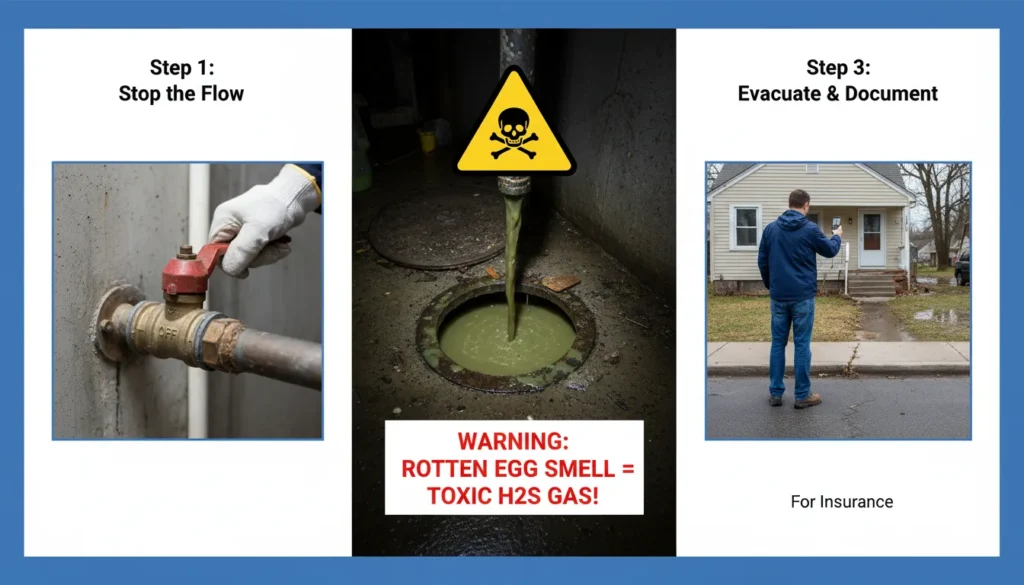
If water is actively leaking, treat the situation as a plumbing emergency.
- Shut off the main water supply.
- Keep people away from electrical hazards created by standing water.
- Control the water only where it is safe to do so.
- Move vulnerable belongings away from the affected area if you can do so safely.
- Contact a qualified plumbing professional for the damaged pipe.
- Address water-damaged areas promptly to limit further property damage.
If you are dealing with an active plumbing problem and need professional assistance, you can speak with a plumbing professional about the situation.
What to Do Before, During, and After Thawing
How to Prevent Pipes From Freezing Again
Once the immediate problem is resolved, prevention becomes the next priority. Focus on plumbing that is exposed to cold conditions or located in areas with inadequate heating.
- Protect vulnerable exposed pipes with appropriate insulation.
- Seal drafts that allow cold air to reach plumbing.
- Keep vulnerable areas warmer during freezing weather.
- Open cabinet doors where appropriate so household heat can reach plumbing.
- Pay particular attention to pipes located along exterior walls and in other cold areas.
- Know where your main water shutoff valve is before an emergency happens.
- Check vulnerable outdoor plumbing before severe cold weather.
- If the same pipe repeatedly freezes, have the underlying installation or exposure evaluated instead of treating every winter event as a separate emergency.
When Should You Call a Plumber for Frozen Pipes?
You do not need to force a DIY thawing attempt when the situation is unsafe or uncertain. Professional help is especially appropriate when:
- The pipe is inside a wall, ceiling, floor, or beneath concrete.
- You see a crack, split, bulge, or active leak.
- The property has significant flooding.
- You cannot identify the frozen section.
- You are not comfortable working around the plumbing safely.
- The pipe does not respond to safe, gradual thawing.
- Water returns but leakage appears.
- Multiple plumbing areas are affected and you cannot determine the cause.
When the issue extends beyond a simple accessible frozen section, professional diagnosis can help identify whether you are dealing with a frozen supply line, damaged pipe, or another plumbing problem.
Need Help With a Frozen or Damaged Pipe?
If the frozen pipe is inaccessible, visibly damaged, leaking, or unsafe to thaw yourself, professional plumbing help is the safer next step.
Quick Frozen-Pipe Decision Guide
What situation are you in?
→ Faucet has little or no water: Check the main supply, identify the affected fixture, and inspect accessible plumbing for freezing.
→ Exposed pipe is frozen but looks intact: Keep the faucet open and use gradual, gentle heat while monitoring the pipe.
→ Pipe is cracked, split, bulging, or leaking: Shut off the main water supply and arrange professional repair.
→ Frozen pipe is inside a wall or under concrete: Avoid aggressive DIY work and get professional assistance.
→ Water returns after thawing but a leak appears: Shut off the water and treat the pipe as potentially damaged.
Frequently Asked Questions About Frozen Pipes
Will frozen pipes unfreeze on their own?
They can thaw naturally as temperatures rise, but waiting does not guarantee that the pipe is undamaged. Monitor the plumbing and respond to any sign of leakage.
How long does it take for a frozen pipe to thaw?
There is no single thawing time that applies to every pipe. The time depends on the location, surrounding temperature, degree of freezing, pipe configuration, and thawing method. Focus on safe, gradual thawing rather than trying to reach an arbitrary time target.
What is the quickest way to unfreeze a pipe?
For an accessible, intact pipe, controlled gentle heat is a safer approach than extreme heat. A hair dryer, appropriate heating pad, or warm towels may be used carefully. Never use an open flame.
Can I use boiling water to thaw frozen pipes?
Do not rely on pouring boiling water as a general frozen-pipe solution, especially when you cannot identify the exact frozen section or pipe condition. Extreme temperature changes can create unnecessary risk. Controlled, gradual warming is the safer principle.
What can I pour down the drain to unfreeze a pipe?
A frozen water-supply pipe is different from a clogged or frozen drain. Pouring a substance down a drain is not a general method for thawing a frozen supply line. First identify which part of the plumbing system is actually affected.
Can pipes freeze if the water is turned off?
Turning off the water supply does not make plumbing automatically immune to freezing. Pipes can still be exposed to freezing temperatures, so vulnerable plumbing should still be protected from cold conditions.
Where are pipes most likely to freeze?
Common vulnerable areas include exterior walls, crawl spaces, basements, garages, attics, cabinets, and other locations where plumbing is exposed to cold air or inadequate heating.
What happens when a pipe freezes?
Water inside the pipe freezes and expands, which can create pressure in the plumbing system. A damaged section may begin leaking when the ice melts and water flow returns.
How long can pipes be frozen before bursting?
There is no dependable universal time limit. Burst risk depends on the conditions surrounding the plumbing and the condition of the pipe. Treat visible damage or active leakage as an immediate reason to shut off the water and seek professional help.
What should I do if pipes freeze and there is no water at home?
Check whether the problem affects one fixture or the entire home, confirm that the main water supply is available, inspect accessible plumbing, and look for signs of freezing. If the pipe is safely accessible and intact, gradual thawing may be possible. If it is damaged or inaccessible, get professional help.
Key Takeaways
- Act early when you suspect a frozen pipe.
- Shut off the main water when a burst, crack, or significant leak is suspected.
- Open the affected faucet while safely thawing an intact accessible line.
- Inspect before applying heat.
- Use gentle heat, not an open flame.
- Monitor the pipe during and after thawing because damage may become visible as water flow returns.
- Do not confuse a frozen water-supply pipe with a frozen or clogged drain.
- Do not rely on a fixed number of hours to determine whether a frozen pipe is safe.
- Get professional help when the pipe is inaccessible, damaged, leaking, or unsafe to thaw yourself.
Helpful Plumbing Resources
For additional information about frozen-pipe prevention and emergency response, reputable resources include:
A Frozen Pipe Is Easier to Manage When You Know What to Check First
If your pipe is accessible and intact, gradual thawing may solve the immediate problem. If you see damage, active water, major flooding, or an inaccessible frozen line, do not take unnecessary risks—get professional plumbing help.