How to Fix a Main Sewer Line Clog: 2026 Expert Guide
Your home’s main sewer line system is the primary underground highway that carries all wastewater safely away to the municipal sewer or septic tank. When a blockage occurs in this central line, your entire plumbing infrastructure can grind to a halt.
If you notice gurgling noises from multiple drains or see wastewater backing up into your shower when you flush the toilet, you are facing a serious plumbing emergency. In this comprehensive updated guide, we break down the critical warning signs, common causes like tree root intrusion, modern diagnostic methods, and real-world 2026 repair costs so you can make an informed decision before disaster strikes.
5 Critical Warning Signs of a Main Sewer Line Clog
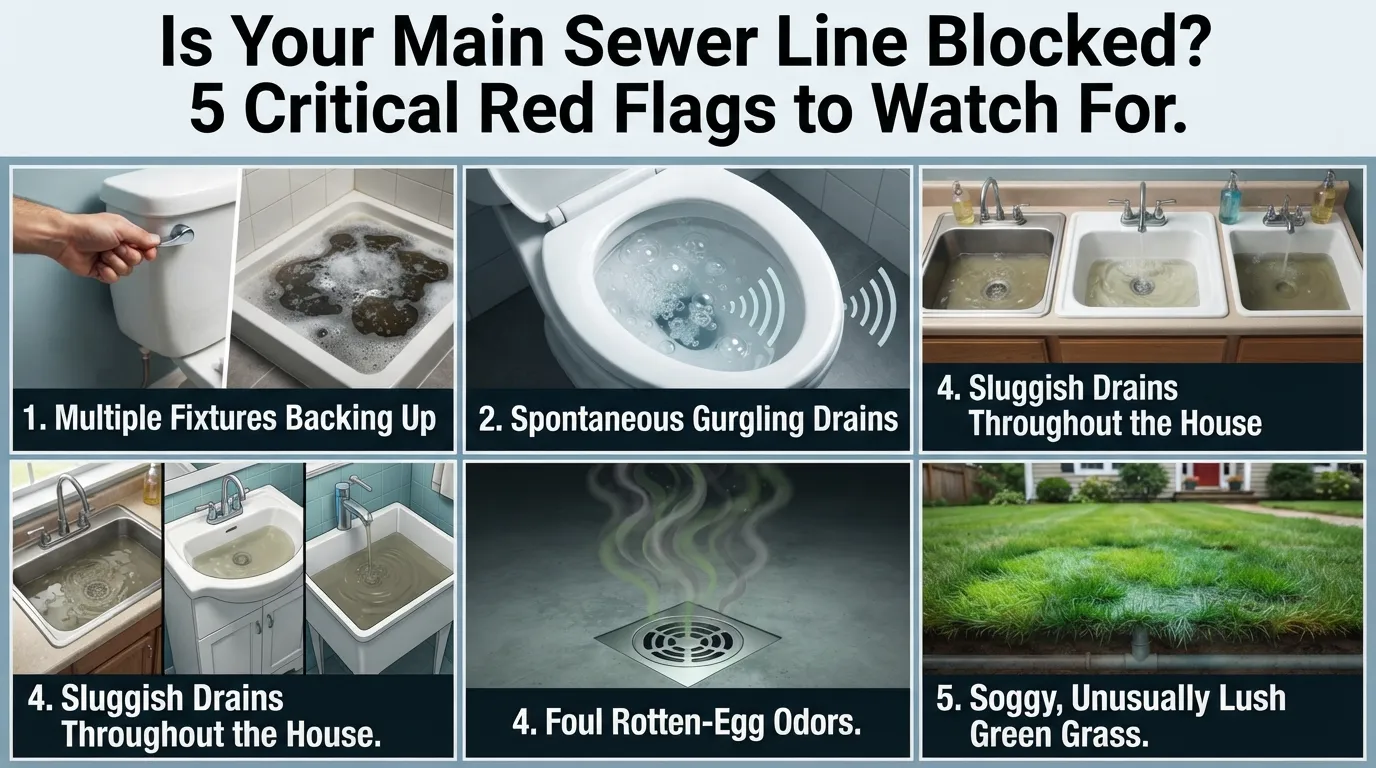
Recognizing the early warning signs of a sewer line failure can save you thousands of dollars in property damage and extensive remediation. Look out for these five critical red flags:
1. Multiple Fixtures Backing Up Simultaneously
When the main sewer line is blocked, wastewater has nowhere to go, forcing it back up through your lowest open drains. A classic sign is a reactionary backup: if you run your washing machine or flush a toilet, and soapy, dirty water immediately bubbles up into your bathtub or shower stall, your main line is compromised.
2. Strange Gurgling and Bubbling Noises
If your toilets are bubbling spontaneously when not in use, or you hear a persistent “chugging” or “gug-gug” sound from your drains after your dishwasher runs, air is trapped inside the system. The blockage forces displaced air bubbles back up through the standing water in your traps, creating distinct gurgling sounds.
3. Slow Drains Throughout the Entire House
A single slow sink usually points to a localized hair or soap clog in the P-trap. However, if every sink, shower, and toilet in your home is draining sluggishly at the same time, the restriction is much deeper. Localized plunging will not resolve this; the issue lies squarely in the central exit line.
4. Foul Sewer Odors (Rotten Egg Smell)
A properly functioning plumbing system utilizes water traps and plumbing vents to keep sewer gases out of your living spaces. When a main line is blocked, raw sewage sits stagnant in your pipes, releasing a pungent, toxic odor of hydrogen sulfide (rotten eggs) near floor drains, basements, or laundry rooms.
5. Soggy Patches or Unusually Lush Lawn Areas
Sewer line issues can manifest outdoors. If your main line is cracked or completely broken by a severe blockage, wastewater will seep into your yard. Look out for isolated patches of grass that grow significantly faster and greener than the rest of the lawn, or soggy, foul-smelling sinkholes in your soil.
How to Diagnose a Main Line Clog: Step-by-Step
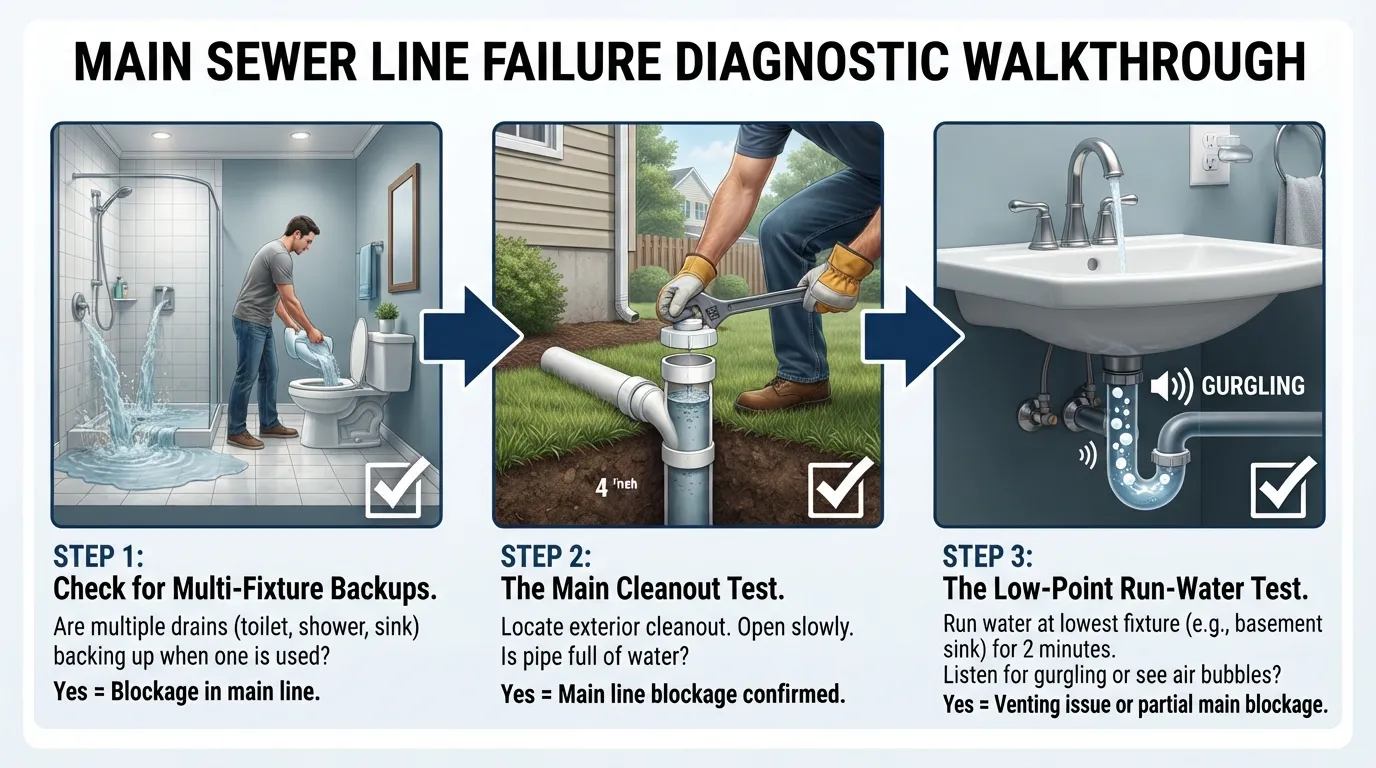
Before calling out an emergency technician, you can perform these basic steps to verify if the issue is a localized clog or a main line failure.
The Cleanout Test: Locate your main sewer cleanout (usually a 3- to 4-inch PVC or cast-iron pipe with a raised square cap found in your yard or near the foundation). Carefully unscrew the cap. If standing water or raw sewage fills the pipe to the top or spills out, the clog is definitively in the main line. If it is dry, the restriction is localized within your home’s internal branches.
The Low-Point Run-Water Test: Go to the lowest level of your home and run the sink or shower closest to the main line exit for two minutes. Monitor nearby drains. Immediate backup or loud air bubbling indicates a severe restriction downstream.
Basement vs. Multi-Family Structural Checks: In a single-family home, the basement floor drain is your lowest point and will always show signs of backup first. In an apartment or condo, if your drains are backing up without you running water, it is highly likely a Shared Stack issue, meaning the building’s vertical main line is blocked, requiring immediate building management intervention.
Primary Causes of Main Sewer Line Blockages
| Common Cause | Impact Level | Primary Material Affected |
| Tree Root Intrusion | Severe / Structural | Clay, Cast Iron, Older PVC |
| Non-Flushable Items | Moderate / Accumulative | All Pipe Types |
| Pipe Scale & Fatberg Build-up | Moderate / Chronic | Cast Iron, Galvanized Iron |
| Structural Pipe Collapse / Belly | Critical | Crumbled Cast Iron, Shifted Clay |
Invasive Tree Root Intrusion
Tree roots remain the leading cause of subterranean pipe failure. Roots naturally seek out the moisture, warmth, and nutrients flowing inside your sewer line. Microscopic cracks or loose joints give tiny root hair strands access. Once inside, they thrive rapidly, creating a thick web that catches grease, wet wipes, and toilet paper until the pipe is completely choked out.
Thick “Fatbergs” and Non-Flushable Items
Products marketed as “flushable wipes” do not break down in water like standard toilet paper. They remain intact, snagging on minor pipe imperfections and forming dense obstructions. Feminine hygiene products, paper towels, dental floss, and cooking grease act like a structural dam inside your line, catching solid waste and creating catastrophic backups.
Structural Pipe Failures, Bellying, and Corrosion
Over time, shifting soil, ground settling, or heavy vehicle traffic overhead can cause a section of your sewer line to sink, creating a “belly” or low spot. Waste pools in these bellies instead of flowing downhill via gravity, leading to chronic, recurring blockages. Furthermore, older cast-iron pipes corrode internally, creating rough surfaces that snag debris continuously.
How to Clear a Main Sewer Line Clog: 2026 Options
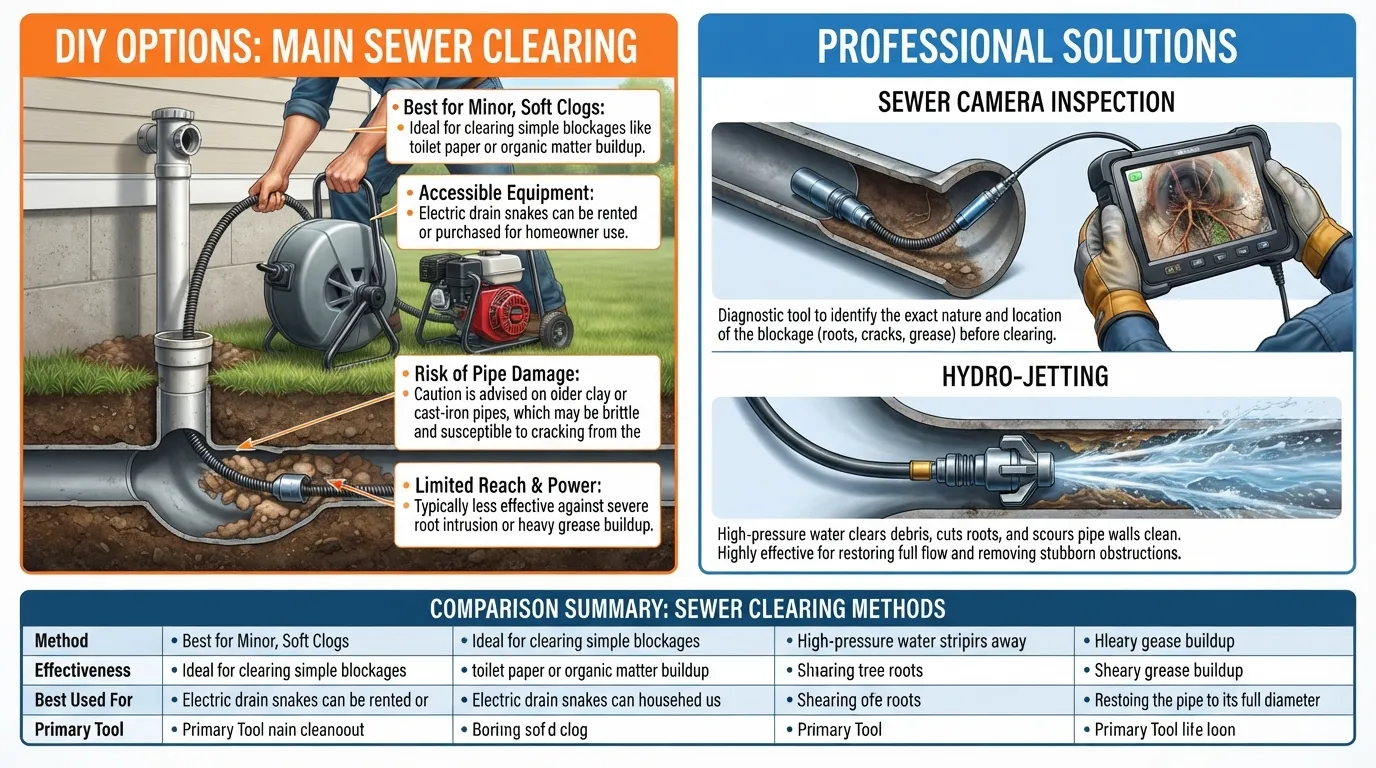
Safe DIY Methods (For Minor/Soft Clogs Only)
If you catch a main line restriction early, renting or buying a heavy-duty manual or electric sewer auger (drain snake) can clear soft obstructions. Insert the cable directly into the exterior cleanout, feeding it through until you hit resistance. Rotate the head to chew through the accumulation.
⚠️ Warning: DIY mechanical snakes can easily punch right through old, corroded cast-iron or clay pipes if used improperly, turning a simple clog into a massive excavation project.
High-Definition Sewer Camera Inspections
Modern professional plumbing relies on advanced, non-destructive technology to restore full pipe capacity. A waterproof, fiber-optic camera is fed directly down the line. This allows technicians to see the exact nature of the problem—whether it is roots, a pipe belly, grease accumulation, or structural collapse—eliminating all guesswork.
Hydro-Jetting (High-Pressure Scouring)
Instead of simply poking a hole through a clog with a traditional snake, hydro-jetting blasts the interior walls of your pipes with specialized rotating nozzles at pressures up to 4,000 PSI.
This completely strips away years of calcified scale, hardened grease, and completely shears off invasive tree roots, restoring the pipe to its original internal diameter. If you are experiencing regular slow drains, scheduling a “professional drain cleaning“ is the best preventative action you can take.
Trenchless Pipe Repair vs. Traditional Excavation
If a camera inspection reveals that your pipe is broken, cracked, or collapsed, structural repairs are required. Modern plumbing offers Trenchless Pipe Lining (CIPP), which creates a brand-new pipe inside your old one without digging up your entire yard. However, if the pipe has completely collapsed, traditional open-trench excavation or pipe bursting will be necessary to restore standard flow. For major structural failures, you will need to invest in long-term “sewer line replacement“ solutions
2026 Estimated Cost Breakdown: Cleaning vs. Replacement
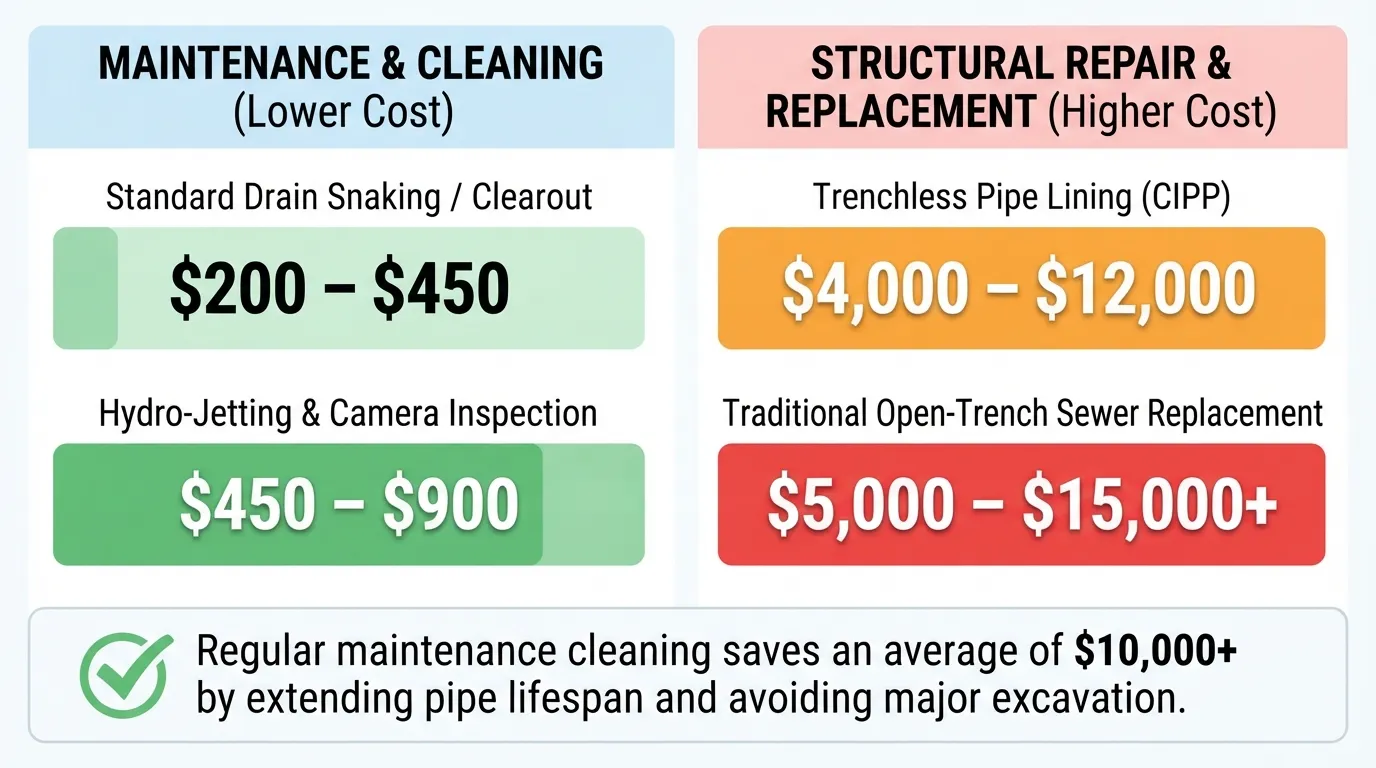
Sewer line repair expenses vary depending on depth, accessibility, and the structural condition of the pipe. Here are the updated 2026 national averages:
Standard Drain Snaking / Clearout: $200 – $450
Professional Hydro-Jetting & Camera Inspection: $450 – $900
Trenchless Pipe Lining (CIPP / Pipe Bursting): $4,000 – $12,000 (No yard digging required)
Traditional Open-Trench Sewer Line Replacement: $5,000 – $15,000+ (Depending on depth, concrete removal, and city street connections)
The Benefits of Professional Sewer Maintenance
Investing in regular sewer maintenance is not just about fixing an immediate problem; it is about protecting your home and your financial assets long-term.
Prevents Serious Health Risks: Raw sewage is a dangerous breeding ground for harmful bacteria, viruses, and parasites. When a main line clogs, the resulting backup can bring these contaminants into your living space, leading to mold growth and foul air quality. Professional cleaning ensures that waste flows away from your home safely.
Saves You Thousands in the Long Run: A simple preventative maintenance service costs a few hundred dollars. In contrast, replacing a collapsed sewer line or repairing major water damage in your basement can cost upwards of $10,000. By catching small clogs and tree roots early through routine inspections, you extend the life of your pipes.
Total Peace of Mind: There is nothing more stressful than worrying about your toilets overflowing every time you run the washing machine or when heavy rains hit. Professional maintenance gives you the confidence that your plumbing system is clear and functioning at its best.
Pro Tips for a Clog-Free Home
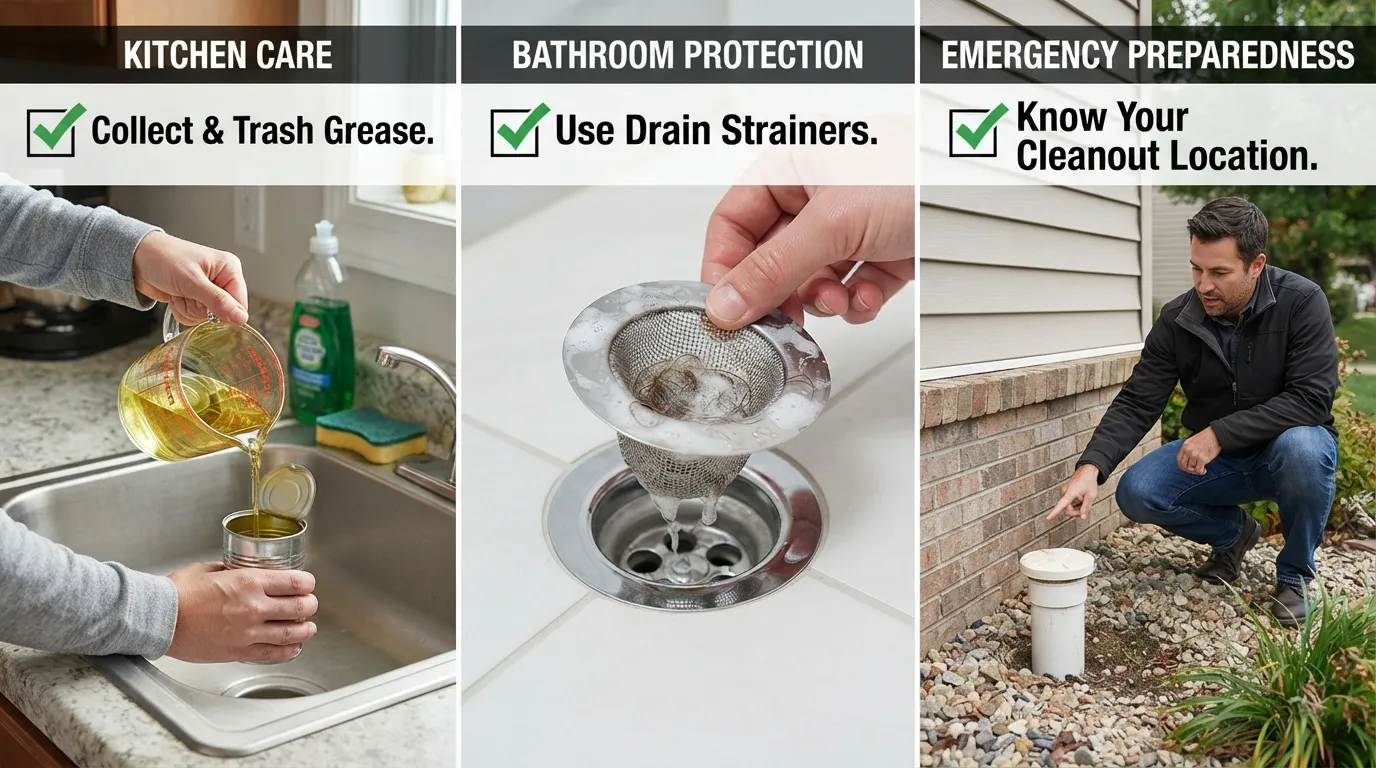
Maintaining a healthy sewer line doesn’t have to be complicated. Follow these expert strategies to prevent backups:
Locate Your Main Cleanout Before an Emergency: The worst time to look for your sewer cleanout is in the middle of a flood, in the dark, with a flashlight. Locate it now (usually a 4-inch pipe with a screw-on cap outside in the yard or basement) and mark it clearly so it can be accessed instantly.
Use a Root-Killer Solution Twice a Year: If you have large trees near your sewer line, their roots are constantly searching for moisture. To stop them before they cause a massive clog, flush a professional-grade copper sulfate or foaming root killer solution down the toilet twice a year to kill off minor root hairs without harming the tree.
Stop Using Liquid Chemical Drain Cleaners: Commercial liquid drain cleaners rely on harsh, caustic acids that generate intense heat. If they get stuck sitting on top of a tough main line clog, they will corrode and eat through your cast-iron or PVC pipes long before they ever dissolve the blockage.
Frequently Asked Questions About Main Sewer Line Clogs
How do I know for sure if my main sewer line is clogged?
The most definitive proof is seeing multiple fixtures back up simultaneously. If flushing your toilet causes water to rise up into your bathtub, or if running your washing machine causes your bathroom floor drain to overflow, the issue is unequivocally a main sewer line clog, as localized clogs only affect one isolated fixture.
Why do people pour salt down the drain or toilet every night?
People historically used rock salt or copper sulfate crystals down the toilet to kill invasive tree roots inside clay pipes. While salt dehydrates root ends temporarily, pouring standard salt down your system every night is highly discouraged today. Salt creates a highly corrosive environment that rapidly accelerates the rust and deterioration of old residential cast-iron and metal pipes.
Is vinegar and baking soda good for unclogging a main sewer line?
No. While the chemical fizzing reaction of baking soda and vinegar is fantastic for clearing minor organic hair and soap scum build-ups inside a small 1.5-inch kitchen or bathroom sink drain, it is completely useless against a main sewer line. The volume of a 3- to 4-inch main sewer line buried deep underground is too massive, and the mixture will dilute long before it reaches a main line clog.
What is the easiest way to fix a clogged bathroom sink?
The easiest and most effective way is to manually clear the P-trap located directly beneath the sink. Place a bucket underneath, unscrew the slip nuts, remove the trap, and clear out the accumulated hair and soap scum. Alternatively, using a cheap plastic drain-cleaning zip-tool can pull out hair obstructions from the pop-up stopper within seconds without disconnecting any pipes.
Why should you never pour hot water or grease down the sink?
Liquid grease, cooking oils, and animal fats coat the inside of your sewer pipes. As the grease moves further down the line, it cools down, solidifies, and binds with other debris to create rock-hard obstructions known as “fatbergs.” Additionally, pouring boiling water down your drains can melt or warp modern PVC pipes and destroy the critical wax ring seal sitting beneath your toilet base, causing structural leaks.
Why do plumbers recommend avoiding liquid chemical drain cleaners?
Commercial liquid chemical cleaners rely on harsh, caustic acids or sodium hydroxide to burn through clogs. These chemicals generate intense exothermic heat inside your lines. When trapped behind a stubborn main line clog, the standing acid will corrode and eat away at cast-iron and PVC pipes from the inside out, leading to costly structural leaks. Furthermore, they present severe chemical burn risks to any plumbing technician who must service the line afterward.
Don't Wait for a Major Plumbing Emergency!
A main sewer line clog is a serious health hazard and structural threat to your property. Ignoring slow drains or recurring gurgling sounds can result in catastrophic, foul blackwater flooding inside your home. Whether you need a preventative high-definition camera inspection or an emergency line clearance, acting early saves you thousands in restoration costs.
Schedule a Professional Sewer Line Inspection Today
Keep your home safe, clean, and functioning perfectly. “Contact our expert, licensed plumbing team“ right now to book an advanced camera diagnostic and hydro-jetting service!