Tree Roots and Drains What Causes Them, How to Fix Them, and How to Prevent Them
Tree roots can cause serious problems for drains and sewer lines, especially when there are small cracks, loose joints, or weak seals in underground pipes. Because roots naturally grow toward moisture and nutrients, even a small opening can attract them and give them a way inside.
At first, the problem may not seem serious. You might notice a slow drain, a gurgling toilet, or a bad smell around your yard. But as the roots grow, they can trap waste, block water flow, damage the pipe, and lead to sewage backups or expensive repairs.
At EZ Plumbing, we know this is one of those hidden plumbing problems that often starts small and gets worse over time. That is why it is important to understand how tree roots get into drains, what signs to look for, and what the best fix really is.
In this guide, you will learn how tree roots enter drain pipes and sewer lines, the warning signs they cause, the damage they can lead to, and the best ways to remove them. We will also cover root killer options, removal costs, insurance questions, and smart ways to prevent the problem from coming back.
What Happens When Tree Roots Get Into Drains and Sewer Lines
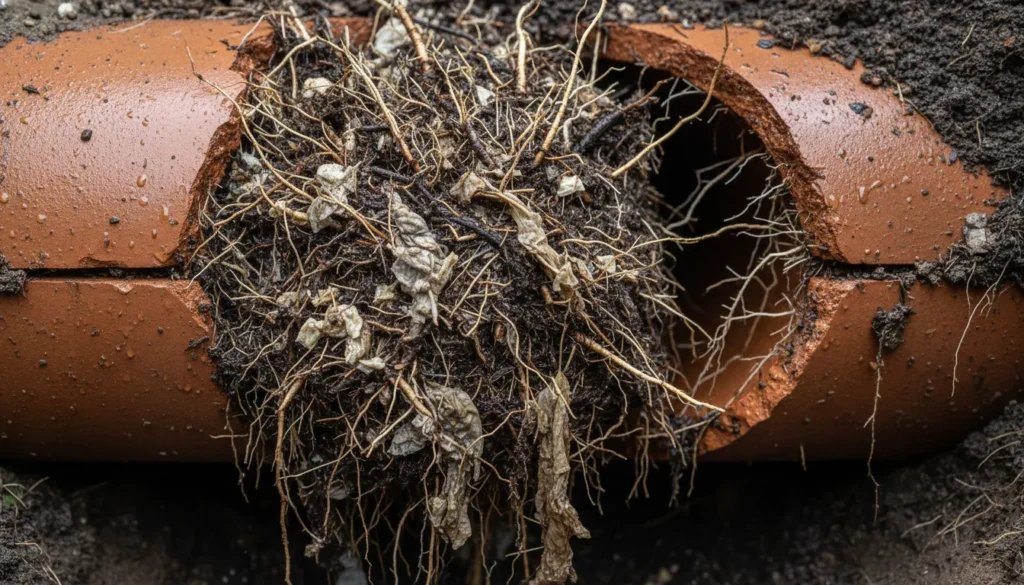
Tree root intrusion happens when roots grow into underground pipes through small openings. Roots are always looking for water and nutrients, so if a drain or sewer pipe has a tiny crack, a loose joint, a weak seal, or damage from age, roots can move toward that moisture and enter the line.
Once roots get inside, they do not stay small. They continue to grow and spread inside the pipe. As they get bigger, they catch toilet paper, grease, soap residue, and other debris flowing through the line. This slowly reduces the space inside the pipe, which makes it harder for wastewater to move freely. Over time, this can lead to slow drains, repeated clogs, bad odors, and even serious blockages or pipe damage.
It is also important to understand that roots can affect different types of underground plumbing systems in different ways.
Roots in household drains usually affect smaller branch lines connected to sinks, tubs, showers, or toilets. These problems often show up as slow drainage, bubbling sounds, or clogs in one part of the home.
Roots in the main sewer line are usually more serious because this pipe carries wastewater away from the whole house. When roots block the main sewer line, you may notice multiple drains backing up at the same time, gurgling toilets, sewage smells, or wastewater coming back into lower fixtures.
Roots in stormwater drains affect pipes that carry rainwater away from the property. When roots get into these lines, the signs may include standing water outside, poor yard drainage, soggy areas, or overflowing outdoor drains during heavy rain.
The repair approach can also vary depending on where the roots are located. Smaller drain line issues may sometimes be cleared more easily, while root intrusion in a main sewer line or stormwater drain often needs a camera inspection to check the damage and decide whether cleaning, repair, or replacement is the best option.
How Do Tree Roots Get Into Sewer Lines and Why Older Pipes Are More Vulnerable

Tree roots get into sewer lines because they are always looking for water, oxygen, and nutrients. Underground sewer pipes often release small amounts of moisture into the surrounding soil, especially if the line has age-related wear or damage. That moisture attracts nearby roots and draws them toward the pipe.
Roots usually enter sewer lines through small weak points such as hairline cracks, loose pipe joints, damaged seals, corrosion holes, or offset joints where one section of pipe has shifted out of place. Even a tiny opening can be enough for thin feeder roots to get inside. Once they find a steady source of water and nutrients, they continue to grow and spread through the line.
Older homes are often more at risk because older sewer systems are more likely to have worn materials, weakened joints, and hidden. Over damage underground time, pipes can crack, corrode, shift, or separate, which gives roots more chances to enter.
Some pipe materials are especially vulnerable. Clay pipes can crack and have many joints, which makes them a common target for root intrusion. Cast iron pipes can corrode over time and develop holes or weak spots. Concrete pipes may crack or shift as they age. Orangeburg pipes, which were made from a compressed wood-fiber material, can soften, deform, and break down over time. Even PVC pipes, which are more resistant than older materials, can still have problems if the joints are damaged, poorly sealed, or offset.
A simple way to look at it is this: the older and weaker the material, the higher the risk of root intrusion. Clay and Orangeburg pipes usually carry a higher risk, cast iron and concrete also become vulnerable with age, and PVC tends to be lower risk unless the joints are damaged. That is why older sewer lines often need more careful inspection when root problems are suspected.
Common Signs of Tree Roots in Drains

Tree roots in drains often cause warning signs before the problem becomes severe. The issue usually starts small, but as roots grow inside the pipe, drainage problems become more noticeable and more frequent.
One of the most common signs is slow drains. You may see water draining slowly from a sink, tub, or shower, even after basic cleaning. A gurgling toilet or bubbling toilet can also be an early sign, especially when air gets trapped because the pipe is partially blocked by roots.
Another common warning sign is frequent drain clogs or recurring backups. If the same drain keeps blocking again and again, or if plunging only solves the problem for a short time, roots may be growing deeper in the line. Slow-flushing toilets and multiple clogged drains at the same time can point to a more serious issue, especially if the main sewer line is affected.
Bad smells are also important to watch for. Bad odors from drains or a sewer smell inside the home or out in the yard can mean wastewater is not flowing properly or that the pipe has been damaged underground.
Outdoor signs can also point to root intrusion. These include standing water, a soggy lawn, wet spots in the yard, or water pooling above the underground line. In some cases, you may notice green or unusually lush patches of grass, which can happen when leaking wastewater feeds the soil above the damaged pipe. More serious warning signs include sinkholes or soft spots in the yard, which may suggest the pipe has cracked, shifted, or collapsed.
If you notice more than one of these signs, it is a good idea to have the line inspected before the damage gets worse
Emergency Warning Signs You Should Not Ignore

Some signs of tree roots in drains or sewer lines are more than just a nuisance. They can point to a serious blockage, a damaged pipe, or a sewer problem that needs urgent attention. When these warning signs appear, the issue should not be ignored or delayed.
One major red flag is sewage backing up into the home. If dirty water starts coming up through a toilet, shower, floor drain, or sink, it usually means the line is heavily blocked and wastewater has nowhere to go. Wastewater backing up into fixtures is also a sign that the problem may be affecting the main sewer line rather than just one small drain.
Another urgent sign is multiple drains backing up at once. If the toilet, sink, and shower are all having problems at the same time, that often means the blockage is deeper in the system and may involve the main sewer line. This is usually more serious than a single slow drain.
A strong sewage smell near the property can also signal a damaged or blocked sewer line underground. If the odor is persistent and unusual, it may mean wastewater is leaking or trapped where it should not be.
Outdoor warning signs can be just as serious. A sinkhole forming in the yard may suggest that the pipe has cracked, shifted, or collapsed, allowing water to wash soil away underground. A collapsed pipe or sewer overflow can quickly turn into a costly repair if not handled early. Water damage near the foundation is another serious sign, because it may mean leaking wastewater is affecting the structure around the home.
The problem becomes urgent when wastewater can no longer move through the system safely, when multiple fixtures are affected, or when there are signs of pipe failure outside the home. At that point, it is no longer just a minor drainage issue. It becomes a plumbing emergency that can lead to property damage, health risks, and much higher repair costs if left untreated.
How Tree Roots Damage Pipes Over Time

Tree root damage usually does not happen all at once. In most cases, it starts as a small hidden problem and slowly becomes much more serious over time.
stage one
Roots find tiny openings in the pipe. These may be hairline cracks, loose joints, weak seals, or small damaged areas that release moisture into the soil. Because roots naturally move toward water and nutrients, even a very small opening can attract them.
stage two
The roots begin to grow inside the pipe and create a partial blockage. At this point, water may still pass through, but not as smoothly as it should. The problem may not seem severe yet, which is why it often goes unnoticed.
stage three
Debris starts building up around the root mass. Things like grease, soap residue, toilet paper, and waste get caught in the roots, making the blockage worse. The flow inside the pipe becomes more restricted, and the system starts struggling to drain properly.
stage four
The warning signs become easier to notice. This is when recurring clogs, slow drainage, gurgling sounds, and repeated backups often begin. The issue is no longer just a small intrusion. It is now affecting how the drain or sewer line works.
stage five
The roots and trapped debris can start putting pressure on the pipe itself. The pipe may crack, shift, sag, or weaken structurally. Older materials are especially vulnerable at this stage, and damage can spread beyond the original entry point.
stage six
The problem can become severe. This may lead to sewage backups, a collapsed sewer pipe, or visible yard damage above the line. At this point, the pipe may no longer function safely and could need major repair or full replacement.
Over time, tree roots can cause many serious problems, including a blocked sewer line, complete blockage, drain line obstruction, sewage backups, pipe cracking, structural pipe damage, and even plumbing system failure. Outside the home, they can also cause yard damage, soil erosion, wet patches, and sinkholes. If sewage overflows or leaks onto the property, it can also create a health hazard. The longer the problem is ignored, the more likely it is to lead to costly repairs and major disruption.
How Plumbers Confirm Tree Roots in Pipes

Plumbers usually do not guess when tree roots are suspected in a drain or sewer line. The most reliable way to confirm the problem is with a sewer camera inspection. This involves feeding a small waterproof camera into the pipe so the inside of the line can be viewed in real time.
During the video inspection, the plumber looks for the exact cause of the blockage and checks how serious the problem is. If tree roots are present, the camera can show where they entered the pipe, how large the root mass has become, and whether the roots are causing a partial blockage or a full obstruction.
A sewer camera snake is especially helpful because it can travel through underground drain and sewer lines without digging up the yard. It also helps with location tracing, which means the plumber can identify the exact spot underground where the problem is happening. This makes it much easier to plan the right repair.
The inspection also allows the plumber to check the severity of the blockage and identify the condition of the pipe itself. They can look for cracks, offset joints, corrosion, broken sections, sagging areas, or even signs of collapse. In many cases, the camera also helps identify the pipe material, such as clay, cast iron, concrete, Orangeburg, or PVC, which matters because some materials are more likely to crack or separate than others.
A camera inspection matters because the best repair depends on what the plumber sees inside the line. A pipe with a small root intrusion may only need cutting and cleaning, while a pipe with cracks or structural damage may need relining or replacement. Without a proper inspection, it is easy to choose a temporary fix for a problem that really needs a longer-term solution.
Best Ways to Remove Tree Roots From Drain Pipes

There is no single fix that works for every root problem. The best way to remove tree roots from drain pipes depends on how large the root intrusion is, how badly the pipe is damaged, and whether the goal is a short-term fix or a longer-term solution.
One common method is mechanical root cutting. A plumber may use a rooter machine, mechanical auger, or drain snake fitted with a root cutting blade. As the rotating cable moves through the pipe, it cuts through the root mass and helps reopen the line. This method is often effective when thick roots are blocking the pipe, but it mainly clears the roots rather than fixing the reason they got in.
Another popular option is hydro jetting. This method uses high-pressure water jetting to cut through roots and wash away grease, sludge, and debris stuck inside the pipe. In many cases, hydro jetting restores water flow more thoroughly than basic snaking because it cleans the inner walls of the pipe as well as clearing the blockage.
Some homeowners also ask about chemical root treatments. These include foaming root killer, copper sulfate for tree roots, and other types of root killer for drains. When people ask what dissolves tree roots in sewer lines, they are usually talking about these products. Chemical treatments can help kill or slow root growth inside the pipe, but they do not repair cracks, joints, or damaged sections. That means they may help control the problem, but they are not always a complete fix.
If the pipe is still in repairable condition, pipe lining and trenchless repair may be the better solution. With trenchless pipe repair, pipe relining, or trenchless pipe lining, a new liner is installed inside the old pipe to create a smoother, stronger, and more root-resistant liner. This is often a good choice when the pipe has damage but is still structurally sound enough to be repaired from the inside.
In more serious cases, excavation and full replacement may be necessary. If the line is broken, collapsed, badly offset, or beyond repair, the damaged section may need to be dug up and replaced. In some situations, a no-dig option may still be possible, but when the damage is too severe, full replacement is often the only long-term answer.
Each method has its place. Some are better for clearing roots quickly, while others are better for preventing the same problem from coming back.
Hydro Jetting vs Root Cutting vs Pipe Relining

The right solution depends on the condition of the pipe, not just the blockage itself. In some cases, cutting the roots is enough to restore flow for now. In other cases, the pipe has already been damaged, which means a longer-term repair is the better choice.
An auger or root cutting machine is usually enough when the main problem is a root mass blocking the line, but the pipe is still in fairly good shape. This method can cut through thick roots and reopen the pipe quickly. It is often used when roots need to be removed fast, especially if the blockage is causing slow drains or repeated clogs. However, root cutting is usually a temporary fix if the opening that let the roots in is still there.
Hydro jetting is often better when the roots are mixed with grease, sludge, paper buildup, and other debris. The high-pressure water cuts through smaller roots and cleans the inside of the pipe more thoroughly than basic root cutting in many situations. It is a strong option when the goal is not just to break the blockage, but also to wash away the buildup left behind. Still, hydro jetting does not repair cracks, separated joints, or weak sections of pipe.
Pipe relining is the better long-term option when the pipe is damaged but still structurally repairable. If a camera inspection shows cracks, joint problems, or root entry points, relining can seal the inside of the pipe and create a smoother, stronger path for wastewater. This helps stop roots from coming back through the same opening. In many cases, relining makes more sense than repeated cleaning if the problem keeps returning.
Replacement becomes necessary when the pipe is broken, badly offset, collapsed, or too damaged to repair from the inside. If the line has severe structural failure, cleaning the roots will not solve the real problem. At that point, replacing the damaged section is often the safest and most reliable long-term solution.
A simple way to think about it is this: if the pipe is mostly sound, cutting or jetting may solve the blockage. If the pipe has damage, lining may be the better answer. If the pipe has failed, replacement is usually necessary.
It is also important to understand that roots often grow back if the entry point remains open. That is why repeated root cutting or chemical treatment alone may only buy time. Chemical root killers do not repair cracks, loose joints, or broken seals. They may help reduce growth inside the pipe, but they do not solve the structural problem.
When people search “what dissolves tree roots in sewer lines,” they are usually looking for a quick chemical fix. In most cases, they mean products such as foaming root killers or copper sulfate. These treatments may help kill or slow root growth inside the pipe, but they have limits. They do not remove heavy root masses as effectively as mechanical cutting or hydro jetting, and they do not repair pipe damage.
Natural or homemade remedies are also commonly searched, but they usually do not provide a reliable long-term solution. Some may have little effect on established roots, while others may be unsafe for pipes, septic systems, pets, or the environment if used incorrectly. That is why safe use and professional guidance matter. The best treatment should be based on the actual condition of the pipe, not just the hope of a quick fix.
Foaming Root Killer vs Copper Sulfate: Which Is Better

Both foaming root killer and copper sulfate are used to control tree roots inside drain and sewer lines, but they do not work in exactly the same way. The better option depends on the size of the root problem, the condition of the pipe, and whether you are trying to manage root growth or solve a larger plumbing issue.
How Foaming Root Killer Works
Foaming root killer is designed to expand inside the pipe and coat the inner walls. As the foam spreads, it reaches roots growing along the sides and top of the pipe, not just the bottom. This makes it useful for treating root growth throughout the line. It is often used to slow regrowth after the pipe has already been cleared.
How Copper Sulfate Works
Copper sulfate works by killing roots when it comes into direct contact with them inside the pipe. It is usually introduced through a toilet or cleanout and then moves through the sewer line with water. It can help reduce smaller root growth, but it may not spread as evenly as a foaming product, especially in lines where the roots are attached above the flow line.
Pros and Cons of Foaming Root Killer
A foaming root killer can coat more of the inside surface of the pipe, which makes it helpful when root growth is spread around the line. It is often seen as better for wider coverage and follow-up maintenance. The downside is that it still does not remove heavy root masses on its own, and it will not repair cracks, loose joints, or damaged pipe sections.
Pros and Cons of Copper Sulfate
Copper sulfate is widely known and often used because it is easy to apply and may help kill smaller roots inside the line. It can be useful in some situations, especially as a maintenance treatment. However, it has limits. It may not reach all root growth evenly, and repeated or improper use can create concerns for pipe condition, septic systems, or the surrounding environment depending on the setup.
When One May Be Used Over the Other
Foaming root killer may be preferred when the goal is to coat more of the pipe wall and treat root growth more evenly. Copper sulfate may be used when a homeowner or plumber wants a more basic chemical root treatment for smaller root issues. In both cases, these products are better for managing root growth than for solving serious blockages or structural pipe damage.
What These Products Can and Cannot Do
Both products can help kill or slow roots inside the pipe. What they cannot do is remove a severe root blockage the way mechanical cutting or hydro jetting can. They also cannot seal cracks, fix offset joints, or repair a broken sewer line. If roots entered through a damaged area, the problem may return unless the pipe is repaired.
Neither Is a Full Fix if the Pipe Is Damaged
This is the most important point. If the line has cracks, separated joints, corrosion, or structural failure, neither foaming root killer nor copper sulfate will provide a complete solution. They may help control symptoms for a while, but they do not fix the reason the roots got in. In that case, the pipe may need cleaning, relining, or replacement depending on the damage.
What Homeowners May Try
Some homeowners try a root killer first because it seems simple and affordable. Others may use a manual auger or rent an electric drain cleaner to try to break through the blockage. These approaches can sometimes help with a small or early-stage problem, but they do not always show what is happening deeper in the line.
Why DIY Has Limits
DIY methods often treat the symptom without confirming the real condition of the pipe. A homeowner may clear part of the blockage but still leave behind roots, debris, or structural damage. Without a proper inspection, it is hard to know whether the line only needs cleaning or whether the pipe itself has been compromised.
The Risk of Damaging Pipes
Manual tools and rental drain machines can damage weak or aging pipes if they are used too aggressively. Older clay, cast iron, or already cracked lines are especially vulnerable. In some cases, repeated force inside the pipe can make a damaged section worse.
Repeated Chemical Use Can Create More Problems
Using chemical products too often can also be a problem. It may give the feeling that the issue is under control while the roots continue growing back through the same entry point. Repeated use without inspection can delay the real repair and allow more damage to happen underground.
When a Professional Inspection Is the Better Option
A professional inspection is the better option when clogs keep coming back, more than one drain is affected, there is a sewage smell, or the property shows signs of underground damage. A camera inspection can confirm whether the roots are minor, severe, or tied to a larger pipe problem. That makes it much easier to choose the right fix instead of guessing.
Roots in Pipes Removal Cost and Repair vs Replacement Cost

The cost of removing tree roots from pipes can vary a lot because not every root problem is the same. Some jobs only need the roots cleared out, while others involve damaged pipes that need relining or full replacement. That is why it is better to think in terms of what is being treated rather than looking for one flat price.
What Affects the Cost
Several factors can change the total cost of the job. The severity of the blockage matters because a small root intrusion is easier to handle than a pipe packed with a large root mass. Pipe length also affects cost, since longer sections take more time to inspect, clean, or repair. Pipe depth matters too, especially if the line is buried deep underground and harder to reach.
Another factor is the access point. If there is an easy cleanout, the work is usually simpler than if the plumber has to create access or work from a difficult location. The need for a camera inspection also affects the price, but it often saves money in the long run by showing the exact location and condition of the pipe before any repair is chosen.
Inspection Cost
A camera inspection is often the first step because it confirms whether the problem is roots only, roots plus debris, or roots plus pipe damage. This cost is usually separate from the clearing or repair work, but it gives the information needed to avoid choosing the wrong fix.
Cutting or Hydro Jetting Cost
If the pipe is still in workable condition, the next cost may be for root cutting with an auger or for hydro jetting. Root cutting is often used to break through thick roots and restore flow. Hydro jetting may cost more in some cases, but it can also clean the pipe more thoroughly by washing away grease, sludge, and buildup along with smaller roots.
Trenchless Repair Cost
If the inspection shows that roots entered through cracks, separated joints, or weak pipe sections, then clearing the roots may not be enough. In that case, trenchless repair or pipe relining may be the better long-term investment. This option usually costs more than basic cleaning, but it can seal the inside of the pipe and help stop roots from returning through the same entry point.
Full Replacement Cost
A full replacement is usually the most expensive option because it may involve excavation, labor, new materials, and restoring the area after the work is done. This becomes necessary when the line is broken, badly offset, collapsed, or too damaged to repair from the inside.
Clearing Roots vs Repairing Pipe Damage
There is an important difference between clearing roots and repairing the pipe. Clearing roots restores flow, but it does not always fix the opening that allowed the roots to get in. If the line has cracks or failed joints, the problem may return. Repairing the pipe is what addresses the cause, not just the symptom.
Temporary Cleaning Cost vs Permanent Repair Cost
A temporary cleaning usually costs less upfront, which is why many homeowners start there. But if the roots come back again and again, repeated cleanings can add up over time. A permanent repair often costs more at first, but it may save money later by reducing repeat service calls and preventing larger damage.
Trenchless vs Excavation
When repair is needed, the cost also depends on whether the job can be done with a trenchless method or whether excavation is required. Trenchless repair is often less disruptive to the yard and may reduce restoration costs. Excavation may be necessary for severe damage, deep pipe failure, or collapsed sections that cannot be repaired from inside the line.
Why the Cheapest Option Is Not Always the Best
The cheapest option is not always the best long-term solution. A low-cost cleaning may reopen the pipe for now, but if the pipe is damaged, the roots may return and the same issue can keep happening. In many cases, the right choice depends on the actual condition of the line, not just the lowest starting price.
Early Action Usually Lowers Cost
Early action usually lowers cost because smaller root problems are easier to manage before they turn into major blockages, broken pipes, or sewer backups. The sooner the issue is inspected and treated, the better the chance of avoiding a more expensive repair later.
Are Tree Roots in Sewer Lines Covered by Insurance

Many homeowners ask whether insurance will cover tree roots in a sewer line, but the answer is not always simple. In most cases, coverage depends on the exact wording of the policy and the type of protection included.
Coverage Depends on Your Policy
Insurance companies do not all treat sewer line problems the same way. Some policies offer limited protection, while others may exclude certain underground pipe issues completely. That is why the first thing to understand is that coverage depends on what your policy says, not just the fact that tree roots caused the problem.
Root Intrusion May Be Treated as Maintenance-Related
Some homeowners insurance policies may not cover tree root intrusion if it is viewed as a maintenance issue, normal wear, neglect, or a problem that developed gradually over time. If the pipe was already old, cracked, or damaged before the root intrusion became severe, the insurer may argue that the line failed because of age or lack of upkeep rather than a sudden covered event.
Sewer Backup Endorsements May Matter
A sewer backup endorsement may also affect what is covered. Some policies add protection for damage caused by water or sewage backing up into the home, but that does not always mean the actual sewer line repair is covered. In some cases, the cleanup or interior damage may be covered while the pipe repair itself is not.
Service Line Coverage May Matter Too
Some homeowners have separate service line coverage or an add-on that helps cover underground utility lines, including sewer lines running from the home to the street. If your policy includes this type of coverage, it may improve the chances of help with certain repair costs. Still, the details vary from one insurer to another.
Review Your Policy Carefully
The best step is to review your policy carefully and look for terms related to sewer lines, service lines, underground pipes, backups, exclusions, wear and tear, and maintenance. This can give you a clearer idea of what may or may not be covered before you make assumptions.
Ask Your Insurance Company Directly
Because policy language can be confusing, it is a good idea to contact your insurance company directly and ask specific questions. For example, you can ask whether they cover tree root intrusion, sewer line repairs, excavation, sewer backups, or damage caused by underground pipe failure. A direct answer from the insurer is usually more helpful than guessing based on general information online.
Keep Expectations Practical
It is best to approach this issue with practical expectations. Insurance may help in some situations, especially if there is added coverage for backups or service lines, but it may not cover every part of the problem. That is why many homeowners find it useful to confirm coverage early, especially before making a major repair decision.
Can Tree Roots Come Back After Removal and What Is the Best Long-Term Solution

Yes, tree roots can come back after removal if the pipe still has cracks, loose joints, weak seals, or other entry points. Removing the roots may solve the blockage for now, but if the opening remains, the same line can attract roots again.
Why Roots Come Back After Removal
Roots return because the conditions that attracted them in the first place are still there. If moisture, nutrients, or leaking wastewater continue to escape from the pipe, nearby roots will keep growing toward that source. As long as the pipe has a weak point, new roots can enter and start the problem again.
Why Repeated Cutting Is Often Only a Temporary Fix
Cutting roots out of the line can restore flow and remove the blockage, but it usually does not fix the damaged area that allowed the roots in. That is why repeated root cutting often becomes a short-term solution instead of a permanent one. If the pipe has not been repaired, roots may grow back and the blockage can return.
If the Roots Are Minor and the Pipe Is Still Sound
If the roots are small and the pipe is still in good condition, treatment and monitoring may be enough. In this situation, a plumber may clear the line, use a root control treatment if needed, and recommend regular inspections to make sure the problem does not return too quickly.
If the Roots Keep Coming Back
If root problems return often, it usually means there is a weak point in the pipe that has not been addressed. In that case, a camera inspection is important because it helps locate the entry point and shows whether a better repair plan is needed. Repeated cleaning without inspection can lead to more service calls without solving the real issue.
If the Pipe Has Cracks or Joint Damage
If the camera inspection shows cracks, separated joints, or other repairable damage, pipe relining may be the best long-term option. Relining seals the inside of the pipe and helps block roots from entering through the same weak areas again. It is often a strong choice when the pipe is damaged but still structurally stable enough to repair from the inside.
If the Pipe Is Collapsed or Badly Damaged
If the pipe is collapsed, badly offset, or too damaged to repair, replacement is usually the best long-term solution. In these cases, cleaning the roots may only provide very short-term relief. The real problem is the failed pipe, not just the blockage inside it.
A Simple Way to Decide
A simple way to think about it is this: if the pipe is sound, cleaning and monitoring may be enough. If the roots keep returning, inspection and a better repair plan are needed. If the pipe has cracks, relining may be the right long-term fix. If the pipe has severe structural damage, replacement is usually the most reliable answer.
How to Prevent Roots in Sewer Lines

Preventing tree roots from getting into sewer lines is usually easier and less expensive than dealing with a major blockage or pipe repair later. Once roots find a way into the line, the problem often keeps coming back unless the real cause is addressed. That is why prevention matters more than repeated emergency cleaning.
Schedule Regular Sewer Inspections
One of the best ways to prevent serious root problems is to schedule an annual sewer inspection or a regular camera inspection. These inspections can catch early root intrusion, weak joints, cracks, or damaged sections before they turn into bigger and more expensive issues.
Keep Up With Routine Sewer Cleaning
Routine sewer cleaning can help keep buildup under control and reduce the chance of roots turning a small issue into a major blockage. If your property has a history of root intrusion, regular maintenance may help you stay ahead of the problem instead of waiting for an emergency.
Use Root-Killing Treatments Carefully
In some cases, a root-killing treatment every 6 to 12 months may help control regrowth inside the line. This can be useful as part of a maintenance plan, especially after roots have already been removed. However, these treatments work best when they are used carefully and when the pipe is not seriously damaged.
Repair Small Pipe Problems Early
A small crack or loose joint may not seem urgent at first, but even a small opening can attract roots. Repairing minor pipe damage early can help stop roots from getting in and prevent a much larger repair later.
Replace Aging Sewer Lines When Needed
Older sewer lines are often more vulnerable to root intrusion because their materials weaken over time. If the line is badly worn, cracked, or made from materials known to fail with age, replacing it may be the best long-term way to prevent recurring root problems.
Practice Proactive Plumbing Maintenance
Proactive plumbing maintenance is important because it focuses on prevention instead of waiting for the line to back up. Repeated emergency cleaning may restore flow for a short time, but it does not always stop the same problem from returning. Prevention helps protect the pipe, reduce repair costs, and avoid bigger disruptions.
Plant Trees Away From Sewer Lines
Smart landscaping plays a big role in prevention. When planting new trees or shrubs, it is best to keep them a safe distance away from sewer lines. The exact distance can vary depending on the tree type, soil conditions, and root behavior, but giving underground pipes more space is always safer than planting too close.
Locate Pipes Before Planting or Digging
Before planting anything in the yard, it is a good idea to locate the sewer line first. If digging is planned, contacting 811 can help identify underground utilities and reduce the risk of planting directly above or too close to buried pipes.
Install Root Barriers Where Needed
Root barriers can help redirect root growth away from sewer lines. They are not a cure for an already damaged pipe, but they can be a smart preventive step when landscaping near underground plumbing.
Choose Non-Invasive Tree Species
Choosing the right trees matters. Some trees have aggressive root systems that are much more likely to seek out water and interfere with underground lines. Choosing non-invasive tree species can reduce the long-term risk.
Avoid Aggressive Root Systems
Certain trees are well known for causing sewer problems because of their aggressive roots. These include willow, poplar, silver maple, sycamore, oak, elm, birch, aspen, and fig. If these trees are already near a sewer line, the line may need more careful monitoring over time.
Consider Safer Tree Options
If you want trees with a lower risk of sewer intrusion, safer options may include Japanese maple, dogwood, redbud, and crabapple. These are generally seen as more manageable choices for properties with underground plumbing nearby.
Water Trees Properly
Proper watering also matters. Trees that are stressed and searching for moisture may be more likely to grow toward underground pipes. At the same time, overwatering near sewer lines can also attract roots toward the area. The goal is to water trees properly without creating extra moisture around vulnerable pipe zones.
Why Prevention Is Better Than Repeat Emergency Cleaning
The biggest benefit of prevention is that it helps stop the cycle before it becomes expensive. A line that is inspected, maintained, and protected is less likely to suffer repeated clogs, emergency backups, or major pipe failure. Preventive action is usually more practical, less disruptive, and more cost-effective than dealing with the same root problem again and again.
When to Call a Plumber for Tree Roots in Your Drains

Some root problems can seem small at first, but they should not be ignored for too long. It is a good idea to call a plumber if you have recurring clogs, a gurgling toilet, or a sewage smell that keeps coming back. These signs often mean the problem is deeper in the line than a basic drain blockage.
You should also get professional help if there is a sewage backup, multiple drains affected at the same time, or a repeated need to use root killer just to keep the line flowing. Outdoor warning signs matter too. Wet patches in the yard, a sinkhole, or suspected sewer damage under the lawn can all point to a more serious underground issue.
Quick Homeowner Checklist
If you think tree roots may be affecting your drains or sewer line, start with a few simple steps. First, notice the signs and pay attention to whether they are happening once or coming back repeatedly. Then stop guessing and avoid treating the problem like a normal clog if the warning signs point to something deeper.
It is also smart to avoid overusing chemical cleaners, especially if the cause has not been confirmed. The next step is to book a sewer camera inspection so the blockage and pipe condition can be checked properly. Once the plumber can confirm the severity of the blockage, it becomes easier to choose the right treatment. If the pipe is damaged, it is important to repair it if needed and then put a prevention plan in place to reduce the chance of the problem returning.
Frequently Asked Questions About Sink Repair
Tree roots get into sewer lines through small weak points such as cracks, loose joints, damaged seals, or corrosion holes. They are attracted to moisture, nutrients, and leaking wastewater around the pipe.
Tree roots get into sewer lines through small weak points such as cracks, loose joints, damaged seals, or corrosion holes. They are attracted to moisture, nutrients, and leaking wastewater around the pipe.
Common signs include slow drains, recurring clogs, gurgling toilets, sewage smells, wet patches in the yard, lush grass over the line, and in severe cases, backups or sinkholes.
When people ask this, they are usually talking about products like foaming root killer or copper sulfate. These may help control or kill roots inside the pipe, but they do not repair cracks or fix damaged pipe sections.
Foaming root killer usually gives wider coverage inside the pipe because it coats more of the pipe wall. Copper sulfate can help kill smaller roots, but neither product is a full fix if the pipe has structural damage.
The cost depends on the size of the blockage, the pipe length and depth, the access point, whether a camera inspection is needed, and whether the line needs cleaning, relining, or full replacement.
Sometimes, but not always. Coverage depends on the policy wording, any sewer backup endorsement, and whether service line coverage is included. Many policies may not cover root intrusion if it is treated as wear, maintenance, or gradual damage.
Yes, hydro jetting can remove smaller roots and clear buildup such as grease and sludge. It is often more effective than basic snaking for cleaning the pipe, but it does not repair cracks or damaged joints.
Tree roots usually do not break intact PVC pipe walls as easily as older materials, but they can still enter through damaged joints, poor seals, or shifted connections. Once inside, they can worsen the problem over time.
Tree roots are a hidden but common cause of drain and sewer line problems. They are drawn to moisture and nutrients, enter through weak points in underground pipes, and can lead to slow drains, clogs, bad smells, pipe damage, and even sewage backups if the issue is ignored.
The good news is that early action can make a big difference. Knowing the signs, understanding how the problem starts, and choosing the right fix can help prevent bigger damage and higher repair costs later. In many cases, the best results come from confirming the problem early and dealing with both the blockage and the condition of the pipe.
Need Help With Tree Roots in Your Drains or Sewer Line?
If you are dealing with recurring clogs, sewer smells, or signs of root intrusion, professional help can save you time, stress, and unnecessary damage. The right next step may include a camera inspection, root removal, hydro jetting, or a longer-term repair plan if the pipe has been damaged.
At EZ Plumbing, we help homeowners find the real cause of drain and sewer problems and choose the fix that makes the most sense for the condition of the line