Home/Blogs/A. O. Smith Water Heaters
A. O. Smith Water Heaters: 7 Expert Secrets to 15+ Years of Performance 2026 Guide
Navigating the A.O. Smith Ecosystem: Retail vs. Professional Grade
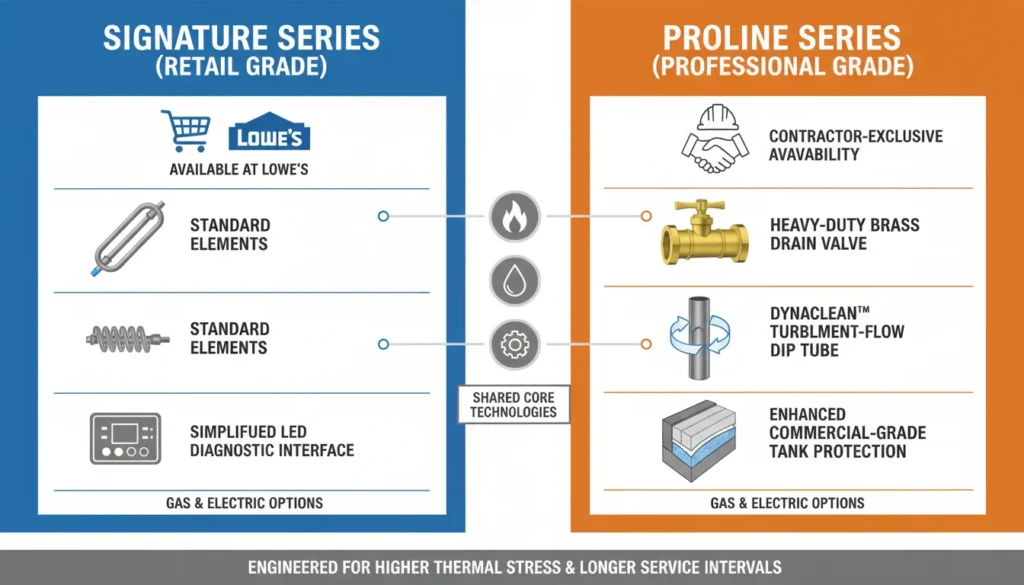
A. O. Smith stands as a premier manufacturer providing tailored water heating solutions for both residential and commercial sectors. Their catalog is strategically split into the ProLine® series, engineered for professional plumbing contractors, and the Signature Series®, which is the primary choice for homeowners shopping at major retailers like Lowe’s.
Signature 100: A Deep Dive into Residential Gas Efficiency
The A.O. Smith Signature 100 40-Gallon Natural Gas Water Heater (G6-S4040NVR) is a standout for medium-sized households, utilizing a powerful 40,000 BTU burner to ensure rapid heat recovery. Unlike many entry-level units, this specific model integrates a self-diagnostic electronic gas control, featuring LED status indicators that simplify troubleshooting by providing real-time feedback on the system’s operational health.
Diverse Tech Portfolio: Beyond standard gas tanks, the brand offers advanced electric, tankless, and high-efficiency hybrid heat pump models designed to meet modern energy standards.
Performance Metrics: The combination of specialized burners and electronic monitoring allows these units to maintain consistent temperatures even during peak demand periods. You can verify these energy-saving standards and safety certifications through the Official AHRI Directory, which tracks industry-leading performance ratings.
The Technician’s Warning: Integration Limits
While the self-diagnostic LED indicators are a massive help for DIY troubleshooting, they are not a substitute for physical inspections. A common “Edge Case” occurs when the electronic control signals a “normal” status, but the physical dip tube has begun to degrade due to extreme hard water. In these specific scenarios, the digital diagnostics might stay green even while your actual hot water volume drops, requiring a manual flush regardless of what the LED suggests.
Mastering High-Volume Hot Water with ProLine Engineering
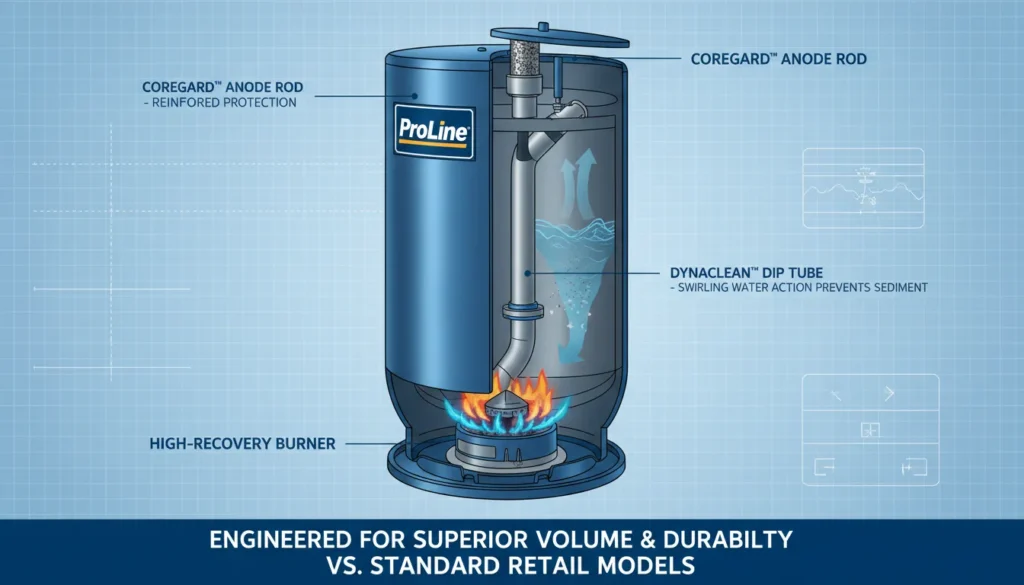
The AO Smith ProLine 74-Gallon High Recovery Natural Gas Water Heater (PCG-75) is the heavy hitter for homes that can’t afford to run out of hot water. Built with a focus on “quiet operation,” this unit uses “Low NOx” burners to keep emissions tight while maintaining massive output. It’s not just about size; it’s about how the tank handles the stress of constant reheating without vibrating or making the house sound like a factory.
The DynaClean™ Advantage: Solving the Sediment Secret
What sets these high-capacity 50-gallon and 74-gallon models apart is a technical detail most homeowners—and even some general contractors—overlook: the DynaClean™ dip tube. This isn’t just a plastic pipe; it’s engineered to create a turbulent water flow at the bottom of the tank. This movement keeps lime and sediment from settling, which is the #1 killer of gas heater efficiency.
Emission Standards: The Low NOx design ensures you are meeting strict environmental codes, similar to those monitored by the Environmental Protection Agency (EPA), without sacrificing the recovery speed required for back-to-back showers.
Durable Construction: The frame and internal lining are built to withstand the higher thermal expansion cycles found in high-recovery gas units, making it a “fit and forget” solution for busy families.
The Hard Water Hurdle: When Turbulence Isn’t Enough
The DynaClean™ system is a beast at preventing sediment, but it’s not a magic wand for extreme mineral content. In areas with “Liquid Rock” levels of hard water, the turbulence can actually keep smaller particles suspended longer, which might lead to minor clicking sounds as they hit the heating surface. If you’re in a high-mineral zone, the tech works best when paired with a basic annual flush to clear out what the dip tube stirred up.
Next-Gen Heating: Voltex® Max and Scale-Proof Tankless Units
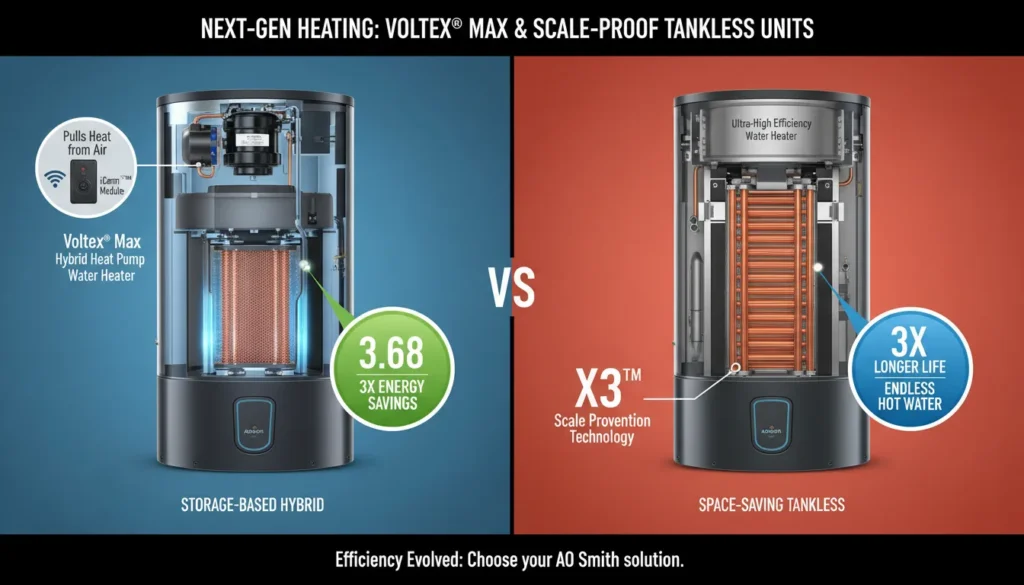
The A.O. Smith HPTA-50 Voltex® Max Smart Hybrid Electric Heat Pump is currently the gold standard for homeowners looking to slash utility bills. It hits an impressive Uniform Energy Factor (UEF) of 3.68, making it significantly more efficient than standard electric tanks. Beyond the raw numbers, the integration of iComm™ Smart Connectivity allows you to manage your home’s water temperature and monitor energy usage directly through a mobile app.
X3™ Technology: The Hard Water Solution
For those moving away from tanks entirely, the Signature Series Ultra High Efficiency Tankless Water Heater (GT15THR-199X3) addresses the biggest weakness of tankless tech: calcium and scale. By utilizing X3™ scale prevention technology, this unit is rated to last up to 3 times longer in hard water environments compared to standard tankless models. This means you don’t have to worry about the constant descaling flushes that usually plague these systems.
Smart Monitoring: The iComm system provides proactive alerts, ensuring you aren’t surprised by a maintenance need when you’re in the shower.
Energy Compliance: These high-efficiency benchmarks meet the rigorous standards set by Energy Star, ensuring your installation qualifies for maximum local rebates and tax credits.
The Connectivity Constraint: Wi-Fi and Scale Realities
The iComm™ Smart Connectivity is a game changer, but it relies heavily on your home’s 2.4GHz Wi-Fi signal strength near the heater. If your unit is tucked away in a deep basement or a far-off utility closet, the “Smart” features might drop offline frequently. Similarly, while X3™ tech is incredibly robust against minerals, it is not a substitute for a whole-house softener if your water is exceptionally acidic, as scale prevention and pH balance are two different chemical battles.
Industrial-Grade Armor: Blue Diamond® Glass and CoreGard™ Defense
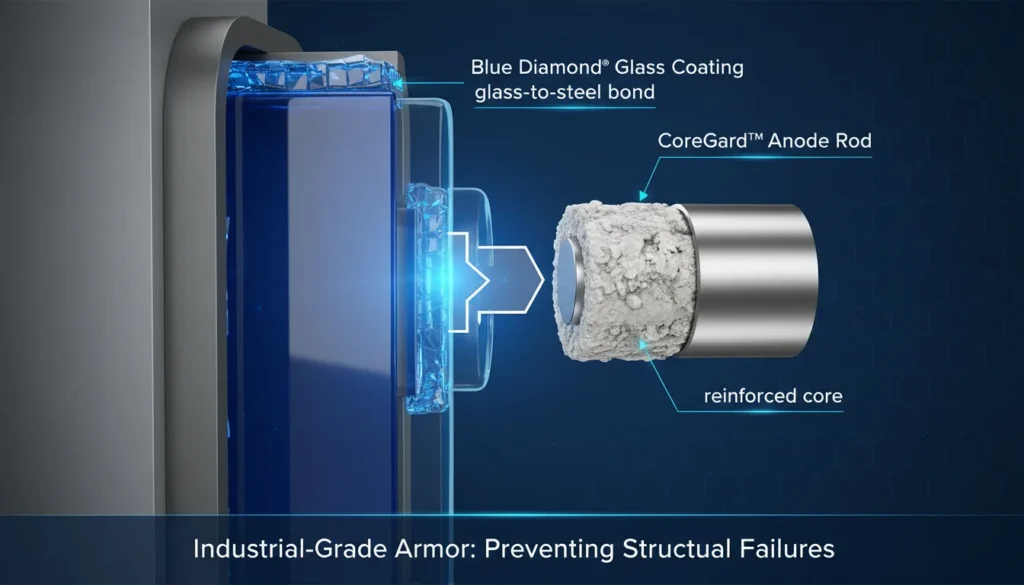
To effectively prevent leaks, AO Smith employs a proprietary Blue Diamond® Glass Coating that provides superior resistance to the high temperatures and chemical reactions found inside a pressurized tank. This isn’t just a surface paint; it is a specialized glass-lining fused to the steel to create a watertight barrier. Combined with the CoreGard™ Anode Rod, the system proactively neutralizes corrosive elements before they can reach the metal shell.
The Stainless Steel Advantage in Anode Design
A primary reason AO Smith is consistently considered a high-quality brand is the specific engineering of the CoreGard™ system. Unlike standard sacrificial rods that degrade into a flimsy wire and eventually snap off, the CoreGard™ anode features a stainless steel core. This core maintains the rod’s structural integrity even as the sacrificial material depletes, ensuring that protection remains distributed across the entire height of the tank for a longer duration.
Superior Tank Defense: The Blue Diamond coating acts as the primary shield, while the anode rod acts as the secondary “sacrificial” defense to attract mineral attacks.
Industry Standards: These protective technologies meet and exceed the safety and durability benchmarks established by the National Board of Boiler and Pressure Vessel Inspectors, which oversees the integrity of pressure-retaining equipment.
The Soft Water Paradox: When Protection Accelerates Wear
While the CoreGard™ rod is built to last, it faces a unique challenge in homes with high-efficiency water softeners. Because softened water increases conductivity, it can cause the sacrificial material on the anode to dissolve much faster than it would in “hard” water. If you are running a heavy softening system, the “high-quality” rod might still require an inspection every 12 to 18 months—a rare scenario where better water quality actually demands more frequent hardware maintenance to prevent the steel core from becoming exposed too soon.
Diagnostic Guide: Solving Short Hot Water Bursts and Noisy Tanks
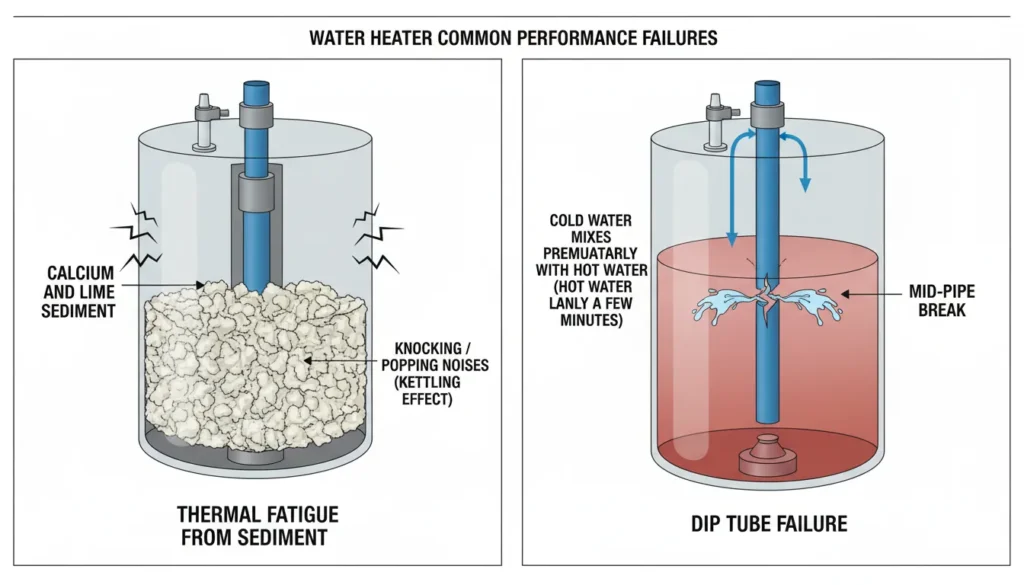
If you find yourself only getting 10 minutes of hot water or hearing strange popping noises from the basement, your unit is sending a distress signal. These symptoms usually point to a failing internal component or heavy sediment buildup. When you never flush your water heater, minerals settle at the bottom, creating a thick layer that acts as an insulator. This forces the burner to run longer and hotter, which significantly shortens the tank’s lifespan and can eventually lead to a total system breach.
The 6-Month Flush: Beyond the “Made in China” Question
While many users get distracted asking “Are A. O. Smith water heaters made in China?”, the real technical focus should be on your service schedule. Most professional plumbers recommend a full system flush every 6 to 12 months. This proactive step is the only way to prevent the “slow recovery rates” often mentioned in user feedback. By clearing the tank floor, you allow the heat to transfer directly to the water again, restoring the fast recovery times the brand is known for.
Identifying Failure: Watch for “rusty” looking water or metallic tastes, which indicate the internal lining is compromised.
Safety Protocols: Always follow the pressure relief valve testing procedures as outlined by the International Association of Plumbing and Mechanical Officials (IAPMO) to ensure the tank doesn’t over-pressurize during heavy sediment blocks.
The “Too Late” Scenario: When Flushing Causes Leaks
There is a specific situation where following the 6-month flush advice can actually backfire. If a tank has been neglected for 5+ years, that thick layer of sediment might be the only thing “sealing” small pinhole leaks at the bottom of a corroded tank. In this case, flushing out the gunk can suddenly reveal multiple leaks that were hidden by the buildup. If your unit is ancient and has never been serviced, a gentle inspection by a pro is better than a high-pressure DIY flush that might leave you with a flooded floor.
Decoding the A.O. Smith Protection Plan: What Owners Must Know
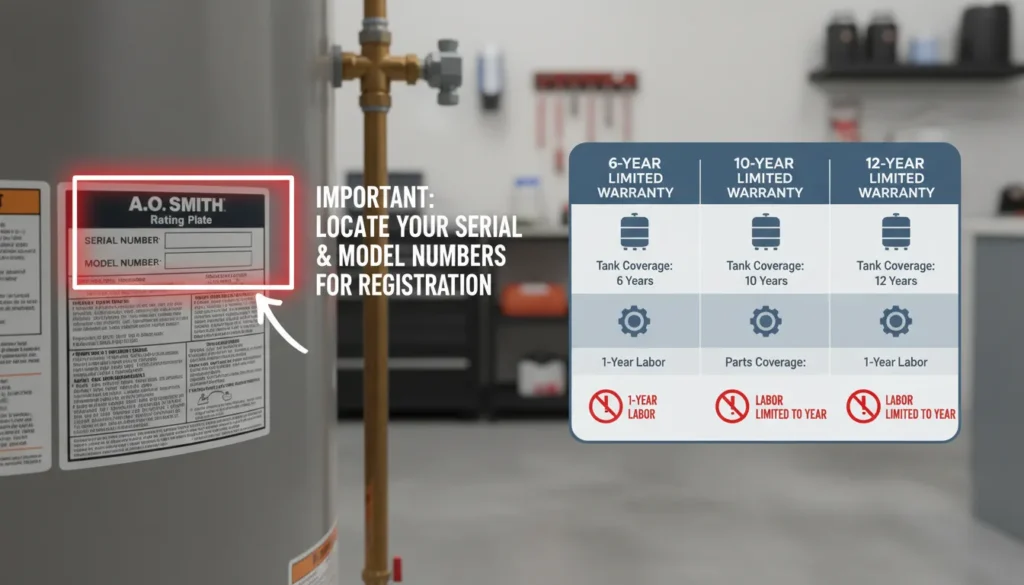
The a o smith warranty typically provides a tiered protection system, covering the core tank and internal parts for a span of 6 to 12 years depending on the model tier. However, it is vital to note that labor coverage is generally restricted to just 1 year. Beyond this initial window, while the manufacturer may provide the replacement part or tank, the homeowner remains responsible for all shipping fees and the secondary installation labor costs required to swap out the hardware.
The Technician Gap: Navigating Service Realities
A unique transparency point often missing from standard reviews is that some users report frustrations with “slow warranty processing” when dealing with specialized components. This issue is particularly prevalent for high-tech hybrid models compared to standard gas units. Finding authorized technicians who are specifically certified to work on smart heat pump systems can take longer in rural areas, leading to extended downtime.
Documentation Strategy: To avoid delays, homeowners should immediately use the official A.O. Smith Warranty Verification tool to confirm their unit’s status and register their serial number.
Service Network: Accessing the brand’s authorized contractor network ensures that any replacement parts installed under the protection plan meet the required safety and performance standards for your specific model.
The Shipping Snag: The Hidden Cost of “Free” Replacements
An important “Reality Check” for any owner is the logistical cost of a tank replacement under warranty. If a 50-gallon tank fails in year seven, the manufacturer may approve a free replacement unit, but the freight cost to ship a 150-pound steel tank to your doorstep—or the local wholesaler—can often reach hundreds of dollars. Many users are surprised by this invoice, assuming a “full warranty” means zero cost. Always budget for the freight and the plumber’s “swap-out” fee, even when the hardware itself is covered at no charge.
Industry Benchmarks: Brand Competition and Real-World Setup Fees
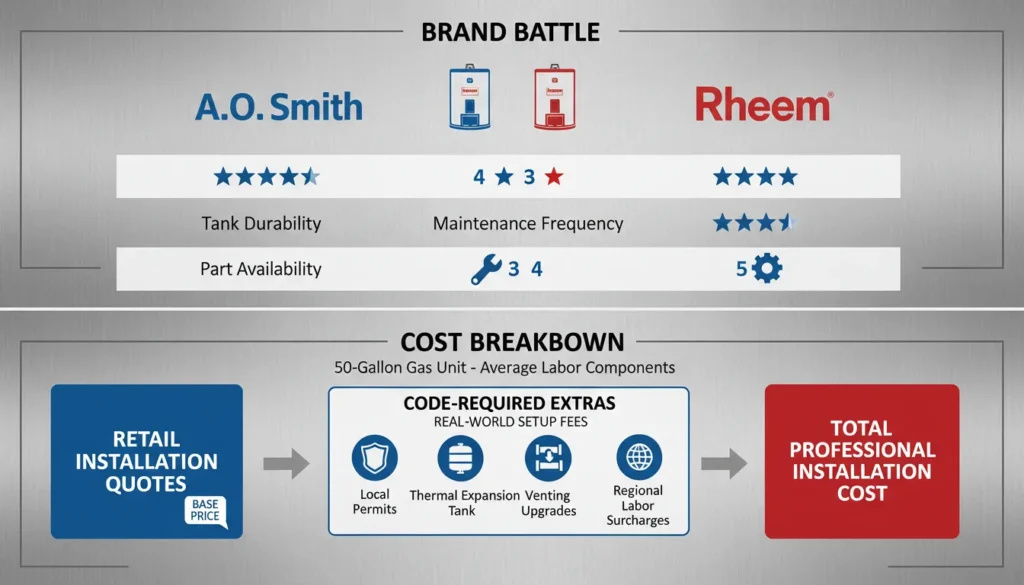
Plumbers frequently categorize A. O. Smith as the most reliable water heater brand on the market today, sharing the top spot with Rheem. While both manufacturers dominate the industry, Rheem is occasionally noted for having slightly lower maintenance needs in specific electronic categories. However, the durable construction of A. O. Smith makes it a preferred choice for contractors who prioritize tank longevity and heavy-duty performance in demanding residential environments.
The Hidden Variables in Installation Estimates
When you start calculating the average labor cost to install a 50 gallon gas water heater, it is vital to look beyond the basic sticker price. National retail estimates, such as the Home Depot charge to install, are heavily influenced by your specific zip code and the local plumbing codes in your area. These regulations often mandate additional hardware like thermal expansion tanks or specific venting upgrades that can quickly push a “standard” quote higher than the national average.
Code Compliance: Every installation must adhere to the standards set by the International Code Council (ICC), which ensures that gas lines and pressure systems are safely integrated into your home’s infrastructure.
Labor Variability: Professional rates fluctuate based on the complexity of the workspace and whether you are upgrading from a standard tank to a high-efficiency model.
The Permit Pitfall: Why Fixed Quotes Often Shift
A common “Reality Check” for homeowners is the cost of municipal permits. Many people assume that a flat-rate installation fee includes everything, but the plumber’s labor often doesn’t cover the city’s inspection or permit fees. In some jurisdictions, the “Home Depot” or independent contractor quote might only cover the physical swap of the tank. If a local inspector finds that your old venting doesn’t meet 2026 safety codes, you could be looking at unexpected expenses to bring the entire system up to par before the job is officially signed off.